芯片研发

Search documents
优迅股份IPO将二次上会:取消8000万元补流项目,曾10年无实控人
Sou Hu Cai Jing· 2025-10-13 07:35
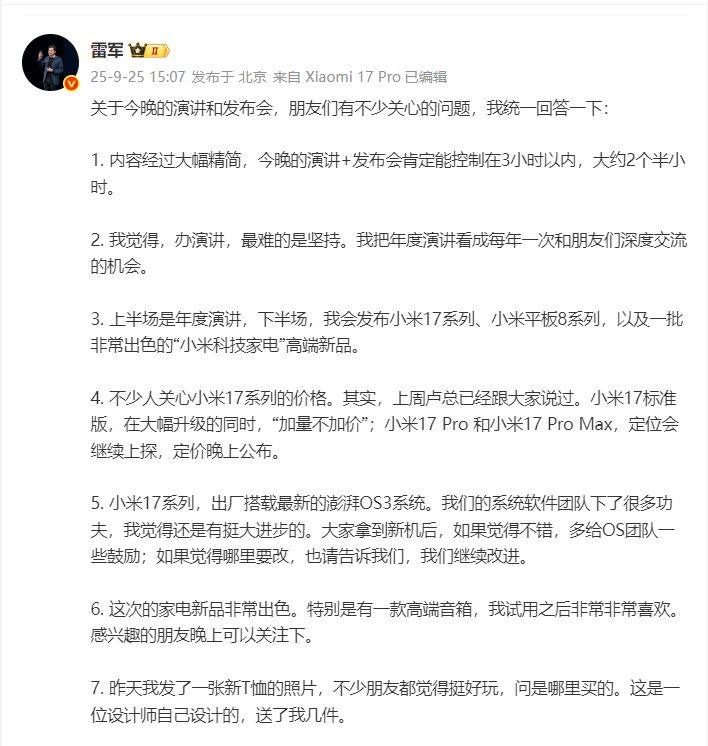
Core Viewpoint - Xiamen Youxun Chip Co., Ltd. is set to undergo a second review for its IPO on the Sci-Tech Innovation Board on October 15, 2025, after a previous postponement in September 2025 [2] Company Overview - Youxun Chip is recognized as a "national manufacturing single champion enterprise" in the optical communication sector, focusing on the research, design, and sales of optical communication front-end transceiver chips [2] IPO Details - The IPO application was accepted on June 26, 2025, and has undergone two rounds of inquiries [2] - The initial review in September 2025 resulted in a "postponed review" decision [2] - The planned fundraising amount has been reduced from 889 million yuan to 809 million yuan following the cancellation of a project aimed at supplementing working capital, which was originally set to raise 80 million yuan [5][6] Financial Performance - As of June 30, 2025, total assets amounted to 8.449 billion yuan, with equity attributable to shareholders at 7.815 billion yuan [6] - The company reported revenues of 339 million yuan in 2022, 313 million yuan in 2023, 411 million yuan in 2024, and 238 million yuan in the first half of 2025 [6] - Net profits for the same periods were 81.4 million yuan, 72.1 million yuan, 77.9 million yuan, and 46.9 million yuan respectively [6] Shareholding Structure - The shareholding of Youxun Chip is relatively dispersed, with no single shareholder holding more than 30% of voting rights, indicating the absence of a controlling shareholder [7] - The actual controllers, Ke Binglan and Ke Tenglong, collectively hold 27.13% of the voting rights, having taken control in November 2022 after a decade without a controlling shareholder [7]

中兴通讯盘中涨超7%续刷上市新高 近三个交易日股价累涨超两成
Zhi Tong Cai Jing· 2025-10-13 03:02
Group 1 - ZTE Corporation (000063) (00763) has continued its recent upward trend, with a peak increase of over 7% in early trading, reaching a new high of 45.2 HKD, and a cumulative increase of over 20% in the last three trading days [1] - As of the report, ZTE's stock price rose by 4.33%, trading at 43.88 HKD with a transaction volume of 2.366 billion HKD [1] - Haitong International noted that the AI server market is entering a phase of rapid growth, leading to accelerated revenue growth for the company [1] Group 2 - ZTE has been engaged in chip research and development since 1996, continuously enhancing its investment in advanced process design, architecture, packaging design, core intellectual property, and efficient digital development platforms [2] - ZTE Microelectronics, a subsidiary, has developed comprehensive front-to-back design capabilities for complex SoC chips, successfully commercializing over 130 types of chips [2] - Huayuan Securities believes that ZTE's research and development layout and technological depth in the chip sector may help establish its core competitiveness in the AI wave [2] Group 3 - The company has strengthened its research and development of intelligent computing-related products, utilizing self-developed chips and AI servers to meet diverse AI scenario demands [1] - ZTE's core chip capabilities are highlighted by its self-developed "Dinghai" DPU chip, "Lingyun" switching chip, and "Zhu Feng" CPU chip, which have contributed to its recognition at the 2025 China Computing Power Conference [1] - The company is expected to enhance its long-term competitive strength in the AI field due to its industry-leading chip design capabilities [1]

拟转让1327万股,东芯股份遭控股股东高位减持
Huan Qiu Lao Hu Cai Jing· 2025-10-11 07:34
Core Viewpoint - Dongxin Co., Ltd. is undergoing a share transfer process, with major shareholders planning to sell approximately 13.27 million shares, which corresponds to a market value of about 1.267 billion yuan at the closing price of 95.5 yuan per share on October 10 [1][2]. Shareholder Structure - The controlling shareholder, Dongfang Hengxin Group, holds 32.38% of the shares, while Suzhou Dongxin Kechuang holds 5.09%, totaling 37.47% before the transfer. Post-transfer, the combined holding will decrease to 34.47%, maintaining the controlling position [2]. Recent Share Reductions - In addition to the current share transfer, Dongfang Hengxin Group previously reduced its holdings by approximately 8.41 million shares (1.9% of total shares) between August 25 and 27, realizing around 800 million yuan based on an average share price of 100 yuan [2]. Stock Performance - The stock price of Dongxin Co., Ltd. has surged significantly, with a cumulative increase of 207.85% from July 29 to August 28, driven by the launch of a self-developed GPU chip by its affiliate, Lixuan Technology, in which Dongxin holds a 35.87% stake [3]. Financial Performance - For the first half of 2025, Dongxin Co., Ltd. reported a revenue of 343 million yuan, marking a year-on-year increase of 28.81%, with a quarter-on-quarter growth of 41.11% in the second quarter. The gross margin improved to 18.76%, up by 5.45% year-on-year [3]. Profitability Challenges - Despite revenue growth, Dongxin Co., Ltd. has not yet achieved profitability, reporting a net loss of 111 million yuan in the first half of the year, compared to a loss of 91.12 million yuan in the same period last year [3].

中国芯片只落后美国几纳秒!“华为们”奋力追赶,专家:5年就能摆脱依赖
Feng Huang Wang· 2025-10-07 12:42
Core Insights - Chinese tech giants are intensifying their high-end chip development to overcome U.S. technology restrictions and challenge companies like NVIDIA [1] - The gap between China and the U.S. in semiconductor technology is still significant but is narrowing [1][2] - Chinese AI models, such as DeepSeek, have demonstrated strong inference capabilities at lower development costs, impacting NVIDIA's stock [1] Group 1: Company Developments - NVIDIA's CEO Jensen Huang stated that China is only nanoseconds behind the U.S. in chip manufacturing, highlighting the rapid progress of Chinese engineers [1] - Alibaba's Tsinghua Unigroup has developed an AI chip, PPU, that matches the performance of NVIDIA's H20 tailored for the Chinese market [1] - Huawei's Atlas 900 A3 SuperPoD system, equipped with the Ascend 910B chip, has begun large-scale shipments and plans to release more advanced chips by 2027, posing a threat to NVIDIA's market dominance [1] Group 2: Market Dynamics - Other companies, such as Shanghai Muxi, are supplying advanced chips to major clients like China Unicom, while Cambricon has seen its stock surge due to U.S. export controls and China's push for domestic chip usage [1] - Internet giants like Tencent and Baidu are also investing in chip research and development [1] - A spokesperson from NVIDIA acknowledged the emergence of competition from Chinese chip companies [1] Group 3: Expert Opinions - Computer scientist Jawad Haji-Yahia noted that while Chinese semiconductors are comparable to U.S. chips in predictive AI, they still lack in complex analytical capabilities [2] - Experts believe that China remains reliant on the most advanced U.S. chips, and while the gap is closing, it may take up to five years for China to reduce its dependency on U.S. technology [2]

美国2000万吨大豆滞销,中国却成全球最大芯片出口国
Sou Hu Cai Jing· 2025-10-04 20:43
Core Insights - The historical trade imbalance between the U.S. and China persists, with the U.S. struggling to identify competitive products to sell to China, leading to significant challenges in the agricultural sector, particularly for soybeans [2][26] - The U.S.-China trade war has resulted in a drastic decline in U.S. soybean exports to China, with imports dropping to 22.13 million tons in 2024, a 5.7% decrease year-on-year, marking the lowest level in 12 years [2][5] - Brazil has emerged as a dominant supplier of soybeans to China, with imports reaching 74.65 million tons in 2024, accounting for 71.1% of China's total soybean imports [7] Trade Dynamics - The bilateral trade volume between the U.S. and China reached $688.28 billion in 2024, a 275-fold increase since the establishment of diplomatic relations in 1979, but the trade structure has significantly changed [2] - U.S. exports to China are increasingly dominated by high-tech products, with machinery, electronics, optics, and medical devices making up 63% of total exports, while agricultural products account for only 23% [9][16] - The U.S. agricultural sector, particularly soybean farmers, has expressed frustration over the trade war, feeling like collateral damage despite government subsidies being insufficient to cover their losses [5][11] Historical Context - The article draws parallels between historical trade challenges faced by the U.S. and current issues, highlighting that the U.S. has historically struggled to offer products that meet Chinese demand [18][20] - The U.S. once relied on selling opium to China to address trade imbalances, a practice that is no longer viable due to China's growing economic power [24][26] - The contrast between China's industrial growth and the U.S.'s status as the largest consumer of opioids underscores the shifting dynamics in global trade and economic strength [26]
刚刚,苹果买了家芯片公司
半导体行业观察· 2025-10-01 00:32
Core Viewpoint - Apple's acquisition of chip companies has significantly strengthened its position in the semiconductor industry, with a history of strategic purchases that enhance its technological capabilities and product offerings [2][4][14]. Group 1: Recent Acquisition - Apple has secretly acquired IC Mask Design Limited, a company specializing in IC layout design services and training, which has collaborated with over 250 tech companies globally [4][5]. - The acquisition is expected to provide Apple with expertise in VDSM technology nodes, potentially aiding in the optimization of its chips and enhancing energy efficiency [5][6]. Group 2: Historical Acquisitions - The acquisition of PA Semi in 2008 marked a turning point for Apple, laying the foundation for its future chip development across various devices [2]. - Subsequent acquisitions include Intrinsity in 2010, which improved microprocessor core development, and Anobit Technologies in 2012, enhancing NAND flash memory performance for Apple devices [8][9]. - Apple also acquired AuthenTec in 2012, which specialized in fingerprint scanning technology, and Passif in 2013, focusing on low-power communication chips [10][12]. - In 2018, Apple purchased Dialog Semiconductor's power management IC business, gaining control over PMIC development [11]. - The acquisition of Intel's smartphone modem business in 2019 added significant wireless technology patents to Apple's portfolio [12]. Group 3: Current Chip Development - Apple has developed multiple chip series, including A, C, H, M, N, S, and U series, showcasing its extensive capabilities in the semiconductor field [14]. - The company's aggressive patent filing strategy, averaging around 1,000 CPC G06F patents annually, reflects its commitment to innovation in chip technology [14]. - The competitive landscape in the semiconductor industry is intensifying, with other tech giants also increasing their capabilities through acquisitions, indicating a trend that Apple is likely to continue [14].


张江半导体龙头,晶晨股份冲刺港股IPO!
Sou Hu Cai Jing· 2025-09-29 05:37
Core Viewpoint - The company, Amlogic, has submitted an application for H-share listing on the Hong Kong Stock Exchange, aiming to expand its international capital market presence and enhance brand influence [1][3]. Group 1: Company Overview - Amlogic, established in 2003, became one of the first companies to list on the Shanghai Stock Exchange's Sci-Tech Innovation Board in August 2019 [3]. - The company is a leading fabless semiconductor system design firm, focusing on the research, design, and sales of system-on-chip (SoC) and peripheral chips [3]. - Amlogic's product line includes multimedia smart terminal SoC chips, wireless connectivity chips, and automotive electronic chips, with applications in smart home, automotive electronics, office education, and industrial sectors [3]. Group 2: Market Position and Performance - According to a Frost & Sullivan report, Amlogic ranks fourth globally among manufacturers focused on smart terminal SoC chips and is the leading company in mainland China and second globally in the home smart terminal SoC chip sector [3]. - As of June 30, the company has shipped over 1 billion chips, with projections indicating that in 2024, one in every three smart set-top boxes and one in every five smart TVs will use Amlogic's chips [3]. - The company has a global customer network covering over 250 major operators and 14 of the top 20 global TV brands, along with numerous AIoT and automotive manufacturers [3]. Group 3: Financial Performance - Amlogic's revenue for 2022, 2023, 2024, and the first half of 2025 is approximately 5.545 billion, 5.371 billion, 5.926 billion, and 3.33 billion respectively, with net profits of about 732 million, 499 million, 819 million, and 493 million [4]. - The company has seen significant growth in smart home products and wireless connectivity chips, with smart home product sales increasing by over 50% year-on-year in the first half of 2025 [4]. - In the second quarter, sales of Wi-Fi 6 chips exceeded 1.5 million units, surpassing the total sales for 2024, indicating a quarter-on-quarter growth of over 120% [4]. Group 4: International Expansion and Funding - Amlogic is a leading player in the global audio and video SoC market, with over 90% of its revenue coming from overseas markets, covering regions such as North America, Europe, Latin America, Asia-Pacific, and Africa [5]. - The company plans to use the funds raised from the H-share listing to support growth, enhance R&D capabilities, build a global customer service system, and pursue strategic investments and acquisitions [5]. - Successful completion of the H-share issuance is expected to bolster Amlogic's overseas market expansion and diversify its financing channels, strengthening its global competitiveness in the smart multimedia SoC chip sector [5].


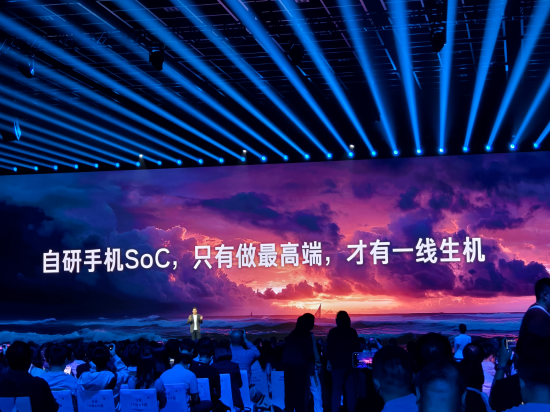
雷军谈小米芯片业务:哪怕没有成功,也将为小米培养一支强大的芯片研发队伍
Mei Ri Jing Ji Xin Wen· 2025-09-25 11:48
Core Viewpoint - Xiaomi Group's founder and CEO Lei Jun emphasized the importance of continuing the chip business despite potential short-term financial losses, arguing that the long-term benefits of developing a strong chip R&D team would outweigh the immediate costs [2]. Summary by Relevant Categories Company Strategy - In a high-level meeting regarding the future of the chip business, Lei Jun posed a critical question to executives about the long-term implications of abandoning the chip initiative, highlighting a strategic commitment to innovation and self-sufficiency in technology [2]. Financial Considerations - Lei Jun expressed that the potential savings of "hundreds of billions" of yuan from discontinuing the chip business would not justify the loss of a vital capability for Xiaomi, indicating a willingness to invest heavily in R&D for future growth [2].

雷军:当年同行解散3000多人芯片团队,我手机被电话和信息挤爆
Xin Lang Ke Ji· 2025-09-25 11:27
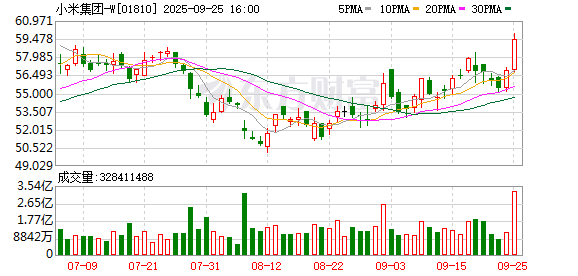
Core Viewpoint - Xiaomi's CEO Lei Jun emphasized the importance of perseverance in the face of challenges, particularly regarding the company's chip team, which faced uncertainty after a competitor disbanded their own chip team [2]. Group 1 - Lei Jun recalled a past incident where a competitor unexpectedly disbanded their chip team, causing concern among Xiaomi's stakeholders about the future of its own chip team [2]. - The company has learned from past experiences and is committed to maintaining its chip team despite external pressures and fears [2]. - A full team meeting was called immediately to reassure employees and reinforce the commitment to the chip division, highlighting the company's determination to continue its efforts in this area [2].
雷军回应“年度演讲”7大热点问题!小米17标准版“加量不加价”
Mei Ri Jing Ji Xin Wen· 2025-09-25 09:37
Core Points - Xiaomi's CEO Lei Jun announced a streamlined annual presentation and product launch event, expected to last around 2.5 hours [1][2] - The event will feature the launch of the Xiaomi 17 series, Xiaomi Pad 8 series, and several high-end "Xiaomi Tech Appliances" [1][2] - The Xiaomi 17 standard version will see significant upgrades without a price increase, while the Pro and Pro Max versions will have higher positioning with prices to be announced [1][2] - The Xiaomi 17 series will come equipped with the latest Surge OS 3, with improvements made by the software team [1][2] - A notable high-end speaker from the new appliance lineup has received positive feedback from Lei Jun [1][2] - The Xiaomi 17 series will globally debut the fifth-generation Snapdragon 8 processor, built on a 3nm process, boasting a peak frequency of 4.6GHz [5][6][7] - Xiaomi's recent financial performance shows a record revenue of 115.96 billion RMB for Q2 2025, a 30.5% year-on-year increase, and a net profit of 10.83 billion RMB, up 75.4% [17]