财政金融协同

Search documents
财政部:“十四五”期间,农户累计获得农业保险赔款超5200亿元
Sou Hu Cai Jing· 2026-01-20 10:18
Core Viewpoint - The Chinese government is actively promoting agricultural insurance through fiscal policies, which has significantly contributed to the stability of agricultural production and food security in the country [1][3]. Group 1: Agricultural Insurance Development - Since 2007, the central government has supported agricultural insurance through premium subsidies, making it one of the earliest fiscal-financial collaborative policies [1][3]. - The average premium for complete cost insurance for rice is approximately 50 yuan per mu, with farmers paying around 10 yuan and the government covering about 40 yuan, leading to potential compensation of hundreds to thousands of yuan in case of disasters [3]. - China's agricultural insurance premium scale ranks first globally, supporting stable grain production of over 1.4 trillion jin, which is crucial for feeding nearly 20% of the world's population on just 9% of the world's arable land [3][4]. Group 2: Achievements in Agricultural Insurance - The development of agricultural insurance is characterized by "quantity and quality improvement," reflected in four continuous aspects: 1. Continuous increase in fiscal investment, with nearly 80% of agricultural insurance premiums coming from government subsidies, growing at double-digit rates annually [4]. 2. Continuous improvement of the institutional framework, with various departments collaborating to establish a comprehensive agricultural insurance system tailored to China's conditions [4]. 3. Continuous enhancement of coverage capabilities, providing high coverage for major agricultural products and implementing reward and subsidy policies for local specialty products [4]. 4. Continuous increase in benefits for farmers, with over 520 billion yuan in compensation provided to farmers during the "14th Five-Year Plan" period, aiding recovery from natural disasters [4]. Group 3: Future Directions - The Ministry of Finance plans to continue enhancing the quality and efficiency of agricultural insurance and will issue a guiding document in 2026 aimed at promoting high-quality development in this sector [5].

财政部:今年将“硬核”支持稳就业、稳企业、稳市场、稳预期
Zheng Quan Ri Bao Wang· 2026-01-20 09:19
"结构更优",主要就是要持续优化支出结构,确保资金用在紧要处。打破"基数+增长"支出固化格局, 积极运用零基预算理念,大力压减低效无效支出,把更多的财政资金用在提振消费、"投资于人"、民生 保障等方面,多渠道增加居民收入。通过有"力度"、有"温度"的支出安排,不断提升人民群众的获得 感。 "效益更好",就是着力提高资金使用效益,每一分钱都要产生应有的效益。2026年将继续安排超长期特 别国债,用于"两重"建设和"两新"工作,并优化政策实施;完善专项债券项目负面清单管理,深化地 方"自审自发"试点,更好发挥债券资金效益。同时,加强财政金融协同,探索创新政策工具,放大公共 资金的带动作用和公开政策的外溢效应。 1月20日,国新办举行新闻发布会,介绍发挥积极财政政策作用,推动经济社会高质量发展有关情况。 财政部副部长廖岷表示,2025年更加积极的财政政策,做到了兼顾当前与长远,既有力支持当下的经济 增长、办好民生实事,又有效推动中国经济结构转型,为经济社会中长期可持续发展打下坚实基础。 对于2026年财政政策,廖岷表示,按照中央经济工作会议部署,财政部门将继续实施更加积极的财政政 策,概括起来就是"总量增加、结构更 ...
财政部:我国农业保险保费近八成来源于财政补贴
Sou Hu Cai Jing· 2026-01-20 08:30
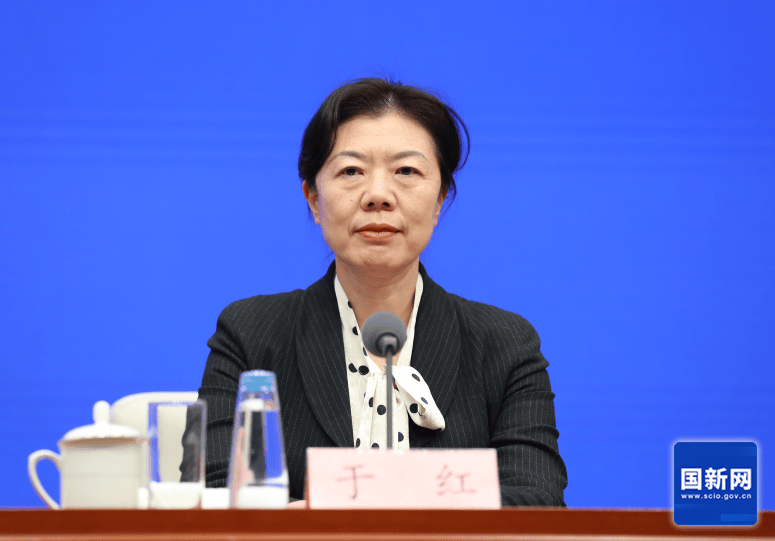
据第一财经网站,1月20日,财政部金融司司长于红在国新办新闻发布会上表示,从2007年开始,中央 财政以保费补贴形式支持农业保险发展,是最早的财政金融协同政策措施之一。我国农业保险保费近八 成来源于财政补贴,各级财政保费补贴的增速每年都保持两位数增长,用真金白银支持农业保险行业发 展。2025年,我国农业保险保费规模已经突破1550亿元,为1.25亿户次农户提供风险保障超5.2万亿元。 ...
一揽子支持政策缓解中小微企业“融资难融资贵”
Sou Hu Cai Jing· 2026-01-20 06:52
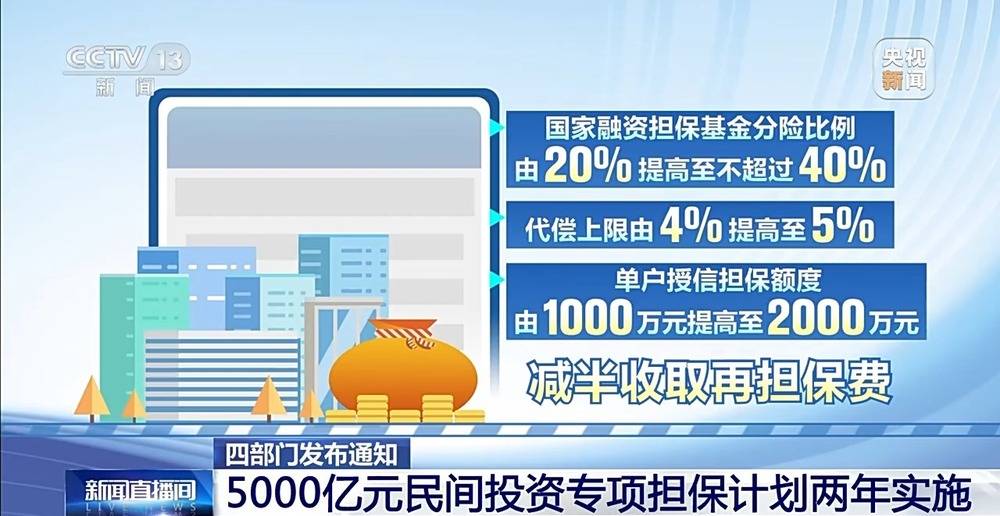
Core Viewpoint - The Ministry of Finance and other departments have announced a special guarantee plan for private investment, which will provide 500 billion yuan in funding support to the market [1][2]. Group 1: Special Guarantee Plan - The special guarantee plan will be implemented over two years, aiming to guide banks to increase lending of 500 billion yuan for fixed asset loans to small and micro enterprises [2]. - The risk-sharing ratio of the National Financing Guarantee Fund will be increased from 20% to a maximum of 40%, and the compensation cap will rise from 4% to 5% [2][8]. - The single credit guarantee limit will be raised from 10 million yuan to 20 million yuan, and the re-guarantee fee will be halved [2]. Group 2: Impact on Private Investment - The investment guarantee plan is expected to leverage a total of nearly 900 billion yuan in private investment through a three-tier government financing guarantee mechanism [4]. - The plan is crucial for stabilizing and promoting private investment in the current economic climate [4]. Group 3: Targeted Support Areas - The policy will support small and micro enterprises engaged in purchasing equipment and raw materials, technological transformation, and various production and operational activities [5]. - It will also cover sectors such as catering, health, elderly care, childcare, culture, entertainment, tourism, and green and digital industries [5]. Group 4: Loan Interest Subsidy Policy - Starting this year, a loan interest subsidy policy for small and micro enterprises will be implemented, focusing on key industries such as new energy vehicles, medical equipment, and high-end manufacturing [9][11]. - The subsidy will provide a 1.5 percentage point interest reduction for eligible fixed asset loans, with a maximum loan amount of 50 million yuan and a cap of 150,000 yuan per borrower [13]. Group 5: Coordination of Fiscal and Financial Policies - Experts believe that these policies are part of a coordinated effort between fiscal and financial sectors to alleviate the challenges of financing for market entities [14]. - The special guarantee plan is seen as an innovative mechanism that will contribute to increasing investment, creating jobs, and stabilizing economic growth [16].
财政金融协同加码促内需
Zhong Guo Jing Ying Bao· 2026-01-17 10:37
Group 1 - The core viewpoint of the article is that the fiscal policy in 2026 will become more proactive and collaborative, particularly in conjunction with monetary and industrial policies, enhancing the overall effectiveness of macroeconomic regulation [1] - The Ministry of Finance, in collaboration with relevant departments, held a video conference to promote a package of policies aimed at stimulating domestic demand, emphasizing the simplification of processes and strengthening execution tracking to ensure effective policy implementation [1][2] - The new round of policies focuses on boosting resident consumption and private investment, with measures such as optimizing service industry loans and personal consumption loan interest subsidies to enhance consumer capacity [1][2] Group 2 - In the consumption sector, the upgraded "dual interest subsidy" policy is a key focus, providing interest subsidies for loans to service industry entities in areas like dining, tourism, and healthcare, thereby reducing financing costs for quality service supply [2] - To stimulate private investment, a special guarantee plan for private investment has been established, along with a risk-sharing mechanism for private enterprise bonds, addressing the challenges of loan accessibility and high bond issuance costs [2][3] - The establishment of a collaborative working mechanism among fiscal departments, financial institutions, and regulatory bodies aims to break down departmental barriers, ensuring efficient use of fiscal funds and directing them towards the real economy and consumer endpoints [3]
华夏时评:财政金融协同发力,精准滴灌激活内需
Hua Xia Shi Bao· 2026-01-16 11:36
Core Viewpoint - The central economic policy direction for 2026 emphasizes "quality improvement and efficiency enhancement," focusing on precise and targeted measures rather than broad monetary expansion [2][4]. Group 1: Central Bank Policies - On January 15, the central bank announced a 25 basis point reduction in the rates of structural monetary policy tools and increased support for key areas such as technological innovation, small and micro enterprises, and green low-carbon projects [2][3]. - The central bank will merge and increase the quota for re-loans and rediscounting for agriculture and small enterprises by 500 billion, with a total quota of 1 trillion specifically for private enterprises [3]. - The re-loan quota for technological innovation and technical transformation will be raised from 800 billion to 1.2 trillion, including support for private small and medium enterprises with high R&D investment [3]. Group 2: Fiscal Policies - The Ministry of Finance held a national video conference on January 13 to deploy a package of policies aimed at promoting domestic demand through fiscal and financial collaboration [2][4]. - The emphasis on fiscal-financial collaboration was reiterated, highlighting the importance of simplifying processes and strengthening execution to ensure effective policy implementation [2][4]. Group 3: Policy Implications - The combination of fiscal and monetary policies in early 2026 reflects a new macroeconomic management approach that balances moderate monetary easing with precise structural optimization to boost domestic demand [4]. - The focus on "quality improvement and efficiency enhancement" suggests that future policies will continue to prioritize structural adjustments while maintaining the capacity for further monetary easing if total demand fluctuates [4]. - The effectiveness of policy implementation will depend on breaking down departmental barriers and local protectionism to ensure that policies effectively support the real economy [4].

国常会部署实施财政金融一揽子政策 双轮驱动扩大内需
Sou Hu Cai Jing· 2026-01-15 01:24
Core Viewpoint - The State Council's meeting on January 9 outlined a comprehensive policy package to promote domestic demand through coordinated fiscal and financial measures, emphasizing the need for proactive macroeconomic policies to enhance effectiveness and collaboration [1]. Group 1: Policy Implementation - The meeting highlighted the importance of aligning fiscal and financial policies to maximize their impact and encourage social capital participation in consumption and investment [1]. - A focus on promoting consumer spending includes optimizing loan policies for service industry operators and personal consumption, aiming to enhance residents' consumption capacity [1]. - Support for private investment will be strengthened through measures such as interest subsidies for loans to small and micro enterprises, establishing special guarantee plans for private investment, and optimizing fiscal subsidies for equipment upgrades [1]. Group 2: Policy Signals and Expectations - The comprehensive fiscal and financial policy package aims to stimulate effective demand and create a synergistic effect in promoting domestic demand, which is expected to boost confidence and guide market expectations [1]. - The Ministry of Finance will continue to actively promote the collaboration of fiscal and financial policies, directing funds to key areas to leverage the impact of fiscal resources [1]. Group 3: Implementation and Monitoring - The meeting emphasized the need for more facilitative measures to ensure effective policy implementation and enhance the sense of gain for the public and enterprises [2]. - There will be close tracking of policy implementation progress and strengthened management to ensure the efficient and compliant use of funds [2].
金融界财经早餐:财政部重磅!推进财政金融协同促内需一揽子政策;沪深北交易所融资保证金比例上调;换房退税政策再延两年;8天翻倍AI大牛股停牌核查(1月15日)
Jin Rong Jie· 2026-01-15 01:09
Company and Industry Highlights - Easy Point World announced a stock trading suspension starting January 15, 2026, due to significant price fluctuations, with a stock price increase exceeding 100% over the past nine trading days [8] - Sunflower received a notice from the China Securities Regulatory Commission regarding an investigation into information disclosure violations, but stated that normal operations would not be significantly affected [8] - Five Minerals Development plans a major asset swap and cash purchase of assets from Five Minerals Holdings, with the transaction expected to constitute a significant asset restructuring [8] - Unigroup Guowei intends to acquire 100% equity of Ruineng Semiconductor through a share issuance and cash payment, while also raising supporting funds from specific investors [9] - International Medicine announced that its controlling shareholder pledged 75 million shares for financing, representing 12.17% of the shares held by the shareholder and 3.35% of the total share capital [9] - WuXi AppTec proposed a conditional cash acquisition offer for Dongyao Pharmaceutical at a price of HKD 4.00 per share, representing a premium of approximately 114.67% over the average closing price [10] - Ctrip Group is under investigation by the State Administration for Market Regulation for suspected monopolistic behavior, and the company has stated it will cooperate with the investigation [10] - Alibaba is set to hold a product launch event for its Qianwen APP on January 15, 2026, showcasing new AI capabilities [11]


油价跳水 白银涨破92美元;与辉同行遭打假;携程回应被立案调查丨每经早参
Mei Ri Jing Ji Xin Wen· 2026-01-14 22:06
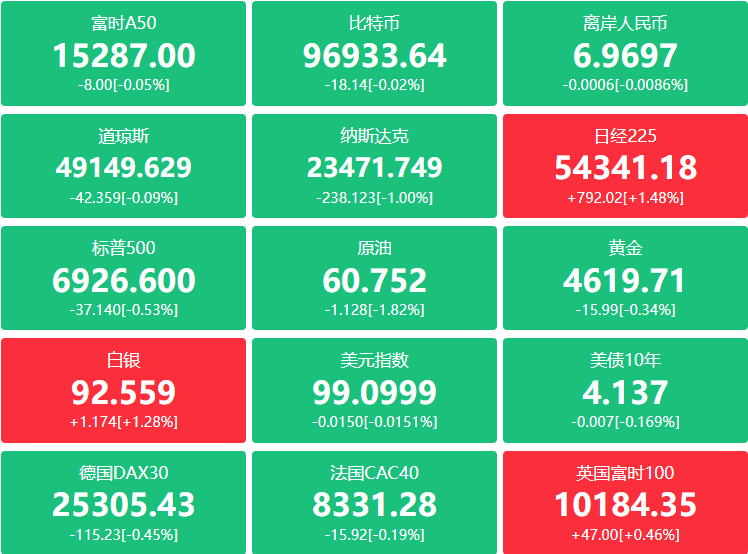
Group 1 - The U.S. stock market experienced a collective decline, with the Dow Jones down 0.08%, Nasdaq down 1%, and S&P 500 down 0.53%. Major tech stocks like Oracle and Broadcom fell over 4%, while Intel rose over 3% [5] - The Federal Reserve's Beige Book indicated that economic activity grew at a slight to moderate pace in 8 out of 12 districts, with a more optimistic outlook for future activity [5] - International oil prices saw a significant drop, with WTI crude oil down 1.61% to $59.95 per barrel and Brent crude down 1.53% to $64.47 per barrel [5] Group 2 - The Ministry of Finance, the State Administration of Taxation, and the Ministry of Housing and Urban-Rural Development announced a tax refund policy for individuals selling their homes and purchasing new ones within a year, effective from January 1, 2026, to December 31, 2027 [7] - A meeting was held by the Ministry of Industry and Information Technology to address the issue of "price wars" in the new energy vehicle industry, emphasizing the need for fair competition and quality-driven innovation [8] - The Ministry of Finance conducted a video conference to promote a package of policies aimed at boosting domestic demand through fiscal and financial collaboration [9] Group 3 - Canadian Prime Minister Carney arrived in Beijing for his first official visit to China in eight years [10] - The Shanghai government announced a plan to implement key technology research projects in the field of autonomous driving, focusing on the development of advanced hardware and software solutions [10] - The People's Bank of China will conduct a 900 billion yuan reverse repurchase operation to maintain liquidity in the banking system [11] Group 4 - Ctrip announced it will cooperate with regulatory authorities following an investigation into alleged monopolistic practices [16] - Guangzhou Chali Group addressed reports of a 200 million yuan salary arrears, stating that most employee salaries have been paid, and they are working on settling outstanding payments for former employees [17] - Boeing reported that it secured nearly 1,200 commercial aircraft orders in 2025, surpassing Airbus for the first time since 2018 [18] Group 5 - Huawei is projected to reclaim the top position in China's smartphone market by 2025, with an estimated shipment of 285 million units, despite a slight year-on-year decline of 0.6% [20] - The Zhejiang Securities Regulatory Bureau is investigating Sunflower's restructuring plan for misleading statements regarding its actual production capacity and business model [28] - Haidilao announced a change in CEO, with founder Zhang Yong returning to the role, indicating a strong intent to address challenges faced by the company [30]

21社论丨财政金融协同进一步扩大内需
21世纪经济报道· 2026-01-13 02:00
Group 1 - The core viewpoint of the article emphasizes the importance of expanding domestic demand as a key measure to address structural constraints and build a new development pattern in the context of ongoing external environmental changes affecting China's economy [1][2]. - The recent State Council meeting outlined a comprehensive policy package aimed at promoting consumption and expanding investment, which are identified as the two main lines of focus for economic work in 2026 [2][3]. - The article highlights the role of fiscal and monetary policies as essential tools for economic regulation, with fiscal policy providing direct and targeted adjustments through budget arrangements and tax leverage, while monetary policy influences credit demand indirectly through total money supply and interest rate adjustments [1][4]. Group 2 - In terms of promoting consumption, the article discusses the optimization of interest subsidy policies for service industry operators and personal consumption loans, which aim to enhance residents' consumption capacity and lower credit costs [2][3]. - The article outlines that in 2026, policies will further optimize personal consumption loan subsidies and increase support for service industry operators, creating a positive cycle between demand and supply [3][4]. - For expanding investment, the article details a set of measures designed to lower financing costs for market entities, including loan interest subsidies for small and micro enterprises and the establishment of risk-sharing mechanisms for private enterprise bonds [3][4]. Group 3 - The article emphasizes the interconnectedness of employment stability, income expectations, and consumer confidence, indicating that support for investment will ultimately benefit consumption growth [4][5]. - It stresses the importance of fiscal subsidies in reducing financing costs for small and micro enterprises, which are crucial for maintaining operations and supporting job stability [4][5]. - The article calls for enhanced collaboration between fiscal and monetary policies to effectively address bottlenecks in the economic chain from production to consumption, thereby stimulating market vitality and resilience [5].