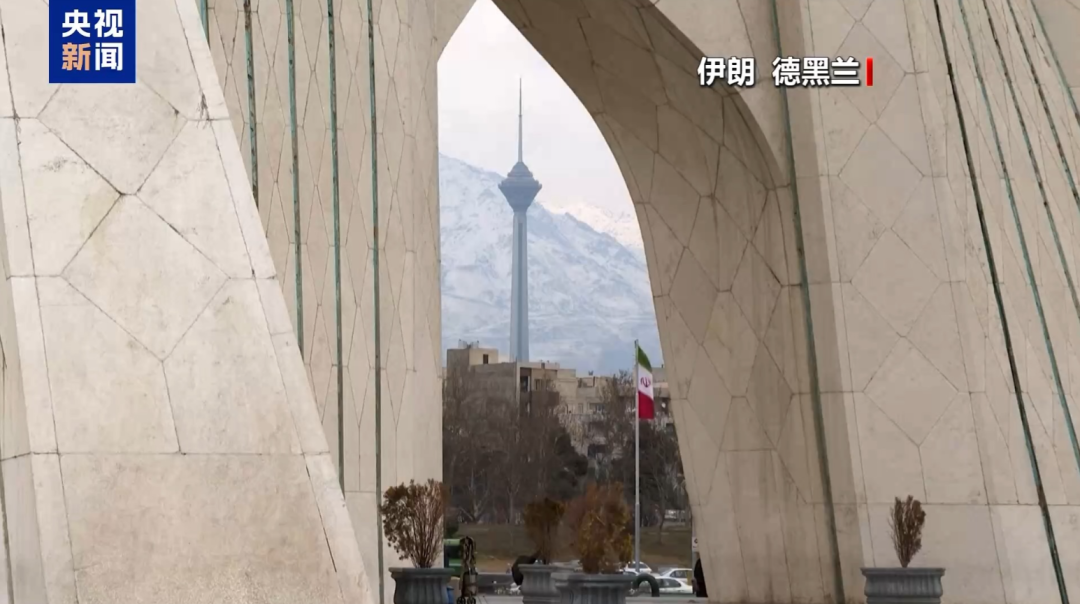
货币贬值

Search documents
伊朗约3000人因骚乱被捕
Xin Lang Cai Jing· 2026-01-17 02:21
Core Viewpoint - Approximately 3,000 individuals, including members of terrorist organizations and participants in recent riots, have been arrested in Iran amid protests against rising prices and currency devaluation [1] Group 1: Arrests and Protests - The Iranian security officials reported the arrest of around 3,000 individuals involved in riots, including key leaders and those linked to Israel [1] - The protests were triggered by economic issues such as price increases and currency depreciation, leading to unrest that resulted in casualties among both security personnel and civilians [1] Group 2: Government Response - Iranian President Ebrahim Raisi emphasized the government's commitment to addressing the economic difficulties faced by the people while rejecting any foreign influence, particularly from the U.S. and Israel, in inciting unrest [1] - The government is focused on listening to public demands and is determined to resolve the economic challenges faced by the Iranian population [1]
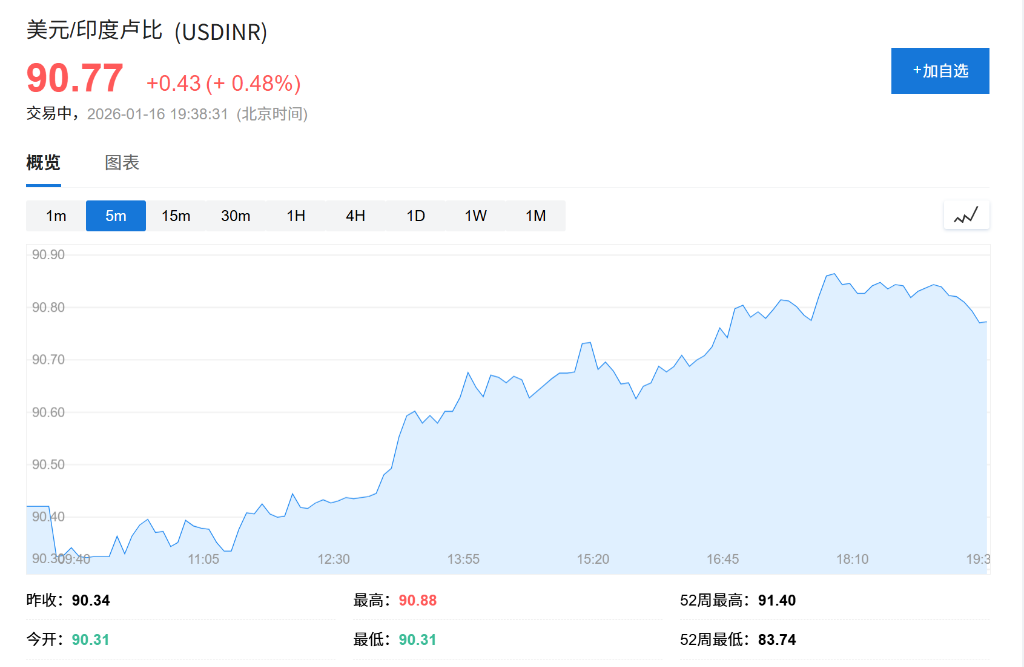
央行支持减弱叠加美元反弹,印度卢比遭遇“完美风暴”
Hua Er Jie Jian Wen· 2026-01-16 11:42
Group 1 - The Indian Rupee is facing multiple pressures, including foreign capital outflows, a strengthening US dollar, limited support from the central bank, and trade disputes with the US, pushing it to a one-month low [1][3] - As of January, foreign investors have withdrawn $1.6 billion from the Indian stock market, continuing a trend from the previous year where $17 billion was withdrawn, highlighting the increasing capital outflow issue [3][4] - The depreciation of the Rupee poses a dual threat to India, a net oil importer, as it raises inflation risks and erodes returns for foreign investors, with the Rupee down approximately 5% in 2025, making it the worst-performing currency in Asia [3][4] Group 2 - The capital outflow is the most direct pressure on the Rupee, with foreign investors withdrawing $1.6 billion from the Indian stock market in January alone, following a total of $17 billion in 2025 [4] - The delay in trade agreements with the US has further dampened market sentiment, with a proposed 50% tariff on Indian goods set to take effect on August 27, 2025 [4] - The reliance on volatile foreign capital inflows has increased, with MUFG Bank Ltd. adjusting its Rupee forecast to 92 by the end of September, down from a previous expectation of 90.80 [4]

2025年美元对雷亚尔已累计贬值11.2%
Shang Wu Bu Wang Zhan· 2026-01-15 17:00
Core Insights - The Brazilian media reports that by December 31, 2025, the US dollar has depreciated by 11.2% against the Brazilian real [1] - On December 31, 2025, the exchange rate was 1 USD to 5.4890 BRL, with a monthly increase of 2.9% in December, partially offsetting the annual decline [1] Summary by Category Currency Performance - The US dollar experienced a depreciation of 11.2% against the Brazilian real throughout 2025 [1] - The exchange rate at the end of December 2025 was 1 USD to 5.4890 BRL [1] - In December alone, the dollar appreciated by 2.9%, which helped to narrow the overall annual depreciation [1]
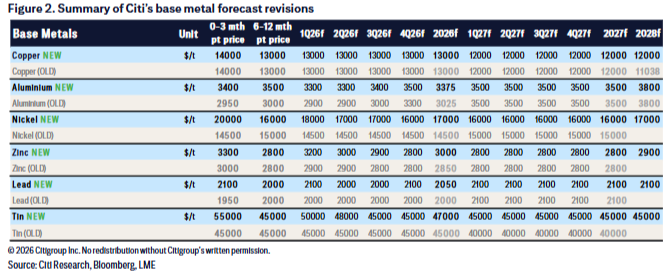
“战术性看涨”原油和贵金属,“结构性看涨”铝,铜价“或一个月内见顶”--这家投行的“最新商品判断”
Hua Er Jie Jian Wen· 2026-01-15 04:48
Core Viewpoint - The commodity market is at a critical turning point influenced by geopolitical tensions and supply shortages, with specific forecasts for various commodities through 2026 [1][20]. Oil Market - The short-term oil market is driven by geopolitical premiums, with a price target of $70 per barrel for Brent crude, influenced by tensions in Iran and the Russia-Ukraine conflict, as well as export disruptions in Kazakhstan and Libya [3][6]. - However, the long-term outlook is bearish due to expected supply surplus and policy pressures, particularly from the U.S. government aiming for lower oil prices [6][20]. Precious Metals - In the precious metals sector, silver is expected to outperform gold, with target prices set at $100 per ounce for silver and $5,000 for gold, driven by current market momentum and capital flows [7][20]. - The report suggests that these high price levels may trigger hedging actions from producers and central banks [7]. Base Metals - Aluminum is identified as having the most structural opportunity, facing a significant supply deficit, with short-term price targets of $3,400 per ton and mid-term targets of $3,500 [8][20]. - In contrast, copper is forecasted to reach $14,000 per ton, but the confidence in this projection has weakened significantly since December, with a warning that January may be the peak for the year [11][20]. Lithium Market - The lithium market has seen a rebound of over 50%, primarily due to supply constraints from delays in mining operations and tightening policies [12][14]. - Citigroup has raised the three-month price target for lithium carbonate to $25,000 per ton, reflecting strong demand from battery manufacturers [13][20]. - Despite the short-term strength, there is a cautious long-term outlook for lithium prices, anticipating downward pressure as supply increases [14]. Natural Gas and Agriculture - The natural gas market is expected to face long-term supply surplus challenges, with bearish views on LNG and European TTF gas prices starting from 2027 [15][20]. - In agriculture, a bullish outlook is maintained for most commodities, with sugar prices expected to rebound in 2026 due to increased demand from China and changes in Brazilian production [19][20].
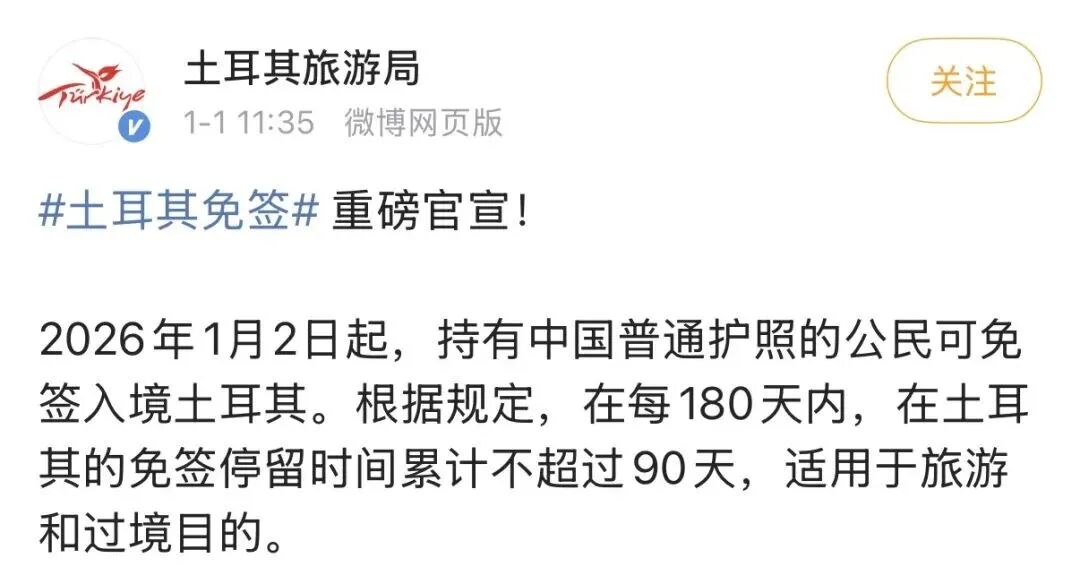
第一批免签去土耳其的中产,已经破产了
3 6 Ke· 2026-01-15 01:21
Core Insights - Turkey has seen a significant surge in tourism interest, with travel-related searches increasing dramatically on platforms like Qunar and Tongcheng, indicating a shift in travel plans for the upcoming Spring Festival [1][3] Price Increases - The cost of basic items in Turkey has skyrocketed, with a simple bottle of water priced at 85 lira (approximately 13.7 RMB) and a can of Coca-Cola at 210 lira (around 33.9 RMB) [4][6] - Dining costs are exorbitant, with meals such as a portion of vegetables costing 80 lira and a simple McDonald's meal reaching 210 lira [9][14] - The price of tourist attractions has also surged, with entrance fees for places like the Topkapi Palace increasing significantly over a short period [46][48] Currency and Inflation - Turkey's inflation rate has been extreme, with prices rising by 100% in less than six months, making it difficult for both locals and tourists to manage expenses [45][67] - The Turkish lira has depreciated dramatically against the dollar, leading to a situation where many services are priced in euros or dollars, further increasing costs for tourists [53][55] Tourism Dynamics - Despite the high costs, Turkey remains an attractive destination due to its unique cultural and natural offerings, such as hot air balloon rides in Cappadocia and historical sites in Istanbul [34][74] - The tourism sector is crucial for Turkey's economy, contributing significantly to GDP and employment, with projections indicating it will account for about 12% of GDP by 2025 [71][72] Visitor Experience - Tourists are experiencing a stark contrast between expected costs and actual expenses, leading to a perception of being overcharged, especially in tourist-heavy areas [53][76] - The chaotic currency system, where multiple currencies are accepted, complicates transactions and often results in higher costs for tourists [56][60]
Silver and Gold Prices Soar on Fundamentals and FOMO. Why Investors Should Be Wary.
Barrons· 2026-01-14 15:02
Global metals prices extended their searing rally Wednesday, with gold, silver, and copper all hitting all-time highs amid a surge in demand tied to geopolitical risks, currency debasement and industrial demand. ...
Silver, Gold Prices Soar on Fundamentals and FOMO. Why Investors Should Be Wary.
Barrons· 2026-01-14 12:27
Global metals prices extended their searing rally Wednesday, with gold, silver, and copper all hitting fresh all-time highs amid a surge in demand tied to geopolitical risks, currency debasement and industrial demand. ...

伊朗称逮捕297名与美以有关联的骚乱分子
Xin Lang Cai Jing· 2026-01-13 17:46
Core Viewpoint - Iran has arrested 297 individuals linked to unrest associated with the United States and Israel, indicating a significant crackdown on dissent amid ongoing protests over economic issues [1] Group 1: Arrests and Actions - The Iranian police force announced the arrest of 297 individuals involved in riots connected to organizations associated with the "Zionist regime" of Israel and the United States [1] - Iranian intelligence reported that recent operations in Tehran led to the capture of key figures suspected of organizing and directing unrest [1] - The arrested individuals were involved in acts of "destruction and terrorism" targeting public facilities, religious sites, and security forces across various areas in Tehran [1] Group 2: Context of Protests - Recent protests in Iran have been triggered by rising prices and currency devaluation, leading to unrest and casualties [1] - Iranian Foreign Minister Amir-Abdollahian stated that the security forces have regained control of the national situation, attributing direct responsibility for the events to Israel and the United States [1]
伊朗国际长途电话服务恢复
Xin Lang Cai Jing· 2026-01-13 15:39
Core Viewpoint - Iran has restored international long-distance telephone services after a period of disruption due to protests against rising prices and currency devaluation, which led to unrest and casualties [1] Group 1 - International long-distance telephone services in Iran became operational again on January 13 [1] - Protests in various regions of Iran were triggered by inflation and currency depreciation, resulting in unrest and casualties [1] - The disruption of internet services and international telephone services occurred during the protests [1]
伊朗:访问互联网将继续受限
Xin Jing Bao· 2026-01-13 01:47
Core Viewpoint - Iran's internet access remains restricted until the national security situation stabilizes, as stated by the Iranian Cyber Space Management Authority [1] Group 1: Internet Restrictions - The Iranian Cyber Space Management Authority indicated that the lifting of the internet ban will depend on the security situation [3] - Internet services were interrupted in Tehran starting from 8 PM local time on the 8th, linked to ongoing protests in various regions [4] Group 2: Domestic Internet Development - To facilitate daily life for citizens, Iran plans to enhance its domestic internet infrastructure [3] - Citizens can currently access online banking and shopping through the national information network [3] Group 3: Government Response to Protests - Protests against rising prices and currency devaluation have led to unrest, resulting in casualties among security personnel and civilians [4] - The Iranian government, represented by President Pezeshkian, emphasizes the importance of addressing public grievances while rejecting foreign influence in domestic affairs [4]