工业需求

Search documents
ETO Markets 交易平台:美1月就业数据超预期 银价回调至82美元
Sou Hu Cai Jing· 2026-02-12 07:22
Group 1 - The core driver of the recent decline in silver prices is the stronger-than-expected U.S. non-farm payroll report for January, which showed an increase of 130,000 jobs compared to the market expectation of 55,000 jobs [2] - The unemployment rate unexpectedly dropped to 4.3%, the lowest since August 2025, indicating a resilient U.S. labor market [2] - The strong employment data has diminished market expectations for a Federal Reserve interest rate cut, with the probability of a 25 basis point cut in March dropping from 21.7% to 6.0% [2] Group 2 - The recent decline in silver prices is attributed to external macroeconomic data shocks and a technical adjustment following a significant price increase, rather than a deterioration in silver's fundamentals [2] - Silver prices surged from around $30 per ounce to over $100 by the end of January, indicating a need for price correction [2] - Long-term support for silver remains strong due to global risk aversion and expanding industrial demand, particularly in solar energy, electric vehicles, and charging infrastructure [3] Group 3 - Future silver price movements will need to closely monitor the U.S. labor market, inflation data, and Federal Reserve policy statements, as these factors will continue to drive market volatility [4]

银价一度突破每盎司85美元 交易员权衡供需格局
Xin Lang Cai Jing· 2026-02-11 19:43
Group 1 - Silver prices have surged significantly, continuing a trend of high volatility, with industry institutions indicating stronger investment demand in the coming year while industrial demand is expected to weaken [1][2] - On Wednesday, silver prices rose by 6.8%, increasing approximately one-third from last week's low [1][2] - The Silver Institute reported that due to a surge in investment demand overshadowing weakened jewelry demand and reduced silver usage in the solar sector, the silver market will experience a supply deficit for the sixth consecutive year [1][2] Group 2 - Over the past year, silver prices have experienced dramatic fluctuations, driven by investment demand, with prices more than doubling [1][2] - The upward trend in silver prices was interrupted at the end of January by the largest single-day drop in history, but prices have since recovered, albeit with continued volatility [1][2] - As of 1:48 PM New York time, spot gold rose by 1.2% to $5084.28 per ounce, while silver increased by 4.2% to $84.12 per ounce, with platinum and palladium also seeing price increases [1][2]
白银腰斩后反弹30%,谁在抄底?
3 6 Ke· 2026-02-11 11:43
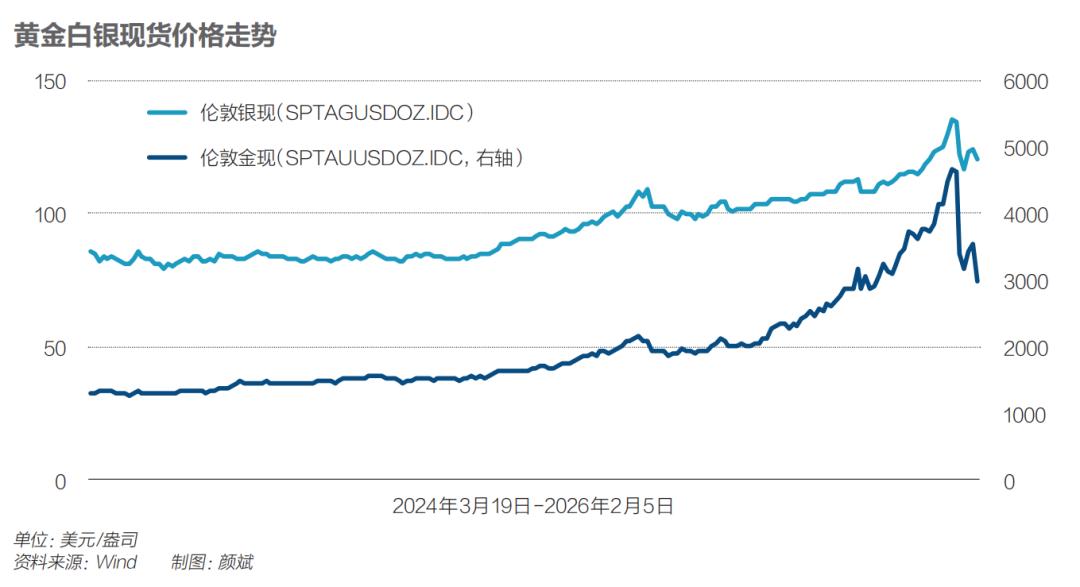
Core Viewpoint - The silver market experienced extreme volatility in early 2026, with prices soaring to a historical high of $121.65 per ounce before plummeting by over 36% in a single day, marking the largest daily drop in nearly 40 years. This volatility was driven by speculative trading and macroeconomic factors, particularly the nomination of Kevin Warsh as the next Federal Reserve Chair, which shifted market sentiment dramatically [1][9][10]. Group 1: Price Movements and Market Dynamics - On January 29, silver prices reached $121.65 per ounce, reflecting a more than 67% increase within a month, but subsequently fell to $64 by February 6, nearly halving from the peak [1][2]. - The National Investment Silver LOF (161226) saw a net value drop of 31.5% on February 2, the largest single-day decline for a domestic public fund [1][11]. - The silver market's liquidity issues and high leverage contributed to a rapid price decline, as programmatic trading exacerbated the situation when investor sentiment shifted [1][10]. Group 2: Supply and Demand Factors - Investment demand significantly reduced the available circulating silver, leading to a structural supply shortage that drove prices up sharply. Once investment funds withdrew, the market faced an oversupply, causing prices to crash [2][16]. - The silver market's supply is constrained by rigid short-term production capabilities and delayed recycling processes, which limits the elasticity of physical supply [2][16]. Group 3: Speculative Trading and Market Sentiment - The silver market was characterized by extreme speculative trading, with the silver-to-gold price ratio deviating significantly from historical norms, indicating overvaluation [3][10]. - Social media platforms played a crucial role in driving retail investor interest, with many new investors engaging in silver trading without fully understanding the associated risks [6][12]. Group 4: Historical Context and Future Outlook - The recent price collapse mirrors historical events, such as the 1980 silver crash, where speculative trading led to dramatic price corrections [3][10]. - Analysts suggest that the silver market may enter a phase of rebalancing, where industrial demand and strategic value will play a more significant role in price determination, moving away from speculative influences [21][22].
白银为啥跌得比黄金猛?
3 6 Ke· 2026-02-06 10:56
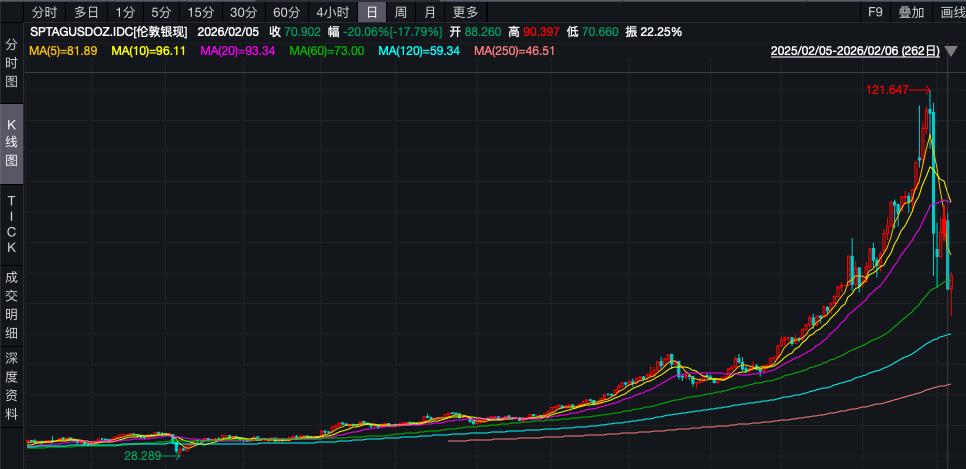
Core Viewpoint - The recent significant price fluctuations in silver, which have erased most of its gains for the year, are attributed to its dual role as both an industrial metal and a precious metal, making it more sensitive to market dynamics compared to gold [8][11][12]. Price Movements - Since January 2, 2026, silver prices have experienced a rollercoaster, starting at $72.49 per ounce and peaking at $121.65 per ounce on January 29, marking a cumulative increase of approximately 61.88% [3]. - On January 30, 2026, silver prices plummeted by 26.42% to $85.26 per ounce, and further fluctuations were noted, with a 9.69% drop on February 6, followed by a recovery to around $72.35 per ounce [3][4]. - In the same period, COMEX silver futures rose from $71.74 per ounce to $121.79 per ounce, reflecting a cumulative increase of about 63.99%, before experiencing a rapid decline [4]. Comparison with Gold - Gold prices also saw fluctuations, with a peak of $5598.75 per ounce on January 29, 2026, and a cumulative increase of approximately 24.52% for the year [6]. - From January 29 to February 6, gold prices fell by about 10.36%, while COMEX gold futures dropped by 8.62% [6][7]. Market Dynamics - The volatility in silver prices is largely due to its smaller market size compared to gold, making it more susceptible to speculative trading and market sentiment [11][12]. - Silver's dual nature as both a precious metal and an industrial metal means it is influenced by economic cycles and industrial demand, which can lead to greater price fluctuations [11][12]. Industrial Demand and Economic Factors - Despite the ongoing global re-industrialization, the demand for silver has not provided sufficient support for its prices due to a lag in demand release and economic uncertainties [13]. - Factors such as the potential appointment of a hawkish Federal Reserve chair and tightening global liquidity have contributed to negative sentiment in the silver market [13]. Future Outlook - Short-term predictions indicate continued volatility in silver prices, influenced by speculative trading and the pace of industrial demand recovery [14]. - Long-term expectations suggest that as industrial demand in sectors like solar energy and AI increases, coupled with supply constraints, silver prices may experience a recovery [15].
2026年白银是否还会涨价?全维度QA解析(含机构预判与投资指南)
Sou Hu Cai Jing· 2026-02-05 11:43
Core Viewpoint - The article emphasizes the significant fluctuations in silver prices in 2026, highlighting the factors driving these changes and providing insights for investors to make informed decisions regarding silver investments [1]. Group 1: Current Status and Historical Trends of Silver Prices - In 2026, silver prices experienced extreme volatility, peaking at $112.24 per ounce in early January, a ten-year high, before dropping over 12% by early February, with a maximum single-day drop of 10%, setting a historical record [2]. - As of February 5, 2026, the price of silver was reported at $77.131 per ounce in London and 20,000 yuan per kilogram in Shanghai, showing a significant decline from the peak but still a substantial increase from approximately $29 per ounce at the beginning of 2024 [2]. Group 2: Core Logic Behind the Surge in Silver Prices - Over the past year, silver prices have surged over 110%, driven by three main factors: a boom in industrial demand, a widening supply-demand gap, and a combination of investment and safe-haven demand [3]. - Industrial applications of silver in sectors like solar energy, electric vehicles, and AI infrastructure have significantly increased, contributing to price growth [3]. - The global silver supply-demand gap is projected to reach 3,659 tons by 2025, equivalent to four months of global production, further supporting price increases [3]. Group 3: Key Factors Influencing Silver Price Increases in 2026 - Industrial demand, particularly from the photovoltaic sector, is expected to be a major support for silver prices in 2026, with predictions of continued growth in industrial applications [4]. - The supply-demand imbalance is unlikely to reverse in the short term, providing ongoing support for silver prices, although technological advancements could impact this dynamic [5]. - The performance of the US dollar is a critical external factor affecting silver prices, with a negative correlation between the two; a potential interest rate cut by the Federal Reserve could weaken the dollar and boost silver prices [6]. Group 4: Institutional Predictions for Silver Prices in 2026 - Several institutions maintain a bullish outlook for silver prices in 2026, with predictions that prices could exceed $100 per ounce, citing ongoing supply-demand imbalances and industrial demand as key drivers [9]. - Conversely, some institutions express caution, highlighting concerns over high valuations, potential technological advancements in silver alternatives, and the impact of a recovering global economy on silver prices [10]. - Domestic brokerages generally adopt a neutral to optimistic stance, forecasting a "volatile upward" trend for silver prices in 2026, while emphasizing the need to monitor technological developments and Federal Reserve policies [11]. Group 5: Investment Strategies for Silver in 2026 - Ordinary investors can consider five main methods for investing in silver, including physical silver, paper silver, silver futures, silver T+D, and silver ETFs, each catering to different risk preferences [12]. - Investment strategies should be tailored to individual risk profiles, with conservative investors focusing on physical silver or ETFs, while more aggressive investors may engage in futures trading [13].
白银突破110美元!黄金站上5100美元大关,两个因素推动价格狂飙
Sou Hu Cai Jing· 2026-01-31 13:23
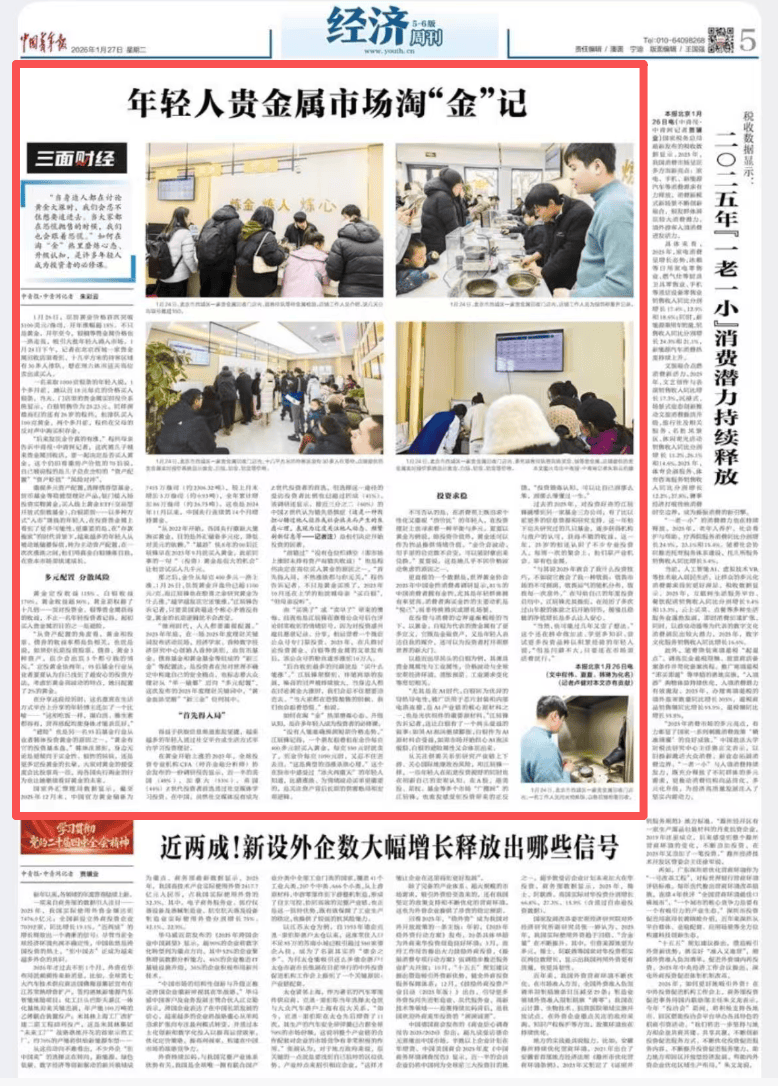
Group 1 - The article highlights a significant surge in interest and participation in the gold and silver markets, with diverse demographics now engaging in buying physical gold, reminiscent of past market frenzies [1][3] - Gold prices have surpassed $5,100, and silver has seen a 55% increase in just one month, indicating a market that has exceeded many professional forecasts [3][8] - The shift in participant demographics is notable, with younger investors increasingly entering the market, utilizing trading apps and social media to share insights, transforming gold and silver from mere investment tools to social status symbols [5][12] Group 2 - The trading behavior has evolved from long-term holding to day trading and short-term operations, with silver experiencing daily fluctuations exceeding 10%, a volatility previously seen in smaller tech stocks [7][22] - The perception of gold has shifted, with it now serving as a neutral currency amid geopolitical tensions, as central banks globally increase their gold reserves in preparation for a potential "de-dollarization" world [12][16] - Industrial demand for silver is rising, driven by concerns over energy supply and its essential role in new technologies, reflecting a broader anxiety about energy resources [13][15] Group 3 - The article suggests that the current market sentiment is overheated, with ordinary investors feeling conflicted about buying at high prices, emphasizing the importance of maintaining a calm approach during market frenzies [18][22] - Investment strategies are discussed, with physical gold and silver being suitable for long-term holding, while paper assets like ETFs offer liquidity but lack the tangible feel of physical metals [20][22] - Ultimately, the article stresses the need for investors to focus on maintaining composure and recognizing the intrinsic value of gold and silver amidst market volatility [24]
国泰海通|宏观:白银牛市:价格破100怎么看
国泰海通证券研究· 2026-01-29 14:05
Core Viewpoint - The article discusses the recent surge in silver prices, attributing it to a combination of industrial and financial demand, and highlights the differences between silver and gold in terms of their market behavior and attributes [2][5][10]. Group 1: Silver Price Surge - Since 2025, silver prices have skyrocketed, reaching new highs, primarily driven by industrial and financial demand [6][8]. - The price of silver increased from $29.4 per ounce at the beginning of 2025 to $72.0 per ounce by the end of the year, marking a 144.8% increase, while gold rose by 62.8% during the same period [8]. - As of January 27, 2026, silver prices reached historical highs of $111.6 per ounce in the spot market and $106.5 per ounce in COMEX futures, with year-to-date increases of 50.3% and 51.1%, respectively [8]. Group 2: Historical Context of Silver Price Movements - Over the past 50 years, silver has experienced four notable price surges, with the most recent one beginning in 2024 due to geopolitical risks and instability in the international monetary system [3][16]. - The first surge occurred from 1979 to 1980, driven by speculative funds, while the second surge from 2010 to 2011 was fueled by quantitative easing following the financial crisis [16]. - The third surge in 2020 was a result of monetary easing in response to the pandemic, and the fourth surge since 2024 has been supported by strong industrial demand amid global energy transitions [17][19]. Group 3: Demand Dynamics - Industrial demand is the core driver of silver prices, accounting for 58.5% of total demand in 2024, with significant contributions from sectors like photovoltaics and electric vehicles [22][23]. - The demand for silver in photovoltaics is expected to rise significantly, with projections indicating that global photovoltaic silver usage will reach 196 million ounces by 2025, 2.2 times that of 2021 [23]. - The ongoing energy transition and technological advancements in high-end electronics are expected to sustain structural growth in silver demand [19][22]. Group 4: Market Behavior and Volatility - Silver's financial attributes lead to greater price volatility compared to gold, as it attracts speculative investments due to its lower price and higher elasticity [12][26]. - The increase in speculative positions in silver futures can significantly impact prices, as seen when non-commercial long positions rise, leading to increased market optimism and price surges [26][28]. - The structure of silver ETFs, particularly the locking mechanism of inventories, can exacerbate market tightness and influence price dynamics [28][29]. Group 5: Future Outlook - The long-term outlook for silver prices remains positive, supported by ongoing industrial demand and potential shifts in monetary policy as countries reassess their reserve assets [33]. - The article warns of potential short-term overvaluation risks for silver, as recent price movements may indicate a correction phase following a period of rapid gains [34][36].

黄金大涨没赶上,白银呢?多方回应
Sou Hu Cai Jing· 2026-01-28 05:29
Core Insights - Silver has outperformed gold in the market, with silver prices rising significantly while gold has reached a historic high of $5000 per ounce [1][3]. Price Performance - Year-to-date, international gold futures have increased by over 17%, while silver has surged by 55% [2]. Market Dynamics - The current market trend has led to a substantial increase in investment in silver bars, making silver a focal point in the precious metals investment landscape, surpassing gold in attention [3]. - Factors contributing to this trend include ongoing global geopolitical risks and uncertainties in international politics, which have amplified gold's status as a safe-haven asset [3]. - The uncertainty surrounding the Federal Reserve's monetary policy and concerns about the long-term credibility of the US dollar have driven funds towards precious metals [3]. Industrial Demand - Silver's price increase is also supported by improved expectations for industrial demand, particularly in the context of the AI industry, where silver is a key material due to its excellent thermal and electrical conductivity [3]. - Silver is essential for chip packaging and internal circuit connections, making it a critical raw material in the AI supply chain and solar panel production [3]. Investment Caution - Despite the current bullish sentiment, there are warnings about potential short-term corrections in both gold and silver prices due to previous significant gains [4][6]. - Investors are advised to remain rational and avoid chasing high prices, as the current high premiums may not be sustainable [6]. - Ordinary investors are cautioned against leveraged trading, as silver's speculative nature could lead to significant losses [6].
贵金属策略日报:“银”位震荡运,波动险加剧-20260128
Zhong Xin Qi Huo· 2026-01-28 01:31
1. Report Industry Investment Rating - No information about the industry investment rating is provided in the report. 2. Core Viewpoints - Gold and silver are operating in high - level oscillations, with increased volatility risks. Gold remains strong due to safe - haven and allocation demand, while silver needs to be cautious of retracement risks after a rapid rise [1]. - Gold maintains resilience at high levels, with its safe - haven and allocation attributes being dominant. In the short - term, attention should be paid to the amplifying effect of risk events on volatility [1]. - Silver has entered a rhythm - repair phase after a rapid rise. Although it still has price elasticity, the retracement risk increases under high - volatility conditions [2]. 3. Summary by Relevant Catalog Gold - **Logic**: In the context where precious metals are in the spotlight, gold gets strong support in the high - level range. During the Asian session, due to Trump's remarks on South Korea's tariffs, regional market uncertainty increased, equity assets were under pressure, and gold and silver rose slightly, reflecting the marginal return of safe - haven demand. Compared with other precious metals, gold's price is more stable, with a significantly lower volatility than silver, and allocation - type funds regard gold as a priority choice, supporting its strength at high levels [1]. - **Outlook**: In an environment of rising global uncertainty and repeated switching of risk preferences, the safe - haven and allocation value of gold still has resilience. In the short - term, attention should be paid to the risk of increased volatility caused by geopolitical and trade policy disturbances, but the medium - term support logic remains unchanged [1]. Silver - **Logic**: After the previous sharp rise, the market is divided on the short - term sustainability of silver. From the capital side, the global silver ETF holdings decreased by about 2.4% this month when the price hit a new high, the largest monthly decline since 2022, indicating that some allocation - type funds have started to take profits and wait and see. In terms of inventory, the silver inventory in COMEX warehouses dropped to the lowest level since March last year after the tariff expectations cooled down, falling for the fourth consecutive month, reflecting that the phased hoarding formed due to policy expectations is being digested. From the demand structure, about half of silver's demand comes from the industrial end. After the price enters the three - digit range, downstream enterprises may adjust through technology or postpone procurement to cope with the high - price environment, which restricts short - term demand. At the same time, the single - day increase of silver has reached the historical fluctuation range many times, and the volatility has disturbed ETFs and some professional investors, but it has not completely changed the trend - trading pattern [2]. - **Outlook**: In the medium - term, silver can still benefit from the macro - narrative and safe - haven environment dominated by gold, but in the short - term, it is more likely to digest the excessive rise through high - level oscillations. Attention should be paid to the trading rhythm during the decline of volatility [2]. Commodity Index - **Specialty Index**: The commodity index is 2503.03, up 1.13%; the commodity 20 index is 2879.55, up 1.44%; the industrial products index is 2369.84, up 0.40%; the PPI commodity index is 1461.06, up 0.19% [42]. - **Sector Index**: The precious metals index on January 26, 2026, was 4916.75, with a daily increase of 4.46%, a 5 - day increase of 10.89%, a 1 - month increase of 25.18%, and a year - to - date increase of 28.57% [43].
黄金跌价了,26年1月25日,金条降价,各大银行黄金金条最新价格
Sou Hu Cai Jing· 2026-01-27 14:08
Group 1: Gold Price Trends - Domestic gold prices have shown signs of decline, with Au9999 at 1114 CNY/gram, Shanghai gold futures at 1121 CNY/gram, and the basic gold price at 1107 CNY/gram, all reflecting weak performance [1] - Retail gold prices for major brands remain concentrated between 1551 and 1553 CNY/gram, with slight variations among different retailers [2] - The trading and benchmark prices indicate a "weak but elastic" characteristic, with fluctuations in spot and deferred products, suggesting that investors should focus on whether the benchmark price continues to weaken and if funds are flowing back in [5] Group 2: Platinum and Silver Market Insights - Platinum prices show significant brand differences, ranging from 667 CNY/gram at lower-end retailers to 1102-1148 CNY/gram at higher-end brands [3] - Silver's strong performance is driven by structural shortages and expanding industrial demand, particularly in solar energy and electronics, which supports its mid-term price [10] - The disparity between gold, silver, and diamonds is rooted in their demand sources and pricing transparency, with gold primarily driven by reserve and hedging attributes [6][8] Group 3: Investment Strategies and Market Sentiment - Gold funds have generally strengthened, with daily increases between 2.3% and 2.47%, indicating that funds are still willing to participate in precious metal allocations despite the price drop [6] - For cautious investors, a systematic investment approach, such as dollar-cost averaging, is often preferable to chasing short-term price movements [6] - Silver is recommended for disciplined participation rather than emotional chasing, with a suggestion to consider gradual investment if the trend is favorable [10]