门罗主义

Search documents
视频丨国际人士谴责美国对委内瑞拉发动军事行动
Yang Shi Xin Wen Ke Hu Duan· 2026-01-08 05:57
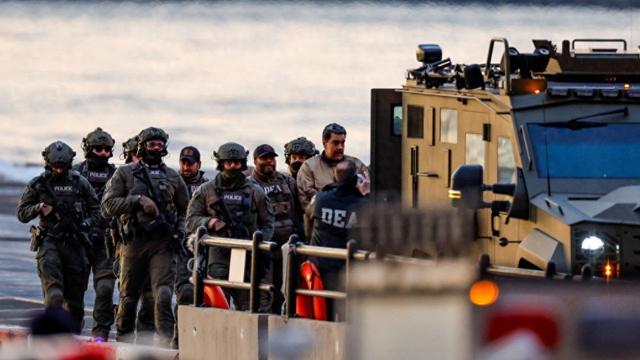
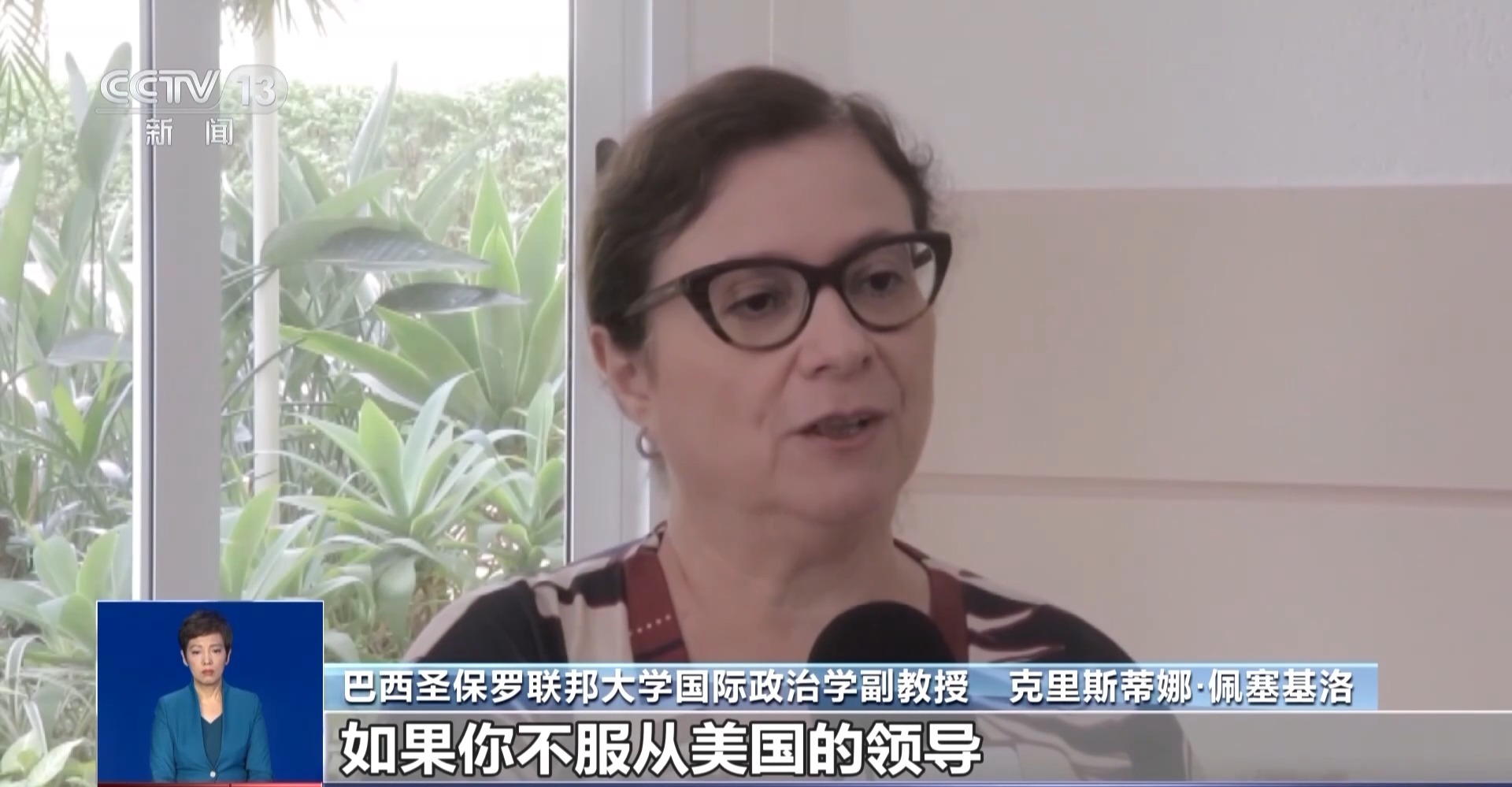
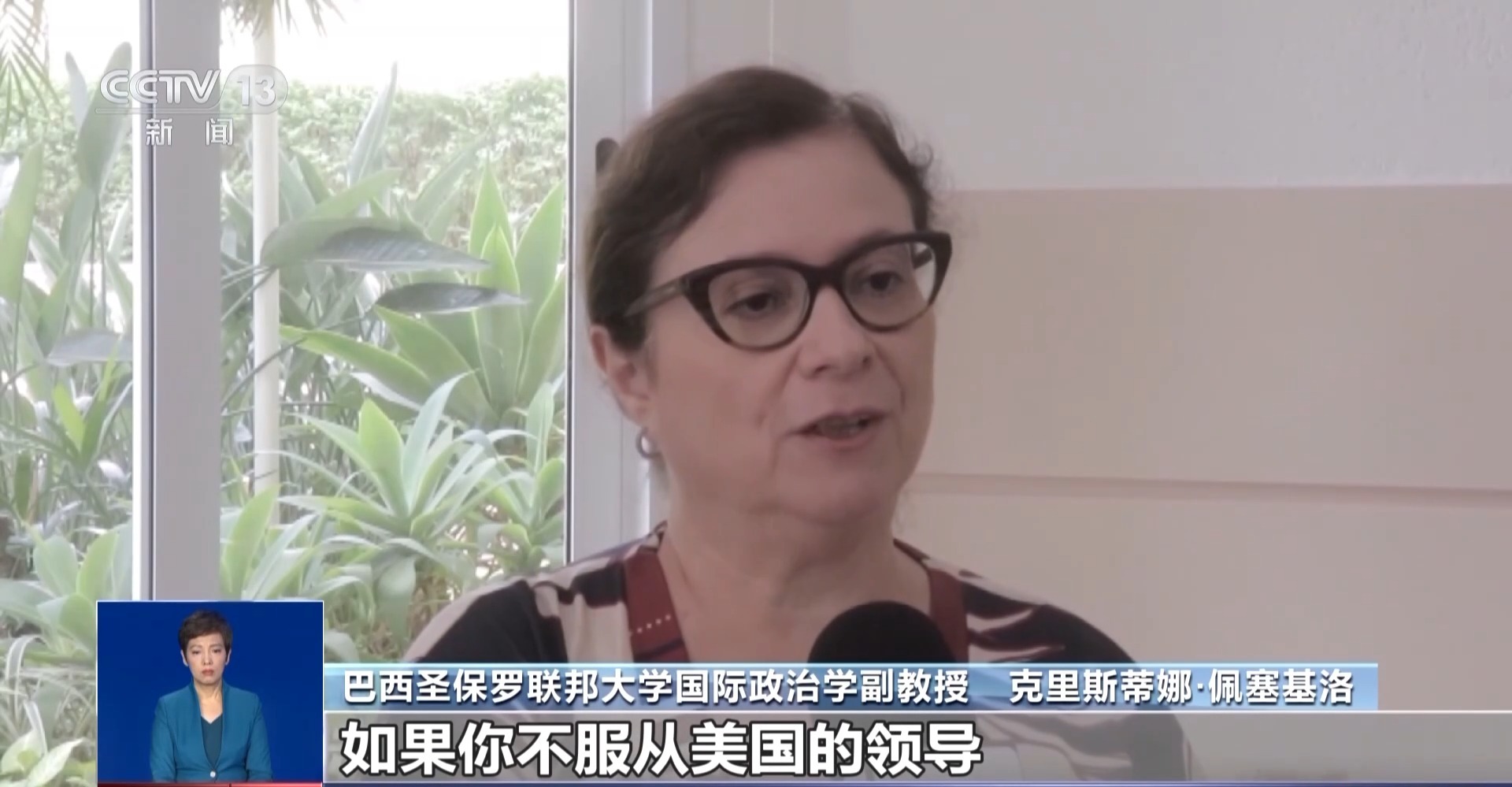
美国前助理防长 傅立民:这是无端的侵略行为,这种做法是特朗普政府超越门罗主义,在西半球推行霸权,他们认为唯一重要的主权只有美国的主权。军 事行动是违反宪法的,国会没有授权对另一个国家使用武力,尤其是强制扣押另一个主权国家的总统和国家元首马杜罗。对委内瑞拉实施军事行动不但违反 了美国法律,也违反了国际法中的许多规定。 责编:秦雅楠、王瑞景 日前,美军对委内瑞拉发动军事打击,并强行控制委内瑞拉总统马杜罗。多国政要和地区组织纷纷发声,谴责美国对委内瑞拉的军事行动。国际人士指出, 美国当前的对外行动并非孤立事件,而是"门罗主义"在当代语境下的再现。 0:00 厄瓜多尔前外长 纪尧姆·隆:特朗普及其政府公开宣称此举关乎权力博弈,关乎美国重新掌控西半球 ,重建美国在拉丁美洲的霸权,更重要的是这首先涉及 资源争夺,尤其是委内瑞拉石油。这显然侵犯了委内瑞拉乃至整个拉丁美洲的主权。 巴西圣保罗联邦大学国际政治学副教授 克里斯蒂娜·佩塞基洛:如果你不遵循我们美国的政策框架,如果你不服从美国的领导,就会产生后果。这是为更多 政治干预打开了大门,也为通过军事或政治干预,危及主权埋下了隐患。 ...

《经济学人》丨特朗普的赤裸坦率让世界怀念美国以前的虚伪
美股IPO· 2026-01-08 04:15
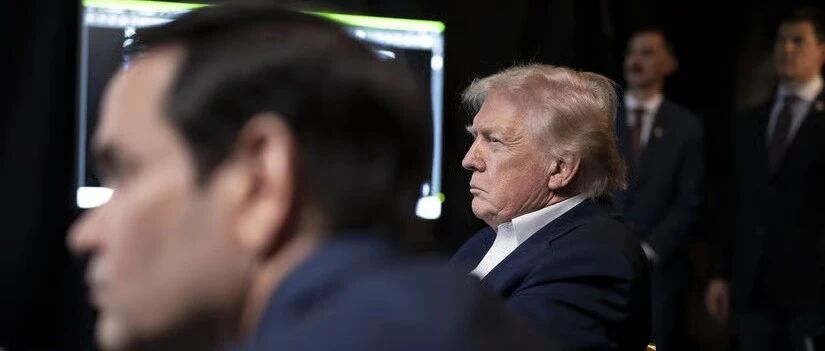
Core Viewpoint - The article discusses the radical honesty of Donald Trump in American foreign policy, highlighting how his straightforwardness contrasts with traditional political hypocrisy, particularly regarding U.S. interests in Venezuela and the broader implications for international relations [3][4][5]. Group 1: Trump's Political Style - Trump's political charm lies in his brutal honesty, which he uses to justify actions that serve U.S. interests, such as military interventions for oil, without the pretense of promoting democracy [3][4]. - His cynicism acts as a shield against criticism, as he openly admits to prioritizing American interests over moral considerations [3][5]. Group 2: U.S. Foreign Policy Implications - Critics of U.S. foreign policy may find satisfaction in Trump's candidness, as historical interventions in Latin America often prioritized U.S. commercial interests over human rights [5][6]. - Trump's revival of the Monroe Doctrine, now termed "Donroe Doctrine," emphasizes the need for U.S. dominance in the Western Hemisphere, focusing on securing exclusive contracts for American businesses [5][6]. Group 3: Future of International Relations - The article raises concerns about the potential normalization of aggressive, self-serving behavior in international relations, as other nations may follow the U.S. example of blatant self-interest [6][7]. - The erosion of respect for international law could lead to a world where power dynamics overshadow moral obligations, challenging the post-World War II order established by previous U.S. leaders [7].
从委内瑞拉事件看特朗普“唐罗主义”下的外交战略重心转变
Soochow Securities· 2026-01-08 03:23
Group 1: Strategic Shift in U.S. Foreign Policy - Trump's military action in Venezuela reflects a practical application of his National Security Strategy (NSS) and the concept of "Donroe Doctrine" [2] - The NSS emphasizes a focus on core areas, particularly the Western Hemisphere, while downplaying peripheral regions [2] - The U.S. aims to strengthen supply chains in the Western Hemisphere to reduce external dependencies and enhance economic resilience [2] Group 2: Characteristics of Trump's Foreign Policy - The "America First" principle prioritizes U.S. interests over ideological narratives, contrasting with the Biden administration's approach [3] - Trump's strategy involves seeking absolute dominance in core regions while pursuing cost-effective benefits in non-core areas [4] - The administration's military actions are characterized by a willingness to use force to secure U.S. strategic interests, as seen in the Venezuelan operation [5] Group 3: Implications for Global Geopolitical Landscape - Trump's limited intervention strategy in Europe and the Middle East may reduce the likelihood of the U.S. creating tensions in these regions [4] - The military action in Venezuela serves as a warning to other Latin American countries, potentially reshaping their diplomatic relations with the U.S. [6] - Despite a strategic withdrawal from traditional geopolitical hotspots, risks in Europe and the Middle East may increase due to power vacuums and regional competition [6]
委内瑞拉局势-现状-走向-连锁影响
2026-01-08 02:07
Summary of Key Points from the Conference Call Industry or Company Involved - The discussion primarily revolves around the political and economic situation in Venezuela, focusing on the power dynamics and U.S. involvement in the region. Core Points and Arguments - **Current Power Structure in Venezuela**: The regime is controlled by Interior Minister Diosdado Cabello and Defense Minister Vladimir Padrino, who oversee the country's security forces, including police, militia, and military, significantly influencing the situation in Venezuela [2][4]. - **U.S. Non-support for Opposition**: The U.S. has refrained from supporting the Venezuelan opposition due to concerns over their capability to challenge the military's power and the potential for creating a power vacuum that could lead to chaos and increased crime [3][4]. - **Trump Administration's Strategy**: The Trump administration has employed secretive operations to achieve short-term goals without fully overthrowing the Venezuelan regime, reflecting a cautious approach to avoid long-term conflict [5][10]. - **Economic Interests**: The U.S. seeks to secure economic benefits, particularly in oil and mineral resources, and aims to reduce the influence of countries like Russia and China in Venezuela, which will be critical in future negotiations [6][10]. - **Resource Allocation by Maduro**: Maduro maintains loyalty through the distribution of oil revenues, with estimates suggesting that 1/3 to 1/2 of oil income is used for stability purposes, complicating future negotiations regarding resource redistribution [7][8]. - **Stability and Future Negotiations**: The current stability in Venezuela is attributed to Maduro's relatively low personal desire for wealth, leading to generous resource distribution. However, any negotiations with the U.S. may disrupt the existing complex interest structures, potentially leading to internal conflicts [8][9]. - **Long-term Uncertainty**: While the Trump administration focuses on short-term economic gains, the long-term effectiveness of these strategies remains uncertain, with potential risks of refugee crises and increased drug-related crime if stability is not achieved [3][10]. Other Important but Possibly Overlooked Content - **Historical Context**: The discussion draws parallels with historical events, such as the Bay of Pigs invasion, highlighting the risks of U.S. intervention and the potential for unintended consequences if operations fail [11][12]. - **Political Risks in Latin America**: The upcoming elections in various Latin American countries present significant political risks, with a potential shift towards right-wing leadership, which may align ideologically with U.S. interests but could also lead to changes in foreign policy towards China [15]. - **Market Selection for Exporters**: Export companies are advised to prioritize markets in the Eastern Hemisphere, which are perceived as more stable and less influenced by U.S. intervention, while being cautious of potential upheavals in the Western Hemisphere [16].
国际人士谴责美国对委内瑞拉发动军事行动
Yang Shi Xin Wen Ke Hu Duan· 2026-01-08 02:03
Core Viewpoint - The recent military action by the U.S. against Venezuela, including the forced control of President Maduro, has drawn widespread condemnation from various political leaders and regional organizations, highlighting a resurgence of "Monroe Doctrine" in contemporary context [1][3] Group 1: Political Reactions - Multiple international figures have criticized the U.S. military action as an infringement on Venezuela's sovereignty and a broader attempt to reassert U.S. dominance in Latin America, particularly concerning resource control, especially oil [1] - The former Ecuadorian Foreign Minister, Guillaume Long, emphasized that the U.S. actions are about power dynamics and resource competition, which violate the sovereignty of Venezuela and Latin America as a whole [1] - Brazilian political science professor, Cristina Pecequilo, warned that non-compliance with U.S. policies could lead to severe consequences, opening the door for further political and military interventions that threaten sovereignty [1] Group 2: Legal and Ethical Concerns - Former U.S. Assistant Secretary of Defense, Fulin Min, described the military action as an unwarranted act of aggression, arguing that it exceeds the Monroe Doctrine and represents a push for U.S. hegemony in the hemisphere [3] - He stated that the military action violates U.S. constitutional law, as Congress did not authorize the use of force against another sovereign nation, particularly in the context of detaining a head of state [3] - The actions taken against Venezuela are not only against U.S. law but also contravene numerous international legal standards [3]
不到一年,美国已在7国实施军事打击
Ren Min Ri Bao· 2026-01-08 00:31
Core Viewpoint - The recent large-scale military action by the United States against Venezuela is a blatant display of American imperialism and interventionism, which has historically led to significant turmoil and conflict globally [1][2][8]. Group 1: Historical Context of U.S. Military Interventions - Since its founding in 1776, the United States has conducted nearly 400 military interventions worldwide, with a significant portion occurring in Latin America [4]. - The U.S. has a long history of territorial expansion through violence, including wars and invasions, particularly in Latin America, which has been viewed as its sphere of influence since the Monroe Doctrine [3][4]. - A study indicates that from 1898 to 1994, the U.S. orchestrated at least 41 coups in Latin America, averaging one every 28 months, employing various methods such as economic sanctions and direct military invasions [3]. Group 2: Recent Military Actions and Their Implications - The military action against Venezuela is the largest U.S. intervention in Latin America since the 1989 invasion of Panama, with President Trump asserting that it aims to maintain U.S. dominance in the Western Hemisphere [2][5]. - Trump’s administration has conducted military strikes in seven countries within less than a year, contradicting his earlier promises to avoid overseas conflicts [2][5]. - The military intervention has reportedly resulted in at least 40 deaths among military personnel and civilians in Venezuela, exacerbating an already severe humanitarian crisis due to U.S. sanctions [4][5]. Group 3: Consequences of U.S. Interventionism - The U.S. military interventions have historically led to severe humanitarian crises, as seen in various conflicts where millions have died or been displaced [4][6]. - The ongoing military actions and threats from the U.S. may create a perception of low costs and difficulties in intervening in other nations, potentially leading to more aggressive foreign policies [5][6]. - The psychological toll on U.S. veterans from prolonged military engagements has resulted in high suicide rates, indicating a significant social issue stemming from these interventions [7]. Group 4: Global and Regional Reactions - The military action against Venezuela is viewed as a potential new source of conflict in Latin America, undermining the sovereignty of nations in the region [8][9]. - Analysts warn that if the U.S. continues to intervene militarily in sovereign nations, it could render international law meaningless and threaten the self-determination of Latin American countries [9].
我们为啥关注委内瑞拉?
Xin Lang Cai Jing· 2026-01-07 23:23
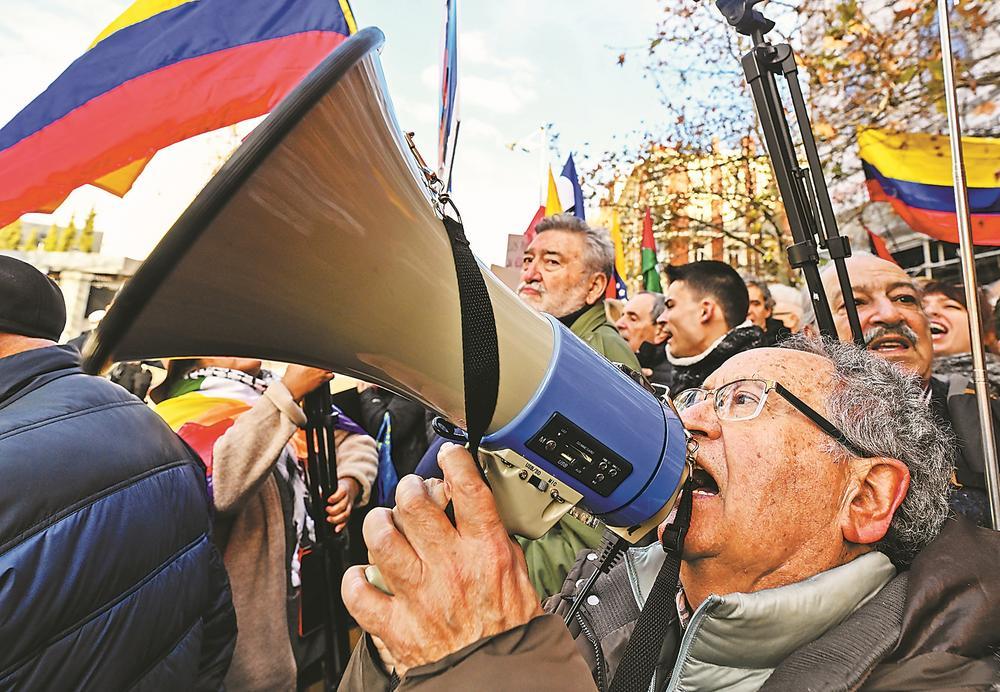
3日,美军突袭委内瑞拉并强行控制和转移委总统马杜罗。美总统特朗普随后宣称美国将"管理"委内瑞拉,放言"不惧"派出地面部队进行占 领。 1月4日,民众在西班牙马德里市中心的美国驻西班牙大使馆前,抗议美国对委内瑞拉采取军事行动。 新华社 连续几天来,委内瑞拉一直是全球局势的焦点,引起国际社会广泛关注。每当我们对委内瑞拉多一分关注,就会对美国的霸权行径多一分警 醒。 更值得警惕的是,美国的野心并未止步于拉美,而在于谋求全球霸权。 6日,美国白宫新闻秘书莱维特说,特朗普及其团队正在讨论"一系列选项"以得到格陵兰岛,其中包括"动用美国军队"。无怪乎英国《卫报》 专栏作家西蒙·蒂斯德尔评价特朗普政府的真实面目是"全球战争贩子,无处不在的威胁"。 回看美国历史不难发现,军事干涉早已成为其对外政策的重要一环。据美国相关统计,自1776年美国建国至2019年,美国在全球进行了392次 军事干涉(包括威胁使用武力、展示武力以及特种部队行动等),其中约一半发生在1950年之后,约四分之一发生在冷战结束后。特朗普执政 后,对外动武干涉的激进程度较往届政府有过之而无不及:已在委内瑞拉、也门、叙利亚、伊朗、伊拉克、索马里和尼日利亚等7国 ...
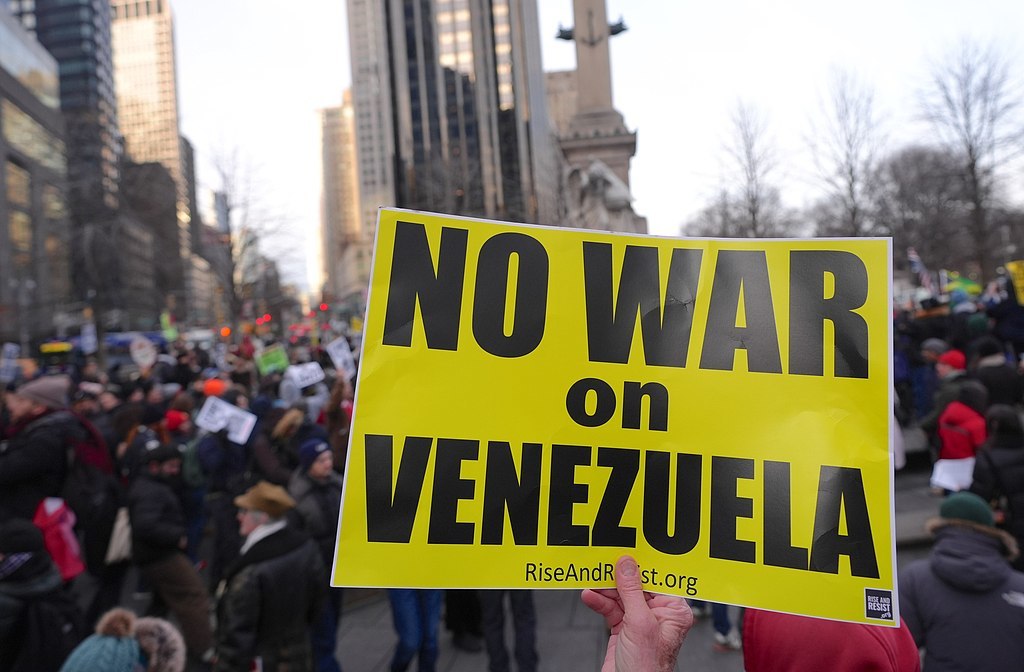
起底美国“新门罗主义”②:200年的“门罗主义”如何锁住拉美自主发展权
Huan Qiu Shi Bao· 2026-01-07 22:45
【环球时报驻巴西特派记者 宋亦然 环球时报特约记者 李静】 编者的话: "我很高兴地宣布,委内瑞拉将向美国移交3000万至5000万桶高品质石 油。"美国总统特朗普1月7日在社交媒体上发布的帖子,暴露了该国几个月来以打击毒贩为由对委内瑞拉展开军事行动的真实目的之一。媒体普遍 认为,这是美国在"新门罗主义"的影响下,对拉美国家进行干涉的最新案例。在"起底美国'新门罗主义'"深度认知系列第二篇报道中,《环球时 报》将为您介绍从1823年"门罗主义"的提出,到现在"新门罗主义"的出现,美国如何通过经济控制、军事干涉等手段,持续锁住拉美的自主发展 权。 据新加坡《联合早报》报道,美国强行控制委内瑞拉总统马杜罗,是在"新门罗主义"影响下采取的行动。各国媒体也普遍将这种"新门罗主义"称 为"唐罗主义"。《华尔街日报》表示,在这一理念下,商业利益与资源争夺正驱动着美国的战略干预。 200多年来,从"门罗主义"到"新门罗主义",美国不断在拉美国家攫取经济利益,而后者则因此沦为美国的经济附庸。据多家媒体报道,20世纪 初,以联合果品公司(现为金吉达品牌国际公司)为代表的美国公司,在包括洪都拉斯、危地马拉等在内的中美洲国家攫取大 ...
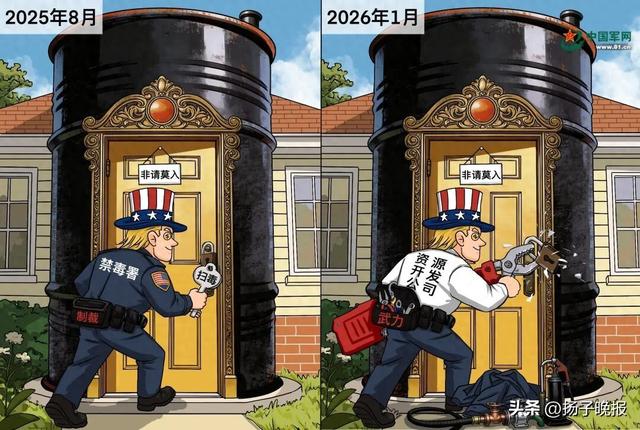
漫评丨演都不演了!美国“霸权剧本”如今已撕下所有伪装
Xin Lang Cai Jing· 2026-01-07 14:04
Group 1 - The core viewpoint of the articles highlights the U.S. military intervention in Venezuela as a strategic move to control oil resources under the guise of combating drug trafficking and terrorism [2][3][6] - The U.S. has a historical pattern of intervening in Latin American countries, often using pretexts of restoring order or fighting against perceived threats, while the underlying motive remains the control of oil and resources [3][4][5] - The recent actions against Venezuelan President Maduro are seen as part of a broader strategy to secure U.S. dominance in the global oil market and maintain the supremacy of the U.S. dollar [3][6] Group 2 - The U.S. has explicitly stated its intention to push major oil companies into Venezuela to invest in and repair the country's oil infrastructure, indicating a clear economic motive behind the military actions [2][3] - The term "oil" was mentioned 26 times in a White House press conference, compared to only a few mentions of "drugs," further emphasizing the focus on oil rather than the stated reasons for intervention [3] - The U.S. has issued warnings to neighboring countries like Colombia, Cuba, and Mexico, suggesting that military actions may extend beyond Venezuela, showcasing an aggressive stance towards maintaining control over the region's resources [6]
中国学者谈“马杜罗事件”:美国战略调整的涟漪将对2026年中国周边形势带来风险
Xin Lang Cai Jing· 2026-01-07 11:01
Core Viewpoint - The recent actions of the United States regarding Venezuela, including the forceful control of President Maduro, challenge the fundamental principles of the United Nations Charter and expose U.S. hegemonic tendencies, potentially destabilizing the current international order [2][3][5]. Group 1: U.S. Actions and International Reactions - The U.S. military's forceful control of Venezuelan President Maduro has drawn significant international attention, with experts highlighting that this reflects U.S. hegemonic behavior and could inspire similar actions from other nations, further undermining global peace and stability [3][5]. - Chinese officials have condemned the U.S. actions as a violation of Venezuela's sovereignty and a serious threat to international relations, calling for the immediate release of Maduro and his wife [3][4]. - The incident is seen as a practical application of the Monroe Doctrine under Trump's administration, with experts noting that while the U.S. demonstrates military strength, it also depletes its resources and raises questions about future developments [3][4]. Group 2: Implications for International Order - The U.S. actions in Venezuela signify a severe challenge to the liberal international order established post-World War II, with experts warning that the world may revert to a state of power politics reminiscent of the 19th century [4][5]. - The recent U.S. National Security Strategy report indicates a shift in U.S. foreign policy that could lead to increased instability in international relations, as unilateral actions may undermine multilateral governance [5][6]. - Analysts suggest that the U.S. strategy may embolden traditional allies in the Asia-Pacific region, leading to increased military and political activities that could provoke tensions with China [6].