绿色金融

Search documents
绿债扩容强根基 “双碳”赋能开新局
Xin Lang Cai Jing· 2025-12-19 15:20
登录新浪财经APP 搜索【信披】查看更多考评等级 (来源:经济参考报) 在"双碳"目标持续深化推进的背景下,绿色债券作为衔接绿色产业与金融资源的核心工具,2025年在中 国市场实现了规模与影响力的双重突破。 可以看到,截至11月末,中国绿债市场不仅在全球市场中占据了核心地位,更呈现出从"增量扩 张"向"提质增效"转型的鲜明特征。政策体系的不断完善为市场发展注入了强劲动力,但发行主体覆盖 不足、中外标准衔接不畅等短板仍待攻克。 规模领跑全球 记者观察发现,2025年以来,国内绿债市场呈现出了两大特征。一是资金投向高度聚焦核心绿色领域。 安永大中华区ESG可持续发展主管合伙人李菁指出,当前绿色债券募集资金主要集中于清洁能源产业、 基础设施绿色升级及节能环保产业三大板块,合计占比高达83%,累计投入规模已达3.6万亿元,与中 国能源结构优化、工业低碳转型等国家战略高度契合。 二是融资成本优势凸显,市场吸引力持续增强。中证鹏元绿融高级分析师王鼎表示,绿色债券融资成本 较普通债券低0.5至1个百分点,叠加ESG投资理念的普及,投资者基础正不断扩大。 市场亮点纷呈 不可否认,中国绿债市场的快速发展,离不开政策体系的持续完 ...
紫金银行:致力为地方经济和社会发展提供优质金融服务
Zheng Quan Ri Bao Wang· 2025-12-19 15:14
Core Viewpoint - Zijin Bank focuses on optimizing its credit structure by aligning loan issuance with the financial "five major articles," emphasizing support for small and micro enterprises and enhancing service quality for the real economy [1] Group 1: Loan Strategy - The company is concentrating its loan issuance on key areas such as technology finance, green finance, inclusive finance, pension finance, and digital finance [1] - Zijin Bank aims to continuously improve its support for inclusive small and micro customers, reinforcing its commitment to the real economy [1] Group 2: Service Quality - The bank is dedicated to providing high-quality financial services that contribute to local economic and social development [1]
金融科技拐点:从“硬投入”到“软实力”,关注五大关键词
2 1 Shi Ji Jing Ji Bao Dao· 2025-12-19 13:27
Core Insights - The financial technology industry is expected to undergo significant changes in 2026, coinciding with the update of the "Financial Technology Development Plan" [1] - The digital economy has rapidly developed from 2019 to 2025, transitioning financial technology from foundational support to a more substantial role [1] - Financial institutions are shifting their focus from "hard investment" to "soft power" in technology, emphasizing efficiency over scale [3][4] Financial Technology Development - The previous development plan emphasized principles such as digital-driven, intelligent for the public, green and low-carbon, and equitable finance, with eight key tasks outlined [1] - Financial institutions have established top-level designs for digital transformation, with flexible organizational structures and improved cloud infrastructure [1] - The integration of AI, blockchain, and privacy computing technologies is accelerating, enhancing the accessibility of financial services [1] Investment Trends - There is a noticeable slowdown in the growth rate of technology investments by financial institutions, particularly among major banks [2] - From 2020 to 2024, technology investment by 16 state-owned and joint-stock banks increased from 140.4 billion to 187.4 billion yuan, but the growth rate has significantly decreased [2] - Some banks have begun to reduce their technology investment amounts starting in 2023, with only one bank achieving double-digit growth in 2024 [2] Organizational Changes - Financial institutions are adjusting their organizational structures to optimize technology governance and deepen reform [6] - Initiatives include the establishment of digital financial committees and AI action groups to enhance decision-making and risk management [6][7] - The focus is on breaking down departmental barriers and fostering collaboration across different levels of governance [7] Technology Application - Financial institutions are pursuing both "frontier exploration" and "practical efficiency" in technology applications, with a shift towards using technology as a production factor [4] - AI applications are increasingly penetrating core business areas, with banks implementing AI in various operational scenarios [9] - The integration of internal and external data is enhancing customer profiling, risk management, and marketing strategies [8] Future Outlook - The "14th Five-Year Plan" emphasizes the importance of building a strong financial nation, with a focus on AI governance, cross-border data flow mechanisms, and sustainable finance [10][11][14] - The development of digital RMB and the establishment of financial technology centers in key cities like Shanghai and Hong Kong are strategic priorities [12][15] - The financial industry is expected to continue innovating in green finance and integrating environmental and social responsibilities into core business processes [14]
绿色金融在行动!招商基金联合招商基金蛇口租赁住房REIT项目,举办“零碳森活”绿色环保主题游园会
Zhong Guo Zheng Quan Bao· 2025-12-19 12:48
长期以来,招商基金积极响应国家"双碳"战略部署,深入践行金融"五篇大文章"发展要求,贯彻落实 ESG投资理念,大力发展绿色金融,以实际行动支持绿色低碳和可持续发展。本次绿色环保主题游园会 活动,深入招商基金蛇口租赁住房REIT项目所在小区,实现与REIT资产的品牌联动,共同开展ESG运 营实践,助力构建绿色运营生态。 壹栈林下小区是招商基金蛇口租赁住房REIT(基金代码:180502)的核心资产之一,属于招商蛇口 (001979)旗下"壹栈"品牌,以交通便捷的城市配套区域为核心选址,专注于为政策型人才和青年人才 提供高品质、低成本的租赁住房解决方案,助力城市人才安居,完善城市功能。该项目致力于打造绿色 社区,在运营管理中充分践行ESG理念,通过绿色建筑、高效运营管理、绿色租赁、环保宣传等举措, 构建可持续、循环发展的理想社区,为租户创造更加美好的居住生活,为社会的可持续发展贡献更多力 量。 12月14日,由招商基金和招商基金蛇口租赁住房REIT壹栈林下项目联合主办的"零碳森活"绿色环保主 题游园会活动在深圳市南山区招商街道壹栈林下小区成功举行,超100位壹栈林下的居民现场参与活 动,一同在"玩、吃、学、美、晒 ...

专访孙蕊:培育“适应经济”,解锁气候领域私人投资潜力
2 1 Shi Ji Jing Ji Bao Dao· 2025-12-19 12:12
Group 1 - The global climate action is shifting focus from mitigating climate change to adapting to its impacts, driven by increasing extreme weather events such as wildfires, floods, and droughts [1][4] - The report "The Rise of the Adaptive Economy" highlights that global economic losses from climate-related physical disasters are projected to exceed $300 billion in 2024, primarily affecting 55 high-vulnerability countries with a population of 3.6 billion [1][4] - In 2023, climate financing reached a record $1.9 trillion, but only 3.4% was directed towards adaptation efforts, indicating a significant funding gap that hampers global capacity to respond to climate shocks [1][5] Group 2 - The adaptation investment offers substantial climate benefits and economic value, with every $1 invested potentially generating up to $5 in returns, while also creating more jobs compared to fossil fuel industries [1][4] - China's role in climate action has been significant, with the government enhancing national contributions and industries setting net-zero targets, while also providing support to developing countries through South-South cooperation [2][3] Group 3 - The climate adaptation market is still in its early and fragmented stages, with solutions like drought-resistant seeds and heat-resistant building materials not yet widely adopted, leading to insufficient private capital investment [5] - The estimated annual funding requirement for developing countries to adapt to climate change is between $187 billion and $359 billion by 2030, highlighting the urgent need for increased investment in adaptation [5] Group 4 - To unlock private investment in adaptation, it is essential to create a conducive policy environment, align policies with private investment needs, and focus on key areas such as economic resilience and infrastructure quality [6] - The establishment of the "Open Compliance Carbon Market Alliance" at COP30 signals a significant step towards creating a transparent and interconnected global carbon market [7] Group 5 - The launch of the "Climate and Trade Comprehensive Forum" at COP30 aims to discuss unilateral trade measures and carbon border adjustment mechanisms, marking an important institutional innovation [8] - The mutual recognition of carbon credit international standards is deemed necessary for enhancing market liquidity and establishing reasonable carbon pricing [8] Group 6 - Companies are encouraged to prioritize sustainable development as a strategic imperative, including setting emission reduction targets and enhancing internal carbon asset management capabilities [9] - Collaboration through industry associations is recommended to improve professional standards and address common industry challenges [9]
金融行业双周报(2025/12/5-2025/12/18):监管引导非银“提质”证券结构优化,险资长投激励-20251219
Dongguan Securities· 2025-12-19 12:05
Investment Ratings - Banking: Overweight (Maintain) [1] - Securities: Market Weight (Maintain) [1] - Insurance: Overweight (Maintain) [1] Core Insights - The financial sector indices showed varied performance, with banking down by 0.93%, securities up by 3.47%, and insurance up by 15.61% as of December 18, 2025 [11] - The report highlights a trend of increasing social financing, with a notable contribution from corporate bonds, while loan demand remains weak, particularly in the residential sector [45] - Regulatory changes in the insurance sector aim to encourage long-term investments and enhance the competitive advantage of leading insurance companies [3] Summary by Sections Market Review - As of December 18, 2025, the banking, securities, and insurance indices experienced declines of -0.93%, increases of +3.47%, and +15.61% respectively, with the Shanghai Composite Index showing a slight increase of +0.14% [11] - Among the sub-sectors, Xiamen Bank (+5.49%), Zhongyin Securities (+12.39%), and China Ping An (+16.99%) performed the best [11] Recent Market Indicators - The report notes that the social financing growth trend continued in November, with a marginal decrease in the contribution from government bonds [45] - New RMB loans decreased by 1,900 million yuan year-on-year in November, indicating weak loan demand, particularly in the residential sector [45] Industry News - The China Securities Regulatory Commission emphasized differentiated development paths for the securities industry, encouraging leading firms to enhance resource integration through mergers and acquisitions [2] - The insurance regulatory authority issued guidelines to lower risk factors for investments in A-shares and export credit insurance, promoting long-term holding and investment in technology sectors [3] Investment Recommendations - For banking, the report suggests focusing on regional banks with strong performance, such as Chengdu Bank, Ningbo Bank, and others [46] - In the insurance sector, companies like China Pacific Insurance and China Life are highlighted for their potential [4] - The securities sector recommends firms like Zhongyin Securities and Huatai Securities, which are expected to benefit from the regulatory changes [4]

恒丰银行 “十四五”:聚力实体,迈向高质量发展 | 行业观察
Sou Hu Cai Jing· 2025-12-19 11:37
Core Viewpoint - Hengfeng Bank is undergoing a significant transformation by directing financial resources towards serving the real economy and national strategies, with over 80% of its existing loans allocated to key regions such as the Yellow River, Beijing-Tianjin-Hebei, Yangtze River Delta, and Guangdong-Hong Kong-Macau [3][4][11] Financial Performance - As of the end of 2024, Hengfeng Bank achieved an operating income of 25.775 billion yuan, an increase of 87% compared to the end of 2019, and a net profit of approximately 5.4 billion yuan, which is about eight times higher than in 2019 [6] - The bank's net interest margin and net interest spread improved to 1.41% and 1.52% respectively by the end of 2024, showcasing strong performance amidst industry challenges [6] Loan Growth and Structure - Hengfeng Bank has seen significant growth in various loan categories, with technology loans increasing by 21%, small and micro loans by 27%, and inclusive agricultural loans by 19% [4][12] - The bank's total assets reached approximately 1.56 trillion yuan by the end of Q3 2025, up from 1.03 trillion yuan at the end of 2019, indicating robust growth [8] Asset Quality - Hengfeng Bank has maintained a declining non-performing loan ratio for over 20 consecutive quarters, reaching a low of 1.42% [8] - The bank has implemented strict internal controls and improved its capital adequacy and provision coverage ratios, ensuring stable asset quality [8] Support for Real Economy - The bank emphasizes its commitment to serving the real economy, with a focus on key areas such as ecological protection and green development, particularly in the Yellow River basin [11] - Hengfeng Bank has launched various financial products, including a knowledge property-linked "water-saving loan," to support green initiatives [14] Inclusive Finance - Hengfeng Bank has made strides in inclusive finance, with a 27% increase in small and micro loans and a 19% increase in inclusive agricultural loans, exceeding overall loan growth rates [12] - The bank has established a dedicated committee for inclusive finance and rural revitalization, enhancing its focus on these sectors [12] Green Finance Initiatives - The bank's green financing balance has surpassed 130 billion yuan, with a compound annual growth rate of over 40% in the past three years [16] - Hengfeng Bank has actively supported clean energy projects, contributing to significant carbon reduction efforts [16] Aging Population Services - Hengfeng Bank has developed specialized financial services for the elderly, managing financial assets of 211 billion yuan for 2.2 million elderly clients by the end of 2024 [19][18] - The bank has established a leadership group for pension finance to enhance its offerings in this area [18] Consumer Finance Development - The bank has focused on developing consumer finance products, with personal consumer loans reaching 102.1 billion yuan by the end of 2024, marking a 12.34% increase [21] - Hengfeng Bank has launched digital consumer credit products to meet customer needs [21] Support for Private Enterprises - Hengfeng Bank has provided financial support to private enterprises, with a 22% increase in loans to the private manufacturing sector [13]

中新金融合作连推重磅措施:数字人民币试点落地、A股赴新二次上市通道开启
Sou Hu Cai Jing· 2025-12-19 11:23
Core Insights - The 21st China-Singapore Bilateral Cooperation Joint Committee (JCBC) meeting was held in Chongqing on December 15, 2025, focusing on enhancing cooperation in the financial and capital markets between the two countries [1][2]. Group 1: Initiatives Launched - The meeting resulted in several initiatives aimed at strengthening financial cooperation, including the designation of DBS Bank as Singapore's second Renminbi clearing bank, following the Industrial and Commercial Bank of China Singapore branch [3]. - Support for A-share companies to conduct secondary listings on the Singapore Exchange (SGX) was announced, with the Monetary Authority of Singapore (MAS) and the China Securities Regulatory Commission (CSRC) facilitating this process [3]. - A new interbank counter bond market arrangement supported by Bank of China and DBS Bank was initiated, providing institutional investors access to specific fixed-income products from the Chinese interbank bond market [3]. - A pilot program for digital Renminbi (e-CNY) was launched for Singapore travelers, allowing them to open and top up digital wallets for merchant payments in China [4]. Group 2: Progress in Financial Cooperation - The MAS welcomed progress in cross-border green finance cooperation through the Singapore-China Green Finance Working Group, aiming to enhance interoperability of green classification standards [5]. - Collaboration on index and exchange-traded fund (ETF) products was deepened, with the launch of the China Securities Index and SGX Asian Emerging Markets Technology Index and plans for more ETF products under the Singapore-China ETF mutual recognition framework [5]. - A new financial cooperation memorandum was signed between the MAS and the Chongqing Municipal Government, promoting cross-border financing, fintech innovation, and green finance [5]. Group 3: Statements from Officials - The MAS Managing Director expressed that the deepening financial connectivity between China and Singapore has supported growth in cross-border trade and investment, and emphasized the importance of continued collaboration in banking and capital markets [6].

碳市场周报-20251219
Jian Xin Qi Huo· 2025-12-19 10:52
1. Report Industry Investment Rating - No relevant information provided 2. Core Viewpoints - The carbon emission trading mechanism is a core policy tool for China's "dual - carbon" goal. The current national carbon market is limited to the spot market, and after the expansion this year, the market size has increased by 60%. Listing carbon emission right futures is an important direction for enriching carbon financial products [6] - The national carbon market will enter a new stage with the implementation of a combination of free and有偿 carbon quota allocation. The initial, medium - term, and long - term goals of有偿 allocation are to stabilize the market, promote price discovery, and support low - carbon transformation respectively [7] - The "Notice" on green finance and green factory construction is conducive to the in - depth integration of green finance and industrial green manufacturing, promoting the green transformation of the manufacturing industry [7] 3. Summary by Directory 3.1 Carbon Market Weekly Overview - In November, the national carbon market's comprehensive price ranged from 51.54 yuan/ton to 70.14 yuan/ton, with a closing price of 59.65 yuan/ton and a monthly increase of 14.80%. The total trading volume was 4775.32 million tons, and the total turnover was 2.757 billion yuan [5] - In the third week of December, the comprehensive price ranged from 57.74 yuan/ton to 62.98 yuan/ton, with a closing price of 62.40 yuan/ton, a 7.53% increase from the previous Friday. The total trading volume was 972.88 million tons, and the total turnover was 579,633,428.88 yuan [5] - From January 1 to December 19, 2025, the trading volume of carbon emission allowances in the national carbon market was 212 million tons, and the turnover was 12.999 billion yuan [5] 3.2 Market News - Guangzhou plans to promote the construction of the carbon emission trading market and support the Guangzhou Futures Exchange to develop carbon emission right futures [6] - The national carbon market will implement a combination of free and有偿 carbon quota allocation. The initial proportion of有偿 allocation can be set between 1% - 3%, with the medium - term goal of promoting price discovery and the long - term goal of supporting low - carbon transformation [7] - The "Notice" on green finance and green factory construction promotes the integration of green finance and industrial green manufacturing [7] 3.3 Market Data - No specific data content provided other than the section title [10]
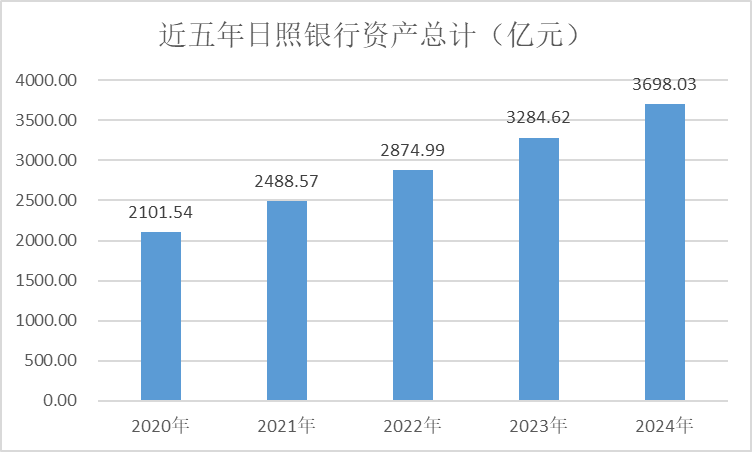
城商行三十年|日照银行:深耕齐鲁向海而行,在坚守与创新中筑牢区域金融根基
Jin Rong Jie· 2025-12-19 10:25
卅年砥砺,风云激荡。从扎根一隅、服务地方的"金融毛细血管",到与国同梦、与城共进的"经济重要支 柱",中国城市商业银行用三十载时光,完成了一场波澜壮阔的跨越与重塑。在此背景下,金融界重磅推 出"城商行三十年:跨越与重构"系列策划,系统梳理城商行蜕变为区域金融支柱的历程,剖析行业挑战与 未来航向。本文聚焦——日照银行。这家诞生于2000年的海滨城商行,历经二十余载深耕细作,已实现资 产规模突破3500亿元、跻身全国银行百强的跨越式成长,勾勒出"扎根本土不松懈、战略升级不止步"的发 展蓝图,其以"一基两翼"布局链接区域脉络、以数字金融赋能产业升级的实践,正是新时代城商行稳健致 远的鲜活样本。 前世今生:二十五载深耕,从本土到区域的跨越 官网显示,日照银行成立于2000年12月28日,前身为日照市商业银行,是一家由国有股份、企业法人股份 及自然人股份共同组成的具有独立法人资格的股份制商业银行。2004年实现本外币一体化经营,与50多个 国家和地区的500多家银行建立了代理行关系。 2006年该行引进南京银行为战略投资者,开创了国内城商行之间战略合作的先河。2009年更名为日照银 行,设立首家分行青岛分行。2010年 ...