大模型

Search documents
这家公司单笔融资50亿,创过往一年中国大模型领域单笔最高融资纪录!
是说芯语· 2026-01-26 04:39
Core Viewpoint - StepFun, a leading general model startup, has completed a record-breaking B+ round financing of over 5 billion RMB, marking the highest single financing in China's large model sector in the past 12 months. The appointment of AI leader Yin Qi as chairman aims to accelerate the implementation of the "basic large model + AI + terminal" dual-wheel strategy, enhancing the competitiveness of domestic large models in commercialization [1][2]. Financing Details - The B+ round financing attracted a diverse array of investors, including state-owned enterprises, industrial capital, and top venture capital firms. Notable participants include State Investment Fund, China Life Equity, and Tencent, indicating strong market recognition of StepFun's technological capabilities and commercialization path [2]. - The funds will primarily focus on the development of foundational models and the acceleration of the "AI + terminal" strategy, establishing a collaborative ecosystem that integrates capital, industry, and technology [2]. Management Team Upgrade - Yin Qi's appointment as chairman brings significant experience from his previous roles, including co-founding Megvii Technology and leading strategic transformations in AI applications. His leadership is expected to enhance the company's strategic direction and technological focus [3][5]. - The core management team includes CEO Jiang Daxin, a former Microsoft executive and expert in natural language processing, and other key figures with extensive backgrounds in AI and technology, ensuring a robust foundation for technological breakthroughs and strategic execution [5]. Technological Advancements - Founded in April 2023, StepFun has rapidly developed a distinct product matrix, releasing three generations of the Step series general models. The Step 3 model has achieved industry-leading inference efficiency, establishing a core technology layout that includes language models, multimodal models, and cloud-terminal collaboration [6]. - The company has achieved significant milestones, such as launching the first deployable GUI open-source model and achieving a 96.4% accuracy rate with its Step Audio R1.1 model, surpassing major international models [6]. Commercialization Strategy - StepFun's "AI + terminal" strategy has been successfully implemented in the automotive and mobile phone sectors, creating a clear commercial loop. In the mobile sector, over 60% of leading domestic smartphone brands have partnered with the company, with model installations exceeding 42 million units [7]. - In the automotive sector, the collaboration with Qianli Technology and Geely has led to the launch of the first end-to-end voice model in the AgentOS smart cockpit, achieving nearly 40,000 sales in three months and entering overseas markets [7].


大模型小虎阶跃星辰融资50亿元,AI创业老兵印奇任董事长
Sou Hu Cai Jing· 2026-01-26 04:05
Core Insights - The large model sector in China is experiencing significant investment, with Jieyue Xingchen completing over 5 billion yuan in Series B+ financing, setting a record for single financing in the past 12 months [1] - The funding will be used for foundational model research and to accelerate the implementation of the AI + terminal strategy [1] - Jin Qi, chairman of Qianli Technology, has been appointed as chairman of Jieyue Xingchen, focusing on strategic direction and technological development [2] Investment and Financing - Jieyue Xingchen's recent financing round included participation from various institutional investors such as Shangguotou Xiandao Fund and Tencent, among others [1] - The company aims to develop a top-tier foundational model and enhance its AI + terminal strategy through this funding [1] Leadership and Strategic Direction - Jin Qi has extensive experience in AI and automotive integration, having previously led AI applications in various real-world scenarios [2][4] - His appointment is seen as a strategic move to strengthen the collaboration between Jieyue Xingchen and Qianli Technology, focusing on AI applications in automotive technology [2][4] Technological Development - Jieyue Xingchen has released three generations of foundational large models, with the latest model achieving high inference efficiency and focusing on multimodal capabilities [6][7] - The company is also targeting deployment across multiple platforms, including mobile, automotive, and IoT devices, with significant partnerships already established [7][9] Market Impact and Future Plans - Jieyue Xingchen's models have been integrated into over 42 million devices, serving nearly 20 million users daily [9] - The company anticipates that its large models will be deployed in over one million vehicles this year, indicating strong market penetration [9] - Jin Qi emphasizes the importance of integrating AI with terminals in three core scenarios: individual, transportation, and home, with a focus on vehicles as the primary entry point [9]

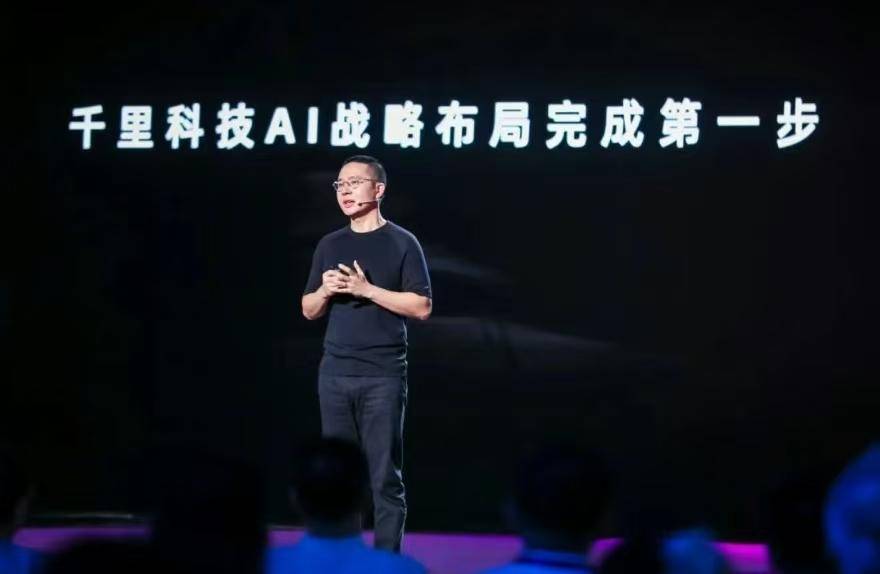
阶跃星辰完成B+轮50亿元融资
Xin Lang Cai Jing· 2026-01-26 03:54
Core Insights - Shanghai-based AI unicorn Jieyue Xingchen has completed a B+ round of financing, raising 5 billion yuan, setting a record for single financing in the large model sector over the past 12 months [1][4]. Company Developments - Jieyue Xingchen announced that Yin Qi has been appointed as the chairman, responsible for overall strategic direction and technological guidance [2][5]. - Yin Qi has extensive experience in the AI field and will work alongside CEO Jiang Daxin, Chief Scientist Zhang Xiangyu, and CTO Zhu Yibo as part of the core management team [2][5]. Strategic Goals - Yin Qi expressed two main expectations for Jieyue Xingchen: to become one of the top companies in China's foundational model sector and to establish a commercial closed-loop system [3][6]. - The company aims to integrate AI or large models with terminal applications, focusing on both B2B and B2C markets centered around terminal use cases [3][6]. - Yin Qi emphasized the importance of talent density as a fundamental support for achieving the vision of Artificial General Intelligence (AGI) and commercial viability [3][6].
人工智能周报(26年第4周):MiniMax Agent 2.0正式发布,百度文心5.0上线-20260126
Guoxin Securities· 2026-01-26 03:18
Investment Rating - The report maintains an "Outperform" rating for the industry, indicating expected performance above the market benchmark by over 10% [3][28]. Core Insights - The report highlights that 2026 is expected to see a surge in mature AI agent products due to advancements in large models, particularly in multi-modal capabilities, long text processing, and reasoning abilities. This increase in demand for reasoning will drive revenue growth for upstream cloud computing vendors [2][25]. - It notes that domestic internet giants are approximately one year behind their overseas counterparts in AI capital expenditures. As the capabilities of large models improve and supply builds up, AI will increasingly empower the core businesses of these giants [2][25]. - The report anticipates that the third quarter will mark a peak in spending for the internet giants' food delivery competition, with a projected narrowing of losses for Alibaba, Meituan, and JD.com in the fourth quarter [2][25]. - The report recommends focusing on AI-related stock selection, specifically highlighting Alibaba and Tencent Holdings as key investment opportunities [2][25]. Company Summaries - Tencent Holdings (0700.HK) is rated "Outperform" with an adjusted EPS forecast of 27.60 in 2025 and 32.63 in 2026, with PE ratios of 20.3 and 17.1 respectively [3]. - Alibaba Group (9988.HK) is also rated "Outperform," with an adjusted EPS of 6.66 for 2025 and 8.77 for 2026, and PE ratios of 23.8 and 18.1 [3]. - Meituan (3690.HK) is rated "Outperform," with a forecasted adjusted EPS of -1.26 in 2025 and 5.20 in 2026, reflecting a significant improvement in its financial outlook [3]. - Baidu Group (9888.HK) is rated "Outperform," with an adjusted EPS of 7.64 for 2025 and 8.87 for 2026, and PE ratios of 19.7 and 17.0 [3]. - Kuaishou (1024.HK) is rated "Outperform," with an adjusted EPS forecast of 4.68 in 2025 and 5.51 in 2026, with PE ratios of 16.3 and 13.9 [3]. - Tencent Music (TME.N) is rated "Outperform," with an adjusted EPS of 5.64 for 2025 and 6.50 for 2026, and PE ratios of 21.1 and 18.4 [3]. - NetEase Cloud Music (9899.HK) is rated "Outperform," with an adjusted EPS of 14.54 for 2025 and 12.09 for 2026, with PE ratios of 11.5 and 13.8 [3]. - Meitu (1357.HK) is rated "Outperform," with an adjusted EPS of 0.16 for 2025 and 0.27 for 2026, with PE ratios of 48.6 and 28.8 [3].
市人大代表曲子恒:加快培育养老服务主体,促进服务场景创新
Xin Jing Bao· 2026-01-26 03:13
Core Viewpoint - The article emphasizes the need for enhancing the supply capacity of elderly care services in Beijing, driven by the increasing demand due to an aging population, and the role of digital technology in improving the quality and efficiency of these services [1][2]. Group 1: Enhancing Elderly Care Service Supply - The demand for home-based elderly care services is rising, with the population aged 60 and above in Beijing projected to reach 5.14 million by 2024, accounting for 23.5% of the total population [2]. - The focus has shifted from merely covering the demand for elderly care services to ensuring high-quality, sustainable, and stable supply capabilities [2]. - Recommendations include fostering influential brands and platforms through policy guidance, financial support, and standardization to expand the scale and quality of the elderly care industry in Beijing [2][3]. Group 2: Financial and Regulatory Innovations - Suggestions include innovating financial and insurance support models, such as providing low-interest credit to well-performing elderly care service providers and developing liability insurance products in collaboration with insurance companies [3]. - Regulatory approaches should explore inclusive and prudent methods to optimize the business environment for elderly care services while maintaining safety standards [3]. Group 3: Policy Guidance for Service Innovation - The article advocates for leveraging policy guidance to promote the application of AI, large models, and smart equipment in various life service scenarios, including elderly care and community services [4]. - It suggests creating platforms to connect technology, service providers, and demand, along with exploring subsidies for application and smart transformation projects to lower entry barriers for businesses [4]. Group 4: Laborer Support and Stability - The article highlights the importance of enhancing laborer support through initiatives like the "City Builders' Managers' Home" project, which offers diverse housing rental options for service workers [5]. - Recommendations include expanding housing security projects and providing support in terms of housing subsidies, tax reductions, and service enhancements for platforms and enterprises involved in these projects [5].
阶跃星辰获超50亿融资创纪录
Sou Hu Cai Jing· 2026-01-26 03:03
Group 1 - StepFun, a Shanghai-based AI startup, completed over 5 billion RMB in Series B+ financing, setting a record for the largest single financing in China's AI model sector in the past 12 months [1][3] - The financing round included participation from various institutional investors such as the State Investment Fund, China Life Equity, and others, with existing shareholders like Tencent and Qiming also increasing their investments [3] - The funds raised will be fully allocated to the development of foundational models, aiming to create a top-tier base model and accelerate the implementation of the AI + terminal strategy [3] Group 2 - The company announced the appointment of Yin Qi as the new chairman, responsible for setting the strategic direction and technological focus of the company [1]

阶跃星辰新帅印奇:目标成为中国基础模型领域优秀公司之一
Feng Huang Wang· 2026-01-26 02:48
Core Viewpoint - AI startup Jieyue Xingchen has appointed Yin Qi, chairman of Qianli Technology, as its new chairman to oversee strategic direction and technology development [1] Group 1: Company Leadership and Strategy - Yin Qi has been involved with Jieyue Xingchen since its establishment in April 2023 and believes that large models align with the pursuit of AGI (Artificial General Intelligence) [1] - The company aims to become one of the leading firms in China's foundational model sector and achieve a commercial closed loop [1] - Key focuses for the company under Yin Qi's leadership include enhancing research and development, improving organizational effectiveness, and increasing talent density [1] Group 2: Technical Focus and Development - Jieyue Xingchen will concentrate on three main technical directions: enhancing the intelligence level of foundational models, promoting multimodal integration of text, speech, and images, and developing visual language action models for better synergy between the brain and execution devices [1] - The company plans to advance from Step 3.5 to Step 4 in model iteration [1]


阶跃星辰获超 50 亿元 B+轮融资,印奇出任董事长
Bei Jing Shang Bao· 2026-01-26 02:29
同日阶跃宣布印奇正式出任公司董事长,负责公司战略节奏与技术方向的制定。印奇将与CEO姜大昕、 首席科学家张祥雨、CTO朱亦博组成核心管理团队。阶跃星辰表示,依托模型算法与系统能力,阶跃在 语言基模、多模态模型及端云协同模型上达到世界领先水平。同时,围绕汽车、手机及穿戴式、具身机 器人等场景,阶跃正加快构建AI+终端商业化体系。 北京商报讯(记者魏蔚)1月26日,大模型创业公司阶跃星辰宣布,已完成超50亿元B+轮融资,刷新过去 一年中国大模型赛道单笔最高融资纪录。参与机构包括上国投先导基金、国寿股权、浦东创投等产业投 资人,腾讯、启明、五源等老股东跟投。本轮融资将用于基础模型研发,打造全球顶尖基座模型,加速 AI+终端战略落地。 ...
上海:龙腾虎跃闹“芯”春
Xin Hua Wang· 2026-01-26 02:13
Core Insights - Shanghai is emerging as a leading hub for the semiconductor and artificial intelligence industries in China, with significant growth projections for both sectors by 2025 [1][7][13] - The rapid expansion of the general GPU market in China is driven by the increasing demand for computing power, particularly due to the rise of AI models [3][6] - A number of innovative AI companies have recently gone public, highlighting the vibrant "Shanghai tech sector" [6][11] Industry Overview - The integrated circuit industry in Shanghai is expected to achieve a revenue scale exceeding 488 billion yuan by 2025, doubling in five years [1] - The artificial intelligence industry in Shanghai is projected to exceed 550 billion yuan, with a growth rate surpassing 30% [1] - Shanghai ranks fourth globally and first in China in the latest global integrated circuit industry competitiveness ranking [8] Company Developments - Wallen Technology, the first GPU company listed on the Hong Kong stock market, has set a record for the largest IPO since the implementation of the special technology company listing mechanism [3] - TianShu Intelligent Chip is expected to deliver approximately 15,000 general GPU units in the first half of 2025, covering various sectors including finance and healthcare [3] - MiniMax, a rapidly growing AI company, has achieved significant milestones in video model development, generating over 590 million videos [4][5] Investment and Ecosystem - Shanghai has established a comprehensive investment ecosystem, including a fund matrix with a scale of 105 billion yuan to support core technology breakthroughs and industry chain organization [11][12] - The city is fostering a collaborative environment for AI companies, with over 200 AI enterprises having settled in the "Mosu Space" innovation community [9][10] - The government is actively supporting innovation by facilitating pilot projects for new products, which is crucial for early-stage product iteration [12]
50亿,新年最大融资诞生
投资界· 2026-01-26 01:54
Core Viewpoint - The article highlights the significant financing achievement of Jieyue Xingchen, which completed over 50 billion RMB in B+ round financing, setting a record for the largest single financing in China's large model sector in the past 12 months [2][3]. Financing Landscape - In 2025, AI model companies completed 22 investments totaling 9.416 billion RMB, showing a decline compared to 2024, with only three companies achieving single-round financing over 1 billion RMB [3]. - The investment landscape has become more cautious, with major players like Alibaba and Tencent shifting focus to internal model development, leading to a decrease in external investments [3][6]. - Jieyue Xingchen's successful financing amidst this cooling trend indicates a consolidation of funds towards leading players in the large model sector [3][6]. Investment Composition - Jieyue Xingchen's financing round featured a diverse array of investors, including state-owned enterprises, industrial capital, and strategic investment institutions, marking a shift from previous trends dominated by dollar funds [6][7]. - Notable investors include China Life's equity fund and Xiamen Guomao, indicating a strategic interest in the emerging AI industry [6]. - The presence of established investors like Qiming Venture Partners and Tencent suggests strong confidence in Jieyue Xingchen's potential [7]. Leadership and Team Structure - The appointment of Yin Qi as chairman, alongside a strong core team, positions Jieyue Xingchen for competitive advantage in the large model arena [8][11]. - The team includes experienced leaders from major tech companies, enhancing the company's strategic and operational capabilities [11][12]. Technological Innovation - Jieyue Xingchen has developed a comprehensive model matrix, releasing over 30 models, and focusing on a unique "AI + terminal" strategy [12][13]. - The company's flagship model, Step 3, showcases advanced multimodal capabilities, achieving significant efficiency improvements over competitors [13][20]. - The integration of AI infrastructure is emphasized as a critical component for operational success, likening it to the foundational elements of construction [12]. Market Position and Growth - Jieyue Xingchen has established a leading position in the AI + terminal sector, with partnerships covering 60% of major smartphone brands and significant sales in the automotive sector [20][21]. - The company reported a 170% increase in API call volume over three consecutive quarters, indicating strong market demand and user engagement [21]. - The strategic focus on "physical AI" aligns with industry trends, positioning Jieyue Xingchen to capitalize on emerging opportunities in the AI landscape [18][20]. Future Outlook - The article suggests that the next wave of AI development will focus on "physical AI," which requires a combination of sensory data and multimodal understanding [18]. - Jieyue Xingchen's approach to integrating AI with physical devices is seen as a potential game-changer, with implications for new business models and market dynamics [20]. - The ongoing evolution of the AI sector is expected to lead to the emergence of new players and innovations, reshaping the competitive landscape [21].