AI大模型

Search documents
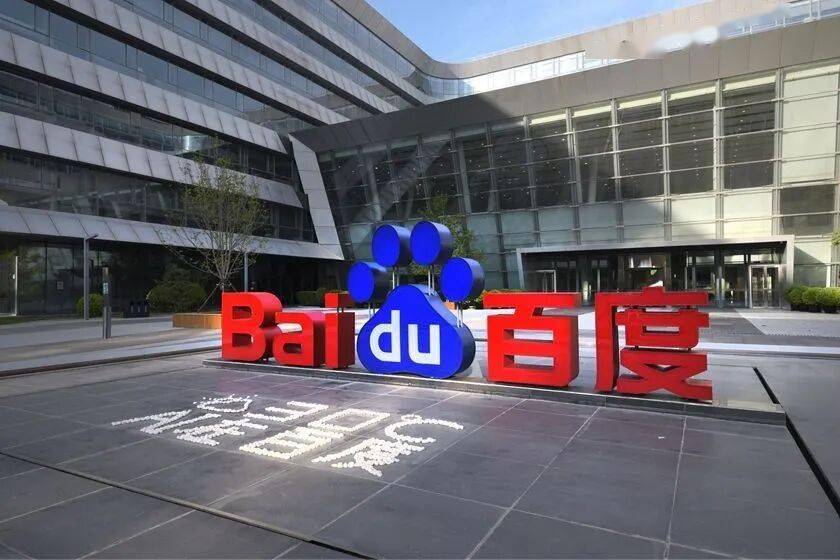
百度开启最大规模裁员? 所涉部门裁员比例15%到30%不等
Sou Hu Cai Jing· 2025-11-30 07:55
Group 1 - The core point of the article highlights that Baidu is undergoing its largest workforce reduction in recent years, with layoffs affecting various business lines and departments, with ratios ranging from 10% to 30% [2] - The layoffs are described as a normal year-end adjustment, with no specific target for the number of layoffs, and compensation packages include year-end bonuses, which are considered generous [2] - Employees report that the scale of this layoff exceeds previous year-end adjustments, and the severance pay can reach N+3.5, which includes years of service plus an additional 3.5 months of salary [2] Group 2 - Despite the large-scale layoffs, many employees do not feel personally targeted, and the continuation of year-end bonuses has led to a general lack of resentment among staff [2] - However, there are concerns that the ongoing layoffs may impact morale within the company [2]


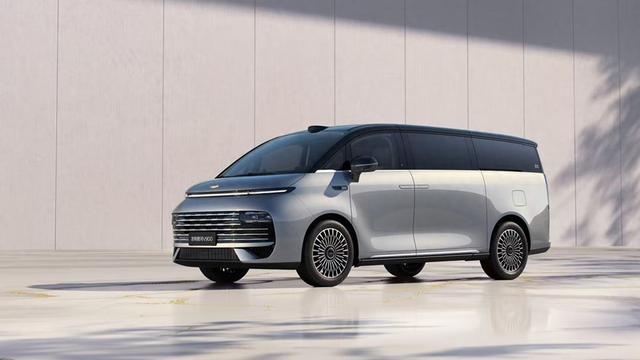
目标豪华MPV市场 超级AI增程吉利银河V900首秀
Bei Jing Ri Bao Ke Hu Duan· 2025-11-30 03:47
Core Viewpoint - The launch of the Galaxy V900 marks the debut of Geely's flagship MPV under the Galaxy brand at the 23rd Guangzhou International Auto Show [1] Group 1: Product Specifications - The Galaxy V900 has dimensions of 5360mm in length, 1998mm in width, and 1920mm in height, with a wheelbase of 3200mm and a space utilization rate of 91.8%, featuring a trunk capacity exceeding 1100 liters [3] - The vehicle offers flexible seating configurations of 6, 7, or 8 seats, with all seats equipped with ventilation and heating functions, and the front and second-row seats featuring SPA-level 8-point massage capabilities, catering to various scenarios such as business receptions and multi-generational families [3] Group 2: Technology and Features - The Galaxy V900 is equipped with the Flyme Auto 2.0 vehicle system, integrating DeepSeek and Geely's self-developed Xingrui AI model, powered by the Snapdragon 8295P flagship chip, enabling seamless operation and natural voice interaction [5] - Additional features include a 9.1-liter cold and warm refrigerator, a 27-speaker Flyme Sound audio system, a health-oriented three-zone fresh air system, and EOC active noise cancellation technology [5] Group 3: Intelligent Driving Assistance - The intelligent driving assistance system of the Galaxy V900 is at a luxury level, featuring the Qianli Haohan H5 assistance solution with 27 perception units, including a long-range high-precision LiDAR, three high-precision millimeter-wave radars, eleven HD cameras, and twelve high-precision ultrasonic radars for 360-degree situational awareness [7] - The vehicle supports industry-leading end-to-end no-map navigation assistance (NOA) for highway and urban driving, capable of executing complex maneuvers such as voice lane changes, roundabout navigation, and U-turns [7] - The intelligent parking system covers over 300 types of parking spaces, supporting low-light parking, narrow space parking, and 3-kilometer memory parking, with a parking success rate exceeding 99% [7]

视频|新浪财经对话腾讯云副总裁:金融行业对大模型要求更严格 技术发展为“螺旋式进步”
Xin Lang Zheng Quan· 2025-11-29 06:53
Core Viewpoint - The financial industry has high standards for AI large models, focusing on compliance and content accuracy due to its data-intensive and risk-sensitive nature [1][2]. Group 1: Compliance and Accuracy Requirements - The financial sector's regulatory framework is stringent, necessitating adherence to laws and industry standards, making compliance the first hurdle for AI large models [1]. - The seriousness of financial services leads to a low tolerance for errors, as inaccuracies can directly impact customer asset safety and rights, thus requiring higher accuracy in content output [1]. Group 2: Differentiated Needs in Financial Sub-sectors - Different financial sub-sectors such as retail banking, corporate finance, securities, and insurance have varied requirements for AI large models [2]. - The development of solutions in these sub-sectors is described as a "spiral iteration," where improvements in specific applications enhance the foundational large model [2]. Group 3: Future Focus and Development Strategy - The company aims to continuously focus on compliance and precision needs within the financial industry, optimizing intelligent solutions through deep collaboration between foundational large models and specific applications [2]. - The strategy involves using a combination of "small models + large models" to enhance the effectiveness of AI applications across various financial sectors, facilitating efficient digital transformation under compliance [2].

更懂中小企业的华为IdeaHub S3,如何重塑会议协作体验?
Sou Hu Cai Jing· 2025-11-29 01:18
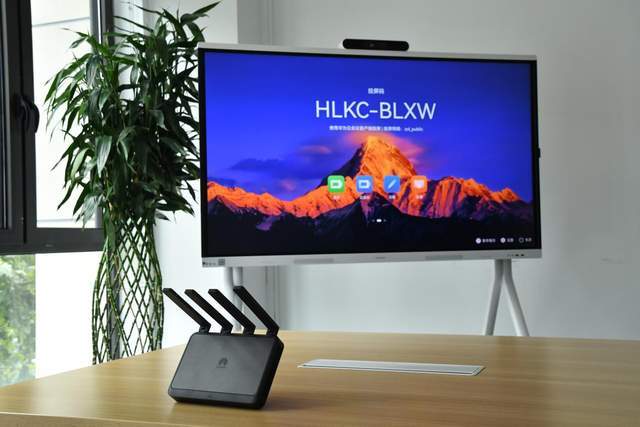
Core Viewpoint - The article emphasizes that intelligent transformation is crucial for small and medium-sized enterprises (SMEs) to enhance market competitiveness and achieve long-term development, with meeting collaboration tools playing an irreplaceable role in this process [1]. Group 1: Challenges in Traditional Meeting Solutions - Traditional meeting solutions struggle to keep pace with intelligent transformation, revealing shortcomings such as poor audio and video quality, insufficient intelligent experience, and subpar user experience [3]. - These issues directly impact the efficiency of meeting collaboration, becoming obstacles for SMEs in their intelligent transformation journey [3]. Group 2: Huawei's Solution - Huawei has launched the new IdeaHub 3 series meeting tablet, leveraging 30 years of expertise in professional audio and video to address the challenges faced by SMEs [3]. - The IdeaHub 3 features upgraded intelligent 4K dual cameras, intelligent image enhancement, smart directing, and super screen sharing technology, providing a smooth and high-definition meeting experience [3]. Group 3: Key Features of Huawei IdeaHub S3 - The IdeaHub S3 offers high-frequency functions such as wireless screen sharing, meeting whiteboard, and audio-video conferencing, which are essential for meeting efficiency and experience [4]. - The wireless screen sharing eliminates cable limitations, making meetings more convenient, while the smooth touch writing on the meeting whiteboard is crucial for team creativity [4]. - The audio-video quality is enhanced through advanced algorithms, improving visual quality from 720P to near 1080P and utilizing AI noise reduction technology for clear audio [13][15]. Group 4: Enhanced Collaboration Features - The 9-split screen feature allows multiple users to share content simultaneously, significantly improving collaboration efficiency and reducing meeting preparation time [7]. - The device includes a mirroring control function for easy navigation and supports dual writing, enhancing the experience of remote collaboration [8][12]. - The integration of AI models into the smart whiteboard allows participants to perform intelligent searches directly on the board, improving meeting continuity and efficiency [10]. Group 5: Overall Impact on SMEs - The Huawei IdeaHub S3 not only achieves breakthroughs in intelligent levels but also enhances the overall user experience, facilitating the transition from functional satisfaction to experience optimization in the industry [17]. - This evolution provides SMEs with more diverse and adaptable meeting collaboration solutions, supporting their intelligent transformation leap [17].
公司问答丨福昕软件:公司海外编辑器产品接入ChatGPT模型 国内编辑器产品接入DeepSeek和豆包模型
Ge Long Hui A P P· 2025-11-28 09:11
Core Viewpoint - The company, Foxit Software, is actively engaging with AI technologies by integrating various AI models into its products, indicating a strategic focus on innovation and adaptation in the rapidly evolving tech landscape [1] Group 1: Product Development - Foxit Software's overseas PDF product market share exceeds 90%, highlighting its strong international presence [1] - The company has integrated the ChatGPT model into its overseas editor products, showcasing its commitment to leveraging advanced AI capabilities [1] - For domestic products, Foxit Software is utilizing the DeepSeek and Doubao models, indicating a tailored approach to different market needs [1] Group 2: Future Plans - The company is monitoring the development and transformation of various AI models, suggesting a proactive stance towards future technological advancements [1] - Foxit Software plans to continue researching and evaluating suitable AI models for potential integration, reflecting its ongoing commitment to innovation [1]

机械设备行业双周报(2025、11、14-2025、11、27):政策助发展加速,技术迭代迎产业升级-20251128
Dongguan Securities· 2025-11-28 08:21
Investment Rating - The report maintains a "Market Weight" rating for the mechanical equipment industry, indicating that the industry is expected to perform within ±10% of the market index over the next six months [70]. Core Insights - The mechanical equipment industry experienced a bi-weekly decline of 3.36%, outperforming the CSI 300 index by 0.61 percentage points, ranking 11th among 31 industries [12]. - Year-to-date, the mechanical equipment sector has increased by 28.67%, surpassing the CSI 300 index by 13.92 percentage points, ranking 7th among 31 industries [12]. - The report highlights the acceleration of human-shaped robot development driven by continuous policy support and technological advancements, which is expected to enhance application scenarios [4][66]. - The engineering machinery sector is projected to see sustained demand due to the commencement of major national projects and the acceleration of funding and replacement policies [4][67]. Summary by Sections Market Review - As of November 27, 2025, the mechanical equipment sector's bi-weekly performance showed a decline of 3.36%, with a month-to-date decline of 4.73% and a year-to-date increase of 28.67% [12][15]. - Among the five sub-sectors, the engineering machinery sector had the smallest decline of 0.31% bi-weekly, while the rail transit equipment II sector saw the largest decline of 6.46% [20][21]. Valuation - The overall PE TTM for the mechanical equipment sector is 30.48 times, with sub-sectors showing varying valuations: general equipment at 42.01 times, specialized equipment at 30.72 times, and rail transit equipment II at 17.16 times [3][24]. Data Updates - The report includes updates on sales figures for various machinery, such as a 10.20% year-on-year increase in truck crane sales for October 2025, and a 15.90% increase in forklift sales [63]. Company Announcements - The report notes several companies' announcements regarding shareholding changes and patent grants, indicating ongoing innovation and market activity within the sector [66]. Recommendations - The report suggests focusing on companies like Huichuan Technology, Green Harmonic, Sany Heavy Industry, and Hengli Hydraulic, citing their strong market positions and growth potential driven by infrastructure investments and technological advancements [68].





国产GPU上市潮涌
2 1 Shi Ji Jing Ji Bao Dao· 2025-11-27 23:11
Core Viewpoint - Muxi Integrated Circuit (Shanghai) Co., Ltd. is set to go public on the STAR Market, aiming to raise 3.904 billion yuan for the development of high-performance GPUs and AI inference GPUs [1][4]. Company Overview - Muxi was established in September 2020, focusing on the independent development of high-performance GPU chips and computing platforms. The core team has over ten years of experience in GPU R&D and mass production [3]. - The CEO, Chen Weiliang, holds a 22.94% stake, making him the actual controller of the company. Notable investors include the National Team and prominent venture capital firms [3]. Financial Performance - Muxi's revenue has seen exponential growth, with projected revenues of 42.64 million yuan in 2022, 530.21 million yuan in 2023, and 743 million yuan in 2024, reflecting a compound annual growth rate of 4074.52% [4]. - Despite revenue growth, Muxi is currently operating at a loss, with net profits of -777 million yuan in 2022, -871 million yuan in 2023, and -1.409 billion yuan in 2024. The cumulative undistributed profits reached -1.048 billion yuan by March 2025 [4]. Market Position and Competition - Muxi is expected to become the second domestic GPU company listed on the A-share market, following Moer Thread [2]. - The global GPU market is dominated by Nvidia and AMD, with Muxi holding approximately 1% of the Chinese AI chip market share in 2024 [6]. - The company faces significant competition from established players and emerging domestic firms, necessitating rapid technological advancement and commercialization capabilities [6]. Product Development - Muxi has launched products for AI training, inference, and general computing, with the C500 being the main product currently shipped. The next-generation C600 chip is expected to support advanced training capabilities [5]. - The revenue structure indicates that the integrated training and inference GPU boards are the primary drivers of growth, contributing 68.99% of the main business revenue in 2024 [5]. Industry Trends - The surge in demand for computing power driven by AI models and the push for domestic alternatives are benefiting Muxi's growth trajectory [4]. - Other domestic GPU companies are also in the process of going public, indicating a competitive landscape in the sector [7][8].
夸克AI眼镜入场 大模型能力与场景生态建设成竞争焦点
Shang Hai Zheng Quan Bao· 2025-11-27 18:20
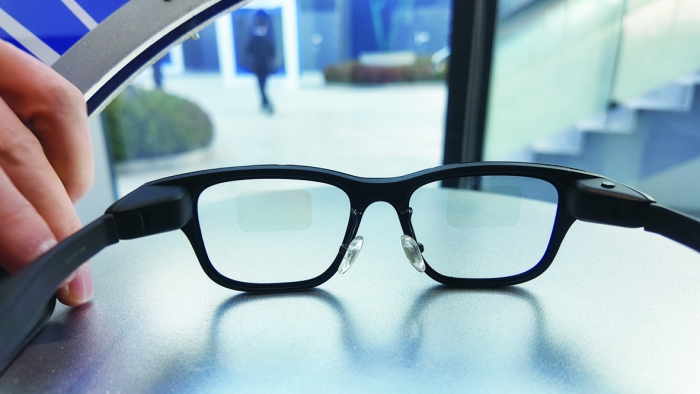
Core Insights - Quark AI glasses are equipped with navigation, payment, and AI Q&A functions, leveraging Alibaba's internal ecosystem to address the current ecological challenges faced by AI glasses [5][6] - The AI glasses market is rapidly growing, creating new market opportunities for companies within the industry [5][11] Product Launch - On November 27, Quark AI glasses were officially launched, featuring two series (S1 and G1) with a total of six models, priced from 1,899 yuan to 3,799 yuan [8] - The S1 series includes three models with different frame styles and colors, while the G1 series focuses on fashion and portability [8] Market Dynamics - The competition in the AI glasses sector is intensifying, with a focus on AI model capabilities and ecosystem development [5][6] - Analysts suggest that a successful consumer-facing AI terminal product could provide Alibaba's core e-commerce ecosystem with new traffic sources, creating a synergy between technology empowerment and business growth [8] Industry Consensus - There is a growing consensus in the industry that the key to AI glasses lies in AI technology rather than just combining AI with eyewear [8][9] - The true potential of AI glasses is seen in their ability to serve as genuine AI terminals rather than mere novelty devices [8] Collaborative Efforts - Alibaba has formed an industry ecosystem alliance for Quark AI glasses, collaborating with companies like Qualcomm and Luxshare Precision to enhance product development and production capabilities [10] - Strategic partnerships between listed companies and AI glasses manufacturers are driving industry development, with companies like Guanghe Tong and Lens Technology actively participating in the ecosystem [11] Technological Advancements - The hardware implementation of AI glasses in China is not considered a significant challenge due to the maturity of the consumer electronics supply chain [10] - Companies are focusing on developing new products and technologies, such as bone conduction microphones for AI glasses, to meet the evolving market demands [11]

紧跟摩尔线程,“国产GPU第二股”来了,预计营收3年狂增3500倍
2 1 Shi Ji Jing Ji Bao Dao· 2025-11-27 13:40
Core Viewpoint - Muxi Integrated Circuit (Shanghai) Co., Ltd. is set to launch its IPO on the Sci-Tech Innovation Board, aiming to raise 3.904 billion yuan for the development of high-performance GPUs and AI inference technologies [1][5]. Company Overview - Muxi was established in September 2020, focusing on the independent development of high-performance GPU chips and computing platforms. The core team has over ten years of experience in GPU development, with notable figures from AMD [5]. - The CEO, Chen Weiliang, holds a 22.94% stake, making him the actual controller of the company. Significant investors include state-owned enterprises and prominent venture capital firms [5][6]. Financial Performance - Muxi's revenue has seen exponential growth, with projected revenues of 15 billion to 19.8 billion yuan in 2025, representing a year-on-year increase of 101.86% to 166.46% [6]. - Despite the revenue growth, the company has reported net losses from 2022 to 2024, with cumulative losses reaching 1.048 billion yuan by March 2025 [6][7]. Product Line and Market Position - Muxi has launched products for AI training and inference, with the C500 GPU being a key product. The next-generation C600 chip is expected to support advanced training capabilities [7]. - The company currently holds about 1% market share in China's AI chip market, facing competition from established players like NVIDIA and AMD [7]. IPO and Market Context - Muxi's IPO follows the recent listing of another domestic GPU company, Moore Threads, which is seen as the first domestic GPU stock. The competitive landscape includes several other companies also pursuing IPOs [9][10]. - The market for domestic GPUs is gaining traction due to increasing demand for computing power driven by AI models, but challenges remain due to competition and the need for rapid technological advancement [7][9].

紧跟摩尔线程,“国产GPU第二股”来了,预计营收3年狂增3500倍
21世纪经济报道· 2025-11-27 13:24
Core Viewpoint - Muxi Integrated Circuit (Shanghai) Co., Ltd. is set to go public on the STAR Market, aiming to raise 3.904 billion yuan for the development of high-performance GPUs and AI inference GPUs, potentially becoming the second domestic GPU company listed in A-shares after Moore Threads [1][4]. Group 1: Company Overview - Muxi was established in September 2020, focusing on the independent development of high-performance GPU chips and computing platforms, with a core team having over ten years of experience in GPU R&D and mass production [4]. - The company is backed by notable investors, including the state-owned China Structural Adjustment Fund and prominent venture capital firms like Sequoia Capital and Matrix Partners [5]. - Muxi's valuation reached 21.071 billion yuan following a funding round in February 2025 [5]. Group 2: Financial Performance - Muxi's revenue has seen exponential growth, with figures of 426,400 yuan in 2022, 53.0212 million yuan in 2023, and an expected 743 million yuan in 2024, resulting in a compound annual growth rate of 4074.52% [5]. - The company anticipates a revenue of 1.5 billion to 1.98 billion yuan in 2025, representing a year-on-year growth of 101.86% to 166.46%, which is nearly a 3518-fold increase compared to 2022 [5]. - Despite the revenue growth, Muxi reported net losses of 777 million yuan, 871 million yuan, and 1.409 billion yuan from 2022 to 2024, with cumulative undistributed profits of -1.048 billion yuan as of March 2025 [6]. Group 3: Market Position and Competition - The global GPU market is dominated by Nvidia and AMD, with Muxi holding approximately 1% of the AI chip market in China as of 2024 [7]. - The company faces significant competition from established players and emerging domestic firms, which may challenge its technological advancement and commercialization capabilities [7]. Group 4: Product Development - Muxi has launched products for AI training, inference, and general computing, with the Xisi N series GPU entering mass production in April 2023 and the core Xiyun C series GPU expected to launch in February 2024 [6]. - The training and inference GPU series is projected to generate 512 million yuan in sales in 2024, accounting for 68.99% of the company's main business revenue [6].