
数字经济

Search documents
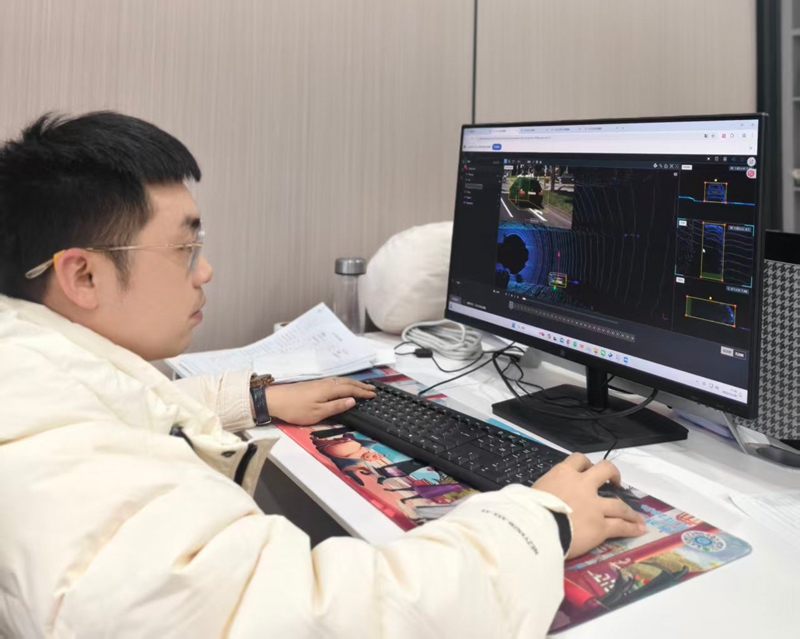
万人入行,大山里的标注正“火热”
Ren Min Wang· 2026-01-21 12:40
Core Insights - The data annotation industry in Guizhou is experiencing rapid growth, with the number of practitioners expected to exceed 10,000 by December 2025, reflecting a strong development trend in the digital economy sector [1][3]. Industry Growth and Development - Guizhou's smart industry scale is projected to reach 280 billion yuan by 2025, supported by the establishment of 50 key data centers, positioning the province as a leader in digital economic growth [3]. - The data annotation sector is crucial for the development of technologies such as autonomous driving, where precise data labeling enhances the reliability of subsequent algorithm training [2]. Talent and Workforce - Guizhou has a rich talent pool, with over 53,000 graduates in big data-related fields annually, which is a significant factor attracting data annotation companies to the region [5]. - The local government is implementing various policies to support data annotation professionals, including housing subsidies and educational benefits, to ensure a stable workforce [9]. Business Environment and Incentives - Guizhou's government has introduced a 1.5 billion yuan fund to support the development of the data industry, with policies designed for quick and efficient access to financial incentives for companies [14]. - The province has seen the establishment of 75 data annotation companies, with major players like Benyuan Zhishu Technology rapidly expanding their operations and workforce [6][5]. Infrastructure and Support - New data annotation facilities are being developed, such as the 1,500 square meter base in Xiaolanshan, which is designed to accommodate 330 standardized workstations [9]. - Guizhou is focusing on creating high-quality data annotation industrial parks and enhancing public service capabilities to support industry growth [10].

中国第二个5万亿之城诞生
21世纪经济报道· 2026-01-21 12:35
Economic Performance - In 2025, Beijing's GDP reached 52,073.4 billion yuan, growing by 5.4% year-on-year, surpassing the national growth rate by 0.4 percentage points, making it the second city in China to achieve a GDP of over 5 trillion yuan after Shanghai [1] - The third industry, particularly information transmission, software, IT services, and finance, is the main driver of Beijing's economic growth, contributing approximately 86% to the GDP, with a growth rate of 5.8% in 2025 [3][5] Key Industries - The information transmission, software, and IT services sector achieved a value-added of 12,192.4 billion yuan, growing by 11.0%, while the financial sector reached 8,668.2 billion yuan, growing by 8.7%, together contributing over 70% to Beijing's economic growth [3][5] - Haidian District plays a crucial role in this growth, with its software and information services accounting for about two-thirds of the city's output in this sector, and is expected to grow by 17% in 2026 [3][5] Digital Economy and Innovation - Beijing's digital economy increased by 8.7% in 2025, with core industries growing by 10.4%, indicating a positive trend towards high-end and intelligent industrial development [5] - Strategic emerging industries and high-tech manufacturing saw value-added growth of 15.5% and 7.5%, respectively, with significant increases in production for new energy vehicles and lithium-ion batteries [5] Consumer Market - In 2025, Beijing's total market consumption grew by 1.6%, with retail sales of consumer goods declining by 2.9%, which is lower than the national growth rate of 3.7% [7][10] - Certain categories, such as gold and jewelry, cosmetics, and new energy vehicles, experienced significant growth, while automotive and communication equipment sales saw declines of 13.7% and 15.9%, respectively, impacting overall retail performance [9][10] Future Outlook - The focus for Beijing moving forward will not only be on developing emerging industries but also on boosting consumption and releasing domestic demand potential [10]
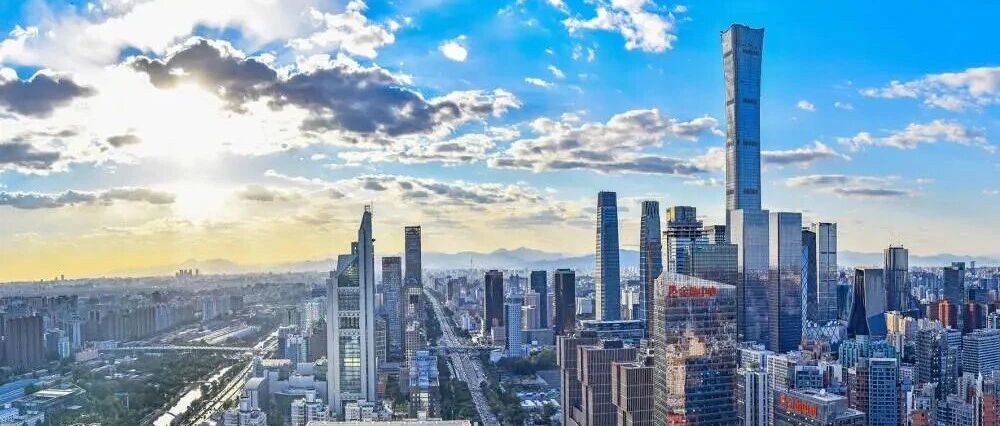
新华鲜报丨新跨越!北京成为我国第二个GDP超5万亿元城市
Xin Hua Wang· 2026-01-21 11:49
Economic Growth - Beijing has officially become the second city in China to surpass a GDP of 5 trillion yuan, achieving a GDP of 52,073.4 billion yuan in 2025, representing a growth of 5.4% compared to the previous year [1] - Over the past five years, Beijing's economic increment has been approximately 1.4 trillion yuan, equivalent to creating an economy as strong as the Haidian District [1] High-Quality Development - Beijing has implemented high-quality development characterized by reduction in growth, focusing on optimizing existing resources and improving quality while maintaining the lowest energy consumption, water usage, and carbon emissions per unit of GDP in the country [1] - The city aims for sustainable growth, emphasizing "green GDP" alongside significant economic expansion [1] Industrial Structure - The economic structure of Beijing continues to optimize, heavily embracing "high-tech" industries, with the digital economy accounting for over 40% of the city's GDP [1] - The information services sector remains the largest in the country, while the financial sector holds approximately half of the national asset scale; advanced manufacturing sectors like integrated circuits and new energy vehicles are experiencing rapid growth [1] Innovation and R&D - Beijing maintains a research and development expenditure intensity of around 6%, with over 300 technology companies being established daily, leading the nation in the number of artificial intelligence large model registrations [2] - The city ranks first in the "Nature Index - Research Cities" list, showcasing its strength in scientific research and innovation [2] Regional Development - Beijing is fostering regional collaboration, with over 4,000 enterprises originating from Beijing establishing themselves in the Xiong'an New Area, enhancing the vitality of the "Capital Economic Circle" [2] - The optimization and restructuring of industrial chains have resulted in technology contract transaction amounts exceeding 230 billion yuan flowing to Tianjin and Hebei [2] Environmental Improvements - The average PM2.5 concentration in Beijing has decreased by two-thirds compared to 2013, reflecting significant environmental improvements recognized internationally [5] - Urban governance initiatives have created a "15-minute convenient living circle," enhancing the quality of life for residents [5] Historical Context and Future Goals - Beijing's economic total was less than 300 million yuan in 1949, surpassed 1 trillion yuan in 2007, and crossed the 5 trillion yuan mark in 2025, marking significant historical economic progress [5] - Moving forward, Beijing's goal is to prioritize high-quality development rather than merely focusing on the size of its economy, aiming for a better quality of life for its citizens [5]
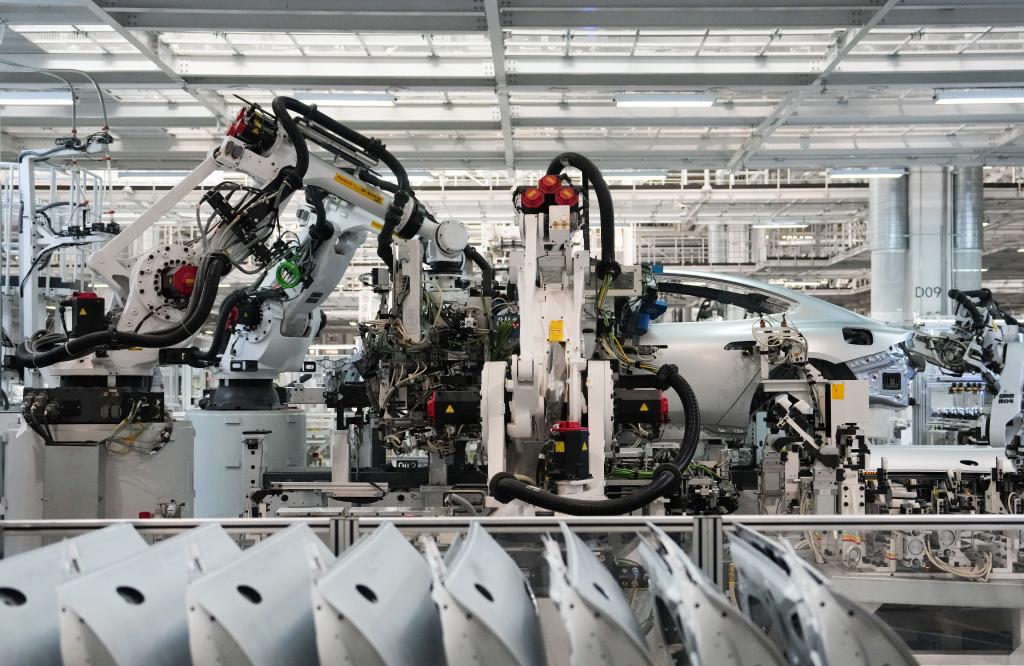
晶采观察丨增长5%!140万亿GDP背后的“质”变底气
Yang Guang Wang· 2026-01-21 10:33
Core Viewpoint - In 2025, China's GDP surpassed 140 trillion yuan, marking a 5.0% increase from the previous year, reflecting a stable and progressive economic performance under the "14th Five-Year Plan" [2][3]. Group 1: Economic Performance - The National Bureau of Statistics highlighted that the economic performance in 2025 can be summarized with the terms "stable, progressive, new, and resilient" [2]. - The R&D expenditure intensity reached 2.8%, exceeding the OECD average for the first time, indicating a strong commitment to innovation [3][4]. Group 2: Innovation and Technology - China ranked in the top ten globally for innovation index, with over 5 million valid invention patents, becoming the first country to achieve this milestone [4]. - The country maintained its position as the world leader in PCT international patent applications for six consecutive years, with a steady increase in high-value patents in key technology areas [4]. Group 3: Industrial Development - In 2025, the added value of equipment manufacturing and high-tech manufacturing accounted for 36.8% and 17.1% of the total industrial added value, respectively, indicating a shift towards high-end manufacturing [5]. - The production of civilian drones and industrial robots increased by 37.3% and 28%, respectively, showcasing the growth of the low-altitude economy and intelligent manufacturing [5]. Group 4: Digital Economy and Daily Life - The digital economy is rapidly advancing, with significant developments in artificial intelligence and robotics, leading to enhanced productivity and new job opportunities [5][6]. - Brain-computer interface technology is expected to see accelerated industrialization in 2025, expanding its application scenarios [6]. Group 5: Green Development - Daily production of new energy vehicles reached 45,000 units, contributing to a growing market share and lower costs for consumers [6]. - Traditional industries are experiencing reduced energy consumption levels, leading to more environmentally friendly building materials and products [6]. Group 6: Future Outlook - The cultivation of new productive forces and the benefits of reform are becoming increasingly evident, with emerging forces counteracting downward pressures on the economy [6]. - The commitment to strategic stability and adaptability is essential for continuing the modernization of China's economy [6].
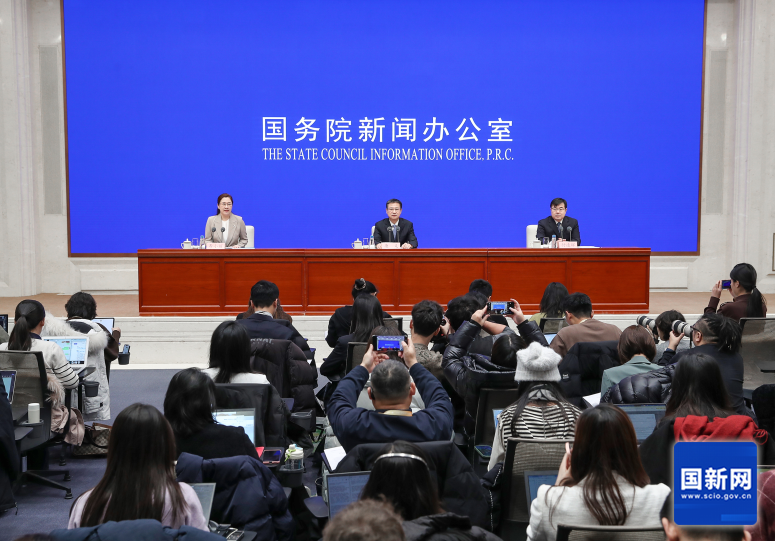
2025年我国数字经济占GDP比重约35%
Xin Lang Cai Jing· 2026-01-21 10:25
Core Viewpoint - The Chinese government aims to achieve a strong start for the "14th Five-Year Plan," with the digital economy's added value expected to reach 49 trillion yuan by 2025, accounting for approximately 35% of GDP [1][8]. Group 1: Economic Structure and Development - By 2026, China's economic structure is projected to continue improving, with new development drivers emerging and overall growth trends remaining positive [3][11]. - The new quality productivity is expected to develop steadily, releasing significant growth potential across consumption, investment, technology, industry, urban-rural, and regional areas [3][11]. Group 2: New Economic Growth Points - New technologies, products, and scenarios are gaining momentum, with sectors like new energy, new materials, aerospace, quantum technology, and biomanufacturing poised for growth [5][13]. - The installed capacity of new energy storage has surpassed 100 million kilowatts, accounting for over 40% of the global total [5][13]. - The "Artificial Intelligence +" initiative is enhancing China's vast scenario advantages, driving explosive growth in high-end manufacturing, emerging consumption, and new business models [5][13]. Group 3: Integration of Innovation and Talent - China possesses a complete industrial system and a massive market of over 1.4 billion people, with more than 5 million graduates in science, technology, engineering, and mathematics each year [5][13]. - The digital economy, including digital consumption and trade, is integrating innovation, industry, and talent, creating a clustered development environment [5][13]. Group 4: Innovation Clusters and Regional Development - China has 24 of the world's top 100 innovation clusters, ranking first globally for three consecutive years, with the "Shenzhen-Hong Kong-Guangzhou" cluster now the world's leading cluster [6][14]. - The government is establishing three international science and technology innovation centers in Beijing, Shanghai, and the Guangdong-Hong Kong-Macau Greater Bay Area, supported by newly set up regional funds to enhance innovation [6][14]. - The focus is on transforming potential into new momentum and technological flow into economic growth, ensuring a successful start to the "14th Five-Year Plan" [6][14].
数据要素服务创新中心动态 | 60亿金额,80+项目及场景建设机会清单 数据要素服务创新中心(成都中心)邀您面对面洽谈
Xin Lang Cai Jing· 2026-01-21 10:25
Core Insights - The "2026 Digital Bazhong Spring Supply and Demand Matching Event" will be held in Bazhong City, focusing on deep communication and cooperation opportunities in digital construction [2][6] - A total investment of 6 billion yuan is planned for various projects showcased during the event [7][11] Project Opportunity Overview - Smart Agriculture Project: Investment of 24 million yuan for an e-commerce platform covering local agricultural products, providing online sales and traceability services [7] - Digital Cultural Tourism Project: Investment of approximately 41.29 million yuan for an integrated smart microgrid to enhance urban energy management [8] - Urban Governance Project: Investment of 80 million yuan for a comprehensive traffic perception network to improve urban traffic management [9] - Smart Education Project: Investment of 120 million yuan for a new infrastructure project in Enyang District to enhance educational quality [10] - Industrial Development Project: Investment of 500 million yuan for a research and study base integrating teaching, research, and practice [11] Event Highlights - The event aims to showcase the achievements and core capabilities of digital Bazhong in infrastructure and application scenarios, enhancing recognition of its digital transformation [12] - The event will release over 80 specific scene opportunities in key areas such as smart agriculture, digital cultural tourism, urban governance, and public services [12] - The goal is to facilitate at least 40 one-on-one deep connections between supply and demand parties, aiming to establish over 15 clear cooperation intentions on-site to accelerate project implementation [12]

中国第二个5万亿城市,诞生
虎嗅APP· 2026-01-21 09:58
以下文章来源于国民经略 ,作者凯风 国民经略 . 在这里,读懂中国经济、城市和楼市 本文来自微信公众号: 国民经略 ,作者:凯风 城市经济,天花板仍在抬升。 刚刚,京沪发布最新经济数据,2025年上海GDP达5.67万亿,北京达5.2万亿,双双同比增长5.4%, 跑赢大盘。 这意味着,北京成为继上海之后的第二座5万亿城市,在全国遥遥领先。 5万亿的经济体量,在国内与安徽、河北省相当;在国际上堪比瑞典、比利时,放在全球可排在25位 以内。 曾几何时,广深与京沪经济齐头并进,如今京沪先行一步,大幅拉开差距,将城市GDP推向新的高 度。 京沪何以领跑?谁是未来的经济第一大市? 京沪,靠什么晋级5万亿? 5万亿GDP,堪称"富可敌国",也是大多数中西部省份难以企及的存在。 上海的5万亿,主要靠汽车、人工智能、生物医药、金融、贸易等支柱产业的共同托举。 与上海、深圳、广州都不同,北京并非工业城市,而以高端服务业著称,第三产业占比超85%。 第二大支柱产业,则是金融业,贡献超过8000亿GDP,让许多二三线城市望尘莫及。 北京虽然没有"金融中心"的名号,但作为金融监管决策中心,云集了全国几乎所有的金融监管部门和 国有金融 ...

2025年浙江全社会用电量超7200亿千瓦时
Xin Hua Cai Jing· 2026-01-21 09:31
Core Insights - Zhejiang's total electricity consumption is projected to exceed 700 billion kilowatt-hours for the first time in 2025, reaching 726.65 billion kilowatt-hours, a year-on-year increase of 7.18%, indicating a positive economic development trend in the province [1] - The province's electricity demand is driven by its focus on high-quality development and the construction of a common prosperity demonstration zone, with significant investments in ten major projects [1] Group 1: Electricity Consumption by Sector - In 2025, the highest electricity load in Zhejiang is expected to reach a historical peak of 131 million kilowatts [1] - The electricity consumption for the three major industries in Zhejiang is projected to be 4.11 billion kilowatt-hours for agriculture, 476.81 billion kilowatt-hours for industry, and 133.2 billion kilowatt-hours for services, with year-on-year growth rates of 12.14%, 5.60%, and 10.84% respectively [1] - Residential electricity consumption is expected to reach 112.54 billion kilowatt-hours, reflecting a year-on-year increase of 9.65% [1] Group 2: Industrial Growth and Structure Adjustment - The industrial electricity consumption in Zhejiang is projected to be 469.37 billion kilowatt-hours in 2025, with a year-on-year growth of 5.82%, indicating a stable industrial production trend [1] - The manufacturing sector's electricity consumption is expected to reach 395.97 billion kilowatt-hours, growing by 5.18% year-on-year [1] - The automotive manufacturing sector is highlighted as a key pillar industry, with electricity consumption expected to reach 14.26 billion kilowatt-hours, a significant year-on-year increase of 16.63% [2] Group 3: Growth in Tertiary Sector and New Industries - The electricity consumption in the information transmission, software, and IT services sector is projected to reach 12.38 billion kilowatt-hours, with a year-on-year growth of 14% [2] - Zhejiang's digital economy, particularly in Hangzhou, is seeing rapid growth, with companies like Zhejiang Fubao Intelligent Technology Co., Ltd. achieving an electricity consumption of 2.861 million kilowatt-hours, a year-on-year increase of 25.2% [2] - The wholesale and retail sector's electricity consumption is expected to reach 33.56 billion kilowatt-hours, growing by 15.34%, while the rental and business services sector is projected to consume 10.5 billion kilowatt-hours, with a growth of 10.63% [2]
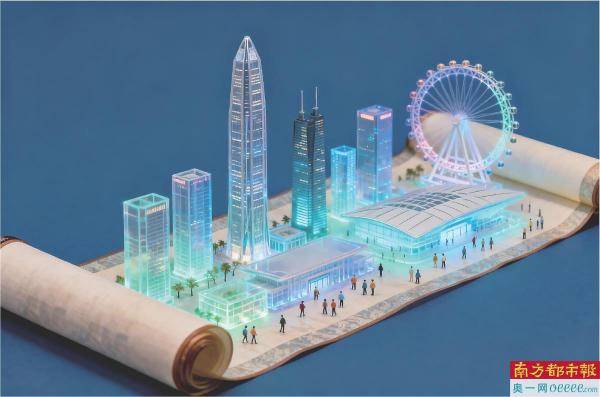
深圳甲级写字楼去年净吸纳量创四年新高
Sou Hu Cai Jing· 2026-01-21 08:30
Group 1 - The core viewpoint of the article highlights that Shenzhen's Grade A office market is set to see a significant supply increase in 2025, with a total of 1.182 million square meters from 21 new projects, marking a 9.4% year-on-year growth in total stock to 12.843 million square meters [3][5] - Demand for office space is notably driven by technology and high-end manufacturing companies, contributing to a net absorption of 664,000 square meters in 2025, the highest since 2021 and 16.9% above the five-year average [3][4] - The market is also witnessing a trend of repurposing existing office properties into hotels, providing a new avenue to alleviate vacancy pressures [3] Group 2 - Despite the increase in net absorption, rental prices are under pressure, with the rental index for Grade A offices in Shenzhen declining by 1.9% quarter-on-quarter and 10.6% year-on-year, averaging RMB 132.6 per square meter per month [4] - Looking ahead to 2026, the overall supply of Grade A offices is expected to remain substantial, potentially exceeding one million square meters again, with total stock projected to reach nearly 14 million square meters, an 8.0% year-on-year increase [5] - The upcoming APEC meeting in Shenzhen is anticipated to boost the city's international profile and support demand from technology and high-tech manufacturing sectors, leading to a positive outlook for the office market [6]
增长5%!140万亿GDP背后的“质”变底气
Yang Guang Wang· 2026-01-21 08:23
Core Insights - In 2025, China's GDP surpassed 140 trillion yuan, achieving a growth rate of 5.0% compared to the previous year, marking a successful conclusion to the 14th Five-Year Plan and a strong start towards the second centenary goal [1] Group 1: Economic Performance - The economic performance of 2025 is characterized by stability, progress, innovation, and resilience, as summarized by the head of the National Bureau of Statistics [1] - The core driving force behind this performance is the emergence of new productive forces, which have integrated deeply into various aspects of production and daily life [2] Group 2: Innovation and R&D - R&D expenditure intensity increased to 2.8%, surpassing the OECD average for the first time, indicating a sustained commitment to innovation [2] - China ranked in the top ten globally for innovation index, with over 5 million valid invention patents, becoming the first country to reach this milestone [2] - The number of PCT international patent applications has ranked first in the world for six consecutive years, reflecting a steady expansion of high-value patents in key technology areas [2] Group 3: Technological Advancements - Significant technological achievements include the successful maiden flight of the "Nine Sky" drone, the launch of the Tianwen-2 mission, and the commissioning of the first electromagnetic catapult aircraft carrier, showcasing China's strides towards technological self-reliance [3] Group 4: Industrial Development - The digital economy is leading the development of new productive forces, with an average of 45,000 new energy vehicles produced daily and over 500 million express packages sent [5] - The added value of equipment manufacturing and high-tech manufacturing industries accounted for 36.8% and 17.1% of the total industrial added value, respectively [5] - The production of civilian drones and industrial robots increased by 37.3% and 28%, respectively, indicating robust growth in these sectors [5] Group 5: Digital Integration and Green Development - The integration of digital technologies into daily life is creating a "smart package," with brain-computer interface technology rapidly advancing and expanding its application scenarios [7] - The daily production of new energy vehicles reached 45,000, with over 50% market share, leading to more affordable and accessible options for consumers [7] - Traditional industries are experiencing reduced energy consumption levels, contributing to a more environmentally friendly living environment [7] Group 6: Economic Transition - The cultivation of new productive forces and the benefits of reform are becoming increasingly evident, with emerging forces helping to offset downward pressure and enhance upward momentum [8] - The high-quality development driven by new productive forces is seen as a guarantee for the modern industrial system and a testament to China's economic shift towards quality [10]