数字经济

Search documents
破千亿美元!中国成中亚各国第一大贸易伙伴,当地“淘宝”创始人怎么看?
Di Yi Cai Jing· 2026-01-21 07:57
Core Insights - The bilateral trade between China and Central Asian countries has surpassed $100 billion for the first time, marking a significant milestone in their economic relations [1] - China has become the largest trading partner for all Central Asian countries, with trade volume continuing to grow for five consecutive years [1][6] - E-commerce platforms like Uzum are playing a crucial role in facilitating trade, with a wide range of Chinese products available to consumers in Uzbekistan [1][3] Trade Growth - In 2025, China's exports to Central Asia are projected to reach $71.2 billion, a year-on-year increase of 11%, with strong growth in consumer goods, machinery, and high-tech products [6] - Imports from Central Asia to China are expected to be $35.1 billion in 2025, reflecting a 14% increase, primarily in energy and mineral resources, with a growing variety of non-resource products [6] E-commerce Development - Uzum, established in 2022, has quickly become Uzbekistan's first unicorn, transforming from a sales platform to a service ecosystem that includes logistics and financial services [5] - The platform has over 17 million monthly active users, nearly half of Uzbekistan's adult population, indicating a strong market for online shopping [3] Infrastructure and Connectivity - The establishment of the China-Central Asia trade cooperation platform in Nanjing and the ongoing development of logistics and cross-border payment systems are enhancing trade efficiency [4] - New transportation initiatives, such as the opening of direct rail services and increased air routes, are facilitating easier trade and travel between China and Central Asia [7]


去年北京数字经济增加值同比增长8.7%
Zhong Guo Xin Wen Wang· 2026-01-21 07:53
Group 1 - The digital economy in Beijing experienced a year-on-year growth of 8.7% in value added, with core industries growing by 10.4% [1] - From January to November last year, the revenue of strategic emerging services and high-tech services in Beijing increased by 8.9% and 12.5% respectively, with strong performance in information technology services, emerging software development, and new media services [1] - Investment in high-tech industries in Beijing grew by 40.1% last year, with orderly progress in new infrastructure investments related to information, integration, and innovation, supporting industrial innovation and urban development [1] Group 2 - The status of enterprises in Beijing as innovation leaders has strengthened, with R&D expenditures of key large and medium-sized enterprises increasing by 7.1% from January to November last year, and over 10% growth in industrial, scientific research, and technical service sectors [1] - The proportion of enterprises engaging in R&D activities increased by 0.9 percentage points year-on-year [1] - In 2025, the Zhongguancun Demonstration Zone will initiate a new round of spatial layout adjustments, establishing future industry characteristic parks covering 20 new tracks including quantum information and brain science [2]
去年两度押注新型核能后,阿里系出手传统核电项目
Xin Lang Cai Jing· 2026-01-21 07:21
Core Viewpoint - Alibaba has officially entered the nuclear power sector by investing in China Nuclear (Xiangshan) Nuclear Energy Co., marking a significant strategic move into traditional energy markets [1][3] Group 1: Company Investment Details - China Nuclear (Xiangshan) Nuclear Energy Co. was recently established with a registered capital of 250 million RMB, focusing on power generation, transmission, and supply [1] - The company is co-owned by China Nuclear Power's subsidiary, Hongrun Construction, Youngor Group, and Alibaba's Shanghai Yiqi Network Technology Co., indicating a collaborative investment approach [1] - The investment aligns with Alibaba's previous engagements in nuclear energy, including funding for controlled nuclear fusion technology companies [2] Group 2: Strategic Intentions - The investment serves dual purposes: providing stable financial returns and positioning Alibaba for future market opportunities as private sector participation in nuclear power may increase [3] - By entering the nuclear energy sector, Alibaba aims to create a synergistic supply chain, leveraging nuclear energy to support its data centers and reduce operational costs [3] - The move is also seen as a way to attract more private capital from the Yangtze River Delta region to support nuclear technology development and project implementation [3] Group 3: Industry Context - The investment reflects a broader trend of private enterprises entering the nuclear sector, with recent projects allowing increased private equity participation [2] - Experts suggest that Alibaba's strategy is not driven by immediate energy shortages but rather aligns with national energy innovation goals, supporting advancements in nuclear technology [4]

稳步发展数字人民币!多地部署新年重点任务,跨境支付与普惠金融成发力点
券商中国· 2026-01-21 06:43
Core Viewpoint - The digital renminbi, as a legal digital currency issued by the People's Bank of China, is gradually demonstrating its systemic value in promoting financial technology innovation, enhancing payment efficiency, and fostering inclusive economic growth as its pilot scope expands and application scenarios deepen [1] Recent Developments - At the beginning of 2026, various branches of the central bank in cities like Shanghai, Yunnan, Chongqing, and Sichuan held annual work meetings to summarize the achievements of 2025 and outline key tasks for the development of the digital renminbi in the new year [2] - Under the framework of "steady development of the digital renminbi," localities are forming differentiated and collaborative development paths in key areas such as cross-border trade, inclusive finance, and the construction of international financial centers [2][4] Local Deployment Highlights - Shanghai has established a "digital renminbi international operation center" and aims to enhance financial management and service capabilities in 2026, while Yunnan focuses on accelerating the construction of digital renminbi scenarios for border trade [4] - Chongqing has achieved significant progress with successful pilot projects for bilateral digital renminbi settlements and cross-border transactions exceeding 2.2 billion yuan in 2025, with plans to continue steady development in 2026 [4] - Sichuan's focus for 2026 is on expanding the acceptance environment and user base for digital renminbi, aiming to establish a widely accessible and sustainable application ecosystem [5] Application Scenarios - The digital renminbi's pilot promotion has entered a new phase of scale and deep integration, expanding acceptance scenarios from online e-commerce platforms to offline retail stores and various public services [7] - As of November 2025, the digital renminbi has processed 3.48 billion transactions with a total transaction amount of 16.7 trillion yuan, and the digital renminbi app has opened 230 million personal wallets [8] Functional Iteration - A new generation of the digital renminbi measurement framework and management system was implemented on January 1, 2026, with the app upgraded to version 2.0, allowing wallet balances to earn interest at the current deposit rate [10] - The app has introduced a "carbon benefit" mini-program that quantifies users' carbon reduction efforts into "carbon points," which can be converted into digital renminbi, promoting green behavior and integrating the digital renminbi into daily life [10]

济宁确定2026年12条重点工作线
Da Zhong Ri Bao· 2026-01-21 06:36
Group 1 - The core focus of Jining's government work report is to achieve high-quality development through twelve pragmatic actions, emphasizing industrial economy, expanding domestic demand, and enhancing cultural tourism [1][2][3] - Jining aims to strengthen its industrial backbone by promoting the manufacturing sector, optimizing industrial structure, and enhancing productivity through initiatives like the "chain leader system" [1][2] - The city plans to establish itself as a northern inland shipping center, targeting a port cargo throughput of 140 million tons and developing green and intelligent shipping [2] Group 2 - Innovation is prioritized, with a target of 12 billion yuan in R&D investment and initiatives to attract young talent and accelerate technology transfer [2] - The new urbanization strategy focuses on enhancing the central urban area's capabilities and promoting county-level economic advancement [3] - The report outlines a commitment to rural revitalization, ensuring food security, and improving agricultural industries while promoting green and low-carbon transformation [3] Group 3 - The government emphasizes the importance of social welfare, aiming for high-quality employment, satisfactory education, and improved social security [3] - Risk prevention measures will be implemented to ensure safety in production, finance, and social governance, supporting stable and harmonious societal conditions [3]
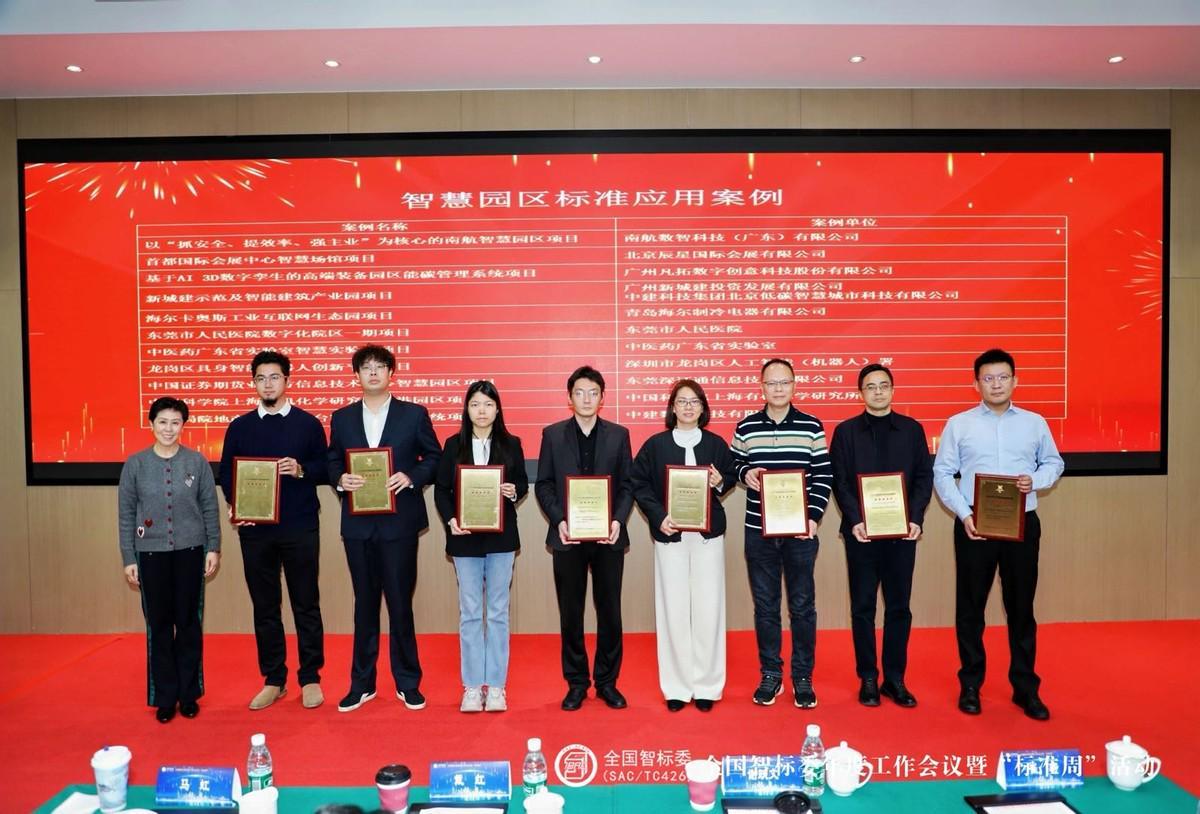
34家园区入选2025年智慧园区标准应用案例
Sou Hu Wang· 2026-01-21 06:25
Core Insights - The current development of smart parks is a key component in the construction of smart cities and an important driver for industrial digital transformation [1] - The effectiveness of standardized implementation is a critical measure of the smartization level of parks [1] Group 1: Standardization and Evaluation - On January 13, the National Technical Committee for Digital Standardization of Intelligent Buildings and Residential Areas announced the results of the "2025 Smart Park Standard Application Case" selection, with 34 parks selected [1] - The submitted projects cover various types, including comprehensive industrial parks and economic and technological development zones, with a focus on strengthening the guiding role of standards [1] Group 2: Case Studies and Technological Empowerment - The selected 34 parks reflect high-level practices in the standardization of smart park construction, exemplified by the Haier Kaos Industrial Internet Ecological Park, which is the only five-star case in the manufacturing category [3] - The digital project team at the park integrated cutting-edge technologies such as IoT, AI, and digital twins to fully empower the park's smart and digital transformation, achieving 100% closed-loop management and enhancing collaborative efficiency by 75% [3] - The promotion of these case experiences is expected to further drive the formation of a new pattern of smart park development characterized by "standard guidance, technological empowerment, and ecological collaboration," injecting stronger momentum into the high-quality development of the digital economy [3]
资本“利益实质”的数字重构——从“剩余价值独占”到“γ系数争夺”
Jing Ji Guan Cha Bao· 2026-01-21 06:20
Core Insights - The article discusses the transformation of value sources and the restructuring of wealth distribution in the digital age, emphasizing the shift from traditional surplus value (M) to the control of data contribution coefficient (γ) as the new focal point of capital interests [1][11]. Theoretical Foundation - Marx's analysis of capital's profit essence provides a complete system from abstraction to specifics, covering production to distribution [2]. Digital Leap - The digital economy introduces data (D) as a crucial production factor, necessitating an expansion of classical economic formulas to include data's role in value creation and distribution [3]. Evolution of Surplus Value Formula - The surplus value formula evolves to M = α·K + β·L + γ·D, reflecting the significant role of data in enhancing production efficiency and resource allocation [4][6]. Reality of Competition - In the context of platform capitalism, there is a monopolization of the γ coefficient, leading to severe imbalances in profit distribution [7]. Deep-rooted Contradictions - The struggle for the γ coefficient represents a deeper conflict regarding the development path of digital civilization, highlighting economic interests at stake [8]. China's Practical Exploration - China is exploring ways to reconstruct data distribution relationships and promote shared benefits through innovative data property rights systems, such as the "three rights separation" model in Shenzhen [9][10]. Platform Private Ownership and Data Enclosure - Platforms utilize user agreements to claim ownership of user-generated data, leading to a "data enclosure movement" that undermines the rights of data producers [10]. Algorithmic Opacity and Value Transfer - The use of complex algorithms creates a lack of transparency in measuring the contribution of data, allowing platforms to obscure the true value derived from data [10]. Labor Identity Ambiguity - The digital economy blurs the lines between users as laborers and data producers, often resulting in users receiving compensation only for their labor while platforms monopolize data value [10]. Socialization of Production vs. Private Data Ownership - The contradiction between the social nature of data production and its private ownership by platforms leads to wealth concentration and social injustice [10]. Value Creation and Distribution Discrepancy - There is an increasing divergence between value creation (data production by users) and value distribution (platforms monopolizing profits), exacerbating social inequality [10]. Global "γ Colonialism" Risk - Developed countries exploit data resources from developing nations, creating a new center-periphery relationship characterized by "smart colonialism" [10]. Conclusion - The restructuring of capital profit essence in the digital age revolves around the pricing and distribution rights of data, with the struggle for the γ coefficient being central to understanding contemporary digital economic contradictions [11]. Technological Empowerment for Transparent Distribution - Utilizing blockchain and smart contract technologies can create traceable and measurable data value distribution mechanisms, ensuring fair sharing of data contributions [12]. Macro Governance to Guide Benefit Flow - Governments can use tax and industrial policies to redirect data revenue towards public services, promoting a virtuous cycle of development [12].
通信ETF(515880)涨超1.6%,连续4日净流入近20亿元,把握未来产业长期大趋势
Mei Ri Jing Ji Xin Wen· 2026-01-21 05:56
Group 1 - The core viewpoint is that AI and digital economy are long-term trends in the industry, with computing power, networking, storage, and thermal management being the main beneficiaries [1] - There is a growing consensus that Co-Packaged Optics (CPO) is an inevitable technology choice, significantly reducing power consumption, enhancing bandwidth density, and minimizing latency, making it a key trend for AI data center applications [1] - The overseas computing power industry remains highly prosperous, while domestic developments in computing power and continued investments from major companies are expected to sustain high demand in the AI sector and AIDC industry chain through 2026 [1] Group 2 - The communication ETF (515880) achieved a remarkable annual increase of 125.81% in 2025, ranking first in the market, and its scale is also the largest among similar products, with a size of 13.922 billion yuan as of January 20, 2025 [2] - As of December 22, 2025, the communication ETF has over 48% of its holdings in optical modules and nearly 20% in servers, with core components accounting for over 77%, reflecting the fundamental strength of overseas computing power [1][2]
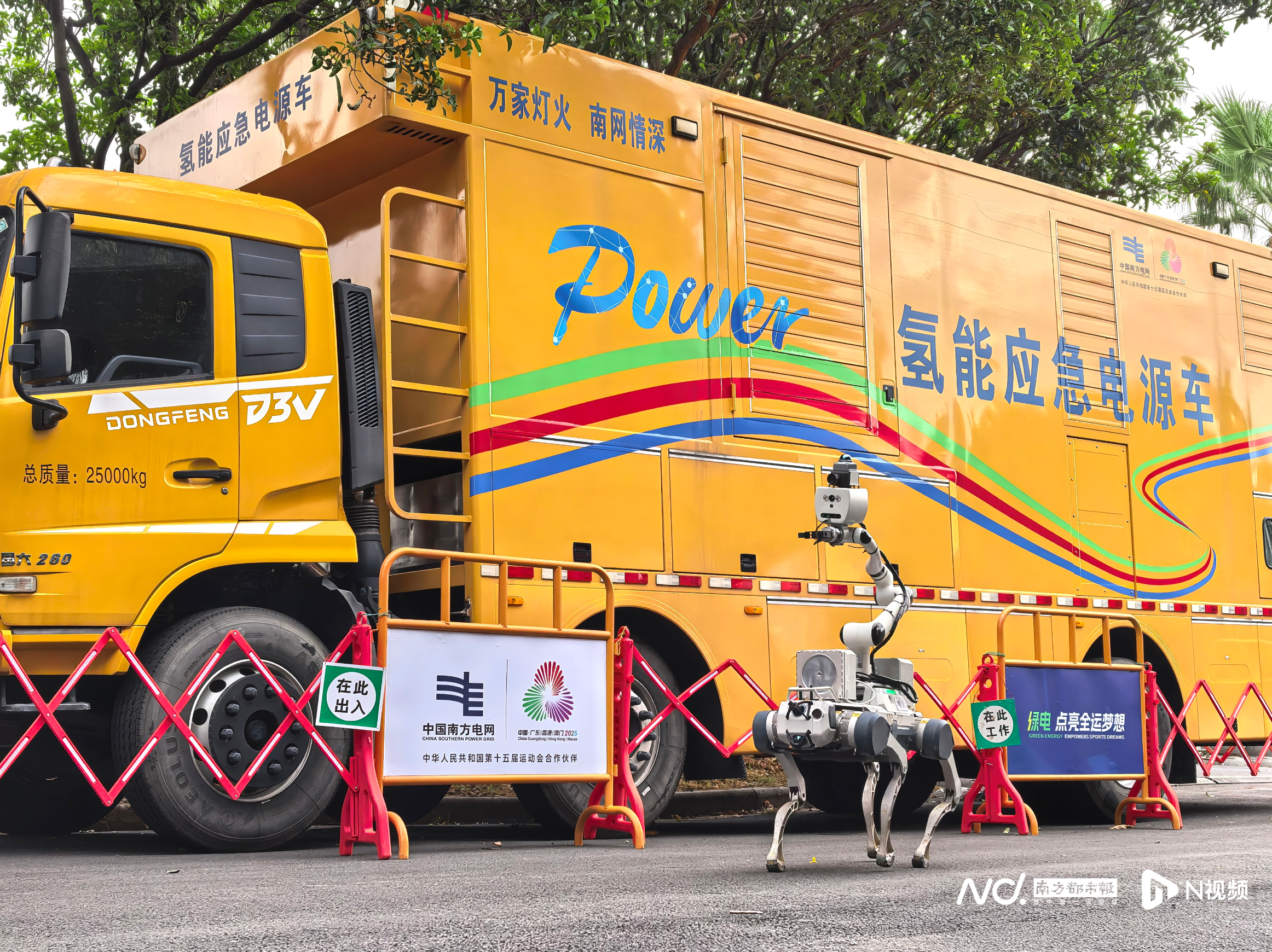
2025年广州新能源车整车制造业用电量增速超70%
Nan Fang Du Shi Bao· 2026-01-21 05:48
Group 1 - The total electricity consumption in the Southern Power Grid region is projected to reach 1.7994 trillion kilowatt-hours by 2025, marking a year-on-year growth of 5.4% and a 37.8% increase compared to the end of the 13th Five-Year Plan in 2020 [1] - Green electricity is becoming a significant aspect, with one out of every two kilowatt-hours consumed being green electricity, and the carbon emissions per kilowatt-hour decreasing from 0.36 kg in 2020 to 0.33 kg [1] - The electricity consumption growth in Guangdong's high-tech and equipment manufacturing industry is notable, with a year-on-year increase of 6.65%, particularly in the automotive manufacturing and electronics sectors, which saw growth rates of 12.66% and 8.57% respectively [1] Group 2 - The modern service industry in the Southern Power Grid region is experiencing a recovery, with electricity consumption increasing by 6.2% year-on-year, and production and life service sectors growing by 8.3% and 8.7% respectively [4] - The emerging digital economy is showing strong growth, with the information transmission, software, and IT services sector's electricity consumption rising by 14.1%, and internet data services soaring by 55.2% [4] - The "East Data West Computing" strategy is advancing, with Guangdong's 307 data centers consuming over 10.9 billion kilowatt-hours in 2025, a year-on-year increase of 28.58%, and the Guizhou internet data service consumption skyrocketing by 95.01% [4]
中国电信跌2.02%,成交额9.88亿元,主力资金净流出2.90亿元
Xin Lang Cai Jing· 2026-01-21 05:47
Core Viewpoint - China Telecom's stock has experienced a decline of 7.46% year-to-date, with significant drops over various time frames, indicating potential challenges in the market [1]. Financial Performance - For the period from January to September 2025, China Telecom reported a revenue of 394.27 billion yuan, reflecting a year-on-year growth of 0.59% [2]. - The net profit attributable to shareholders for the same period was 30.77 billion yuan, showing a year-on-year increase of 5.03% [2]. Stock Market Activity - As of January 21, China Telecom's stock price was 5.83 yuan per share, with a market capitalization of 533.49 billion yuan [1]. - The stock has seen a trading volume of 988 million yuan on the same day, with a turnover rate of 0.22% [1]. - Major funds have seen a net outflow of 290 million yuan, with significant selling pressure observed [1]. Shareholder Information - As of September 30, 2025, the number of shareholders for China Telecom was 273,700, an increase of 22.83% from the previous period [2]. - The average circulating shares per person remained at 0 shares, indicating a stable shareholder base [2]. Dividend Distribution - Since its A-share listing, China Telecom has distributed a total of 95.19 billion yuan in dividends, with 68.65 billion yuan distributed over the last three years [3]. Company Overview - China Telecom, established on September 10, 2002, and listed on August 20, 2021, primarily engages in telecommunications and related services [1]. - The company's revenue composition includes mobile communication services (39.56%), industrial digital services (27.78%), fixed-line and smart home services (23.80%), and other income sources [1].