
AI芯片

Search documents
千人芯片团队转至新加坡子公司?字节跳动回应
是说芯语· 2025-09-07 07:54
Core Viewpoint - ByteDance is reportedly restructuring its chip team, transferring it to a new entity, Picoheart, in Singapore, amidst rumors of layoffs and independence, which the company has denied, stating that the core structure remains unchanged [2][3]. Group 1: Company Structure and Changes - ByteDance's chip research team, consisting of 1,000 employees, has been moved to its Singapore subsidiary, Picoheart, with no changes to contracts, work locations, or benefits [2][3]. - The employment contracts for the chip team are managed by various entities controlled by Picoheart across multiple cities, including Beijing and Shanghai [4][5]. Group 2: Investments and Acquisitions - In 2024, Picoheart acquired a 9.5% stake in InnoStar Semiconductor, a Shanghai-based memory chip manufacturer, aimed at enhancing data storage efficiency for its virtual reality products [3]. - ByteDance has also invested in other Chinese chip design companies, including Silicon Integrated and Moore Threads [3]. Group 3: AI and Technology Investments - ByteDance is significantly increasing its investment in artificial intelligence, planning to invest over $12 billion in AI-related projects in 2023, with a substantial portion allocated for AI chip procurement [5]. - The company has established a dedicated Seed team for AI research and expanded its cloud computing division, Volcano Engine, to support its AI initiatives [5].


英伟达的劲敌,拿下百亿美元芯片大单
2 1 Shi Ji Jing Ji Bao Dao· 2025-09-06 15:02
Core Viewpoint - Broadcom has reported impressive earnings driven by strong demand for AI-related products, positioning itself as a significant competitor to Nvidia in the AI chip market [1][5]. Financial Performance - For Q3 of fiscal year 2025, Broadcom achieved revenue of $15.952 billion, a year-on-year increase of 22%, slightly exceeding the previous guidance of $15.8 billion [1]. - Adjusted net profit for the same period was $10.702 billion, reflecting a year-on-year growth of 30.15% [1]. - AI business revenue reached $5.2 billion, up 63% year-on-year, surpassing the previous quarter's guidance of $5.1 billion [1]. Market Position and Strategy - Unlike Nvidia, which focuses on general-purpose GPU chips, Broadcom specializes in designing custom ASIC chips tailored for cloud service providers, enhancing compatibility with their specific AI inference needs [2][3]. - Broadcom's CEO highlighted that the company expects AI semiconductor revenue to accelerate, projecting $6.2 billion for Q4, marking 11 consecutive quarters of growth [5]. - The XPU business accounted for 65% of Broadcom's overall AI revenue in Q3, with significant demand from three major clients [5]. Industry Trends - The competition between GPU and ASIC chips is expected to continue, with both types of chips serving different market needs in AI infrastructure [4][8]. - ASIC chips are gaining traction due to their efficiency in AI inference tasks, which are increasingly favored by cloud service providers [6][7]. - Analysts predict that by 2028, the shipment volume of AI ASICs will surpass that of GPUs, with a compound annual growth rate (CAGR) of 52% for ASICs compared to 50% for GPUs [9].


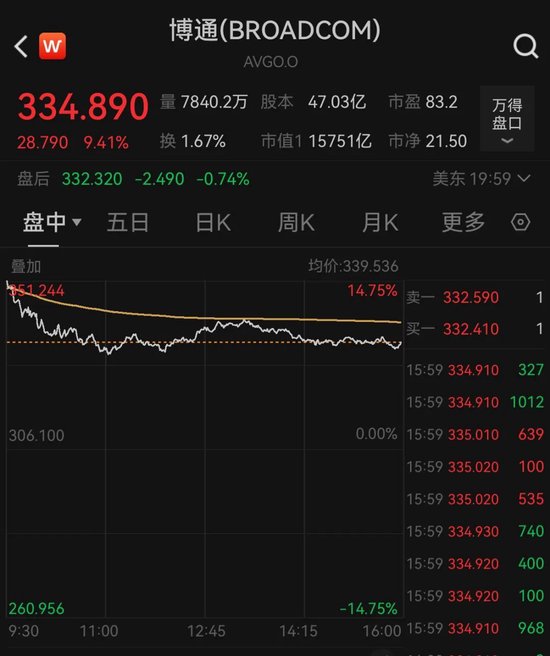
英伟达的劲敌,拿下百亿美元芯片大单
21世纪经济报道· 2025-09-06 14:53
Core Viewpoint - Broadcom has reported impressive earnings driven by strong demand for AI-related products, particularly custom ASIC chips, which are tailored for cloud service providers, contrasting with Nvidia's focus on general-purpose GPU chips [1][3][5]. Financial Performance - For Q3 of FY2025, Broadcom achieved revenue of $15.952 billion, a 22% year-over-year increase, and adjusted net income of $10.702 billion, up 30.15% [1]. - AI business revenue reached $5.2 billion in the same quarter, reflecting a 63% year-over-year growth, slightly exceeding the previous guidance of $5.1 billion [1]. Market Dynamics - The demand for ASIC chips is rising as they are better suited for specific AI inference needs, leading to a competitive landscape where both GPU and ASIC markets are expected to grow together [4][8]. - Broadcom's CEO indicated that AI semiconductor revenue is projected to accelerate, with expectations of reaching $6.2 billion in Q4, marking 11 consecutive quarters of growth [5]. Customer Demand - Broadcom's XPU business accounted for 65% of its AI revenue in Q3, driven by increasing orders from three major clients, which are expected to create a serviceable addressable market of $60 billion to $90 billion by FY2027 [5]. - A new order worth $10 billion for XPU chips has been received, potentially from OpenAI, which could enhance Broadcom's AI performance beyond previous expectations [5]. Competitive Landscape - Other companies like Marvell are also benefiting from the demand for custom ASIC chips, with Marvell reporting a 58% year-over-year revenue increase in its latest quarter [6]. - The ASIC chip market is anticipated to expand as AI applications grow, potentially surpassing the AI training market, which is dominated by GPU chips [6][8]. Future Projections - Analysts predict that from 2023 to 2028, the compound annual growth rate (CAGR) for high-end cloud AI accelerators will be 50% for GPUs and 52% for AI ASICs, suggesting that AI ASIC shipments may exceed those of GPUs by 2028 [9].

周五,AI芯片巨头“冰火两重天”
华尔街见闻· 2025-09-06 10:10
Group 1 - The core market contradiction revolves around "AI chips," with Broadcom's stock soaring due to a partnership with OpenAI, while Nvidia's stock fell, impacting the tech sector negatively [1][4] - Broadcom, a top-weighted stock in the S&P 500, will help OpenAI design and produce an AI chip starting in 2026, leading to a 9.4% increase in Broadcom's stock, while Nvidia's stock dropped by 2.70% [4] - The decline in Nvidia's stock also affected other tech stocks, with AMD down 6.6% and Microsoft down 2.6%, reflecting investor concerns over intensified competition in the AI chip sector [4] Group 2 - A disappointing U.S. employment report showed only 22,000 new jobs in August, far below the expected 75,000, and the unemployment rate rose slightly to 4.3% [5][6] - This weak employment data reinforced expectations that the Federal Reserve may lower interest rates in its upcoming meeting, but it also raised concerns about the overall economic condition [6] - Market reactions to potential rate cuts are mixed, with small-cap stocks benefiting, as seen by a 0.5% rise in the Russell 2000 index, while some strategists warn that rate cuts may not meet market expectations [6] Group 3 - There is increasing market divergence, with cyclical companies underperforming and energy and financial sectors both declining over 1.8% due to falling oil prices [7] - Amid economic uncertainty and geopolitical factors, investors are seeking safe-haven assets, pushing gold and gold mining stocks to new highs since 2011 [7] - Tesla's stock rose 3.6% following a proposal for a historic $1 trillion compensation package for CEO Elon Musk, while Lululemon's stock plummeted 19% after lowering its earnings outlook [7] Group 4 - The market will closely monitor upcoming CPI inflation data and Apple's annual iPhone launch event as key indicators for future trends [8]

博通大涨、英伟达下跌,博通能否替代英伟达?“AI芯片”牵动整个美股
美股IPO· 2025-09-06 04:55
Group 1 - Broadcom will design and produce AI chips for OpenAI starting in 2026, leading to a 9.4% increase in Broadcom's stock price [1][6] - Nvidia's stock fell by 2.70% due to concerns over increased competition in the AI chip market, negatively impacting the technology sector [1][6] - AMD's stock dropped by 6.6% and Microsoft's stock fell by 2.6% as a result of Nvidia's decline, indicating a broader impact on tech stocks [6] Group 2 - The U.S. non-farm payroll report showed only 22,000 new jobs in August, significantly below the expected 75,000, raising concerns about economic growth [4][7] - The unemployment rate slightly increased to 4.3%, and previous data was revised to show a contraction for the first time since 2020, intensifying recession fears [7] - Market reactions to potential Federal Reserve interest rate cuts are mixed, with small-cap stocks benefiting while larger economic concerns persist [7] Group 3 - There is a noticeable divergence in market performance, with cyclical companies underperforming and energy and financial sectors both declining over 1.8% [8] - Investors are increasingly seeking safe-haven assets like gold, pushing gold mining stock indices to their highest levels since 2011 [9] - Tesla's stock rose by 3.6% following a proposal for a $1 trillion compensation package for CEO Elon Musk, while Lululemon's stock plummeted by 19% due to lowered earnings outlook [9] Group 4 - The market is set to closely monitor upcoming CPI inflation data and Apple's annual iPhone launch event as key indicators for future trends [10]
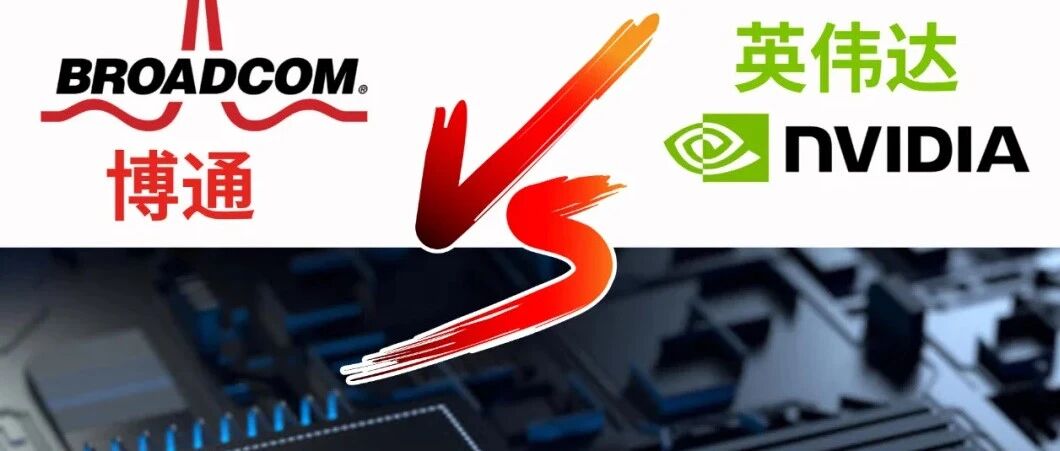
创新高!暴涨9.41%!博通业绩再超预期背后,ASIC定制芯片持续吸引买家入场 机构上调目标价至415美元
美股IPO· 2025-09-06 02:27
Core Viewpoint - Broadcom has reported impressive earnings, driven by strong demand for AI-related products, particularly custom ASIC chips, positioning itself as a significant competitor to Nvidia in the AI chip market [3][4]. Financial Performance - For Q3 of FY2025, Broadcom achieved revenue of $15.952 billion, a 22% year-over-year increase, slightly above the previous guidance of $15.8 billion [3]. - Adjusted net income reached $10.702 billion, reflecting a 30.15% year-over-year growth [3]. - AI business revenue was $5.2 billion, marking a 63% increase year-over-year, surpassing the previous quarter's guidance of $5.1 billion [3][4]. AI Chip Market Dynamics - Broadcom's XPU business accounted for 65% of its overall AI revenue in Q3, with continued growth in demand for custom AI accelerators from major clients [5]. - The company anticipates AI semiconductor revenue growth to accelerate, projecting $6.2 billion in AI revenue for Q4, contributing to 11 consecutive quarters of growth [4][11]. - Broadcom has received a significant order exceeding $10 billion for XPU chips, potentially from OpenAI, which could enhance its AI performance expectations for FY2026 [6]. Competitive Landscape - The ASIC chip market is expected to grow as it caters specifically to AI inference needs, which are becoming increasingly important as AI applications expand [8]. - Nvidia and AMD are also exploring opportunities in the ASIC chip market, indicating a competitive environment where both GPU and ASIC chips will coexist and develop [4][10]. - Major cloud service providers are investing in both Nvidia's GPUs and developing their own AI chips, reflecting a dual strategy to meet diverse AI infrastructure needs [9][10]. Market Outlook - The ASIC chip market is projected to grow at a CAGR of 52% from 2023 to 2028, potentially surpassing GPU shipments by 2028 [11]. - Broadcom's strong Q3 performance and optimistic Q4 projections have led to increased market confidence, with analysts raising target prices for the stock [11].

英伟达在华特供AI芯片B30A售价曝光!
国芯网· 2025-09-05 12:48
Core Viewpoint - The article discusses the ongoing efforts of Nvidia to customize AI chips for the Chinese market, highlighting the potential pricing and performance differences compared to existing models [2][4]. Group 1: Nvidia's AI Chips for China - Nvidia is reportedly working on a new AI chip for China, which may be priced at two times the cost of the H20 model, potentially reaching $20,000 to $24,000 (approximately 171,000 yuan) [2][4]. - The B30A chip is likely based on the Blackwell B300A design, utilizing TSMC's 4nm process and featuring advanced packaging with 144GB HBM3E and a power consumption of 600W [4]. - Nvidia aims to maintain its market presence in China by promoting its AI chips, as they are superior in performance compared to domestic alternatives [4]. Group 2: Chinese Tech Companies' Interest - Major Chinese tech companies, including Alibaba and ByteDance, are keen to acquire advanced Nvidia AI chips, indicating a strong demand for high-performance computing solutions [4]. - There is a concern that if Chinese developers fully transition to domestic products, it could diminish Nvidia's influence in the market, which is why the company is eager to continue its partnerships [4].

多家机构集体上调博通目标价,Melius Research给出415美元的最高目标价
Feng Huang Wang· 2025-09-05 11:55
Group 1 - Broadcom reported better-than-expected Q3 earnings and provided optimistic guidance for Q4 AI chip revenue [2] - Q3 adjusted earnings per share were $1.69, exceeding market expectations of $1.67 [2] - Q3 adjusted net revenue was $15.95 billion, surpassing the market forecast of $15.84 billion [2] Group 2 - Broadcom's Q3 AI semiconductor revenue reached $5.2 billion, above the expected $5.11 billion [2] - For Q4, Broadcom anticipates revenue of approximately $17.4 billion, compared to market expectations of $17.05 billion [2] - Q4 AI semiconductor revenue is projected to be $6.2 billion, exceeding the market estimate of $5.82 billion [2] Group 3 - Following the earnings report, multiple investment banks raised their target prices for Broadcom significantly [1] - Melius Research raised its target price from $335 to $415, while Piper Sandler increased it from $315 to $375 [1] - Other notable increases include Morgan Stanley from $357 to $382 and Deutsche Bank from $300 to $350 [1]
新架构芯片公司,缘何赢得全球资本押注?-财经-金融界
Jin Rong Jie· 2025-09-05 11:38
Core Insights - The AI chip industry is witnessing a significant shift with the rise of non-GPU architectures, attracting substantial capital investments, as exemplified by Groq's recent funding rounds totaling $6 billion and a valuation nearing $60 billion [1][4][5] - The competition is intensifying between two main technological factions: the traditional GPU-based centralized computing architecture led by Nvidia and the emerging innovative data flow architectures favored by companies like Groq, SambaNova, and Google [3][4][5] - Non-GPU chip companies are gaining traction in the market, with their unique advantages in AI computation, leading to increased interest from both policy and industry capital [3][4][5] Investment Trends - Non-GPU chip companies are receiving significant investments, with Groq's valuation skyrocketing from $28 billion to nearly $60 billion within a year [4] - SambaNova has also seen its valuation rise to $50 billion within five years, showcasing the potential of innovative architectures in the AI chip sector [5] - The domestic AI chip market in China is evolving to support both GPU and non-GPU architectures, with a focus on long-term strategic value and commercial potential [6][7] Technological Developments - Groq's self-developed data flow processor (LPU) claims to be ten times faster than Nvidia's GPUs while costing only one-tenth, indicating a significant technological edge [4] - SambaNova's reconfigurable data flow chip can support training of models with 50 trillion parameters, outperforming Nvidia's H100 in performance while maintaining lower total ownership costs [5] - Companies like Qingwei Intelligent are developing reconfigurable computing architectures, with their TX8 series AI chips set to launch by the end of 2024, further enhancing the competitive landscape [8][9] Market Dynamics - The market is characterized by a "factional struggle" between traditional GPU architectures and innovative non-GPU architectures, with the latter gaining recognition from major players like OpenAI [3][5] - The emergence of new architectures is seen as a long-term strategy to build competitive barriers in the domestic AI chip market, despite the challenges posed by the need for ecosystem development and customer migration [10][11] - The investment landscape is shifting towards high originality and low homogeneity projects, with companies like Qingwei Intelligent and SambaNova being highlighted for their unique technological propositions [8][11]

科德教育:参股中昊芯英下半年预计为公司提供一定投资收益
Zheng Quan Shi Bao Wang· 2025-09-05 10:17
Group 1: Company Overview - Zhonghao Xinying, an AI "quasi-unicorn" company, is attracting significant market attention due to its potential acquisition of an A-share company, leading to a surge in the stock price of Tianpu Co., which has recently experienced consecutive trading halts due to price increases [1] - Kede Education, an A-share education company, is also under investor scrutiny due to its investment in Zhonghao Xinying, holding a 5.53% stake [1][3] Group 2: Financial Performance - In the first half of 2025, Kede Education reported an operating income of approximately 366 million yuan, a slight decrease compared to the previous year, and a net profit attributable to shareholders of 53.28 million yuan, down 15.16% year-on-year [2] - The investment loss from Zhonghao Xinying, amounting to 8.92 million yuan, significantly impacted Kede Education's half-year profit, contributing to the overall decline in net profit [2][3] Group 3: Business Segments - Kede Education's ink business is influenced by seasonal fluctuations, with a reported revenue of 183 million yuan in Q1 2025, which slightly decreased due to early Spring Festival sales [2] - The company remains optimistic about the ink industry, citing structural growth in high-end printing markets despite challenges in traditional publishing due to digitalization [3] - In the education sector, Kede Education notes increasing competition and a shift in parental preferences towards vocational education for middle-performing students, indicating a changing landscape in the education market [4]
