数字孪生

Search documents
凡拓数创202509004
2025-09-04 14:36
Summary of the Conference Call for Vantou Digital Creation Company Overview - **Company**: Vantou Digital Creation - **Industry**: Digital Twin Technology and Digital Culture Key Points and Arguments Financial Performance and Outlook - In the first half of 2025, Vantou's overall performance improved, with digital integration service revenue increasing by 46% compared to the previous year, driven by a strong order backlog and a favorable industry environment [3] - Despite expected revenue growth in the second half of 2025 due to a low base last year, profit margins are under pressure from intense market competition and investments in new businesses [3][2] - Operating cash flow increased by over 80% in the first half, but there is uncertainty regarding cash collection in the second half [3] Strategic Shift and Business Model - The company is transitioning from traditional digital creativity to digital twin information products and is actively exploring the ToC (consumer) digital culture sector [2] - Vantou is collaborating with cultural institutions like Taishan and the National Library to monetize through IP partnerships and ticket revenue sharing [2][6] - The focus is on developing standardized software in the digital twin field, integrating simulation and high-speed rendering technologies to attract developers [2][8] Digital Twin Technology Development - Vantou aims to enhance its digital twin business by developing AI-driven 3D solutions, improving virtual scene construction, and data simulation capabilities [16] - The company is concentrating on three sectors: water resources, energy, and smart manufacturing, leveraging mergers and acquisitions for market positioning and technological synergy [24][25] Challenges and Opportunities in ToC Business - While the ToC business appears lucrative, challenges include sourcing attractive IP and managing high operational costs [11] - The success of certain IPs in the market is attributed to strong operational capabilities and the element of chance [12][13] AI Technology Impact - The proliferation of AI technology lowers the barriers to digital content creation, but Vantou's extensive 3D asset library and upgraded rendering engine provide a significant competitive advantage [14] - The company does not directly commercialize 3D assets but develops specific applications based on these assets [15] Future Development Plans - Vantou plans to standardize its digital twin software and attract developers to create personal and enterprise tools [9] - The company is focused on enhancing its operational capabilities in the ToC sector while continuing to innovate in digital culture projects [10] Acquisition Strategy - Vantou has made strategic acquisitions in water and information technology sectors and is actively seeking additional targets, although finding suitable candidates remains challenging [26] Stock Incentive Plans - The company is under pressure to meet its stock incentive goals for 2025 and plans to continue its tradition of stock incentives every two to three years [27] Collaboration with Lixun Precision - The partnership with Lixun Precision is progressing well, with order values increasing significantly [28] Future Outlook - Vantou is positioned in the virtual reality industry, which is expected to evolve significantly, and aims to grow through both organic development and strategic acquisitions [29]
能科科技跌2.12%,成交额3.57亿元,主力资金净流出861.75万元
Xin Lang Cai Jing· 2025-09-04 06:33
Group 1 - The core viewpoint of the news highlights the recent stock performance and financial metrics of Nengke Technology, indicating a decline in stock price despite a significant year-to-date increase [1] - As of September 4, Nengke Technology's stock price was 43.30 CNY per share, with a market capitalization of 10.595 billion CNY and a trading volume of 357 million CNY [1] - The company has experienced a year-to-date stock price increase of 44.91%, but has seen a decline of 13.85% over the last five trading days [1] Group 2 - Nengke Technology, established on December 26, 2006, and listed on October 21, 2016, operates in sectors such as defense, high-tech electronics, 5G, automotive, and infrastructure [2] - The company's revenue composition includes 30.35% from cloud products and services, 30.24% from industrial engineering and electrical products, 20.90% from software systems and services, and 18.08% from AI products and services [2] - As of June 30, 2025, Nengke Technology reported a revenue of 738 million CNY, reflecting a year-on-year growth of 4.91%, and a net profit of 111 million CNY, with an 18.75% increase [2] Group 3 - Nengke Technology has distributed a total of 79.65 million CNY in dividends since its A-share listing, with 21.40 million CNY distributed over the past three years [3] - As of June 30, 2025, the top ten circulating shareholders include Huaxia Industry Prosperity Mixed Fund and Jiao Yin Advanced Manufacturing Mixed Fund, with the latter being a new shareholder [3]

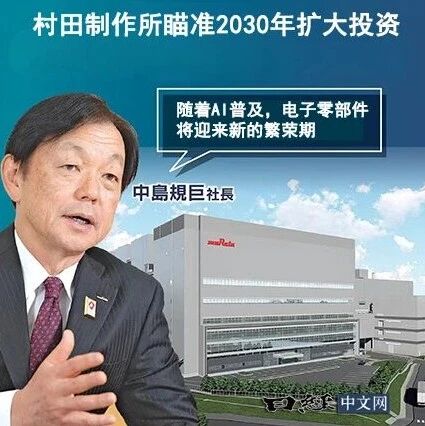
村田研究(上)瞄准15年周期投资千亿
日经中文网· 2025-09-04 02:57
Core Viewpoint - Murata Manufacturing anticipates a peak in performance around 2030, driven by the widespread adoption of AI-equipped devices, despite a projected decline in profits for the current fiscal year [3][10][12]. Group 1: Investment and Growth Strategy - The company plans to increase its capital investment for the fiscal year ending March 2026 to 270 billion yen, a 50% increase from the previous year, in anticipation of growing demand for electronic components due to AI [3][6]. - A new factory is under construction in Izumo City, Shimane Prefecture, with an investment of approximately 47 billion yen, set to become Murata's largest facility upon completion in 2026 [5][6]. - The company aims to expand its market share of multilayer ceramic capacitors (MLCC) to 43% by 2030, up from the current 40% [15]. Group 2: Market Position and Challenges - Murata holds the largest market share in the MLCC segment, which is essential for smartphones and electric vehicles, with about 40% of a global market valued at approximately 2 trillion yen [6][7]. - Despite its leading position, the company faces challenges due to stagnation in the smartphone and automotive markets, with a projected net profit of 177 billion yen for the fiscal year 2025, a 24% decrease from the previous year [9][10]. - The competitive landscape is intensifying, with companies from Taiwan and South Korea aggressively pursuing market share, prompting Murata to invest heavily to maintain its leadership [16]. Group 3: Historical Performance and Future Outlook - Historically, Murata has experienced performance peaks every 15 years, with significant profit margins during the fiscal years of 1984, 2000, and 2015, linked to technological advancements in electronics [11][12]. - The upcoming peak in 2030 is expected to be driven by the integration of AI in consumer electronics, with the company preparing for a surge in demand for electronic components [12][15]. - The company acknowledges the need for substantial investment to stay ahead of competitors and capture market share, even if it means sacrificing short-term profits [16].

【行业深度】洞察2025:中国智慧交通行业竞争格局及排名情况(附项目竞争情况、企业排名、细分赛道、战略集群、波特五力模型)
Qian Zhan Wang· 2025-09-03 10:41
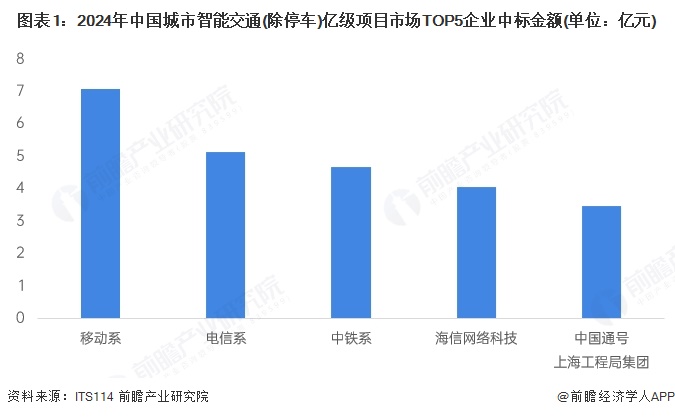
Core Viewpoint - The Chinese smart transportation industry is experiencing moderate market concentration, with leading companies like China Mobile and China Telecom dominating the market due to their advanced communication technologies and infrastructure resources [2][6]. Market Competition Analysis - In 2024, the top five companies in the urban smart transportation project bidding are China Mobile, China Telecom, China Railway, Hisense Network Technology, and China Communications Shanghai Engineering Bureau Group, collectively holding over 45% of the market share [1][2]. - The market is characterized by a layered competition where telecom operators lead infrastructure, state-owned enterprises focus on vertical markets, and tech companies emphasize technological breakthroughs [6][15]. - The CR3 (concentration ratio of the top three companies) stands at 31%, while the CR5 (concentration ratio of the top five companies) is 44%, indicating a significant presence of leading firms [6]. Innovation and Technology Ranking - The top five companies in the Chinese smart transportation technology innovation ranking for 2025 are Baidu Apollo, Huawei, Mogu Car Union, Zhongke Chuangda, and Jinzhi Technology, recognized for their comprehensive technology solutions and successful pilot projects [8][9]. - Companies like Baidu Apollo and Huawei leverage their full-stack technology and integrated solutions to maintain their leading positions in the market [8][10]. Segment Analysis - Smart transportation solution providers include Baidu Apollo and Huawei, which offer comprehensive solutions from perception to control, focusing on technology integration and scene implementation capabilities [10]. - Hardware product solution providers consist of component manufacturers like Bosch and Dahua Technology, which meet the demand for sensors and vehicle-mounted terminals [10]. - The competitive landscape also includes technology integrators such as Baidu Maps and Gaode Maps, which provide foundational data and technical support for smart transportation [10]. Strategic Cluster Analysis - Market leaders like Dahua Technology excel in revenue and profit margins by offering a range of smart transportation products and solutions [13]. - Companies such as Junsen Electronics and Yutong Bus are recognized as market drivers due to their scale advantages in automotive manufacturing and components [13]. Competitive Forces Summary - The competitive landscape of the smart transportation industry is characterized by high technical barriers for existing competitors, with significant pressure from potential entrants, particularly tech giants [15]. - The bargaining power of suppliers is moderate, while buyers, including government and automotive companies, exert strong pressure for cost-effectiveness and customization [15]. - The threat of substitutes is low, as smart transportation is a necessary upgrade area, making it difficult for existing technologies to be disrupted in the short term [15].
东芯股份复牌一度涨超4%,拟2.11亿元增资上海砺算
Sou Hu Cai Jing· 2025-09-03 02:08
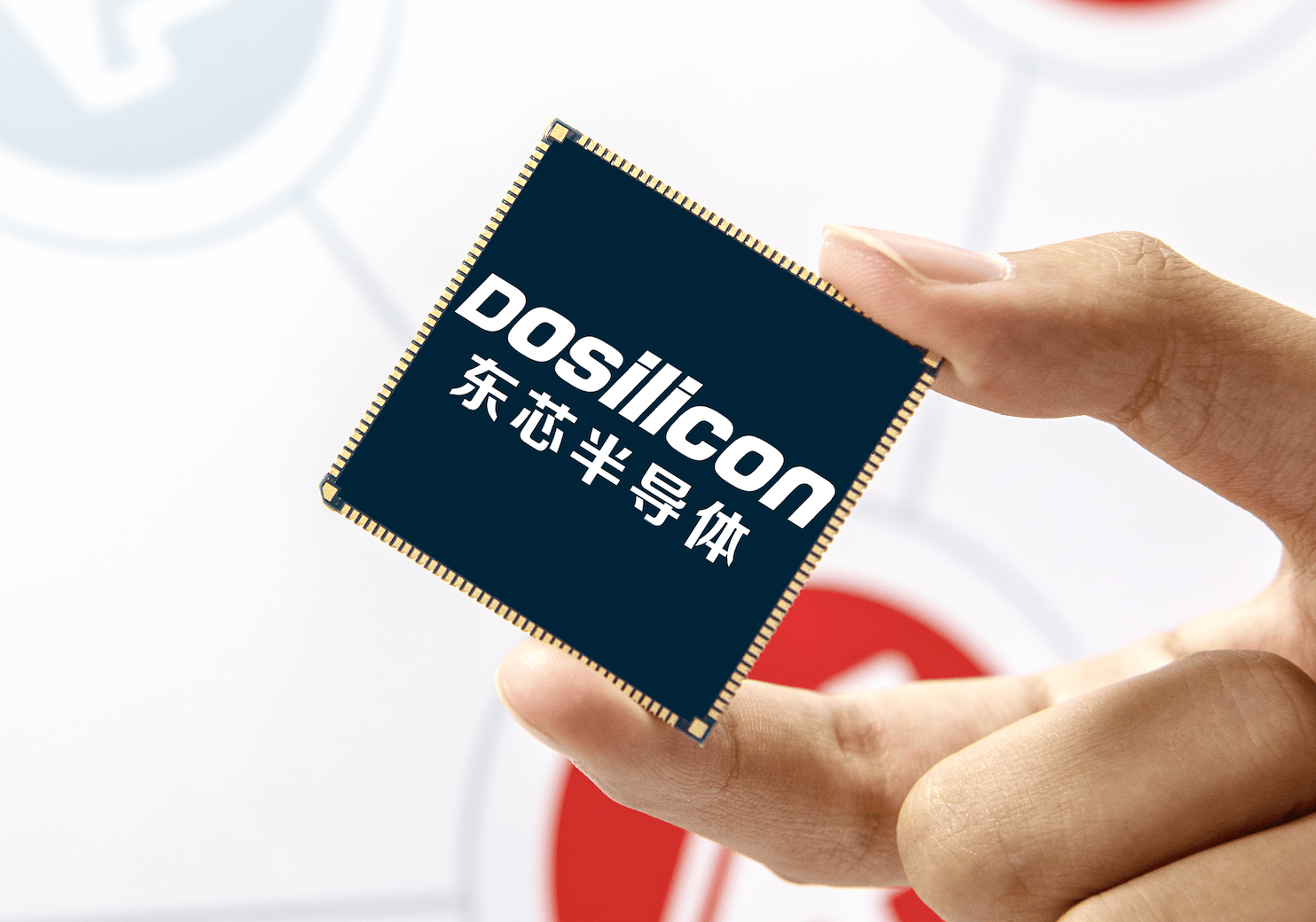
Core Viewpoint - Dongxin Co., Ltd. (688110.SH) has experienced significant stock price fluctuations, with a cumulative increase of 207.85% from July 29 to August 28, raising concerns about its valuation and profitability [1][2][4]. Group 1: Stock Performance and Market Reaction - Dongxin's stock was suspended for verification due to a sharp price increase, and upon resuming trading, it saw an initial rise of over 4%, closing at 121.77 yuan per share, with a market capitalization of 53.9 billion yuan [1]. - The stock price has been under scrutiny by the Shanghai Stock Exchange for abnormal trading activities, leading to multiple monitoring actions in August [1]. - The company's rolling price-to-earnings ratio is currently negative, contrasting sharply with the industry average of 53.35 [1]. Group 2: Financial Performance - In the first half of 2025, Dongxin reported an operating income of 34.3 million yuan, a year-on-year increase of 28.81%, but also recorded a net loss of 111 million yuan, which is an increase in losses by 19.84 million yuan compared to the previous year [2]. - The company indicated that its operational performance has not changed in line with the recent stock price surge, highlighting a risk of market trading changes without corresponding improvements in profitability [4]. Group 3: Investment and Business Development - Dongxin plans to increase its investment in Shanghai Lishuan, a company it has invested in, with a total investment amounting to approximately 500 million yuan, including 211 million yuan from its own funds [4][5]. - After the capital increase, Dongxin's ownership in Shanghai Lishuan will decrease to approximately 35.87% [5]. - Shanghai Lishuan focuses on the research and development of scalable GPU chips, with applications in various fields such as personal computers and cloud gaming, although product sales are subject to uncertainties [4][5].

青达环保(688501):业绩符合预期,火电细分环节AI+有望超预期
Shanxi Securities· 2025-09-03 02:05
Investment Rating - The report maintains a "Buy-A" rating for the company [1][6] Core Views - The company's performance meets expectations, with significant growth in revenue and net profit, driven by advancements in AI technology in the thermal power sector [2][4] - The company is actively integrating AI technology with traditional equipment, focusing on pain points in existing management systems within thermal power plants [4][5] - The company has developed an AI-based intelligent operation and maintenance management platform for slag transportation equipment, recognized as internationally leading [4][5] Financial Performance - For the year ending June 30, 2025, the company reported revenue of 1.19 billion yuan, a year-on-year increase of 130.8%, and a net profit of 110 million yuan, up 351.8% [2] - The gross profit margin for Q2 2025 was 27.96%, an increase of 4.76 percentage points from the previous quarter [2] - The company expects continued revenue growth in the second half of 2025, with anticipated orders in various environmental protection systems [5] Market Data - As of September 2, 2025, the company's closing price was 30.08 yuan, with a market capitalization of 4.062 billion yuan [4] - The company has a basic earnings per share (EPS) of 0.88 yuan and a return on equity (ROE) of 10.60% [5] Future Projections - The company forecasts EPS of 1.76 yuan, 2.29 yuan, and 2.95 yuan for the years 2025, 2026, and 2027, respectively, with corresponding price-to-earnings (P/E) ratios of 17.1, 13.1, and 10.2 [6][9] - Revenue is projected to grow from 1.947 billion yuan in 2025 to 2.977 billion yuan in 2027, reflecting a compound annual growth rate (CAGR) of 19.4% [9][10]

格林大华期货早盘提示-20250903
Ge Lin Qi Huo· 2025-09-02 23:32
Report Summary 1. Report Industry Investment Rating - No industry investment rating is provided in the report. 2. Core Viewpoints - On Tuesday, growth - related indices adjusted significantly, while the Shanghai 50 Index stabilized the market. The trading volume was 2.87 trillion yuan with increased volume during the decline. The Shanghai 50 Index rose 0.39%, while the CSI 1000 Index dropped 2.50% [1]. - Central Huijin increased its holdings of 12 ETF products in the first half of the year, spending over 210 billion yuan. Since August, Chinese assets have been continuously "swept up" by global funds. Many overseas - listed Chinese ETFs have seen a surge in scale, and Chinese mainland stock funds attracted over $4 billion in the past week [1][2]. - Overseas funds showed a net inflow into the A - share market in the first half of 2025. As of the end of June 2025, overseas investors held 3.07 trillion yuan of A - shares. Northbound funds increased their A - share holdings in the first two quarters of 2025 [1][2]. - The market may enter a daily - level adjustment, which is a total adjustment since the rise in June. The probability of a sharp decline is low, and the adjustment is expected to be in the form of range - bound lateral fluctuations [2]. 3. Summary by Directory 3.1 Market Review - On Tuesday, growth - related indices adjusted deeply. The Shanghai 50 Index closed at 2992 points, up 11 points (0.39%); the CSI 300 Index closed at 4490 points, down 33 points (- 0.74%); the CSI 500 Index closed at 6961 points, down 148 points (- 2.09%); the CSI 1000 Index closed at 7313 points, down 187 points (- 2.50%) [1]. - Among industry and theme ETFs, the top - gainers were Robot 50 ETF, Bank ETF, etc., and the top - losers were New Energy Vehicle Battery ETF, etc. Among sector indices, the top - gainers were oil and gas exploration, forestry, etc., and the top - losers were communication equipment, components, etc. [1]. - Net inflows of settlement funds into CSI 1000, CSI 300, CSI 500, and Shanghai 50 stock index futures were 6.7 billion, 6.4 billion, 4.8 billion, and 2.8 billion yuan respectively [1]. 3.2 Important Information - The "Construction Plan for a High - Quality Standard System for Industrial Mother Machines" was issued, focusing on developing standards for the application of new - generation information technologies in industrial mother machines [1]. - Central Huijin increased its holdings of 12 ETF products in the first half of the year, covering Shanghai 50ETF, CSI 300ETF, etc., with a total cost of over 210 billion yuan [1][2]. - Overseas funds showed a net inflow into the A - share market in the first half of 2025. As of the end of June 2025, overseas investors held 3.07 trillion yuan of A - shares. Northbound funds increased their A - share holdings in the first two quarters of 2025 [1][2]. - Since August, Chinese assets have been continuously "swept up" by global funds. The scale of the KraneShares China Overseas Internet ETF exceeded $8.5 billion, and Chinese mainland stock funds attracted over $4 billion in the past week [1][2]. - UBS believes that overseas investors have sufficient room to increase their A - share holdings. With China's economic recovery and corporate profit growth, global investors may regain confidence in the A - share market [1]. - An idle US nuclear power plant in Iowa will be re - connected to the grid to meet the power demand of AI data centers [2]. - The eurozone unemployment rate dropped from 6.3% in June to 6.2% in July, with 170,000 fewer unemployed people, matching the historical low in November 2024 [2]. - Dutch pension funds are unwinding large - scale positions in long - term interest rate swaps, causing the yields of 30 - year German and French government bonds to reach multi - year highs [2]. - Retail giants such as Walmart and Target said that price increases related to tariffs have affected food, household goods, and electronics. The worst may be yet to come for consumers and businesses [2]. - The Trump administration is considering declaring a national housing emergency to address the US housing crisis and for political purposes [2]. 3.3 Market Logic - The deep adjustment of growth - related indices on Tuesday was accompanied by the Shanghai 50 Index stabilizing the market. Central Huijin's large - scale ETF purchases and the continuous inflow of global funds into Chinese assets are the main market - influencing factors [2]. 3.4 Market Outlook - The market may enter a daily - level adjustment, which is a total adjustment since the rise in June. The probability of a sharp decline is low, and the adjustment is expected to be in the form of range - bound lateral fluctuations [2]. 3.5 Trading Strategies - For stock index futures directional trading, expect the adjustment to be in the form of range - bound lateral fluctuations with a low probability of a sharp decline [2]. - For stock index option trading, stay on the sidelines as the market enters an adjustment period [2].
深圳先进数字能源技术研发基地及技术交付中心建设项目可行性研究报告
Sou Hu Cai Jing· 2025-09-02 05:08
Core Viewpoint - The company plans to establish an advanced digital energy technology research base in Shenzhen to address current space shortages and enhance research and development capabilities, focusing on cutting-edge technologies and infrastructure development [2][3][4]. Group 1: Necessity of Project Construction - The project aims to resolve the significant shortage of office and research space, aligning with the company's strategic goals and the rapid development of digital power systems [3]. - It is essential for the company to implement its development strategy by integrating advanced digital technologies with energy technology, thereby enhancing its research and development framework [4]. Group 2: Improvement of R&D Environment - The establishment of a centralized research center in Shenzhen will create an advanced R&D environment, attracting high-quality talent and fostering a positive cycle of technology, talent, and application [5]. Group 3: Strategic Importance of Technology Reserve - The company recognizes that proactive technology reserves are crucial for maintaining industry leadership and mitigating market uncertainties, emphasizing the need for early investments in cutting-edge fields like AI and quantum computing [6][7]. Group 4: Feasibility of Project Construction - The company has extensive industry experience and a strong technical team, which provides a solid foundation for the construction of the research center [8]. - The company has a unique tiered R&D management system that ensures balanced development between research and business needs [10]. - Increased R&D investment is economically feasible and will enhance product quality and market recognition, leading to sustainable revenue growth [11]. Group 5: Main R&D Topics - The project will focus on several key research topics, including the development of new detection devices, gas separation technologies, and modular intelligent architecture design software [12][13][14]. Group 6: Project Investment Estimate - The total estimated investment for the project is 780.4 million yuan, with construction costs of 539.883 million yuan and equipment costs of 76.165 million yuan, over a construction period of three years [16]. Group 7: Project Location and Land Use - The project will be located in Bao'an District, Shenzhen, covering an area of 12,095.5 square meters with a total planned construction area of approximately 74,990 square meters [17]. Group 8: Environmental Impact - The project is expected to have minimal environmental impact, complying with national environmental standards and regulations [18]. Group 9: Economic Benefit Analysis - While the project may not generate direct economic benefits, it will enhance the company's R&D capabilities and core competitiveness, ensuring sustainable development [19].
宁德时代与印度尼西亚合作项目正式动工
鑫椤锂电· 2025-09-02 03:12
Group 1 - The core viewpoint of the article highlights the establishment of a joint venture project in Indonesia for nickel resources and battery industry, involving CATL's subsidiary, ANTAM, and IBC, with a total investment of nearly $6 billion [1] - The project is expected to support the production of batteries for 200,000 to 300,000 electric vehicles annually and aims to expand into the energy storage sector [1] - The total planned area for the project exceeds 2,000 hectares, including nickel mining and smelting in North Maluku Province, battery material manufacturing, and battery recycling, as well as a battery manufacturing facility in Karawang, West Java Province [1] Group 2 - The first phase of the Karawang battery factory is planned to have a production capacity of 6.9 GWh, utilizing advanced technologies such as AI, 5G, and digital twins, built to CATL's lighthouse factory standards [1] - The project aims to accelerate the transition to electric mobility and energy transformation in Indonesia and globally [1]

OpenAI拟在印度建设大型新数据中心;宇树科技新专利可提升机器人舞蹈表演效果丨智能制造日报
创业邦· 2025-09-02 03:09
1. 【OpenAI拟在印度建设大型新数据中心】OpenAI正寻求在印度打造一座大型新数据中心,这可能 成为其 "星际之门"(Stargate)品牌人工智能基础设施在亚洲推进的重要一步。据知情人士透露, 这家ChatGPT开发商目前正在寻找当地合作伙伴,计划在这个全球人口最多的国家建立一座容量至少 为1千兆瓦的数据中心。由于相关信息未公开,这些知情人士要求匿名。该数据中心有可能成为印度 规模最大的数据中心之一 —— 目前包括微软、Alphabet旗下谷歌,以及亚洲首富在内的科技巨头, 都已在印度投资建设此类设施。目前,OpenAI这一潜在项目的具体选址和时间规划尚不明确。知情 人士表示,该公司首席执行官山姆・奥特曼本月访问这个南亚国家时,或许会宣布该数据中心的相关 计划,但目前这些规划仍存在变数。OpenAI的代表则拒绝就此置评。(财联社) 2.【半年7轮亿元级融资,具身智能公司智平方新一轮A系列融资落定】9月1日,记者获悉,具身智 能机器人公司智平方(AI² Robotics)近期完成由深创投领投的新一轮A系列融资,深创投单家超过 亿元投资。据悉,本轮不仅有老股东敦鸿资产、国投的持续加码,还吸引了华熙生物和 ...