智能网联汽车

Search documents
MWC25上海:电信行业如何找到增长机会,华为徐直军分享四点洞察
Huan Qiu Wang· 2025-06-18 13:05
Core Insights - The GSMA 2025 MWC Shanghai focuses on four key themes: 5G integration, AI+, industry interconnectivity, and empowerment interconnectivity [1] Group 1: Market Dynamics - The telecom market has entered a mature phase, but it is experiencing a critical period of demand transformation and technological iteration [3] - Identifying growth opportunities from changing user demands is essential for the industry [3] Group 2: User Demand Insights - The number of global delivery riders is projected to increase from approximately 30 million in 2020 to 70 million by 2024, and is expected to reach 160 million by 2030, representing 5% of the global workforce [3] - Delivery riders exhibit a Monthly Average Usage (MOU) ten times that of average users, and their Daily Average Usage (DOU) is twice that of ordinary users, making them a high-value user group for telecom operators [3] - The global number of streamers is expected to grow from about 10 million in 2022 to 130 million by 2030, accounting for 4% of the global workforce [3] Group 3: Video Ecosystem Development - High-definition video is valuable for enhancing consumer experience and increasing operator traffic, yet only 22% of mobile video traffic currently consists of 1080P or higher resolution [4] - Collaboration across the entire value chain, including operators, OTT content providers, and device manufacturers, is necessary to unlock the potential of high-definition video traffic [4] Group 4: Smart Connected Vehicles - By 2025, it is projected that 30% of passenger cars sold in China will feature 5G connectivity, increasing to 95% between 2026 and 2030 [6] - The automotive sector's reliance on autonomous perception and decision-making necessitates independent connectivity for both the cabin and the vehicle [6] - Challenges such as 5G IPR issues and varying user experiences need to be addressed collaboratively within the mobile communications industry [6] Group 5: Empowering Small Businesses - The digitalization and smart transformation of 500 million individual businesses create new demands for broadband networks [6] - The FTTR (Fiber to the Room) solution can provide comprehensive coverage and improve network quality for small businesses, facilitating their digital upgrades [6]

华为徐直军:自动驾驶不能依赖网络,产业增长需把握四大趋势
Nan Fang Du Shi Bao· 2025-06-18 06:37
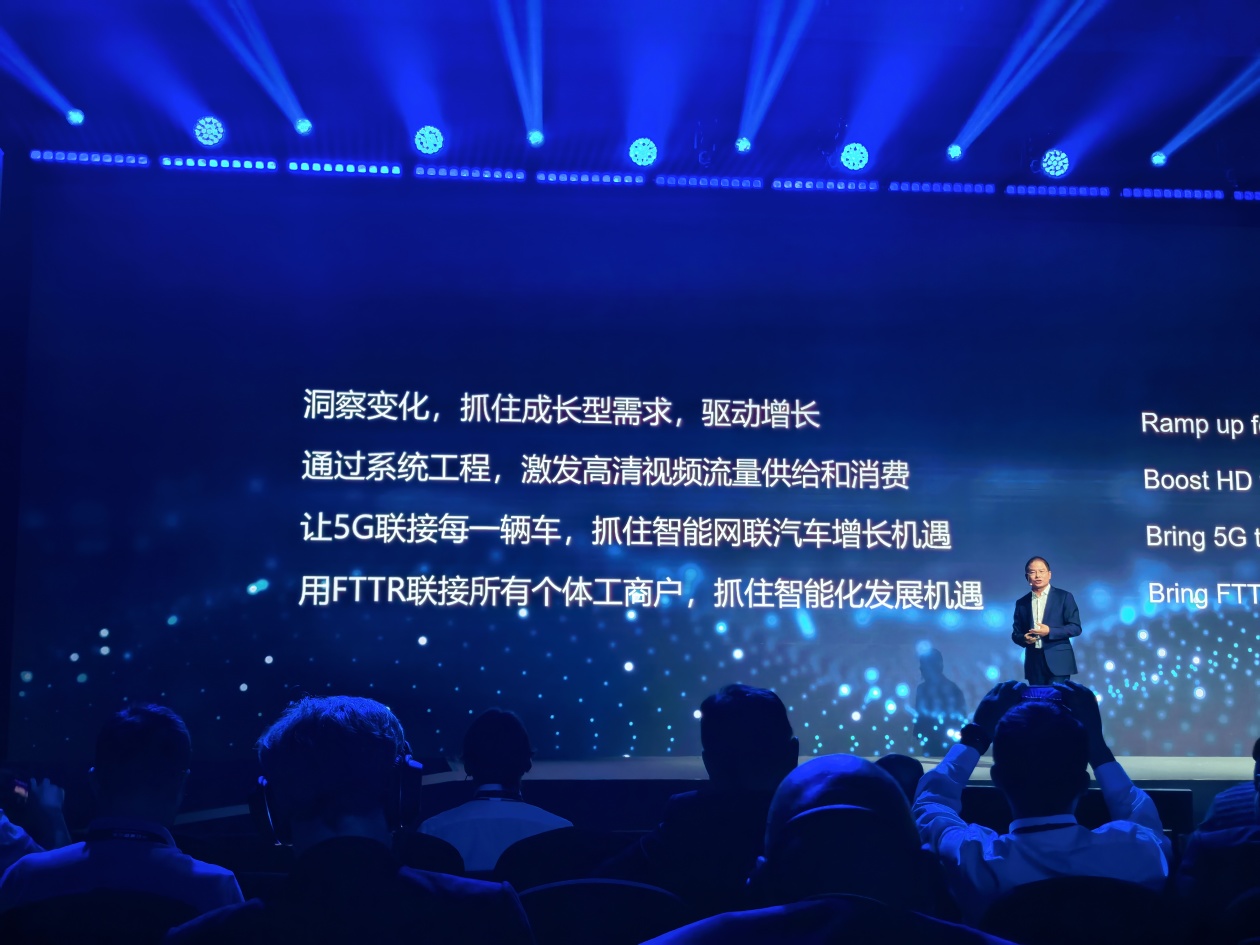
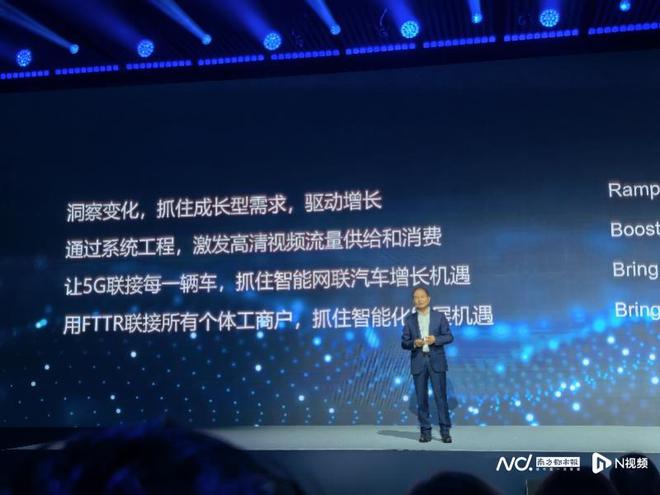
Core Viewpoint - The telecommunications industry is in a mature phase but is not stagnant, facing profound transformation driven by evolving user demands and technological advancements [1][3]. Industry Trends - The global telecommunications industry is experiencing slowed growth, with operators facing challenges such as user growth stagnation and declining ARPU (Average Revenue Per User) [3]. - The focus is on unlocking the commercial value of network capabilities as 5G deployment nears completion [3]. Emerging User Demands - New user groups, such as delivery riders, streamers, and esports players, are emerging with a strong demand for high-quality, low-latency, and customized connectivity services [3][5]. - These groups are becoming significant factors influencing the distribution of communication resources [3]. Smart Connected Vehicles - The development of smart connected vehicles emphasizes that autonomous driving should not solely rely on network connectivity; vehicles must possess independent perception and decision-making capabilities [3][5]. - While network connectivity can enhance auxiliary functions and information sharing, local intelligent systems' independence and security must be prioritized during critical driving operations [3][5]. Design Recommendations - The design of in-vehicle connectivity should separate cabin and vehicle connectivity needs, with cabin connections following a B2C model and vehicle T-BOX connections adhering to a B2B model [5]. - This "mutually independent, individually connected" design approach aims to enhance overall vehicle communication security and commercial efficiency [5]. Future Industry Trends - Four core trends for the industry's future were identified: 1. Understanding changes and capturing growth-oriented demands to drive growth 2. Utilizing systems engineering to stimulate high-definition video traffic supply and consumption, connecting every vehicle with 5G 3. Connecting all individual businesses through FTTR to seize opportunities in intelligent development [5]. - These trends are seen as critical pathways for operators to achieve business breakthroughs and sustained growth [5].
华为徐直军:5G车联网占比未来五年将提升至95%,产业应抓住机遇
news flash· 2025-06-18 05:29
Core Insights - Huawei's rotating chairman Xu Zhijun stated that by 2025, 30% of China's passenger car sales will be 5G connected vehicles, with this figure expected to rise to 95% between 2026 and 2030, indicating a significant growth opportunity in the smart connected vehicle sector [1] Industry Trends - The automotive industry must focus on autonomous perception and decision-making in the context of self-driving, emphasizing the need for vehicles to operate independently of network reliance [1] - Both the vehicle cabin and the entire vehicle require network connectivity, but they have different demands and business models, suggesting a need for independent yet interconnected systems [1] Challenges - The current 5G connected vehicle market faces challenges such as 5G IP rights issues, intense price competition affecting attractiveness, and varying user experiences [1] - The resolution of 5G IP rights issues requires collaborative efforts from the mobile communications industry [1]
深圳自动配送车集结备战618 年底无人车运营规模将破1000台
Zheng Quan Shi Bao Wang· 2025-06-18 03:59
Core Viewpoint - The article highlights the rapid development of the automated delivery industry in Shenzhen, emphasizing the city's efforts to establish itself as a national benchmark for automated logistics solutions, particularly in preparation for the upcoming 618 shopping festival [1][2]. Group 1: Automated Delivery Operations - A large-scale "automated delivery drill" took place in Shenzhen, featuring over 40 automated delivery vehicles from major companies like Meituan and SF Express, aimed at ensuring efficient logistics during the shopping festival [1][2]. - The automated delivery vehicles have completed over 5 million outdoor deliveries in Shenzhen, showcasing their operational capabilities and collaboration with human couriers for instant delivery services [2][3]. Group 2: Industry Development and Standards - Shenzhen's automated delivery industry is projected to exceed 1,000 operational vehicles by the end of 2025, positioning the city as a leader in the sector [3][4]. - The city has established a comprehensive logistics network integrating buses, subways, unmanned vehicles, and drones, while traditional transport companies are also adapting to the automated delivery model [4][5]. - Strict management protocols have been implemented, including unified vehicle identification, regulatory compliance, and a centralized operational platform to ensure safety and efficiency [4][5]. Group 3: Talent and Infrastructure - Shenzhen has attracted top talent from leading companies in the automated delivery sector, and partnerships with educational institutions are fostering a skilled workforce for the industry [4]. - Over 300 kilometers of roads have been opened for automated delivery, with a rapid response mechanism in place to accommodate business needs [5].
智能网联汽车ETF(159872)政策与技术共振,车联网基建+高阶自动驾驶双主线凸显
Xin Lang Cai Jing· 2025-06-17 02:25
Group 1 - The smart connected vehicle ETF (159872.SZ) remained stable with a 0.00% increase, while its associated index, CS Vehicle Networking (930725.CSI), rose by 0.15% [1] - Major constituent stocks such as SAIC Motor Corporation increased by 0.63%, Wanma Technology by 5.39%, and Qianfang Technology by 1.36%, indicating positive market sentiment [1] - A meeting held by the trading association on June 16 focused on supporting high-quality development in the automotive sector, with representatives from nine major automakers discussing financing needs and optimization suggestions [1] Group 2 - The trading association emphasized the need for innovation in the bond market to support automakers' transitions towards intelligent and green technologies [1] - Research from Shenwan Hongyuan highlighted the VLA model's significant improvement in autonomous driving performance, achieving an average no-takeover mileage of 50-100 kilometers, compared to traditional solutions [2] - The VLA model's deployment requires substantial computing power, as seen in Li Auto's use of a 4 billion parameter scale on the OrinX chip, underscoring the importance of computing hardware in the smart connected vehicle industry [2] Group 3 - Citic Securities noted Haige Communication's involvement in smart transportation, emphasizing its "Beidou + 5G + C-V2X" communication network, which is part of a national vehicle networking pilot project [2] - The technology developed by Haige Communication is expected to directly support high-level autonomous driving scenarios, reflecting the trend of collaborative development between vehicle networking infrastructure and intelligent driving [2]
汽车行业周报:多数车企作出承诺,行业转向良性发展-20250616
Guoyuan Securities· 2025-06-16 14:43
Investment Rating - The report maintains a positive outlook on the automotive industry and leading companies' performance [4][6]. Core Insights - The automotive industry is experiencing a healthy transition with commitments from multiple automakers to shorten supplier payment terms to within 60 days, aimed at stabilizing the supply chain and enhancing operational resilience [2][49]. - Retail and wholesale sales of passenger vehicles in early June showed a year-on-year growth of 19% and 10% respectively, while the new energy vehicle market saw a significant retail growth of 40% [1][21]. - The report highlights the importance of technological advancements in driving the industry's future, particularly in smart driving and core component opportunities [4]. Summary by Sections 1. Weekly Market Review (June 7-13, 2025) - The automotive sector index decreased by 0.85%, with the passenger vehicle segment experiencing the largest decline of 2.03% [12][16]. - The commercial vehicle segment saw a notable increase of 6.67% [12]. 2. Weekly Data Tracking (June 7-13, 2025) - From June 1-8, 2025, retail sales of passenger vehicles reached 343,000 units, a 19% increase year-on-year, while wholesale sales totaled 311,000 units, a 10% increase [21]. - New energy vehicle retail sales during the same period reached 202,000 units, marking a 40% year-on-year growth [21]. 3. Industry News (June 7-13, 2025) - Major automakers are calling for a return to rational competition, emphasizing the need to focus on technology and quality rather than price wars [36]. - The Ministry of Commerce reported progress in negotiations regarding the EU-China electric vehicle trade dispute [37][38]. - SAIC, Huawei, and China Automotive Technology & Research Center established a cooperation task force to enhance smart and connected vehicle technologies [39].





车企“倒戈”纯视觉,激光雷达为何“失宠”
Zhong Guo Qi Che Bao Wang· 2025-06-16 07:10
Core Viewpoint - The competition between lidar and pure vision systems in the automotive industry is intensifying, with more companies shifting towards pure vision technology for advanced driver assistance systems (ADAS) [2][3][5] Group 1: Technology Comparison - Companies like Xiaomi are equipping their vehicles with lidar, while others like Xpeng are adopting pure vision systems for their ADAS [2] - Xpeng's senior director argues that the long-range detection capability of lidar is a "false proposition" due to its technical limitations, such as energy decay and point cloud density [3] - Lidar's performance is significantly reduced in adverse weather conditions, with effective detection range dropping to under 30 meters during heavy rain, while pure vision systems show better performance in similar conditions [4] Group 2: Cost and Market Dynamics - The primary reason for the shift to pure vision systems is cost-effectiveness, as they are significantly cheaper than lidar systems [5] - Xpeng's MONA M03 MAX is the first model to offer full-featured intelligent driving assistance at a price point below 150,000 yuan (approximately 22 million USD) [5] - The competition in the automotive market is pushing companies to adopt more affordable solutions to equip mid-range vehicles with ADAS capabilities [9] Group 3: Future Trends - The trend is moving towards a combination of pure vision and lidar systems to leverage the strengths of both technologies, especially for high-end models [9][10] - Companies are increasingly focusing on the integration of AI algorithms and self-developed chips to enhance the performance of pure vision systems [6][10] - The ultimate goal for autonomous driving technology is a multi-sensor fusion system that combines cameras and lidar to achieve a comprehensive solution [10]


收评:创业板指跌1.13% 油气、军工股逆势大涨
Xin Hua Cai Jing· 2025-06-13 07:45
Market Overview - The market experienced fluctuations with the ChiNext Index and Shenzhen Component Index both declining over 1% [1] - As of the close, the Shanghai Composite Index was at 3377, down 0.75%, with a trading volume of 605.4 billion; the Shenzhen Component Index was at 10122.11, down 1.10%, with a trading volume of 861.9 billion; the ChiNext Index was at 2043.82, down 1.13%, with a trading volume of 410.5 billion [1] Sector Performance - Precious metals, oil and petrochemicals, nuclear pollution prevention, and military industries saw significant gains, while beauty care, film and television, IP economy, and diversified finance sectors faced declines [1][2] - The oil and gas sector was particularly strong, with multiple stocks hitting the daily limit, including Keli Co., which saw a 30% increase [2] Individual Stock Movements - Over 4400 stocks in the market experienced declines, indicating a broader market downturn [3] - Notable gainers included Jiekang Equipment and Xibu Gold, both hitting the daily limit [2] Institutional Insights - Jifeng Investment noted that the market is currently in a transitional phase of profit improvement and valuation recovery, suggesting a potential upward turning point for A-shares and the economy [4] - China Galaxy Securities highlighted a structural market trend in the food and beverage sector, focusing on new channels and product categories as key growth opportunities [4] - Qingdao Anzhi Investment emphasized a cautious approach to market positioning, recommending attention to sectors that have seen significant adjustments, such as technology [4] Policy Developments - Shenzhen is set to implement 24 special measures to relax market access, particularly in artificial intelligence, smart connected vehicles, and medical devices, aiming to enhance regulatory frameworks [6] - The city will also promote the "AI + city" initiative and accelerate the application of high-power charging technologies [6] Company Pricing Adjustments - Tesla has increased the price of the all-wheel-drive version of the Model S in the U.S. from $79,990 to $84,990, and the Model S Plaid from $94,990 to $99,990 [7][8]

年内882家A股公司宣布募投项目变更
Zheng Quan Ri Bao Zhi Sheng· 2025-06-12 16:47
Group 1 - A total of 882 A-share listed companies have announced changes to their fundraising projects as of June 12, with the most common adjustment being changes in the use of raised funds [1] - Zhejiang Rongsheng Environmental Paper Co., Ltd. announced a change in the use of remaining funds from its convertible bond project, reallocating 95.683 million yuan to a new energy-saving and carbon-reduction project [1] - Guangdong Zhongsheng Pharmaceutical Co., Ltd. plans to redirect a total of 103.0754 million yuan from various projects to its subsidiary for new drug research and development [1] Group 2 - Adjustments in fundraising amounts are also common, as seen with Wuhan Yangtze Communication Industry Group Co., Ltd., which increased the investment amount for one project from 318 million yuan to 422 million yuan while reducing another from 175 million yuan to 70.6 million yuan [2] - The adjustments are influenced by changes in market conditions and strategic needs, including project construction conditions, market demand shifts, and policy adjustments [2] - The automotive parts industry has seen a significant number of project changes, with companies like Ningbo Top Group Co., Ltd. increasing investment in smart driving projects from 300 million yuan to 444 million yuan [3][4] Group 3 - The automotive and related parts industry is experiencing frequent project changes due to rapid technological advancements in electric vehicles and the emergence of new demands in smart connected vehicles [4] - Increased competition and supply chain restructuring are driving companies to reallocate funds, reflecting the industry's shift towards electrification and intelligence [4]
【政策综述】关于国家鼓励新能源汽车充换电等基础设施建设的相关政策及实施成效分析
乘联分会· 2025-06-12 08:38
Core Viewpoint - The article emphasizes the importance of developing charging and swapping infrastructure for electric vehicles in China, highlighting government policies and initiatives aimed at enhancing the infrastructure to support the growth of the new energy vehicle industry [4][5]. Summary by Sections 1. Policy Encouragement for Charging Infrastructure - The "New Energy Vehicle Industry Development Plan (2021-2035)" aims for core technologies in the sector to reach international advanced levels, with electric vehicles becoming mainstream [4]. - A series of policies have been introduced to accelerate the construction of charging and swapping infrastructure, including the establishment of a unified operational service platform for charging facilities [5][6]. 2. Implementation Opinions and Guidelines - In January 2022, the National Development and Reform Commission issued opinions to enhance the service capacity of electric vehicle charging infrastructure, focusing on community charging facilities and urban-rural network improvements [7]. - The June 2023 guidelines from the State Council emphasized optimizing network layouts and enhancing operational service levels for charging infrastructure [8]. 3. Pilot Programs for Electric Vehicle Electrification - A pilot program for the full electrification of public vehicles was initiated in January 2023, targeting various vehicle types with an expected promotion of over 600,000 new energy vehicles and the construction of over 70,000 public charging stations [9]. 4. Hydrogen Station Construction for Fuel Cell Vehicles - The government has implemented policies to support the construction of hydrogen stations, with significant subsidies for stations built in key urban areas [12][19]. - As of March 2025, China has built over 540 hydrogen stations, leading the world in this infrastructure [18]. 5. Achievements in Charging Infrastructure - By December 2024, China had established a charging infrastructure network with 12.818 million units, a 49.1% increase year-on-year, indicating a robust growth in alignment with electric vehicle sales [16]. - The ratio of charging stations to electric vehicles is approximately 1:2.7, demonstrating that infrastructure development is keeping pace with vehicle growth [16]. 6. Market Growth for Fuel Cell Vehicles - The cumulative sales of fuel cell vehicles reached 29,500 units by March 2025, marking a fourfold increase since the demonstration phase began [19]. - The domestic production rate of key components for fuel cells has risen significantly, with costs dropping by 80% from 15,000 yuan/kW to 2,500 yuan/kW [19]. 7. Advancements in Intelligent Connected Vehicles - Significant progress has been made in the demonstration applications of intelligent connected vehicles, with multiple testing zones established across major cities [19]. - The market penetration of advanced driver-assistance systems (L2) reached 57.3% in 2024, with L3 and above vehicles beginning to enter the market [19].