风险管理

Search documents
纯苯期货和期权上市在即 企业表态将积极参与交易
Zheng Quan Ri Bao· 2025-08-08 07:27
Core Viewpoint - The launch of pure benzene futures and options on July 8 by Dalian Commodity Exchange is expected to provide effective risk management tools for the pure benzene industry, with companies eager to participate in initial trading [1][4]. Industry Overview - Pure benzene is a key organic chemical raw material with downstream applications in various sectors including electrical appliances, construction materials, packaging, and fiber materials. China is the largest producer and consumer of pure benzene globally [2][3]. - The rapid changes in the supply-demand structure of the spot market have increased uncertainties for companies in the pure benzene industry, highlighting the urgent need for suitable risk management tools [2]. Challenges Faced by Companies - Companies face several operational challenges, including a lack of pricing power in the domestic pure benzene market, increased credit risk due to price volatility, and mismatched product liquidity between pure benzene and its derivatives [3]. - The reliance on traditional methods such as long-term contracts and inventory adjustments for risk management is insufficient, especially during extreme market fluctuations [2][3]. Futures and Options Details - The first batch of pure benzene futures will consist of four contracts, with a trading unit of 30 tons per contract and physical delivery [4]. - Initial trading limits are set at 7% of the previous day's settlement price, with a 14% limit on the first trading day. The margin requirement is 8% of the contract value [4]. Participation and Expectations - Companies have expressed strong interest in participating in the futures and options market to enhance their risk management capabilities and improve price discovery [5]. - The expectation is that the futures market will enhance liquidity, optimize the structure of market participants, and attract more industry clients and financial institutions [5].
当风控遇上大数据:探析中国人寿寿险公司风险防控体系的“数字实践”
Zhong Guo Jing Ji Wang· 2025-08-08 07:26
Core Viewpoint - China Life Insurance Company is deeply integrating ESG development concepts into its comprehensive risk management system, maintaining an A-class risk rating for 27 consecutive quarters, and establishing itself as an innovative model for risk management in the financial sector [1][3]. Group 1: Risk Management Framework - The company has established a comprehensive risk management system characterized by a "1+7+N" framework, which includes a set of regulations and guidelines for managing various types of risks [1][3]. - A risk management responsibility assessment mechanism has been implemented, incorporating risk management compliance into the performance evaluation of departments and senior management [3]. - The company emphasizes proactive risk management, shifting from a reactive to a proactive governance approach, and aims to enhance its risk management capabilities through advanced technologies and frameworks [4]. Group 2: Financial Risk Control - China Life Insurance Company prioritizes financial risk prevention, adhering to the principle of not allowing systemic risks to occur, and continuously improving its risk management strategies [1][2]. - The company aligns its risk management framework with its strategic goals, organizational structure, and business characteristics to effectively identify, measure, and control risks [2][3]. - The company aims to balance risk and return under its risk appetite, ensuring the safety and adequacy of capital while protecting policyholders' interests [2]. Group 3: ESG Integration - The company has developed an ESG risk management approach, focusing on identifying, assessing, and controlling ESG-related risks within its overall risk management framework [3][4]. - It adheres to five key principles in its ESG risk management: comprehensiveness, prudence, foresight, applicability, and dynamism [3]. - The company is committed to enhancing its financial services to support sustainable development while ensuring financial safety [4].

我国“商品期货重器”如何护航黄金产业发展
Zheng Quan Ri Bao· 2025-08-08 07:20
本报记者 邢 萌 王 宁 今年以来,在复杂多变的国际形势下,市场避险情绪高涨,黄金价格居高不下。伦敦金长期处于 3300美元/盎司以上,国内金饰价格一度突破1000元/克。受高金价影响,金饰销售低迷,终端消费动力 不足,产业发展面临挑战。 在此背景下,黄金衍生品有望成为支撑产业稳健运行的安全阀。近日,记者深入调查北京、深圳、 山东等地黄金加工销售市场,通过采访线下金店、产业公司、期货公司、业内专家等多方人士了解到, 高金价下,黄金期货、黄金期权在助力金企应对价格波动风险、推进稳健经营方面发挥了重要作用,推 动中国黄金市场从传统现货交易市场迈向更加成熟的现代金融衍生品市场。 新形势下,中国期货市场对外开放力度持续加大,业界期待黄金期货能加快国际化步伐,不断优化 跨境交易机制,吸引国际机构广泛参与,从而提高我国黄金市场的国际影响力,增强话语权。 产业链企业避险需求上升 尽管黄金价格持续走高,但并未带来想象中的产业"盛宴"。事实上,由于高金价抑制了消费需求, 近期产业链企业库存资产避险需求上升。 记者调查发现,黄金销售疲态渐显正在中国最大的黄金珠宝交易市场深圳水贝、矿脉资源极为丰富 的"中国金都"山东招远、北京规模 ...
董责险融入上市公司治理成趋势
Jing Ji Ri Bao· 2025-08-08 03:58
Core Insights - The D&O insurance market is undergoing structural changes as more listed companies in China incorporate it into their risk management practices, with a market penetration rate approaching 30% as of mid-July 2023, up from less than 8% in 2019 [1] - The new Company Law, effective July 2024, formally establishes the D&O insurance system, making it a necessary component for companies to protect their directors during their tenure [1] Group 1 - Over 300 A-share listed companies have disclosed D&O insurance plans, indicating a significant increase in adoption [1] - Insurance companies report a 24.1% year-on-year increase in inquiries for D&O insurance, reflecting a growing interest in this type of coverage [2] - The current market lacks a comprehensive risk assessment mechanism, leading to significant pricing discrepancies and insufficient personalized coverage [2] Group 2 - Many companies still misunderstand D&O insurance, viewing it as an additional cost rather than a necessary risk management tool [2] - There is a polarized perception among investors regarding D&O insurance, with some seeing it as a means for executives to perform their duties without fear, while others view it as a potential "safety net" [2] - The risk assessment methods for D&O insurance in the A-share market need to be upgraded, utilizing advanced technologies like machine learning for better evaluation [3] Group 3 - The lack of a robust information disclosure system hampers the healthy development of the D&O insurance market, with most companies only announcing details upon initial purchase [3] - Regulatory bodies are encouraged to implement mandatory disclosure systems for D&O insurance, enhancing market transparency and investor trust [3] - D&O insurance should be viewed as a positive signal for corporate governance and social responsibility, rather than merely a compliance tool [3] Group 4 - Despite existing challenges, D&O insurance is increasingly recognized as a "safety valve" for corporate governance, especially in the context of stricter regulations on ESG, information disclosure, and internal controls [4] - Insurance companies are expanding their service offerings to include legal consulting, risk management training, and crisis management, moving towards a comprehensive support model for clients [4] - The future development of D&O insurance is expected to play a more significant role in the corporate governance framework of listed companies in China, transitioning from a risk buffer to a governance enabler [4]
董责险融入公司治理成趋势
Jing Ji Ri Bao· 2025-08-07 22:49
Core Viewpoint - The D&O insurance market in China is undergoing structural changes, with an increasing number of listed companies incorporating D&O insurance into their risk management practices, leading to a market penetration rate approaching 30% as of mid-July 2023, up from less than 8% in 2019 [1] Group 1: Market Trends - Over 300 A-share listed companies have disclosed D&O insurance plans as of July 2023, indicating a significant rise in adoption [1] - Ping An Property & Casualty reported nearly 1,000 inquiries for A-share D&O insurance in 2024, a year-on-year increase of 24.1% [2] - The new Company Law, effective July 2024, formally establishes the D&O insurance system, making it increasingly essential for companies [1] Group 2: Challenges and Issues - The current market lacks a comprehensive risk assessment mechanism, leading to significant pricing discrepancies and insufficient personalized coverage [2] - Many companies still misunderstand D&O insurance, viewing it as an additional cost rather than a necessary risk management tool [2] - The lack of continuous disclosure regarding coverage amounts, rates, and claims hinders market transparency and investor trust [3] Group 3: Future Outlook - There is a need for upgrading risk assessment methods in the A-share market, utilizing advanced technologies like machine learning for more precise evaluations [3] - Insurance companies are expanding their services beyond traditional coverage to include legal consulting, risk management training, and crisis management [4] - As regulations improve and companies become more aware of the benefits, D&O insurance is expected to play a more significant role in corporate governance in China [4]
2025中国(郑州)国际期货论坛将于8月19—20日举办
Qi Huo Ri Bao Wang· 2025-08-07 16:32
Core Viewpoint - The 2025 China (Zhengzhou) International Futures Forum will focus on empowering the real economy and supporting national construction through high-quality development of the futures market, highlighting its essential role in risk management and economic stability [1][2]. Group 1: Forum Overview - The eighth edition of the forum will take place on August 19-20, 2025, in Zhengzhou, co-hosted by Zhengzhou Commodity Exchange and the Chicago Mercantile Exchange Group [1]. - The forum aims to gather government departments, regulatory agencies, industry associations, enterprises, financial institutions, and experts to discuss the development trends and innovative practices of the futures market in the current era [1][2]. Group 2: Importance of Futures Market - The futures and derivatives market serves as a "stabilizer" for the market economy and a "toolbox" for risk management, becoming indispensable in supporting the real economy and national strategies [1]. - In agriculture, the futures market stabilizes producers' income and strengthens food security, contributing to agricultural power construction [1]. - In manufacturing, it helps companies lock in raw material costs and mitigate price volatility risks, supporting the construction of a manufacturing powerhouse [1]. - The market also provides diverse hedging tools for international trade, enhancing the construction of a trade powerhouse [1]. Group 3: Industry Insights - The forum will address how to transform uncertainties in economic development into certainties, enhancing the quality of support for the real economy and national construction [2]. - High-level opening of the futures market is crucial for accelerating the construction of a "dual circulation" new development pattern and achieving Chinese-style modernization [2]. - Recent expansions in QFII and RQFII participation in commodity futures and options have broadened the market's openness, attracting foreign institutions and enhancing the international influence of Chinese futures prices [2]. Group 4: Forum Structure - The forum will feature four sub-forums focusing on key areas of national construction: foreign opening, risk management for industrial enterprises, agricultural products (oils and fats), and industrial products (polyester) [4]. - Notable speakers will include former Deputy Director of the State Council Development Research Center Yu Bin and other industry leaders, discussing topics such as the outlook for high-quality economic development and trends in the global derivatives market [4]. Group 5: Practical Implications - The forum is positioned as a platform for practical solutions, aiming to provide insights into risk management and industry upgrades through discussions and exchanges among participants [4][5]. - The event is expected to serve as a "booster" for the integration of futures and spot markets, contributing to national construction [5].

五洲交通: 五洲交通关于对广西交通投资集团财务有限责任公司风险持续评估的报告
Zheng Quan Zhi Xing· 2025-08-07 16:24
广西五洲交通股份有限公司 关于对广西交通投资集团财务有限责任公 司风险持续评估的报告 根据《上海证券交易所上市公司自律监管指引第 5 号 --交易与关联交易》的相关要求,广西五洲交通股份有限 公司(简称"公司")通过查验广西交通投资集团财务有 限责任公司(简称"财务公司")《金融许可证》《营业执 照》等证件资料,审阅财务公司 2025 年 6 月(未经审计) 资产负债表、利润表等财务报表,对财务公司的经营资质、 业务和风险状况进行持续评估。现将有关风险评估情况报 告如下: 一、财务公司基本情况 财务公司 2013 年 5 月 13 日经原中国银行业监督管理 委员会(简称"原中国银监会")批准(银监复〔2013〕 ,由广西交通投资集团有限公司出资 100%成立。 金融许可证机构编号:01107919;统一社会信用代码: 代表人:赵就亮;职工人数 48 人;住址为广西壮族自治 区南宁市良庆区凯旋路 5 号中国-东盟金融城基金大厦 B 座 7 层、8 层及 15 层 B1512-B1515 号。 经营范围:吸收成员单位存款;办理成员单位贷款; 办理成员单位票据贴现;办理成员单位资金结算与收付; 提供成员委托贷款、债 ...

精准预警+主动服务 平安产险江苏分公司风险减量服务再升级
Jiang Nan Shi Bao· 2025-08-07 03:45
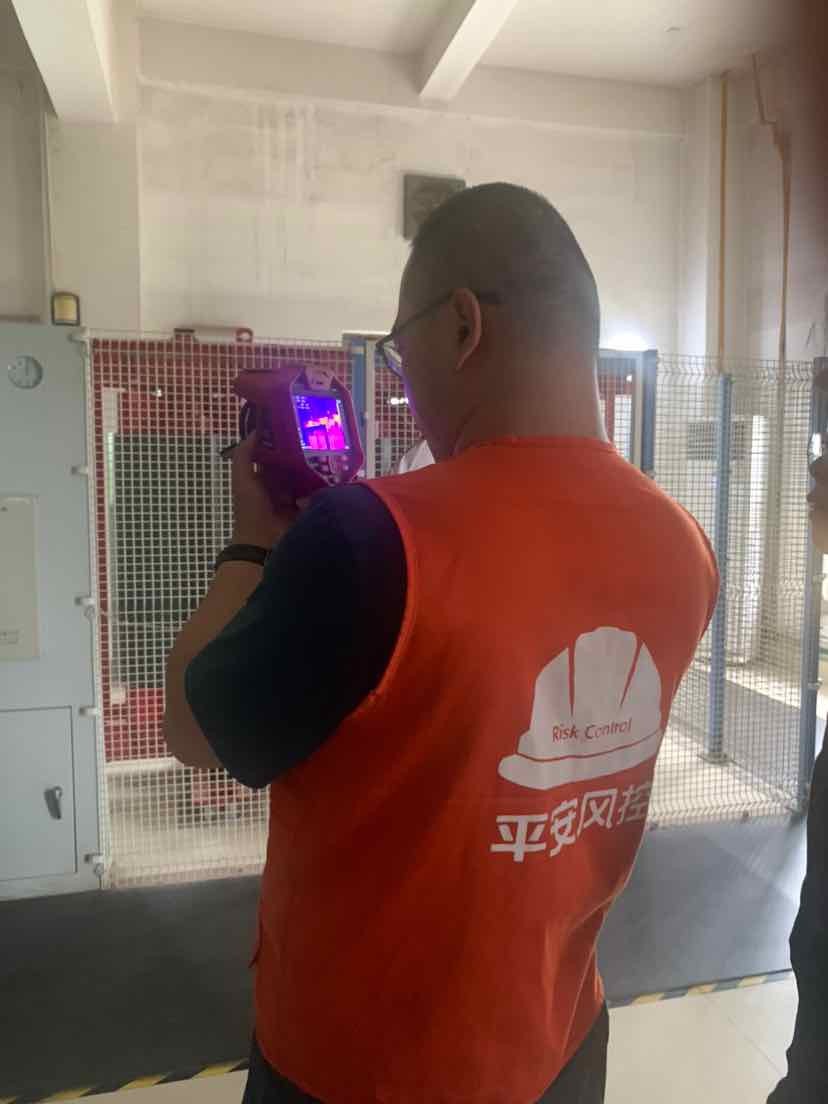
Core Viewpoint - The fire incident at a car parts factory in Jiangsu has prompted Ping An Property & Casualty Insurance's Jiangsu branch to take proactive measures to ensure client safety and mitigate operational risks for partner companies [1][2] Group 1: Incident Response - Following the fire, the risk control team from Ping An Property & Casualty Insurance quickly initiated infrared detection services for multiple insured automotive parts and related manufacturing enterprises in the area [1] - The team utilized advanced infrared thermal imaging technology to conduct thorough inspections of critical areas prone to fire hazards, such as electrical equipment, wiring, and storage areas [1] - The inspections successfully identified several high-risk fire hazards, leading to the issuance of risk prevention and rectification recommendations to the affected enterprises [1] Group 2: Risk Management and Safety Measures - The risk control team discovered significant safety hazards, including aging electrical wiring in one enterprise that was operating under prolonged overload conditions, resulting in temperatures exceeding safety thresholds [1] - The team communicated the potential severe consequences of these hazards to the enterprise leaders and provided a professional risk rectification proposal, outlining specific requirements and deadlines for corrective actions [1] - This infrared revisit initiative reflects the company's commitment to social responsibility and the enhancement of risk management services, aiming to support the stable development of more enterprise clients [2]

【私募调研记录】永安国富调研上海合晶
Zheng Quan Zhi Xing· 2025-08-07 00:09
Group 1 - The well-known private equity firm Yong'an Guofu recently conducted research on a listed company, Shanghai Hejing, focusing on its production capacity and market strategy [1] - Shanghai Hejing has an 8-inch production capacity of 215,000 wafers per month and aims to become a domestic benchmark [1] - The company plans to expand its 12-inch production capacity in three phases, with an additional 60,000 wafers expected by the end of 2026, targeting a total capacity of 100,000 wafers per month [1] - The company is focusing on the development of power devices and CIS, with a high proportion of overseas sales compared to domestic sales [1] - The industry is expected to experience cyclical fluctuations, with an upward trend anticipated in the second half of 2025 and into 2026 [1] - The delivery of 8-inch wafers is tight, while 12-inch production is expected to increase gradually, maintaining a high overall capacity utilization rate [1] Group 2 - Yong'an Futures Co., Ltd. is a publicly listed company on the New Third Board with a registered capital of 1.31 billion RMB [2] - The company has consistently ranked among the top ten futures companies in China for eighteen consecutive years and holds a leading position in Zhejiang Province [2] - Yong'an Futures operates in various business areas, including commodity futures brokerage, financial futures brokerage, futures investment consulting, asset management, and fund sales [2] - The company has established a presence in 38 cities across China and has offices in Chicago, Hong Kong, and Singapore [2] - Yong'an Futures aims to become a leading comprehensive financial derivatives service provider both domestically and internationally [2]
Jackson(JXN) - 2025 Q2 - Earnings Call Transcript
2025-08-06 16:02
Financial Data and Key Metrics Changes - Adjusted operating earnings for the second quarter were $350 million, supported by strong performance from spread products and higher yields in the bond portfolio [17][19] - Total adjusted capital exceeded $5.3 billion, reflecting a 5% increase since year-end 2024 [12][34] - Adjusted operating earnings per share was $4.87, with an adjusted figure of $5.12, up 5% from the prior year's second quarter [19][20] Business Line Data and Key Metrics Changes - Retail annuity sales reached $4.4 billion, a 9% increase over the first quarter and a 4% increase year-over-year [7][10] - RILA account balances increased by nearly 80% from the second quarter last year, with sales approaching $1.4 billion, up 16% from the previous quarter [6][7] - Variable annuity net outflows improved for the second consecutive quarter, totaling $2.2 billion, down 27% from a year ago [10][22] Market Data and Key Metrics Changes - Average retail annuity AUM increased to $249 billion, up from year-end 2024 [24] - The company experienced a 9.4% return on separate account assets, contributing approximately $19 billion to AUM [45] Company Strategy and Development Direction - The company remains committed to a balanced capital management strategy, focusing on disciplined investments, maintaining a strong balance sheet, and consistent capital return to shareholders [15][14] - Jackson is exploring opportunities for strategic partnerships and risk transfer transactions to enhance shareholder value [50][53] - The company aims to leverage Brook Re for potential M&A opportunities, enhancing capital generation and free cash flow [72][80] Management's Comments on Operating Environment and Future Outlook - Management expressed confidence in the strong and sustainable capital generation supporting future growth initiatives and ongoing capital return to shareholders [12][13] - The need for financial security in retirement is increasingly recognized, positioning annuities as essential tools for clients [15][16] Other Important Information - The company returned $216 million to common shareholders in the quarter, a 60% increase from the previous year [32] - A cash dividend of $0.80 per common share was approved for the third quarter [14] Q&A Session Summary Question: Excess capital position and potential uses - Management reiterated the philosophy of generating excess capital, paying it as free cash flow, and returning capital to shareholders [40][42] Question: AUM levels and equity market impact - Strong equity market performance contributed to AUM growth, with solid margins expected despite some variable expense offsets [44][46] Question: Strategic considerations for business remixing - Management is open to strategic partnerships and risk transfer opportunities that enhance shareholder value [50][53] Question: RILA product features and competition - RILA sales increased 16% sequentially, with a competitive product offering that includes income options [60] Question: Risk management of RILA and legacy VA - The company manages RILA and legacy VA products separately, leveraging natural offsets in equity risk [70] Question: Potential for inorganic growth using Brook Re - Management confirmed that Brook Re could be leveraged for M&A opportunities, particularly in acquiring complementary blocks of business [72][80]