人造太阳

Search documents
全球陷入“电荒”,中国历史性的机会来了
Sou Hu Cai Jing· 2025-11-08 16:58
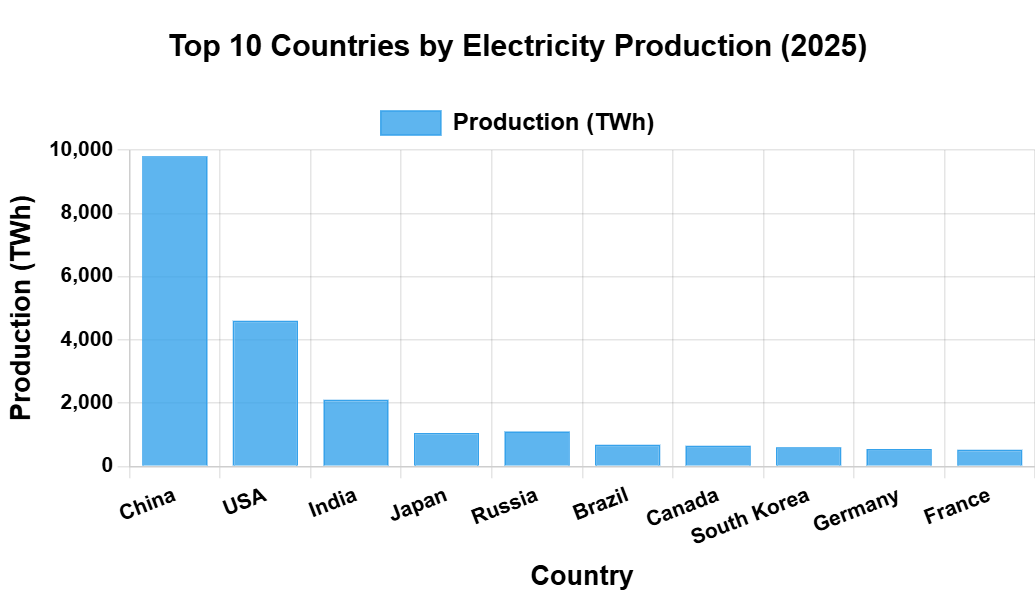
Core Insights - A global electricity crisis is emerging, presenting significant investment opportunities for China, particularly in the electricity industry chain exports [1] - The crisis is driven by aging power grids and increasing demand from energy-intensive industries like AI, leading to soaring electricity prices and rolling blackouts in various regions [5][4] - China's electricity structure remains robust, with record-high power generation and capacity, positioning it well to capitalize on the global demand for electricity [6][10] Group 1: Global Electricity Crisis - The electricity crisis is characterized by unprecedented power shortages in Europe, with prices exceeding 400 euros per megawatt-hour [5][4] - In the U.S., states like Texas have faced near-collapse of their power grids, leading to rolling blackouts [2] - The average outage time in European grids is projected to increase by 150% by 2025 [4] Group 2: Demand and Supply Dynamics - The demand for electricity is surging, particularly due to AI technologies, with predictions that AI data centers will increase global electricity demand by 175% by 2030 [5] - Aging infrastructure is unable to meet the rising demand, with over 70% of U.S. transformers exceeding 25 years of service [5] - China's power generation is projected to exceed 10 trillion kilowatt-hours in 2024, accounting for nearly 30% of global generation [6] Group 3: China's Competitive Advantage - China has developed advanced transmission technologies, such as ultra-high voltage transmission, enabling efficient energy transfer from renewable sources [10] - The country leads in energy storage capacity, with over 40% of global installations, enhancing its ability to manage supply and demand [10] - Major projects like the Yarlung Tsangpo River hydropower development and the artificial sun project are set to bolster China's energy infrastructure and future capabilities [13][14] Group 4: Export Opportunities - China's electricity equipment exports are on the rise, with a projected value of $29.59 billion in 2024, marking a 15.4% increase [15] - The country is also expanding its influence by constructing entire power plants and grid systems in countries like the Philippines and Brazil [16] - The global electricity crisis is seen as a profound opportunity for China to export not just equipment but comprehensive energy solutions [17]

中国“人造太阳”:点亮未来能源之光
Sou Hu Cai Jing· 2025-11-08 07:39
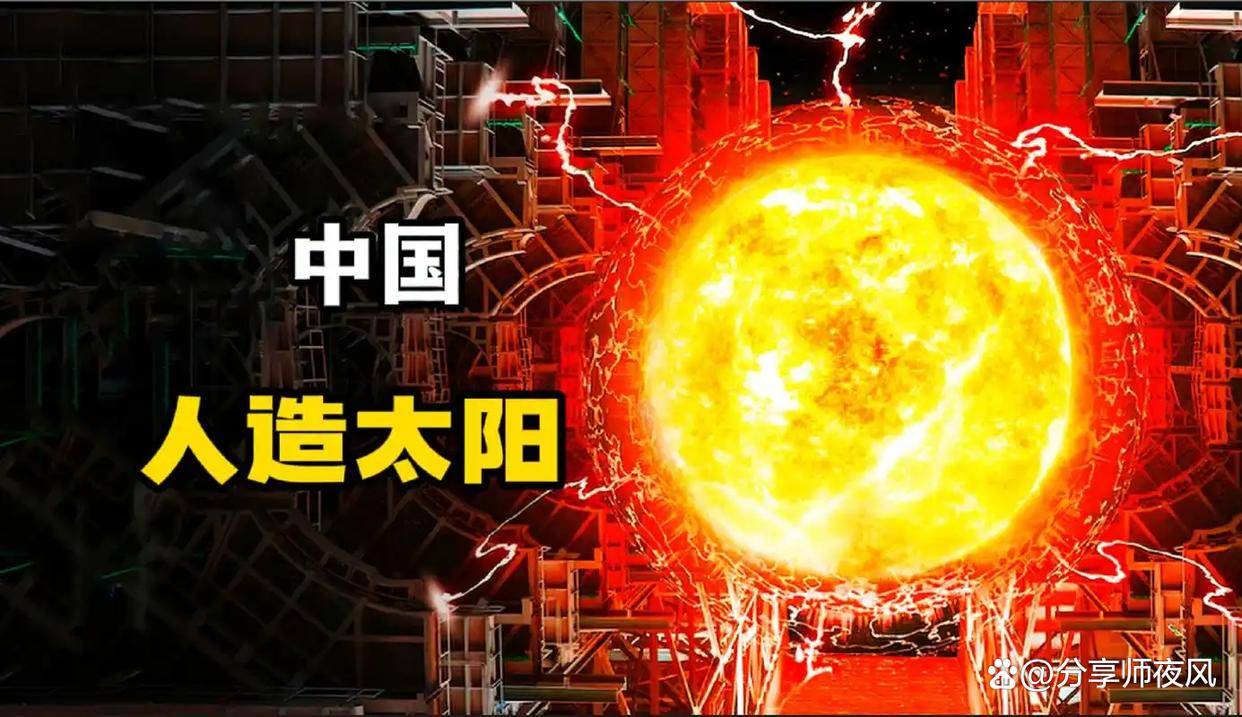
Core Insights - The "artificial sun" project, known as the Experimental Advanced Superconducting Tokamak (EAST), aims to achieve nuclear fusion, providing nearly limitless clean energy, similar to the sun's energy production [1][3] - The project utilizes isotopes of hydrogen, deuterium, and tritium as fuel, with deuterium being abundantly available in seawater, estimated at 450 trillion tons [1] - Successful commercialization of this technology could revolutionize global energy supply by eliminating greenhouse gas emissions and long-term radioactive waste associated with traditional fossil fuels [3][5] Energy Transition - The "artificial sun" project addresses the urgent need for energy transition away from fossil fuels, which have led to resource depletion and severe environmental issues [3][5] - It holds significant strategic importance for national energy security and climate change mitigation, promoting a shift towards clean and low-carbon energy sources [5][8] Technological Advancement - The project involves a multidisciplinary approach, integrating plasma physics, materials science, superconducting technology, and precision manufacturing, leading to key technological breakthroughs [5][7] - Innovations from the project can benefit other industries, such as superconducting technology in maglev trains and medical devices, enhancing overall technological capabilities [5][7] International Influence - China's achievements in the "artificial sun" project enhance its international standing in energy technology and innovation, contributing significantly to the International Thermonuclear Experimental Reactor (ITER) initiative [7][8] - The success of this project not only elevates China's position in global energy technology but also offers a Chinese solution and wisdom for global energy cooperation and development [7][8]
2025可控核聚变全球商业化项目进展、技术拆解及产业链布局分析报告
Sou Hu Cai Jing· 2025-11-08 02:07
Core Insights - The report discusses the progress and technological advancements in the global commercialization of controlled nuclear fusion, highlighting China's significant role in this competitive landscape [1][10]. Group 1: Global Competition and Technological Advances - The primary goal of controlled nuclear fusion is to replicate the fusion reactions occurring in the sun, achieving stable and controllable energy output on Earth. This requires overcoming the "fusion triple product" threshold, which is the product of plasma temperature, density, and confinement time reaching 10²¹ m⁻³・s・keV [2]. - The ITER project, involving 35 countries and costing over €20 billion, is the largest international nuclear fusion collaboration. By 2025, it will complete the installation of its core coil system, capable of generating a magnetic field of 11.8 Tesla to confine plasma at 150 million degrees Celsius. The project aims to conduct deuterium-tritium fusion experiments by 2034, targeting an energy gain factor of Q=10 [2][3]. - U.S. private companies are making significant strides in commercialization. Commonwealth Fusion Systems (CFS) plans to validate Q>1 by 2026 and launch a 200 MW commercial reactor by 2030. Helion Energy has signed the world's first fusion power purchase agreement with Microsoft, promising a 50 MW plant by 2028 and expanding to 250 MW by 2030 [3]. Group 2: China's Breakthroughs and Diverse Approaches - In 2025, China achieved notable breakthroughs in controlled nuclear fusion, with both state-led and private sector initiatives advancing the "deuterium-tritium + hydrogen-boron" dual approach [4][5]. - The EAST (Experimental Advanced Superconducting Tokamak) successfully maintained 100 million degrees Celsius plasma for 1066 seconds, setting a world record and demonstrating the capability for long-duration plasma confinement, essential for future power generation [4]. - The private sector's "Xuanlong-50U" device achieved significant milestones, including a million-ampere hydrogen-boron plasma discharge and stable operation at 1.2 Tesla for 1.6 seconds, marking a breakthrough in hydrogen-boron fusion technology [5]. Group 3: Diverse Technological Routes and Industry Development - The controlled nuclear fusion field is characterized by multiple technological routes, including magnetic confinement, inertial confinement, and emerging technologies, each with its advantages and challenges [6][7]. - The magnetic confinement route, particularly the tokamak design, remains the most mature, while the field-reversed configuration (FRC) and stellarator designs are also being explored for their potential benefits [6]. - The industry chain for controlled nuclear fusion is developing, with China achieving significant progress in domestic production of superconducting materials and key components for fusion devices, supporting the overall commercialization efforts [8][9]. Group 4: Future Energy Landscape - The global race for controlled nuclear fusion is driven by increasing energy demands and the need for sustainable energy solutions. The International Energy Agency predicts that global electricity demand will double by 2050, while fossil fuels face reduction pressures [10]. - Controlled nuclear fusion offers a solution with zero carbon emissions, sustainable raw materials, and stable 24-hour power supply, positioning it as a potential "ultimate energy" source for the future [10].
安泰科技:目前公司尚未涉及第四代钍基熔盐堆领域
Mei Ri Jing Ji Xin Wen· 2025-11-05 12:57
Core Viewpoint - Antai Technology, a subsidiary of China Steel Research Group, is not currently involved in the fourth-generation thorium molten salt reactor sector, despite its significant role in other fusion projects [1] Group 1: Company Overview - Antai Technology is a key supplier of core materials for the ITER international nuclear fusion experiment and has a market share exceeding 80% in critical components for thorium molten salt reactors [1] - The company has successfully developed and produced tungsten composite components and first wall components that are utilized in major projects such as the EAST, CRAFT, and CFETR [1] Group 2: Current Developments - The company is advancing the world's first commercial demonstration project for thorium molten salt reactors, although it has clarified that it is not yet involved in the fourth-generation thorium molten salt reactor field [1]

四中全会精神在基层|“夸父”逐日!“人造太阳”向未来
Xin Hua She· 2025-11-05 10:15
Core Insights - The article highlights China's advancements in nuclear fusion research, particularly through the EAST (Experimental Advanced Superconducting Tokamak) and the "Kua Fu" project, which aims to develop a next-generation fusion reactor [1][2][3] Group 1: EAST Achievements - The EAST device has achieved significant milestones, including a world record of maintaining a temperature of over 100 million degrees Celsius for 1000 seconds, simulating conditions necessary for future fusion reactors [1][2] - During the 14th Five-Year Plan period, EAST set records for plasma operation times of 101 seconds and 403 seconds, showcasing China's growing capabilities in fusion technology [1][2] Group 2: Kua Fu Project Development - The Kua Fu project, initiated in December 2018, has made substantial progress, with over 92% of the overall engineering completed, focusing on the development of core components for the next-generation fusion reactor [2][3] - Key components of the Kua Fu project, such as the low-frequency current drive system and the domestic ion cyclotron heating system, have successfully passed expert evaluations and are now operational [2][3] Group 3: Future Plans and Applications - The 15th Five-Year Plan is expected to be a critical phase for China's fusion energy development, transitioning from experimental to demonstration reactors, with the BEST (Broadly Enhanced Superconducting Tokamak) device aiming for completion by the end of 2027 [3][4] - Fusion-derived technologies are already being applied in various fields, including medical treatments and security systems, indicating the potential for fusion energy to become a new economic growth point [3][4] Group 4: Industry Integration - The article emphasizes the integration of technology and industry in the fusion energy sector, with Hefei developing a comprehensive industrial cluster that includes superconducting materials, magnet systems, and vacuum equipment [4]
领跑全球!中国“人造太阳”稳定运行1000秒,2050年终结能源焦虑
Sou Hu Cai Jing· 2025-10-31 14:42
Core Insights - The article discusses the critical issue of energy scarcity and highlights controlled nuclear fusion, referred to as "artificial sun," as a potential ultimate solution to humanity's energy challenges [2][4][22] - It emphasizes China's advancements in controlled nuclear fusion technology and its position in the global competition [17][20][24] Energy Scarcity and Its Implications - Energy scarcity significantly influences human society, leading to competition, trade, and conflicts, particularly evident in regions like the Middle East due to oil reserves [4][5] - The reliance on fossil fuels and the limitations of renewable energy sources like solar and wind power necessitate a more sustainable solution [5][7] Controlled Nuclear Fusion as a Solution - Controlled nuclear fusion aims to replicate the sun's energy production process, utilizing isotopes of hydrogen (deuterium and tritium) as fuel [9] - The challenges include achieving the necessary high temperatures (around 100 million degrees) and confining the plasma using magnetic fields [11][13] China's Leadership in Fusion Technology - China has made significant strides in controlled nuclear fusion, with a Tokamak device achieving over 1000 seconds of stable operation and plans for a fusion power plant by 2027 [17][20] - The country's advancements are attributed to long-term investment and breakthroughs in materials science, superconducting magnets, and precision manufacturing [19][20] Future Implications of Fusion Energy - The commercialization of controlled nuclear fusion is projected around 2050, potentially leading to an era of unlimited energy and transforming global dynamics [20][22] - The shift from resource competition to value creation could foster growth in various sectors, including arts, technology, and culture [22][24]
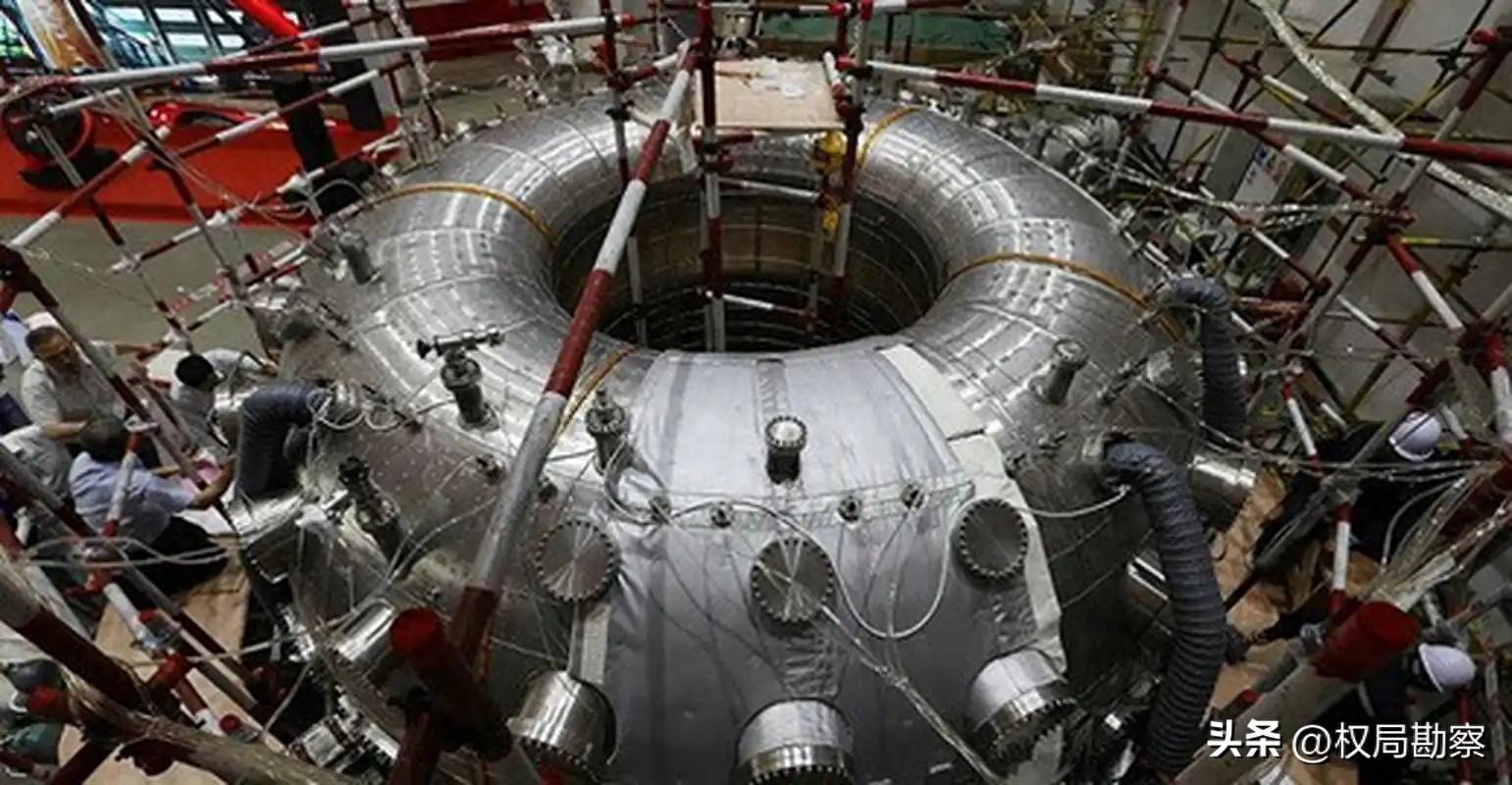
突发特讯!中国通告全球,成功制备人造太阳关键材料,引发高度关注
Sou Hu Cai Jing· 2025-10-29 04:36
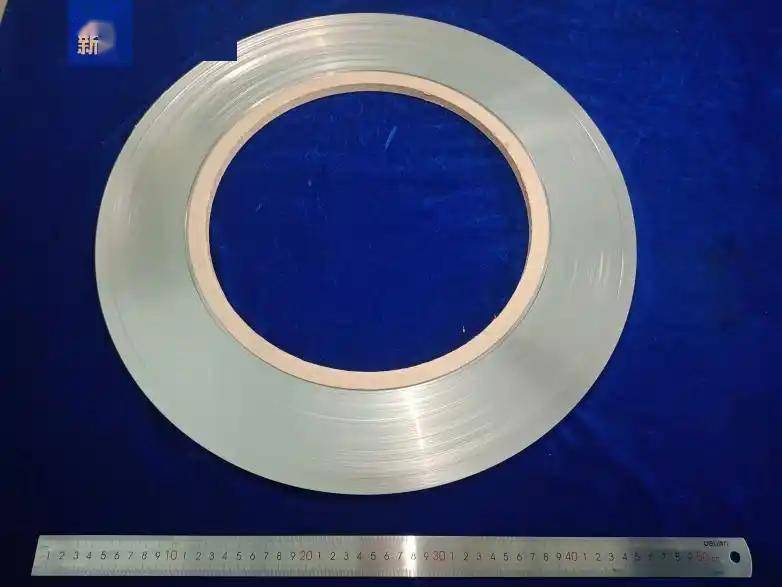
Core Insights - China has achieved a significant milestone in the energy sector by industrially producing ton-level Hastelloy C276 metal-based superconducting tape, crucial for nuclear fusion technology, marking a shift from a follower to a leader in the ultimate energy race [1][5][9] Group 1: Technological Breakthrough - The successful industrialization of ton-level Hastelloy C276, a nickel-based alloy, is essential for the stability of Tokamak nuclear fusion devices, capable of withstanding extreme temperatures and radiation [3][5] - The production of this superconducting tape is expected to significantly reduce manufacturing costs, addressing long-standing challenges in the large-scale development of fusion devices [5][9] Group 2: Strategic Importance - This breakthrough reflects China's long-term commitment to nuclear fusion, with nearly 20 years of sustained investment and participation in international projects like the ITER [7][8] - The achievement highlights China's ability to integrate research and industrial processes, facilitating rapid application of scientific advancements [8] Group 3: Implications for Energy Independence - Mastery of nuclear fusion technology could position China as a leader in energy independence, reducing reliance on fossil fuels and reshaping the global energy landscape [9][10] - The successful production of Hastelloy C276 also enhances China's capabilities in high-end manufacturing and national defense, reducing dependency on foreign materials [9] Group 4: Future Challenges - Despite the breakthrough, significant challenges remain in achieving commercial viability for nuclear fusion, including key performance metrics that have yet to be met [9][10] - The historical context suggests that advancements in foundational materials often precede broader technological revolutions, indicating potential for future developments in energy technology [9][10]
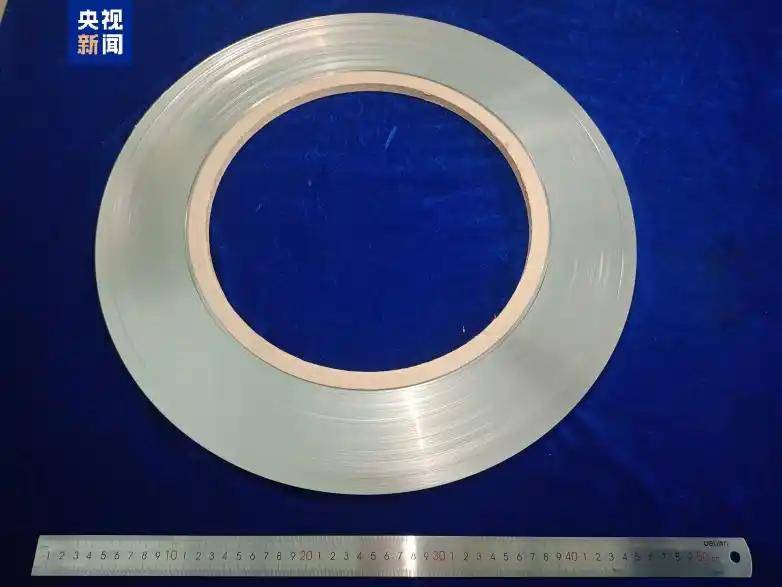
【新华社】我国科研人员实现“人造太阳”关键核心材料制备
Xin Hua She· 2025-10-29 01:21
Core Insights - The research team at the Institute of Metal Research, Chinese Academy of Sciences, has successfully achieved industrial-scale production of high-purity ton-level Hastelloy alloy using self-developed purification technology, which is crucial for the production of second-generation high-temperature superconducting tapes [1][2] - The second-generation high-temperature superconducting tapes are essential for creating powerful magnetic fields necessary for controlled nuclear fusion, and the production of these tapes has previously relied on imported Hastelloy alloys, which are expensive and have uncertain supply timelines [1] - The newly developed Hastelloy alloy has purity levels that meet or exceed those of imported materials, and the team has also overcome key technical challenges in processing, resulting in ultra-thin metal strips with specific dimensions and excellent thermal stability and mechanical properties [1] Production and Collaboration - The metal strips produced by the Institute of Metal Research have undergone validation with relevant enterprises, successfully completing the large-scale production of nearly one kilometer of high-temperature superconducting tape [2] - A framework cooperation agreement has been established between the Institute of Metal Research and related enterprises for the supply of 20 tons of metal strips, with plans for further collaboration to optimize the production process [2]
每日复盘-20251028
Guoyuan Securities· 2025-10-28 14:44
Market Performance - On October 28, 2025, the Shanghai Composite Index fell by 0.22% to 3988.22 points, while the Shenzhen Component Index decreased by 0.44% to 13430.10 points, and the ChiNext Index dropped by 0.15% to 3229.58 points[2][15][7] - The total market turnover was 21653.07 billion yuan, a decrease of 1912.80 billion yuan from the previous trading day[2][15] Stock Trends - Out of 2362 stocks that rose, 2908 stocks fell, indicating a bearish market sentiment[2][15] - The best-performing sectors included Defense and Military (+1.23%), Computer (+0.49%), and Comprehensive (+0.46%), while the worst performers were Non-ferrous Metals (-2.75%), Steel (-1.34%), and Construction (-0.97%)[2][20] Fund Flow - On October 28, 2025, the net outflow of main funds was 483.69 billion yuan, with large orders contributing to a significant portion of the outflow[3][25] - Small orders saw a continuous net inflow of 503.16 billion yuan, indicating retail investor interest despite the overall market decline[3][25] ETF Activity - Major ETFs such as the Huaxia SSE 50 ETF and the Huatai-PB CSI 300 ETF saw their trading volumes decrease by 5.29 billion yuan and 1.56 billion yuan, respectively[3][29] - The total trading volume for ETFs on October 28 was lower compared to the previous day, reflecting reduced investor activity[3][29] Global Market Context - On the same day, major Asia-Pacific indices generally declined, with the Hang Seng Index down 0.33% and the Nikkei 225 down 0.58%[4][32] - In contrast, European indices showed positive performance on October 27, with the DAX up 0.28% and the FTSE 100 up 0.09%[5][33]
突发特讯!中国通告全球,成功制备“人造太阳”关键材料,引发高度关注
Sou Hu Cai Jing· 2025-10-28 10:46
Core Insights - China's successful industrial-scale production of ton-level Hastelloy C276, a key material for nuclear fusion, marks a significant advancement in the quest for controlled nuclear fusion, positioning China as a potential leader in the ultimate energy race [1][3][5] Group 1: Importance of Hastelloy C276 - Hastelloy C276 is a nickel-based alloy that can withstand extreme temperatures, radiation, and corrosive environments, making it essential for Tokamak fusion devices [3] - The ton-level production of this second-generation high-temperature superconducting substrate is expected to significantly reduce costs and address the challenges of scaling up fusion devices [3][5] Group 2: Factors Behind China's Breakthrough - China's long-term commitment to nuclear fusion, starting from its involvement in the ITER project in 2006 to the independent construction of the EAST superconducting Tokamak, showcases strategic determination over nearly two decades [5] - The collaboration across the entire industrial chain, from basic research at the Metal Research Institute to engineering applications by companies like Western Superconducting, has facilitated this breakthrough [5] - China has developed the largest research team globally in high-temperature alloys and superconducting materials, providing a strong talent pool for innovation [5] Group 3: Implications for Energy Independence and National Security - Mastery of nuclear fusion technology could position China at the forefront of the global energy landscape, reducing reliance on oil and gas imports [5] - The ability to produce Hastelloy C276 independently enhances China's capabilities in high-end manufacturing and national defense, mitigating external dependencies [5] Group 4: Challenges Ahead - Despite the significant breakthrough, challenges remain in achieving commercial viability, including key performance metrics like ignition time and energy gain coefficient [7] - Historical precedents suggest that breakthroughs in foundational materials often precede technological revolutions, indicating that this development could be a precursor to future advancements in energy technology [7]