信用修复

Search documents
资金持续宽松,债市偏强震荡
Rui Da Qi Huo· 2025-12-26 08:57
1. Report Industry Investment Rating No relevant information provided. 2. Core View of the Report - The domestic economic fundamentals showed marginal slowdown in industrial growth and social retail in November, with fixed investment in continuous negative growth and stable unemployment. Financial data in November was structurally differentiated, with social financing increment exceeding expectations due to direct financing, but credit continued to weaken, and the demand for long - term corporate investment remained weak. CPI continued to improve, while the decline of PPI widened slightly. Overseas, the US economy maintained resilience with strong consumption, but the job market cooled. The market's expectation of future interest - rate cuts increased. The central bank's monetary policy in the next year will continue the moderately loose tone, but the urgency of short - term interest - rate cuts is low. It is expected that interest rates will continue to fluctuate in the short term [99]. 3. Summary According to the Directory 3.1. Market Review - **Weekly Data**: The 30 - year, 10 - year, 5 - year, and 2 - year Treasury bond futures' main contracts rose by 0.27%, 0.14%, 0.08%, and 0.06% respectively. The trading volume of the TS main contract increased, while the trading volumes of the TF, T, and TL main contracts decreased slightly. The open interest of the TF, T, TS, and TL main contracts all increased [13][16][22][30]. 3.2. News Review and Analysis - **Domestic News**: On December 22, the 1 - year and 5 - year - plus LPR remained unchanged, with cumulative decreases of 10 basis points this year. The National Housing and Urban - Rural Development Work Conference proposed to optimize real - estate policies. The central bank's Monetary Policy Committee meeting in the fourth quarter emphasized maintaining capital - market stability. The Ministry of Finance and other 9 departments formulated the enterprise climate - information disclosure guidelines. The National Development and Reform Commission proposed to regulate the "new three items" industries [33][34]. - **Overseas News**: The US GDP in Q3 2025 increased by 4.3% quarter - on - quarter annually, and consumer spending was the main driving force. Japan's 2026 fiscal - year preliminary budget reached 122.3092 trillion yen, a record high [34][35]. 3.3. Chart Analysis - **Spread Changes**: The spreads between 10 - year and 5 - year, 10 - year and 1 - year Treasury bond yields widened. The spreads between the TF and TS, T and TF main contracts widened. The 10 - year, 30 - year, 5 - year, and 2 - year Treasury bond futures' near - far month spreads all widened [43][49][53][60]. - **Treasury Bond Futures Main - Position Changes**: The net short positions of the top 20 holders in the T Treasury bond futures main contract decreased [67]. - **Interest - Rate Changes**: Overnight and 2 - week Shibor rates decreased, while 1 - week and 1 - month Shibor rates increased. The DR007 weighted average rate rebounded to around 1.52%. The short - end yields of Treasury bond cash bonds were strong, with 1 - 7Y yields decreasing by 1.10 - 6.75bp, and 10Y and 30Y yields decreasing by about 0.5bp to 1.84% and 2.22% respectively. The spreads between Chinese and US 10 - year and 30 - year Treasury bond yields narrowed slightly [69][74]. - **Central Bank's Open - Market Operations**: The central bank conducted 422.7 billion yuan in reverse repurchases and 210 billion yuan in treasury - cash fixed deposits this week, with 457.5 billion yuan in reverse - repo maturities and 120 billion yuan in treasury - cash fixed - deposit maturities, resulting in a net withdrawal of 244.8 billion yuan. The DR007 weighted average rate rebounded to around 1.52% [78]. - **Bond Issuance and Maturity**: This week, the total bond issuance was 983.033 billion yuan, and the total repayment was 1081.165 billion yuan, with a net financing of - 98.132 billion yuan [82]. - **Market Sentiment**: The central parity rate of the RMB against the US dollar was 7.0358, with a cumulative increase of 192 basis points this week. The spread between the offshore and onshore RMB narrowed. The 10 - year US Treasury bond yield decreased slightly, the VIX index decreased, the 10 - year Chinese Treasury bond yield increased slightly, and the A - share risk premium decreased slightly [85][91][96]. 3.4. Market Outlook and Strategy - The domestic economic internal driving force needs to be boosted. The central bank's monetary policy in the next year will continue the moderately loose tone, but the short - term urgency of interest - rate cuts is low. It is expected that interest rates will continue to fluctuate in the short term [99].
国开行、工行、农行、中行、建行、交行、邮储银行等迅速响应!
Jin Rong Shi Bao· 2025-12-26 04:46
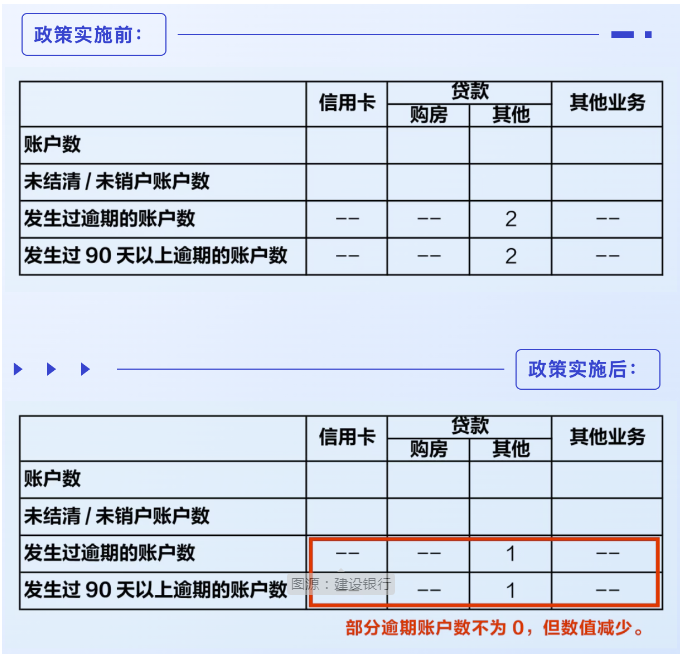
Core Viewpoint - The People's Bank of China has announced a one-time credit repair policy that allows individuals with overdue debts of up to 10,000 RMB to have their overdue information removed from the credit reporting system if they repay their debts in full by March 31, 2026 [1] Group 1: Policy Details - The policy applies to all types of personal credit, including credit cards, housing loans, and consumer loans, as long as they meet the specified conditions [1] - Individuals must fully repay overdue debts, including principal, interest, and penalties, and make timely payments for the current month to qualify for the credit repair [2] - The overdue information in credit reports will be adjusted, changing the repayment status from overdue to normal and the overdue amount from a non-zero value to zero [3][4] Group 2: Implementation and Support - Banks, including major institutions like Industrial and Commercial Bank of China and Agricultural Bank of China, are actively preparing to implement the policy and provide guidance to the public [6][7] - The central bank will offer an additional two free credit report inquiries in the first half of 2026 to accommodate increased demand for credit report checks following the policy implementation [5] - The policy is not to be viewed as a means of "credit washing," but rather as a special arrangement to address public concerns while maintaining the principle of punishing dishonesty [7]






银行业积极响应信用修复政策 支持个人和家庭重塑信用
Jin Rong Shi Bao· 2025-12-25 02:58
Core Viewpoint - The People's Bank of China has announced a one-time credit repair policy aimed at supporting individuals with damaged credit who actively repay their debts, in response to the ongoing impacts of the COVID-19 pandemic [1][3]. Group 1: Policy Implementation - The policy applies to personal overdue information for amounts not exceeding 10,000 RMB from January 1, 2020, to December 31, 2025, where individuals can have their overdue debts removed from the credit system if repaid by March 31, 2026 [2]. - Financial institutions have quickly responded to the policy, emphasizing the importance of promoting and implementing the credit repair measures [1][3]. Group 2: Benefits for Individuals and Financial Institutions - The policy is expected to provide a corrective opportunity for individuals with past credit issues, improving their credit status and stimulating economic activity [3]. - It will help financial institutions better identify individual credit situations, enhancing the quality and effectiveness of inclusive financial services [3][4]. - The policy is anticipated to activate a significant number of potential credit customers, positively impacting consumer credit growth [4]. Group 3: Relationship Between Banks and Customers - The implementation of the policy is likely to foster a better relationship between banks and customers, encouraging individuals to value and maintain their credit [5]. - Banks are expected to provide improved financial services based on the enhanced credit environment created by the policy [5]. Group 4: Challenges for Financial Institutions - Banks face the challenge of optimizing risk control capabilities while implementing the credit repair policy [6]. - There is pressure on banks to quickly adjust risk control models to incorporate the new repair rules and prevent secondary risks from historical record changes [7]. - Financial institutions need to ensure accurate reporting of repayment information to the credit system and may need to develop new assessment models for the repaired customer group [7][8].


兰州住房公积金中心发布一次性信用修复政策全攻略
Xin Lang Cai Jing· 2025-12-25 01:02
Core Viewpoint - The Lanzhou Housing Provident Fund Management Center has launched a one-time credit repair policy to support borrowers with damaged credit who are actively repaying their loans, allowing them to restore their credit status without the need for application or documentation [1][2]. Group 1: Policy Details - The policy applies to overdue information generated between January 1, 2020, and December 31, 2025, with a single overdue amount not exceeding 10,000 yuan, and must be fully repaid by March 31, 2026 [1]. - The policy operates on an "automatic recognition" mechanism, where the People's Bank of China will automatically process the credit repair without requiring individual applications [1]. - If overdue debts are fully repaid by November 30, 2025, the overdue information will not be displayed starting January 1, 2026; if repaid between December 1, 2025, and March 31, 2026, the information will be removed by the end of the following month [1]. Group 2: Adjustment of Credit Information - Eligible overdue information will be adjusted to reflect a "normal" repayment status instead of "overdue," and the overdue amount will be changed to "0" in the credit report [2]. - The Lanzhou Housing Provident Fund Management Center emphasizes that this policy is a free public welfare initiative, warning against scams that charge fees for credit repair services [2]. - Individuals can enjoy two additional free credit report inquiries from January 1 to June 30, 2026, in addition to the annual two free inquiries, through official channels [2].
如何申请一次性信用修复?国有大行权威解答
Xin Lang Cai Jing· 2025-12-25 00:38
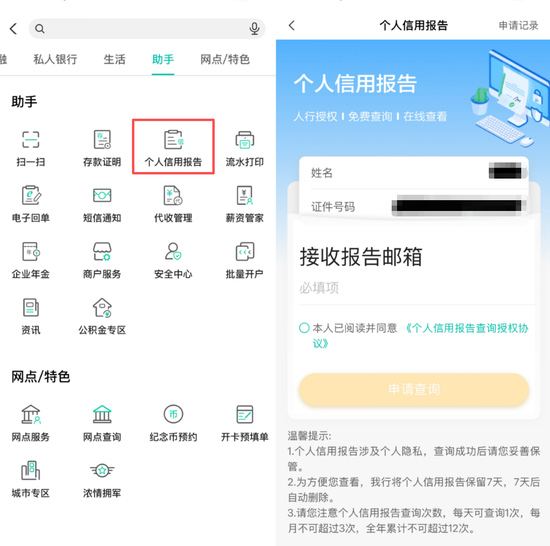
Core Viewpoint - The People's Bank of China has announced a one-time credit repair policy effective from January 1, which will not display certain overdue information in personal credit reports for eligible individuals [1][7]. Group 1: Policy Implementation - Major state-owned banks quickly responded to the announcement by providing answers to frequently asked questions regarding the policy [2][4]. - Agricultural Bank of China stated that overdue information meeting the criteria will be automatically identified and processed without requiring public applications [2][7]. - The policy is completely free, and individuals do not need to apply or engage third parties for assistance [1][10]. Group 2: Eligibility Criteria - The policy applies to overdue information in the financial credit information database from January 1, 2020, to December 31, 2025, with a single overdue amount not exceeding 10,000 yuan [7]. - Individuals must fully repay their overdue debts by March 31, 2026, for the information to be excluded from their credit report [7]. Group 3: Bank Responses and Services - Banks have enhanced their online and offline services to facilitate customer inquiries about their credit reports [2][4][5]. - Various banks, including China Construction Bank and Bank of Communications, have provided multiple channels for customers to check their credit reports, including mobile apps and self-service machines [4][5]. Group 4: Impact on Financial Institutions - The policy is expected to encourage overdue borrowers to repay their debts, aiding banks in recovering non-performing assets and improving asset quality [8]. - The one-time nature of the policy is designed to prevent moral hazard while potentially increasing demand for personal loans [8].
我市法院2025年度涉企执行“成绩单”发布 35.62亿元精准兑现到位
Zhen Jiang Ri Bao· 2025-12-24 23:38
Core Insights - The Zhenjiang Intermediate Court emphasizes the importance of executing enterprise-related cases to support high-quality economic and social development in 2025, balancing "legal enforcement" with "civilized goodwill" [1][2] - A total of 8,306 enterprise-related cases were concluded in 2025, with an execution amount of 3.562 billion yuan [1] - The court aims to reduce the cost for creditors in realizing their claims and minimize the impact of enforcement measures on normal business operations [1] Group 1: Execution of Enterprise Cases - In 2025, the court executed 8,306 cases with a total amount of 3.562 billion yuan [1] - The court adopted "active sealing and active deduction" methods to lessen the impact of enforcement on business operations [1] - A pre-penalty mechanism was established, resulting in 27 cases of proactive compliance or settlement [1] Group 2: Credit and Debt Management - The court enhanced execution and reconciliation efforts, with 2,796 enterprises reaching settlements with creditors this year [1] - A credit repair mechanism was improved, assisting 241 dishonest enterprises in restoring their credit [2] - The number of enterprises listed as dishonest debtors decreased by 33.44% year-on-year [2] Group 3: Bankruptcy and Debt Resolution - The court successfully rescued 39 enterprises through bankruptcy reorganization and reconciliation procedures [2] - The execution of cases involving government arrears to small and medium-sized enterprises was strengthened, resolving 8 cases [2] - External supervision was reinforced, with 38 representatives from various organizations participating in enterprise execution activities [2]
国有大行火速响应信用修复新政
21世纪经济报道· 2025-12-24 14:10
Core Viewpoint - The article discusses the implementation of a new credit repair policy by the People's Bank of China, which allows for automatic credit repair for individuals with overdue debts, significantly lowering the barriers and costs associated with credit repair [1][3]. Group 1: Policy Overview - The new policy, effective from December 22, 2025, allows for the automatic removal of certain overdue information from credit reports without the need for individual applications, marking a shift towards a dual focus on both punishment and repair in the credit system [1][3]. - The policy covers various types of personal loans, including mortgages, consumer loans, and credit cards, and applies to all financial institutions connected to the central bank's credit system [6][3]. Group 2: Eligibility and Conditions - To qualify for the credit repair, overdue information must meet three criteria: it must have occurred between January 1, 2020, and December 31, 2025; the overdue amount must not exceed 10,000 RMB; and the debt must be fully repaid by March 31, 2026 [6][3]. - The automatic repair process is designed to be seamless, with the central bank's credit system identifying eligible overdue information without requiring any action from the individual [3][7]. Group 3: Implementation by Financial Institutions - Major banks, including Industrial and Commercial Bank of China, Agricultural Bank of China, and others, have quickly adapted to the new policy by enhancing their service channels and ensuring accurate data management to facilitate the policy's implementation [9][10]. - Banks have established various channels for customers to inquire about their credit status and have emphasized the importance of confirming repayment amounts to ensure eligibility for the credit repair [11][10]. Group 4: Balancing Rights and Risk Management - The new policy aims to balance individual rights protection with financial risk management, encouraging overdue borrowers to repay their debts while helping banks recover non-performing assets [14][15]. - The policy is expected to stimulate demand for personal loans, including consumer and mortgage loans, by releasing previously constrained financing needs, thus revitalizing the credit market [15][16].

央行启动信用修复,1万元以下逾期还清不影响买房买车
3 6 Ke· 2025-12-24 09:51
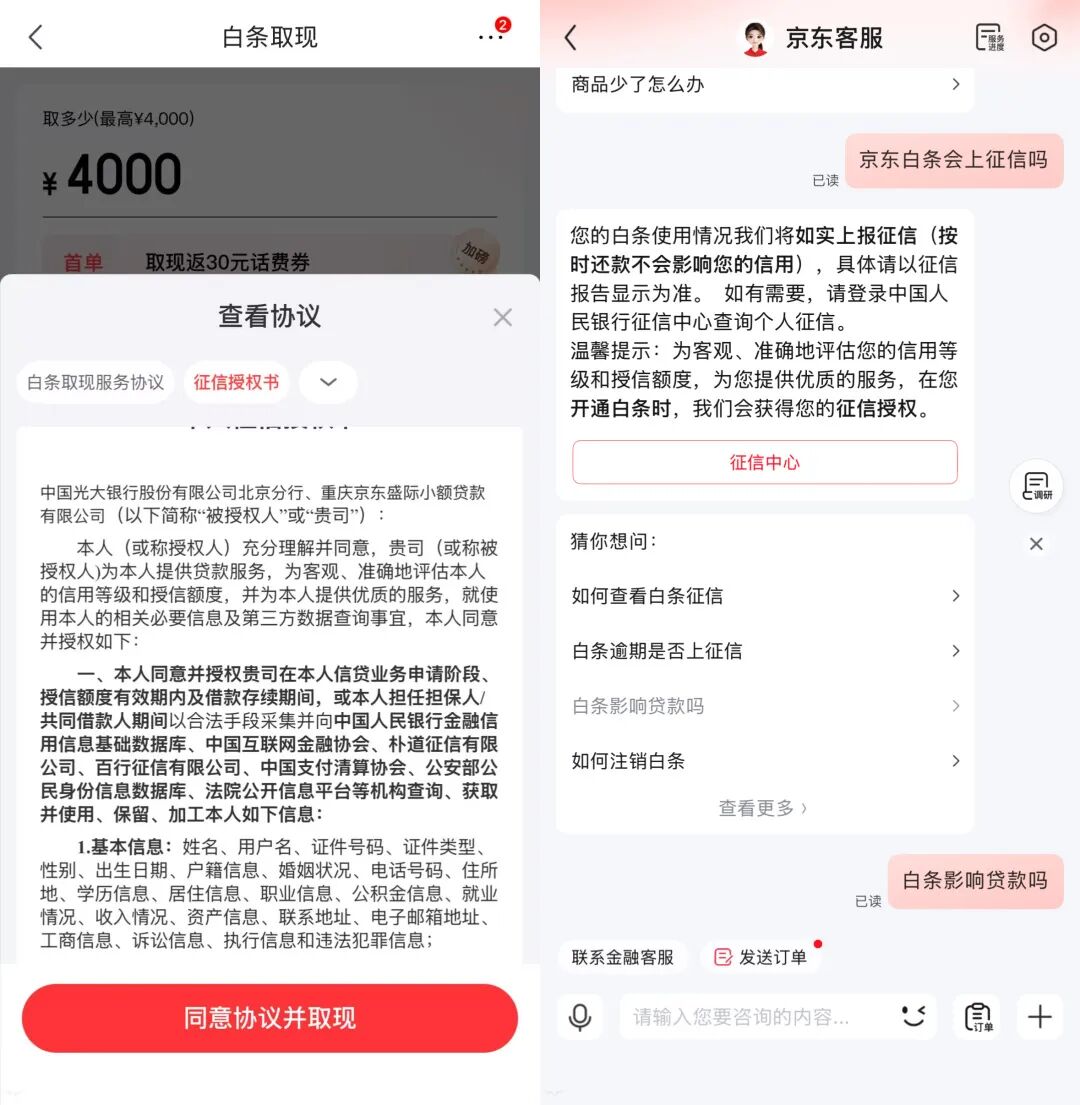
Core Insights - The article discusses the impact of credit records on individuals' financial opportunities, particularly in relation to loans and mortgages, highlighting the growing concern over credit management in the context of increasing credit consumption [1][3][13] Group 1: Credit Information and Its Implications - As of November 2025, the central bank's credit system has recorded credit information for 810 million individuals, indicating the extensive reach of credit data [1] - Small overdue amounts, even as low as 100 yuan, can lead to significant consequences, such as loan rejections, affecting individuals' ability to secure mortgages or business loans [1][3] - The article emphasizes that all credit products, including "Huabei" and "JD White Bar," are reported to the credit system, and consumers often overlook the implications of their credit behavior when using these services [7][9] Group 2: Risks Associated with "Buy Now, Pay Later" Schemes - The "Buy Now, Pay Later" model has become increasingly popular, but it poses risks such as impulsive spending and potential credit damage due to missed payments [9][12] - Many consumers are unaware of the credit implications of these services, as they are often set as default payment options, leading to unintentional credit obligations [9][12] Group 3: Credit Repair Initiatives - The People's Bank of China has introduced a one-time credit repair policy aimed at individuals with small overdue amounts, allowing for the removal of certain overdue records if debts are settled by specific deadlines [16] - This policy applies to various types of loans, including personal, housing, and consumer loans, and aims to alleviate the credit challenges faced by individuals [16] - The initiative reflects a broader trend towards improving the credit repair system, with recent regulations and guidelines being established to support this effort [14][16]
瑞达期货国债期货日报-20251224
Rui Da Qi Huo· 2025-12-24 09:08
| 项目类别 | 数据指标 | 最新 | 环比 项目 | 最新 | 环比 | | --- | --- | --- | --- | --- | --- | | 期货盘面 | T主力收盘价 | 108.230 | 0.02% T主力成交量 | 69143 | -29383↓ | | | TF主力收盘价 | 106.025 | -0.01% TF主力成交量 | 54708 | -24224↓ | | | TS主力收盘价 | 102.526 | 0% TS主力成交量 | 26501 | -8831↓ | | | TL主力收盘价 | 112.840 | 0.02% TL主力成交量 | 110763 | -29971↓ | | 期货价差 | TL2603-2606价差 | -0.22 | -0.05↓ T03-TL03价差 | -4.61 | 0.00↑ | | | T2603-2606价差 | 0.00 | +0.00↑ TF03-T03价差 | -2.21 | -0.01↓ | | | TF2603-2606价差 | 0.01 | +0.01↑ TS03-T03价差 | -5.70 | -0.01↓ | | | TS ...

个人信用修复“免申即享”落地 多家国有大行火速响应
2 1 Shi Ji Jing Ji Bao Dao· 2025-12-24 08:08
Core Viewpoint - The People's Bank of China has introduced a new policy for one-time credit repair, allowing eligible individuals to have their overdue information not displayed in the financial credit information database, marking a shift towards a dual focus on both punishment and repair in the credit system [1][15] Group 1: Policy Overview - The policy, effective from December 22, 2025, features an "automatic enjoyment" mechanism, significantly lowering the barriers and operational costs for credit repair [2][16] - It covers various personal credit products, including mortgages, consumer loans, and credit cards, without requiring individuals to apply actively [1][15][19] - Eligible overdue information must meet three criteria: it must have occurred between January 1, 2020, and December 31, 2025, the overdue amount must not exceed 10,000 RMB, and the debt must be fully repaid by March 31, 2026 [5][20] Group 2: Implementation by Banks - Major state-owned banks, including ICBC, ABC, CCB, BOC, and others, quickly responded to the policy by optimizing service measures to ensure effective implementation [7][21] - Banks have enhanced their systems for credit report inquiries and established risk monitoring mechanisms to facilitate the policy's rollout [21][22] - Specific channels for customer inquiries and corrections have been set up by various banks to ensure quick responses to any issues [22] Group 3: Clarification on Debt Repayment - Full repayment of overdue debts requires borrowers to settle both historical overdue amounts and current monthly payments [24][25] - Banks emphasize the importance of confirming the final repayment amount with financial institutions to avoid issues with policy eligibility [25] Group 4: Balancing Rights and Risk - The new policy aims to balance individual rights protection with financial risk prevention, encouraging overdue borrowers to repay their debts and helping banks recover non-performing assets [12][26] - The policy is seen as a significant opportunity for banks to enhance their service quality and better assess borrowers' creditworthiness [27] Group 5: Economic Impact - The credit repair policy is expected to stimulate demand for personal credit products, potentially boosting the lending market [13][27] - However, the overall improvement in credit demand will require support from fiscal and real estate policies due to the current economic environment [14][27] Group 6: Distinction from Debt Forgiveness - The credit repair policy is distinct from debt forgiveness, as it requires full repayment of overdue loans before any credit record corrections are made [28]