创新药出海

Search documents
港股全流通备案,复宏汉霖(02696.HK)计划2030欧美上市15款产品
Sou Hu Cai Jing· 2026-01-19 01:25
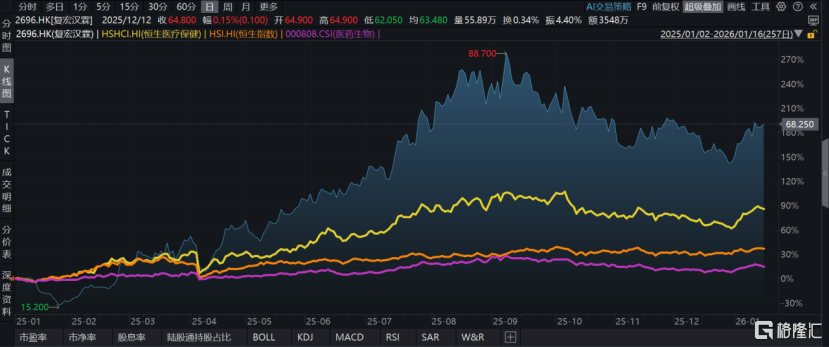
Group 1 - The core point of the news is that Fuhong Hanlin has received approval from the China Securities Regulatory Commission for the full circulation of approximately 182.6 million unlisted shares, which is expected to enhance stock liquidity and attract more international investors [1] - The full circulation signifies not only an adjustment in share structure but also an optimization of corporate governance and unification of shareholder interests, which is beneficial for Chinese innovative pharmaceutical companies aiming for globalization [1][2] - Fuhong Hanlin's strategy of "differentiated innovation + global operation" has shown a clear trajectory, with successful product launches and deepening pipeline layouts, demonstrating strong growth resilience in the capital market [1] Group 2 - The pharmaceutical sector has experienced a recovery curve from the bottom, supported by favorable policies, returning funds, AI technology, and the international expansion of innovative drugs, leading to a significant valuation recovery [3] - As of December 31, 2025, both Hong Kong and A-share pharmaceutical sectors recorded substantial gains, with the Hang Seng Healthcare Index rising by 56.95%, while Fuhong Hanlin's stock surged by 140.71%, peaking at over 505% during the year [3] - The outlook for 2026 indicates a clearer development logic for the pharmaceutical industry, with a comprehensive policy support system for innovation and a growing global presence for Chinese innovative drugs [4] Group 3 - Fuhong Hanlin's global expansion has entered a new phase, with a commercial product matrix that has grown to 10 approved products and 5 applications accepted by the NMPA and EMA, covering over 60 countries and benefiting more than 950,000 patients [6][7] - The flagship product, Hanquyou®, has been approved in over 50 markets, while Hanshuang® has received approvals in more than 40 countries, including a significant approval in Peru for a PD-1 monoclonal antibody [7] - The company has accelerated its global layout through various licensing agreements with firms like Sandoz and Dr. Reddy's, which not only provide immediate cash flow but also facilitate entry into mature markets [7] Group 4 - Fuhong Hanlin has established a diverse and high-quality R&D pipeline with over 50 early-stage molecules, focusing on best-in-class (BIC) and first-in-class (FIC) products, including monoclonal antibodies and ADCs [9] - The company has developed multiple innovative platforms to ensure the quality and efficiency of R&D, which supports the creation of a competitive long-term innovation pipeline [9] - Key clinical and registration milestones for 2026 include significant advancements for Hanquyou® and HLX22, with plans for multiple global clinical studies and regulatory submissions [11][12] Group 5 - Fuhong Hanlin's future innovation therapies include ADCs, bispecific antibodies, and TCE products, with over 40 new clinical research applications expected to be approved within five years [16] - The company's growth trajectory reflects the broader narrative of the value reassessment of Chinese innovative pharmaceuticals, showcasing its ability to navigate from a local player to a global leader [16][17] - The full circulation not only brings opportunities for governance optimization and valuation reshaping but also resonates with the company's dual strategy of innovation and globalization [16]

创新药“出海”进入新阶段的三点启示
Zheng Quan Ri Bao· 2026-01-18 17:10
Core Insights - In 2025, China's innovative pharmaceuticals are expected to experience explosive growth in overseas licensing, with total overseas licensing exceeding $130 billion. This trend continues into 2026, with companies like Rongchang Biologics achieving significant overseas licensing deals [1] Group 1: Transition in Business Model - The "going global" strategy for innovative drugs has shifted from selling individual products to selling capabilities. Chinese pharmaceutical companies are now recognized for their comprehensive R&D platforms and validated clinical development capabilities, rather than just individual drug rights [2] - This transition necessitates that Chinese companies build a complete innovation capability chain, distinguishing industry leaders from ordinary participants based on their systematic pharmaceutical innovation capabilities [2] Group 2: Shift to Source Innovation - Sustainable "going global" requires a fundamental shift in R&D logic from incremental improvements to providing "first-in-class" or "best-in-class" solutions for unmet clinical needs. Recent high-value transactions indicate that capital is increasingly concentrating on companies with genuine differentiated innovation capabilities [3] - Companies that successfully navigate challenging fields, such as Alzheimer's disease, are gaining international recognition, highlighting the importance of investing in complex biological mechanisms and unclear development paths [3] Group 3: Strategic Global Positioning - The strategy of Chinese innovative pharmaceutical companies has evolved from merely exporting products to establishing a global ecosystem. More transactions are adopting risk-sharing models, indicating a proactive approach to R&D and commercialization for long-term value distribution [4] - "Going global" also represents a strategic move to secure future technological influence. Chinese companies are demonstrating competitive R&D efficiency in emerging technology areas, such as antibody-drug conjugates and cell therapies, positioning themselves favorably in the global pharmaceutical landscape [4] - The total overseas licensing amount exceeding $130 billion signifies that the Chinese innovative pharmaceutical industry is now qualified to participate in top-tier global competition, with the real challenge lying in subsequent global clinical advancement and commercialization capabilities [4]
15个月的蹉跎,宜明昂科如何用一个“迟到”的资产敲开MNC大门?
Xin Lang Cai Jing· 2026-01-15 14:14
Core Viewpoint - The termination of the collaboration between 宜明昂科-B (1541.HK) and AxionBio highlights the challenges faced by Chinese innovative drug companies in the global market, emphasizing that the choice of partners may be more critical than the technical advantages of the products themselves [5][21][25]. Group 1: Collaboration Details - In August 2024, 宜明昂科-B signed a potential licensing agreement with AxionBio worth over $2 billion, which was seen as a significant step for the company's international expansion [2][18]. - By January 2026, 宜明昂科-B announced the recovery of global rights for its dual-antibody drug IMM2510 and CTLA-4 antibody IMM27M, marking the end of the collaboration [4][21]. - The company retained the $35 million upfront and milestone payments received from AxionBio, indicating a strategic decision rather than a forced exit [5][21]. Group 2: Clinical Development Challenges - The clinical trial progress for IMM2510 was notably slow, with only three patients enrolled in the Phase I trial in the U.S. before the collaboration ended [7][23]. - The FDA approved the clinical trial application for IMM2510 in July 2025, but AxionBio did not administer the first patient until October 2025, resulting in a 15-month delay from the agreement to actual clinical operations [7][23]. Group 3: Market Competition - The PD-(L)1/VEGF dual-antibody market is highly competitive, with 17 drugs currently in clinical trials, all associated with Chinese innovative drug companies [10][27]. - Major players like 康方生物 and 三生制药 have advanced their products to Phase III clinical trials in collaboration with multinational giants, creating a challenging environment for 宜明昂科-B [10][27]. Group 4: Strategic Implications - The decision to regain rights to the assets allows 宜明昂科-B to explore new partnerships and strategies without being constrained by previous agreements, although it also means assuming all associated risks and costs [15][33]. - The company plans to target multinational corporations for future business development while also considering partnerships with mid-sized companies [29][33]. Group 5: Financial Considerations - Despite receiving $35 million from the previous collaboration, the funds are insufficient to cover the long-term costs of global clinical development for the two drugs [30][31]. - 宜明昂科-B has reported continuous losses from 2023 to 2025, with increasing R&D expenditures, indicating significant financial pressure moving forward [30][31].

招银国际:料创新药出海趋势长期将延续 推荐买入中生制药、药明合联(02268)等
Xin Lang Cai Jing· 2026-01-14 04:15
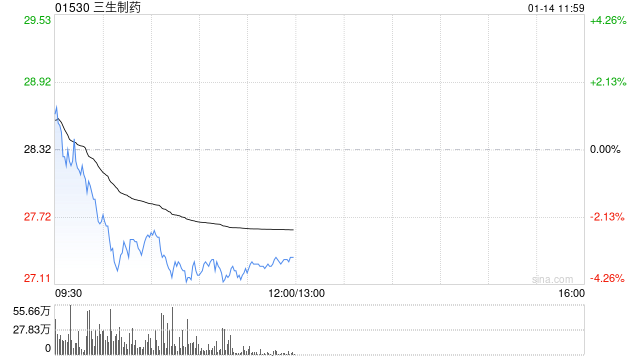
Group 1 - The MSCI China Healthcare Index has increased by 11.8% year-to-date, outperforming the MSCI China Index by 9.1% [1][4] - The pharmaceutical industry has seen significant growth, attributed to the valuation correction in Q4 of the previous year and strong allocation willingness from institutional investors at the beginning of the year [1][4] - Looking ahead to 2026, the trend of innovative drugs going overseas is expected to continue, with a focus on the clinical progress and data validation of pipelines that have already gone abroad [1][4] Group 2 - The estimated market size for patented drugs in China is approximately 300 billion to 400 billion RMB, accounting for about 25% to 35% of total drug sales in China [1][4] - Among this, domestically developed innovative drugs represent about one-third, translating to approximately 100 billion to 130 billion RMB [1][4] - The company recommends buying shares in Sanofi (01530), Genscript (02273), WuXi AppTec (02268), and China National Pharmaceutical Group (01177) [1][4]

招银国际:料创新药出海趋势长期将延续 推荐买入中生制药、药明合联等
Zhi Tong Cai Jing· 2026-01-14 03:42
Group 1 - The MSCI China Healthcare Index has increased by 11.8% year-to-date, outperforming the MSCI China Index which rose by 9.1% [1] - The pharmaceutical industry has seen significant growth, primarily due to the valuation adjustments from the fourth quarter of last year and strong allocation intentions from institutional investors at the beginning of the year [1] - The trend of innovative drugs going overseas is expected to continue until 2026, with a focus on the clinical progress and data validation of pipelines that have already gone abroad [1] Group 2 - The current market size of patented drugs in China is estimated to be between 300 billion to 400 billion RMB, accounting for approximately 25% to 35% of total drug sales in China [1] - Among this, domestically developed innovative drugs represent about one-third, translating to approximately 100 billion to 130 billion RMB [1] - The company recommends buying shares of three pharmaceutical firms: 3SBio (01530), Genscript Biotech (02273), WuXi AppTec (02268), and China National Pharmaceutical Group (01177) [1]
招银国际:料创新药出海趋势长期将延续 推荐买入中生制药(01177)、药明合联(02268)等
智通财经网· 2026-01-14 03:38
Group 1 - The MSCI China Healthcare Index has increased by 11.8% year-to-date, outperforming the MSCI China Index which rose by 9.1% [1] - The pharmaceutical industry has seen significant growth, primarily due to the valuation correction in the fourth quarter of last year and strong allocation willingness from institutional investors at the beginning of the year [1] - The trend of innovative drugs going overseas is expected to continue until 2026, with a focus on the clinical progress and data validation of pipelines that have already gone abroad [1] Group 2 - The current market size of patented drugs in China is estimated to be between 300 billion to 400 billion RMB, accounting for approximately 25% to 35% of total drug sales in China [1] - Among this, domestically developed innovative drugs represent about one-third, translating to approximately 100 billion to 130 billion RMB [1] - The company recommends buying shares of three pharmaceutical firms: 3SBio (01530), Genscript Biotech (02273), WuXi AppTec (02268), and China National Pharmaceutical Group (01177) [1]
创新药出海“火爆”!荣昌生物签订重磅BD,港股创新药ETF(159567)涨超2.5%,开年以来反弹超11%
2 1 Shi Ji Jing Ji Bao Dao· 2026-01-14 02:16
Group 1 - The Hong Kong stock market saw a strong performance in the early session on January 14, with the pharmaceutical sector leading the gains. The Hong Kong Innovative Drug ETF (159567) rose by 2.52%, with trading volume quickly surpassing 300 million yuan [1] - The Hong Kong Innovative Drug ETF (159567) has experienced a rebound since the beginning of 2026, with a cumulative increase of over 11% from January 5 to January 13 [1] - The ETF closely tracks the Guozheng Hong Kong Stock Connect Innovative Drug Index (987018), which reflects the performance characteristics of listed companies in the innovative drug sector within the Hong Kong Stock Connect [1] Group 2 - On January 12, the 44th JPMorgan Global Healthcare Conference officially opened in the United States, attracting significant attention from the biopharmaceutical industry. Several domestic innovative drug companies participated, with seven companies presenting at the main venue [2] - Huatai Securities noted that the liquidity in the Hong Kong innovative drug sector has significantly improved since the beginning of 2026, and the JPMorgan conference has provided a platform for domestic pharmaceutical companies to advance overseas business development (BD) collaborations [2] - The ongoing liquidity recovery is expected to lead to a clear innovative drug beta market, with external demand-driven CXO companies likely to achieve performance that exceeds expectations, resonating with innovative drugs [2]


BD大单扎堆、龙头业绩预增翻倍,港A创新药掀起暴涨浪潮
Ge Long Hui· 2026-01-13 20:52
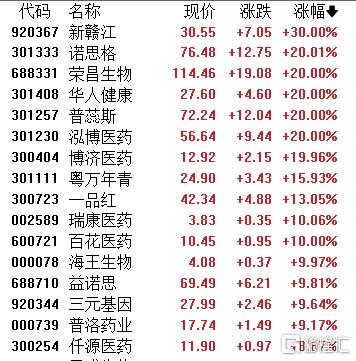
Core Viewpoint - The pharmaceutical sector in Hong Kong and A-shares experienced a significant surge, driven by various sub-sectors including innovative drugs, CRO, bioproducts, and medical services, leading to a wave of stock price increases [1][2][3] Group 1: Market Performance - A-shares saw a surge with stocks like Xin Gan Jiang, Nuo Si Ge, and Rong Chang Bio hitting the daily limit, while others like San Yuan Gene and Qian Yuan Pharma also reported substantial gains [1][2] - In the Hong Kong market, leading stocks such as WuXi AppTec and others also experienced notable increases, with WuXi AppTec rising over 7% [2][3] Group 2: Business Development (BD) Collaborations - The recent JPMorgan Healthcare Conference served as a key platform for Chinese innovative pharmaceutical companies to showcase their core products and advance overseas BD collaborations [5][6] - A series of significant BD deals were announced, including a $6.5 billion upfront payment agreement between Rong Chang Bio and AbbVie, with potential total payments reaching $5.6 billion [7] - Other notable collaborations included a $5.7 billion deal between Yilian Bio and Roche, and a nearly $1.7 billion agreement between Sino Neuro and Novartis [7] Group 3: Financial Performance - WuXi AppTec projected a revenue of approximately 45.456 billion yuan for 2025, marking a year-on-year increase of about 15.84%, with a net profit expected to reach 19.151 billion yuan, reflecting a significant growth of approximately 103% [9] - BeiGene also reported strong revenue expectations for 2025, estimating between 36.2 billion to 38.1 billion yuan, indicating substantial growth compared to the previous year [12] Group 4: Industry Outlook - Analysts are optimistic about the long-term prospects of the innovative drug sector, with expectations of continued BD activity and a peak in data disclosures in early 2026 [14] - The trend of Chinese innovative drugs entering overseas markets is expected to persist, with a focus on clinical progress and data realization [14] - The ADC (Antibody-Drug Conjugate) sector is highlighted as a rapidly developing treatment modality, with high technical barriers and strong customer loyalty in the CDMO (Contract Development and Manufacturing Organization) industry [16]

“双抗”56亿美元“出海” 荣昌生物资金压力缓解
Bei Jing Shang Bao· 2026-01-13 15:42
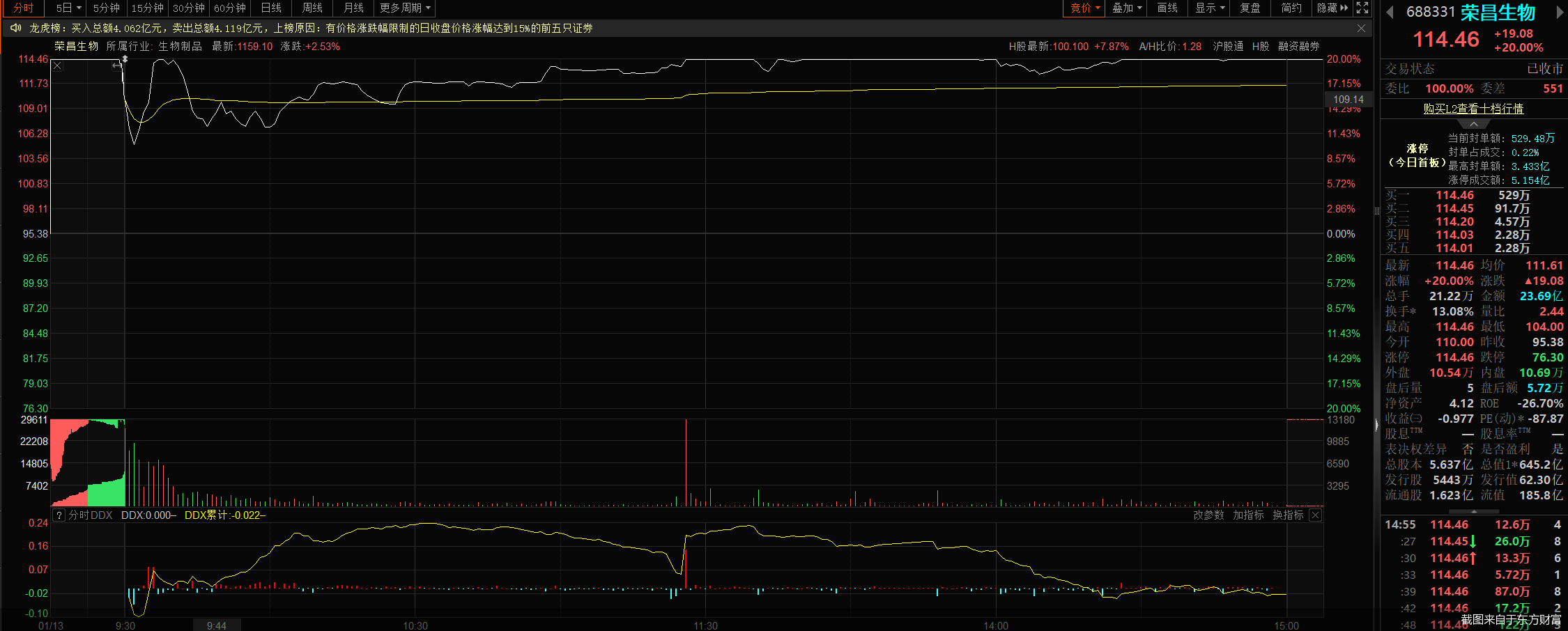
Core Viewpoint - Rongchang Biologics has signed an exclusive licensing agreement with AbbVie for the dual-specific antibody drug RC148, valued at approximately $5.6 billion (about 39.06 billion RMB), marking a significant milestone in the company's business development efforts [1][3]. Group 1: Business Development Transactions - The agreement with AbbVie includes an upfront payment of $650 million (about 4.53 billion RMB) and potential milestone payments of up to $4.95 billion (about 34.53 billion RMB) based on development, regulatory, and commercialization achievements [3]. - This transaction is noted as the highest upfront payment recorded in the innovative drug sector for business development (BD) transactions at the start of the year [3]. - Since 2025, Rongchang Biologics has completed three BD transactions, including the recent agreement with AbbVie, indicating a strategic push for international expansion [5][6]. Group 2: Financial Performance - For the first three quarters of 2025, Rongchang Biologics reported revenue of approximately 1.72 billion RMB, a year-on-year increase of 42.27%, while the net loss narrowed to 551 million RMB [7]. - The company’s cash reserves reached 1.07 billion RMB by the end of Q3 2025, an increase from 743 million RMB and 763 million RMB at the end of 2023 and 2024, respectively [7]. - Despite the increase in cash reserves, the company still faces a high debt ratio of 61.18% as of Q3 2025, indicating ongoing financial pressure [7]. Group 3: Market Reaction - On January 13, following the announcement of the AbbVie deal, Rongchang Biologics' A-shares hit the daily limit, closing at a 20% increase, with a total trading volume of 2.369 billion RMB [2]. - The H-shares also experienced a significant rise, closing up 7.87% [2]. - The market's positive response reflects investor confidence in the potential of the RC148 drug and the strategic partnership with AbbVie [6][8].
再度签订重磅BD!荣昌生物双抗药物56亿美元出海,能否实现资金“突围”
Bei Jing Shang Bao· 2026-01-13 11:42
Core Viewpoint - Rongchang Biologics has signed a significant exclusive licensing agreement with AbbVie for the dual-specific antibody drug RC148, with an upfront payment of $650 million and potential milestone payments up to $4.95 billion, totaling approximately $5.6 billion. This deal has led to a substantial increase in the company's stock prices, with A-shares hitting the daily limit and H-shares also experiencing significant gains [1][3][4]. Financial Impact - On January 13, Rongchang Biologics' A-shares opened 15.33% higher and closed at the daily limit of 114.46 yuan per share, marking a 20% increase and a total market capitalization of 645.2 billion yuan. The trading volume reached 2.369 billion yuan with a turnover rate of 13.08% [3]. - The H-shares also saw a rise, closing at 100.1 HKD per share, up 7.87% [4]. - The $650 million upfront payment from AbbVie is expected to alleviate the company's short-term cash flow issues, which have been a concern due to a high debt ratio of 61.18% and cash reserves of 1.07 billion yuan as of Q3 2025 [10][13]. Business Development Transactions - Since 2025, Rongchang Biologics has completed three major business development (BD) transactions, including the recent agreement with AbbVie. Previous deals included licensing agreements with Vor Bio and Santen Pharmaceutical, which also involved significant upfront and milestone payments [8][9]. - The RC148 drug targets PD-1 and VEGF pathways, aiming to enhance anti-tumor immune responses while inhibiting tumor-driven angiogenesis. Clinical studies are ongoing in China for various advanced malignancies [6][9]. Market Position and Future Outlook - The dual-target PD-1/VEGF antibody has become a popular target among multinational pharmaceutical companies, indicating a competitive landscape for such innovative therapies [7]. - The company aims to balance external licensing ("authorized blood transfusion") with internal development ("self-blood production") to ensure sustainable growth and enhance long-term value [14][15].