技术分析

Search documents
中銀Niki詳解中芯資金動向:看多資金踴躍入場,高杠杆產品需求凸顯
Ge Long Hui· 2026-01-21 09:08
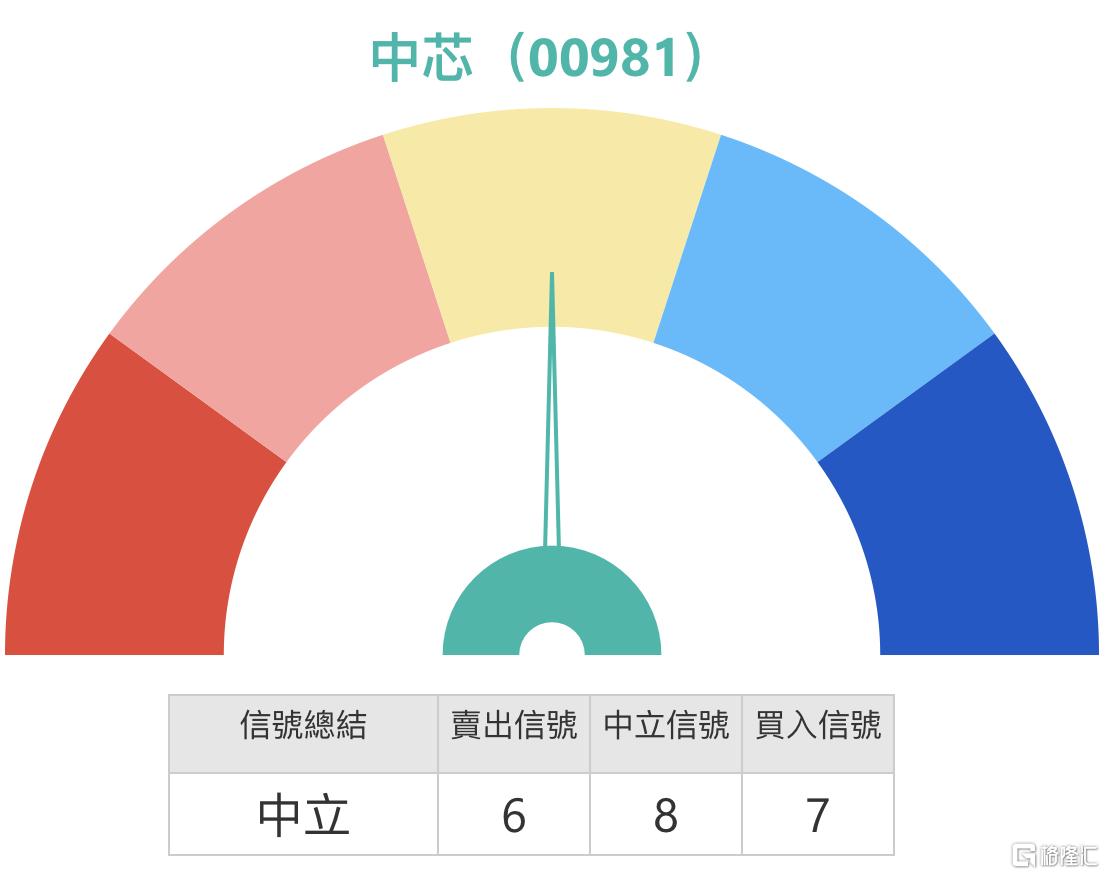
技術面透視與市場觀點交匯:關鍵區間內的動態平衡 根據截至1月21日的數據,中芯國際的股價升3.83%,股價報77.35元。目前,第一阻力位位於79.3元,第二阻力位則為81.1元,這構成了股價上行需要突破的 首道關卡。下方的支持區域則更為關鍵:第一支持位在70.5元,而第二支持位在66.8元。當前的股價運行區間,恰與 1月16日【港股Podcast】 中提出的短期 窄幅震盪區間(約74.3元-81.3元)高度吻合。該欄目同時指出,當前多空爭奪較為激烈,尚未形成明確的趨勢方向,技術信號處於"中立"狀態,建議投資者 保持耐心,待走勢明朗後再擇機操作。 從技術指標來看,市場情緒處於中性偏謹慎的觀察期。日線圖上的多個震盪指標信號多為「中立」,但值得注意的是,隨機震盪指標已進入超賣區間,發出 買入信號,這暗示短線拋壓可能暫時得到釋放。與此同時,MACD、一目均衡表及保力加通道等多個中期趨勢指標卻給出了「買入」信號,這種短線與中線 信號的背離,往往預示著股價在關鍵支持位附近可能醞釀著方向選擇。 | | | 【中銀做客】解讀:高位調整中的資金流向與高槓桿工具需求 在 1月20日的【中銀做客】 欄目中,中銀國際董事Niki對 ...

技术分析:现货黄金价格持续刷新历史新高
Jin Rong Jie· 2026-01-21 05:06
Economies.com的分析师今日最新观点:现货 黄金大幅飙升,首次突破4800美元的主要阻力位,这一目 标正是我们此前分析中所预期的。本轮强劲表现,得益于短期内主升趋势的全面主导,同时受到下方趋 势线的支撑。由于交易价格高于EMA50,加上相对强弱指标发出积极信号,尽管已达到超买水平,但 仍保持上行,表明当前动能强劲,同时需密切关注任何潜在的放缓迹象。 ...
技术分析:布伦特原油期货正试图恢复其上涨势头
Jin Rong Jie· 2026-01-21 05:06
Economies.com的分析师今日最新观点:布伦特原油 期货价格小幅上涨,此前其相对强弱指标上的超买 状况已得到释放,尤其是在出现负面信号之后。当前,价格获得了一定的多头动能,这有助于其恢复并 再次上行,特别是在依托EMA50均线支撑的情况下,这进一步强化了看涨情景。在短期内,主要多头 趋势依然占据主导地位。 ...
技术分析:布伦特原油期货正积聚上涨动能
Jin Rong Jie· 2026-01-20 05:24
Economies.com的分析师今日最新观点: 布伦特原油 期货价格在上一交易日盘中小幅回落,期间相对强 弱指标出现了一些负面信号,但价格正试图积聚新的看涨动能,这有望帮助其企稳回升。当前,市场正 寻求更高的低点作为新的支撑基础,以助推价格进一步反弹。同时,价格持续运行在EMA50均线之 上,形成动态支撑,这进一步巩固了短期内主要看涨趋势的稳定性和主导地位。 ...
技术分析:WTI原油期货价格维持涨势
Jin Rong Jie· 2026-01-20 05:24
Economies.com的分析师今日最新观点:WTI原油 期货价格延续上涨,显示出价格维持积极走势的信 号,表明其具备延续上行动能的能力,受益于对EMA50均线支撑的明显企稳。在短期内牛市趋势持续 占据主导地位的同时,相对强弱指标也出现了积极的重叠信号,为进一步上涨铺平了道路。 ...
Dow Jones Index futures slip as investors wait for key catalysts this week
Invezz· 2026-01-19 12:01
Group 1: Market Reaction to Trade Conflicts - The Dow Jones Index futures experienced a pullback, dropping over 300 points and falling below the key support level of $49,000, marking a nearly 2% decline from its highest point this year [1][2] - The decline is attributed to a new tariff conflict between the United States and the European Union, initiated by President Trump, who announced a 10% tariff on certain European countries [2][3] - The European Union is considering imposing its own tariffs worth €93 billion in retaliation, which could escalate the trade conflict further [3][4] Group 2: World Economic Forum Impact - The World Economic Forum in Davos is another significant catalyst for the Dow Jones Index, where key government and corporate leaders will discuss major issues [5][6] - President Trump is set to be the keynote speaker, announcing policies aimed at housing affordability and credit card interest rates, which may influence market sentiment [6] Group 3: Corporate Earnings Season - The ongoing earnings season will see major companies, including Netflix, GE Aerospace, Johnson & Johnson, and Procter & Gamble, report their financial results, which will impact the Dow Jones Index [7][8] - Netflix's report is particularly noteworthy as it will provide insights into the management's perspective on the Warner Bros buyout [7] Group 4: Supreme Court Ruling on Tariffs - A significant event for the Dow Jones Index will be the Supreme Court's ruling on Trump's tariffs, expected to be released soon, with analysts divided on the outcome [9] - A favorable ruling could benefit American companies, although any positive effects may be temporary due to Trump's potential use of other tariff tools [9] Group 5: Upcoming Economic Data - The Dow Jones Index will also respond to upcoming macroeconomic data, including the US inflation report and flash manufacturing and services PMI numbers, which are critical for market analysis [10] Group 6: Technical Analysis - The Dow Jones Index has shown a rebound from a low of $36,700 in April last year to a high of $49,855 this year, remaining above the 50-day and 100-day Exponential Moving Averages [12] - An inverse head-and-shoulders pattern has formed, suggesting a potential rebound with a target of $50,000 later this year [12]

技术分析:现货白银价格触及关键阻力位
Jin Rong Jie· 2026-01-19 06:08
本文源自:金融界AI电报 Economies.com的分析师今日最新观点: 现货白银价格大幅上涨,强势冲击93.00美元的关键阻力位,正 准备刷新历史新高。此次上涨得益于相对强弱指标(RSI)所释放的积极信号,此前该指标已达到与价 格走势相比明显超卖的极端水平。在短期内,主导趋势依然为多头行情,同时现货白银持续获得由其位 于EMA50均线上方交易所带来的动态支撑,这进一步增强了未来一段时间内延续涨势的可能性。 ...
技术分析:WTI原油期货价格短期内有望延续涨势
Jin Rong Jie· 2026-01-19 06:08
Core Viewpoint - WTI crude oil futures are showing strong upward momentum driven by multiple favorable factors, including global supply tightness and ongoing production cuts by major oil-producing countries [1] Group 1: Market Dynamics - Market participants are focused on the impact of geopolitical risks, which are providing support for oil prices [1] - The gradual recovery of the global economy is leading to sustained growth in energy demand, further pushing up WTI crude oil futures prices [1] Group 2: Currency Influence - Fluctuations in the US dollar exchange rate are affecting oil price trends; a weaker dollar typically enhances the attractiveness of WTI crude oil futures priced in dollars [1] Group 3: Technical Analysis - WTI crude oil futures prices have broken through key resistance levels, indicating a potential continuation of the upward trend in the short term [1] Group 4: Future Monitoring - Investors are advised to closely monitor upcoming macroeconomic data and changes in OPEC+ policies to assess the future trajectory of oil prices [1]
穿越时间之河的淘金智慧 ——读《证券分析》(全新升级版)
Shang Hai Zheng Quan Bao· 2026-01-18 18:15
Core Insights - The article discusses the legacy and impact of Benjamin Graham's "Security Analysis," highlighting its foundational principles of value investing and the importance of understanding the relationship between price and value [4][5][6]. Group 1: Historical Context - In the 1920s, Benjamin Graham identified a mispriced oil pipeline company, leading to significant returns by advocating for the distribution of its hidden assets [4]. - Graham's experiences during the 1929 stock market crash prompted him to write "Security Analysis," which encapsulated his investment philosophy developed over 20 years [6]. Group 2: Key Concepts - The concepts of "margin of safety" and "intrinsic value" are central to Graham's investment philosophy, emphasizing the need to invest below intrinsic value to account for future uncertainties [6][11]. - "Security Analysis" defines intrinsic value as determined by tangible assets, earnings, and dividends, contrasting it with market prices influenced by emotions and speculation [8][11]. Group 3: Market Dynamics - The article contrasts two perspectives on market behavior: viewing the market as a "weighing machine" that reflects true value over time versus a "voting machine" driven by emotions and market sentiment in the short term [9][10]. - Graham's insights suggest that while short-term price movements may be irrational, long-term value will eventually be recognized, reinforcing the importance of patience in investing [11][12]. Group 4: Practical Application - The article emphasizes the challenges of adhering to value investing principles, particularly the psychological barriers investors face in maintaining discipline during market fluctuations [12][13]. - Graham's teachings encourage investors to focus on fundamental business performance rather than market noise, advocating for a long-term perspective in investment decisions [12][14].

趋势交易有关的精华书单
猛兽派选股· 2026-01-17 05:23
Core Concepts - The article discusses various influential books that provide insights into investment strategies, trading systems, and psychological aspects of trading, emphasizing the importance of understanding complex theories and behavioral economics in the financial markets [1][2][3][4][5][6][7][8] Group 1: Fundamental Thinking - "Complex" by Michele Waldrop introduces complex theory in economics, highlighting the evolution of thought among academic elites and its implications for understanding stock markets through multi-dimensional thinking [1] - "Nudge" by Richard Thaler explores the intersection of economics and psychology, revealing human biases and impulsive behaviors that challenge traditional economic assumptions, offering valuable insights for investment and life [1] - "The Art of War" by Sun Tzu provides strategic principles applicable to stock trading, such as cautious engagement and psychological tactics, which can enhance trading decisions [1] Group 2: Trading Systems - "Market Wizards" by Stan Weinstein outlines a comprehensive trend trading system, emphasizing the importance of understanding market phases and relative strength, making it an excellent entry point for traders [2] - "Stock Market Wizards" by Mark Minervini offers a refined trading system with practical insights, building upon Weinstein's work and providing a deeper understanding of trend speculation [2] - "How to Make Money in Stocks" by William O'Neil presents the CANSLIM system, which encapsulates the essence of trend speculation and has proven effective for many of O'Neil's disciples [3] Group 3: Technical Tactics - "Technical Analysis of the Futures Markets" by John Murphy serves as a comprehensive guide to technical analysis, combining practical application with authoritative insights, making it a revered resource in the field [4] - "The Chen Theory" by Chen Zhongshuo integrates mathematical logic with market dynamics, offering a unique perspective on technical analysis that stands out among conventional literature [4] - "The Wyckoff Method" by Meng Hongtao simplifies the complex Wyckoff theory, focusing on the essence of price-volume analysis and its relevance to contemporary behavioral economics [5] Group 4: Psychological Aspects - "The Wall Street Ghost" emphasizes the importance of psychological preparedness and decisiveness in trading, highlighting the mental aspects that can influence trading success [7] - "Reminiscences of a Stock Operator" by Jesse Livermore provides insights into the psychological challenges faced by traders, focusing on mindset and behavior in the face of market volatility [7] Group 5: Trading History and Personalities - "Market Wizards" by Jack Schwager documents interviews with successful traders, offering valuable lessons and insights into their strategies and mindsets, beneficial for aspiring traders [8] - "The New Market Wizards" continues the exploration of trading success stories, providing inspiration and practical wisdom for future market participants [8]