新能源转型

Search documents
中国汽车行业展望
Zhong Cheng Xin Guo Ji· 2026-02-06 09:32
Investment Rating - The report maintains a stable investment rating for the Chinese automotive industry, indicating that the overall credit quality of the industry is not expected to change significantly in the next 12 to 18 months [5][7]. Core Insights - The automotive industry in China is projected to continue high production and sales levels in 2026, supported by policies such as vehicle trade-in programs and the extension of subsidies for new energy vehicles (NEVs). However, challenges such as the reduction of NEV purchase tax incentives and geopolitical uncertainties may exert pressure on growth [5][7]. - The report highlights a divergence in financial performance among automakers, with domestic brands and traditional fuel vehicle companies that are accelerating their transformation expected to perform better financially [7][21]. - The competitive landscape is shifting, with domestic brands increasing their market share in the passenger vehicle segment, while joint venture brands face transformation challenges [7][21]. Summary by Sections Analysis Approach - The automotive manufacturing industry is cyclical, influenced by macroeconomic conditions and consumer sentiment. The report assesses credit fundamentals by analyzing production and sales trends across passenger and commercial vehicles, as well as the impact of policies on market dynamics [8]. Industry Fundamentals - Since 2025, China's automotive market has shown stable economic performance, with significant policy support driving demand. In 2025, vehicle production and sales grew by 10.4% and 9.4%, respectively, reaching 34.53 million and 34.40 million units. The industry is characterized by rapid growth in NEVs and strong export performance [9][17]. Financial Performance - The report notes that while the industry has seen revenue growth, profit margins are under pressure due to price wars. Some automakers are experiencing cash flow issues and high debt levels, leading to signs of market consolidation [7][9]. Conclusion - The report concludes that while the automotive industry is expected to maintain growth, the pace may slow due to various factors, including policy changes and market saturation. The focus will shift towards enhancing service consumption and improving market order [20][30]. Tables and Figures - The report includes various tables and figures illustrating trends in vehicle sales, production, and market dynamics, providing a visual representation of the industry's performance [10][13][44].
长安汽车发布股票回购公告:以坚定信心开启价值重塑新篇章
Zhong Guo Qi Che Bao Wang· 2026-02-05 08:58
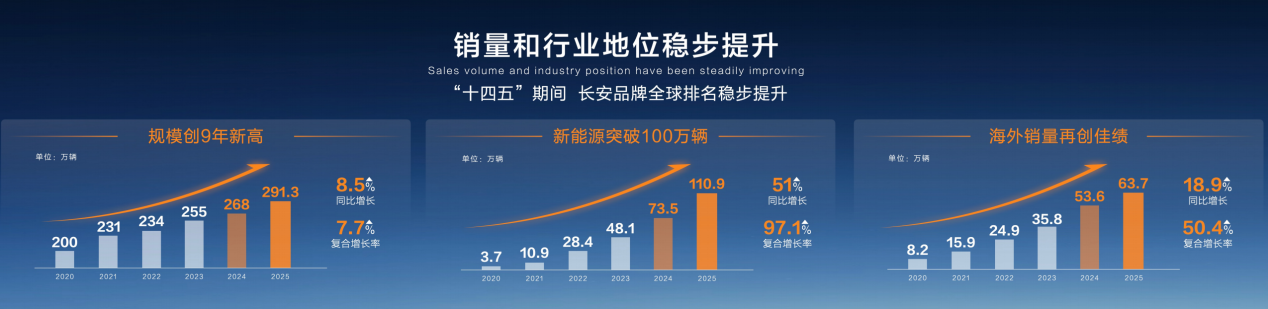
Core Viewpoint - Changan Automobile announced a share repurchase plan of 1 to 2 billion yuan, demonstrating management's confidence in the company's strategic outlook and commitment to shareholder interests [1][4]. Group 1: Strategic Confidence - The company aims to achieve cumulative sales of 40 million units by 2028, with a target of 5 million units by 2030, where 60% will be new energy vehicles and 35% will be from overseas markets [2]. - Changan plans to launch 26 new products over the next three years, covering over 140 countries and regions, supporting its dual-driven strategy of technology and market expansion [2]. Group 2: Market Signals - The repurchase is positioned as a response to the global automotive industry's shift towards smart electrification, reflecting the company's strong belief in its strategic development and intrinsic value [4]. - As of Q3 2025, the company's cash and cash equivalents totaled 54.412 billion yuan, making the maximum repurchase limit of 2 billion yuan only about 3.68% of this reserve [4]. Group 3: Focus on Returns - The repurchase aligns with the central government's call for improved quality and market value management of listed companies [5]. - The plan aims to enhance earnings per share (EPS) and return on equity (ROE), thereby increasing shareholder value and investment returns [5]. Group 4: Long-term Vision - Changan is positioning itself as a "long-termist" in the automotive industry, with a focus on accelerating its transition and global expansion [7]. - The company's transformation story is expected to gain market attention as it progresses with its "14th Five-Year Plan" [7].


1月终端销售8.96万辆,上汽大众2026奔赴出众年
Zhong Guo Qi Che Bao Wang· 2026-02-05 08:18
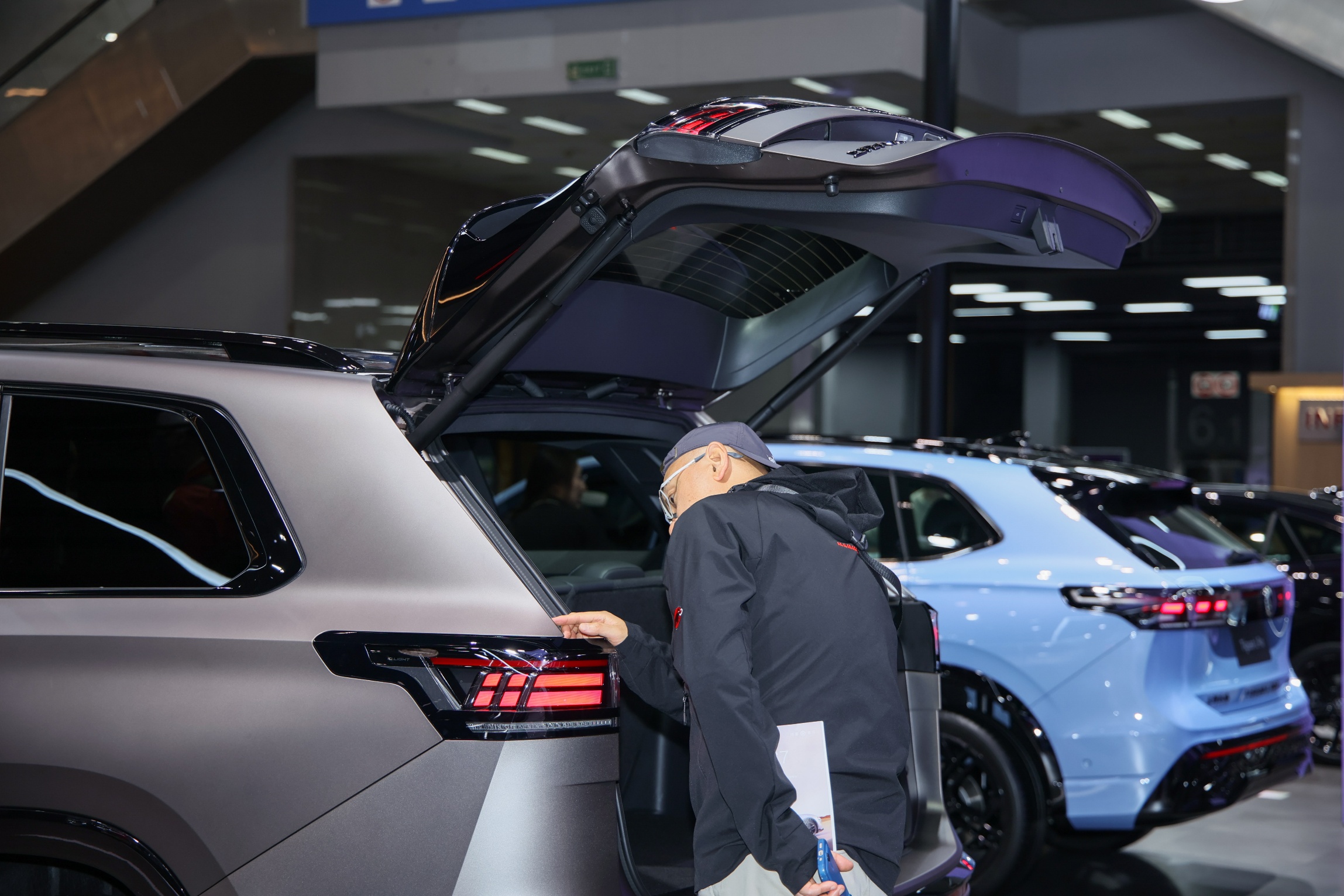
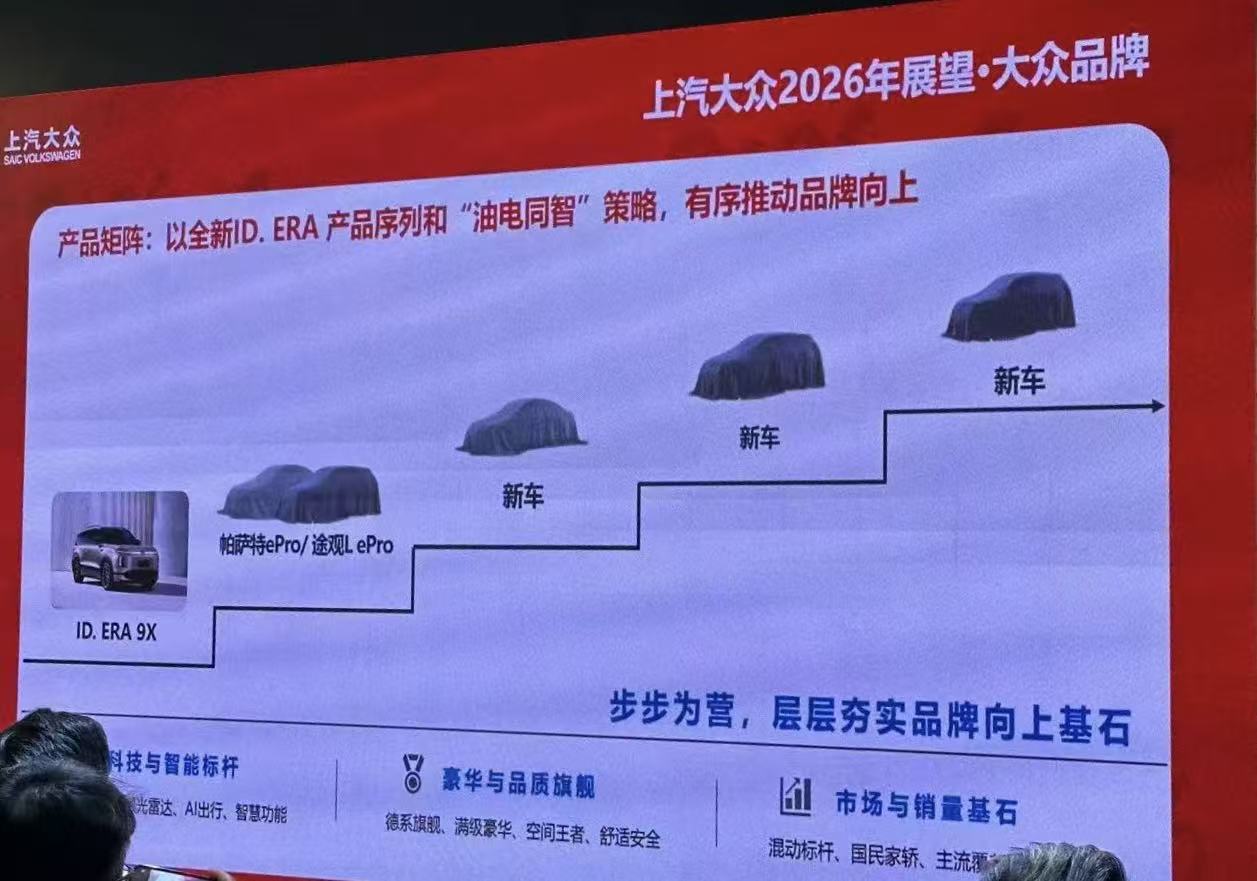
Group 1 - In January, the domestic automotive market faced pressure due to a shift in consumption policies and seasonal factors, with SAIC Volkswagen achieving terminal sales of 89,600 units [1] - The main products of SAIC Volkswagen showed strong performance, with the Lavida family selling over 23,000 units, the Passat family nearly 21,000 units, and the Tiguan family over 21,000 units, all leading their respective segments with monthly sales exceeding 20,000 units [2] - The SAIC Volkswagen brand reached a cumulative sales milestone of 26 million units in January, becoming the first single brand in the domestic market to surpass this figure [2] Group 2 - In the luxury segment, SAIC Audi achieved terminal sales of 3,800 units in January, representing a year-on-year increase of 35.7% [6] - The Audi E5 Sportback, a key model, has won several prestigious awards, reinforcing its position in the luxury electric vehicle market [6][7] - The automotive industry is transitioning from scale expansion to high-quality development, with consumer purchasing decisions shifting from policy dependence to product value recognition [9] Group 3 - In 2026, SAIC Volkswagen plans to launch seven new energy models covering pure electric, plug-in hybrid, and range-extended technologies [12] - The Audi E7X, the second model under the Audi brand, will be officially unveiled at the Beijing Auto Show [12] - The ID. ERA 9X is set to begin mass production, having successfully completed winter testing, showcasing the company's strong R&D and technological capabilities [12][13]

拟以10亿元至20亿元回购公司股份 长安汽车以坚定信心开启价值重塑新篇章
Zheng Quan Ri Bao Wang· 2026-02-05 07:45
Group 1 - The company plans to repurchase shares worth between 1 billion to 2 billion yuan, with a minimum of 700 million yuan and a maximum of 1.4 billion yuan for A-shares, and a minimum of 300 million yuan and a maximum of 600 million yuan for B-shares, demonstrating management's confidence in the strategic outlook and commitment to shareholder rights [1] - The strategic plan aims for cumulative sales of 40 million units by 2028, with a target of 5 million units by 2030, where 60% will be new energy vehicles and 35% will be from overseas markets, positioning the company among the top 10 global automotive brands [2] - The repurchase is seen as a response to the ongoing transformation in the global automotive industry towards smart electrification, reflecting the company's strong belief in its strategic development and intrinsic value [3] Group 2 - The repurchase aligns with the central government's call for improved quality and market value management of listed companies, and the company has already initiated measures such as mid-term dividends and executive share purchases [4] - The repurchase is expected to enhance earnings per share (EPS) and return on equity (ROE), thereby increasing shareholder value and investment returns, while also addressing long-standing concerns regarding B-share liquidity [3][4] - The company is adopting a long-term perspective, focusing on accelerating its position in the new energy sector and expanding its global footprint, while reinforcing its commitment to shareholder interests through tangible actions [4]
超151亿元资金“抢筹”,仅四家入围!600863,定增落地
Shang Hai Zheng Quan Bao· 2026-02-04 15:40
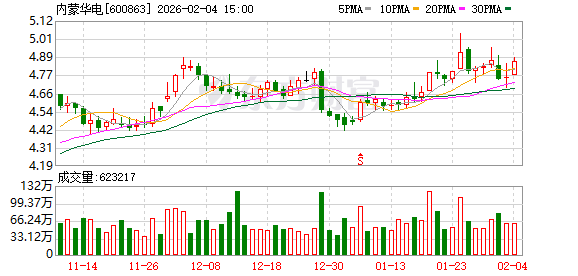
Core Viewpoint - Inner Mongolia Huadian, a listed company under China Huaneng, successfully completed a private placement raising 2.65 billion yuan at a price of 4.94 yuan per share, attracting over 15.1 billion yuan in subscriptions, indicating strong institutional interest in the company's asset quality and transformation prospects [2][5]. Group 1: Fundraising Details - The private placement had a subscription multiple of over 5.72 times, with 44 institutional investors participating, including notable entities like UBS AG and China National Investment Fund [5][6]. - The four successful subscription entities were: - China Everbright Financial Asset Investment Co., Ltd. (30 million yuan) - Hubei Cultural Tourism Capital Holdings Co., Ltd. (10 million yuan) - CCB Financial Asset Investment Co., Ltd. (100 million yuan) - Shandong High-speed (Shenzhen) Investment Co., Ltd. (1.25 billion yuan) [6]. Group 2: Asset Acquisition and Strategic Importance - The fundraising is part of a strategy to acquire high-quality wind power assets with a total installed capacity of 1.6 million kilowatts from Northern Power, enhancing the company's renewable energy portfolio [5][8]. - Following the acquisition, the company's total installed capacity is expected to reach approximately 5.5 million kilowatts, with the proportion of renewable energy increasing by 8 percentage points to over 23% [8][10]. Group 3: Financial and Operational Implications - The newly acquired wind power assets are anticipated to provide stable cash flow and enhance the company's resilience against coal price fluctuations, thereby improving operational stability [10]. - The company has committed to a cash dividend policy of no less than 70% from 2025 to 2027, reflecting a focus on shareholder returns [10].

长城汽车(601633):长城汽车点评:单车营收持续增长,年终奖、政府补贴等因素短期扰动盈利
Changjiang Securities· 2026-02-04 10:14
Investment Rating - The investment rating for the company is "Buy" and is maintained [8] Core Views - The company is expected to achieve a net profit attributable to shareholders of 9.91 billion yuan in 2025, a year-on-year decline of 21.7% [2][5] - The company is accelerating its global expansion and is committed to the transformation towards new energy, with a continuous new car cycle expected to drive improvements in sales and performance [2] - Long-term strategies, including four major expansion strategies, are anticipated to open up long-term growth potential for sales, while the shift towards smart technology is expected to enhance profitability across the entire industry chain [2] Summary by Relevant Sections Financial Performance - In Q4 2025, the company achieved sales of 400,000 units, a year-on-year increase of 5.5% and a quarter-on-quarter increase of 13.2% [12] - The revenue for Q4 2025 was 69.21 billion yuan, representing a year-on-year increase of 15.5% and a quarter-on-quarter increase of 13.0% [12] - The net profit attributable to shareholders for Q4 2025 is projected to be 1.28 billion yuan, a year-on-year decline of 43.5% and a quarter-on-quarter decline of 44.4% [12] Strategic Initiatives - The company is focusing on three dimensions: product, channel, and supply chain adjustments to deepen its new energy transition [12] - The "ONE GWM" strategy is accelerating the company's overseas expansion, with sales channels covering over 1,400 locations in more than 170 countries and regions [12] - The company is enhancing its technological capabilities in smart driving and data algorithms, which are expected to strengthen its competitive edge in the smart vehicle market [12] Future Projections - The projected net profits for the company from 2025 to 2027 are 9.91 billion yuan, 14.20 billion yuan, and 17.40 billion yuan, respectively [12] - The corresponding price-to-earnings ratios for A-shares are expected to be 17.9X, 12.5X, and 10.2X for the same period [12]

上汽大众准备跟新势力拼刺刀
Hua Er Jie Jian Wen· 2026-02-04 08:31
Core Insights - The Chinese automotive market underwent significant restructuring in 2025, with various brands, including new entrants and joint ventures, facing intense competition and challenges [1] - SAIC Volkswagen managed to maintain its position in the market, achieving a total sales volume of 1.06 million units in 2025, thus securing its place in the "million club" [1][2] - The company plans to launch a series of new energy vehicles (NEVs) in 2026, marking a strategic shift from survival to offensive strategies against competitors [6][7] Group 1: Market Performance - In 2025, SAIC Volkswagen's market share in the fuel vehicle segment increased to 8.3%, despite an overall decline in the market [2] - The sales structure revealed that traditional models like Passat, Lavida, and Tiguan continued to perform well, each maintaining monthly sales of around 20,000 units [2] - SAIC Audi achieved a sales volume of 47,000 units with a 23% year-on-year growth, outperforming the market [2] Group 2: Strategic Transition - The company is adopting a dual-track strategy, focusing on both fuel and new energy vehicles, to balance its existing fuel vehicle business with the need for a transition to NEVs [4][5] - The upcoming ID.ERA series is designed specifically for the Chinese market, with the flagship model ID.ERA 9X featuring a range of over 1,000 kilometers, aimed at competing with popular models from rivals [9][10] - SAIC Volkswagen plans to introduce seven new energy models in 2026, covering pure electric, hybrid, and range-extended technologies [7][10] Group 3: Organizational Changes - The company is undergoing significant internal restructuring to adapt to the new automotive era, including the introduction of new processes and systems to enhance efficiency and responsiveness [11][12] - The integration of IPD and GTM processes aims to break down traditional silos, allowing for a more customer-oriented approach in product development and marketing [13][14] - The leadership emphasizes the need for agility and speed in decision-making to compete effectively with new entrants in the market [14][15]
山推股份(000680) - 000680山推股份投资者关系管理信息20260204
2026-02-04 08:30
Group 1: Product Development and Innovation - The company has successfully launched several new products since 2025, including large-tonnage and compact dual-power models such as SD60-C6 and L98K, with positive market promotion for skid steer loaders [2] - The transition to renewable energy is accelerating, with the introduction of hybrid models like DEH1000 bulldozer and LEH120 loader [2] Group 2: International Business Expansion - The company is focusing on brand building, technology upgrades, management optimization, and talent cultivation as core directions for its international strategy in 2025 [2] - The establishment of overseas subsidiaries has reached a total of 13, with new facilities in Indonesia and Peru [3] - The company is enhancing its market presence by increasing overseas resource investment and developing products tailored to local markets, thereby strengthening its competitive edge [3] Group 3: Stock Buyback Progress - As of January 31, 2026, the company has repurchased 11,910,472 shares, accounting for 0.79% of the total share capital, with a total transaction amount of 111,591,612.24 yuan [3] - The highest and lowest repurchase prices were 10.20 yuan and 8.64 yuan per share, respectively [3] - The company plans to continue the buyback program based on market conditions and will comply with relevant disclosure obligations [3] Group 4: On-site Visit - The on-site visit included a tour of the company showroom and main assembly workshop to understand product applications and scenarios [3]

重仓新能源的车厂们
投中网· 2026-02-04 07:13
Core Viewpoint - The Chinese automotive market in January 2026 is characterized by a stark contrast, with most automakers experiencing negative growth, particularly in the new energy vehicle (NEV) sector, highlighting the importance of having a diversified product lineup that includes both fuel and electric vehicles [5][6][7]. Sales Performance Summary - In January, the retail sales of passenger cars are expected to reach 1.8 million units, a month-on-month decline of 20.4%, with NEV sales around 800,000 units, marking a penetration rate drop to 44.4%, nearly 10 percentage points lower than the peak at the end of 2025 [6][7]. - Traditional automakers like SAIC, Geely, and GAC Toyota reported stable sales due to their dual strategy of offering both fuel and NEVs, with SAIC's total sales reaching 327,400 units, a year-on-year increase of 23.94% [10][11]. - Geely's total sales were 270,167 units, with fuel vehicles contributing significantly to its performance, while BYD faced a 30.11% decline in NEV sales, indicating the challenges faced by companies heavily reliant on NEVs [12][15]. Market Dynamics - The differentiation in sales performance among automakers is attributed to their strategic choices, particularly the presence of a fuel vehicle base, which enhances resilience against market fluctuations [9][19]. - The demand for fuel vehicles surged during the pre-Spring Festival period, as consumers preferred mature technology and the convenience of fuel vehicles for long-distance travel, further supported by the limited impact of policy changes on fuel vehicles [19][20]. Export Growth - Exports have become a crucial support for many leading automakers, with companies like Chery and SAIC reporting significant increases in overseas sales, indicating a dual strategy of maintaining domestic stability while expanding globally [17][18]. Future Outlook - The current market conditions signal a shift from policy-driven growth to market-driven dynamics, emphasizing the need for automakers to maintain a balanced portfolio of fuel and NEVs to navigate future uncertainties [22]. - Companies that can effectively manage their fuel vehicle base while rapidly advancing in the NEV sector are likely to emerge as market leaders, while those focusing solely on NEVs may face greater risks during market fluctuations [21][22].




东方证券:铜精矿有望纳入战略储备范围 关键金属地位或进一步增强
智通财经网· 2026-02-04 02:45
Group 1 - The core viewpoint is that China plans to include copper concentrate in its national strategic reserve system to address a 75% high dependence on imports and enhance the security of the industry chain [1][2] - The average grade of global copper mines is declining, and major mining companies are reporting a decrease in copper production due to this decline, coupled with insufficient capital expenditure [3] - The domestic copper smelting capacity is being strictly controlled, and the "anti-involution" policy is expected to drive an upward trend in both copper prices and smelting fees, benefiting related companies' profit recovery [4] Group 2 - The inclusion of copper concentrate in the strategic reserve system marks a shift from a single reserve of refined copper to a multi-layered and multi-variety reserve, enhancing the security of the copper industry chain [2] - The ongoing global demand for copper in traditional sectors and emerging fields like renewable energy is expected to maintain a tight supply trend, reinforcing copper's critical status in manufacturing [3] - The expectation of a gradual effect from the "anti-involution" policy over the next two to three years suggests a potential recovery in copper smelting fees, with investment opportunities in copper mining and smelting companies [4]