
锂电储能系统

Search documents
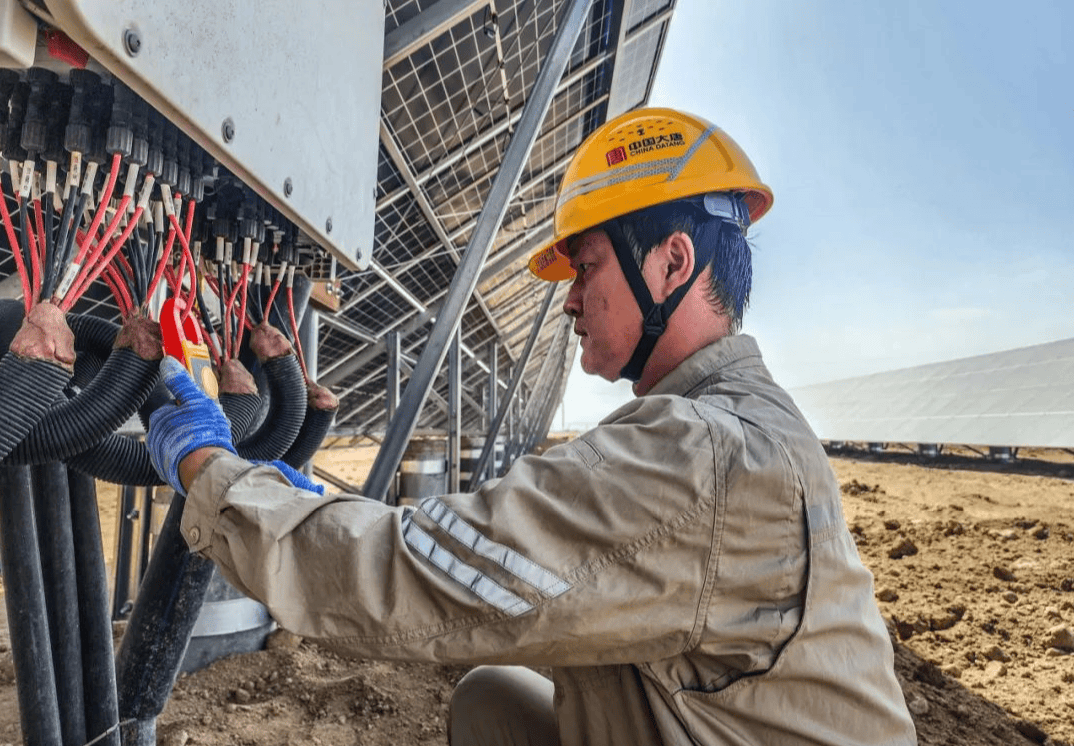
光伏运维工作内容有哪些 产业新趋势下实操解析
Sou Hu Cai Jing· 2026-02-24 10:41
Core Insights - The China Photovoltaic Industry Association released the "China Photovoltaic Industry Development Roadmap (2025-2026)", outlining the current state of the photovoltaic industry and technology trends up to 2035 [1] - By 2025, the new installed capacity of solar photovoltaic in China is projected to reach 315.07 GW, with a cumulative installed capacity exceeding 1200 GW and crystalline silicon module production surpassing 620 GW, reflecting a year-on-year growth of 5.4% [1] Installation and Maintenance - The rapid expansion of photovoltaic installations and the shift towards n-type technology will see n-type monocrystalline silicon wafers accounting for 97% of the market by 2025 [1] - Photovoltaic operation and maintenance (O&M) is crucial for ensuring efficient and stable operation of power plants, covering the entire lifecycle of solar power plants, including daily inspections, equipment maintenance, and fault handling [1] Daily Inspections - Daily inspections are fundamental to identify potential issues in equipment and power plants, preventing minor problems from escalating into major failures [3] - Key inspection targets include photovoltaic modules, inverters, junction boxes, and tracking systems, with specific attention to n-type components for issues like micro-cracks and hot spots [3] Equipment Cleaning - The efficiency of photovoltaic modules is significantly affected by surface cleanliness, with dirt and debris reducing power conversion efficiency [4] - Cleaning methods should be adapted to the local environment, with frequency varying based on regional conditions, such as monthly cleaning in rainy areas and weekly in dust-prone regions [4] Fault Repair - Timely fault repair is essential to minimize downtime and reduce power generation losses, with different equipment requiring specific handling approaches [5] - After repairs, testing is necessary to confirm normal operation and to document the fault and repair process for future reference [5] Data Monitoring and Analysis - The shift towards intelligent O&M emphasizes the importance of real-time data monitoring and analysis to optimize power generation efficiency [6] - Key performance indicators include equivalent utilization hours and LCOE (Levelized Cost of Energy), with data analysis helping to refine operational strategies [6] Record Keeping - Comprehensive record-keeping is vital for maintenance, asset evaluation, and fault tracing, covering all aspects of O&M [7] - Records should include inspection logs, cleaning records, fault repair documentation, and equipment information, ensuring compliance with evolving industry standards [7] Specialized Maintenance for Energy Storage - The integration of photovoltaic and energy storage systems necessitates specialized maintenance for lithium battery systems, focusing on battery status, PCS operation, and temperature control [8] - Regular monitoring of charging and discharging efficiency is essential to enhance the utilization and energy conversion efficiency of storage systems [8] Technology Adaptation - Rapid technological advancements in the photovoltaic industry require O&M personnel to stay updated on new equipment and techniques [9] - Monitoring systems must also be upgraded to accommodate new data analysis needs, ensuring alignment with industry technological developments [9] Compliance Management - O&M must adhere to national policies and industry standards to ensure legal and stable operation of power plants, aligning with the roadmap's goals for high-quality development [10] - Compliance includes maintaining power generation quality, managing waste, and reporting operational statistics as part of the broader energy transition goals [10] Conclusion - Photovoltaic O&M is evolving from basic tasks to a comprehensive role that includes equipment maintenance, data monitoring, energy storage management, technology adaptation, and compliance [11] - Future trends indicate a move towards intelligent, specialized, and refined O&M practices, requiring personnel to possess both traditional maintenance skills and data analysis capabilities to maximize power generation efficiency and support energy transition goals [11]

全国性储能容量电价机制出台,储能系统价格持续上涨
Zhong Guo Neng Yuan Wang· 2026-02-10 01:24
Core Viewpoint - The report highlights the growth in the solar and energy storage sectors, with significant export figures and production adjustments anticipated due to policy changes and market dynamics [1][4][5]. Production - Solar module production is expected to decrease by 13.58% month-on-month in December 2025, while there are plans for increased production due to export tax incentives, though actual implementation remains uncertain [2]. - Battery production for power, storage, and consumer applications is projected to be 188 GWh in February 2026, down 10.5% month-on-month, indicating a restructuring in supply with leading companies maintaining strong orders [2]. Pricing - As of February 4, 2026, the price of polysilicon remains stable at 54.00 CNY/kg, while the average price of 183N monocrystalline silicon wafers has decreased by approximately 7.41% to 1.25 CNY/piece [3]. - The average price of lithium battery storage systems in December 2025 is reported at 0.5882 CNY/Wh, reflecting a 2.82% increase month-on-month, with specific systems showing significant price variations [3]. Demand - In December 2025, solar module exports reached approximately $2.314 billion, marking an 18.22% year-on-year increase but a 4.05% month-on-month decline, while inverter exports totaled $839 million, up 26.12% year-on-year and 9.38% month-on-month [4]. - Domestic solar installations in November 2025 amounted to 22.02 GW, a 74.76% increase month-on-month, with cumulative installations for the year reaching 274.89 GW, a 33.25% year-on-year growth [4]. Investment Recommendations - The report suggests that the cancellation of VAT export rebates for certain products starting in April 2026 may boost domestic demand for solar products in the short term and lead to the elimination of outdated production capacity in the long term [5]. - Companies such as Sungrow Power Supply (300274), Chint Power (002150), and Nandu Power (300068) are recommended for investment, along with a focus on CATL (300750) and EVE Energy (300014) [5].





光伏50ETF(159864)盘中涨超1.2%,连续3日迎资金净流入,产业趋势与技术突破受关注
Mei Ri Jing Ji Xin Wen· 2026-01-29 07:32
Core Insights - The photovoltaic 50 ETF (159864) has seen a price increase of over 1.2% during intraday trading on January 29, marking three consecutive days of net capital inflow, driven by industry trends and technological breakthroughs [1] Industry Trends - The energy storage trend continues to improve, with the domestic procurement scale expected to exceed 100 GWh by December 2025, showing characteristics of simultaneous growth in both volume and price [1] - The weighted average price of lithium battery energy storage systems has rebounded month-on-month, indicating a positive market shift [1] - Energy storage is likely to become a standard feature for grid-connected green electricity projects, with multiple provinces issuing clear guidelines [1] Demand for Power Equipment - The expansion of AI and the global upgrade of power grids are driving demand for transformers and other power equipment, with China accounting for 60% of global transformer production capacity, positioning it as a key supplier [1] - Chinese leading enterprises are experiencing robust overseas orders as they transition their export products towards high-end markets [1] Photovoltaic Technology Advancements - In the photovoltaic sector, the efficiency of heterojunction/perovskite tandem solar cells has surpassed previous benchmarks, aligning with high-end applications such as space photovoltaics due to their high efficiency and lightweight characteristics [1] - The industry is witnessing a shift away from internal competition, accelerating the restructuring of supply and demand [1] - Solid-state batteries are entering a critical window for engineering and industrialization [1] Market Overview - The photovoltaic 50 ETF (159864) tracks the photovoltaic industry index (931151), which reflects the overall performance of upstream, midstream, and downstream companies in the photovoltaic industry, covering sectors such as silicon materials, silicon wafers, battery cells, modules, and related equipment manufacturers [1]
90亿温州富豪周庆治,对连年亏损的南都电源萌生去意了
Sou Hu Cai Jing· 2025-12-15 11:32
Core Viewpoint - Nandu Power is undergoing significant capital changes, including a potential change in control and the sale of its lead recycling business, amid ongoing financial struggles and a strategic shift from lead to lithium batteries [2][3]. Financial Performance - Nandu Power has reported a cumulative loss of 2.779 billion yuan over the past five years, with a net loss of 220 million yuan in the first three quarters of 2024, representing a 189.22% year-over-year decline [2][6]. - For the year 2023, the company achieved a revenue of 14.666 billion yuan, a 24.83% increase, but net profit plummeted by 89.19% to 36 million yuan [6]. - In 2024, revenue is projected to drop by 45.56% to 7.984 billion yuan, with a staggering net loss of 1.497 billion yuan, marking a 4260.62% decline [6]. Strategic Shift - The company initiated a "shift from lead to lithium" strategy in 2020, which has not yet yielded positive results, leading to a significant reduction in revenue from its lead recycling segment [6][11]. - The revenue from the lead recycling business fell by 72.33% to 759 million yuan in the first half of the year, contributing only 19.35% to total revenue [6]. Corporate Governance - The current actual controller of Nandu Power is Zhou Qingzhi, who has transitioned from real estate to the renewable energy sector after a failed real estate IPO in 2006 [10][11]. - Zhou Qingzhi has not held a board position since May 2022, with Zhu Baoyi currently serving as the chairman [5]. Market Position - Nandu Power ranks fourth in global market shipments for energy storage system integrators and second among Chinese companies for lithium battery shipments to data centers and base stations [10]. - The company's stock price closed at 18.38 yuan per share on December 11, 2023, with a market capitalization of 16.51 billion yuan, down 11.4 billion yuan from its peak [11].

中国这个行业爆了!海外订单猛增246%,有人正以亏本价销售
Mei Ri Jing Ji Xin Wen· 2025-11-03 23:11
Core Insights - The global lithium battery energy storage installation capacity increased by 68% year-on-year in the first three quarters of this year, indicating a significant growth in the energy storage industry [1][2] - Chinese energy storage companies received 163GWh of new overseas orders in the first half of 2025, a 246% increase year-on-year, with Europe, the Middle East, and Australia emerging as key markets [1][2] - The cancellation of mandatory energy storage policies in China has led to an increase in project internal rate of return (IRR), boosting companies' willingness to invest in energy storage [1][2] Industry Growth Drivers - The acceleration of global energy transition is driving demand in traditional markets like the US, China, and Europe, as well as emerging markets in the Middle East [3] - The maturation of energy storage business models in developed markets is contributing to explosive growth, with China shifting focus from policy-driven mandates to value exploration [3] - Technological advancements have reduced energy storage system costs by approximately 80% compared to three years ago, enhancing economic viability and stimulating market demand [3] Company Performance - Sungrow Power's energy storage system revenue reached 28.8 billion yuan, a 105% increase year-on-year, making it the company's largest revenue source [4] - Guoxuan High-Tech's total output of power and energy storage batteries was approximately 63GWh, with nearly 30% directed towards energy storage [4] - Envision's energy storage cell production is operating at full capacity, with significant demand from both domestic projects and international orders [7] Market Dynamics - The energy storage sector is becoming a new focal point for photovoltaic lithium battery companies, with many securing large contracts [5][6] - The entry of photovoltaic and wind power companies into the energy storage market is expected to create additional downstream market opportunities and drive industry consolidation [7] - The current policy environment is favorable for photovoltaic companies to develop energy storage businesses, with support for technology research, application expansion, and financial subsidies [8] Future Outlook - The energy storage market is projected to maintain a growth rate of 40% to 50% in the coming years, driven by increasing demand and technological advancements [7] - The industry is at a critical turning point in 2025, transitioning from rapid growth to high-quality development, necessitating caution against irrational price competition [9] - Recommendations for healthy industry development include maintaining quality standards, accelerating technological innovation, and establishing a capacity warning system to prevent disorderly expansion [9]

储能企业致命困局:有企业停产,3GWh订单成定时炸弹
经济观察报· 2025-10-21 11:13
Core Viewpoint - The current shortage of battery cells is the most critical issue facing the energy storage industry, leading to various operational challenges and financial pressures for companies [2][4][19]. Group 1: Supply Chain Challenges - Battery cell shortages have forced many energy storage companies to operate at reduced capacity, with some only able to maintain two-thirds of their production lines [3][4]. - The average delivery time for energy storage battery cells has increased from 30 days to 75 days, with 38.7% of small and medium-sized energy storage companies forced to cut production due to shortages [3][4]. - Companies are experiencing a shift from a buyer's market to a seller's market, with increasing prepayment requirements and longer lead times for battery cell orders [8][12]. Group 2: Financial Implications - The inability to secure battery cells has led to significant financial losses, with companies facing daily penalties due to delayed orders and unfulfilled contracts [14][19]. - The average asset-liability ratio for listed companies in the energy storage sector reached 65.3% in the first half of 2025, indicating rising financial pressure [30]. Group 3: Market Dynamics - The energy storage industry is experiencing a price war, with lithium battery storage system prices dropping nearly 80% over the past three years, leading to widespread losses across the sector [6][22]. - The emergence of a secondary market for battery cells has grown rapidly, with an estimated 5GWh of battery cells expected to flow through this market by September 2025, representing over 15% of total demand [27]. Group 4: Strategic Responses - Companies are adopting strategies such as splitting orders among multiple suppliers to mitigate supply risks, although this increases management and logistics costs [11][21]. - Some firms are exploring vertical integration by investing in battery cell production to secure supply chains, while others are focusing on higher-margin projects to ensure survival [32][33]. Group 5: Future Outlook - Industry experts predict that the battery cell shortage will persist for at least 6 to 12 months, with potential improvements expected post-2026 as new capacities come online and alternative technologies mature [34]. - The ongoing competition and supply chain challenges are prompting companies to innovate and adapt, with a focus on both technological advancements and market strategies to ensure long-term viability [36].

英伟达明确AIDC配储刚需,中压整流器、SST为下一代配电方案
HTSC· 2025-10-16 07:50
Investment Rating - The report maintains an "Overweight" rating for the power equipment and new energy sector [10]. Core Insights - The necessity of energy storage in AI data centers (AIDC) has been emphasized, marking it as a critical component rather than an optional configuration [9][10]. - The report highlights the expected growth in data center installations in the U.S., projecting over 12GW of new capacity this year and 20-30GW annually in the next two years [7]. - The introduction of the 800V direct current (DC) architecture is identified as a significant advancement for future power supply solutions, with a focus on medium-voltage rectifiers and solid-state transformer (SST) technologies [8][10]. Summary by Sections Industry Overview - The report discusses the increasing demand for energy storage solutions due to the fluctuating power loads in AI data centers, which require reliable energy management systems [6][9]. - It notes that lithium battery storage is becoming the primary solution for addressing gaps in the U.S. power system, especially given the limitations of gas and nuclear power capacity additions [7]. Key Recommendations - The report recommends investing in leading companies in the energy storage and electrical equipment sectors, particularly those with proven capabilities in large-capacity battery production and established case studies in data center energy storage [9]. - Specific attention is drawn to companies like Mingyang Electric, which is highlighted for its strong growth potential and market position [19][20]. Market Trends - The report indicates a shift towards high-voltage direct current (HVDC) systems and SST solutions as essential components for future energy distribution frameworks [8][10]. - It emphasizes the importance of certification and local service capabilities for suppliers in competitive markets like Europe and North America [9].
算力圈开始卷绿电了?抖音入局200MW风光伏储微网!
Sou Hu Cai Jing· 2025-10-03 03:25
Core Insights - The competition among major internet companies has shifted from app performance to the environmental impact of their data centers, with Douyin planning to procure over 200MWh of large-scale lithium battery storage and renewable energy equipment to ensure uninterrupted power supply for its core business [1][4] - Douyin's aggressive procurement strategy reflects a sense of urgency in its green energy initiatives, aiming to respond to carbon neutrality policies, reduce reliance on traditional power grids, and ensure business continuity [4][6] - The industry is collectively transforming under policy guidance, with a mandatory requirement for new data centers to achieve over 80% green electricity usage by the end of 2025, pushing all data center operators to accelerate their green initiatives [4][6] Company Actions - Douyin's tender specifies that bidders must have experience with large-scale lithium battery storage systems of at least 30MWh, with a tight timeline for project completion by the end of December [4] - Tencent has already implemented a successful integrated wind, solar, and storage project, which is the first of its kind in China, generating 14 million kWh annually, equivalent to the annual electricity consumption of 5,000 households [6][8] - Tencent's project not only reduces carbon emissions by nearly 8,000 tons annually but also saves over 3.5 million yuan in electricity costs, demonstrating that green transformation can yield economic benefits [8] Industry Trends - The shift towards green computing is becoming a core competitive advantage in the data center industry, as the demand for computing power continues to grow alongside the digital economy [8][10] - The green electricity ratio directly impacts operational costs, and more clients are considering environmental performance when selecting cloud service providers [8] - Future policies will further clarify the direction of green energy initiatives, with ongoing plans to enhance the integration of computing power and energy management through innovative mechanisms [10]


宁德时代曾毓群:储能系统集成过度内卷 0.4元/Wh价格严重偏离成本 不可持续!
起点锂电· 2025-09-17 10:14
Core Viewpoint - The energy storage industry is facing significant challenges due to ongoing price competition, which is undermining the healthy development of the sector [2][3]. Price Competition - The price of energy storage systems has decreased by approximately 80% over the past three years, with recent bids falling below 0.4 CNY/Wh, which deviates significantly from production costs [3]. - In August 2025, the average bid price for 2h and 4h lithium battery storage systems reached historical lows, with a specific project bid at 0.389 CNY/Wh [3]. - The trend of price competition is also spreading internationally, particularly in the Middle East, where prices have reached 73-75 USD/kWh, closely approaching China's lowest costs [5]. Market Dynamics - The energy storage market is experiencing overcapacity and intense competition, leading many companies to adopt low-price strategies to capture market share [5]. - As of 2023, low-price competition has become evident, continuing into 2024 and 2025, with over 300,000 registered energy storage companies [5]. Industry Outlook - The energy storage industry is described as being in a "dual state," where leading companies are securing numerous orders while many others face declining profit margins and risk elimination from the market [6]. - A positive trend is emerging as more companies are resisting low-price competition, shifting focus from price wars to value wars through differentiation and global strategies [6]. Innovation and Safety - Companies are urged to enhance research and development to escape homogenized competition and improve product performance and safety [7]. - CATL, as a leading enterprise, has invested over 80 billion CNY in R&D since 2014 and holds over 43,000 patents, emphasizing the importance of data and scientific principles in their commitments [7].

经导财评|“反内卷” 成行业可持续发展必选项
Da Zhong Ri Bao· 2025-08-15 10:41
Core Viewpoint - The storage industry in China is responding to the "anti-involution" initiative, with over 150 companies signing a proposal to promote fair competition and healthy development in the sector [1][2]. Group 1: Industry Response - As of August 14, 152 companies have actively participated in the initiative, including major players like BYD, EVE Energy, Huawei Digital Energy, and Xiamen Hichain Energy Technology [1]. - Among the top ten lithium-ion battery manufacturers, nine have joined the initiative, and eight out of the top ten energy storage system integrators are also participants, indicating strong support from the industry [1]. Group 2: Industry Challenges - The new energy storage capacity in China reached 94.91 million kilowatts (22.2 billion kilowatt-hours) by the end of June, reflecting a growth of approximately 29% compared to the end of 2024 [1]. - Despite rapid growth, the price of lithium battery storage systems has plummeted nearly 80% over the past three years, leading some companies to face a situation of "increased revenue without increased profit" [1]. Group 3: Proposal Details - The initiative emphasizes reasonable pricing and fair competition, encouraging companies to base their market participation on technology, service, reputation, and performance capabilities [2]. - It advocates for integrity, transparency, professionalism, and prudence in bidding activities, aiming to eliminate false commitments and irrational low-price competition [2]. - The initiative is seen as essential for sustainable development in the industry, promoting healthy market environments and accelerating technological advancements [2].