
名爵MG4

Search documents
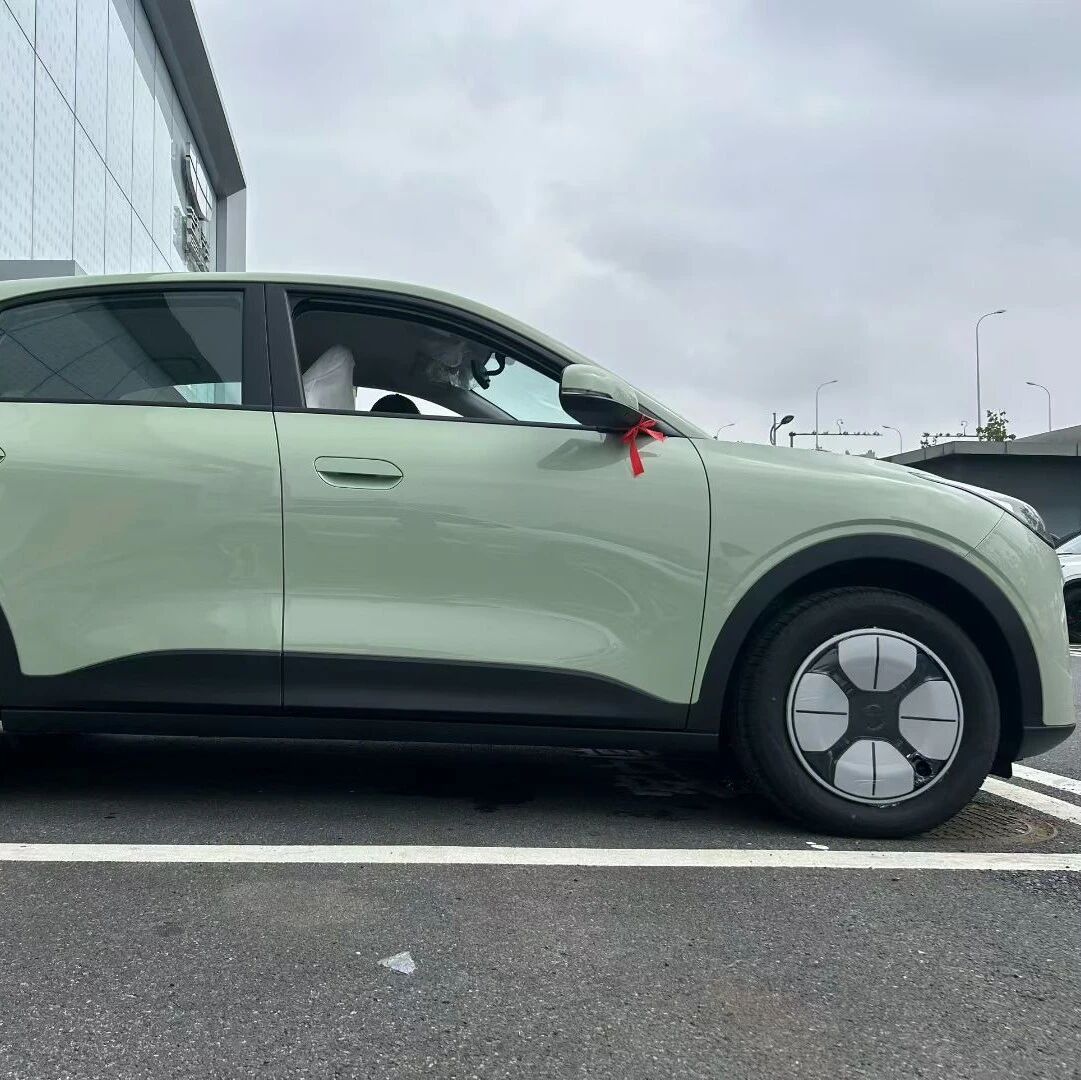
名爵MG4:全是家里买的第二台车,热泵空调是加分项
车fans· 2026-03-18 00:29
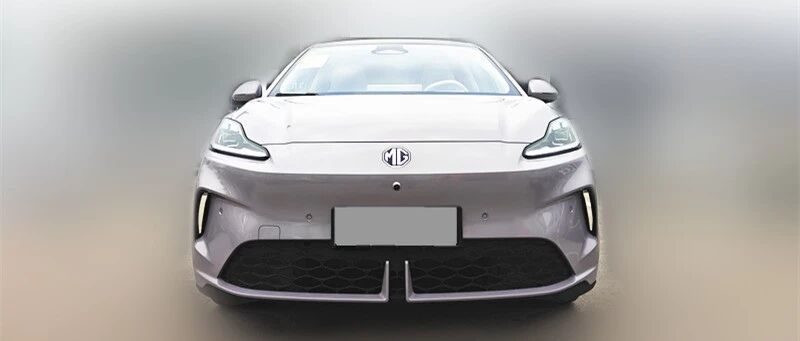
Core Viewpoint - The MG4 model from MG has seen a significant increase in availability and sales, with a notable shift in customer demographics and preferences towards electric vehicles [1][2]. Sales Performance - The local MG dealership reports an average of 6 customer groups visiting daily, with 60% interested in the MG4, leading to 28 units sold last month, representing over 65% of total sales [2]. - The most popular configuration is the 437 km "Calm Version," which accounts for 50% of sales, while the 530 km "Smart Version" struggles to sell, often compared unfavorably to competitors like BYD Dolphin [10]. Customer Demographics - Buyers of the MG4 are primarily second-car owners, aged 20-40, often employed in stable jobs, seeking a reliable vehicle for commuting [4]. - A notable customer profile includes individuals transitioning from traditional fuel vehicles to electric, valuing performance and reliability over brand prestige [4][6]. Competitive Analysis - The MG4 competes with models like BYD Sea Gull and Geely Star Wish, with its advantages being a powerful 120 kW motor and standard heat pump air conditioning, which enhances winter performance [6]. - However, brand perception issues arise due to the use of Ruipu Lanjun batteries, as many customers prefer the more recognized CATL brand [6][8]. Customer Preferences - The most favored color for the MG4 is "East Purple," while unique colors like "Coral Red" and "Island Blue" have not sold at all [11]. - Customers often express concerns about the vehicle's features, such as the horn's volume and the sensitivity of the keyless entry system, leading to suggestions for aftermarket solutions [14][15]. Pricing and Financing - The MG4 is currently offered with a cash discount of 4,000 yuan, which includes a 3,000 yuan "no-threshold replacement subsidy" [13][19]. - Financing options are popular, with a common plan being a 50,000 yuan loan over two years at zero interest, resulting in a monthly payment of approximately 2,083 yuan [13]. Maintenance and Warranty - Regular maintenance costs for the MG4 are low, estimated at under 200 yuan in smaller cities, with a warranty of 6 years or 150,000 km and an 8-year battery warranty with a maximum 30% degradation [17][18]. Additional Considerations - New buyers receive a complimentary 7 kW charging station with free installation within 30 meters, which is a significant incentive for customers with parking spaces [19].

江北新区(浦口区):一体融合,南京向北
Xin Hua Ri Bao· 2026-01-11 20:42
Economic Growth - The regional GDP has increased by 5.9% [1] - The total investment from signed projects reached 122.3 billion [1] - The industrial added value for the first eleven months grew by 8.2% and 11.2% respectively [1] Industrial Development - The petrochemical and steel industries achieved an industrial output value exceeding 270 billion [1] - The integrated circuit industry generated revenue of 47.213 billion, marking an 8.9% growth and accounting for 51.43% of the city's total [1] - The biopharmaceutical industry reported revenue of 43.5 billion, with a 12% increase [1] Project Highlights - Major projects include the construction of high-end daily chemical products and high-performance additives [1] - The launch of the first domestically produced general-purpose GPU chip by Muxi [1] - The total investment from Huatianshi in Jiangbei exceeds 34 billion [1] Strategic Goals - The focus for the year includes achieving a 5% growth in comparable GDP and positive growth in total social investment [2] - The integration of Jiangbei New Area and Pukou District aims to enhance development capabilities through unified leadership and operations [2] - The strategic layout is centered around "2+4+N" industries, emphasizing technological and industrial innovation [2]
新华鲜报|“新国补”落地首周!消费市场“焕新”
Xin Hua Wang· 2026-01-07 23:56
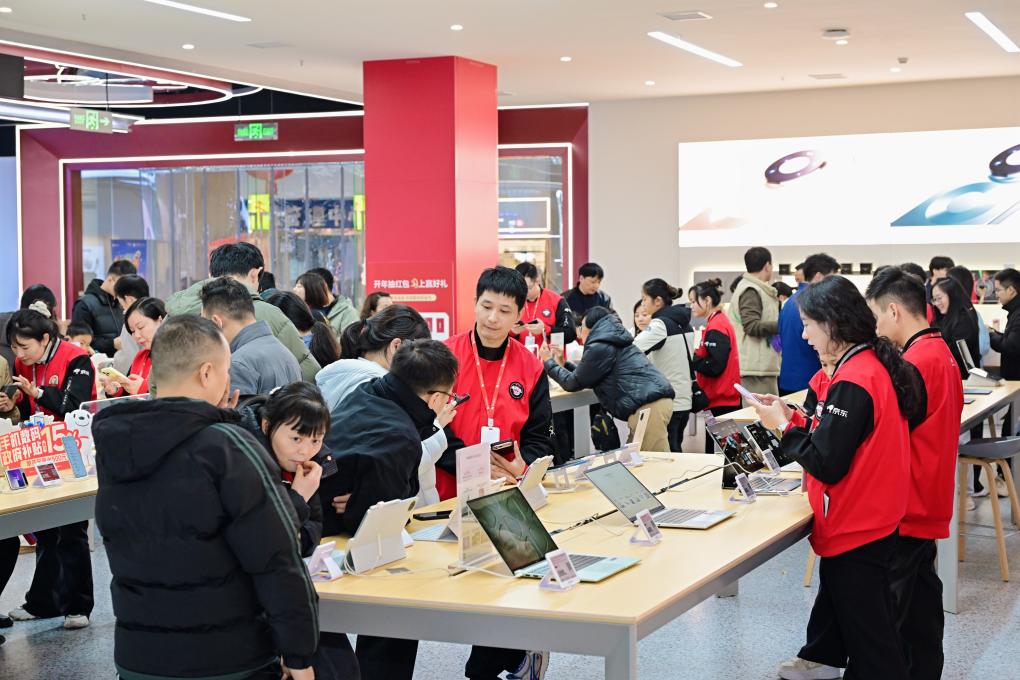
Group 1 - The "New National Subsidy" policy for replacing old consumer goods such as automobiles, home appliances, and digital products has been officially implemented, leading to a revitalization of the consumption market and enhancing both industrial upgrades and quality of life for citizens [1][2] - Major online and offline platforms, including JD.com and Suning, have fully adopted the national subsidy, offering additional promotions and services to facilitate consumer upgrades [2][3] - The new subsidy policy aligns with consumer demand and trends towards consumption upgrades, expanding support to include smart glasses and smart home products, with a focus on energy-efficient appliances [2][3] Group 2 - During the New Year holiday, consumer traffic in Suning's stores increased by 110% nationwide, with cities like Beijing, Chengdu, and Shanghai being the most active in utilizing the subsidy [3] - The first batch of 625 billion yuan in long-term special government bonds to support the old-for-new consumption plan has been allocated to local governments, contributing to a strong start for the consumption market [2][3] Group 3 - The automotive sector is also benefiting from the new subsidy, with the first application for the 2026 vehicle scrappage and replacement subsidy being submitted, allowing for higher subsidies based on the new car price [5][6] - The adjustment of the new energy vehicle purchase tax from exemption to a 50% reduction has led to varied consumer reactions, with some opting to wait while others proceed with purchases due to existing needs [5][6] - The overall automotive consumption structure is evolving, with the replacement rate exceeding 55%, indicating a strong market demand for upgrades [6] Group 4 - The launch of the "National Subsidy" coincided with the New Year, leading to immediate consumer engagement and participation in various promotional activities across cities [8] - The holiday season is critical for capturing consumer interest, prompting various regions to enhance subsidy accessibility and ensure effective implementation of the policy [8][9]
“新国补”落地首周!消费市场“焕新”
Sou Hu Cai Jing· 2026-01-07 15:34
Group 1 - The "New National Subsidy" policy for replacing old consumer goods officially launched at the beginning of the new year, aiming to enhance both industrial upgrades and the quality of life for citizens [1] - The policy includes subsidies for digital and smart products, expanding the scope to include smart glasses and smart home products, with a focus on energy-efficient appliances [2][3] - The first week of the policy saw significant consumer engagement, with a notable increase in foot traffic and sales across various platforms, indicating a strong market response [3][7] Group 2 - The automotive sector is benefiting from the new subsidy policy, which adjusts the old car replacement subsidy to be based on a percentage of the new car's price, encouraging consumers to purchase higher-value, environmentally friendly vehicles [4][6] - The adjustment of the new energy vehicle purchase tax from exemption to a 50% reduction has led to varied consumer reactions, with some opting to wait while others proceed with purchases due to existing needs [4][5] - The overall automotive market is showing signs of rational consumer behavior, with a significant portion of consumers prioritizing product features and brand service over mere price discounts [6] Group 3 - Various cities are actively promoting the subsidy program during the holiday season, launching multiple consumer engagement activities to maximize participation and ensure the effectiveness of the subsidies [7] - The focus on creating a seamless consumer experience through "policy + scenario + experience" initiatives is crucial for capturing the holiday shopping momentum [7] - The market's enthusiasm for the "New National Subsidy" reflects a broader trend towards high-quality development and the transition from "Made in China" to "Intelligent Manufacturing in China" [7]
新华鲜报丨“新国补”落地首周!消费市场“焕新”
Xin Hua Wang· 2026-01-07 15:11
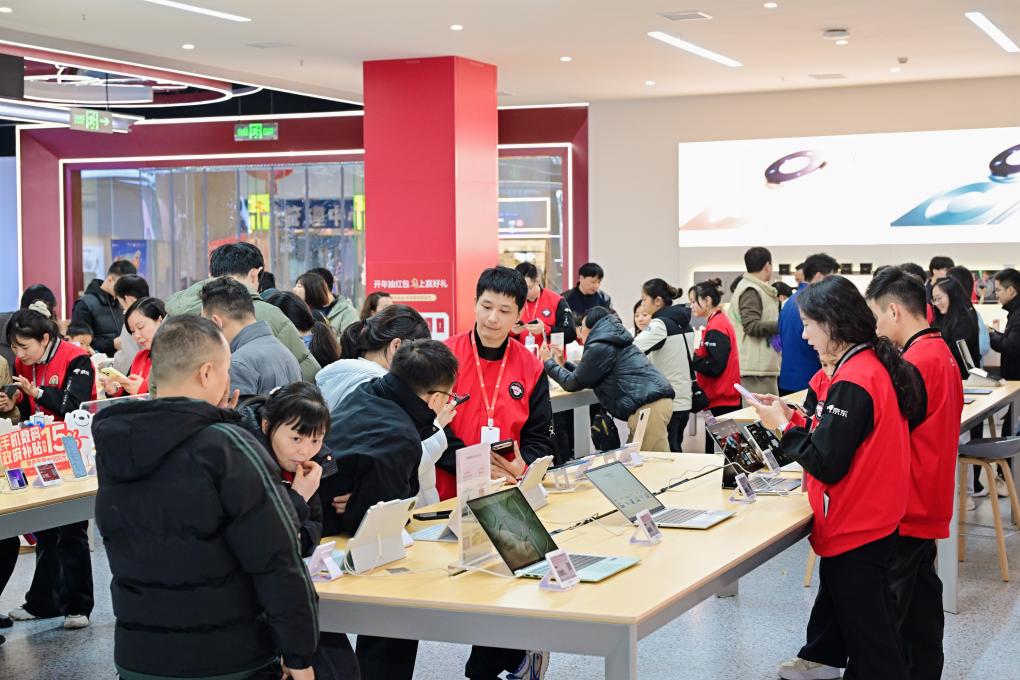
Core Viewpoint - The implementation of the "New National Subsidy" policy for trade-in of consumer goods such as automobiles, home appliances, and digital products is expected to stimulate the consumption market and enhance the quality of life for citizens, driving both industrial upgrades and consumer demand [1][11]. Group 1: Consumer Goods Market - The "New National Subsidy" policy has led to a surge in consumer interest, with platforms like JD.com and Suning launching various promotional activities to facilitate trade-ins and provide additional benefits [2][10]. - The policy has expanded the scope of subsidies to include digital and smart products, aligning with consumer demand for upgraded technology and energy-efficient appliances [2][3]. - Sales data from Suning indicates a significant increase in foot traffic, with a 110% week-on-week rise in stores nationwide during the New Year holiday, particularly in major cities like Beijing and Shanghai [3][10]. Group 2: Automotive Market - The automotive trade-in subsidy has been adjusted to provide higher incentives based on the price of new vehicles, with a maximum subsidy of 20,000 yuan for scrapping old cars and 15,000 yuan for trade-ins [6][8]. - The adjustment in the new energy vehicle tax policy, from full exemption to a 50% reduction, has led to varied consumer reactions, with some opting to wait for better deals while others proceed with purchases due to existing needs [6][7]. - The overall vehicle replacement rate has surpassed 55%, indicating a strong demand for upgrading to greener and smarter vehicles, supported by the new subsidy structure [8]. Group 3: Market Dynamics and Consumer Behavior - The market is becoming more rational, with consumers increasingly prioritizing product features such as energy efficiency and smart technology over mere price discounts [7][8]. - The New Year holiday has been identified as a critical period for capturing consumer interest, with various cities launching promotional events to maximize the impact of the subsidy policy [10][11]. - Industry experts emphasize the importance of timely adjustments to subsidy categories and the need to combat fraudulent claims to ensure the effectiveness of the subsidy funds [10].


又一电车冬季续航测试发布,小米YU7达成率超Model Y,小鹏P7全场最高
Jin Rong Jie· 2025-12-28 09:29
Core Insights - The latest winter testing results for electric vehicles were released by Auto Home, conducted in Yakeshi, Inner Mongolia, under extreme cold conditions of around -20°C, showcasing unexpected performances from various models [1] Electric Vehicle Performance Rankings - In the "Advanced Family 5-Seater Electric SUVs" category, the 2026 Wanjie M7 Pure Electric Itra Four-Wheel Drive version achieved a 44.4% range completion rate with an actual range of 282 km, ranking first [7] - The 2025 Xiaopeng P7 750 Four-Wheel Drive High-Performance Ultra version led the "Advanced Family Electric Cars" category with a 53.9% range completion rate and an actual range of 366.7 km [10] - The 2025 Nissan N7 625 Max topped the "Mainstream Family Electric Cars" category with a 47.4% range completion rate and an actual range of 296.3 km [16] - In the "Essential Commuter Electric Small Cars" category, the 2025 BYD Seagull Intelligent Driving version achieved a 43.8% range completion rate with an actual range of 177.2 km, ranking first [18] - The 2025 BYD Ti3 501 km Four-Wheel Drive Ultra version led the "Personalized Electric SUVs" category with a 44.9% range completion rate and an actual range of 224.7 km [19] Overall Rankings - The overall testing results indicated that the Xiaopeng P7 had the highest range completion rate among all tested models, while the Ideal i8 2025 Standard version had the lowest at 34.8% with an actual range of 250.3 km [21] - Among joint venture electric vehicles, the Nissan N7 had the highest range completion rate, ranking fifth overall [21]






补贴退场后,八个案例说说最后30天买车的“最优解”
车fans· 2025-12-03 00:30
Core Viewpoint - The article discusses the impact of the suspension of provincial and national subsidies for vehicle purchases on consumer behavior and market dynamics, highlighting the dependency created by these subsidies and the current alternatives available for consumers [1][2]. Group 1: Subsidy Status and Consumer Behavior - The provincial subsidy (8000-15000 yuan) and national subsidy (15000-20000 yuan) were suspended in September and October 2025, leading to a significant drop in consumer interest as over 100 million vehicles were sold under the "old-for-new" subsidy scheme [1]. - The suspension of subsidies has created a dependency among both consumers and dealerships, with some dealerships incurring costs to find alternative subsidy channels [1]. - Consumers express frustration, with sentiments like "once the subsidy stops, feelings go cold," indicating a strong reliance on these financial incentives [1]. Group 2: Current Alternatives for Consumers - Some provinces, such as Guizhou and Chongqing, have not yet announced the suspension of subsidies, and there are still opportunities for consumers to claim local subsidies [2]. - Specific local subsidies are being offered in provinces like Guangdong, Jiangsu, and Anhui, with amounts ranging from 3000 to 10000 yuan [2]. - Consumers are advised to calculate the best options available, considering the current market conditions and available subsidies [3][5]. Group 3: Case Studies and Recommendations - Case studies illustrate various consumer scenarios, such as a consumer in Anhui looking to purchase a vehicle without the provincial subsidy, who is advised to explore local subsidies instead [4][5]. - Another case highlights a consumer's indecision due to waiting for discounts on new models, emphasizing the importance of making timely decisions based on available subsidies [10][11]. - Recommendations include considering the purchase of vehicles before the end of the year to take advantage of existing local subsidies, as well as evaluating the potential benefits of acquiring an old vehicle to qualify for future subsidies [26][27].
星愿新车代买车主分享:精准梳理需求,选代买快准狠赶上政策末班车
车fans· 2025-11-07 02:19
Core Insights - The article highlights the efficient car purchasing experience facilitated by the CarFans team, particularly emphasizing the accurate policy predictions and execution capabilities of the team led by Lu Hongzhuang [1][12][20] Purchase Details - The vehicle purchased is the Geely Xingyuan 310 Youth Edition, with a pre-discount price of 68,800 yuan and a final purchase price of 63,300 yuan after discounts, leading to a total on-the-road price of 68,645 yuan, which includes insurance costs of 5,045 yuan [6][4] - The actual final price after the trade-in subsidy is 59,645 yuan [6] Comparison with Competitors - The buyer compared three models: BYD Qin L, Geely Xingyuan, and the newly launched MG4, ultimately focusing on the Xingyuan and MG4 due to their competitive pricing and features [7][8] - The decision to forgo the MG4 was based on its unconventional steering wheel design and the preference for a more straightforward purchase process with the Xingyuan [9] Purchase Experience - The buyer engaged with CarFans for the first time on September 23, 2025, and received prompt responses and support from Lu Hongzhuang, leading to a quick establishment of a purchase service group [12][13] - The buyer faced a minor setback in obtaining the old car's registration but was advised by Lu to prioritize picking up the new car to secure the trade-in subsidy [14][20] Vehicle Usage Experience - The buyer recommends test-driving the vehicle before purchase, noting initial discomfort with the new car's features compared to their previous gasoline vehicle [18] - Overall satisfaction with the vehicle is expressed, highlighting the importance of efficiency and the timely execution of the purchase process [20]
上汽集团(600104):国企改革稳步推进,收入、业绩继续修复
GUOTAI HAITONG SECURITIES· 2025-11-03 09:22
Investment Rating - The investment rating for the company is "Accumulate" with a target price of 24.34 CNY [5][12][14] Core Insights - The company's Q3 performance met expectations, with revenue and sales continuing to recover despite short-term disruptions from impairment provisions. The results reflect ongoing reforms and partnerships, particularly with Huawei, which are expected to provide new growth avenues [2][12] - The new management team has clarified the positioning of various business segments and is accelerating internal reforms while actively pursuing external collaborations, which is anticipated to help the company gradually overcome challenges and reverse its revenue and performance trends [12][14] Financial Summary - Total revenue for 2023 is projected at 744.705 billion CNY, with a slight increase of 0.1% year-on-year. Revenue is expected to decline by 15.7% in 2024, followed by a recovery with growth rates of 4.7%, 8.1%, and 8.6% in the subsequent years [4][13] - Net profit attributable to the parent company is forecasted to be 14.106 billion CNY in 2023, with a significant drop of 88.2% in 2024, followed by a substantial recovery of 536.7% in 2025 [4][13] - The earnings per share (EPS) for 2025 is adjusted to 0.92 CNY, with further projections of 1.21 CNY and 1.49 CNY for 2026 and 2027 respectively [12][14] Sales and Performance - For the first nine months of 2025, the company achieved a revenue of 469 billion CNY, representing a year-on-year increase of 9%. The net profit for the same period was 81 billion CNY, up 17.3% year-on-year [12] - The company sold 3.19 million vehicles in the first nine months of 2025, marking a 20.5% increase compared to the previous year [12] Strategic Developments - The company launched its first model under the Huawei partnership, the H5, on September 23, 2025, which is expected to enhance its marketing, distribution, and technological capabilities [12][14] - The introduction of popular new models under its own brand, such as the MG4, has contributed positively to sales performance [12]

上海车市迎来销售“黄金档” 新车“高手过招”、政策“红包”加码 预计四季度热度将不断走高
Jie Fang Ri Bao· 2025-10-08 02:28
Core Insights - The Shanghai automotive market experienced a significant sales boost during the National Day and Mid-Autumn Festival holiday, attributed to new car launches and enhanced subsidy policies [1][5][6] Group 1: Market Performance - Shanghai's automotive sales saw a substantial increase during the holiday period, with local automakers reporting a month-on-month rise in September sales [1] - Notably, the sales of Zhiji Automotive surged by 80% month-on-month, driven by the popularity of the new LS6 model [1][3] - Tesla's new model launch also contributed to increased consumer interest, with Tesla's domestic sales reaching 71,000 units in September, a 25% month-on-month increase [4] Group 2: New Car Launches - Multiple automakers launched new models ahead of the holiday, stimulating consumer interest and sales [3] - The introduction of new electric vehicles, such as the MG4 and Audi E5 Sportback, has positively impacted market dynamics, with some dealerships reporting sales doubling post-launch [3] - The new LS6 model from Zhiji Automotive has received significant attention, with orders extending into the end of the year [3] Group 3: Subsidy Policies - Shanghai's consumers can benefit from dual-layer subsidies, including national and district-level incentives, with the latter recently announced to boost sales [5][6] - District-level subsidies can reach up to 5,500 yuan, with additional benefits for higher-priced vehicles, making the purchase of electric cars more attractive [6] - The current exemption from vehicle purchase tax for electric vehicles is set to change in 2026, prompting consumers to consider purchasing in the fourth quarter [6]