机构库存

Search documents
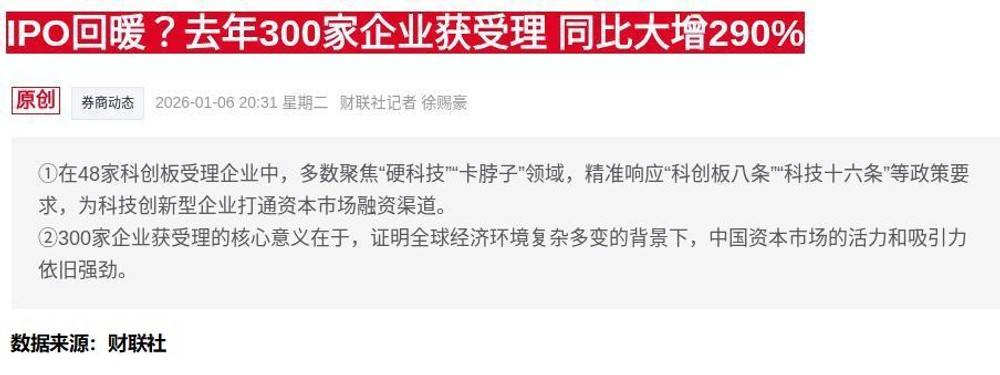
IPO受理暴增3倍,4000点上变局出现!
Sou Hu Cai Jing· 2026-01-07 07:15
Core Viewpoint - The surge in A-share IPO applications in 2025 to 300, nearly tripling from 77 in 2024, is not indicative of a market recovery but rather reflects adjustments in the acceptance process, with a significant portion coming from the Beijing Stock Exchange and a focus on advanced manufacturing and hard technology firms [1][3][9] Group 1: IPO Insights - The increase in IPO applications should not be mistaken for a comprehensive market rebound; it is more about the adjustment in the acceptance rhythm rather than a true recovery [3][9] - The majority of the new IPOs are from the Beijing Stock Exchange, which accounts for nearly 60% of the total applications, while the Sci-Tech Innovation Board primarily features loss-making hard technology companies [1][8] - The market's preference for stability is highlighted by the fact that 89% of companies selected profitability as a standard for listing, contrasting with the Sci-Tech Innovation Board's allowance for losses based on growth potential [8][10] Group 2: Investment Behavior Analysis - Understanding the underlying trading behaviors is crucial; not all accepted IPOs will pass, similar to how not all rising stocks are worth buying [5][9] - The concept of "institutional inventory" is essential for identifying whether institutional investors are actively participating in trades, which can indicate the sustainability of price movements [5][8] - The distinction between "virtual declines" and "false rises" in stock prices mirrors the potential pitfalls in interpreting IPO numbers without considering the actual market dynamics [3][9] Group 3: Importance of Behavioral Data - Behavioral data, such as institutional participation, is more reliable than surface-level metrics like IPO numbers or stock prices; this can help avoid being misled by superficial trends [9][10] - The reliance on data tools to track institutional trading characteristics can provide insights into market behavior, helping investors to navigate potential traps of "false rises" and "virtual declines" [10]

连续五天融资净买入,资金持续力看一点
Sou Hu Cai Jing· 2026-01-07 04:09
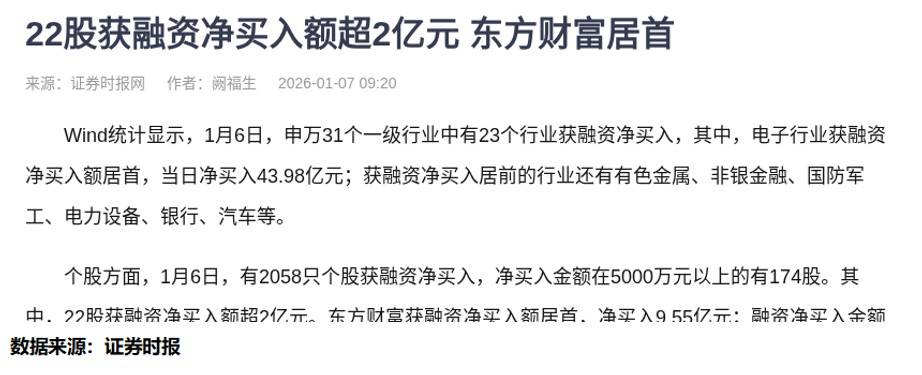
Group 1 - The core viewpoint emphasizes that merely observing financing net purchases is insufficient; the true determinant of a stock's ability to withstand volatility lies in the "real attitude" of institutional investors behind the scenes [1][3] - Many investors focus on superficial data like "financing net purchases" and "increased trading volume," believing that following the crowd is a safe strategy, but this can lead to misleading outcomes [3][5] - The analysis of institutional inventory reveals that during previous price rebounds, institutional participation remained active, indicating that they were not selling but rather consolidating positions; however, a lack of institutional inventory during a price drop signals potential trouble ahead [5][7] Group 2 - Investors often fall into the trap of only looking at price movements without understanding the underlying buying and selling dynamics, which can obscure the true intentions of institutional players [7][8] - Quantitative data analysis is crucial as it helps investors discern whether institutional funds are actively participating in trades, which can provide insights into market sentiment and potential price movements [7][8] - The market is not about guessing but rather about analyzing data to reveal the true situation; understanding institutional actions can prevent premature selling or holding onto losing positions [8][9]

融资净买超43亿,后面牵出一串大手笔
Sou Hu Cai Jing· 2026-01-07 03:12
Core Viewpoint - The article emphasizes that the true market direction is determined by the underlying attitudes of institutional investors rather than superficial data such as net buying amounts in various sectors [1]. Group 1: Market Reactions to News - The article discusses a case where a pharmaceutical stock was expected to drop due to negative news but instead rose by 30%, highlighting the disconnect between perceived bad news and actual market behavior [3]. - It illustrates that institutional investors may use negative news as an opportunity to accumulate shares quietly, as evidenced by increasing institutional inventory despite falling stock prices [4]. Group 2: Institutional Behavior - The article points out that institutional attitudes are reflected in their trading behaviors rather than just in news headlines or stock price movements [6]. - A specific example is given where a stock with a reported 8-fold increase in net profit actually saw a 10% decline because institutional investors were not participating in the rally, indicating a lack of interest [6]. Group 3: Importance of Institutional Inventory - The article stresses the importance of monitoring institutional inventory levels as a key indicator of market sentiment, suggesting that rising inventory alongside positive news indicates genuine interest from institutions [8]. - Conversely, if there is significant buying activity without a corresponding increase in institutional inventory, it may suggest that retail investors are driving the price, leading to potential instability [9]. Group 4: Conclusion on Market Dynamics - The article concludes that there are no absolute "good" or "bad" news in the market; the critical factor is whether institutions are willing to act on the news [9]. - Quantitative data on institutional inventory serves as a tool to reveal the true intentions of institutional investors, helping to navigate market perceptions [9].
2026年首只文旅股上市 你忽略的市场本质在这里
Sou Hu Cai Jing· 2026-01-06 07:20
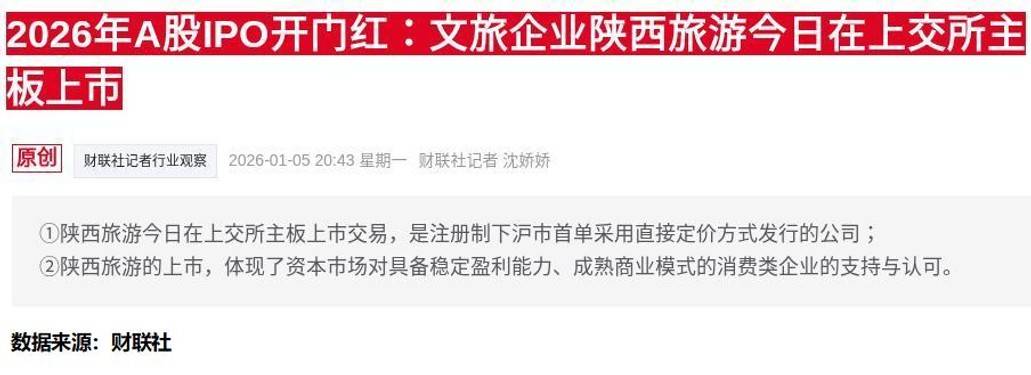
Core Viewpoint - The article discusses the dynamics of stock market reactions to news, emphasizing that the underlying behavior of institutional funds is more critical than the news itself in determining stock price movements [1][2]. Group 1: Market Reactions to News - The A-share market experienced a unique start in 2026 with the listing of Shaanxi Tourism, which saw its opening price rise by 63% from the issue price of 80.44 yuan, marking it as the first cultural tourism company to list in the past five years [1]. - The common confusion among investors arises from the phenomenon where positive news does not always lead to price increases, and negative news does not always result in declines, highlighting the importance of understanding market sentiment and institutional behavior [2][7]. Group 2: Institutional Behavior - The article emphasizes that the activity level of institutional funds can be tracked through their trading characteristics rather than just the volume of transactions, indicating whether they are actively participating in the market [5][8]. - The concept of "institutional inventory" is introduced, which reflects the ongoing trading activity of institutional investors; its presence indicates continued interest, while its absence suggests a lack of support for price movements [5][7]. Group 3: Investment Strategy - Investors are advised to focus on the attitude of institutional funds rather than solely on news, as the true market dynamics are driven by sustained institutional participation rather than short-term speculative trading [7][8]. - The article suggests that understanding the active involvement of institutions can help investors discern which price movements are genuine and supported versus those that are merely temporary fluctuations [8].
基金经理说2026年该买这些?看完数据再决定
Sou Hu Cai Jing· 2026-01-05 04:15
最近刷到证券时报的报道,汇添富基金经理程竹成聊2026年的投资方向——最看好A股,尤其是AI这类新质生产 力行业,说现在是布局的好阶段;美股估值偏高但可能"软着陆",态度中性;黄金因为美联储降息,还有上升空 间。很多人可能会问:"这会不会影响我的钱包?"其实新闻只是市场波动的"诱因",真正决定结果的是资金的态 度和交易行为——就像我用了十多年的量化大数据,能帮着看清这些藏在走势背后的动作,避免踩坑。 说到踩坑,牛市里的暴跌最容易让人犯愁:到底该拿还是该卖?卖早了怕踏空,卖晚了怕套牢,总踩不准节拍 ——这不就是因为光看走势吗?走势可是机构用来掩盖真实意图的"烟雾弹",靠它判断肯定错得多。 我用的量化大数据里,有个"机构库存"数据——橙色柱体越活跃,说明机构资金参与交易的频率越高、时间越 长。就拿这只股票来说,虽然三次调整的走势看着吓人,但"机构库存"压根没消失(看图1)——这意味着机构还 在持续、积极地参与交易。你想啊:股价调整的时候,机构反而更活跃,这不就说明他们没打算"跑"吗?要是早 看到这数据,谁还会纠结卖不卖? 一、走势是"障眼法",交易行为才是"真面目" 还有另一只股票更典型:前期几次调整都"涨回去了 ...

美元年度大跌,但比这更重要的是…
Sou Hu Cai Jing· 2026-01-04 16:36
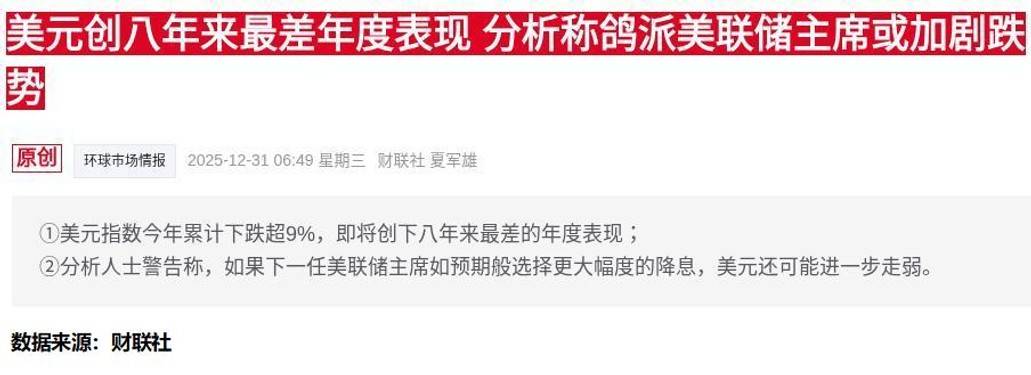
Group 1 - The core point of the article emphasizes that the fluctuation of the US dollar is primarily influenced by the actions of large institutional investors rather than just news headlines [3][16] - The article highlights that the US dollar has dropped over 9% this year, marking its worst annual performance in eight years, largely due to market speculation about the Federal Reserve's monetary policy [3][4] - It is suggested that the real indicator of stock performance is whether large funds are actively trading, rather than focusing solely on valuation metrics [4][16] Group 2 - The article discusses the pitfalls of relying on valuation alone, illustrating with examples of stocks with low and high price-to-earnings ratios that performed contrary to expectations due to lack of institutional trading [4][9] - A quantitative measure called "institutional inventory" is introduced, which reflects the active trading behavior of institutions rather than just their buying volume [8][9] - The article concludes that monitoring institutional inventory is more reliable than following news or valuation metrics for predicting stock price movements [16]
AI赋权之争,藏着炒股的底层逻辑
Sou Hu Cai Jing· 2026-01-04 13:35
Group 1 - The core viewpoint of the article emphasizes the importance of not being deceived by superficial appearances, whether in AI or stock trading, and instead focusing on the underlying essence [1][9] - Joshua Bengio, known as the "father of AI," publicly opposes granting legal rights to AI, arguing that current AI systems do not possess self-awareness but merely execute programmed tasks [1] - The article draws a parallel between AI's perceived self-protection and the misleading nature of stock price movements, highlighting that both can be misinterpreted if one only looks at surface-level indicators [1][9] Group 2 - The article discusses the challenges investors face in discerning genuine trends in stock prices, often leading to poor investment decisions based on superficial observations [2][4] - It illustrates the importance of analyzing trading behavior data to uncover the true intentions behind stock price movements, differentiating between institutional and retail investor actions [4][6] - A case study is presented where one stock, influenced by institutional buying, increased by 25%, while another stock, driven by retail investors, fell by 18%, underscoring the significance of understanding market dynamics [6][8] Group 3 - The article concludes that the key ability in both AI and stock trading is to penetrate beyond surface appearances to grasp the underlying reality, which can lead to more informed and successful investment decisions [9]

美国就业要降温?关键看机构怎么动
Sou Hu Cai Jing· 2026-01-04 04:02
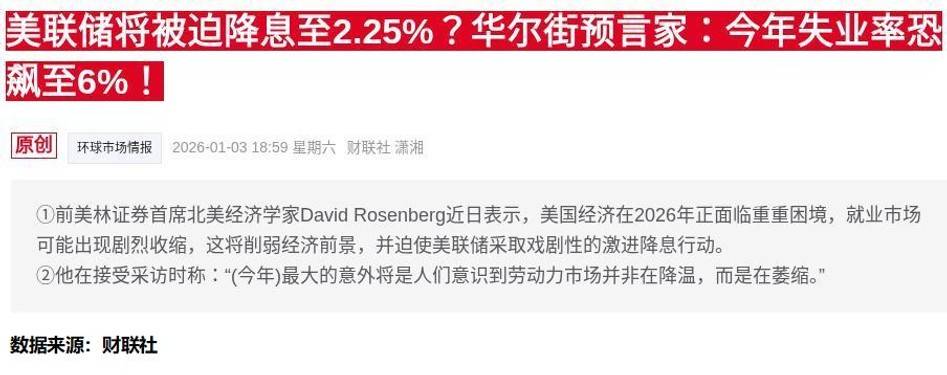
最近看新闻说,前美林证券的首席北美经济学家罗森伯格提醒:2026年美国劳动力市场可能要"踩刹车"——去年11月失业率已经从年初的4%涨到4.6%,他 预计很快会突破5%,年底甚至可能摸到6%。更关键的是,这种就业萎缩会倒逼美联储大幅降息125个基点,把利率从现在的水平砍到2.25%。 这和华尔街的共识完全不一样:多数经济学家觉得美国就业会保持稳定,美联储今年顶多降息1-2次;美联储自己的利率点阵图也只预测降息1次。但罗森伯 格说,数据才是美联储的"指挥棒"——劳动力市场的崩溃和经济衰退,会让美联储不得不"被迫行动"。 看到这消息,肯定有人问:"这和我们炒股票有啥关系?难道美国就业不好,我们的股票就会跌?"其实不然——重要的从来不是消息本身,而是机构大资金 对消息的态度。 一、消息再多,不如看机构的真实动作 去年伊朗和以色列冲突时,很多人把市场调整归为"黑天鹅",但回头看,其实是机构本来就有调仓需求,刚好借消息"掩人耳目"。散户却把消息当主因,要 么急着冲进去,要么赶紧跑路,结果就是追涨杀跌,亏了钱还不知道为什么。 就像我之前关注的两只股票——"华XX"和"神XX",之前都有不错的涨幅,市场反弹时却分出了胜负: ...
上市公司取消监事会?我用炒股经验看懂了
Sou Hu Cai Jing· 2026-01-03 12:19
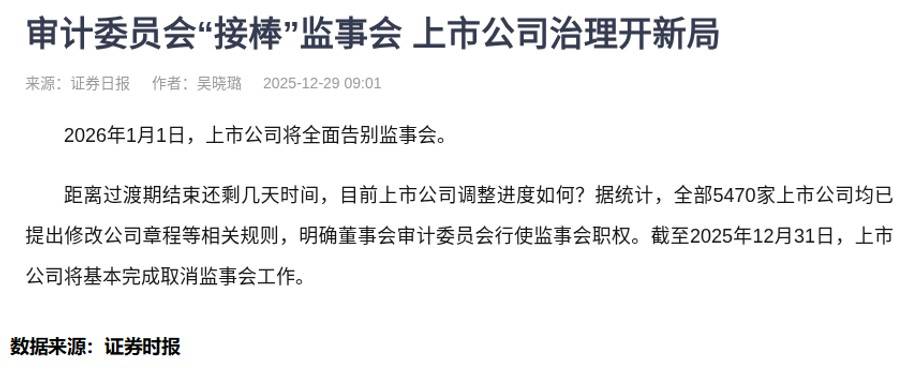
一、公司监督变专业,咱们看股也得"专业" 平时咱们炒股,总绕不开三件事:选什么、什么时候买、什么时候卖。可大多数人做这三件事,靠的都是"感觉"——看走势涨了觉 得要继续,跌了怕见底,结果往往是"追高套在山顶,割肉在地板"。 最近刷到条挺重要的新闻——2026年1月1日起,所有上市公司都要全面取消监事会了,换成董事会里的审计委员会接棒监督职能。 目前5470家上市公司已经修改了公司章程,明确审计委员会要行使以前监事会的职权,过渡期结束前基本能完成所有调整。 可能有人会问:"公司换个监督部门,跟我炒股有啥关系?"其实啊,咱们买股票最怕的就是公司藏着风险没被发现——以前监事会 有时候因为成员不够专业,可能漏看财务漏洞;现在换成审计委员会(成员大多是财务、法律出身的专家),是不是能更及时揪出 问题?但反过来,就算公司监督变专业了,咱们自己看股票的时候,是不是也得学会像审计委员会那样:不用表面走势判断,而是 看背后真实的资金动作? 先放张新闻里的图,大家先直观感受下这次改革的核心变化: 我有个朋友去年就踩过这种坑:他买了只股票,一开始一路涨,可中间突然来了两根长阴线,直接砸掉20%,他吓得赶紧卖了,结 果后来这只股票又 ...
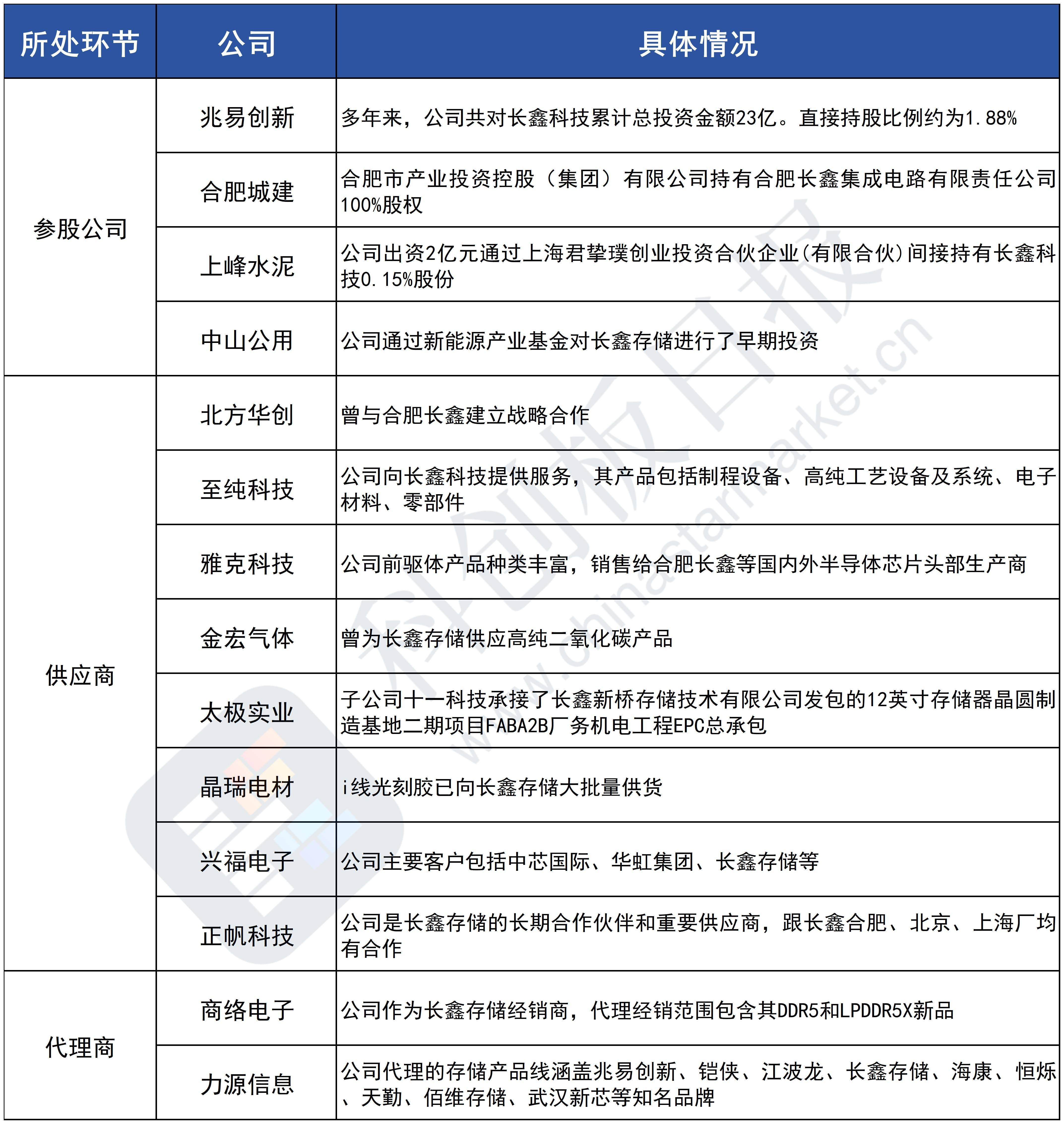
长鑫IPO获受理,比走势更该看的是这个
Sou Hu Cai Jing· 2026-01-02 16:19
Group 1 - Changxin Technology's IPO application has been officially accepted by the Shanghai Stock Exchange, aiming to raise 29.5 billion yuan for DRAM storage technology upgrades and capacity construction [1] - There is significant discussion regarding whether related stocks should be purchased following Changxin's IPO announcement, with some investors expressing concerns about market trends [1][5] - The focus should be on the actual participation of institutional investors rather than merely speculating on stock price movements [5][16] Group 2 - The importance of analyzing institutional inventory is highlighted, as it reflects the active trading behavior of large funds, which is a more reliable indicator than price trends alone [5][10] - Historical examples illustrate that stocks can experience significant price fluctuations, but the underlying institutional activity can provide clarity on whether to hold or sell [10][16] - The emergence of quantitative big data allows for a clearer understanding of institutional trading behaviors, moving away from reliance on intuition in stock trading [16]