
注册制改革

Search documents
执掌证监会5年,易会满接受调查
Di Yi Cai Jing· 2025-09-06 03:15
Core Points - Yi Huiman, former chairman of the China Securities Regulatory Commission (CSRC), is under investigation for serious violations of discipline and law, following his resignation over a year ago [1] - During his five-year tenure, Yi oversaw significant reforms in China's capital markets, including the launch of the Sci-Tech Innovation Board and the implementation of a comprehensive registration system [5][6] - The ongoing anti-corruption campaign within the CSRC has led to multiple officials being investigated, including former vice chairman Wang Jianjun and several other senior officials [7][8] Group 1 - Yi Huiman was appointed as the ninth chairman of the CSRC in early 2019, succeeding Liu Shiyu, during a critical period of reform and innovation in the capital markets [1][3] - Under Yi's leadership, the A-share market saw over 1,800 new IPOs from 2019 to 2023, raising more than 2 trillion yuan in total financing [6] - Yi emphasized the importance of anti-corruption measures, maintaining a "zero tolerance" stance against corruption within the CSRC [6] Group 2 - Yi Huiman's recent activities included participating in a national committee meeting focused on stabilizing foreign trade and conducting research in Zhejiang on optimizing major productivity layouts [2][4] - The investigation into Yi follows a pattern of disciplinary actions against numerous officials within the CSRC, indicating a broader crackdown on corruption in the regulatory body [7][8] - The reforms initiated during Yi's tenure, such as the registration system, were described as transformative, impacting the regulatory framework and overall market dynamics [5][6]
广东证监局副局长王文哲:支持辖区企业到港交所等境外市场上市
2 1 Shi Ji Jing Ji Bao Dao· 2025-08-30 11:24
Core Viewpoint - The Guangdong Securities Regulatory Bureau emphasizes the importance of enhancing the financial cooperation and development of the Guangdong-Hong Kong-Macao Greater Bay Area, particularly in supporting high-quality technology enterprises for listing and financing [1][4]. Group 1: Financial Market Developments - The three major exchanges play a core role in the construction of the international financial hub in the Greater Bay Area, with the Shenzhen Stock Exchange enhancing support for innovation and the Hong Kong Stock Exchange reforming its issuance system to facilitate Guangdong enterprises going public [2]. - As of July 2023, 165,000 individual investors participated in the "Cross-Border Wealth Management Connect," with cross-border remittance exceeding 120 billion yuan [2]. - Since the start of the 14th Five-Year Plan, Guangdong has seen the establishment of 10 new industry legal entities and subsidiaries, with a total of 31 securities companies, 36 fund companies, and 23 futures companies [2]. Group 2: Technology Enterprise Financing - Guangdong leads the nation in technology enterprise listings, with 249 new domestic listed companies since the beginning of the 14th Five-Year Plan, raising 233.5 billion yuan, of which 95% are technology enterprises [3]. - In the past five years, Guangdong enterprises have issued over 560 innovative bond types, raising more than 220 billion yuan, and 14 public REITs products raising over 40 billion yuan [3]. - By the end of July 2023, Guangdong had 2,364 private equity fund managers, managing a total of 2.4 trillion yuan, with investment cases and amounts remaining among the highest in the country [3]. Group 3: Future Initiatives - The Guangdong Securities Regulatory Bureau plans to enhance services for high-quality technology enterprises seeking to go public, optimizing the listing service system in collaboration with exchanges and local government [4]. - There will be increased efforts to support various enterprises in expanding direct financing, particularly through the issuance of technology innovation bonds and public REITs [5]. - The Bureau aims to promote mergers and acquisitions among listed companies and foster the growth of "patient capital" to facilitate a virtuous cycle between technology, industry, and finance [5].
今年来38家会计师事务所被罚 多方聚力共助行业革新
Sou Hu Cai Jing· 2025-08-27 13:23
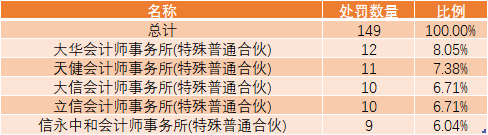
Core Insights - The accounting firms have become a focal point of capital market regulation since 2025, with a significant increase in penalties imposed by regulatory bodies [1][2] - A total of 38 accounting firms received 149 penalties amounting to 150.3 million yuan, representing a 44.7% increase compared to the same period last year [1][2][4] Regulatory Environment - The regulatory environment has intensified, with the China Securities Regulatory Commission (CSRC) and exchanges issuing numerous penalties to accounting firms, reflecting a commitment to maintaining market order [1][2] - The revised "Management Measures for the Record-Filing of Accounting Firms Engaging in Securities Services" aims to enhance quality management and professional responsibility among accounting firms [8] Penalty Statistics - The top five accounting firms by penalty count include: - Dahua CPA: 12 penalties (8.05%) - Tianjian CPA: 11 penalties (7.38%) - Daxin CPA: 10 penalties (6.71%) - Lixin CPA: 10 penalties (6.71%) - Xinyong Zhonghe CPA: 9 penalties (6.04%) [3] - In terms of penalty amounts, Tianheng CPA and Daxin CPA faced fines exceeding 30 million yuan, while others like Zhonghua CPA and Dahua CPA were fined over 10 million yuan [4] Industry Challenges - The auditing industry is grappling with balancing market competition and quality assurance, with some firms engaging in price competition that undermines audit independence [7] - Key areas needing improvement include revenue recognition, related party transactions, and asset impairment, indicating a need for enhanced standardization and risk management [7] Future Directions - The industry is encouraged to adopt a three-pronged approach: market-based pricing, penetrating regulation, and ecological restructuring to improve audit quality [11] - Suggestions include establishing a pricing guidance system, mandatory audit liability insurance, and a dual-signature system for audit reports to enhance accountability [11] Collaborative Efforts - Healthy industry development requires collaboration among various stakeholders, including listed companies improving governance, intermediaries maintaining professional integrity, and regulators refining oversight mechanisms [12]

IPO变革两周年:IPO结构性回暖 A股科技属性愈发显著
Bei Ke Cai Jing· 2025-08-27 08:25
Group 1 - The core viewpoint of the articles highlights the recovery of the A-share IPO market following the "827 policy," which aims to balance the pace of IPOs and enhance the quality of listed companies [1][3][11] - The number of IPOs and the total amount raised in 2023 have shown significant improvement, with 66 companies successfully going public and raising approximately 65.27 billion yuan, nearing the total for the entire previous year [3][6] - The "827 policy" has led to a structural shift in the quality of listed companies, moving from quantity to quality, and has encouraged a dynamic balance in investment and financing [4][10] Group 2 - The A-share market is increasingly focusing on technology-driven companies, with high-tech enterprises accounting for over 70% of new listings in recent years [6][10] - The introduction of the fifth set of listing standards on the Sci-Tech Innovation Board is aimed at supporting innovative companies, particularly those in critical technology sectors [5][6] - Regulatory scrutiny has intensified, with a focus on ensuring the quality of IPOs, leading to a decrease in the number of companies withdrawing their IPO applications [7][10] Group 3 - The future of the IPO market is expected to be characterized by a "slow bull" market, with a gradual and rational increase in IPOs, aligning with market demands and industry development [9][10] - The regulatory framework is shifting towards a more sustainable and predictable issuance mechanism, emphasizing the continuous operational capability and intrinsic value of companies [9][10] - The overall trend indicates a transition from "scale expansion" to "ecological optimization," positioning the IPO market as a core engine for supporting high-quality development [11]
特区45载:深交所引领资本赋能创新 新兴产业迎价值重估
2 1 Shi Ji Jing Ji Bao Dao· 2025-08-26 00:07
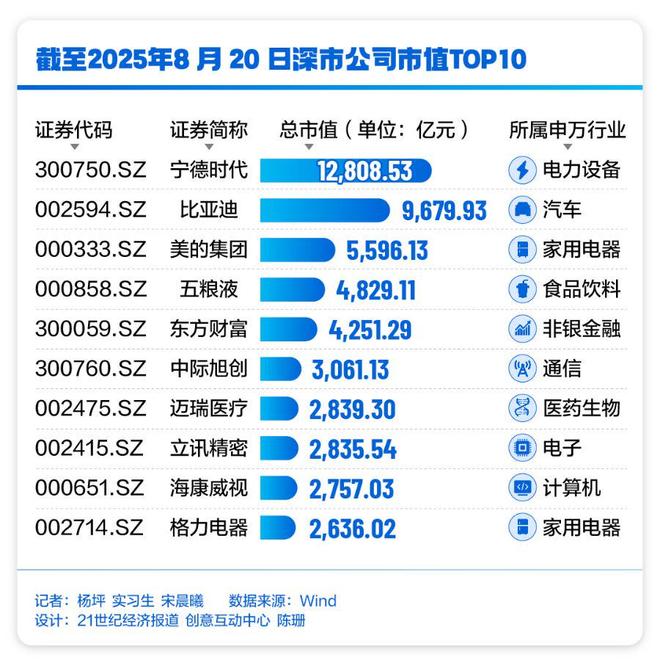
Group 1 - Shenzhen Stock Exchange (SZSE) has become a core force in China's capital market, supporting the development of strategic emerging industries and high-tech enterprises through the implementation of the registration system reform for the ChiNext board [1][2] - As of August 20, 2025, the number of A-share listed companies on SZSE has exceeded 2870, with a total market capitalization surpassing 40 trillion yuan, and nearly 70% of ChiNext companies belong to strategic emerging industries [1][3] - The top five industries by market capitalization on the ChiNext board are electronics, power equipment, biomedicine, robotics, and machinery, reflecting a significant shift towards technology-driven sectors [3][9] Group 2 - The market capitalization of leading companies has changed significantly over the past five years, with CATL surpassing Wuliangye to become the top company at 1.28 trillion yuan, and BYD's market cap increasing by over 90% to 978 billion yuan [4][5] - The overall revenue of 1376 ChiNext listed companies reached 4.03 trillion yuan in 2024, with a net profit of 207.46 billion yuan, indicating a continuous growth trend [11] Group 3 - R&D investment in the Shenzhen market exceeded 760 billion yuan in 2024, a nearly 68% increase from 2020, with companies like BYD and ZTE leading in R&D spending [12][14] - The number of new listings on the ChiNext board under the registration system has reached 577, with a total market capitalization of 4.64 trillion yuan, all in high-tech industries [8][12] Group 4 - The implementation of new policies has led to an increase in mergers and acquisitions, with 121 restructuring proposals disclosed in 2024, and 964 new mergers and acquisitions reported by listed companies [17][18] - The new restructuring regulations simplify the process for companies, allowing for quicker approvals and enhancing the market's capacity for resource allocation [18][19] Group 5 - In 2024, cash dividends from Shenzhen-listed companies reached 575.3 billion yuan, a 41.8% increase, with several companies announcing significant buyback plans [20][21] - The introduction of policies allowing Hong Kong-listed companies to return to the A-share market presents new opportunities for both companies and investors [22][23]
监管发布,券业新变化!
Zhong Guo Ji Jin Bao· 2025-08-18 13:46
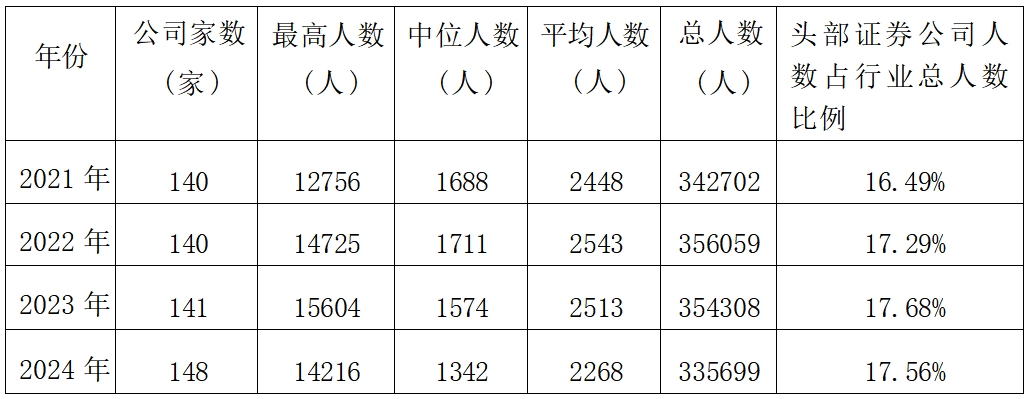
Core Insights - The securities industry is transitioning from a "mass recruitment" strategy to a "high-quality and efficient" talent strategy, with significant progress in building a top-tier financial talent pool [1][2]. Personnel Changes - The total number of securities industry personnel reached 335,699 by the end of 2024, a decrease of 7,003 from 2021, representing a decline of 2.04% [2][3]. - The proportion of personnel in leading securities firms increased to 17.56%, indicating a concentration of talent in larger firms [2][3]. - The number of securities brokers decreased by 27,000, a decline of 48.85%, while the number of investment advisors increased by 12,000, a rise of 17.46% [3][4]. Age and Experience Distribution - By 2024, over 50% of industry personnel were aged 36 and above, an increase of 10.05 percentage points since 2021 [4]. - Personnel with 11-19 years of experience accounted for 29.58% of the workforce, indicating a trend towards a more experienced workforce [4]. Investment Banking Sector - The number of investment banking personnel grew by 10.6% from 27,300 to 30,200 between 2021 and 2024, but average revenue per person fell by 54.74% from 2.58 million to 1.17 million [6]. - Despite a reduction in investment banking personnel in 2024 compared to 2023, average revenue per person continued to decline significantly [6]. Research and Sales Personnel - Research and institutional sales personnel increased by 47.29% from 5,813 to 8,562 between 2021 and 2024, with research personnel growing by 36.82% to 6,968 [7]. - The net income from trading unit seat leasing dropped by 42.7% to 14.434 billion yuan due to fee reforms [7]. Revenue Metrics - The average revenue per person in the industry was 1.344 million yuan in 2024, only 38% of that of leading securities firms [9]. - Leading securities firms had average revenues of 3.4985 million yuan and average net profits of 977,700 yuan, significantly higher than their smaller counterparts [9]. Compliance and Violations - The total number of industry violations increased significantly, with 1,619 instances recorded from 2021 to 2024, rising from 276 to 557 annually [10][12]. - The most common violations were related to illegal stock trading, investment banking, and brokerage services, with illegal stock trading accounting for 23.52% of violations in 2024 [10][12].
监管发布 券业新变化!
Zhong Guo Ji Jin Bao· 2025-08-18 13:42
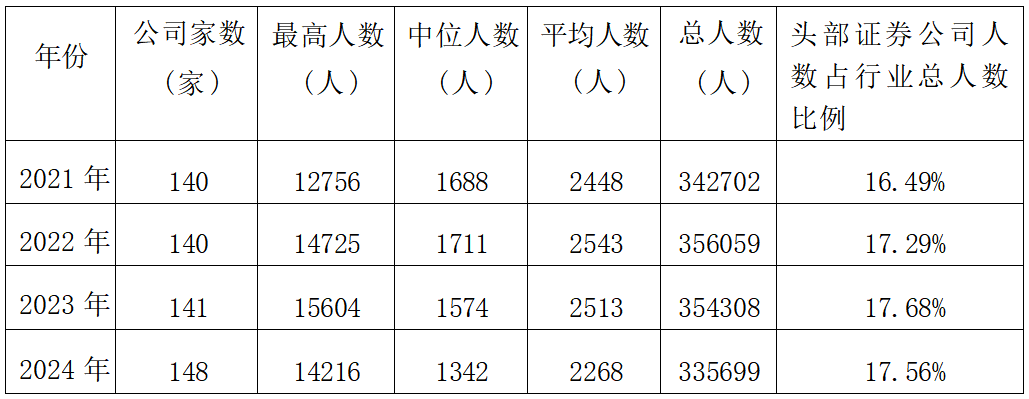
Core Insights - The Chinese securities industry is transitioning from a "mass recruitment" strategy to a "high-quality and efficient" talent strategy, with significant progress in building a top-tier financial talent pool [1][2] Personnel Changes - The number of securities industry personnel has entered a consolidation phase, with a decrease of 7,003 personnel from 2021 to 2024, representing a decline of 2.04% [2] - As of the end of 2024, the total number of personnel in securities companies is 335,699, with leading firms accounting for 17.56% of the total workforce [3][10] - The number of securities brokers has decreased by 27,000, a decline of 48.85%, while investment advisors have increased by 12,000, a rise of 17.46% [3] Age and Experience Distribution - In 2024, over 50% of industry personnel are aged 36 and above, marking a 10.05 percentage point increase since 2021 [4] - Personnel with 11 to 19 years of experience make up 29.58% of the workforce, indicating a trend towards a more experienced workforce [4] Investment Banking Sector - The number of investment banking personnel has grown by 10.6% from 27,300 to 30,200 between 2021 and 2024, but average revenue per person has dropped by 54.74% from 2.58 million to 1.17 million yuan [7] - The saturation of investment banking personnel requires time for adjustment, and revenue stabilization will need further efforts [7] Research and Sales Personnel - From 2021 to 2024, the number of research and institutional sales personnel has increased by 47.29%, with research personnel growing by 36.82% [8] - The net income from trading unit seat leasing has decreased by 42.7% to 14.434 billion yuan due to fee reforms [8] Revenue Metrics - The average revenue per person in the industry is 1.344 million yuan, which is only 38% of that of leading securities firms [10] - Leading firms have an average revenue of 3.498 million yuan and an average net profit of 977,700 yuan, significantly lower than Goldman Sachs' figures [10] Compliance Issues - The total number of industry violations has increased, with 1,619 instances recorded from 2021 to 2024, showing a growth of 101.81% [11] - Violations related to stock trading, investment banking, and brokerage services are the most common, with stock trading violations accounting for 23.52% in 2024 [11]
监管发布,券业新变化!
中国基金报· 2025-08-18 13:35
Core Viewpoint - The article discusses the evolution of the workforce in the securities industry from 2021 to 2024, highlighting a shift from a "people-intensive" strategy to a "high-quality and efficient" talent strategy, with significant progress in building a top-tier financial talent pool [2]. Workforce Growth and Structure - The number of employees in the securities industry reached 335,700 by the end of 2024, a decrease of 7,003 people or 2.04% from 2021 [4]. - The proportion of employees in leading securities firms increased to 17.56%, indicating a concentration of personnel in larger firms [4]. - The number of securities brokers decreased by 27,000, a decline of 48.85%, while investment advisors increased by 12,000, a rise of 17.46% [5]. Age and Experience Distribution - By 2024, over 50% of industry employees were aged 36 and above, an increase of 10.05 percentage points from 2021 [7]. - Employees with 11 to 19 years of experience accounted for 29.58% of the workforce, indicating a trend towards a more experienced workforce [7]. Investment Banking Sector - The number of investment banking personnel grew by 10.6% from 27,300 to 30,200 between 2021 and 2024, but average revenue per employee fell by 54.74% from 2.58 million to 1.17 million [10]. - The saturation of investment banking personnel remains a challenge, requiring time for the industry to stabilize and recover revenue per employee [10]. Research and Sales Personnel - From 2021 to 2024, the number of research and institutional sales personnel expanded by 47.29%, from 5,813 to 8,562 [12]. - The ratio of sales personnel to researchers improved from 1:7.1 to 1:4.4, indicating a more efficient structure [12]. Revenue and Performance Disparities - The average revenue per employee in the industry was 1.34 million, only 38% of that of leading securities firms [15]. - Leading firms had average revenues of 3.50 million and net profits of 977,700, significantly higher than the industry average [15]. Compliance and Regulatory Issues - The total number of industry violations increased significantly, with 1,619 instances recorded from 2021 to 2024, a rise of 101.81% [18]. - Violations related to illegal stock trading, investment banking, and brokerage services were the most common, with illegal trading accounting for 23.52% of violations in 2024 [18].

年内23家公司退市,5家主动离场
Cai Jing Wang· 2025-08-14 03:31
Group 1 - The core viewpoint is that the A-share market is experiencing an accelerated pace of delisting, with 23 companies having delisted this year due to various reasons including financial issues, trading violations, and voluntary delisting [1][2] - The diversification of delisting channels is becoming more apparent, which is expected to enhance the market's price mechanism and improve the capital market's resource allocation function [1] - The increase in companies choosing voluntary delisting reflects a growing trend, with *ST Tianmao being the fifth company to opt for this route this year, citing significant uncertainties affecting its business structure [1] Group 2 - The new delisting regulations are seen as beneficial for investor protection, as they reduce "shell speculation" and optimize the market ecosystem [2] - As of August 13, 2023, the majority of the 23 delisted companies were due to financial and trading issues, with 9 companies delisted for financial reasons and 9 for trading violations, including 5 for face value and 3 for market value [2] - The normalization of voluntary delisting is viewed as an inevitable outcome of the registration system reform, facilitating a transition in the capital market from strict entry regulations to more accessible exit mechanisms [2]

年内23家公司退市!
Zheng Quan Shi Bao· 2025-08-14 00:58
Core Viewpoint - The A-share market is experiencing an accelerated pace of delisting under the regulatory policy of "retreating as necessary," with 23 companies delisted this year due to various reasons including financial issues, trading violations, and major illegal activities [1][2]. Group 1: Delisting Trends - A total of 23 A-share listed companies have been delisted this year, with reasons ranging from financial delisting to voluntary delisting [1][2]. - The diversification of delisting channels is becoming more apparent, contributing to a more rational market price mechanism and enhancing the capital market's resource allocation function [1][3]. - *ST Tianmao is the fifth company to voluntarily delist this year, citing significant uncertainties affecting its business structure [1]. Group 2: Regulatory Environment - The tightening of delisting regulations is seen as beneficial for protecting investor interests, reducing "shell speculation," and optimizing the market ecosystem [2]. - The current delisting standards include criteria such as a total market value below 500 million and fewer than 2,000 shareholders, which are gradually taking effect [2][3]. - The regulatory framework for delisting has become more stringent, particularly concerning financial fraud and corporate governance issues, leading to an increase in companies being forced to delist due to financial indicators [3]. Group 3: Future Recommendations - Suggestions for improving the delisting process include clarifying timelines, compressing overlapping delisting steps, and enhancing the regulatory functions of exchanges to prevent companies from remaining inactive [4]. - There is a call for the establishment of a robust mechanism for accountability and penalties post-listing, as well as improving investor compensation mechanisms to protect the rights of small investors [4].