煤炭清洁高效利用

Search documents
徐新荣在咸阳市调研时表示加快煤炭产业链重点项目建设 助力全省“十四五”圆满收官
Shan Xi Ri Bao· 2025-11-13 00:10
Group 1 - The provincial political consultative conference chairman Xu Xinrong emphasized the importance of advancing key projects in the coal industry chain to achieve annual targets and ensure a solid foundation for the "14th Five-Year Plan" and a good start for the "15th Five-Year Plan" [1] - Xu visited the Xinyuan High-end Energy Chemical Park in Binzhou, inspecting the operation of the Shaanxi Coal Weihe Chemical Group's 300,000-ton coal-to-ethylene glycol project, urging the company to focus on high-end development and enhance the value and competitiveness of the industry chain [1] - At the Yangjiaping coal mine project in Changwu County, Xu discussed progress, mining technology, and environmental protection with company leaders, stressing the need for safety and green production while accelerating project construction through technological innovation [1] Group 2 - Xu visited the Datang Binchang Power Co., Ltd., where he learned about unit operations, smart management, and energy conservation, encouraging the company to leverage the advantages of coal-electricity joint operations to enhance energy supply capabilities for regional economic development [1] - During a visit to the Binzhou Municipal Political Consultative Conference, Xu highlighted the necessity of integrating the Party's leadership throughout the consultative work and aligning with the new requirements set by the provincial committee [2] - Xu called for strengthening political guidance and uniting various parties and communities to contribute to the successful completion of the "14th Five-Year Plan" and a strong start for the "15th Five-Year Plan" [2]
中国装机规模最大火电厂年发电量预计超400亿千瓦时
Ren Min Ri Bao Hai Wai Ban· 2025-11-04 05:26
Core Viewpoint - The Zhejiang Beilun Power Plant's Unit 9, a 1 million kilowatt coal-fired generator, has officially commenced operations after 168 hours of full-load trial operation, making it the largest coal-fired power plant in China with a total installed capacity of 7.34 million kilowatts and an expected annual electricity generation of over 40 billion kilowatt-hours [1] Group 1: Company Overview - The Beilun Power Plant is located in Ningbo, Zhejiang Province, and has been operational since the first unit was commissioned in 1991 [1] - The newly operational Unit 9 is part of the first phase of an energy-saving and emission-reduction renovation project, which began construction in 2023 [1] Group 2: Industry Developments - China is actively promoting the transformation and upgrading of coal-fired power units, with 95% of coal power units achieving ultra-low emissions during the "14th Five-Year Plan" period [1] - The National Energy Administration has indicated that during the "15th Five-Year Plan" period, efforts will be made to fully utilize the flexible adjustment capabilities of thermal power and promote the upgrade of the next generation of coal power units [1]

我国装机规模最大火电厂投产
Ren Min Ri Bao· 2025-11-03 21:50
Core Insights - The Beilun Power Plant in Ningbo, Zhejiang Province has successfully commenced operations of its 1 million kilowatt coal-fired unit after 168 hours of full-load trial operation, making it the largest coal-fired power plant in China with a total installed capacity of 7.34 million kilowatts [1] Group 1: Operational Highlights - The newly operational Unit 9 is part of the first phase of the energy-saving and emission-reduction renovation project, which began construction in 2023 [1] - The expected annual electricity generation from the Beilun Power Plant exceeds 40 billion kilowatt-hours [1] - During the trial operation, the average emission concentrations of particulate matter, sulfur dioxide, and nitrogen oxides from Unit 9 reached leading levels among similar units in the country [1] Group 2: Environmental and Energy Transition Efforts - The Beilun Power Plant has become the largest heat source in a 50 square kilometer area, indicating its significant role in local energy supply [1] - The plant is accelerating the development of multi-energy complementarity by investing in wind power, solar energy, and energy storage projects to generate more green electricity [1] - The Chinese government continues to promote the clean and efficient use of coal during the 14th Five-Year Plan period, with plans to enhance the flexible adjustment capabilities of coal-fired power during the 15th Five-Year Plan [1]
“十五五”,绘就煤炭清洁高效利用“新图景”
中国能源报· 2025-10-27 04:00
Core Viewpoint - The coal industry in China is at a critical juncture as it approaches peak consumption, necessitating a shift towards technological innovation and green development to ensure clean and efficient utilization of coal resources [1][3][10]. Group 1: Industry Performance and Trends - During the "14th Five-Year Plan" period, China's coal production has consistently increased, with a total output reaching 4.78 billion tons in 2024, an increase of 880 million tons compared to 2020 [5]. - The coal mining sector has seen significant investment, with approximately 2.1 trillion yuan allocated, leading to the establishment of modern and intelligent coal mines [5][7]. - The coal transportation network has expanded, with coal railway shipments rising from 2.36 billion tons to 2.82 billion tons, enhancing the national coal distribution capacity [6]. Group 2: Structural Optimization and Technological Advancements - The number of coal mines has decreased from over 4,600 to around 4,300, while the average production capacity per mine has increased to over 1.4 million tons [7]. - The focus of coal production is shifting towards the central and western regions, with the four provinces of Shanxi, Shaanxi, Inner Mongolia, and Xinjiang projected to produce 3.9 billion tons in 2024, accounting for 81.6% of national output [7][8]. - The coal chemical industry is transitioning towards high-quality and efficient development, with a significant increase in the production of polyolefins, reaching 3.61 million tons over five years [8]. Group 3: Future Outlook and Strategic Goals - The coal industry is expected to reach a consumption peak around 2028, with a subsequent plateau period characterized by slight fluctuations in demand [10]. - Companies are encouraged to focus on green development and technological advancements to explore new growth avenues while maintaining energy supply responsibilities [10][11]. - The industry aims to enhance competitiveness by integrating upstream and downstream enterprises, with plans to establish two major industrial clusters by 2030 [11].

构建新型能源体系的山西实践
Xin Hua She· 2025-09-26 07:17
Group 1: Energy Supply and Transition - Shanxi province is tasked with ensuring energy supply and promoting energy transition, focusing on both coal supply security and low-carbon development [1] - The province aims to build a new energy system by integrating wind, solar, and hydrogen energy alongside coal [1] Group 2: Technological Advancements in Coal Mining - Shanxi has established 298 intelligent coal mines and 55 green mining pilot projects to enhance coal supply quality and safety [2] - The province is pushing for the transformation of coal products from primary fuels to high-value products through advanced technologies [2] Group 3: Innovation and Research in Energy - Shanxi has built 12 national-level major innovation platforms and numerous provincial laboratories to drive technological breakthroughs in clean coal utilization [3] - New technologies in green and low-carbon energy are emerging, contributing to the province's high-quality energy development [3] Group 4: Growth of Renewable Energy - Since the 14th Five-Year Plan, renewable energy has become the main source of new installed capacity in Shanxi, with a 4309 MW increase in capacity over the past five years [5] - The share of renewable energy in total power generation has improved from 1/7 to 1/4, indicating a significant shift towards green energy [5] Group 5: Green Power Parks and Economic Impact - Shanxi is developing green power parks that provide competitive electricity prices and enhance product competitiveness for companies [6] - The number of green power park pilot projects has expanded from 3 to 13, showcasing the province's commitment to industrial transformation [6] Group 6: Market Reforms and Flexibility in Power Supply - Shanxi has implemented market reforms to enhance the flexibility of power supply, allowing companies to adjust their electricity usage based on real-time pricing [8][9] - The province has established nine virtual power plants, aggregating various resources to optimize electricity consumption and enhance system resilience [8][9] Group 7: Electricity Market Development - Shanxi has developed the first operational electricity spot market in the country, with rules continuously updated to improve efficiency and transparency [10] - The market prioritizes renewable energy, maintaining a utilization rate of over 97% for renewable electricity [10]
端牢能源饭碗 加快绿色转型——构建新型能源体系的山西实践
Xin Hua She· 2025-09-25 12:22
Group 1: Energy Transition and Development - Shanxi province is tasked with ensuring energy supply and promoting energy transition, focusing on clean and low-carbon development of coal [1] - The province aims to build a new energy system by integrating wind, solar, and hydrogen energy alongside coal [1] - As of August, Shanxi has established 298 intelligent coal mines and 55 green mining pilot projects to enhance coal supply quality [2] Group 2: Technological Innovations - Shanxi has built 12 national-level major innovation platforms and numerous provincial laboratories to drive technological advancements in energy [3] - Breakthroughs in clean coal utilization technologies, such as rapid peak regulation for coal-fired power plants, have been achieved [3] - Companies in Shanxi are transforming coal into high-value products, such as nylon fibers and sodium-ion battery materials [3] Group 3: Renewable Energy Growth - Since the 14th Five-Year Plan, renewable energy has become the main source of new installed capacity in Shanxi, with a 4309 MW increase in capacity over five years [5] - The proportion of renewable energy in Shanxi's total power generation has improved from 1/7 to 1/4, indicating a significant shift towards green energy [5] - Shanxi's renewable and clean energy installed capacity now accounts for 54.4% of total capacity, leading the nation in green electricity export [5] Group 4: Green Power Parks - Shanxi is developing low-carbon and zero-carbon parks that integrate green electricity with various industries, enhancing competitiveness through direct supply [6] - The number of green power park pilot projects has expanded from 3 to 13 this year, showcasing the province's commitment to industrial transformation [6] Group 5: Market Reforms and Flexibility - Shanxi is implementing market reforms to enhance the flexibility of its power system, allowing for better integration of renewable energy sources [8] - The establishment of virtual power plants has enabled companies to adjust their electricity usage based on market prices, optimizing energy consumption [8][9] - Over half of Shanxi's coal-fired power units have undergone flexibility upgrades to support renewable energy integration [9]
【榆林】煤化工产业与科技深度融合加速推进
Shan Xi Ri Bao· 2025-09-24 22:58
Core Insights - Yulin is a significant energy base in China and one of the four modern coal chemical industry demonstration zones, focusing on clean and efficient coal utilization [1][4] - The 1 million tons/year high-end chemical new materials project is a key initiative under Yulin's "14th Five-Year Plan," aimed at enhancing the coal chemical industry chain [1][2] - The project includes various production facilities, such as a 400,000 tons/year DMTA unit and a 200,000 tons/year ethylene oxide unit, which will produce refined chemical products for downstream markets [1][2] Industry Development - Yulin is developing six industrial chains, including coal-based high-end chemicals and coal-to-oil, to promote industrial clustering in designated industrial zones [2][4] - The transformation of coal into various products, including construction materials and biodegradable medical supplies, signifies a shift towards sustainable practices in the coal industry [2][4] - The establishment of the Yulin Zhongke Clean Energy Innovation Research Institute aims to integrate technology and industry, focusing on hydrogen energy storage and downstream coal chemical research [3][4] Environmental Initiatives - Yulin is actively pursuing carbon reduction strategies, including the largest carbon capture and utilization project in Shaanxi, which aims to reduce CO2 emissions by 1.01 million tons annually [4] - The project converts CO2 into useful products for oil recovery, underground storage, and agricultural fertilizers, aligning with global green energy trends [4] - The introduction of innovative technologies in coalbed methane extraction and low-carbon fracturing techniques reflects the industry's commitment to reducing carbon emissions [5]
【基础化工】持续推动煤炭清洁高效利用,现代煤化工发展可期——行业周报(20250915-0919)(赵乃迪/蔡嘉豪/胡星月)
光大证券研究· 2025-09-21 23:04
Core Viewpoint - The article emphasizes the Chinese government's strong support for the development of modern coal chemical industry, particularly in Xinjiang, highlighting the importance of clean and efficient coal utilization as part of the broader strategy for energy security and ecological sustainability [4][5]. Group 1: Policy Support - The State Council released a white paper on the successful practices of the Party's governance in Xinjiang, focusing on the development of modern coal chemical industry and the need for a low-carbon path tailored to Xinjiang's unique conditions [4]. - The government aims to establish a comprehensive clean and efficient coal utilization system by 2030, enhancing coal conversion efficiency and pollution control [5]. Group 2: Industry Growth and Projections - In 2024, China's modern coal chemical industry is projected to have a coal conversion capacity of 138 million tons of standard coal per year, with a conversion volume of approximately 120 million tons, replacing an equivalent of 38.1 million tons of oil and gas [6]. - The total revenue for the modern coal chemical industry in 2024 is expected to reach approximately 202.66 billion yuan, representing a year-on-year growth of 4.2%, while total profits are projected to be around 11.93 billion yuan, a significant increase of 178.1% [6]. Group 3: Technological Advancements - The DMTO-Ⅲ technology has reduced methanol consumption to 2.66 tons per ton in the coal-to-olefins sector, with total domestic coal-to-olefins capacity expected to reach 13.42 million tons per year by the end of 2024, marking a year-on-year growth of 5.6% [7]. - The coal chemical industry is advancing towards high-end and green development through technological upgrades and capacity expansion, ensuring national energy security [7].

持续推动煤炭清洁高效利用,现代煤化工发展可期:基础化工行业周报(20250915-20250919)-20250921
EBSCN· 2025-09-21 06:47
Investment Rating - The report maintains an "Overweight" rating for the basic chemical industry [5] Core Viewpoints - The development of modern coal chemical industry in China is expected to thrive due to strong policy support and technological breakthroughs, focusing on clean and efficient coal utilization [2][3][4] - The coal chemical industry is projected to achieve significant growth in revenue and profit, with a total revenue of approximately 202.66 billion yuan in 2024, representing a year-on-year increase of 4.2%, and a profit of about 11.93 billion yuan, up 178.1% [3][4][30] Summary by Sections Industry Dynamics - The State Council emphasizes the importance of modern coal chemical development, aiming to establish a clean and efficient coal utilization system by 2030, enhancing coal conversion efficiency and pollutant control [2][23] - The Xinjiang region is highlighted for its potential in modern coal chemical development, focusing on renewable energy, clean coal utilization, and advanced technologies [1][21] Policy and Technological Support - The report outlines various government policies aimed at promoting the modern coal chemical industry, including the promotion of green and low-carbon technologies [24][25] - Technological advancements, such as the DMTO-III technology, have improved efficiency in coal-to-olefins production, reducing methanol consumption [29] Market Performance - The coal chemical industry is expected to see a structural adjustment and upgrade, with a focus on high-end, diversified, and low-carbon development [26][30] - The report suggests monitoring specific companies such as Baofeng Energy, Hualu Hengsheng, and others for potential investment opportunities [4][30]


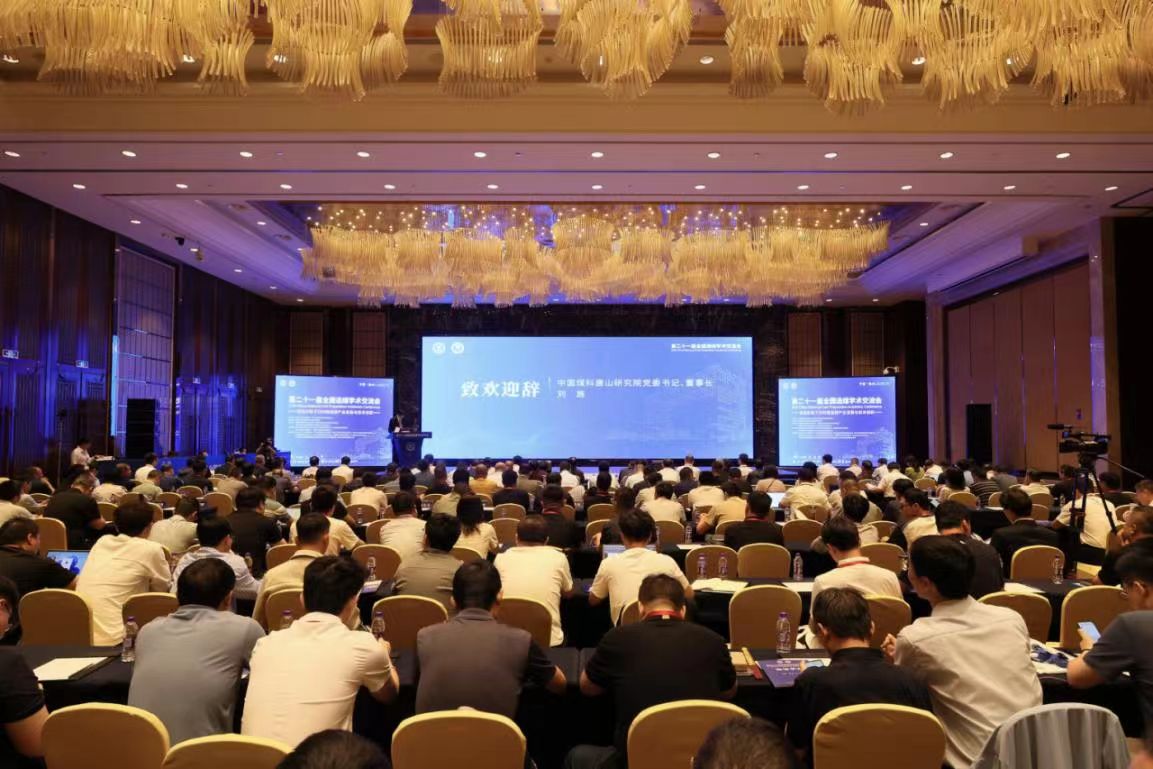
中国煤科唐山研究院主办的第二十一届全国选煤学术交流会在绍兴召开
Zhong Guo Neng Yuan Wang· 2025-09-18 08:26
Core Viewpoint - The 21st National Coal Selection Academic Exchange Conference was successfully held in Shaoxing, focusing on the development and technological innovation of the coal selection industry during a period of declining coal prices, aiming to promote technological upgrades and breakthroughs in the industry [1][3]. Group 1: Conference Overview - The conference was hosted by the China Coal Science and Technology Tangshan Research Institute, with nearly 300 participants from relevant universities, research institutes, design units, equipment manufacturing, and production enterprises in the coal selection field [1]. - Keynote speeches were delivered by Liu Jing, Wang Zhanqiang, and Ma Jian, emphasizing the importance of collaboration and innovation in the coal selection industry [1][3][6]. Group 2: Keynote Highlights - Liu Jing's keynote report discussed the construction of an ecological system for technological innovation in coal selection, addressing critical issues in technology and calling for collective efforts to enhance coal selection processes [3]. - Wang Zhanqiang highlighted the achievements of the China Coal Machinery Industry Association in promoting high-quality development and urged further collaboration among industry peers [6]. - Ma Jian emphasized the significance of clean and efficient coal utilization during the 14th Five-Year Plan period and outlined the future development framework for coal washing and processing [8]. Group 3: Future Directions - The conference served as a platform for discussing the transition of coal from traditional fuel to clean fuel and high-quality raw materials, aiming for sustainable development in the coal industry [8][10]. - The event included awards for influential academic papers and set the stage for in-depth discussions on the challenges and breakthroughs in coal selection technology [8].