电动化

Search documents
经纬恒润(688326.SH):2025年度净利润9953.75万元
Ge Long Hui A P P· 2026-02-26 09:02
Core Viewpoint - The company reported significant growth in revenue and net profit for the fiscal year 2025, driven by advancements in automotive intelligence and electrification, as well as strategic investments in product upgrades and market expansion [1]. Financial Performance - The company achieved an operating revenue of 6.848 billion yuan, representing a year-on-year increase of 23.59% [1]. - The net profit attributable to the parent company reached 99.5375 million yuan, an increase of 649.8557 million yuan compared to the previous year [1]. - The net profit attributable to the parent company, excluding non-recurring gains and losses, was 30.5594 million yuan, up by 648.9601 million yuan year-on-year [1]. Market and Product Development - The company has actively expanded both domestic and international markets, focusing on strategic investments to promote product upgrades and iterations [1]. - In 2025, the company's initial investments and R&D results were effectively released, leading to rapid revenue growth from new products, particularly domain controller products [1]. - The continuous upgrade and iteration of existing product lines have attracted more customers and project opportunities, further driving revenue growth [1].

东吴证券:行业复苏动能稳步释放 建议关注北交所工程机械相关标的
智通财经网· 2026-02-26 06:38
Core Viewpoint - The engineering machinery industry in China is expected to enter a recovery phase in the second half of 2025, with significant growth in excavator sales both domestically and internationally in January 2026, confirming the turning point of the industry cycle [1][2]. Group 1: Industry Overview - The engineering machinery industry exhibits strong cyclicality due to the interplay of downstream demand fluctuations, supply-side adjustments, policy regulation timing, and global economic resonance [2]. - In 2025, China is projected to sell 235,257 excavators, a year-on-year increase of 17.0%, with domestic sales of 118,518 units (up 17.9%) and exports of 116,739 units (up 16.1%) [2]. - In January 2026, excavator sales reached 18,708 units, marking a 49.5% year-on-year increase, with domestic sales at 8,723 units (up 61.4%) and exports at 9,985 units (up 40.5%) [2]. Group 2: Structural Opportunities - The industry is experiencing a resonance pattern of stabilizing domestic demand, high overseas growth, and a significant update in product structure [3]. - The previous sales peak (2016-2020) has led to a theoretical replacement period for equipment from 2024 to 2026, driven by policies promoting the elimination of old equipment [3]. - The anticipated interest rate cuts by the Federal Reserve in Q4 2025 may boost infrastructure investments in Europe and the U.S., while the Belt and Road Initiative continues to expand infrastructure investments, particularly in mining and water conservancy projects [3]. - Electrification and automation are identified as key growth drivers, with projections indicating that sales of new energy mining trucks in China will exceed 2,000 units by 2025, and the penetration rate of autonomous mining trucks will rise from 1% in 2021 to 6% in 2024 [3]. Group 3: Investment Opportunities - The North Exchange is home to a complete industrial chain in the engineering machinery sector, with numerous small giants in niche markets [4]. - The focus on specific segments such as non-road dump trucks, tunnel construction equipment, drilling rigs, and road recycling equipment is recommended, with companies like Wuxin Tunnel Equipment (920174.BJ) and Tongli Co. (920599.BJ) highlighted [4]. - Key components such as hydraulic systems, filtration systems, thermal management systems, and electronic control systems are also of interest, with companies like Wantong Hydraulic (920839.BJ) and Taikai Ying (920020.BJ) suggested for investment [4]. - In the parts and materials sector, companies like Lintai New Materials (920106.BJ) and Litong Technology (920225.BJ) are recommended for their products including friction materials, gears, bearings, and seals [4].

工程机械复苏动能稳步释放,建议关注北交所工程机械相关标的
Soochow Securities· 2026-02-26 04:00
Investment Rating - The report suggests focusing on engineering machinery-related stocks listed on the Beijing Stock Exchange due to the steady release of recovery momentum in the engineering machinery industry [1]. Core Insights - The engineering machinery industry entered a recovery phase in the second half of 2025, with significant year-on-year growth in excavator sales in January 2026, confirming the turning point of the market [6][15]. - Structural opportunities are expanding, driven by domestic demand stabilization, high overseas growth, and product structure updates [6][20]. - The industry is characterized by a complete supply chain on the Beijing Stock Exchange, with numerous small giants in niche markets [25]. Summary by Sections 1. Recovery Momentum and Structural Opportunities - The engineering machinery industry shows strong cyclicality, with a recovery phase starting in the second half of 2025. In 2025, China sold 235,257 excavators, a 17.0% increase year-on-year, with January 2026 sales reaching 18,708 units, up 49.5% year-on-year [6][15]. - Domestic demand is driven by a significant equipment replacement cycle and supportive policies, while overseas demand is boosted by the Belt and Road Initiative and expected interest rate cuts in the U.S. [15][17]. - Electrification and automation are key growth drivers, with projections indicating that sales of new energy mining trucks will exceed 2,000 units by 2025 [20][21]. 2. Focus on Engineering Machinery Stocks on the Beijing Stock Exchange - The engineering machinery sector on the Beijing Stock Exchange encompasses a complete supply chain, including upstream equipment, core components, and end machinery [25]. - Key areas of focus include: - **Complete Machinery**: Emphasis on non-road dump trucks and tunnel construction equipment, benefiting from demand in mining and hydropower [25]. - **Core Components**: Hydraulic systems and tires are critical components, with companies like WanTong Hydraulic and TaiKaiYing highlighted for their market positions [25]. - **Parts and Materials**: Companies like LinTai New Materials and LiTong Technology are noted for their advancements in friction materials and hydraulic hoses [25].
德国总理默茨携30家“顶配团”访华 德国企业:期待中德携手引领全球技术变革
Zhong Guo Jing Ying Bao· 2026-02-25 14:34
另一位"团员"宝马集团董事长齐普策在随德国总理默茨访华期间表示:"当今世界,全球性挑战纷繁交 织,合作是应对变局、开创未来的必由之路。德国总理此次访华,向世界传递了持续对话、深化合作的 鲜明信号,同时也为宝马同中国伙伴未来继续挖掘合作潜力奠定了基础。国际环境越复杂,越需要各国 敞开胸怀,摒弃误解偏见,加强沟通对话,增进政治互信,维护世界和平与稳定。" 《中国经营报》记者采访了解到,作为德国先进的汽车制造商以及最早进入中国市场的跨国企业,大众 汽车集团(中国)方面就德国总理默茨访华表示:"在全球格局日渐动荡分化的背景下,德国总理弗里 德里希·默茨此次访华,释放出稳定、对话与务实合作的重要信号。作为欧洲最大经济体,德国在塑造 欧中经贸关系方面发挥着关键作用。对大众汽车集团、德国乃至整个欧洲的工业界而言,中国的意义不 仅仅是销售市场,更是创新的策源地和技术合作伙伴,同时也是全球价值创造体系中的一大支柱。在电 动出行、软件、人工智能和电池技术等领域,中国正以全球领先的速度引领发展节奏,并塑造行业标 准。无论是在出行还是可再生能源等关键领域,任何真正致力于推动转型的企业,都不可能忽视中 国。" 刚刚迎来品牌140周年的 ...
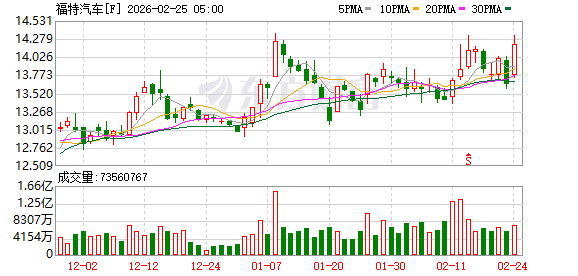
福特在美召回超45万辆汽车,业绩承压下或谋求与中国车企合作
Mei Ri Jing Ji Xin Wen· 2026-02-25 13:05
Core Insights - Ford Motor Company is recalling over 450,000 vehicles in the U.S. due to various safety issues, highlighting challenges in product quality control [2] - The company reported a significant net loss of approximately $8.2 billion in 2025, marking its largest annual loss since 2008, despite a slight increase in revenue [3] - Ford's sales performance is declining, with a 5.3% year-over-year decrease in U.S. sales in January 2026 and a 2% drop in global sales for 2025 [4] Recall Details - The largest recall involves 412,774 units of the 2017-2019 Explorer models due to potential rear suspension link failure, increasing collision risk [2] - Additionally, 24,690 units of the 2023-2025 Ford Escape and 2023-2026 Lincoln Nautilus plug-in hybrid models are recalled for battery defects that could lead to short circuits and fire hazards [2] - The recall also includes 15,965 units of the 2025 Transit model due to a potential brake failure issue [2] Financial Performance - Ford's total revenue for 2025 was approximately $187.3 billion, with a net loss of $8.2 billion, compared to a net profit of $5.9 billion in 2024 [3] - The fourth quarter of 2025 was particularly detrimental, with revenue of $45.9 billion, a 4.8% decline year-over-year, and a net loss of $11.1 billion [3] - Special project costs of $19.5 billion in Q4 2025, related to strategic adjustments, significantly impacted overall profitability [3] Sales Performance - In January 2026, Ford's U.S. sales were 135,400 units, down 5.3% year-over-year, indicating weak growth in core markets [4] - Global sales for 2025 were approximately 4.395 million units, a 2% decline, with Ford being surpassed by Chinese automaker BYD for the first time [4] - In China, Ford's retail sales dropped to 99,400 units in 2025, falling below the critical threshold of 100,000 units [4] Strategic Initiatives - Ford is exploring a potential collaboration framework with the U.S. government to allow Chinese automakers to establish production facilities in the U.S. while providing protections for domestic companies [4][5] - This strategy aims to leverage the technological advantages of Chinese firms in electrification and smart technology, potentially reducing Ford's R&D costs [5] - However, the initiative faces uncertainties due to high tariffs on Chinese imports and stringent regulatory requirements in the U.S. [5]


捷豹路虎中国换帅:潘庆升任全球采购董事,CFO韩少帅履新CEO
Jing Ji Guan Cha Wang· 2026-02-25 05:39
Core Insights - The recent leadership changes at Jaguar Land Rover (JLR) reflect a strategic alignment with the growing trend of appointing finance-background executives in the automotive industry, particularly as companies transition towards electrification and digitalization [5][7] - The new appointments aim to strengthen JLR's operations in China, which is a crucial market contributing significantly to the company's global performance and trade relations between the UK and China [5][6] Group 1: Leadership Changes - Pan Qing has been appointed as the Global Procurement Director while continuing as the President of JLR China, overseeing government affairs and strategic partnerships [2][5] - Tim Howard, the current CFO of JLR China, will take over as the CEO of the China region, with the Chief Commercial Officer, Wu Chen, and his team reporting directly to him [2][5] Group 2: Strategic Importance of China - JLR is one of the largest UK companies investing in China, contributing approximately 22% to the UK's total exports to China, highlighting its role as a key player in Sino-British trade [5][6] - The Chinese market once accounted for nearly a quarter of JLR's global market share, emphasizing its importance in the company's overall strategy [5] Group 3: Pan Qing's Contributions - Since taking charge in January 2017, Pan Qing has driven significant localization efforts, transforming JLR's operations in China from a sales-focused approach to a dual core of R&D and manufacturing [5][6] - Under his leadership, JLR has introduced high-value models and upgraded its retail network and service experiences, achieving six luxury brand championships in 2025 according to J.D. Power [5][6] Group 4: Future Directions - The collaboration between JLR and Chery is set to deepen, with plans to relaunch the Freelander brand and develop new models based on Chery's electric vehicle architecture, aiming for a localized approach to the brand's transition to electric vehicles [6][8] - The focus on cost control and operational efficiency will be further emphasized under Tim Howard's leadership as CEO, leveraging his financial expertise to enhance JLR's performance in China [6][7]

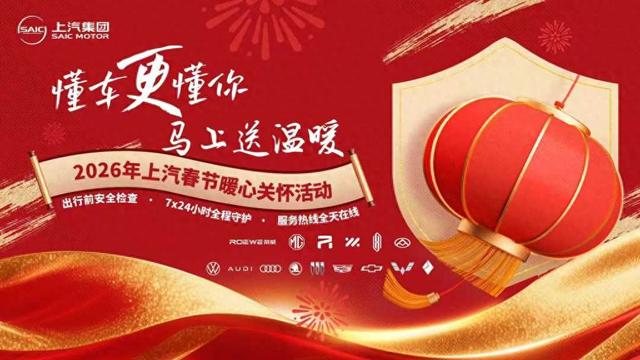
上汽集团:马年开新篇 春耕正当时
Xin Lang Cai Jing· 2026-02-25 03:25
Core Insights - SAIC Motor Corporation has successfully implemented its user-centric philosophy, launching a series of customer care initiatives during the Spring Festival, including free safety checks and 24/7 roadside assistance [1][3] - The company reported strong sales figures for January 2026, with wholesale sales reaching 327,000 units, a year-on-year increase of over 23%, and retail sales at 363,000 units, both leading the industry [3][4] - The growth in sales is attributed to a structural transformation within the company, with a significant increase in sales from its self-owned brands, which accounted for 65.3% of total sales, up 7.3 percentage points from the previous year [3][4] Sales Performance - In January 2026, SAIC's self-owned brands sold 214,000 units, marking a 39.6% year-on-year increase, highlighting the company's successful restructuring of its product growth strategy [3][4] - The sales of new energy vehicles reached 85,000 units, a 39.7% increase year-on-year, with the IM Motors brand showing a remarkable 66% growth [4][6] - The overseas market also performed well, with sales of 105,000 units in January, a 51.7% increase, and the MG brand becoming the first Chinese brand to exceed cumulative sales of 1 million units in Europe [4][6] Reform and Strategy - The comprehensive reform initiated by SAIC in 2024 aims to break down organizational inertia and resource barriers, enhancing responsiveness to market demands [6][9] - The company has invested over 150 billion yuan in technological innovation, holding nearly 26,000 valid patents, which forms a solid technical foundation for its transformation [7][9] - SAIC's approach focuses on practical solutions rather than chasing trends, with a commitment to long-term investments in technology that address user pain points [9][10] Product Development - 2026 is set to be a pivotal year for SAIC's smart electric products, with a clear product strategy that covers all price ranges and travel scenarios [10][15] - The company is launching new models across its brands, including the Roewe i6 targeting the A+ class market and the MG brand focusing on the core new energy segment [12][14] - SAIC's joint ventures are also advancing in electric vehicle development, with plans for new models that leverage local market insights [14][15] Future Outlook - The ongoing reforms at SAIC are expected to continue driving growth, with a focus on core areas such as solid-state batteries and digital chassis technology [18] - The company aims to optimize its product matrix while balancing high-end and mainstream market demands, ensuring a sustainable approach to growth [18] - SAIC's transformation reflects broader trends in the traditional automotive industry, emphasizing the importance of technology and user needs in driving future success [18]

兰博基尼调整电动化路线,已近乎放弃纯电
Guan Cha Zhe Wang· 2026-02-24 09:59
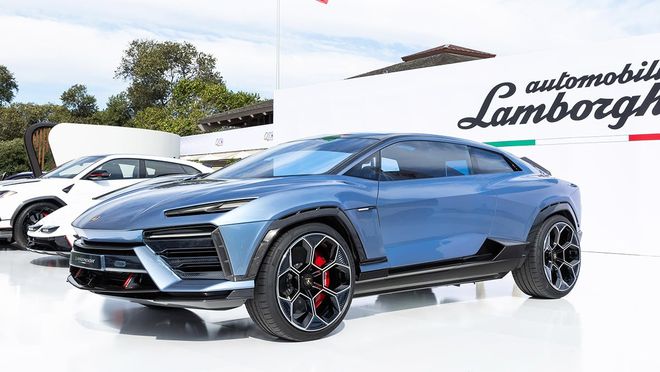
Core Viewpoint - Lamborghini has adjusted its electric vehicle strategy, shifting the Lanzador concept car from a fully electric model to a plug-in hybrid electric vehicle (PHEV) format due to slow acceptance of electric vehicles among target customers [1][3]. Group 1: Strategic Adjustments - The Lanzador, initially planned as a pure electric vehicle, will now be launched as a PHEV, with its release date pushed from 2028 to 2029 [1][3]. - Lamborghini's CEO, Stephan Winkelmann, stated that investing heavily in pure electric development is financially irresponsible given the current market maturity [3]. - The planned pure electric version of the Urus has also been halted, with the next generation of Urus set to debut in 2029 as a plug-in hybrid [3]. Group 2: Current and Future Models - Lamborghini plans to launch the Urus plug-in hybrid version by the end of 2024, while its supercars, Temerario and Revuelto, will only offer hybrid powertrains [3]. - The company is also set to introduce a fourth model that will utilize hybrid technology [3]. Group 3: Industry Comparison - In contrast to Lamborghini's cautious approach, several supercar brands are accelerating their electric vehicle plans, with Ferrari, Bentley, and Rolls-Royce all set to release their first electric models between 2023 and 2026 [4].
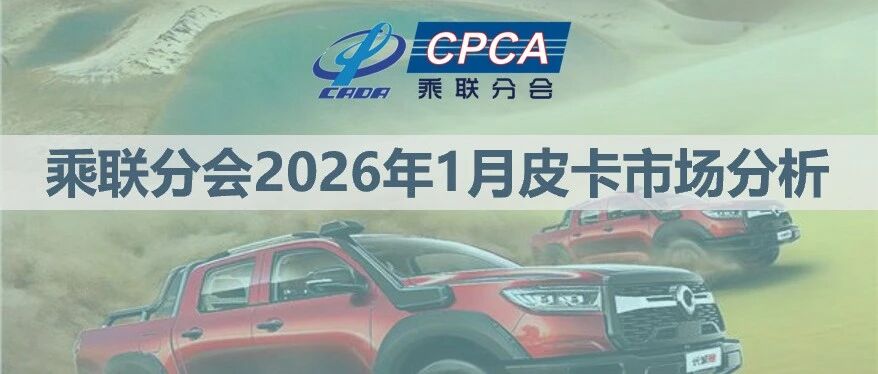
【乘联分会论坛】2026年1月皮卡市场分析
乘联分会· 2026-02-24 08:35
Core Viewpoint - The pickup truck market in China is experiencing strong growth, with significant increases in both production and sales, particularly in January 2026, where sales reached 49,000 units, a year-on-year increase of 22.5% [2][7]. Pickup Truck Production and Sales - In January 2026, pickup truck production was 52,000 units, marking a 29.3% year-on-year increase [2]. - The domestic retail market continues to be dominated by major players such as Great Wall Motors, Jiangling Motors, and Zhengzhou Nissan, maintaining a "one strong, many strong" competitive landscape [2]. Export Performance - In January 2026, China exported 27,000 pickup trucks, a 44% year-on-year increase, although it saw a 5% month-on-month decline [9][11]. - The export share of total pickup truck sales is projected to reach 54% in January 2026, indicating a strong reliance on international markets for growth [11]. New Energy Pickup Trucks - New energy pickup truck sales reached 6,000 units in January 2026, reflecting an 18% year-on-year increase and a 6% month-on-month increase, outpacing overall pickup truck growth [3][15]. - Major contributors to new energy pickup sales include BYD and Geely Radar, with BYD exporting 3,150 units [3]. Market Trends and Seasonal Effects - The pickup truck market typically sees increased sales post-Chinese New Year, with demand driven by construction and small business needs [5]. - The market is characterized by a strong correlation between commercial vehicle sales and the economic health of small enterprises, indicating that recovery in the pickup market could signal broader economic improvement [5]. Regional Market Dynamics - The southwest and northwest regions of China account for approximately 46% of total pickup truck demand, with these areas showing stable growth [17]. - Urban markets, particularly in Beijing, are showing improved performance for pickup trucks, especially in the context of electric and hybrid models [18]. Manufacturer Performance - Great Wall Motors continues to dominate the domestic pickup market with nearly 50% market share, while other manufacturers like Jiangling and Zhengzhou Nissan also maintain strong positions [22][26]. - The competitive landscape is evolving, with traditional manufacturers facing pressure from emerging brands like Geely Radar, which are gaining traction in the market [20][24]. Conclusion - The pickup truck market in China is on an upward trajectory, driven by strong domestic sales, robust export growth, and the increasing popularity of new energy vehicles, with significant regional variations and competitive dynamics shaping the landscape [2][11][15].
2026年中国汽车产业十大趋势:L3级商业化启航,芯片短缺潮或再现
Ju Chao Zi Xun· 2026-02-24 06:36
Core Insights - In 2025, China's automotive industry continues to lead globally in production and sales for the 17th consecutive year, with a significant shift towards electrification and intelligence, as new energy vehicle penetration approaches 50% [2] - The industry is transitioning from "quantitative change" to "qualitative change," with L3 autonomous driving technology entering the market and competition in Robotaxi services beginning [2] Group 1: Sales and Market Trends - In 2025, new car sales in China are projected to reach 34.4 million units, a 9.4% increase year-on-year, with domestic sales at 27.3 million units, remaining stable compared to 2017 [3] - New energy vehicle sales are expected to hit 16.49 million units in 2025, marking a 28.2% increase and a penetration rate of 47.9%, with predictions for 2026 indicating a rise to 19 million units and a penetration rate of 54.68% [3][4] Group 2: Export Trends - In 2023, China exported 5.223 million vehicles, surpassing Japan to become the world's largest automotive exporter, but growth is expected to slow significantly in the following years, with 2026 export growth projected at 4.3% [5] - Notable exporters include Chery Group, with 1.344 million units, and BYD, achieving a 151.34% increase in exports [5] Group 3: Technological Developments - Major Chinese automakers are accelerating the development of solid-state battery technology, with several companies planning to achieve mass production by 2027, despite high costs currently limiting their use to high-end models [6][7] - The commercialization of L3 autonomous driving is set to progress, with the first vehicles receiving licenses by the end of 2025 and plans for regulatory frameworks to be established by 2026 [8] Group 4: Industry Competition - The Robotaxi sector is entering a phase of large-scale competition, with companies like XPeng and Pony.ai expanding their fleets and aiming for significant operational scale by 2026 [9] - The automotive industry is increasingly integrating into the robotics sector, with several companies launching humanoid robots and enhancing their technological capabilities [10][11] Group 5: Luxury Brand Challenges - Luxury brands in China are facing declining sales, with significant drops reported by major German automakers, indicating a structural shift in the market [12] - Domestic high-end models are gaining traction, challenging traditional luxury brands and leading to a reduction in dealership numbers [12] Group 6: Joint Ventures and Localization - Joint venture brands are focusing on deep localization strategies to counter the rise of domestic brands, with plans to enhance their product offerings and R&D capabilities in China [13][14] Group 7: Chip Supply Issues - The automotive industry is facing a new wave of chip shortages, driven by geopolitical factors and rising costs, with predictions of significant production disruptions in 2026 [15] - The domestic chip production rate is expected to rise from 25% in 2025 to 35% in 2026, as companies ramp up local manufacturing efforts [16][17]