量化大数据

Search documents
赴港上市募资百亿,资金态度才是核心
Sou Hu Cai Jing· 2026-02-03 12:57
国内销量领先的功能饮料企业近期成功登陆香港联交所主板,本次全球发售定价每股248港元,绿鞋前发行超4000万股,募集资金超100亿港元,公开发售获 57倍以上认购,国际配售也获15倍以上认购,成为港股市场历史上规模最大的软饮料IPO项目,同时也是今年以来全球规模最大的IPO项目,获得多家知名 投资者的青睐与认购,引发市场广泛关注。 对普通投资者而言,这类企业上市的消息往往会引发对相关板块的关注,但市场中常常出现看似亮眼的走势却难以延续,看似平淡的表现反而暗藏机会的情 况。其核心原因在于,多数投资者仅关注表面的行情波动,却未看清背后资金的真实态度。而量化大数据的出现,为投资者提供了穿透表面走势,看清资金 行为底层逻辑的工具。 一、机构参与的底层逻辑:持股≠持续交易 市场中,多数投资者存在一个认知误区:认为有机构持股的个股就具备走势保障,即便短期表现平淡,也会有资金托底。但实际情况是,每年发行的各类机 构产品数量众多,几乎九成个股都有机构资金的身影,但个股走势分化却始终存在。 这一现象的底层逻辑在于,机构持股并不等同于机构持续参与交易,部分机构持股并非以获取交易价差为目的,而缺乏机构资金持续参与的个股,走势回落 ...


84股获连续融资净买,量化拆解机构动作
Sou Hu Cai Jing· 2026-02-03 01:13
市场每天都被各类消息包裹,不少投资者习惯跟着消息面调整自己的投资方向,但常常陷入"消息刚出,行情已变"的尴尬。近期有统计数据显示,截 至1月30日,沪深两市共有84只个股连续5个交易日或以上获融资净买入,其中鹏欣资源连续11个交易日获净买入,申万宏源、崧盛股份等多只个股也 在列。很多人会疑惑,这些获持续资金关注的个股,后续走势是否值得期待?实际上,A股市场的运行逻辑有其特殊性,往往存在"提前布局、提前交 易"的特征,消息面更多是市场波动的诱因,而非核心决定因素。想要跳出消息面的迷惑,关键在于看懂背后的真实交易行为——这正是量化大数据能 发挥核心价值的地方,它能帮我们客观还原资金的参与状态,避免被表面走势和嘈杂消息左右。 一、消息面的迷惑性:交易节奏的错位困境 不少投资者都有过类似经历:一则利好消息出台,赶紧跟进却发现走势不及预期;或是利空消息出现,慌忙离场后却看到走势出现逆转。这种困惑的 根源,在于A股市场和海外市场的交易逻辑差异——海外市场通常基于已知信息开展交易,消息会直接反映在走势变化中;而A股市场更倾向于提前布 局、提前交易,也就有了"买传闻、卖新闻"的说法。但即便了解这个逻辑,依然很难踩准节奏,因为 ...

融资余额高位震荡,量化看清资金博弈
Sou Hu Cai Jing· 2026-02-02 16:10
Core Viewpoint - The article emphasizes the importance of understanding underlying capital movements rather than just price changes in the market, highlighting that quantifiable data can reveal hidden dynamics that influence market trends [1][2]. Group 1: Market Dynamics - The financing balance in the A-share market has remained above 2.7 trillion yuan, indicating a strong presence of leveraged funds [1]. - There has been a notable decrease of 10 percentage points in the attention towards the metals sector, while interest in technology and consumer sectors continues to rise [1]. - Many investors are reacting to market trends without understanding the underlying capital movements, leading to missed opportunities and losses [2]. Group 2: Quantitative Analysis - Quantitative data can reveal different trading behaviors, such as "speculative capital rush" and "institutional adjustment," which are not visible through traditional price charts [5]. - The first occurrence of "speculative capital rush" is followed by price fluctuations, indicating that institutional funds are actively adjusting their positions [5]. - Understanding these quantitative signals can help investors capture opportunities before they arise [7]. Group 3: Institutional Behavior - Differentiating between active adjustments by institutional funds and genuine exits is crucial; active adjustments are indicated by "institutional adjustment" signals, while exits would show a disappearance of institutional inventory data [10]. - The core of capital competition lies in understanding the actions of different types of funds, as those who can interpret these actions gain a strategic advantage [10]. Group 4: Overcoming Bias - Many ordinary investors fall into the trap of subjective biases, focusing solely on price changes and sector trends without recognizing the underlying capital movements [12]. - Quantitative data provides a visual and objective representation of capital behaviors, helping investors make informed decisions rather than relying on intuition [12]. - Establishing an objective investment perspective can lead to more stable market navigation and sustainable investment capabilities [12].
具身智能上市潮涌,别困在业绩误区
Sou Hu Cai Jing· 2026-01-31 07:45
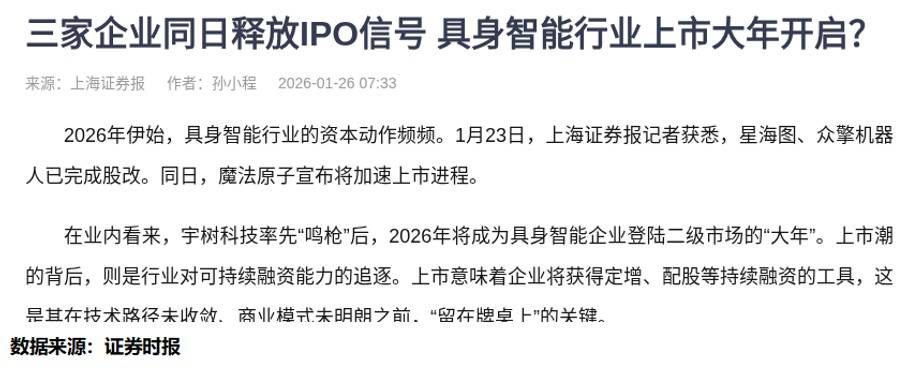
Group 1 - The core viewpoint of the article emphasizes the importance of quantitative data over traditional performance metrics in making investment decisions [1][3] - The experience of an investor, referred to as "Old Wang," illustrates that relying solely on good earnings reports can lead to poor investment choices, as market movements are often influenced by the activity of institutional investors [3][6] - The article highlights that the "institutional inventory" data can provide insights into the level of institutional participation in trading, which is crucial for understanding market trends [6][10] Group 2 - The article warns against being misled by short-term price rebounds that lack institutional support, as these can lead to losses if the underlying participation is weak [6][8] - It discusses the significance of distinguishing between genuine market movements and superficial trends by analyzing institutional behavior rather than relying on price charts alone [8][10] - The narrative concludes with a call for a cognitive upgrade in investment strategies, advocating for the use of objective data to inform decisions rather than emotional reactions to market fluctuations [12]
零食龙头赴港上市,数据看穿A股的协同效应
Sou Hu Cai Jing· 2026-01-29 12:57
Group 1 - The core point of the article highlights the successful listing of Mingming, a leading snack food company in Hong Kong, which has attracted significant institutional investment, including Tencent and Temasek, marking it as the "first stock of bulk snacks" in the Hong Kong market [1] - The article discusses the challenges investors face when making decisions based on stock price movements, emphasizing that price trends often obscure the true trading intentions behind them [3][6] - It introduces the concept of "institutional inventory," which reflects the active participation of institutional investors in trading, providing a clearer picture of market dynamics beyond mere price fluctuations [6][9] Group 2 - The article explains that the disappearance of "institutional inventory" signals a lack of active participation from institutional investors, indicating that the stock may no longer align with their long-term investment strategies [7][9] - It emphasizes the importance of quantitative data in understanding market behavior, as it remains unaffected by emotional biases and accurately reflects trading fundamentals [9][11] - The article advocates for a shift from subjective decision-making based on price trends to a more objective approach driven by data, which can help investors avoid common pitfalls and make more informed decisions [10][11]

茶饮玩出新招,股市也藏同款逻辑
Sou Hu Cai Jing· 2026-01-28 11:41
Core Insights - The tea beverage brand has chosen to reduce collaboration frequency and focus on differentiated products, regional specialty ingredients, and overseas expansion, launching 15 globally synchronized tea specials and opening over 100 stores in 32 overseas cities, becoming the most widely distributed new tea beverage brand globally [1][9] - The market dynamics reflect a similar logic where some investors are misled by superficial market movements while others leverage quantitative data to uncover underlying intentions, leading to more rational investment decisions [1][2] Group 1: Market Behavior and Institutional Logic - The apparent "top-making" behavior in the market is essentially an "institutional shakeout," where large funds create repeated fluctuations to encourage less committed investors to exit, thereby solidifying the foundation for future price movements [4] - Institutions utilize these fluctuations to filter out "steadfast" investors, creating tension to prevent too many followers from sharing in future gains [2][4] Group 2: Quantitative Data Analysis - Quantitative data analysis involves accumulating long-term trading behavior data and extracting different behavioral characteristics through models, similar to analyzing the product structure and store layout of the tea brand [5] - Two core data sets are highlighted: the "dominant momentum" data reflecting different trading behaviors and the "institutional inventory" data indicating the level of institutional participation, with prolonged orange bars suggesting high institutional engagement [5][7] Group 3: Objective Data vs. Subjective Emotion - Many investors mistakenly use subjective feelings as a basis for judgment, leading to panic during market fluctuations, while the tea brand's focus on product competitiveness over trends illustrates the importance of a solid foundation [8][9] - The advantage of quantitative data is that it replaces subjective emotions with objective data, allowing investors to maintain rational judgments even amidst market volatility [8][9] Group 4: Long-term Decision-making - The essence of long-term growth for consumer brands and rational investment decisions lies in understanding the core essence behind choices, as demonstrated by the tea brand's strategic focus on differentiated products and overseas markets rather than short-term marketing gimmicks [9] - Investors can achieve long-term results not through luck or following trends but by relying on objective evidence provided by quantitative data, enabling them to see through institutional shakeout behaviors and avoid being swayed by short-term market noise [9]

万店咖啡获融资,但超大消费别被K线骗了
Sou Hu Cai Jing· 2026-01-28 10:40
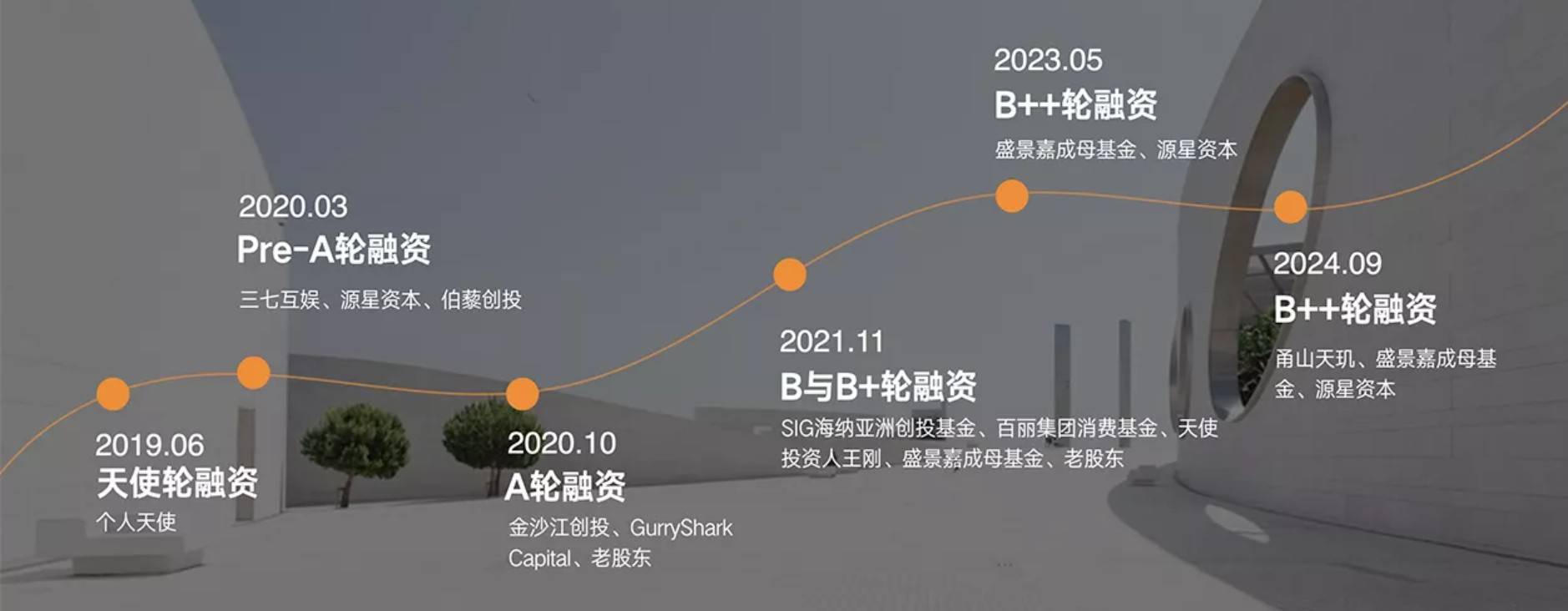
Group 1 - A domestic coffee brand, established for less than 7 years, has recently completed a C round financing of several hundred million yuan and surpassed 10,000 global stores, backed by prominent investors like Junlian Capital and GSR Ventures [1] - The rapid expansion to 10,000 stores is seen as a milestone, but it also presents challenges such as low brand recognition and difficulties in maintaining product quality [1] - The investment landscape often shows a pattern where popular sectors attract capital, yet the actual performance can be volatile, leading to investors either selling too early or holding onto losing positions [1] Group 2 - Market fluctuations can mislead investors, causing them to either hold on too long or sell prematurely, resulting in missed opportunities or losses [2] - An example highlights that despite a stock's overall upward trend, it can experience significant adjustments, which can confuse investors [2] - The "institutional inventory" metric reflects the activity level of institutional funds, indicating that even during price declines, institutional participation can remain strong, suggesting underlying trading momentum [5] Group 3 - The disappearance of "institutional inventory" during a price adjustment signals a lack of active participation from institutional investors, which can lead to deeper price corrections [5][10] - Relying solely on personal experience or intuition in trading can be detrimental; instead, monitoring "institutional inventory" provides a more reliable signal of market dynamics [9] - Quantitative data analysis can reveal patterns in institutional trading behavior, allowing investors to see beyond misleading price movements and understand the true market activity [10] Group 4 - The core value of quantitative data is to replace subjective judgments with objective metrics, helping investors develop a probability-based mindset [11] - The recent financing of the coffee brand illustrates how capital interest reflects broader market judgments about the sector and business model [11] - Utilizing quantitative tools can enable investors to quickly grasp market realities without being swayed by price fluctuations, focusing on key indicators for better decision-making [11]
震荡中底气何在,融资掀开冰山一角
Sou Hu Cai Jing· 2026-01-28 06:46
Core Insights - The article emphasizes the importance of understanding the underlying trading behaviors of stocks rather than just focusing on price fluctuations, especially in a volatile market environment [1][21]. Group 1: Market Behavior - A total of 102 stocks in the Shanghai and Shenzhen markets have seen continuous net buying from financing, indicating strong institutional interest [1]. - Many stocks experience significant price fluctuations, with some only showing upward movement on a few trading days, while the majority remain in a state of oscillation [3][8]. Group 2: Institutional Participation - The "institutional inventory" data, represented by orange bars in quantitative analysis, shows that institutional funds remain active in trading, regardless of price movements [7][12]. - Even when stock prices are stagnant or declining, institutional participation can indicate underlying strength and potential future price increases [8][13]. Group 3: Long-term Value - Stocks that do not show immediate price increases may still be experiencing significant institutional accumulation, which can lead to long-term value [17][18]. - The article suggests that traditional investment strategies often overlook the importance of these "invisible" investments, which can be identified through quantitative data [17][21].

融资资金布局,成本管控是核心
Sou Hu Cai Jing· 2026-01-28 02:37
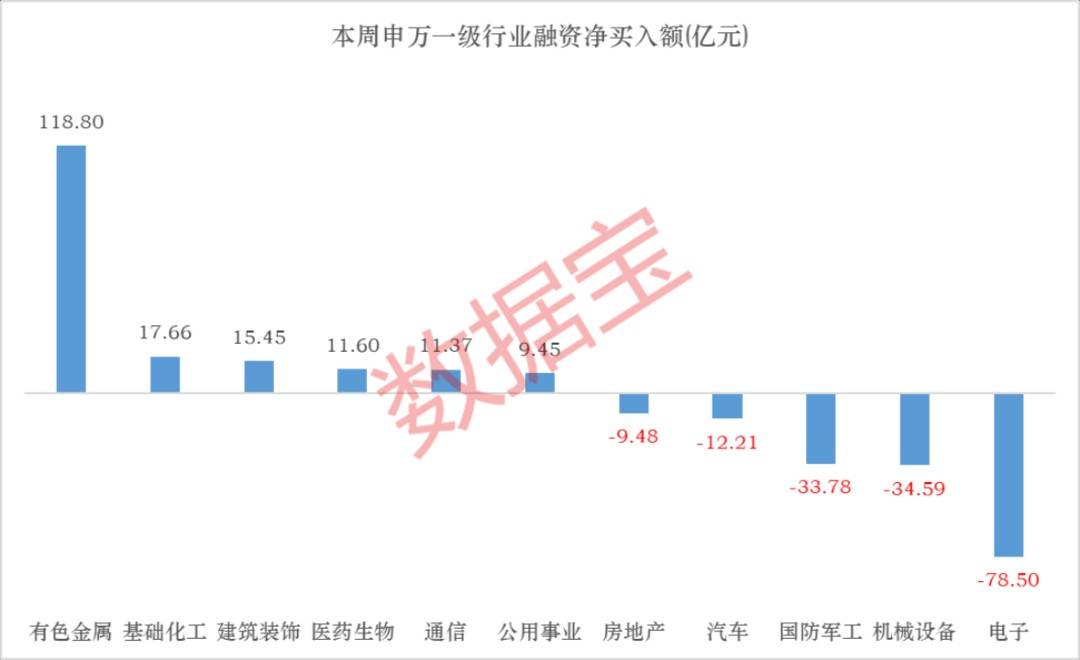
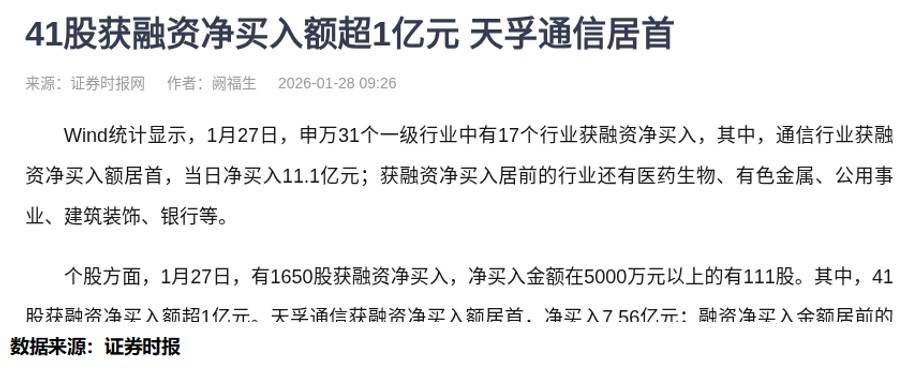
Group 1 - The core viewpoint of the article emphasizes that while short-term capital inflows can indicate market trends, the long-term performance of stocks is primarily determined by institutional investors' cost control strategies [1][3]. - In the recent analysis, 17 out of 31 primary industries received net capital inflows, with the communication sector leading, followed by pharmaceuticals, non-ferrous metals, and public utilities [1]. - Over 1,600 stocks experienced net capital inflows, with 111 exceeding 50 million yuan and 41 surpassing 100 million yuan, indicating significant investor interest [1]. Group 2 - Cost control is a fundamental aspect of value investing, as demonstrated by Warren Buffett's long-term investment in Coca-Cola, where he maintained a low average cost per share [3]. - Institutional trading logic focuses on the safety of holding costs, contrasting with retail investors who often prioritize expected returns [3]. - Quantitative data can reveal institutional trading behaviors, such as increased activity in "institutional inventory" before significant price movements, indicating proactive cost management [3][5]. Group 3 - The behavior of institutional cost management is applicable to both large and small-cap stocks, with early signs of institutional interest often preceding price increases [5]. - Not all small-cap stocks attract institutional interest; for instance, a small-cap stock with low trading volume showed no active institutional inventory, leading to a brief price increase followed by a decline [7]. - The size of a stock's float is not the sole determinant of its performance; rather, the depth of institutional cost management is crucial [9]. Group 4 - Long-term trading behaviors of institutions, such as maintaining active "institutional inventory" for extended periods, can lead to superior stock performance [9]. - Quantitative data can help investors move beyond superficial market sentiments and understand the underlying trading logic of institutional investors [11]. - By focusing on objective trading characteristics, investors can develop a more sustainable and disciplined investment approach, leveraging quantitative data to replace subjective speculation [11].
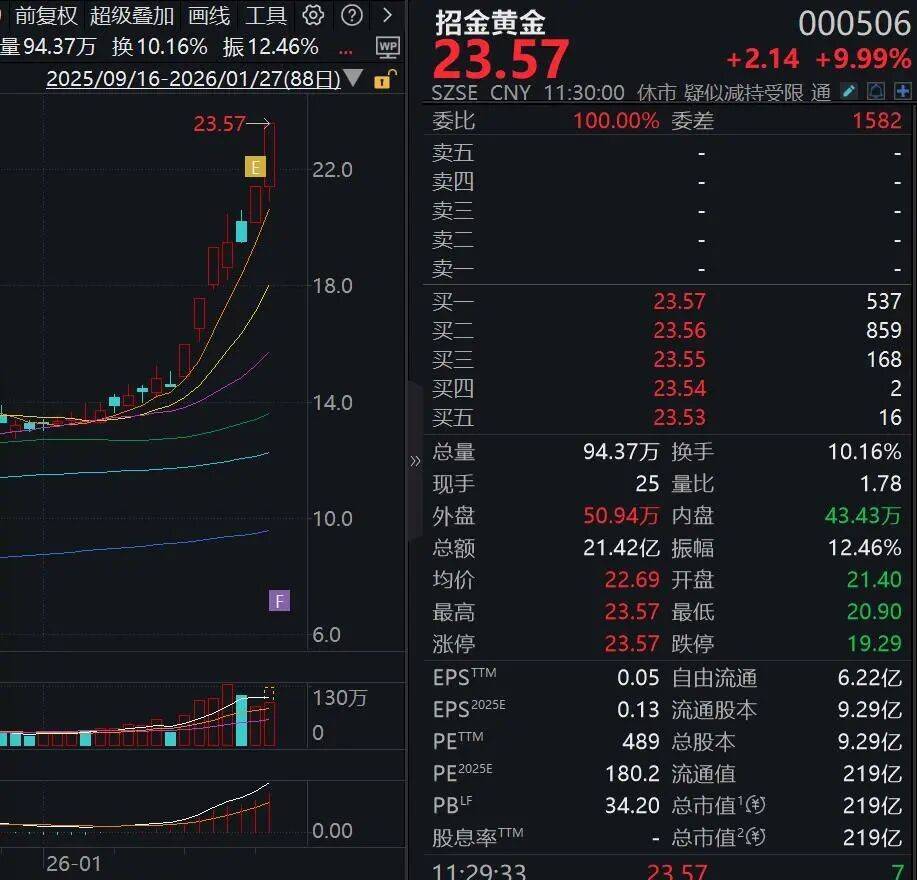
金价飙新高,A股炒贵金属板块自有分寸
Sou Hu Cai Jing· 2026-01-27 10:13
Core Insights - Recent surge in international gold prices, exceeding $5100 per ounce, has led to significant movements in the A-share precious metals sector and a concurrent rise in the banking and insurance sectors [1] - Despite the gold price increase, nearly 4500 stocks underperformed expectations, with trading volume decreasing, indicating a complex market sentiment [1] Group 1: Market Behavior - Investors often fall into the trap of making impulsive decisions based on market fluctuations and news, leading to suboptimal trading outcomes [3] - Emotional responses to market volatility can result in premature exits from positions, causing investors to miss out on potential gains [3] Group 2: Quantitative Analysis - Utilizing quantitative big data can help filter out market noise and identify significant trading signals, allowing for more informed decision-making [6] - Advanced quantitative models can separate different trading behaviors, revealing the true market state and enhancing understanding of market dynamics [6][10] Group 3: Strong Behavior Insights - "Strong behavior" in trading, such as "strong replenishment" and "strong liquidation," indicates significant capital movements and should be closely monitored for strategic insights [10][14] - These strong behaviors reflect planned capital actions and provide clearer operational rhythms, reducing reliance on emotional judgment and speculative news [10][14] Group 4: Data-Driven Decision Making - Transitioning from intuitive trading to data-driven analysis can help investors avoid emotional pitfalls and improve their trading strategies [14] - By leveraging quantitative data, investors can maintain a steady approach in volatile markets, gradually building positive feedback from their investments [14]