险资入市

Search documents
兴业证券:险资入市全拆解
智通财经网· 2025-09-06 07:43
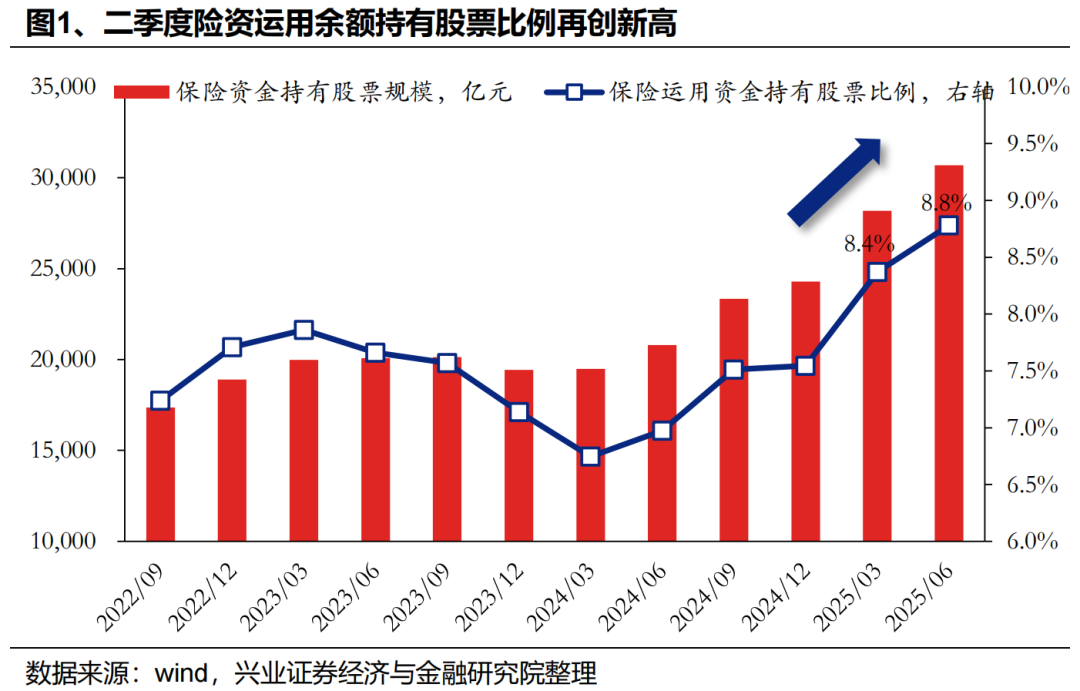
Group 1 - The core viewpoint of the articles indicates that state-owned insurance companies are increasingly optimizing their performance evaluation methods and enhancing their investment in equity assets, leading to a significant increase in stock holdings and a shift towards direct investment strategies [1][2][3]. Group 2 - Insurance funds have accelerated their entry into the market, with a net inflow of approximately 200 billion yuan into stocks in the second quarter, raising the proportion of stocks held to 8.8% [2]. - It is estimated that insurance funds will continue to increase their allocation to A+H stocks by 300 to 400 billion yuan in the second half of the year, driven by a policy encouraging large state-owned insurance companies to invest 30% of new premiums in the stock market [2]. - The shift in investment strategy is evident as insurance funds are moving from external management to direct investment, with a notable increase in stock holdings and a decrease in fund holdings since the fourth quarter of 2024 [2]. Group 3 - In the second quarter, insurance funds increased their allocation to high-dividend stocks while reducing their holdings in energy sectors, with a focus on technology and high-end manufacturing [3]. - The average dividend yield of the top 20 stocks increased to 3.80%, reflecting a preference for high-dividend assets, while the reduction in holdings of cyclical resource stocks indicates a strategic shift in asset allocation [3]. Group 4 - Insurance funds have significantly increased their stake in Hong Kong-listed companies, with 28 instances of shareholding increases this year, 23 of which were in Hong Kong stocks, marking a substantial rise compared to previous years [4]. - The influx of insurance funds into Hong Kong stocks has been a key driver of the rise in dividend assets in the region, particularly after a temporary slowdown due to tariff impacts [4]. Group 5 - In the first half of 2025, insurance funds reduced their allocation to ETFs focused on broad indices while increasing their investment in industry-specific ETFs, particularly in TMT, manufacturing, and financial real estate sectors [5][7]. - The net inflow into industry-themed ETFs reached 609 billion yuan, with insurance funds contributing significantly to this growth [7]. Group 6 - The top insurance companies in the A-share market have accelerated their stock allocations, with a total increase in stock market value of 411.9 billion yuan in the first half of 2025, reflecting a 28.7% increase [8]. - The proportion of FVOCI stocks held by these companies has risen significantly, indicating a strategic focus on long-term investments in dividend assets [8].

险资入市全拆解:连续五个季度大幅增配股票,二季度整体增配红利,整体仍增配科技
Xin Lang Cai Jing· 2025-09-06 07:29
Group 1 - The performance evaluation methods for state-owned insurance companies have been continuously optimized since the beginning of the year, leading to an improved policy environment for insurance fund equity investments, which has accelerated the entry of insurance capital into the market [1] - In the second quarter, insurance companies further increased their stock allocations by approximately 200 billion yuan, with the proportion of stocks held rising by 0.4 percentage points to 8.8% compared to Q1 [1] - It is estimated that insurance capital will continue to increase allocations to A+H stocks by 300 to 400 billion yuan in the second half of the year, based on a 30% investment of new premium income [5] Group 2 - Insurance capital's participation in equity assets is gradually shifting from external management to direct investment, with a notable increase in stock holdings since Q4 2024, while fund holdings have decreased [8] - In the second quarter, insurance capital increased allocations to dividend-paying stocks while reducing holdings in energy sectors, with a focus on technology and high-end manufacturing [11] - The average dividend yield of the top 20 stocks increased to 3.80%, indicating a preference for high-dividend assets [13] Group 3 - Insurance capital has accelerated its stake acquisitions in listed companies, particularly in Hong Kong stocks, with 28 stake acquisitions recorded by August 31, surpassing the total for the previous year [16] - The preference for Hong Kong assets has made insurance capital a core driver of the rise in Hong Kong dividend assets [19] Group 4 - In the first half of 2025, insurance capital's holdings in ETFs saw a slowdown, with a total of 214.9 billion yuan held, reflecting a shift towards direct investments [23] - Despite the slowdown in total ETF allocations, there has been a significant internal structural adjustment, with increased allocations to TMT, manufacturing, and financial real estate sector ETFs [29] Group 5 - The five listed insurance companies in A-shares increased their stock holdings by 411.9 billion yuan in the first half of the year, representing a 28.7% increase [33] - The proportion of FVOCI stocks held by listed insurance companies has significantly increased, with a 62.2% rise in holdings [36]




上市险企半年报:总投资收益增9%,新华保险收益率领跑行业
Sou Hu Cai Jing· 2025-09-02 19:43
Core Insights - The five major listed insurance companies in the A-share market have released their semi-annual reports for 2025, highlighting significant investment dynamics and performance in the capital market [1] Investment Dynamics - The total stock investment of the five major insurance companies reached 1,846.43 billion yuan by the end of Q2, an increase of 411.86 billion yuan from the beginning of the year, reflecting a nearly 30% growth [1] - This increase indicates the insurance companies' confidence in the equity market and recognition of long-term investment value [1] Investment Performance - The five major insurance companies collectively achieved a total investment income of 367.38 billion yuan in the first half of the year, representing a year-on-year growth of nearly 9% [1] - China Life Insurance led with a total investment income of 127.51 billion yuan, accounting for over 30% of the total, attributed to its large investment asset scale [1] - New China Life Insurance reported an annualized total investment return rate of 5.9%, leading the industry and showcasing its efficient investment strategy [2] Return Rate Disparity - There is a notable disparity in the total investment return rates among the insurance companies, with New China Life and China Pacific Insurance achieving annualized rates of 5.9% and 5.1%, respectively, both showing significant year-on-year growth [2] - In contrast, China Life and China Taiping reported lower return rates of 3.29% and 2.3%, respectively [2] - China Ping An did not disclose its annualized return rate but achieved a non-annualized comprehensive investment return rate of 3.1%, up by 0.3 percentage points year-on-year [2] Asset Scale and Strategy - China Life and China Ping An are in the leading tier with investment assets of 7.13 trillion yuan and 6.20 trillion yuan, respectively [2] - China Taiping, China Pacific Insurance, and New China Life follow closely, with their asset scales gradually converging [2] - The differentiation in asset scale influences the investment strategies and performance of each insurance company [2] Market Adaptation - In response to low bond market interest rates and structural differentiation in the stock market, insurance funds have become a crucial stabilizing force in the capital market [2] - Insurance companies are adjusting their asset allocation strategies to adapt to market changes, such as New China Life expanding its equity layout through private equity funds and China Life increasing its allocation to high-dividend assets [2] Investment Strategy Implementation - China Ping An's co-CEO emphasized that the investment strategy is integral to the company's asset matching, focusing on duration, cost, cash flow, yield, and regulatory requirements to achieve a linkage between investment and liability [4] - This precise implementation of investment strategy allows China Ping An to maintain stable investment returns even in complex market conditions [4] - The trend of increasing stock asset allocation among insurance companies is expected to enhance investment returns and promote stable development in the capital market [4] Overall Performance - The five major listed insurance companies demonstrated robust investment styles and flexible market adaptability in their first-half investment performance [4] - As market conditions continue to evolve, these companies will further adjust and optimize their investment strategies to achieve more sustainable and efficient investment returns [4]


大幅增配股票等权益类资产,推动险企业绩稳增长
Huan Qiu Wang· 2025-09-01 07:17
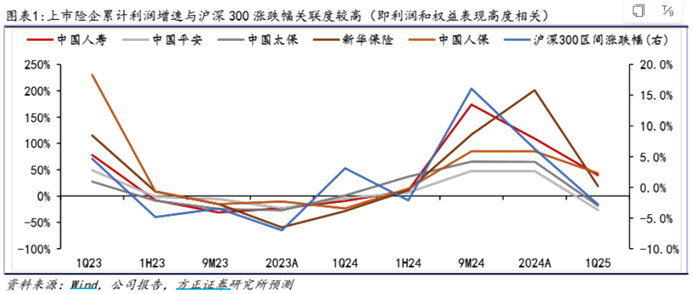
Group 1 - The core viewpoint of the articles highlights a significant increase in equity investments by five A-share listed insurance companies, with stock investment scale reaching nearly 1.8 trillion yuan as of June 30, 2025, an increase of 405.36 billion yuan compared to the end of 2024, indicating a notable shift towards equity assets [1] - According to the analysis by Founder Securities, the influx of new insurance capital into the market and the expected increase in equity allocation ratio will likely support steady growth in insurance company performance, while the risks associated with interest rate spreads are expected to ease due to factors such as the reduction in preset interest rates and constraints on dividend levels [1] Group 2 - The demand for life insurance savings and medical care is recovering, and the integration of reporting and product structure adjustments are expected to enhance the New Business Value Margin (NBVM), leading to a continuous increase in New Business Value (NBV) [2] - The growth rate of property insurance premiums is steadily increasing, with improvements in catastrophe risk and combined ratio (COR) year-on-year, providing sufficient momentum for performance growth [2]
这只近千亿级别基金投资细节曝光!
Jin Rong Shi Bao· 2025-08-31 04:01
Core Insights - The Honghu Fund, a benchmark product for insurance capital entering the market, has reached a scale of 92.5 billion yuan, nearing its target of 100 billion yuan [1] - The fund has demonstrated strong performance, with risk control indicators surpassing performance benchmarks, achieving a balance between policy functionality and financial independence [1] - The investment strategy focuses on large listed companies that meet specific criteria, including good governance, stable operations, consistent dividends, and high liquidity [1] Summary by Sections - **Fund Expansion Path** - The Honghu Fund's growth has been characterized by a "step-by-step approach" with continuous increases in scale, starting with an initial size of 50 billion yuan approved in October 2023 [2] - In May 2025, a second phase was established with a scale of 20 billion yuan, further expanding investment capacity [2] - A third fund was launched in July 2025, with a combined contribution of 22.5 billion yuan from both companies [3] - **Investment Strategy and Future Direction** - The cumulative scale of the fund has reached 92.5 billion yuan, steadily progressing towards the 100 billion yuan target [4] - The investment team has significantly improved in strategy allocation, portfolio management, and stock selection, enhancing the research and investment system [4] - The fund will continue to adhere to its policy positioning, focusing on long-term and value investment principles, while optimizing asset allocation and managing holding periods and trading strategies [4] - Xinhua Insurance has actively participated in the long-term capital market reform, contributing a total of 46.25 billion yuan, focusing on high-quality listed companies in the secondary market [4] - The company has increased its stakes in several quality firms, reinforcing its long-term return foundation [4]
新华保险半年报揭秘:鸿鹄基金收益亮眼,险资布局A股显雄心
Sou Hu Cai Jing· 2025-08-29 16:49
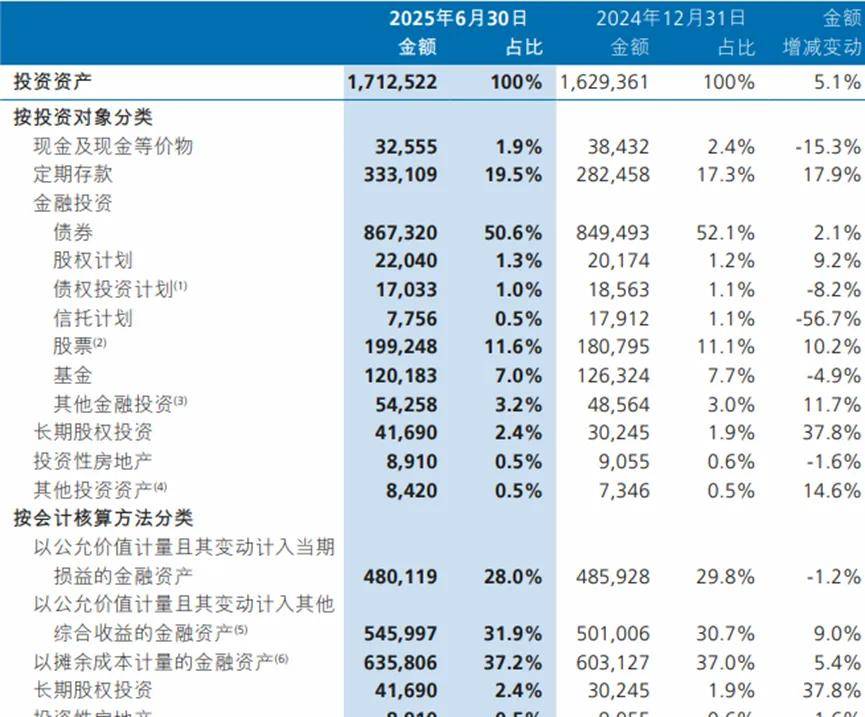
Core Viewpoint - Xinhua Insurance has demonstrated strong performance in its half-year report, showcasing a robust investment strategy and significant growth in both revenue and profit, which has attracted considerable market attention [1][2]. Financial Performance - The company achieved an operating income of 70.041 billion yuan, representing a year-on-year increase of 25.99% [1]. - The net profit attributable to shareholders reached 14.799 billion yuan, with a remarkable year-on-year growth of 33.53% [1]. - The company's stock price increased by 35.59% year-to-date, reflecting its strong financial performance [1]. Insurance Business - Xinhua Insurance reported original insurance premium income of 121.262 billion yuan, up 22.7% year-on-year [1]. - The first-year premium income for long-term insurance surged by 113.1% to 39.622 billion yuan [1]. - The embedded value of the company reached 279.394 billion yuan as of June 30, 2025, marking an 8.1% increase from the end of the previous year [1]. Investment Strategy - As of June 30, 2025, Xinhua Insurance's investment scale reached 1.71 trillion yuan, with direct equity investments and entrusted fund investments totaling nearly 320 billion yuan [2]. - The annualized comprehensive investment return rate was reported at 6.3%, which is particularly notable given the current low interest rate environment [2]. Asset Allocation - The total investment assets increased by 5.1% from the end of 2024, reaching 1.712 trillion yuan [3]. - The allocation of cash and cash equivalents decreased by 15.3%, while fixed deposits increased by 17.9% [3]. - Equity investments saw a growth of 10.2%, reaching 199.248 billion yuan [3]. Private Investment Funds - Xinhua Insurance has expanded its investment channels by participating in private investment funds, such as the Honghu Zhiyuan Fund, co-established with China Life [4]. - As of June 30, 2025, the net assets of the Honghu Zhiyuan Fund reached 55.684 billion yuan, with total assets of 57.112 billion yuan [4]. - The fund has generated significant returns through long-term holdings in quality companies, yielding approximately 550 million yuan in dividend income [4]. Future Outlook - The company plans to continue its prudent investment philosophy, focusing on scientific asset allocation to enhance long-term returns [5]. - Xinhua Insurance aims to actively participate in the establishment and operation of more private investment funds to further broaden its investment channels [5].
中国人保“A股操盘”细节曝光,寿险未来收益率“定档”4%
Hua Er Jie Jian Wen· 2025-08-29 07:51
Core Insights - China Pacific Insurance reported a net profit of 26.53 billion yuan for the first half of the year, representing a year-on-year increase of 16.9% [1] - The company achieved premium income of 454.6 billion yuan, up 6.4% year-on-year, with property insurance premiums at 323.3 billion yuan (up 3.6%) and life insurance premiums at 131.2 billion yuan (up 13.8%) [1] - The company’s first-year premium income for life insurance reached a historical high for the same period [1] Investment Strategy - China Pacific Insurance has been approved for a 10 billion yuan quota to establish a private fund management company, focusing primarily on A-shares with an emphasis on long-term investment value and stable dividend returns [2] - As of the end of June, the company's A-share investment assets grew by 26.1% compared to the beginning of the year, increasing its proportion in total investment assets by 1.2 percentage points [2] Equity Investment Performance - The company has increased its investment in high-dividend stocks under OCI, with the investment scale growing by 60.7% year-to-date, outperforming the CSI 300 Dividend Index by 7.8 percentage points [3] - The company aims to optimize its TPL asset structure and has achieved a return ranking in the top 30% among comparable public funds [3] Response to Market Trends - The management noted that recent increases in high-dividend stock investments by insurance peers reflect a broader investment strategy, with a focus on stable returns amid declining traditional fixed-income asset yields [4] - The company plans to enhance its investment in high-dividend stocks to stabilize overall investment returns [4] Future Investment Plans - The company intends to diversify its equity investment strategies and strengthen research on quality targets, with plans to increase investment through methods such as private placements and strategic investments [5] - Different investment return assumptions have been set for life and health insurance segments, with life insurance at 4% and health insurance at 3.5% [6] Performance Highlights - The company has led in fulfilling national strategic responsibilities, with a compound growth rate of over 20% in insurance liability amounts during the 14th Five-Year Plan period [7] - The company has innovated in risk reduction services and established a digital service platform, providing risk reduction services 4.5 million times in the first half of the year [7] - The company has maintained a high level of asset management, with an annualized total investment return of 5.1% [7] Health Insurance Market Outlook - The health insurance sector is expected to grow rapidly, driven by aging population needs and the development of a multi-tiered medical security system [9] - New growth opportunities in health insurance are anticipated, particularly in long-term care and disability insurance, as the demand for such products increases [9]
险资股票仓位激增,重仓368股,偏爱银行、运营商
2 1 Shi Ji Jing Ji Bao Dao· 2025-08-28 13:46
Core Insights - Insurance capital is increasingly focusing on high-dividend stocks to secure stable returns and mitigate the impact of declining bond yields [2][6][10] - As of August 27, 368 stocks are heavily held by insurance capital, with significant investments in non-bank financials, banks, telecommunications, and utilities [2][5] - Insurance funds have shown a notable increase in equity investments, with 79 new stock positions and 124 increased holdings in Q2 2025 [2][5] Investment Trends - The top holdings include China Life Insurance's stake in China Life, valued at 795.93 billion yuan, and Ping An's stake in Ping An Bank, valued at 135.73 billion yuan [4][5] - Telecommunications companies, particularly China Unicom, China Telecom, and China Mobile, have become key targets for insurance capital in Q2 2025 [4][5] - The most popular stock among insurance funds is Shenhuo Co., with four insurance institutions holding a combined 104 million shares [4] Sector Allocation - The insurance sector's top three holdings by market value are in non-bank financials (796.21 billion yuan), banks (224.57 billion yuan), and telecommunications (33.64 billion yuan) [5] - Insurance capital has increased its holdings in stocks significantly, with a net increase of 640.6 billion yuan in equity investments in the first half of 2025 [9] Policy Influence - Recent policy initiatives have encouraged insurance capital to invest more in the stock market, with a target for large state-owned insurance companies to allocate 30% of new premiums to A-shares starting in 2025 [6][10] - The insurance industry is adjusting its investment strategies to enhance long-term returns, driven by the need for better asset-liability matching [6][7] Future Outlook - Insurance capital is expected to continue increasing its equity investments, with a focus on stable, high-dividend stocks and sectors aligned with national strategic directions, such as green energy and high-end manufacturing [10][11] - The potential for significant incremental capital from insurance funds is anticipated, contributing to the stability of the capital market [11][12]






万亿险资A股重仓图谱:高股息资产“压舱”
2 1 Shi Ji Jing Ji Bao Dao· 2025-08-28 10:17
Core Insights - Insurance capital is increasingly focusing on high-dividend stocks to secure stable returns and mitigate the impact of declining bond yields [1][4] - As of August 27, 368 stocks are heavily held by insurance funds, with significant investments in non-bank financials, banks, telecommunications, and utilities [1][3] - The total market value of insurance holdings reached 1.18 trillion yuan, with 554.1 billion shares held [1] Investment Trends - Major insurance companies like China Life and Ping An have substantial holdings in their respective companies, with China Life holding 92.8% of China Life's circulating shares [3] - Telecommunications operators, including China Unicom, China Telecom, and China Mobile, have become key targets for insurance investments in Q2 [2][3] - The most popular stock among insurance funds is Shenhuo Co., with four insurance institutions holding a combined 104 million shares [2] Sector Allocation - The top three sectors for insurance capital investments are non-bank financials (796.21 billion yuan), banks (224.57 billion yuan), and telecommunications (33.64 billion yuan) [3] - Insurance funds have shown a preference for stable, high-dividend blue-chip stocks, particularly in financial and utility sectors [7][8] Regulatory and Market Influences - Recent policies encourage insurance funds to invest more in the stock market, with a target of 30% of new premiums allocated to A-shares starting in 2025 [4][5] - The insurance sector's asset allocation is shifting towards equities, with a significant increase in stock investments noted in the first half of the year [6] Future Outlook - Insurance capital is expected to continue increasing its equity allocation, driven by rising premium income and a favorable market environment [8] - The potential for substantial and sustained inflows from insurance funds into the capital market is anticipated, enhancing market stability [8]
今年A股收获颇丰,险资入市放缓
阿尔法工场研究院· 2025-08-28 00:04
Core Viewpoint - The pace of insurance capital entering the market is slowing down, reflecting a cautious and rational approach under the absolute return orientation [4] Group 1: Insurance Capital Allocation Trends - In the first half of the year, the insurance industry experienced an accelerated phase of equity asset allocation, with the combined proportion of insurance funds invested in secondary stocks and funds reaching 13.6% by the end of Q2, an increase of 0.3 percentage points from Q1 [5] - The proportion of stock allocation increased by 1.2 percentage points year-on-year, approaching 9%, while the fund proportion slightly decreased, indicating a structural optimization from "outsourcing to direct investment" [5][6] Group 2: Major Players and Their Strategies - Leading insurance companies with high solvency ratios, such as New China Life and Ping An Insurance, have become the main force in increasing allocations, with their equity allocation ratios rising by more than 3 percentage points in the first half of the year [7] - However, the momentum for significant further entry into the market is weakening, as the attitude towards equity assets is becoming more cautious, aligning with the core goal of absolute returns [7] Group 3: Future Outlook and Investment Channels - Despite the potential slowdown in the growth rate of allocation ratios, the absolute amount of insurance capital invested in A-shares is expected to continue increasing [9] - The implementation plan for promoting long-term capital entry into the market mandates that large state-owned insurance companies invest 30% of new premiums in A-shares starting from 2025 [9] - Additionally, the rising proportion of participating insurance policies naturally leads to an increase in equity allocation, with companies like CITIC Prudential Life investing nearly 50% of their participating insurance assets in equity assets [9]