首店经济

Search documents
河北正定借“首店经济”撬动新消费市场
Xin Lang Cai Jing· 2026-01-18 04:03
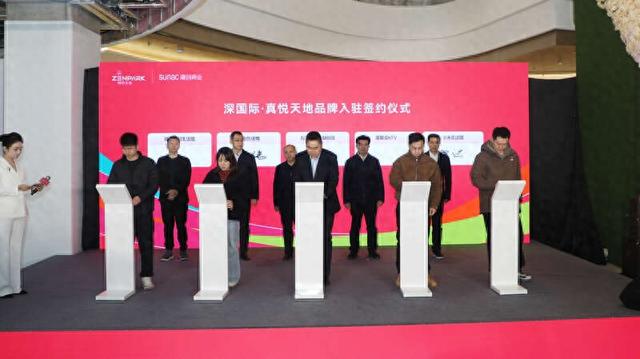
Group 1 - The signing ceremony for the Deep International Zhenyue Tiandi brand took place in Zhengding County, Shijiazhuang, with a theme of "Gathering Strength to Create a Win-Win Future" [1] - The project aims to introduce over 40 brands that are entering Shijiazhuang for the first time and more than 120 brands that will settle in Zhengding, providing new momentum for urban upgrades [1][3] - Zhengding County's position in the Beijing-Tianjin-Hebei coordinated development has been increasingly prominent, with an expected 57.9 million tourists in 2024, nearly half of whom are from Beijing and Tianjin [3] Group 2 - The total investment for the Deep International Zhenyue Tiandi project is 3 billion yuan, focusing on a multi-dimensional integration model of "culture, sports, commerce, tourism, and industry," with full operation expected by December 2026 [3] - The project includes a collaboration with top snow operation company "Hot Snow Miracle" to create the largest indoor professional ski resort in North China, filling a gap in high-quality ice and snow cultural tourism projects in the Beijing-Tianjin-Hebei region [3] - The commercial sector has successfully signed with leading cultural tourism operators for their first store in Beijing-Tianjin-Hebei, bringing in over 30 brands entering Shijiazhuang and more than 80 brands entering Zhengding [3]

本市一年迎来1068家首店
Xin Lang Cai Jing· 2026-01-17 06:24
Core Insights - In the past year, Beijing's first-store economy has experienced significant growth, with the number of new first stores expected to exceed 1,000 for the first time in 2025, reaching 1,068, representing an 11.3% year-on-year increase from 2024, averaging three new stores per day [1] Group 1 - Major brands are establishing their first stores in Beijing, including Yushu Technology's global first store at JD MALL in Dongjing, Dior's first store in Beijing at Sanlitun Taikoo Li North, and Haidilao's first camping site store in Miaofengshan Town, indicating a trend in urban consumer preferences [1] - In 2025, Beijing will host a total of 159 high-energy first stores, which include global, Asian, and Chinese first stores, flagship stores, and innovative concept stores, showcasing a diverse retail landscape [1] Group 2 - The spatial distribution of first stores in Beijing continues to follow a stable pattern, with Chaoyang District leading by contributing nearly 40% of the new stores, followed by Dongcheng, Haidian, and Xicheng Districts, forming the primary tier of Beijing's first-store economy [1]

北京日报社区小板报|今日降雪何时来?预报来了
Xin Lang Cai Jing· 2026-01-17 00:12
Group 1 - Beijing's community health service institutions will enhance their basic medical service capabilities by establishing specialized departments and training bases for specific diseases, starting from 2021 [2] - The Beijing Human Resources and Social Security Bureau has launched the "Spring Breeze Action" employment assistance campaign, focusing on urban unemployed individuals, gig workers, and rural laborers, providing diversified job recommendations and support until the end of March 2026 [2] - The railway department has introduced additional student discount tickets for the 2026 graduates, allowing for six discounted trips this academic year to facilitate job-seeking efforts [2] Group 2 - The first cold wave of the year is expected to bring the strongest rain and snow to central and eastern China, with significant temperature drops and strong winds [5][7] - The Beijing Universal Resort will celebrate its fifth anniversary in 2026 with nine major themed activities, enhancing visitor experiences through new story presentations and special events [11] - Beijing's first waterfront marathon course is set to be developed along the Qinghe and Wenyu Rivers, enhancing the city's running infrastructure [16] Group 3 - In 2025, Beijing saw a significant increase in the number of first stores, reaching 1,068, which is an 11.3% increase compared to 2024, indicating strong commercial vitality [18] - Fengtai District plans to explore outdoor marriage registration points in parks and cultural venues, aiming to elevate the marriage registration process into a cherished life ceremony [20]

去年北京写字楼租金价格累计跌幅超10%,高精尖产业或将带动市场修复
Sou Hu Cai Jing· 2026-01-16 13:47
Core Insights - The economic indicators for Beijing in 2025 show no significant improvement, with a vacancy rate of 19.1% in the office market and declining rental prices across various sectors [1][2] Office Market - The total new supply of office space in Beijing for 2025 was only 180,000 square meters, the lowest since 2015, which helped ease market de-stocking pressure [2] - The net absorption for the year reached 438,000 square meters, leading to a year-on-year decrease in vacancy rates by 1.9 percentage points [2] - Average rental prices in Beijing fell by 10.7% over the year, with the average price at 228.5 yuan per square meter per month [2] - Class A office projects are engaging in price competition to attract tenants, while Class B markets are experiencing more significant rental declines [2] Retail Market - The retail market in Beijing saw a supply peak in 2025, with 534,000 square meters of new retail space, all from urban renewal projects [5] - The "first store economy" is thriving, with various flagship stores opening across the city, indicating a shift towards new and differentiated retail offerings [5] - Despite the influx of new supply, a full recovery in consumer spending is expected to take time, with rental prices in secondary markets still under pressure [5] Warehouse and Logistics Market - The warehouse and logistics market faced severe challenges, with new supply reaching 1.4 million square meters and a vacancy rate soaring to 40.7%, both historical highs [7] - Demand has shifted to surrounding areas like Langfang and Tianjin, leading to a stark contrast in rental trends between Beijing and these regions [7] - Average rental prices in Beijing's warehouse market fell to 37.1 yuan per square meter per month, marking a 14.8% decline over the year [7]

山西太原“首店经济”迎新 激活城市消费新动能
Zhong Guo Xin Wen Wang· 2026-01-16 10:39
Core Viewpoint - The "first store economy" is becoming a new engine for stimulating consumption in Taiyuan, Shanxi, with various first stores in dining, retail, and culture rapidly emerging to enhance local consumer experiences [1][3]. Group 1: First Store Economy - The opening of Hema Fresh's first store in Shanxi on January 16 has attracted many citizens, showcasing a new consumption experience through digital supply chains and integrated services [1][3]. - Since 2025, the Xiaodian commercial area has introduced over 70 first stores, including national and regional first stores, creating a clear and structured brand layout [4]. - The introduction of major retail brands like JD MALL and Suning Max has filled local high-end commercial gaps and enhanced commercial levels through synergistic effects [4]. Group 2: Commercial Development - Xiaodian District aims to optimize the growth ecosystem for first stores, promoting collaboration among various merchants to create a complementary and vibrant consumption ecosystem [4]. - The district has been recognized for its commercial strength, ranking 66th in the national TOP 100 commercial power index, reflecting the successful implementation of the first store economy [1][4].
青海2026年提振消费清单出炉
Xin Lang Cai Jing· 2026-01-15 18:26
Group 1 - The core focus of Qinghai's commerce department in 2026 will be on expanding commodity consumption, enhancing service consumption, enriching consumption scenarios, and optimizing the consumption environment [1][2] - A total of over 400 consumption promotion events are planned for the year, aiming to create a favorable consumption atmosphere through a collaboration of government and enterprises, as well as online and offline integration [1][2] Group 2 - The "Qinghai Family Feast" brand will be developed over a three-year action plan, including activities such as culinary competitions and promotional events, with a goal of publishing 50 recommended dishes [2] - The province will continue to implement a consumption upgrade policy and promote "Qinghai Good Products" through e-commerce and offline activities, aiming to expand the reach of local products [3] - Efforts will be made to enhance the county-level commercial system and attract investment by introducing well-known brands and chain enterprises, with a focus on creating a new consumption landmark in key cities [3]
全国首家机器人6S店营业额已达2000万元
21世纪经济报道· 2026-01-15 12:10
Core Viewpoint - The article highlights the rapid growth of Shenzhen's "first store economy," particularly focusing on the emergence of technology-driven retail spaces, such as the world's first robot 6S store, which has generated significant consumer interest and revenue [1][3]. Group 1: Robot 6S Store Performance - The world's first robot 6S store has achieved a total revenue of 20 million yuan within six months of opening and has signed contracts for six franchise stores, attracting approximately 300,000 customers, with over 30% being international visitors [1][3]. - The store operates under a unique 6S model, which includes leasing and customization services, providing a comprehensive lifecycle service system for robots [3][6]. Group 2: Technology First Stores - Shenzhen has seen a surge in technology first stores, with an average of one new store opening daily from 2022 to 2024, showcasing the city's commercial vitality and innovation capabilities [1][3]. - The article mentions various technology first stores, including a humanoid robot-themed store that integrates AI robots into the retail experience, enhancing customer interaction and service [3][6]. Group 3: Impact on Consumer Behavior - Technology first stores are becoming key drivers of foot traffic and consumer spending, with the humanoid robot-themed store attracting over 2,000 visitors daily, doubling on weekends [8][10]. - These stores are effective in targeting high-net-worth individuals and young families, significantly increasing customer dwell time by 1-2 hours [10][11]. Group 4: Industry and Market Dynamics - The introduction of technology first stores is facilitating the connection between technology, industry, and consumer markets, accelerating the adoption of innovative products like 3D printers and robots [11][12]. - The article emphasizes the need for continuous innovation and adaptation in the retail landscape, as many technology first stores face challenges in sustaining operations due to high costs and market readiness [15][16]. Group 5: Government and Market Support - The Shenzhen government is actively promoting the first store economy, aiming to add over 1,000 new stores within the year and providing financial incentives for brands to establish a presence in the city [16][18]. - Market players are also collaborating to enhance the consumer experience, integrating technology stores with other retail formats to create a more engaging shopping environment [16][18].

朝阳区领跑 2025年北京新增1068家首店
Bei Jing Shang Bao· 2026-01-15 12:07
Group 1 - The core viewpoint of the article highlights that Beijing is set to add 1,068 new flagship stores by 2025, representing an 11.3% increase compared to 2024, showcasing strong commercial vitality and attractiveness [1] - Beijing has gathered 159 high-level flagship stores, including global, Asian, and Chinese first stores, as well as flagship and innovative concept stores, indicating a trend towards high-quality retail experiences [1] - The trend of specialization is emerging in the high-level flagship store economy, with 21 new flagship stores and 107 innovative concept stores added in 2025, moving from "check-in consumption" to "regular integration" [1] Group 2 - The spatial distribution of flagship stores continues to follow a "Chaoyang leading, multi-district collaboration" pattern, with Chaoyang District accounting for nearly 40% of new stores, followed by Dongcheng, Haidian, and Xicheng districts [2] - Shopping centers and commercial streets are the most attractive locations for product consumption flagship stores, with about 70% choosing shopping centers for their customer flow and synergy advantages [2] - Service consumption flagship stores are increasingly favoring community commercial spaces and industrial parks, with over 40% prioritizing these types of locations to meet local service needs [2] Group 3 - The new flagship stores in Beijing in 2025 are characterized by a dominance of local brands, particularly in retail, dining, and service sectors, with a focus on cultural and creative retail [3] - International brands are entering the high-end consumption market, with 20 countries represented, focusing on luxury goods, high-end dining, and lifestyle sectors [3] - Local brands are emphasizing traditional Chinese culture and consumer needs, with new offerings in dining and service sectors, such as art and heritage flagship stores [3] Group 4 - Looking ahead, Beijing has been approved as a pilot city for new consumption formats and scenarios, aiming to support various commercial spaces and create a multi-layered platform for brand launches and experiential consumption [4] - The city plans to attract domestic and international flagship stores and innovative concept stores to create a diverse and fashionable commercial environment [4] - Through effective funding guidance and a robust service system, Beijing's flagship economy is expected to evolve with higher quality and vitality, enhancing consumer supply and experience [4]
前门西兴隆街今年将开街
Xin Lang Cai Jing· 2026-01-14 21:48
Core Insights - The East District is set to revitalize several cultural consumption areas by 2026, with significant projects like the full opening of Qianmen West Xingsong Street and the renovation of the New China Children's Products Store in Wangfujing [1][2] - The district aims to enhance its consumption landscape by focusing on flagship stores and the "first store economy," with a notable increase in the number of unique retail experiences [1][3] Group 1: Cultural Consumption Areas - Qianmen West Xingsong Street will fully open this year after extensive design renovations, featuring 17 restored courtyards designed by seven architects, covering approximately 1.26 hectares with a total building area of about 14,600 square meters [1] - In 2025, the Wangfujing and Qianmen International Consumption Experience Zone will see significant growth, with nine streets recognized as Beijing's characteristic consumption streets, leading the city in quantity [1] Group 2: Economic Development and Consumer Engagement - The Wangfujing area is undergoing a comprehensive upgrade of the New China Children's Products Store, aiming to enhance family-oriented consumption experiences, alongside the introduction of a 150 million yuan investment in a digital entertainment theme park by iQIYI [2] - Wangfujing's commercial area recorded a total foot traffic of 110 million visitors in a year, with a positive growth in revenue from 68 key operating facilities [2] Group 3: First Store Economy and Retail Innovation - Over the past five years, the East District has attracted 581 new flagship and concept stores, with Wangfujing leading the district by introducing 47 high-quality stores in 2025 [3] - The district will focus on integrating cultural, commercial, and tourism experiences, leveraging digital technology to enhance consumer engagement and maintain its position as a leader in the first store economy [3]
从盒马看深圳消费新图景
Sou Hu Cai Jing· 2026-01-14 12:31
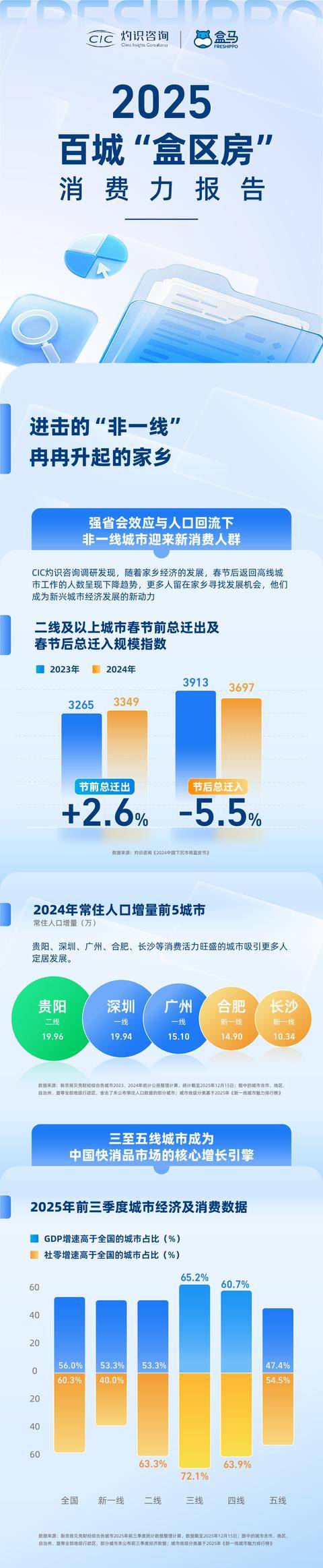
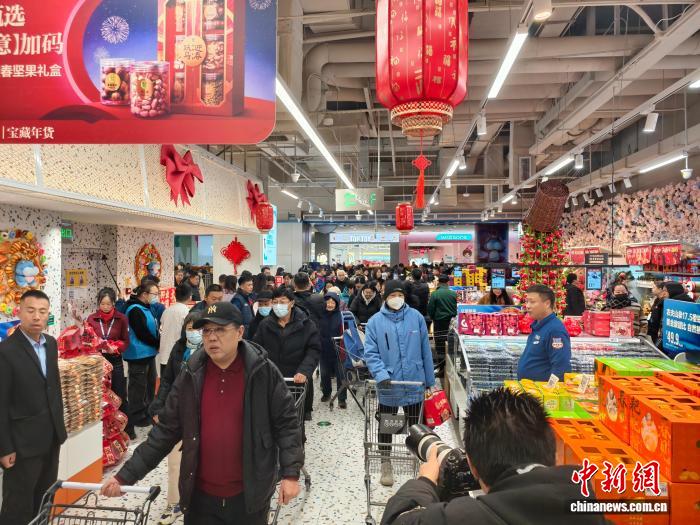
Core Insights - The report titled "2025 Consumption Power Report of Box District Housing in 100 Cities" highlights that the density of Box District Housing and consumer activity are key indicators of urban consumption vitality, closely linked to population structure, industrial capacity, and residents' income levels [1] Group 1: Shenzhen's Consumption Market - Shenzhen, recognized as a "trillion consumption city" for two consecutive years, is experiencing robust growth in its consumption market, with Hema's operations serving as a window into the city's consumption upgrade [5] - The opening of Hema's first store in Guangming District attracted significant foot traffic, indicating a strong local demand for quality products [7][9] - Hema's strategy in Guangming includes offering over 4,000 product categories, catering to the area's growing population and consumption upgrade needs [9] Group 2: First Store Economy - The "first store economy" is seen as a barometer of urban consumption vitality and a lever for regional consumption upgrades, with Hema's Guangming store exemplifying this trend [7][10] - Over the past five years, Shenzhen has added more than 3,500 new stores and innovative business formats, with Hema's expansion filling regional consumption gaps and enhancing market potential [10] Group 3: Supply and Demand Dynamics - The upcoming Spring Festival has prompted an early shift into a "holiday mode" in Shenzhen's consumption market, with Hema's New Year Festival activities serving as a prime example of supply-demand dynamics [11][13] - Hema's New Year Festival launched over a thousand high-quality products, including innovative offerings like pet New Year dinners, aligning with the market's trend towards quality and personalization [13] Group 4: Government and Enterprise Collaboration - The collaboration between government and enterprises is crucial for boosting consumption, with Shenzhen's initiatives to cultivate an international consumption center city being a key focus [14] - Hema's involvement in the cross-year consumption season and its tailored product offerings reflect a strategic alignment with local consumer needs [14] Group 5: Future Outlook - The layout of new retail enterprises centered around "Box District Housing" is driving the expansion of community and nighttime consumption, supporting balanced urban development [15] - Hema's trajectory in Shenzhen illustrates the city's consumption market upgrade path, showcasing resilience and vitality, with expectations for continued growth as quality retail enterprises deepen their presence [15]