价值投资

Search documents
RTO vs. TRI: Which Stock Is the Better Value Option?
ZACKS· 2025-11-10 17:49
Core Insights - The article compares Rentokil Initial PLC (RTO) and Thomson Reuters (TRI) to determine which stock offers better value for investors [1] Valuation Metrics - Both RTO and TRI currently hold a Zacks Rank of 2 (Buy), indicating positive earnings estimate revisions and improving earnings outlooks [3] - RTO has a forward P/E ratio of 21.11, while TRI has a higher forward P/E of 35.53 [5] - RTO's PEG ratio is 4.23, compared to TRI's PEG ratio of 4.44, suggesting RTO may be more attractive when considering expected earnings growth [5] - RTO's P/B ratio is 2.53, significantly lower than TRI's P/B ratio of 5.22, indicating RTO may be undervalued relative to its book value [6] - Based on these valuation metrics, RTO is assigned a Value grade of B, while TRI receives a Value grade of D, suggesting RTO is the superior value option at this time [6]



【西街观察】严管是对A股的厚爱
Bei Jing Shang Bao· 2025-11-10 13:44
Core Viewpoint - The recent investigations into *ST Changyao and other companies for financial fraud and illegal share reductions signify a new norm of stringent regulation in the capital market, which is seen as a positive development for market stability and investor confidence [1][2]. Group 1: Regulatory Environment - The strong regulatory policies have been continuously reinforced, with significant measures introduced from May to October aimed at ensuring high-quality development in the capital market [1]. - The regulatory framework includes a comprehensive approach to investor protection and enforcement, emphasizing accountability for listed companies and their stakeholders [2]. Group 2: Market Impact - The stringent regulations have led to a purification of the market environment, enhancing the quality of listed companies by increasing scrutiny during the IPO process and ensuring that low-quality companies are removed from the market [2]. - There is a noticeable shift in investor behavior, with a growing preference for high-quality and growth stocks, as evidenced by the declining prices of problematic stocks [3]. Group 3: Investor Confidence - Enhanced regulatory measures have improved investor confidence, leading to a more secure investment environment and a steady increase in A-share indices [1][4]. - The market is witnessing a trend of increased dividends and share buybacks, indicating a growing awareness among companies to return value to investors [3].
明星基金经理被指“躲牛,大成基金权益业务牛市“水土不服”
凤凰网财经· 2025-11-10 13:40
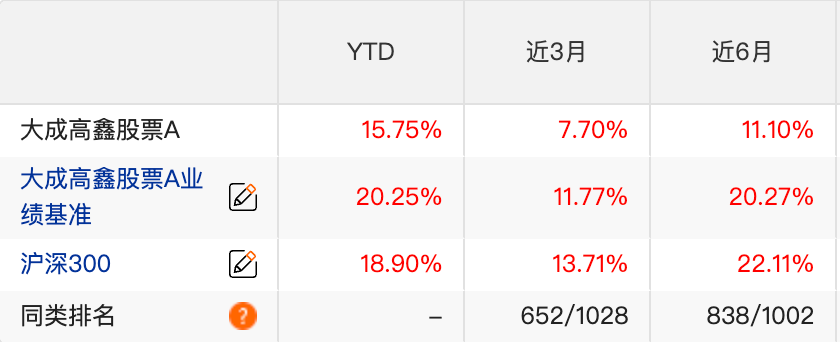
Core Viewpoint - Dachen Fund has struggled to adapt to the current bull market, resulting in underperformance of its equity products compared to the market average, highlighting issues in its investment strategy and execution [3][4][8]. Group 1: Performance Analysis - Dachen Fund's flagship product, Dachen Gaoxin Stock, has shown a decline in performance, with year-to-date returns of 15.75%, trailing behind its benchmark and the CSI 300 index [5][6]. - The fund's management scale decreased from 123.64 billion to 114.53 billion yuan, indicating a loss of investor confidence [6]. - Other Dachen equity products, such as Dachen Rui Xiang Mixed A and Dachen Strategy Return Mixed A, also underperformed relative to the CSI 300 index [6][7]. Group 2: Investment Strategy Issues - Dachen Fund's conservative investment approach, which worked well during bear markets, has led to missed opportunities in the current growth-driven market [8][9]. - The fund's portfolio has been heavily weighted towards value stocks and large-cap stocks, limiting its ability to capitalize on the tech and growth sectors that are currently leading the market [8][9]. - The fund's products have been criticized for style drift, where funds marketed as "growth" or "new" are actually concentrated in traditional value stocks, potentially misleading investors [9]. Group 3: Management and Operational Challenges - Dachen Fund's slow response to market changes has been evident in its delayed investment decisions, with significant cash holdings in newly launched funds [10][11]. - The Dachen Xingyuan Qihang Mixed Fund had an 84% cash position shortly after its launch, missing critical market gains during the early months [10][11]. - High turnover rates in the fund's portfolio have increased trading costs without resulting in improved performance, indicating a reactive rather than proactive management style [14][15]. Group 4: Future Outlook - Dachen Fund's current challenges may serve as a case study for traditional public fund institutions facing transformation difficulties in a changing market environment [16].
高利润公司分红“破冰”:25家季利超30亿企业首派中期红包
2 1 Shi Ji Jing Ji Bao Dao· 2025-11-10 13:25
Core Insights - The A-share market is experiencing an unprecedented wave of dividend reform, with 25 companies announcing their first interim dividend plans since listing, distributing a total of 69.39 billion yuan, averaging 2.78 billion yuan per company [1][3][4] Group 1: Dividend Trends - The trend of interim dividends is becoming a new standard for high-quality companies, with over half of the 207 companies reporting profits exceeding 3 billion yuan in Q3 2025 implementing interim dividends, a significant increase from three years ago [1][3] - The number of companies choosing to implement interim dividends has seen exponential growth, with 72.5% of companies with profits over 10 billion yuan in 2025 participating in interim dividends, compared to only 10% in 2023 [2][3] Group 2: Leading Companies - China Shenhua leads the way with a dividend payout of 19.47 billion yuan, followed by Industrial Fulian and Industrial Bank, with these three companies accounting for 54.73% of the total dividends distributed [4][5] - Notable companies like China Shenhua and Industrial Fulian have significant market capitalizations, with China Shenhua's market cap reaching 852.86 billion yuan and Industrial Fulian's rising from 427.16 billion yuan to 1.44 trillion yuan [3][4] Group 3: Regulatory Influence - Regulatory policies are significantly driving the change in the dividend landscape, with new rules imposing stricter requirements on companies that have not paid dividends for years, thereby encouraging higher dividend payouts [6][7] - The 2025 financial forum introduced policies aimed at promoting long-term investment, emphasizing the importance of companies' long-term dividend capabilities [7][8]



明星基金经理被指“躲牛”,大成基金权益业务牛市“水土不服”
Feng Huang Wang Cai Jing· 2025-11-10 13:01
Core Viewpoint - Dachen Fund, once a leader in defensive strategies during the bear market of 2023-2024, has struggled to adapt to the current structural bull market, resulting in poor performance and significant criticism from investors [1][3][8]. Performance Analysis - Dachen Fund achieved a 7.99% absolute return in active equity during the bear market, ranking first among 24 large and medium-sized public funds [3]. - As of September 2025, Dachen Fund's active equity returns have dropped to second-to-last among peers, with several flagship products showing negative performance [3][4]. - The Dachen Gao Xin Stock Fund, the largest equity fund under Dachen, has seen a cumulative return of 423.11% since its inception in 2015, but has underperformed the market since Q3 2024 [3][4]. Fund Management Issues - Dachen Fund's conservative investment style, which focused on value stocks, has led to missed opportunities in the growth sectors that dominated the market in 2025 [8][9]. - Fund managers have been criticized for their slow response to market changes, with significant cash holdings delaying stock purchases [11]. - The Dachen Xingyuan Qihang Mixed Fund, launched in March 2025, had an 84% cash position three months post-launch, resulting in poor performance compared to benchmarks [11][12]. Trading Activity - Dachen Fund has experienced a dramatic increase in turnover rates, indicating a reactive rather than proactive approach to market conditions [14]. - The turnover rate for Dachen Industry Pioneer Mixed Fund surged from 520% to 1847%, significantly higher than the market average [14]. - Despite high turnover, performance has not improved, with the Dachen Industry Pioneer showing negative returns over the past year [15]. Strategic Recommendations - To address its current challenges, Dachen Fund needs to rethink its investment strategies and adapt to changing market conditions, moving away from rigid investment styles [15][16]. - A focus on restructuring its research and investment decision-making processes may be essential for long-term recovery and competitiveness in the public fund industry [15][16].
价值投资的对立面不是“小登科技”
Sou Hu Cai Jing· 2025-11-10 12:54
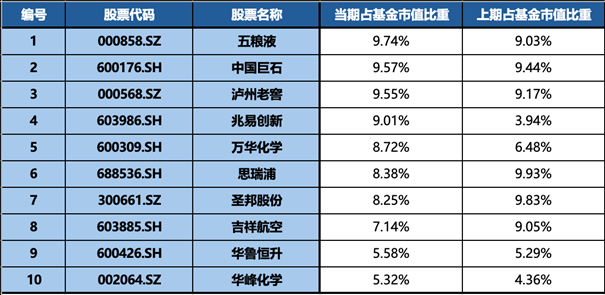
Core Viewpoint - The article discusses the evolving landscape of value investing in the context of emerging technologies like AI, emphasizing that value investing is not opposed to technology investment but rather encompasses it as part of a broader investment strategy [1][16]. Group 1: Value Investing and AI - Value investors can participate in the AI era without abandoning their principles, as value investing is fundamentally about assessing long-term cash flows rather than being confined to specific industries [1][16]. - Tian Yu, a representative value investor, has been early in researching AI and integrates it into his investment evaluations without distinguishing between emerging and traditional industries [2][3]. Group 2: Investment Framework - Tian Yu employs a consistent framework for evaluating all types of companies, focusing on three criteria: clear demand limits, assessable business models, and identifiable economic moats [3][11]. - His analysis of the semiconductor industry, particularly wafer foundries, highlights the importance of understanding the physical and economic principles that govern these businesses [4][5]. Group 3: Case Studies and Insights - The analysis of advanced process wafer foundries reveals that the business model is characterized by high economies of scale and steep learning curves, making it a niche market that can support only a few dominant players [4][5]. - Tian Yu's investment in a specific analog chip company illustrates the importance of looking beyond static financial metrics, focusing instead on long-term cash flow potential [6][7]. Group 4: Market Perceptions and Misconceptions - There is a common misconception that value investors only buy currently profitable companies, but Tian Yu argues that future profitability is equally important, as long as the business can generate cash flow over time [6][11]. - The article emphasizes that value investing is not synonymous with investing in traditional industries; it can also encompass high-tech sectors as long as the underlying business logic is sound [16][18]. Group 5: Portfolio Management - Tian Yu maintains a concentrated portfolio, with over 80% of his holdings in the top ten positions, reflecting a strategy of focusing on high-quality companies across various sectors [13][14]. - His approach to portfolio management balances exposure across different market segments, adapting to changing market conditions while maintaining a focus on companies with strong economic moats [13][14].
Cambium Networks: Risks Of Being Too Early (NASDAQ:CMBM)
Seeking Alpha· 2025-11-10 11:11
Core Insights - The article emphasizes a value investing approach, focusing on an owner's mindset and a long-term investment horizon [1] - The author does not engage in short selling or provide sell recommendations, indicating a preference for long-term investment strategies [1] Group 1 - The analysis is based on value investing principles, which prioritize the intrinsic value of securities over short-term market fluctuations [1] - The author has a background as an advisory representative at Fidelity, suggesting a level of expertise in investment analysis [1] - The article is self-authored and reflects the author's personal opinions without external compensation, indicating independence in the analysis [2] Group 2 - There is no current or planned investment position in any mentioned companies, highlighting a neutral stance in the analysis [2] - The article does not provide specific investment recommendations, aligning with a cautious approach to investment advice [3] - The author’s views may not represent the broader opinions of Seeking Alpha, indicating a personal perspective rather than a consensus [3]


价值投资的对立面不是“小登科技”
点拾投资· 2025-11-10 11:00
Core Viewpoint - The article discusses the relationship between value investing and technology investment, emphasizing that they are not opposites. Value investors can participate in the benefits of the AI era by applying their investment principles to technology sectors [1][20]. Group 1: Value Investing Principles - Value investing is defined as earning returns from the long-term cash flows of companies, without being restricted to specific industries [1][20]. - The core of value investing is to avoid permanent loss of capital, and careful evaluation may lead to missed opportunities, but value investors can still act decisively when confident [2][20]. - Value investors like Tian Yu focus on long holding periods, high concentration in a few stocks, and the importance of a company's competitive advantages [1][2]. Group 2: Technology Investment Insights - Tian Yu has been researching AI and its implications for value assessment early on, indicating that value assessment does not differentiate between emerging and traditional industries [2][4]. - The evaluation framework for technology companies includes understanding demand limits, assessable business models, and identifiable competitive advantages [4][6]. - The semiconductor industry, particularly wafer foundries, is analyzed through a physical perspective, highlighting the challenges and opportunities in advanced process technologies [5][10]. Group 3: Market Dynamics and Investment Strategy - The demand for AI has increased the value of competitive advantages in technology sectors, as performance differences become more significant [6][10]. - Tian Yu's investment strategy involves a dynamic view of future cash flows rather than static earnings, allowing for investments in companies that may not currently be profitable but have strong long-term potential [7][8]. - The article highlights the importance of understanding the underlying business models and competitive dynamics in technology sectors, which can be complex and require specialized knowledge [6][11]. Group 4: Portfolio Management - Tian Yu maintains a concentrated portfolio with a high percentage of top holdings, reflecting a strategy of focusing on quality investments [16][17]. - The portfolio is diversified across different sectors, including technology and chemicals, to mitigate systemic risks while maintaining a focus on companies with strong supply-side competitive advantages [17][18]. - The article emphasizes that value investing is not limited to traditional industries and can adapt to modern technological advancements, allowing investors to benefit from current market trends [20][22].

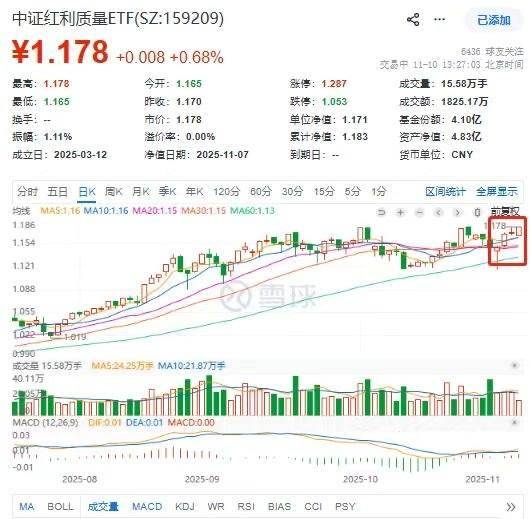
强势四连阳重返历史新高!中证红利质量ETF(159209)获神秘资金盘中再加仓!
Sou Hu Cai Jing· 2025-11-10 06:42
11月10日,两市午后回暖。截至13时26分,可月月分红的中证红利质量ETF(159209)涨0.68%,盘中冲击 四连升;盘中创年内第43次新高。资金热度不减,据Wind Level2实时行情,盘中再度净流入约700万。 产品设计层面,中证红利质量ETF(159209)费用模式采用"0.15%+0.05%"的全市场最低档 ,长期持有具 备明显的成本优势;分红模式采用月度评估分红机制,能更好地满足投资者的现金流需求,提升持有体 验。 据了解,中证红利质量ETF(159209)跟踪的中证全指红利质量指数选取 50 只分红稳定、股息率较高且盈 利持续性较好的上市公司证券作为指数样本,以反映具有较强分红和盈利能力特征的上市公司证券的整 体表现。区别于传统高股息,其当前持仓并不含有银行股。以"红利+质量"双因子筛选机制筛选出兼 具"低估值"+"高质量"双重护城河的优质企业。其核心理念与巴菲特"以合理价格投资卓越企业"的价值 投资逻辑高度契合。 ...
巴菲特也在重金布局,这一板块,爆发!
Zheng Quan Ri Bao Zhi Sheng· 2025-11-10 05:32
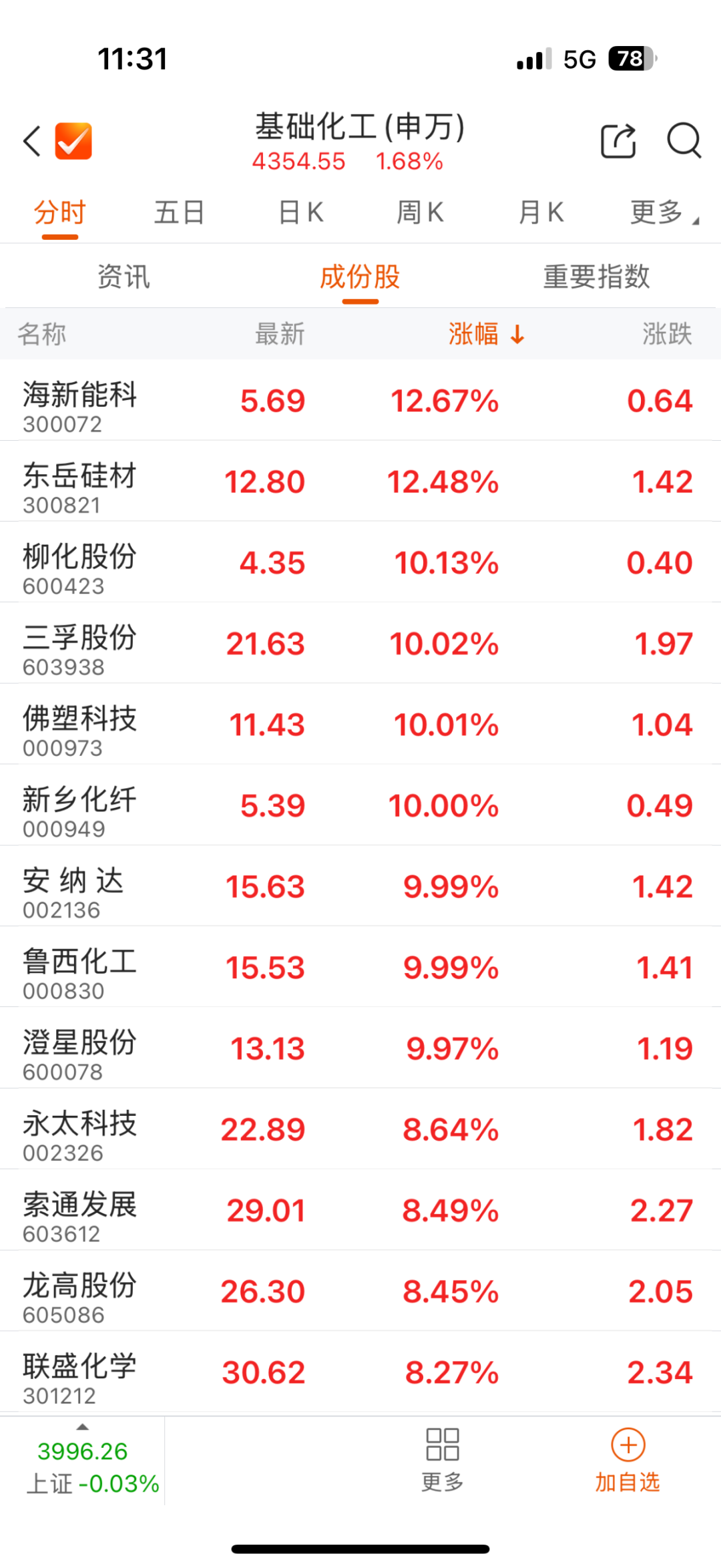
Core Viewpoint - The chemical industry, favored by Warren Buffett, has shown strong performance, with the A-share basic chemical sector index rising by 1.68% to 4354.55 points as of November 10, 2023, and a cumulative increase of 32.74% year-to-date [1][4]. Industry Performance - As of November 10, 2023, the basic chemical sector index recorded a trading volume of 112.149 billion yuan, with 275 stocks rising, 122 falling, and 6 remaining flat [1]. - Notable stocks include Liuhua Co. (600423), Sanfu Co. (603938), and Fusheng Technology (000973), which reached their daily limit up, while Hai Xin Neng Ke (300072) and Dongyue Silicon Material (300821) saw increases of 12.67% and 12.48%, respectively [1][2]. Market Dynamics - The recent surge in the chemical sector is attributed to a combination of improved supply-demand structure and enhanced market confidence [3][4]. - On the supply side, self-regulatory mechanisms among industry players have alleviated previous excessive competition, leading to a healthier supply-demand relationship [4]. - On the demand side, emerging industries such as energy storage and new energy vehicles are driving significant incremental demand for chemical products [4]. Investment Insights - Buffett's recent acquisition of OxyChem for $9.7 billion is seen as a strategic move to bolster confidence in the chemical sector, particularly in the chlor-alkali and PVC production segments [4]. - Analysts believe that the long-term value of the chlor-alkali industry is attractive, with signs of marginal improvement in demand in both the Chinese and U.S. markets [4]. Sector Trends - Current trading in the chemical sector revolves around three main themes: 1. The rise in demand from the energy storage sector is expected to enhance the supply-demand dynamics of upstream lithium battery materials [5]. 2. Continuous self-regulation in the chemical industry is helping to stabilize prices from the bottom [5]. 3. Certain chemical sectors are maintaining high growth rates in their core businesses [5]. Company Performance - Sanfu Co. reported a revenue of 1.547 billion yuan for the first three quarters of the year, a year-on-year increase of 15.2%, with a net profit of 64.136 million yuan, up 26.92% [5]. - The third quarter showed particularly strong performance, with revenue of 540 million yuan, a 23.52% increase year-on-year, and a net profit growth of 162.25% [5]. Global Supply Chain Impact - Domestic chemical companies are benefiting from a complete industrial chain and stable production capabilities, which provide opportunities for import substitution and expansion into overseas markets [6]. - The recent stabilization and recovery of prices for major commodities like crude oil are also supporting the profitability of the chemical industry [6].