
共同富裕

Search documents
每天“劳动一小时”和美乡村入画来
Hang Zhou Ri Bao· 2025-05-16 03:27
扫路面、清沟渠、整庭院……每天清晨,建德市大洋镇庆丰村党总支书记童显明就带着20余名党员 开始在村中打扫卫生,好一片热闹景象。 户户不同景,院院好风光。村庄"颜值"的提升以及村民们满满的幸福感处处可见。在整治好环境的 基础上,大洋镇升级"劳动+治理",将"最多反映一次"下沉到网格,实现在网格"说事"、在网格"解 难",解决大小问题200余件,帮助村民代买、代办事项151件。为了降低老年食堂运营成本,大洋镇麻 车村开垦出3亩多的"爱心菜地",划分5个支部认领,惠及老人127名,年减少村集体开支2万余元。 2022年以来,建德市持续推行"劳动一小时"系列做法,在改善人居环境、融洽干群关系、优化基层 治理等方面,取得明显成效。近日,建德推出"劳动一小时"2.0版,从做法、场景、队伍、机制、纪律 等5个方面迭代出新,使之更具时代性和实效性,为助推乡村振兴共同富裕提供有力支撑。 "我们村自从开展'劳动一小时'以来,村干部每周组织党员打扫公共区域,老百姓负责自家房前屋 后,保洁费用减少了,环境却更美了,老百姓的口碑更好了。"童显明说。 作为建德新城区的洋溪街道洋安社区,通过"劳动一小时"已整治小区环境点位152个,提升楼 ...
李火林赴淳安县调研
Hang Zhou Ri Bao· 2025-05-16 03:14
5月15日,市人大常委会主任李火林赴淳安县调研生态文明建设、深化新时代"千万工程"缩小"三大 差距"工作。卢春强参加。 千岛湖植物园通过森林生态系统修复,打造集植物保护、科普研学、观光休闲、产品展示等功能于 一体的综合性植物园。李火林详细了解临湖地带生态修复、林业有害生物防治等工作,指出要坚持生态 优先、绿色发展,扎实推进生态系统保护工作,守护好淳安的绿水青山。 李火林强调,要始终牢记习近平总书记殷殷嘱托,坚持以习近平生态文明思想为指导,践行"绿水 青山就是金山银山"的理念,立足人大职能优势,围绕富民统筹推进"强城""兴村""融合"三篇文章,扎 实开展好听取审议深化新时代"千万工程"缩小"三大差距"工作情况报告,深化农村改革、推动农民增收 工作、生态文明建设情况报告制度等监督工作,在助力生态保护与经济发展良性互动,更大力度打造共 同富裕示范区城市范例中贡献人大力量。 淳安县第三中学将于2025年秋季学期正式启用,可提供1800个优质学位,面向农村学生全面开放, 以进一步缩小城乡教育公共服务差距。李火林实地踏勘,详细了解校园规划、建设进度以及当地教育资 源整合情况。他指出,要积极探索创新办学模式,加强师资队伍建 ...
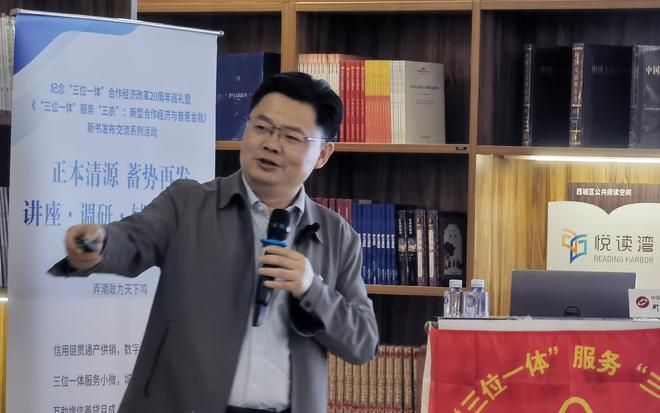
专访陈林:“三位一体”合作经济是通往共同富裕的现实路径
Xin Jing Bao· 2025-05-15 10:22
Core Viewpoint - The "three-in-one" cooperative economy model, initiated in Zhejiang, aims to integrate production, supply, and credit services to enhance agricultural efficiency and support farmers, with significant recognition and implementation at the national level [1][2][4]. Group 1: Historical Context and Development - In January 2006, Xi Jinping proposed the "three-in-one" cooperative economy concept, which was piloted in Zhejiang, particularly through the efforts of Chen Lin, who played a crucial role in its development [1]. - The model gained national attention, with the Central Government emphasizing its importance in various policy documents, including the 2017 and 2021 Central No. 1 documents, which called for the strengthening of farmer cooperatives and comprehensive cooperation [1][2]. Group 2: Challenges and Solutions - During the nationwide promotion of the "three-in-one" model, some regions experienced "deformation" and "diminution" of the original concept, prompting Chen Lin to publish a book addressing these issues and proposing solutions [2][4]. - Chen Lin highlighted the importance of focusing on the needs of farmers rather than bureaucratic divisions, advocating for a cooperative approach that integrates various sectors to enhance agricultural productivity [6][8]. Group 3: Financial Implications - The cooperative economy is seen as a mechanism to ensure financial security and support farmers' income, with the potential to address the challenges posed by traditional financial systems that often overlook small farmers [16][27]. - The upcoming implementation of the "Food Security Law" emphasizes the role of new agricultural entities, such as family farms and cooperatives, in enhancing food production capabilities and ensuring farmers' interests [16]. Group 4: International Comparisons and Lessons - International examples, such as the success of agricultural cooperatives in the U.S. and Japan, illustrate the effectiveness of cooperative models in maintaining market stability and supporting farmers' interests [22][23]. - The cooperative model is essential for creating a robust agricultural sector in China, enabling farmers to negotiate better terms with larger market players and ensuring food security [23].

理论视野 | 统筹增进民生福祉与有效扩大内需
Zhong Yang Ji Wei Guo Jia Jian Wei Wang Zhan· 2025-05-15 00:52
Group 1 - The core viewpoint emphasizes the importance of enhancing people's livelihoods and boosting consumption as essential requirements for responding to public expectations and solidifying the foundation for development [3][4][6] - The transition of China's economy from high-speed growth to high-quality development necessitates a focus on improving living standards and meeting the growing needs of the populace [3][4] - Strengthening social security and improving income distribution are critical for increasing consumer spending and ensuring economic stability [8][9] Group 2 - The need to stimulate domestic demand is highlighted as a strategic focus to enhance economic resilience and autonomy amid complex external challenges [5][7] - The promotion of a vibrant domestic consumption market is crucial for supporting local enterprises and mitigating the impacts of external demand fluctuations [5][7] - The integration of robust social security measures with effective consumption promotion strategies is essential for achieving shared development and advancing towards common prosperity [6][10] Group 3 - Employment expansion and income growth are identified as key methods to enhance residents' income levels and stimulate consumption [7][8] - The optimization of the income distribution system is necessary to ensure a fairer allocation of resources and to support consumption growth [8][9] - Innovative consumption scenarios and targeted subsidies are recommended to boost consumer spending and support the development of the cultural and tourism economy [10]

姚高员专题调研深化新时代“千万工程”推进和美乡村建设工作
Hang Zhou Ri Bao· 2025-05-14 02:38
Group 1 - The city is focusing on promoting the "Ten Million Project" and building beautiful rural areas, emphasizing the integration of ecological preservation and industrial development to enhance the quality of life and work in rural areas [1] - The preservation of cultural heritage, particularly intangible cultural assets like "Louta Xitian," is seen as vital for cultural exchange and should be integrated into rural revitalization efforts [1] - The government is encouraging the development of local tourism by leveraging unique cultural elements and promoting events like the "Yue Fei Loyalty Culture Festival" to enhance the rural tourism brand [2] Group 2 - Sanquan Wang Village is transforming its agricultural resources into a vibrant tourism hotspot by creating diverse tourism products that include historical culture, ecological sightseeing, and experiential activities [3] - The government is promoting the cultivation of innovative "new farmers" who can drive agricultural modernization and rural revitalization through cross-industry collaboration [3] - Emphasis is placed on the importance of historical and cultural education, as seen in the visit to the Yafang Farmers' Movement Memorial Hall, highlighting the need for government officials to uphold traditional values while contributing to economic and social development [3]
省人大常委会来杭调研铸牢中华民族共同体意识推进民族团结进步工作
Hang Zhou Ri Bao· 2025-05-14 02:38
5月13日,省人大常委会副主任刘忻带队来杭调研铸牢中华民族共同体意识推进民族团结进步工 作。市人大常委会党组书记暨军民参加。 刘忻充分肯定了我市铸牢中华民族共同体意识推进民族团结进步工作取得的成效。他指出,推进民 族团结进步工作,对于深入贯彻习近平总书记考察浙江重要指示精神,落实高质量发展建设共同富裕示 范区核心任务,加快推进民族事务治理体系和治理能力现代化,广泛促进各民族交往交流交融具有重要 意义。要全面落实习近平总书记关于加强和改进民族工作的重要思想,紧扣铸牢中华民族共同体意识的 工作主线,扎实推动全省民族团结进步事业攀升新高度、开拓新局面。要坚持文化重共性,推动各民族 文化传承保护和创新交融,以文化认同促进民族团结,建设中华民族共有精神家园。要坚持情感讲同 源,创造共居共学、共建共享、共事共乐的社会条件,增进各民族群众情感联系与共鸣。要坚持载体聚 人心,聚焦各民族群众关心的实际需求,打造实用管用、特色鲜明的阵地载体,拓展"绿水青山就是金 山银山"转化通道,强化数字赋能,推动民族乡村共同富裕。要坚持典型创品牌、立法固根基,完善民 族工作政策法规体系,确保依法依规治理民族事务,以民族工作高质量发展助力中国式 ...
做好区域互补跨江融合南北联动大文章 推动全省区域协调发展向更高水平迈进
Xin Hua Ri Bao· 2025-05-13 21:41
本报讯(记者黄伟)5月13日,省区域协调发展领导小组召开会议,深入学习贯彻习近平总书记关于区域 协调发展的重要论述,研究部署我省相关工作。省委书记、领导小组组长信长星主持会议并讲话,省 长、领导小组组长许昆林就具体工作作安排。 会议听取了我省区域协调发展工作进展情况和下一步工作打算,讨论了省区域协调发展领导小组及办公 室《工作规则》。南京市、徐州市、省科技厅、省工信厅、省交通厅作交流发言。 省领导周红波、储永宏、马欣,省区域协调发展领导小组成员出席会议。 会议指出,党的十八大以来,党中央高度重视区域协调发展,习近平总书记作出一系列重要论述,为我 们推动区域协调发展指明了方向、提供了遵循。江苏要扛好挑大梁责任,必须以更高站位、更实举措做 好区域互补、跨江融合、南北联动大文章,推动全省区域协调发展向更高水平迈进。 会议强调,要进一步优化省域生产力布局,深入实施"1+3"重点功能区战略,加快完善综合交通运输体 系,打造新的发展动力源,着力形成优势互补、高质量发展的区域经济布局。要在更大范围内促进创新 链产业链无缝对接,更好发挥南京、环太湖、徐州科创圈的创新策源和辐射带动作用,在南北结对帮扶 合作中把各地的科创和产业 ...
王健林透露!中国手握“三套房”的家庭,注定要未来面临3个结局
Sou Hu Cai Jing· 2025-05-13 03:41
Core Viewpoint - The real estate market has experienced a significant downturn since 2021, with prices in lower-tier cities halving and first-tier cities returning to 2016 levels, despite government efforts to stabilize the market through various policies [1][3]. Group 1: Market Trends - The initial surge in housing prices led to a speculative buying frenzy, with many individuals borrowing to purchase properties, resulting in skyrocketing prices even in remote areas [1]. - By 2021, the market began to decline, with second and third-tier cities seeing price drops of around 50%, and first-tier cities reverting to previous price levels [1]. - The government has implemented measures such as lowering down payment ratios, reducing loan interest rates, and offering tax incentives to stimulate market recovery [1]. Group 2: Financial Health of Real Estate Companies - Many real estate companies are facing severe financial difficulties and high debt pressures, leading to a growing sense of caution among potential buyers [3]. - The industry is expected to undergo a significant shakeout, with financially strained companies likely to exit the market, while larger firms with stable finances may continue to thrive [5]. Group 3: Taxation and Market Pressure - The introduction of property taxes and landlord taxes in some cities poses a significant burden on homeowners, particularly those with multiple properties, as these taxes can reach up to 20% [6]. - The rental market is under increasing pressure, making it nearly impossible for most homeowners outside major cities to sustain their properties through rental income [6]. Group 4: Wealth Distribution and Policy Implications - The concentration of wealth in real estate has led to high vacancy rates among affluent families, while a significant portion of the population struggles to afford housing [10]. - Government policies aimed at promoting common prosperity and reducing wealth inequality include inheritance taxes on property sales, which could significantly impact high-net-worth families [11]. - These measures are intended to facilitate a more equitable distribution of wealth, although they may cause short-term challenges in the market [11].

深化党建联建 纾解共富难题(党旗在基层一线高高飘扬)
Ren Min Ri Bao· 2025-05-12 22:21
Core Viewpoint - The article highlights the successful implementation of a collaborative model among villages in Chun'an County, Zhejiang Province, focusing on agricultural development and economic cooperation through the establishment of the "Daxiajiang" brand and a joint party committee [1][2][3]. Group 1: Agricultural Development - The Daxiajiang model promotes centralized planting and unified marketing, allowing farmers to sell their products more efficiently, as demonstrated by the success of sweet potato sales from neighboring villages [1][2]. - The Daxiajiang Company has developed a digital platform called "Jiangma Ganjiji," facilitating online sales of agricultural products, which has helped achieve over 20 million yuan in sales by the end of 2024 [3]. Group 2: Organizational Structure - The Daxiajiang Joint Party Committee, led by county leaders, coordinates resources and establishes a cross-departmental meeting mechanism to enhance efficiency in agricultural initiatives [2][3]. - The company operates on a model where profits are shared with the community, ensuring that the local economy benefits from agricultural sales while maintaining a sustainable business approach [3]. Group 3: Community Impact - The initiative has led to the establishment of a cooperative model among 25 administrative villages, allowing for shared economic benefits and continuous dividends for the community [3]. - The focus on utilizing local resources, such as red educational resources and wild medicinal herbs, aims to diversify income sources and enhance the overall economic resilience of the villages involved [3].
构建以人才资源牵引优质文化资源直达基层的新型模式(深入学习贯彻习近平新时代中国特色社会主义思想)
Ren Min Ri Bao· 2025-05-12 22:21
Core Viewpoint - The implementation of the cultural commissioner system in Zhejiang aims to enhance grassroots cultural construction and bridge the cultural gap between urban and rural areas, contributing to the goal of common prosperity in China [1][4]. Group 1: Cultural Commissioner System - The cultural commissioner system will select over 1,570 outstanding cultural talents to support cultural construction in towns and villages, ensuring quality cultural resources reach the grassroots [1][2]. - This system emphasizes the integration of external resources to stimulate internal cultural vitality, addressing the imbalance in cultural resource supply between urban and rural areas [2][3]. - Cultural commissioners will focus on guiding local cultural activities, supporting cultural industries, and enhancing the overall cultural ecosystem in rural areas [6][10]. Group 2: Economic and Social Development - The development of a "cultural economy" is aimed at linking cultural revitalization with rural industrial growth, thereby enhancing economic and social development [3][4]. - Cultural commissioners have already helped generate over 190 million yuan in revenue through cultural tourism planning and creative product sales [3]. - The initiative seeks to empower rural governance and improve public cultural participation through cultural soft governance methods [3][9]. Group 3: Addressing Regional Disparities - The program aims to reduce cultural development disparities by customizing cultural commissioner resources based on the economic and cultural conditions of different regions [4][5]. - Efforts will be made to direct quality cultural resources to remote areas, enhancing accessibility and equality in public cultural services [4][7]. Group 4: Systematic and Long-term Management - A comprehensive work system will be established to standardize the selection, responsibilities, and evaluation of cultural commissioners, ensuring effective grassroots cultural service delivery [5][6]. - The initiative will utilize a digital platform to facilitate resource sharing and project collaboration among cultural commissioners [7][8]. Group 5: Project Implementation and Community Engagement - The cultural commissioner system will focus on project-based management to address the specific cultural needs of local communities, ensuring that cultural services are relevant and effective [8][9]. - Cultural commissioners will engage with local residents to understand their cultural needs and develop projects that resonate with the community [9][10]. Group 6: Talent Development and Collaboration - The program emphasizes the importance of building a cultural talent pool to support rural revitalization, integrating local and external resources [11][12]. - Cultural commissioners will work collaboratively with local leaders and organizations to enhance cultural activities and promote community involvement [13][14].