战略性新兴产业

Search documents
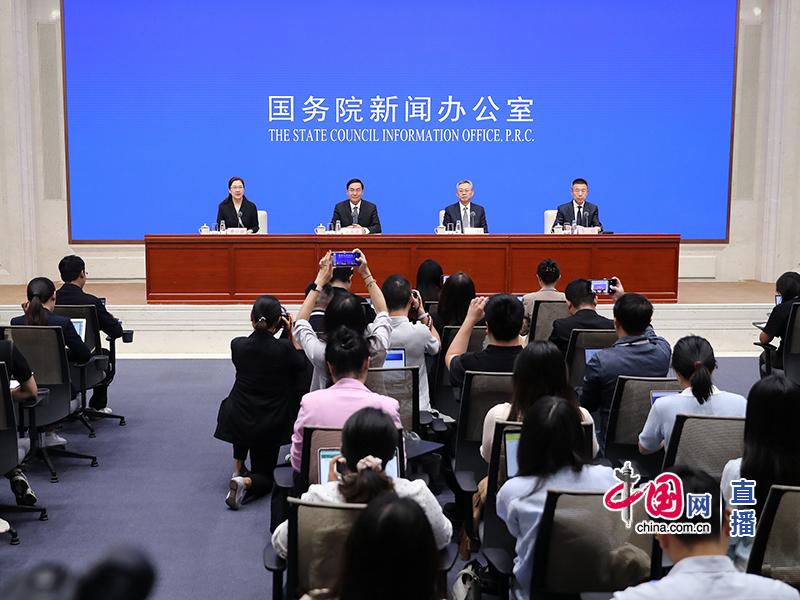
国务院国资委回答新华财经提问:持续加大战略性新兴产业布局力度
Xin Hua Cai Jing· 2025-09-17 06:59
Core Viewpoint - The development of strategic emerging industries is essential for central enterprises to optimize their layout and achieve high-quality growth, with significant efforts and positive outcomes observed during the "14th Five-Year Plan" period, especially after the 20th National Congress of the Communist Party of China [1] Group 1: Industry Structure - Central enterprises are focusing on nine strategic emerging industries and six future industries, systematically laying out their resources, resulting in a new industrial development pattern characterized by "gradual expansion and collaborative progress" [1] - Cumulative investment in strategic emerging industries by central enterprises reached 8.6 trillion yuan during the "14th Five-Year Plan," significantly higher than during the "13th Five-Year Plan," with accelerated development in fields such as integrated circuits, biotechnology, and new energy vehicles [1] Group 2: Growth Momentum - The continuous investment in strategic emerging industries has effectively expanded the development space for enterprises, with projected operating revenue in these sectors exceeding 11 trillion yuan in 2024, and an 8 percentage point increase in revenue contribution over the past two years [2] - Key sectors such as new generation information technology and high-end equipment have each surpassed 1 trillion yuan in revenue, with central enterprises accounting for approximately half of the national installed capacity for new energy power generation [2] Group 3: Development Model - The accelerated layout of strategic emerging industries has profoundly influenced enterprise development models, with central enterprises actively promoting supply-demand matching through nearly 10,000 published supply-demand lists [2] - Many central enterprises have established venture capital funds, with a total scale nearing 100 billion yuan, focusing on technology attributes and emerging fields, thus forming a new model of industry-finance integration [2] - The implementation of the "AI+" initiative has led to the accelerated application of general and industry-specific models, effectively empowering the digital transformation of traditional industries and creating a new model for industrial upgrading [2]
央企控股上市公司市值超22万亿元,“十四五”分红2.5万亿元
2 1 Shi Ji Jing Ji Bao Dao· 2025-09-17 06:04
Core Insights - The total assets of central enterprises have increased from less than 70 trillion yuan to over 90 trillion yuan during the "14th Five-Year Plan" period, with total profits rising from 1.9 trillion yuan to 2.6 trillion yuan, reflecting annual growth rates of 7.3% and 8.3% respectively [1] - Economic Value Added (EVA) has grown from over 380 billion yuan in 2010 to approximately 1.2 trillion yuan, indicating a focus on real value creation by considering capital costs [1] - Central enterprises are actively embracing new fields and accelerating the formation of new growth points, with investments in strategic emerging industries expected to exceed 40% of total investments in 2024 [2] Investment and Performance - From 2021 to 2024, central enterprises are projected to complete a total fixed asset investment of 19 trillion yuan, with an average annual growth rate of 6.3% [3] - The market-oriented issuance of special bonds for stable growth and investment is set to reach a total scale of 500 billion yuan, effectively promoting investment in key projects [3] - The market performance of centrally controlled listed companies has improved, with their market capitalization exceeding 22 trillion yuan, a nearly 50% increase since the end of the "13th Five-Year Plan" [3]

国务院国资委:中央企业资产总额超过90万亿元
Qi Huo Ri Bao Wang· 2025-09-17 05:56
Group 1 - The core viewpoint is that central enterprises in China have shown steady improvement in operational quality and efficiency during the "14th Five-Year Plan" period, with significant growth in assets and profits [1][4] - The total assets of central enterprises increased from less than 70 trillion yuan to over 90 trillion yuan, while total profits rose from 1.9 trillion yuan to 2.6 trillion yuan, with average annual growth rates of 7.3% and 8.3% respectively [1] - Key performance indicators such as operating income profit margin improved from 6.2% to 6.7%, and labor productivity increased from 594,000 yuan to 817,000 yuan per employee per year [1] Group 2 - The construction of a modern industrial system has made new progress, with strategic emerging industries experiencing unprecedented development, and investments in these sectors growing at an annual rate exceeding 20% [2] - Central enterprises have implemented various initiatives, including the "AI+" special action, which has established over 800 application scenarios, and the creation of 1,854 smart factories, leading to reductions in energy consumption and carbon emissions per unit of output by 12.8% and 13.9% respectively [2] Group 3 - The structure of modern state-owned enterprises is continuously optimizing, with strategic restructuring involving 10 enterprises and the establishment of 9 new central enterprises, enhancing the efficiency of state capital allocation [3] - The governance of state-owned enterprises has improved, with the integration of party leadership into corporate governance becoming more institutionalized, and measures to stimulate innovation and enhance regulatory effectiveness have been implemented [3] Group 4 - Central enterprises have contributed significantly to national development, with over 10 trillion yuan in taxes paid and 1.2 trillion yuan in state-owned equity transferred to social security funds during the "14th Five-Year Plan" [3] - The enterprises actively support major national strategies and infrastructure projects, including the construction of the Sichuan-Tibet Railway and the Shenzhen-Zhongshan Link, as well as engaging in over 6,000 overseas investment cooperation projects related to the Belt and Road Initiative [3]
资产总额超90万亿元,央企“家底”更厚
Zheng Quan Ri Bao Wang· 2025-09-17 05:44
Core Insights - The central enterprises have significantly improved their asset quality and profitability during the "14th Five-Year Plan" period, with total assets increasing from less than 70 trillion yuan to over 90 trillion yuan and total profits rising from 1.9 trillion yuan to 2.6 trillion yuan, achieving average annual growth rates of 7.3% and 8.3% respectively [1] - The development of strategic emerging industries is crucial for optimizing the layout structure and achieving high-quality development, with cumulative investments in these industries reaching 8.6 trillion yuan during the "14th Five-Year Plan" [3] Group 1: Financial Performance - Total assets of central enterprises increased from less than 70 trillion yuan to over 90 trillion yuan [1] - Total profits rose from 1.9 trillion yuan to 2.6 trillion yuan, with average annual growth rates of 7.3% and 8.3% respectively [1] - Operating income profit margin improved from 6.2% to 6.7%, and labor productivity increased from 594,000 yuan to 817,000 yuan per employee per year [1] Group 2: Strategic Emerging Industries - The average annual investment growth rate in strategic emerging industries exceeded 20%, with significant advancements in new generation information technology, new energy, new materials, and high-end equipment [2] - Cumulative investments in strategic emerging industries reached 8.6 trillion yuan, with notable growth in integrated circuits, biotechnology, and new energy vehicles [3] - The revenue from strategic emerging industries is expected to exceed 11 trillion yuan in 2024, with contributions from new generation information technology and high-end equipment sectors surpassing 1 trillion yuan each [3] Group 3: Industrial Transformation and Upgrading - The "AI+" initiative has established over 800 application scenarios, and digital transformation efforts have led to the creation of 1,854 smart factories [2] - Energy consumption per unit of output and carbon emissions per unit of output decreased by 12.8% and 13.9% respectively [2] - Central enterprises are increasingly characterized by high-end, intelligent, and green development [2] Group 4: Structural Optimization and Reorganization - The State-owned Assets Supervision and Administration Commission (SASAC) has promoted structural adjustments and optimization, focusing on strategic security and public services, resulting in the market-oriented reorganization of 10 enterprises [4] - SASAC plans to enhance core functions and competitiveness through systematic thinking and innovative measures in the ongoing strategic professional reorganization [4]
国资委强调央企必须重视新一轮科技革命和产业变革加速演进,国企共赢ETF备受关注
Sou Hu Cai Jing· 2025-09-17 05:37
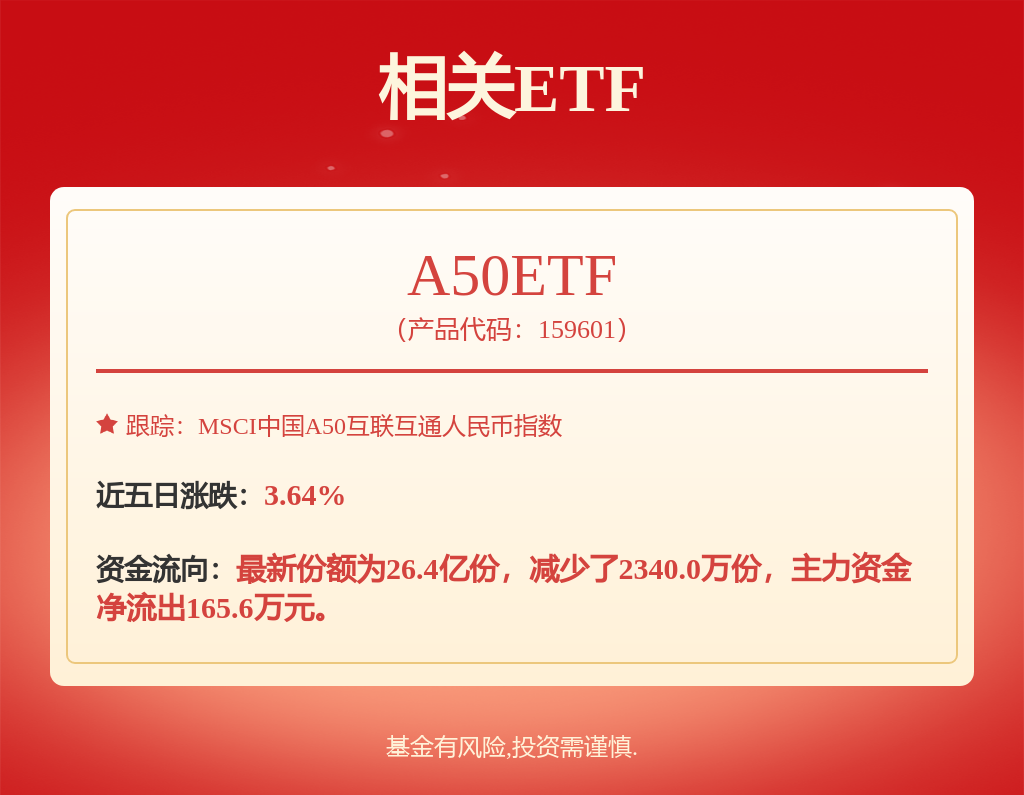
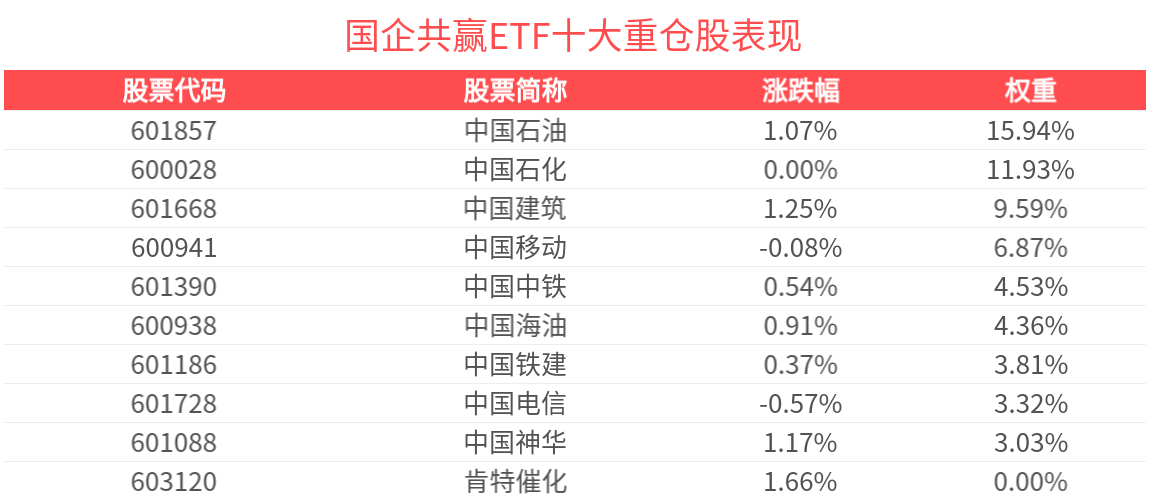
Group 1 - The core viewpoint emphasizes the acceleration of a new round of technological revolution and industrial transformation, urging central enterprises to seize development opportunities and actively embrace new fields and tracks to form new growth points [1] - In 2023, the State-owned Assets Supervision and Administration Commission (SASAC) initiated actions for the revitalization of central enterprises and future industries, increasing assessment guidance and policy support [1] - By 2024, investments by central enterprises in strategic emerging industries are expected to exceed 40% of total investments, with operating revenue approaching 30% [1] Group 2 - As of September 16, 2025, the National Enterprise Win-Win ETF (159719) has seen a net value increase of 51.39% over the past three years, ranking 247 out of 1867 index stock funds, placing it in the top 13.23% [2] - The ETF has recorded a maximum single-month return of 14.61% since its inception, with the longest consecutive monthly gains lasting 7 months and a maximum cumulative increase of 24.70% [2] - The ETF's management fee is 0.25% and the custody fee is 0.05%, making it the lowest among comparable funds [2] Group 3 - The FTSE China National Enterprises Open Win Index, which the ETF closely tracks, aims to reflect the performance of Chinese state-owned enterprises listed in mainland China and Hong Kong, focusing on globalization and sustainable development [2] - The index consists of 100 constituent stocks, including 80 A-share companies and 20 Chinese companies listed in Hong Kong [2] Group 4 - The top weighted stocks in the National Enterprise Win-Win ETF include China Petroleum (15.94%), China Petrochemical (11.93%), and China State Construction (9.59%) [4] - Other notable stocks include China Mobile (6.87%), China Railway (4.53%), and China Telecom (3.32%) [4]






央企聚焦战略性新兴产业 “十四五”以来累计投资8.6万亿元
Zhong Guo Xin Wen Wang· 2025-09-17 05:35
Core Insights - Central enterprises in China have invested a total of 8.6 trillion yuan in strategic emerging industries since the beginning of the 14th Five-Year Plan, marking a significant increase compared to the 13th Five-Year Plan period [1] Group 1: Investment and Development - The focus on strategic emerging industries is essential for optimizing the layout and achieving high-quality development of central enterprises [1] - Investment in strategic emerging industries has accelerated in areas such as integrated circuits, biotechnology, and new energy vehicles, with breakthroughs in cutting-edge fields like humanoid robots and superconducting quantum computing [1] - The overall development pattern is characterized by "gradual expansion and collaborative progress" in industrial development [1] Group 2: Revenue Growth - In 2024, the revenue from strategic emerging industries for central enterprises is expected to exceed 11 trillion yuan, with an 8 percentage point increase in revenue contribution over the past two years [2] - Five sectors, including new generation information technology and high-end equipment, have each surpassed 1 trillion yuan in revenue [2] - Central enterprises account for approximately half of the national installed capacity for new energy power generation, and over 20% of the industrial software market size in China [2] Group 3: Development Models - The accelerated layout of strategic emerging industries has profoundly influenced the development models of enterprises [2] - Central enterprises are actively promoting supply-demand matching through nearly 10,000 published supply-demand lists, forming new models of industrial cooperation [2] - The establishment of venture capital funds by many central enterprises, with a total scale nearing 100 billion yuan, focuses on technology attributes and emerging fields, fostering a new model of industry-finance integration [2] - The implementation of the "AI+" initiative has led to the accelerated application of general and industry-specific models, effectively empowering the digital transformation of traditional industries [2]
数说中央企业高质量发展成果!
中国能源报· 2025-09-17 05:07
Core Viewpoint - The article highlights the significant achievements of central enterprises in China during the "14th Five-Year Plan" period, emphasizing their high-quality development, innovation capabilities, and strategic investments in emerging industries [1][3]. Financial Performance - Since the beginning of the "14th Five-Year Plan," the total assets of central enterprises have increased from less than 70 trillion yuan to over 90 trillion yuan, with total profits rising from 1.9 trillion yuan to 2.6 trillion yuan, achieving annual growth rates of 7.3% and 8.3% respectively [3]. - Central enterprises have contributed over 10 trillion yuan in taxes and fees during this period, and transferred 1.2 trillion yuan of state-owned equity to social security funds [3]. Innovation and Technology - Central enterprises have made substantial progress in innovation, with R&D expenditures exceeding 1 trillion yuan for three consecutive years, and the input intensity rising from 2.6% to 2.8%. They have participated in all major national scientific and technological projects, establishing 97 original technology sources and forming 23 innovation alliances [3]. - A number of critical core technologies, particularly in integrated circuits, industrial mother machines, and industrial software, have been successfully developed [7]. Strategic Investments - During the "14th Five-Year Plan," central enterprises have invested a total of 8.6 trillion yuan in nine strategic emerging industries, significantly increasing their investment compared to the "13th Five-Year Plan" [15]. - The revenue from strategic emerging industries is expected to exceed 11 trillion yuan by 2024, with contributions to revenue increasing by 8 percentage points over the past two years [17]. Digital Transformation and Sustainability - The "AI+" initiative has led to the application of over 800 scenarios, and the digital transformation efforts have resulted in the establishment of 1,854 smart factories. Energy consumption per unit of output and carbon emissions per unit of output have decreased by 12.8% and 13.9% respectively [4]. - Central enterprises are focusing on high-end, intelligent, and green development, which has become a distinctive feature of their operations [4].
将大力推动战略性专业化重组整合!国务院国资委答中证报记者问
Zhong Guo Zheng Quan Bao· 2025-09-17 04:57
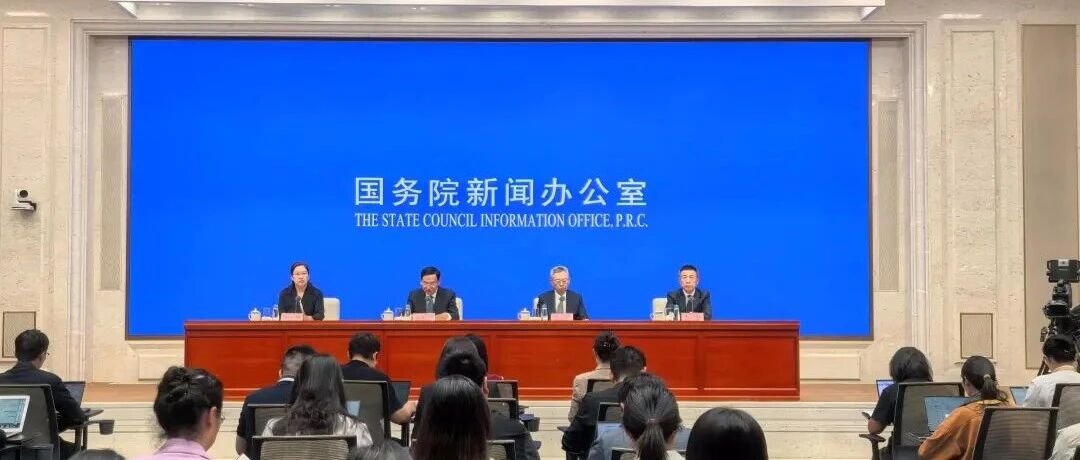
Group 1 - The core viewpoint emphasizes the strategic restructuring and integration of state-owned enterprises to enhance their core functions and competitiveness, thereby supporting economic and social development [1][2][3] - During the "14th Five-Year Plan" period, nine new central enterprises were established, and six groups of ten enterprises underwent strategic restructuring, improving the efficiency of state-owned capital allocation [2][4] - The restructuring focuses on three main areas: supporting national strategies, enhancing industrial collaboration, and optimizing public services, which collectively aim to improve resource allocation and service quality [2][3][4] Group 2 - The market value of central enterprises' listed companies has exceeded 22 trillion yuan, reflecting a nearly 50% increase since the end of the "13th Five-Year Plan" [4] - Central enterprises have implemented cash dividends totaling 2.5 trillion yuan since the beginning of the "14th Five-Year Plan," contributing to the stability of the capital market [4] - Investment in strategic emerging industries has significantly increased, with a cumulative investment of 8.6 trillion yuan since the "14th Five-Year Plan," marking a substantial rise compared to the "13th Five-Year Plan" [5] Group 3 - The "AI+" initiative is being actively pursued, with over 800 application scenarios developed across 16 key industries, aiming to leverage AI for industrial upgrades [6][7] - The establishment of industry data communities has led to the creation of over 1,000 industry data sets, facilitating AI empowerment across various sectors [6] - The capability for intelligent computing supply has more than doubled since the implementation of the "AI+" initiative, with significant investments made in building AI infrastructure [6][7]
“家底”更厚、“智造”更强!数说央企高质量发展成果
Yang Shi Xin Wen· 2025-09-17 04:55
Core Insights - The State-owned Assets Supervision and Administration Commission (SASAC) reported significant progress in the high-quality development of central enterprises during the "14th Five-Year Plan" period, highlighting effective investment expansion and technological innovation [2][3]. Investment and Financial Performance - Central enterprises' total assets increased from less than 70 trillion yuan to over 90 trillion yuan, with total profits rising from 1.9 trillion yuan to 2.6 trillion yuan, achieving average annual growth rates of 7.3% and 8.3% respectively [3]. - Cumulative fixed asset investment by central enterprises reached 19 trillion yuan from 2021 to 2024, with an average annual growth rate of 6.3% [4]. Technological Innovation - Central enterprises have made significant advancements in innovation, with R&D expenditure exceeding 1 trillion yuan for three consecutive years, and the investment intensity rising from 2.6% to 2.8% [3]. - A number of critical core technologies in fields such as integrated circuits and industrial software have been successfully developed, contributing to national pride and confidence [2]. Strategic Focus and Industry Development - Central enterprises have focused on nine strategic emerging industries and six future industries, with cumulative investments in these areas reaching 8.6 trillion yuan, significantly higher than during the "13th Five-Year Plan" [5]. - By 2024, revenue from strategic emerging industries is expected to exceed 11 trillion yuan, with contributions to overall revenue increasing by 8 percentage points over the past two years [5]. Digital Transformation and Sustainability - The "AI+" initiative has led to the establishment of over 800 application scenarios, and the digital transformation efforts have resulted in the creation of 1,854 smart factories [3]. - Energy consumption per unit of output and carbon emissions per unit of output have decreased by 12.8% and 13.9% respectively, indicating a shift towards high-end, intelligent, and green development [3].
“十四五”央企成绩单发布,央企重组整合思路明晰
Di Yi Cai Jing· 2025-09-17 04:30
Core Insights - Central enterprises are focusing on nine strategic emerging industries and six future industries, with significant growth in total assets and profits since the start of the 14th Five-Year Plan [1][3] - The cumulative investment in strategic emerging industries reached 8.6 trillion yuan, with a notable acceleration in sectors like integrated circuits, biotechnology, and new energy vehicles [3][4] - The restructuring and integration of state-owned enterprises have been actively pursued, enhancing the efficiency of capital allocation and operational effectiveness [5][6][7] Group 1: Economic Performance - Since the beginning of the 14th Five-Year Plan, total assets of central enterprises have increased from less than 70 trillion yuan to over 90 trillion yuan, while total profits rose from 1.9 trillion yuan to 2.6 trillion yuan, with average annual growth rates of 7.3% and 8.3% respectively [1] - Central enterprises have contributed over 10 trillion yuan in taxes and transferred 1.2 trillion yuan of state-owned equity to social security funds [1] Group 2: Strategic Investments - The annual growth rate of investments in strategic emerging industries has exceeded 20%, with over 800 application scenarios developed under the "AI+" initiative and the establishment of 1,854 smart factories [1][3] - By 2024, the revenue from strategic emerging industries is expected to surpass 11 trillion yuan, with contributions from new generation information technology and high-end equipment sectors exceeding 1 trillion yuan each [3][4] Group 3: Restructuring and Integration - The restructuring efforts have led to the establishment of six groups of ten enterprises and the formation of nine new central enterprises, focusing on strategic security and public service [5][6] - The integration aims to enhance industry collaboration, reduce redundant investments, and improve resource allocation efficiency, exemplified by the merger of Ansteel Group and Benxi Steel Group [6][7] - Future plans include enhancing core functions and competitiveness through systematic and innovative restructuring efforts [7]