绿色低碳转型

Search documents
华润燃气(1193.HK):预期供暖季需求改善 分红和回购提振信心
Ge Long Hui· 2025-10-25 21:07
Group 1: Natural Gas Demand and Supply - Northern China has experienced a rapid drop in temperatures since October 18, leading to early heating in regions like Taiyuan and Inner Mongolia, with expectations for a quick rebound in natural gas demand [1] - The World Meteorological Organization and the U.S. Climate Prediction Center predict that from November 2025 to March 2026, China's climate will be influenced by both El Niño and La Niña phenomena, resulting in extreme weather events with alternating strong cooling and warming [1] - In 2025, natural gas consumption during the heating season is expected to rebound significantly compared to the previous year, despite a 0.1% year-on-year decline in apparent natural gas consumption in the first eight months of 2025 [1] Group 2: Company Performance and Strategy - The company anticipates a low single-digit growth in annual gas sales volume for 2025, with a slight recovery in gas sales margin, which is projected to increase by 0.01 CNY per cubic meter year-on-year [1] - The company reported a retail natural gas volume of 20.76 billion cubic meters in the first half of 2025, a year-on-year decrease of 0.69%, while the gas sales margin rose to 0.55 CNY per cubic meter [1] - The company is focusing on hydrogen energy and green fuel business development, including ammonia fuel technology research, to create new growth points in the green energy sector [2] Group 3: Dividend and Share Buyback - The company plans to maintain its total dividend payout for 2025, with a 20% year-on-year increase in interim dividends for 2024, and aims to enhance shareholder returns through dividends and share buybacks [2] - The company has a share buyback plan in place, with the next two months identified as a critical window for executing these buybacks to boost market confidence [2] Group 4: Investment Rating - The company has been assigned a "Buy" rating with a target price of 26.6 HKD per share, reflecting a potential upside of 24% compared to the current price, based on updated earnings forecasts [2] - The target price corresponds to price-to-earnings ratios of 16 times for 2025 and 14.6 times for 2026 [2]

以变革应对变局,以创新破解难题|从宁波看世界:中外石化巨头共议绿色转型与新增长
Sou Hu Cai Jing· 2025-10-25 10:03
Core Insights - The petrochemical industry is facing challenges such as external environmental fluctuations, low-carbon transitions, and insufficient high-end supply, while also having opportunities in structural upgrades, technological revolutions, and market expansions [1][4] - The theme of the 2025 China International Petrochemical Conference is "Decoding New Growth," focusing on how the industry can achieve high-quality growth amidst profound adjustments in the global economic landscape and the intertwining of technology and energy revolutions [1] Industry Overview - The petrochemical industry in China has shown strong resilience and innovation since the 14th Five-Year Plan, with projected revenues of 16.28 trillion yuan and total profits of 789.71 billion yuan in 2024, marking increases of 46.9% and 53.2% respectively since 2020 [4] - The total import and export volume of the industry reached 948.81 billion USD, reflecting a 53% increase compared to 2020, indicating enhanced international competitiveness [4] Regional Focus - Zhejiang Province's petrochemical sector is the largest pillar of its manufacturing industry, with projected revenues of 1.8 trillion yuan in 2024, ranking third nationally [3] - Ningbo has established a leading industrial chain in refining and ethylene, aiming to build a world-class green petrochemical industry cluster and enhance its value chain [3] Strategic Directions - Key strategies for the industry include focusing on technological innovation, accelerating green transitions, optimizing industrial layouts, nurturing first-class enterprises, and deepening digital empowerment [4][6] - The industry is currently navigating a complex landscape characterized by demand shifts, structural reconfigurations, regulatory changes, technological breakthroughs, and capital differentiation [6] Technological Advancements - The integration of artificial intelligence in industrial processes is expected to significantly enhance efficiency, reduce costs, and ensure safety, contributing to high-quality development in the sector [7] - A collaboration between Sinopec and BASF on carbon footprint accounting methodologies marks a significant step towards international standards in carbon management [9] Global Perspectives - International leaders emphasize the importance of resilience in supply chains and the need for innovation through ecosystem collaboration, with China playing a crucial role in the global petrochemical landscape [10] - The European chemical industry faces challenges such as high energy costs and declining competitiveness, advocating for strengthened cooperation with China to drive industry development [11]


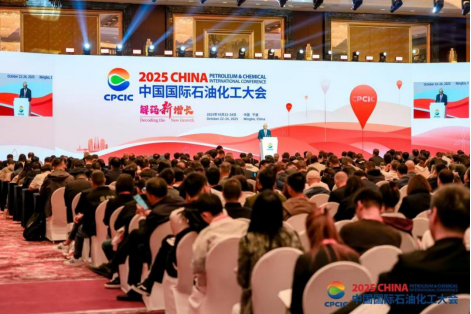
2025中国国际石油化工大会全体会议在宁波召开
Xin Lang Cai Jing· 2025-10-25 09:36
Core Viewpoint - The petrochemical industry must navigate external challenges while seizing opportunities for structural upgrades, technological revolutions, and market expansion to achieve high-quality development during the 14th Five-Year Plan period [1][9]. Group 1: Industry Challenges and Opportunities - The industry faces challenges such as external environment fluctuations, low-carbon transitions, and insufficient high-end supply [1]. - Innovation-driven development and green low-carbon transformation are identified as new growth drivers amid a sluggish global economy and intensified competition [3]. - The petrochemical sector is expected to achieve a revenue of 16.28 trillion yuan and a profit of 789.71 billion yuan in 2024, marking increases of 46.9% and 53.2% respectively since 2020 [9]. Group 2: Regional Focus and Development Goals - Zhejiang Province aims to achieve a revenue of 1.8 trillion yuan in the petrochemical sector by 2024, positioning it as the third-largest in the country [5]. - Ningbo has established a leading industrial chain in refining and ethylene, with plans to build a world-class green petrochemical industrial cluster [7]. Group 3: Strategic Recommendations - Key strategies for the industry include enhancing technological innovation, accelerating green transformation, optimizing industrial layout, nurturing leading enterprises, and deepening digital empowerment [9][13][15]. - The industry is urged to focus on resilience in supply chains, high-end differentiation, and international opportunities while addressing the dual carbon goals [11]. Group 4: International Collaboration and Trends - A significant collaboration was announced between Sinopec and BASF for carbon footprint accounting, marking a breakthrough in international cooperation on carbon management [19]. - Global leaders emphasized the importance of innovation, sustainability, and cooperation with China as a key player in the petrochemical sector [23][24]. Group 5: Conclusion and Future Outlook - The conference highlighted the intertwined trends of energy transition, industrial restructuring, and green low-carbon initiatives, indicating a collective effort towards a sustainable development path in the petrochemical industry [27].
成果发布︱国际零碳零废城市发展联盟成立
国家能源局· 2025-10-25 08:03
Core Viewpoint - The establishment of the "International Zero Carbon Zero Waste City Development Alliance" aims to promote the synergistic development of "net zero emissions" and "zero waste cities" globally, facilitating green and low-carbon transformation in urban areas [2][4]. Group 1: Alliance Objectives and Vision - The alliance focuses on creating a platform for policy dialogue, technological cooperation, capacity building, industrial linkage, and investment matching to accelerate the green transition of cities worldwide [4]. - The vision includes building a "net zero and zero waste future city community" through global collaboration in climate governance, circular economy, and green technology innovation [4]. Group 2: Suzhou's Role and Achievements - Suzhou, as a key founding city of the alliance, has integrated the construction of a clean, low-carbon, safe, and efficient energy system into its socio-economic development over the past decade [4]. - The installed capacity of renewable energy in Suzhou has increased from 300,000 kW to 6,530,000 kW, marking a 21-fold growth [4]. - In 2024, Suzhou completed green electricity transactions of 4.63 billion kWh and green certificate transactions of 1.328 million, ranking first in Jiangsu Province [4]. Group 3: Forum Highlights - The forum, themed "Ten Years of Joint Efforts in Energy Transformation, Innovation Leading a Green Future," was co-hosted by the National Energy Administration, the International Renewable Energy Agency (IRENA), and the Jiangsu Provincial Government [5]. - Key outcomes included the release of the "Global Energy Low Carbon Transition Development 2030 Suzhou Vision" and the "Energy Transformation Index Blue Book 2025," showcasing China's achievements in energy transition and international cooperation [5]. - The event attracted over 2,000 representatives from 36 countries and regions, including energy ministers, ambassadors, and leaders from international energy organizations [5].

全球供强需弱,中国石化行业如何“解码新增长”
第一财经网· 2025-10-25 06:02
Core Insights - The Chinese petrochemical industry is projected to achieve significant growth, with a 53% increase in imports and exports compared to 2020, amidst complex global economic challenges [1][2]. Group 1: Industry Growth and Trends - The 2024 revenue for the Chinese petrochemical industry is expected to reach 16.28 trillion yuan, with a profit of 789.71 billion yuan, marking increases of 46.9% and 53.2% respectively since 2020 [2]. - The industry is experiencing five major trends: geopolitical instability affecting supply chain resilience, the necessity of achieving carbon neutrality, a shift towards multi-energy competition in transportation, peak traditional demand with new chemical materials creating a second growth curve, and structural opportunities arising from global petrochemical industry reconstruction [2][3]. Group 2: Strategic Directions - Companies are encouraged to enhance supply chain resilience, focus on high-end differentiation and intelligence, and build diversified supply systems to seize international opportunities while deepening green and low-carbon transformations [2][3]. - The concept of "new growth" is defined as being driven by innovation, grounded in green and low-carbon principles, enabled by digital transformation, and pursued through open collaboration [2][3]. Group 3: Regional Insights and International Cooperation - Future growth potential in the petrochemical sector is expected to concentrate in regions such as China, India, Southeast Asia, and Africa, with integration and differentiation being key to maintaining resilience during cyclical changes [3]. - The demand for intelligent technology is rising, with a shift from automated control to intelligent decision-making and autonomous operations, necessitating tailored strategies for different regional markets [3].
展开说说丨“规划”这事还得看中国 国际社会都点赞
Yang Shi Xin Wen Ke Hu Duan· 2025-10-25 01:59
Core Insights - China's development is accelerating rapidly, driven by clear planning and strategic goals [2][3] - The upcoming "15th Five-Year Plan" is set to guide China's economic and social development for the next five years, following the achievements of the "14th Five-Year Plan" [3][15] Summary by Sections Planning and Historical Context - The "14th Five-Year Plan" is part of a long history of planning in China, with 14 previous plans contributing to the country's growth and development [5] - Each five-year plan has marked significant milestones, from establishing a complete industrial system to achieving a high-income status and laying the groundwork for a moderately prosperous society [5] Achievements of the "14th Five-Year Plan" - The plan has led to a significant increase in economic output and national strength, with innovation driving new productive forces [15] - Key areas of progress include the establishment of a new development pattern, deepening reforms, and a steady transition towards a green economy [15][17] - The plan has also focused on improving public welfare, enhancing social services, and strengthening safety measures [15] International Recognition - Global leaders have praised China's planning and development strategies, highlighting their clarity and effectiveness [10][12][19] - China's advancements in technology and sustainable energy have been noted as exemplary by various international figures [19][27] Future Outlook - The "15th Five-Year Plan" is anticipated to be a critical phase for further economic and social development, aiming for the realization of socialist modernization by 2035 [37] - The plan will encompass comprehensive deployments across various sectors, ensuring that China remains resilient despite external challenges [30][37]

山东经济总量将跨上十万亿大台阶
Da Zhong Ri Bao· 2025-10-25 01:06
Core Insights - Shandong's economic total is set to surpass 10 trillion yuan, reflecting significant growth and development in the province's economic capabilities [2] Economic Growth - Shandong's GDP increased from 7.44 trillion yuan in 2020 to 9.86 trillion yuan in 2024, raising its share of the national economy from 7.19% to 7.31% [2] - Per capita GDP rose from 73,400 yuan in 2020 to 97,600 yuan in 2024, with the urban-rural income ratio decreasing from 2.33 to 2.14 [2] - Life expectancy increased from 79.1 years to 80.5 years over four years [2] Clean Energy Development - Shandong has accelerated the construction of large-scale clean energy bases, with non-fossil energy generation capacity reaching 134 million kilowatts, accounting for 53.4% of total capacity, a 22.6 percentage point increase since 2020 [2] - Non-fossil energy generation is expected to exceed 210 billion kWh this year, equating to a reduction of 160 million tons of CO2 emissions and saving approximately 60 million tons of standard coal [2] Environmental and Resource Management - Energy consumption per unit of GDP decreased by 18.5% over four years, with energy consumption growth at 3.9% supporting a 6.1% economic growth [3] - Water usage per unit of GDP dropped by 21.3% compared to 2020, achieving early completion of planned targets [3] - The quality of the Yellow River's water has maintained a Class II standard for nine consecutive years [3] Agricultural and Rural Development - Shandong's total grain production has remained stable at over 110 billion jin for four consecutive years, with agricultural output reaching 1.28 trillion yuan [3] - The province leads the nation in agricultural product exports for 26 years, with 2,070 rural revitalization areas cultivated [3] Economic Reforms and Business Environment - Shandong has implemented significant reforms in state-owned enterprises, finance, and taxation, enhancing the business environment [4] - The province has achieved a 90% online service rate for government affairs, promoting efficiency in administrative processes [4] - Shandong is home to 52 companies in the "China Top 500 Enterprises" list and 71 in the "China Top 500 Manufacturing Enterprises" list, with a 33% increase in listed companies since 2020 [4] Employment and Social Services - A total of 5.994 million new urban jobs were created, with 1.568 million positions filled through public welfare programs [5] - Shandong has been designated as a pilot area for rural education revitalization, leading the nation in the number of quality balanced counties for compulsory education [6] - The province has achieved a 90% rate for direct settlement of medical expenses across regions, enhancing healthcare accessibility [6]
国际零碳零废城市发展联盟成立 苏州倡议促全球城市绿色转型
Su Zhou Ri Bao· 2025-10-25 00:49
Core Viewpoint - The establishment of the International Zero Carbon Zero Waste City Development Alliance aims to promote green low-carbon urban development and address global challenges such as climate change and resource constraints [1] Group 1: Alliance Formation - The alliance was initiated by Suzhou and other domestic and international cities during the 2025 International Energy Transformation Forum [1] - The alliance seeks to gather innovative forces from cities, research institutions, and enterprises to provide technical support and economic motivation for energy transformation [1] Group 2: Urban Challenges and Goals - Cities account for over 50% of the global population and consume nearly 80% of energy, making them central to energy transition and green development [1] - The alliance calls for enhanced collaboration among cities to promote green transformation and achieve sustainable development [1] Group 3: Future Initiatives - The alliance will focus on understanding and sharing green development policies among cities, exploring energy transition, and discussing green cooperation mechanisms and standard recognition [1] - It aims to actively develop green industries, expand green consumption, investment, and employment, and foster cooperation in green and digital technologies [1]

展望“十五五”:如何增加“含绿量”,提升经济“含金量”?
Nan Fang Du Shi Bao· 2025-10-24 14:09
Core Viewpoint - The Fourth Plenary Session of the 20th Central Committee of the Communist Party of China emphasized a systematic deployment for comprehensive green transformation, aiming to build a beautiful China through carbon peak and carbon neutrality initiatives [1][4]. Group 1: Green Transformation Measures - The session proposed accelerating the comprehensive green transformation of economic and social development, focusing on the concept that "lucid waters and lush mountains are invaluable assets" [1]. - Key measures include establishing a dual control system for carbon emissions and intensity, transitioning to a green low-carbon energy system, and promoting green low-carbon industrial structure and lifestyle transformations [4][5]. Group 2: Energy System Development - The development of a new energy system is prioritized, with a goal that by the end of the 14th Five-Year Plan, most new electricity demand will be met by new clean energy generation [4][5]. - Specific actions include enhancing non-fossil energy development, promoting clean and efficient use of fossil energy, and constructing a new power system to ensure the effective integration of green electricity [5][11]. Group 3: Industrial Structure Transformation - The green low-carbon industrial structure transformation aims to increase the "green content" of industries, with the current scale of green low-carbon industries estimated at approximately 11 trillion yuan, expected to double in the next five years [5][10]. - The plan includes creating around 100 national-level zero-carbon parks during the 14th Five-Year Plan period, which will significantly expand the green low-carbon industry [5]. Group 4: Lifestyle Changes - The transformation of production and lifestyle towards green low-carbon practices is essential, involving clean production, circular economy development, and promoting green living habits among the public [6][10]. - Goals include achieving a solid waste utilization rate of about 4.5 billion tons by 2030 and increasing the proportion of railway and waterway transport for bulk goods [6]. Group 5: Innovation and Market Dynamics - The period of the 14th Five-Year Plan is seen as crucial for green technology innovation, with a focus on breaking down barriers between industry, academia, and research to enhance green innovation [8][9]. - The market's role in the development of low-carbon green industries is highlighted, with mechanisms established to guide market expectations and attract investment [10].
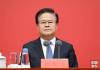
专访中国交建刘正昶:从“跟跑”到“领跑”,以科技创新重塑基建行业竞争力
Zheng Quan Shi Bao Wang· 2025-10-24 14:00
Core Viewpoint - The development of new quality productivity has become a core focus for promoting high-quality development, particularly in the infrastructure sector, which is a vital pillar of the national economy. The emphasis is on leveraging technological innovation to address transformation challenges and activate new industrial momentum [1]. Group 1: Key Breakthroughs in Core Technologies - The company has achieved significant breakthroughs in key core technologies, focusing on critical areas such as dredging, shield tunneling, and deep-sea engineering. This includes the development of major equipment and software, such as an 8-meter shield machine main bearing and a 5000t pile-driving vessel hydraulic cylinder [2]. - The company has independently developed various core software platforms and high-performance materials, filling multiple domestic gaps and accelerating the localization of major equipment [2][3]. Group 2: Research and Development Strategy - The company has optimized its R&D organization to tackle "bottleneck" technologies in emerging fields like floating wind power and deep-sea mining, while also encouraging innovation in traditional infrastructure projects [3]. - A structured approach to R&D has been established, categorizing projects into different levels and focusing on key technological breakthroughs, thereby enhancing the efficiency of R&D investments [3]. Group 3: Integration of Technology and Industry - The company is implementing a special action plan for new quality productivity, focusing on comprehensive, smart, green, and safe transportation, and is developing key demonstration projects in intelligent construction and smart cities [5][6]. - The company has successfully developed the world's largest diameter full-face hard rock tunneling machine, setting multiple world records in the process [6]. Group 4: Green and Low-Carbon Initiatives - The company has established over 130 green and low-carbon design and construction standards across various transportation infrastructure sectors, contributing to the development of a comprehensive green low-carbon standard system [8]. - A "Five-Year Thousand Items" green technology initiative has been launched, identifying numerous low-carbon technologies and achieving significant carbon reduction in various projects [9]. Group 5: Digital Transformation and AI Applications - The company is leveraging digital tools to reconstruct its management system, enhancing operational efficiency and driving business innovation through data utilization [10]. - The company is developing a large AI model for the civil engineering sector, with applications in over 30 scenarios, and is promoting a digital ecosystem for infrastructure [11]. Group 6: Future Development Plans - The company aims to focus on high-end, intelligent, green, and integrated development directions, reinforcing its commitment to original technology innovation and sustainable practices [12].