AI应用

Search documents
20cm速递|关注科创芯片ETF国泰(589100)投资机会,市场关注行业预期转向
Mei Ri Jing Ji Xin Wen· 2026-01-20 06:12
Group 1 - The core viewpoint of the article highlights the strong demand for AI applications and the supply shortage of advanced process and memory chips, leading multinational semiconductor industry leaders to expand their production capacity [1] - The capital expenditure of multinational semiconductor leaders for the fiscal year 2026 is expected to remain optimistic, driven by robust global cleanroom construction demand [1] - Cleanroom orders are anticipated to see both volume and price increases, with profit margins likely to be revised upward due to the slow expansion of construction capabilities [1] Group 2 - Cleanrooms are identified as a fundamental infrastructure component, with the potential for positive changes in their fundamentals to occur first [1] - The capital expenditure in the semiconductor industry is primarily directed towards cleanroom construction and semiconductor equipment [1] - The Guotai Science and Technology Chip ETF (589100) tracks the Science and Technology Chip Index (000685), which has a daily price fluctuation limit of 20% and selects no more than 50 large-cap semiconductor-related securities from the STAR Market [1]
20cm速递|关注科创综指ETF国泰(589630)投资机会,关注半导体预期向上与资本开支周期
Mei Ri Jing Ji Xin Wen· 2026-01-20 06:12
Group 1 - The core viewpoint is that the demand for AI applications is driving the semiconductor industry, particularly in advanced processes and memory chips, leading to a clear need for multinational semiconductor leaders to expand their production capacity [1] - Capital expenditure for multinational semiconductor leaders is expected to remain optimistic for the fiscal year 2026, with strong global demand for cleanroom construction [1] - Cleanroom orders are anticipated to see both volume and price increases, along with an upward adjustment in profit margins, as the basic infrastructure for semiconductor operations is expected to experience positive changes [1] Group 2 - The Guotai ETF (589630) tracks the Sci-Tech Innovation Index (000680), which had a daily fluctuation of 20%, covering 97% of the listed companies on the Sci-Tech Innovation Board [1] - The index includes over 560 constituent stocks, spanning hard technology sectors such as electronics and biomedicine, and aims to reflect the overall performance of the Sci-Tech Innovation Board [1] - The industry allocation of the Sci-Tech Innovation Index is balanced, focusing on the growth and innovation of technology enterprises [1]
午评:沪指跌0.3% 环氧丙烷板块领涨 卫星互联网板块领跌
Xin Hua Cai Jing· 2026-01-20 05:40
Market Overview - The Shanghai and Shenzhen stock markets opened lower on January 20, with major indices experiencing initial gains followed by declines, with the Shanghai Composite Index dropping by 0.82% at one point [1] - By midday, the Shanghai Composite Index closed at 4101.62 points, down 0.30%, with a trading volume of approximately 802.8 billion yuan; the Shenzhen Component Index closed at 14119.95 points, down 1.22%, with a trading volume of about 104.51 billion yuan [1] Sector Performance - The sectors showing initial gains included cultivated diamonds, semiconductors, rental purchase rights, storage chips, and cement materials, while sectors like Hainan, precious metals, and satellite internet showed initial declines [1] - By midday, the leading sectors in terms of gains were epoxy propylene, rental purchase rights, and insurance, while satellite internet, CPO concepts, and virtual robots were among the sectors with the largest declines [1] Institutional Insights - CITIC Securities highlighted that the AI application sector is expected to be a main focus in early 2026, with ongoing catalysts for AI applications and a trend towards accelerated implementation [2] - Huatai Securities noted that the high crowding risk in the defense and military sector has been alleviated, but funds flowing out have not moved to safer options, leading to significant internal sector differentiation and rapid rotation within the A-share market [2] Company Updates - CITIC Construction Investment reported that TSMC's latest financial results exceeded market expectations, indicating strong growth potential in the computing power sector, with a forecast for continued robust demand through 2027 [3] Policy Developments - The National Development and Reform Commission (NDRC) announced plans to formulate the "2026-2030 Strategy for Expanding Domestic Demand," aimed at aligning new demand with new supply through innovative measures [4] - The NDRC is also planning to advance significant projects in high-tech industries, targeting a manufacturing value-added share of over 17% by 2025 [5] - Additionally, the NDRC is researching the establishment of a national-level merger and acquisition fund to enhance government investment strategies and promote innovation and entrepreneurship [6]
帮主郑重:指数普跌资金却暗涌!午后盯紧这个关键信号
Sou Hu Cai Jing· 2026-01-20 05:11
Group 1 - The market is experiencing a significant downturn, with all three major indices in the red and the ChiNext index down nearly 2%, indicating a broad market decline with over 3,300 stocks falling [1] - Certain previously popular sectors such as commercial aerospace, CPO, and controllable nuclear fusion are leading the decline, suggesting a rapid retreat from pure sentiment-driven speculation [3] - In contrast, the chemical and chemical engineering sector is rising due to multiple favorable factors, indicating a cyclical turning point for bulk chemicals, while traditional sectors like real estate, insurance, and banking are also showing unusual activity [3] Group 2 - The strategy in response to the market's divided situation is to "go with the trend and abandon the high for the low," advising against bottom-fishing in sectors that have already seen significant declines [4] - There is a focus on the sustainability of the chemical sector's strength, which is supported by fundamental logic, with potential for small position following if it maintains its momentum [4] - Attention is drawn to two potential directions: semiconductors, which may present opportunities after adjustments due to industry prosperity, and AI applications, where certain stocks are performing well and need to be evaluated for real products and scenarios [4]


002995 一分钟涨停
Shang Hai Zheng Quan Bao· 2026-01-20 04:59
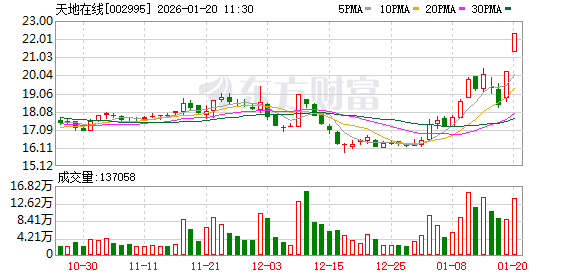
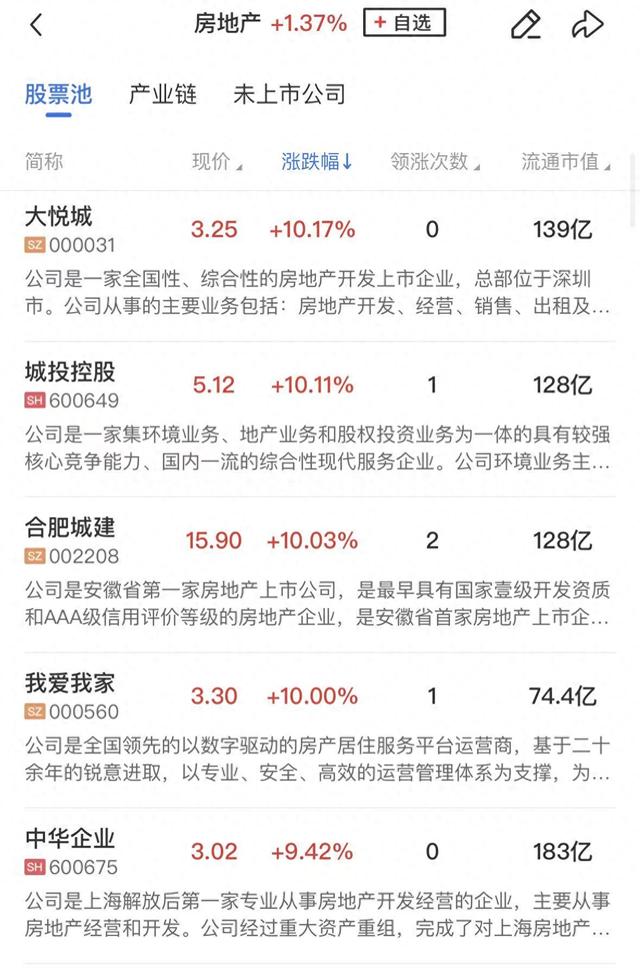
Market Overview - The A-share market experienced fluctuations and adjustments, with significant sell-offs in the previously hot commercial aerospace and non-ferrous metal sectors, leading to a collective decline in the four major stock indices. As of the midday break, the Shanghai Composite Index was at 4101.62 points, down 0.30%, the Shenzhen Component Index fell 1.22%, the ChiNext Index dropped 1.83%, and the Sci-Tech Innovation Index decreased by 1.43% [2] AI Application Sector - The AI application concept showed active performance in the morning session, with notable gains in AI+ marketing, AI+ media, and AI+ technology sectors. The Shenwan Advertising Marketing Industry Index rose by 0.93%, with companies like Tian Di Online (002995) hitting the daily limit and achieving two consecutive daily limit-ups [4][7] - Specific stocks in the AI application sector saw significant price increases, including: - Jiayun Technology (300242) at 6.38, up 19.92% - Zhaoxun Media (301102) at 13.35, up 14.59% - Zhejiang Wenhu (600986) at 9.97, up 10.04% - Tian Di Online (002995) at 22.29, up 10.02% - Yaowang Technology (002291) at 7.47, up 10.01% [8] Real Estate Sector - The real estate sector saw a morning rally, with the Shenwan Real Estate Industry Index increasing by 1.73%, the highest among all primary industries. Notable individual stock performances included: - Dayue City at 3.25, up 10.17% - City Investment Holdings at 5.12, up 10.11% - Hefei Urban Construction at 15.90, up 10.03% - Wo Ai Wo Jia at 3.30, up 10.00% [13][14] - Recent policy announcements aimed at supporting residents in improving housing conditions include tax refunds for individuals selling their homes and purchasing new ones within a year. This is expected to enhance market expectations and promote stable and healthy development in the real estate sector [15]

午评:沪指跌0.3% 地产、银行等板块上扬 军工板块下挫
Zheng Quan Shi Bao Wang· 2026-01-20 04:49
Core Viewpoint - The A-share market is experiencing a downward trend, with major indices showing significant declines, influenced by various macroeconomic factors and sector performance [1]. Market Performance - As of the midday close, the Shanghai Composite Index fell by 0.3% to 4101.62 points, the Shenzhen Component Index dropped by 1.22%, and the ChiNext Index decreased by 1.83% [1]. - Approximately 3400 stocks in the A-share market were in the red, with total trading volume across the Shanghai, Shenzhen, and North exchanges reaching about 1.87 trillion yuan [1]. Sector Analysis - Sectors such as military, non-ferrous metals, and steel are experiencing declines, while real estate, insurance, banking, and semiconductors are showing upward movement [1]. - Active concepts include phosphate-related stocks and the "China Special Valuation" theme [1]. Market Sentiment and Future Outlook - According to Zhongyin Securities, the "spring fever" market is facing short-term pressure due to a complex overseas macro environment, increased uncertainty in the Federal Reserve's monetary policy, and domestic regulatory efforts to stabilize the market [1]. - The risk appetite is not the only factor influencing pricing themes; sector catalysts and positioning are also crucial. The likelihood of "one sector rising while another falls" is greater than "synchronous declines" in the current market context [1]. - Recent changes in trading volume proportions among the top ten concept sectors indicate an increase in semiconductor, photovoltaic, and robotics sectors, with high potential for AI application catalysts in the future [1]. - The short-term adjustment is attributed to previous overvaluations and emotional impacts from event disturbances, but the underlying logic of the AI application trend remains intact, suggesting that the market may continue to perform well [1].
受益AI大模型深度参与,两大板块大幅拉升!
Zheng Quan Ri Bao Zhi Sheng· 2026-01-20 04:36
Core Viewpoint - The integration of AI in short dramas and interactive games is reshaping the media industry, creating new growth opportunities and transforming traditional content monetization methods [2][3]. Group 1: Market Performance - On January 20, A-shares opened high but quickly retreated, with cultural media stocks, particularly in short dramas and games, experiencing significant price increases [1]. - Companies like Jiayun Technology and Zhejiang Wenlian saw their stocks hit the daily limit, with notable performances from Yue Media and Tiandi Online [1]. - Giant Network's stock price reached 51.70 yuan per share, with a market capitalization of 100.1 billion yuan [1]. Group 2: AI Integration in Media - AI short dramas and interactive games are seen as a new growth engine in the media sector, combining narrative appeal with interactive experiences [2]. - AI is revolutionizing the gaming industry by enhancing gameplay through real-time interactions and reducing costs by over 30% [2]. - In the short drama sector, AI is significantly shortening production cycles to 2-3 days and increasing content output [2]. Group 3: Industry Trends and Opportunities - The integration of AI is lowering entry barriers and expanding market size, allowing smaller teams to innovate and create diverse content [3]. - AI is expected to play a crucial role in the future of content creation, with a focus on human-machine collaboration to enhance creativity while maintaining content quality [3]. - The AI application sector is projected to be a key focus area in 2026, with ongoing trends indicating accelerated adoption [3][5]. Group 4: Specific Company Developments - Giant Network has introduced AI models into its core gameplay, enhancing user engagement and attracting millions of players [4]. - Zhejiang Wenlian's partnership with ByteDance's Douyin has led to significant growth in digital marketing applications, with a reported 250 million yuan consumption in 2025, marking a fivefold increase [5]. Group 5: Investment Focus Areas - Investment opportunities are emerging in three key areas: companies leading in AI-native gameplay, full-service providers for short dramas, and AI computing power suppliers [5].

红利低波ETF(512890)近20个交易日逆势吸金15亿元 机构:震荡市中红利资产配置价值凸显
Xin Lang Cai Jing· 2026-01-20 04:32
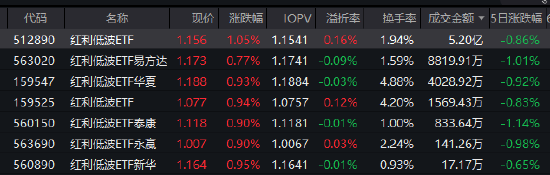
Core Viewpoint - The A-share market experienced an overall adjustment on January 20, with the three major indices opening high and then declining. In this context, the Dividend Low Volatility ETF (512890) rose by 1.05%, closing at 1.156 yuan, with a turnover rate of 1.94% and a transaction volume of 5.20 billion yuan, ranking first among similar ETFs in terms of transaction volume [1][7]. Fund Performance - The Dividend Low Volatility ETF (512890) was established on December 19, 2018, with a benchmark of the CSI Dividend Low Volatility Index return. As of January 19, 2026, it has achieved a total return of 128.72%, outperforming its benchmark, making it a stable tool for asset allocation in a volatile market [5][11]. - The ETF has seen significant net inflows, with 7.7 billion yuan over the last 5 trading days, 15.2 billion yuan over the last 20 days, and 32.1 billion yuan over the last 60 days. As of January 19, 2026, its circulating scale was 266.61 billion yuan [2][8]. Market Context - The cash dividend scale of A-share listed companies is expected to reach a record high of 2.55 trillion yuan in 2025, a year-on-year increase, which is twice the total amount of IPOs and refinancing during the same period, indicating a significant enhancement in dividend return capabilities [4][10]. - Investment in traditional sectors remains under pressure, with construction, real estate, and manufacturing showing varying year-on-year growth rates of -2.2%, -17.2%, and +0.6%, respectively. The market is expected to stabilize gradually due to real estate policies [4][11].
午报三大指数集体下挫,房地产、化工板块逆势走强,商业航天再陷调整
Xin Lang Cai Jing· 2026-01-20 04:20
Market Overview - The three major indices experienced fluctuations and retreated, with the Shenzhen Component Index dropping over 1% and the ChiNext Index falling over 2% [1] - The total trading volume in the Shanghai and Shenzhen markets reached 1.85 trillion, an increase of 568 billion compared to the previous trading day [1] - Over 3,300 stocks in the market declined, while the real estate sector showed active performance with several stocks hitting the daily limit [1] Real Estate Sector - The real estate sector rose by 1.37%, with notable stocks such as Diyi City and Chengdu Investment Holdings hitting the daily limit [2] - A joint announcement from the Ministry of Finance and other departments extended the personal income tax preferential policy for residents purchasing new homes until the end of 2027, allowing tax refunds for those who sell their homes and buy new ones within one year [2] Chemical Sector - The chemical sector saw a counter-trend rise, with stocks like Jiangtian Chemical and Hongbaoli hitting the daily limit [3][4] - Recent data indicated significant price increases in certain chemical products, with epoxy propylene prices rising by 7.9% week-on-week [4] AI Application Sector - The AI application sector rebounded, with stocks such as Jiayun Technology and Yue Media hitting the daily limit [5][6] - Alibaba announced the integration of its AI tool, Qianwen, into its core ecosystem, marking a significant upgrade in its capabilities [6] Storage Chip Sector - The storage chip concept remained active, with stocks like Zhongwei Semiconductor and Puran Technology reaching new highs [7][8] - Micron Technology reported a worsening shortage of memory chips, attributing it to increased demand from AI infrastructure development [8] Market Sentiment - Overall, the market showed signs of adjustment, with the three major indices collectively declining and increased trading volume indicating heightened activity [9] - The market is characterized by rapid shifts between high and low positions, with real estate and chemical sectors showing strength while commercial aerospace stocks faced declines [9]
创业板指半日跌近2%,商业航天、光模块重挫,芯片股走强,分析:高波题材或将降温
21世纪经济报道· 2026-01-20 04:11
Market Overview - On January 20, A-shares experienced a significant drop, with the ChiNext Index falling over 2% at one point, ultimately closing down 1.8% [1] - The Shanghai Composite Index closed down 0.3%, while the Shenzhen Component Index fell by 1.2%, with nearly 3,400 stocks declining [1] Index Performance - The Shanghai Composite Index closed at 4101.62, down 0.30% - The Shenzhen Component Index closed at 14119.95, down 1.22% - The ChiNext Index closed at 1824.62, down 1.43% - The total A-share market index (Wande All A) was at 6743.51, down 0.81% [2] Sector Performance - The chemical sector showed resilience, with stocks like Hongbaoli and Shandong Heda hitting the daily limit [2] - AI application stocks rose, with companies like Jiayun Technology and Yue Media also hitting the daily limit [2] - The storage chip sector remained active, with stocks like Baiwei Storage and Puran Shares reaching new highs, and Baiwei Storage increasing nearly 200% over the last 120 trading days [3] - Retail stocks strengthened, with Shanghai Jiubai and Xinhua Department Store hitting the daily limit, following the National Development and Reform Commission's announcement to develop a strategy for expanding domestic demand from 2026 to 2030 [3] Financing and Market Trends - A-shares' financing balance decreased for the first time in two weeks, with a reported balance of 27,059 billion yuan, down 8.5 billion yuan from the previous day [6][7] - The new financing regulations implemented on January 19 led to a significant drop in margin trading, with the trading volume on that day being the lowest of the year [6] - Key sectors experiencing net selling in financing included electronics, communications, defense, computers, and basic chemicals, each with net selling exceeding 1 billion yuan [7][8] - Analysts suggest that the increase in margin requirements is aimed at cooling down overheated speculative trends, particularly affecting high-volatility sectors [8] Broker Insights - Some brokers reported a shortage of available margin trading quotas due to high market demand [9]