AI技术

Search documents
深交所牵线搭桥 资本与科技企业共绘智能硬件产业新蓝图
Zhong Zheng Wang· 2025-12-30 00:55
Group 1 - The Shenzhen Stock Exchange (SZSE) recently organized an event focused on "smart hardware," facilitating deep dialogue between venture capital institutions and high-quality tech companies in various sectors, aiming to bridge the gap between capital markets and technological innovation [1] - The smart hardware industry is experiencing explosive growth driven by AI technology, becoming a key sector for industrial upgrading and economic activation [1][4] - The event aims to promote the deep integration of capital, technology, and talent, aligning with industry development trends [1] Group 2 - Participating companies are leveraging core technological innovations to establish strong competitive barriers in their respective niches [2] - Shenzhen Pacini Perception Technology has developed a high-precision multi-dimensional tactile sensor that measures 15 sensory dimensions, capturing over 40% of the global market share [2] - Shenzhen Xingzhixing Robotics focuses on developing intelligent special robots for high-risk scenarios, utilizing proprietary technologies to overcome challenges in complex environments [3] Group 3 - The smart hardware sector is diversifying, with significant advancements in AI glasses, smart wearables, smart home devices, industrial smart equipment, and robotics, leading to large-scale product shipments [4] - Deep Control has launched the world's first L4-level energy-efficient intelligent system, enhancing energy efficiency by over 10% for various mechanical and electrical systems [4] - Suunto Sports Technology emphasizes the importance of wearable devices as a representative application of AI, focusing on algorithm development and global data assets [4] Group 4 - Cloud Capital's founder expressed confidence in the smart hardware industry, particularly in the integration of AI and smart hardware, and aims to facilitate more companies in aligning with capital market standards [5] - The Chinese smart hardware ecosystem is thriving, featuring a diverse range of companies from hard tech innovators to those excelling in supply chain integration and user experience [6] - The SZSE's ChiNext board supports various types of innovation, catering to the development needs of smart hardware companies [6]
那个教科书级的出海标杆,如今自己先倒下了
Tai Mei Ti A P P· 2025-12-30 00:50
Core Insights - Anker Innovations is facing significant challenges, including rumors of layoffs, declining profits, and strategic misalignment, amidst a broader downturn in the cross-border e-commerce industry [1][2][3] Group 1: Company Challenges - Anker Innovations reportedly plans to lay off nearly 30% of its workforce, which has raised concerns in the industry, especially as the company recently submitted a listing application to the Hong Kong Stock Exchange [1] - The company's Q3 financial report showed a revenue growth slowdown to 19.88%, the lowest since Q1 2023, with a non-GAAP net profit decline of 2.92% year-on-year and a net cash flow from operating activities dropping to -8.65 billion yuan, a 152.38% year-on-year decrease [1] - Anker's market position is threatened by rising competition from local brands like Ugreen and Baseus, as well as pressure from original equipment manufacturers (OEMs) like Apple and Samsung [2][3] Group 2: Market Environment - The global consumer electronics market is experiencing a slowdown, with growth rates projected between 2.8% and 6% for 2025, significantly lower than the double-digit growth seen during the pandemic [3] - Anker's core business, which relies heavily on the sales of charging devices and accessories, is directly impacted by the declining sales of smartphones and laptops, with global smartphone shipments expected to grow only 6.4% in 2024 [3][4] Group 3: Competitive Landscape - The competitive landscape for accessories is shifting, with OEMs capturing a larger market share in the charging accessories segment, now accounting for 41% of the market compared to Anker and other third-party brands' combined share of 38.6% [4] - Anker's market share in TWS earphones is only 7%, despite a 95% year-on-year increase in shipments, indicating a struggle to compete against leading brands [4] Group 4: Cost Pressures - Rising costs in advertising and compliance are squeezing Anker's profit margins, with advertising costs on Amazon increasing from $1.2 to $2.8 per click, and new tax policies in the U.S. adding significant financial burdens [5][6] - The logistics sector is also facing challenges, with increased customs clearance times and costs, further impacting operational efficiency [6] Group 5: Strategic Misalignment - Anker's shift from its original "shallow sea strategy" to a more diversified product line has led to resource wastage and a dilution of core competencies, resulting in a cycle of high investment with low returns [9][10] - The company's aggressive expansion into new categories has not aligned with its technical capabilities, leading to significant operational failures and the closure of multiple product teams [11][12] Group 6: Organizational Issues - Anker's rapid personnel expansion has resulted in a "high salary, low efficiency" structure, with employee numbers increasing by over 50% in a few years, but without corresponding productivity gains [14][15] - The organizational structure has become cumbersome, leading to slow decision-making and high communication costs, exacerbated by frequent changes in leadership [15][16] Group 7: Future Outlook - The company must refocus on its core competencies and streamline operations to regain market competitiveness, as evidenced by the successful launch of its Anker SOLIX Solarbank 3 Pro product [18] - Anker's experience highlights the need for cross-border e-commerce companies to adapt to a new phase of brand-focused, refined, and globalized strategies, moving away from reliance on low-cost models [18][19]

新股消息 | 国民技术二度递表港交所 为平台型MCU领先企业
Zhi Tong Cai Jing· 2025-12-30 00:46
Company Overview - Guomin Technology Co., Ltd. (国民技术) is a platform-based integrated circuit design company focused on providing control chips and system solutions for various smart terminals [5] - The company has established a diverse product matrix with applications in consumer electronics, industrial control, digital energy, smart home, automotive electronics, and medical electronics [5] - According to Zhaosheng Consulting, Guomin Technology ranks among the top five Chinese companies in the global platform-based microcontroller unit (MCU) market by revenue in 2024, and is ranked first in the Chinese MCU market for embedded commercial encryption algorithm modules [5][12] Financial Performance - The company reported revenues of approximately RMB 1.195 billion, RMB 1.036 billion, RMB 1.168 billion, and RMB 958 million for the fiscal years 2022, 2023, 2024, and the nine months ending September 30, 2025, respectively [8] - Gross profits for the same periods were approximately RMB 426 million, RMB 18 million, RMB 182 million, and RMB 183 million [9] - The company has experienced fluctuations in gross profit margins, with margins of 35.6%, 1.7%, 15.6%, and 19.1% for the respective years [10] Industry Overview - The global MCU market is projected to grow from USD 19.8 billion in 2019 to USD 29.9 billion by 2024, with a compound annual growth rate (CAGR) of 8.6% [12] - Emerging industries are expected to further expand the application range of MCUs, with the global MCU market for edge AI applications anticipated to grow from USD 70 million in 2024 to USD 270 million by 2029, reflecting a CAGR of 31.0% [15] - The Chinese MCU market has rapidly developed from RMB 36.8 billion in 2019 to RMB 63.3 billion in 2024, with a CAGR of 11.5%, and is expected to continue growing at a CAGR of 12.0% to reach RMB 111.4 billion by 2029 [16][19]


2026即时零售冲刺万亿规模:下沉市场提速 AI与运力协同成关键
Sou Hu Cai Jing· 2025-12-29 16:22
行业分析师指出,即时零售已从"数字生活补充"升级为"数字生活基础设施",2026年万亿规模下,行业竞争将聚焦供应链、运力、技术与场景适配能力的综 合较量。捷风快送等运力服务商践行的"聚合赋能+下沉渗透"模式,精准契合行业发展趋势,有望在差异化竞争中持续突围。随着技术创新与生态完善,即 时零售将进一步激活本地消费潜力,成为实体经济数字化转型的关键路径。 AI技术全面渗透,推动行业全链路升级。2026年,AI将从辅助应用转向核心驱动,重塑即时零售供给、履约与服务环节。供给端,AI选品系统结合区域消 费特征实现精准备货,降低库存损耗;履约端,动态路径优化算法结合无人配送技术规模化应用,有效降低末端成本,核心区域"10分钟达"将逐步落地。丰 e足食近期已启动"AI+无人化"战略,计划2026年一季度在北京、上海等核心城市试点无人配送车补货模式,解决"最后5公里"效率难题。运力协同方面,捷 风快送通过与麦芽田、青云聚信达成深度战略合作,打通多平台订单渠道,借助智能调度系统提升履约稳定性,为商家提供全品类定制化配送服务。 政策护航与规范治理同步推进。近期,商务部、财政部已在50城开展消费新业态试点,明确提出激发即时零售活 ...

被动元件继续涨价,行业整体稼动率提升
Xuan Gu Bao· 2025-12-29 14:41
Industry Overview - A major passive components manufacturer will adjust prices for certain products starting January 1, 2026, with increases for resistors, inductors, and other components based on material cost changes [1] - Domestic passive component manufacturers have implemented two price increases in Q4, covering a wide range of products, with customers expanding their purchases [1] - The price increases are primarily driven by cost pass-through, but the demand from AI applications is significantly boosting the usage of passive components, leading to higher industry utilization rates [1] Company Insights - Fenghua Advanced Technology has announced price adjustments for inductor and varistor products, citing increased demand for computing power and energy consumption driven by AI technology [1] - Sunlord Electronics supplies various types of integrated power inductors and tantalum capacitors, with customers including leading domestic server manufacturers and overseas power semiconductor module firms [1]


康恩贝:公司高度重视AI技术的应用
Zheng Quan Ri Bao Wang· 2025-12-29 14:14
Core Viewpoint - The company is focusing on the application of AI technology to transform into an intelligent-driven pharmaceutical enterprise, having established a dedicated AI task force and identified over 20 AI application scenarios [1] Group 1: AI Technology Application - The company has completed the identification of over 20 AI application scenarios, exploring uses in academic promotion, drug development, talent training, and intelligent comparison of packaging versions [1] - The company is collaborating with professional institutions and introducing AI drug research platforms and traditional Chinese medicine models to enhance its drug discovery process [1] Group 2: Innovation and Research - The company aims to accelerate the new drug discovery process by leveraging its high-level research platform to assist in new drug screening and the identification of effective substances [1] - The focus on AI in drug development is intended to address challenges in new drug creation and further enhance the company's innovation capabilities [1]

即将出征米兰冬奥会,中国冬季项目十支国家队比赛装备发布
Xin Lang Cai Jing· 2025-12-29 14:06
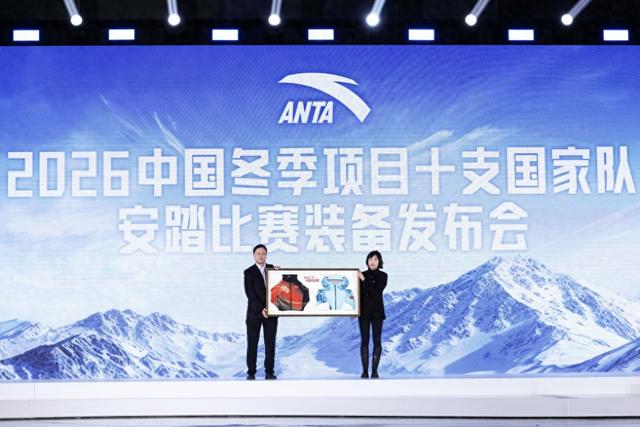
Core Insights - The upcoming Milan Winter Olympics will see the official launch of competition gear for ten national teams by Anta on December 29 at the Beijing Capital Gymnasium [1] - Anta will provide equipment for various winter sports, including short track speed skating, speed skating, figure skating, curling, bobsleigh, luge, skeleton, snowboarding, and freestyle skiing [1] Equipment Upgrades - The national short track speed skating uniforms feature a new generation of cut-resistant materials, achieving a breakthrough in single-layer structure cut resistance, meeting the highest international standard of level 4, while also being lightweight and breathable [3] - The uniforms are customized using 3D scanning modeling and AI technology, enhancing the fit and performance for athletes [3] - The short track speed skating uniforms have undergone 12 years of iteration, achieving full domestic production from design to manufacturing [3] Athlete Feedback - Olympic champion Wu Dajing, the world record holder in men's 500m short track speed skating, expressed gratitude for the technological advancements in protective and drag-reducing gear, allowing athletes to focus more on their techniques [5] Specific Equipment Innovations - The skeleton shoes have been upgraded with lightweight special alloy forged spikes for better grip, and a carbon plate insole combined with a dual-bending line design to significantly enhance propulsion performance [5] - The shoe design is customized based on athlete foot shape data, utilizing a bionic streamlined design to achieve breakthroughs in weight reduction and optimize overall aerodynamic drag [5] Core Technologies - Two core self-developed technologies have been applied in the equipment upgrades: a drag reduction system that improves wind resistance through fiber modification, fabric surface treatment, texture structure, and three-dimensional cutting, achieving world-leading drag reduction capabilities [7] - A thermal current system designed for snow sports optimizes back airflow and increases air circulation, ensuring athletes' backs remain dry, balancing dynamic moisture-wicking and static warmth [7]

城楼网|近期物管企业市场拓展与业务创新动态频现 中天服务拟用1亿元进行现金管理
Xin Lang Cai Jing· 2025-12-29 13:44
近日,多家物业服务企业相继公布市场与业务新动态,显示出行业持续开拓与转型的活力。 在市场拓展方面,融创服务成功中标爱玛科技集团天津总部园区一体化物业服务项目;中湘美好城市新获麓山戒毒所、湖南建工集团机关本部物业服务; 新大正中标北京铁路公安局采购项目,金额1322.20万元;杭州地铁城市服务成功续签昆仑中心办公楼物业服务;首华物业签约实现育慧里二区18号楼整 楼服务全覆盖。 值得注意的是,科技融合与模式创新成为亮点。南都物业宣布携手海康威视,引入多模态大模型文搜系列产品,推动AI技术融入社区服务。金地智慧服 务在浙江永康合作成立城市服务公司,保利物业在深圳出资500万元成立公共设施管理业全资子公司,均展现出对城市服务与细分领域的深入布局。 资本与资产运作方面亦有新进展。招商积余已完成转让所持衡阳中航地产60%股权;中天服务公告拟使用1亿元闲置资金进行现金管理,并将三个募投项 目延期至2028年。此外,华润万象生活于近期举办了健康与餐饮相关品牌活动,丰富服务内涵。 近期系列动作显示,物管企业正通过市场外拓、科技赋能、业务创新及资产优化等多种方式,积极拓展发展空间,推动行业向专业化、多元化方向演进。 责编:李霞 ...


海利尔:目前AI技术在生产端的应用暂未形成统一的应用占比统计口径
Zheng Quan Ri Bao Wang· 2025-12-29 13:13
Core Viewpoint - The company is steadily advancing its intelligent transformation in production, with the implementation of automated production lines being a systematic project carried out in phases [1] Group 1: Production and Technology - The application of AI technology in production has not yet established a unified statistical standard for application proportions [1] - Current applications of AI-related technologies in pilot scenarios focus more on verifying feasibility and optimizing directions rather than providing authoritative quantitative data for external disclosure [1]

锐评|2282万次“致敬”背后,是每个人的“来时路”
Xin Lang Cai Jing· 2025-12-29 11:02
致敬,代表的不仅是感佩,还有共鸣。即便网络内容海量,观点思潮繁杂,但大数据如实呈现,人们依 然愿意为那些奉献与奋进的故事驻足。这让人不禁想到,今年网上流行"第N杯敬自己"的梗,很多网友 对着镜头诉说曾经的坎坷,最后自信拥抱现在的自己。无论是敬他人,还是致自己,这份韧性、真诚与 热爱,才是我们不变的价值认同。 近日,B站发布2025年度弹幕为"致敬"。数据显示,"致敬"一词全年发送量超2282万次,发送用户超459 万人,其中八成为00后。 转自:北京日报客户端 那么,今天的年轻人在致敬什么?是博主深入茫茫戈壁,修复60年前空军留下的"为人民服务"标语;是 AI技术还原出战友年轻的面容,镜头里的老兵红了眼眶;是"八一"建军节飘扬的党旗与战士的回眸;是 遭遇意外截肢却依然乐观的"小何教官"……不变的信仰,技术的温情,薪火的传承,本质上,是具体可 感的人性光辉和家国情愫。 一个词语的刷屏,其实也是一种时代情感的呈现。今天,互联网打开了前所未有的视野,也在舆论场上 画下了太多坐标,难免裹挟起焦虑与迷茫。年轻人以玩梗的方式自嘲,创造了很多独属于他们的"语言 仪式",也常被贴上各种各样的标签。而这些集体性表达中,永远不缺 ...