东数西算

Search documents
“十四五”,我们见证这些“第一”丨点“数”成金,数字经济加速跑
Ren Min Ri Bao Hai Wai Ban· 2025-07-31 02:20
Core Insights - The core value added by China's digital economy is projected to reach 10.4% of GDP by 2024, surpassing the 10% target set five years ago in the "14th Five-Year Plan" [1][2] - The growth of the digital economy is attributed to advancements in digital technology and infrastructure, with a significant increase in the value added from 7.8% in 2020 to 10.4% in 2024, amounting to approximately 6 trillion yuan [1][3] Group 1: Digital Technology and Infrastructure - The rise of domestic artificial intelligence (AI) has been notable, with China leading in the number of generative AI patents, accounting for 61.5% of the global total [2][3] - As of June 2023, China has established 4.55 million 5G base stations and over 30.22 million gigabit network service ports, creating the world's largest mobile communication and fiber broadband network [3][4] - The "East Data West Computing" initiative has significantly enhanced computing power infrastructure, with the number of operational computing centers expected to exceed 9 million by the end of 2024, doubling from the end of the 13th Five-Year Plan [3][4] Group 2: Empowering Industries - The application of data as a new production factor has accelerated across various industries, with examples such as smart farming systems that reduce labor needs and improve efficiency [4][5] - The digital transformation in industries has led to the establishment of over 30,000 basic intelligent factories and more than 1,200 advanced intelligent factories by the end of 2024, covering over 80% of major manufacturing sectors [6][7] - The digitalization of research and design tools in large-scale industrial enterprises is projected to reach a penetration rate of 84.1% by 2024, marking a 10.6 percentage point increase from the end of the previous five-year plan [7] Group 3: Enhancing Daily Life - The online retail sales in China are expected to reach 15.5 trillion yuan by 2024, reflecting a 31.4% increase from the end of the 13th Five-Year Plan, maintaining its position as the world's largest online retail market [10] - The integration of digital technologies in tourism has led to innovative experiences, such as the use of VR and AI in cultural performances and the development of a digital tourism service platform [8][10] - The implementation of smart traffic systems in cities has improved traffic flow and reduced waiting times at traffic lights, enhancing the daily commuting experience for residents [9][10]
同比增长9.3%!信息通信业稳健前行
Zhong Guo Chan Ye Jing Ji Xin Xi Wang· 2025-07-31 00:32
Core Insights - The telecommunications industry in China has shown resilience with a year-on-year growth of 9.3% in total business volume, while the electronic information manufacturing industry increased by 11.1% and software business revenue grew by 11.2% [1][4]. Infrastructure Development - The construction of information infrastructure has accelerated, with a total of 4.55 million 5G base stations and 1.118 billion 5G mobile phone users by the end of June, achieving a user penetration rate of over 79% [1]. - Over 300 cities have deployed 5G-A networks, enhancing network technology and services, which has led to the emergence of new application scenarios such as low-altitude economy and smart manufacturing [1]. Digital Economy Growth - The "dual-gigabit" network development and the rapid advancement of intelligent computing have laid a solid foundation for the sustained growth of the information and communication industry, with 30.22 million gigabit network service ports and 226 million gigabit broadband users [2]. - The national computing resource layout has been optimized, with 10.43 million standard computing racks in use and an intelligent computing scale of 748 EFLOPS, ranking among the world's top [2]. Application of Digital Technologies - The application of digital technologies, particularly 5G and artificial intelligence, has deepened, with 5G applications integrated into 86 out of 97 major categories of the national economy, and over 138,000 5G application cases [3]. - The "5G + Industrial Internet" projects have surpassed 18,500, significantly driving the digital transformation of industries [3]. Information Consumption Trends - New applications such as 5G new calls, live streaming, and cloud gaming have rapidly emerged, leading to a continuous double-digit growth in mobile internet traffic for six consecutive months [4]. - The digital industry achieved a business revenue growth of 9.3% in the first half of the year, with electronic information manufacturing and software services playing a crucial role in this growth [4][5]. Software and IT Services Performance - The software and information technology service industry has shown stable growth, with software business revenue reaching 557.88 billion yuan, a year-on-year increase of 11.2% [5]. - The cloud computing and big data services generated 58.55 billion yuan in revenue, also reflecting an 11.2% growth [5]. Hardware Innovations - Several domestic companies have launched key products in high-growth areas such as security chips and AI-integrated devices, with over 100 AI terminal devices developed [6]. - The sales volume of AI glasses on JD.com increased sevenfold during the "618" shopping festival, indicating a growing consumer interest in AI smart terminal devices [6]. Social Impact and Accessibility - The telecommunications industry has focused on improving public services, achieving over 90% coverage of 5G in administrative villages, thus narrowing the digital divide [6]. - Initiatives to enhance digital accessibility for the elderly have included the adaptation of over 3,000 websites and apps, as well as the organization of over 400,000 digital literacy classes [6]. Future Outlook - The information and communication industry is positioned to inject continuous new momentum into high-quality economic and social development as it enters the planning phase for the 15th Five-Year Plan [7].
点“数”成金,数字经济加速跑(“十四五”,我们见证这些“第一”②)
Ren Min Ri Bao Hai Wai Ban· 2025-07-30 22:09
Core Viewpoint - The core viewpoint of the article is that China's digital economy has significantly advanced, with the core industry's value added to GDP expected to reach 10.4% by 2024, surpassing the initial target set in the "14th Five-Year Plan" ahead of schedule, indicating a new stage in digital economic development [7][9][17]. Group 1: Digital Economy Growth - The value added of China's digital economy core industry as a percentage of GDP increased from 7.8% in 2020 to 10.4% in 2024, representing a growth of 2.6 percentage points and an increase of approximately 6 trillion yuan [7][9]. - The digital economy is recognized as a new economic form that relies on data resources and modern information networks, with significant advancements in digital technology and infrastructure [8][9]. - The number of AI patents from China reached 27,000 out of 45,000 globally, accounting for 61.5%, indicating China's leading position in the global AI model development [9][10]. Group 2: Empowering Industries - The application of digital technologies in agriculture has led to significant efficiency improvements, with some enterprises reporting a 5.5% increase in yield and a 5.3-fold increase in marine biological resources [11][12]. - By 2024, over 30,000 basic intelligent factories and more than 1,200 advanced intelligent factories have been established, covering over 80% of major manufacturing sectors, with productivity improvements of 22.3% on average [12][13]. - The digital transformation in industries has resulted in enhanced operational efficiency, with the digital R&D design tool adoption rate among large-scale industrial enterprises reaching 84.1% by 2024 [13]. Group 3: Enhancing Daily Life - The digital economy has improved daily life experiences, with online retail sales projected to reach 15.5 trillion yuan in 2024, a 31.4% increase from the end of the 13th Five-Year Plan [17]. - Smart traffic management systems have been implemented, optimizing traffic light durations based on real-time data, thus improving commuting efficiency [16][17]. - The integration of digital technologies in cultural and tourism sectors has led to innovative experiences, enhancing visitor engagement through advanced technologies like VR and AI [15][19]. Group 4: Urban Digital Infrastructure - The construction of a unified digital infrastructure is underway, integrating various data sources to enhance urban management and governance capabilities [18][20]. - The focus on data sharing and collaboration among different sectors aims to break down information silos, improving overall operational efficiency in urban environments [20][21].


着力打造国家向北开放新平台!第五届中国—蒙古国博览会即将举办
Di Yi Cai Jing· 2025-07-30 07:32
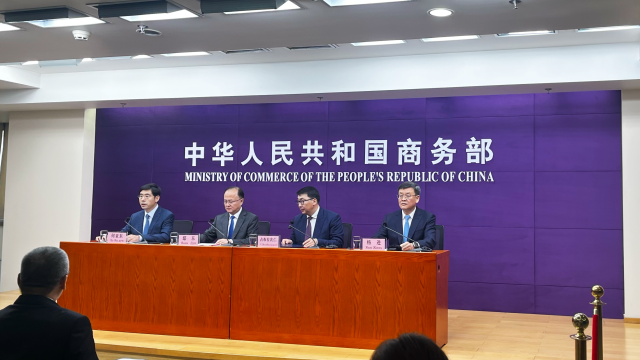
2024年中蒙贸易额达到186.2亿美元,同比增长10.1%,超出中国外贸总体增幅5个百分点。 8月25日至29日,第五届中国—蒙古国博览会将在内蒙古呼和浩特市举办,这是今年中蒙两国重要的经 贸交流活动之一。 7月30日,商务部举行专题新闻发布会。商务部副部长鄢东介绍,中蒙博览会是中蒙两国政府共同主 办、面向全球的国际性展会。本届主题为"深化互利合作 推进合作共赢",将突出区域性、开放性和多 元性,着力打造国家向北开放新平台、区域产业链供应链合作新纽带、东北亚区域合作新支点。 据商务部数据,2024年中蒙贸易额达到186.2亿美元,同比增长10.1%,创历史新高,超出中国外贸总体 增幅5个百分点。中国长期保持蒙古最大贸易伙伴国、最大进口来源国和出口对象国地位。 蒙古国食品农牧业和轻工业部国务秘书占布拉次仁表示,《中华人民共和国和蒙古国关于建立和发展全 面战略伙伴关系的联合宣言》设定了力争早日将两国贸易额提升至200亿美元的目标。 两国正朝着既定 的贸易增长目标稳步迈进。特别值得一提的是,两国共同举办的博览会等活动,为这一目标的实现发挥 了重要作用。 他对第一财经记者表示,2025年将要举办的第五届中蒙博览会是 ...
第五届中国—蒙古国博览会将于8月下旬在呼和浩特举办
Yang Shi Xin Wen Ke Hu Duan· 2025-07-30 07:02
Group 1 - The fifth China-Mongolia Expo will be held from August 25 to 29 in Hohhot, Inner Mongolia, focusing on "deepening mutually beneficial cooperation and promoting win-win collaboration" [1] - The expo will feature over 1,500 domestic and international enterprises across multiple industry-specific pavilions [1] - A special exhibition area for green computing and artificial intelligence will showcase solutions like "East Data West Computing" and Mongolia's new energy data center plans [1] Group 2 - The expo will highlight over 30 leading achievements in the fields of new energy and modern coal chemical industry, particularly focusing on cross-border electricity transmission and related technologies between China and Mongolia [1] - Key events during the expo include "Mongolia Day," a "Technology and Entrepreneurship Forum," and various cultural exchange activities [1] - The Deputy Minister of Commerce, Yan Dong, emphasized the expo's role in enhancing regional openness and cooperation, serving as a new platform for national northward opening and a new link for regional industrial and supply chain cooperation [1]
格力两科技成果获“国际领先”鉴定,可助数据中心提升节能
Nan Fang Du Shi Bao· 2025-07-29 05:50
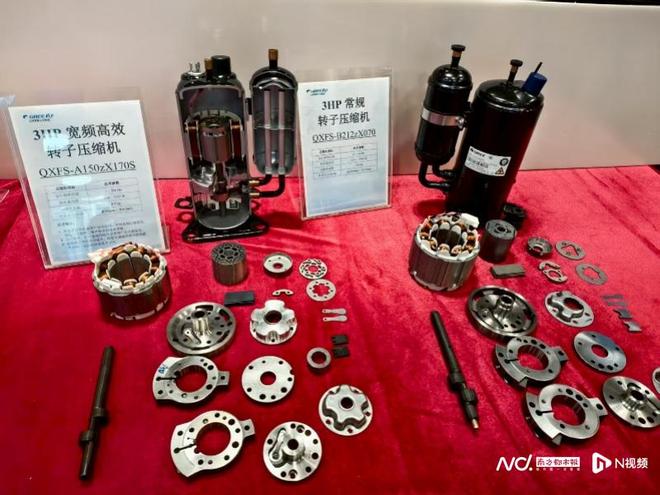
Core Viewpoint - The rapid development of big data and AI technologies is driving the growth of data centers, which are projected to consume over 1100 KWh of electricity by 2024, with air conditioning systems accounting for 40% of total energy consumption, highlighting the urgent need for energy-saving innovations [1][3] Group 1: Technological Innovations - Gree Electric's newly developed "high-efficiency rotary volume refrigerant pump and machine room air conditioning" and "multi-adaptive wide-frequency high-efficiency rotary compressor and air conditioner" have been recognized as "internationally leading" technologies [1][3] - The rotary volume refrigerant pump is noted as an international first, significantly improving energy efficiency and addressing traditional refrigerant pump challenges [5][8] Group 2: Industry Context - The scale of data centers in China is rapidly expanding, with over 8.8 million standard racks expected by the end of 2024, driven by the "East Data West Computing" initiative, AI computing power demands, and green low-carbon policies [3] - Data centers are referred to as "smokeless steel mills" due to their rapid energy consumption growth, making the push for green transformation and energy efficiency crucial for industry development [3] Group 3: Energy Consumption Insights - Traditional communication machine rooms have air conditioning as a major energy consumer, accounting for over 30% of total energy costs [4] - The new refrigerant pump technology allows for a significant increase in operational temperature range, enhancing energy efficiency and enabling substantial energy savings, with estimates of 240 million kWh saved annually if adopted by major telecom operators [5][7] Group 4: Compressor Technology Advancements - Gree's multi-adaptive wide-frequency rotary compressor has overcome industry challenges related to low efficiency and reliability, achieving a frequency range of 1Hz to 200Hz, which is significantly broader than the conventional range [7][8] - The compressor's efficiency improvements include a 5% increase across all frequency bands, a 10% enhancement in seasonal energy efficiency, and a 15% boost in low-temperature heating capacity, ensuring better user experience and energy savings [7][8]

华源证券:给予并行科技增持评级
Zheng Quan Zhi Xing· 2025-07-29 04:13
Core Viewpoint - The report highlights the significant revenue growth of Parallel Technology, driven by its intelligent computing cloud services, with a projected revenue increase of 69% year-on-year for the first half of 2025, supported by strategic collaborations and advancements in AI integration [1][4]. Financial Performance - In H1 2025, the company achieved revenue of 458 million yuan (yoy +69%), with a net profit of 5.08 million yuan (yoy +20%) and a net cash flow from operating activities of 39.26 million yuan (yoy +323%) [1]. - For Q2 2025, revenue reached 259 million yuan (yoy +86% / qoq +31%), with a net profit of 1.48 million yuan [1][2]. Business Segments - The company reported revenue from its four main business segments: computing power services (441.72 million yuan, yoy +71%), supercomputing cloud system integration (10.23 million yuan, yoy +121%), supercomputing software and technical services (5.69 million yuan), and other services (0.03 million yuan) [2]. - The intelligent computing cloud service segment alone generated 264.63 million yuan, reflecting a year-on-year growth of 175% [2]. Strategic Collaborations - Parallel Technology signed a framework cooperation agreement with Alibaba Cloud to enhance domestic computing power infrastructure and promote AI technology applications across various sectors [3]. - The company's MaaS platform has integrated the Zhiyu GLM-Z1 series inference models, aiming to provide efficient and cost-effective solutions for clients [3]. Industry Trends - The intelligent computing power scale in China is projected to reach 725.3 EFLOPS in 2024, with a year-on-year growth of 74.1%, driven by the national "East Data West Computing" initiative [4]. - The report anticipates that by 2025, the general computing power scale will reach 85.8 EFLOPS, while intelligent computing power is expected to grow to 1,037.3 EFLOPS, marking a 43% increase [4]. Profit Forecast - The company forecasts net profits of 24 million yuan, 36 million yuan, and 48 million yuan for 2025, 2026, and 2027 respectively, with corresponding EPS of 0.40, 0.61, and 0.80 yuan per share [5].
宏景科技(301396.SZ):关联资源加持,筑牢 AI 算力发展根基
Xin Lang Cai Jing· 2025-07-29 01:47
Group 1 - The core point of the announcement is that Hongjing Technology has confirmed a significant procurement of NVIDIA chips from Deepbo Information, amounting to 55.368 million yuan, which is crucial for its AI computing power strategy [1] - Deepbo Information's unique status as a partner and its resources are key to this collaboration, providing Hongjing with a reliable channel to acquire high-end NVIDIA chips amid global shortages [1][2] - The partnership aligns with national strategies like "East Data West Computing," allowing Hongjing to capitalize on the growing demand for AI computing power in various sectors [2] Group 2 - The collaboration enhances Hongjing's infrastructure for AI model training and algorithm optimization, enabling the company to offer integrated services of computing power, algorithms, and applications [3] - Hongjing's proactive approach in securing chip resources through strategic partnerships demonstrates its competitive edge in the market, especially during a time of chip shortages [2][3] - The partnership with Deepbo Information not only addresses immediate supply challenges but also positions Hongjing favorably for future growth in the AI computing landscape [3]
并行科技(839493):智算云收入高增带动2025H1营收yoy+69%,“并行算网”赋能“东数西算”战略
Hua Yuan Zheng Quan· 2025-07-29 01:07
Investment Rating - The investment rating for the company is "Accumulate" (maintained) [5] Core Views - The company's revenue in H1 2025 reached 458 million yuan, representing a year-on-year increase of 69%. The growth was driven by the high increase in intelligent computing cloud services, which saw a 175% year-on-year growth [6][9] - The company has signed a framework cooperation agreement with Alibaba Cloud to enhance AI technology accessibility through the integration of the GLM-Z1 series inference models into its MaaS platform [6][7] - The "Parallel Computing Network" is expected to support the national "East Data West Computing" strategy, with the intelligent computing scale projected to reach 725.3 EFLOPS in 2024, a year-on-year increase of 74.1% [7] Financial Performance Summary - In H1 2025, the company achieved a net profit of 5.08 million yuan, a year-on-year increase of 20%, and a net cash flow from operating activities of 39.26 million yuan, up 323% year-on-year [6] - Revenue projections for 2025 are estimated at 863 million yuan, with a year-on-year growth rate of 31.86% [8] - The company is expected to achieve net profits of 24 million yuan in 2025, with corresponding EPS of 0.40 yuan per share [9]
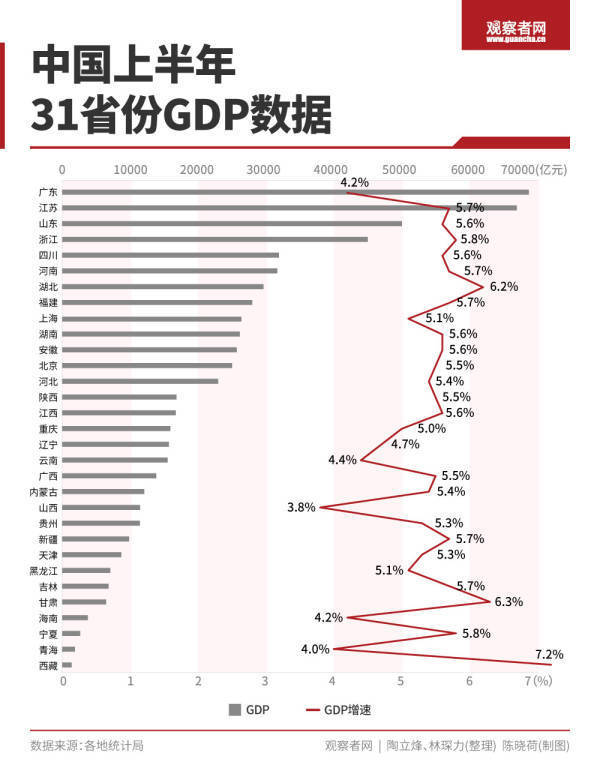
31省份半年报出炉:四川、上海、辽宁排位上升,广东、海南、山西疲软
Sou Hu Cai Jing· 2025-07-28 11:56
Economic Overview - In the first half of 2025, the GDP of 31 provinces in China has been released, with Guangdong, Jiangsu, and Shandong remaining the top three economic provinces [1] - The national GDP growth rate for the first half of 2025 is reported at 5.3%, with 20 provinces exceeding this growth rate [1][2] Provincial Performance - Tibet leads the growth with a GDP increase of 7.2%, followed by Gansu at 6.3% and Hubei at 6.2% [2][20][23] - Guangdong's GDP growth is reported at 4.2%, placing it among the lowest in the country, with significant declines in fixed asset investment and exports [26][27] - Sichuan's GDP reached 31,918.2 million yuan, growing by 5.6%, driven primarily by the service sector [8] - Shanghai's GDP grew by 5.1%, with the information service sector contributing significantly to this growth [5][6] Sector Contributions - The service industry remains the main driver of Shanghai's economy, accounting for 79.1% of its GDP, with information services growing by 14.6% [5][6] - In Gansu, the industrial sector saw a notable increase, with a 10.2% growth in industrial output, making it one of the few provinces with double-digit growth [20][21] - Hubei's high-tech manufacturing sector also performed well, with a 14.4% increase in output [23] Investment and Trade - Gansu's foreign trade showed strong growth, with a 33.8% increase in total trade value, significantly higher than the national average [21] - Guangdong's export growth was only 1.1%, indicating challenges in the external trade environment [26] - Fixed asset investment in Guangdong decreased by 9.7%, the largest decline in the country, primarily due to a drop in real estate investment [27][30] Challenges and Future Outlook - The economic performance of provinces like Liaoning and Yunnan remains below the national average, with growth rates of 4.7% and 4.4% respectively [12][14] - The ongoing challenges in traditional industries and the need for structural adjustments are highlighted in provinces like Liaoning [13] - The economic outlook for provinces like Hubei appears positive, with expectations to meet the annual growth target of 6% [24]