
乌克兰重建

Search documents
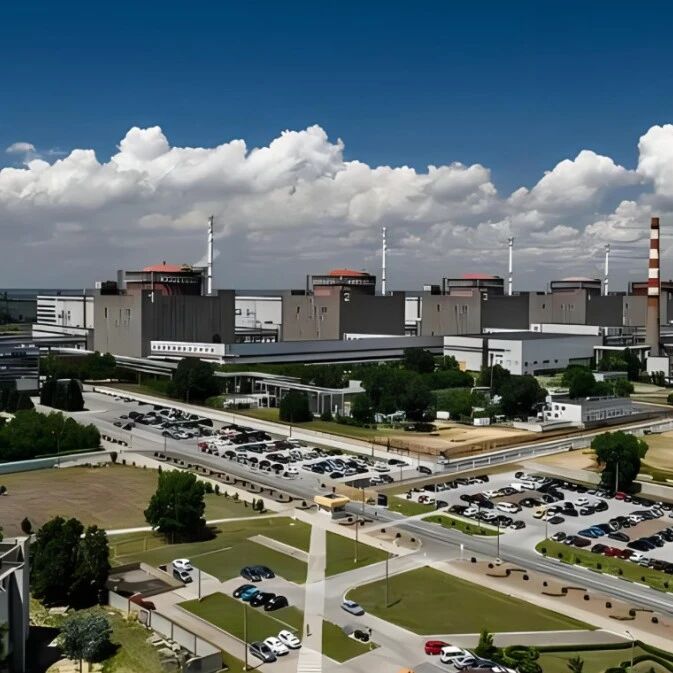
美乌首次开会讨论“战后重建”,美欧争夺“万亿大蛋糕”,华尔街想在乌最大核电站旁建数据中心
美股IPO· 2025-12-11 03:50
Core Viewpoint - The article discusses the initiation of discussions regarding Ukraine's post-war reconstruction plan, highlighting the growing divergence between the U.S. and Europe on how to manage frozen Russian assets and the overall reconstruction strategy [1][4][8]. Group 1: U.S. Proposal - The U.S. proposes to utilize approximately $200 billion of frozen Russian assets to support American-led projects, including the construction of large data centers near the Zaporizhzhia nuclear power plant, with the potential to expand the funding pool to $800 billion under Wall Street's management [1][4][8]. - The U.S. vision includes a "business for peace" approach, allowing Wall Street executives and private equity firms to manage the funds, which U.S. officials believe will prevent rapid depletion of resources compared to European plans [8][9]. Group 2: European Response - The European Union prefers to use the frozen assets directly to support the Ukrainian government financially and for purchasing defense weapons, opposing any cooperation with Russia on energy, which they equate to a "Yalta Conference" for economic interests [1][4][9]. - European leaders, including German Chancellor Friedrich Merz, express skepticism towards the U.S. proposals, emphasizing the need to maintain economic isolation of Russia [4][9]. Group 3: Diplomatic Context - The discussions occur amid intense diplomatic negotiations involving the U.S., Europe, Ukraine, and Russia, with a focus on a revised peace proposal that has been streamlined to 20 key points [7]. - The atmosphere at the negotiation table remains tense, with reports of strong language used by U.S. officials during discussions with European leaders [7]. Group 4: Investment Opportunities - BlackRock has previously collaborated with the Ukrainian government to establish a reconstruction bank aimed at attracting private investment, which could potentially draw in hundreds of billions of dollars for reconstruction projects [6].

2026年债市展望:蛰伏反击
HTSC· 2025-11-03 05:50
Group 1: Macroeconomic Outlook - The report highlights that both the US and China are entering critical years, with global investment driven by three and a half engines: AI investment, defense spending, and industrial restructuring [1][14] - The nominal GDP growth rate is expected to recover, with a focus on domestic demand and technology as key policy areas [1][2] - The transition from old to new economic drivers in China is anticipated to gain momentum, leading to a rebalancing of supply and demand [2][11] Group 2: Policy Environment - The "15th Five-Year Plan" sets a supportive policy tone, with monetary policy expected to remain accommodative, albeit with less room than in the current year [3][15] - Fiscal policy is projected to maintain a certain level of expansion, with total tools estimated at 15.7 trillion yuan, an increase of approximately 1.2 trillion yuan from this year [3][15] - The report emphasizes the importance of structural tools and the coordination between monetary and fiscal policies to support various sectors [3][15] Group 3: Supply and Demand Dynamics - The narrative of "asset scarcity" in the bond market is expected to weaken, with a focus on the verification of corporate profits and capacity utilization [4][18] - The report notes that government bond supply is likely to increase, but market pressure will be manageable due to central bank support [4][18] - Institutional behavior is identified as a major source of market volatility, with a reduction in stable funding leading to increased market fluctuations [4][18] Group 4: Bond Market Strategy - The bond market is expected to maintain a "low interest rate + high volatility" characteristic, with the central rate likely remaining stable or slightly increasing [5][18] - The report suggests a strategy of segment trading, coupon strategies, and equity exposure as priorities over duration adjustment and credit downgrading [5][18] - The ten-year government bond yield is projected to fluctuate between 1.6% and 2.1%, with a widening of term spreads anticipated [5][18]
建材行业报告(2025.08.11-2025.08.17):俄乌冲突有望结束,关注乌克兰重建受益标的
China Post Securities· 2025-08-18 10:31
Industry Investment Rating - The investment rating for the construction materials industry is "Outperform the Market" and is maintained [1]. Core Insights - The report highlights the potential benefits from the reconstruction of Ukraine, with an estimated total cost of approximately $524 billion, which is nearly three times Ukraine's GDP for 2024. Key areas of investment include housing ($84 billion), transportation ($78 billion), energy ($68 billion), industrial and commercial sectors ($64 billion), and agriculture ($55 billion) [3]. - The report emphasizes the competitive advantages of domestic international engineering companies in Ukraine's post-war reconstruction, despite the U.S. leading the efforts. Companies such as China Communications Construction Company, China Chemical Engineering, China National Materials, and China Steel International are noted as potential beneficiaries [4]. - In the cement sector, a policy to limit overproduction is expected to enhance capacity utilization, with a forecasted recovery in demand and price increases starting in August [4]. - The glass industry is facing a downward trend in demand due to real estate impacts, with supply-demand imbalances persisting. However, the report anticipates that environmental regulations will accelerate the industry's cold repair processes [4]. - The fiberglass sector is experiencing growth driven by demand from the AI industry, with expectations for a significant increase in both volume and price [5]. - The consumer building materials sector is projected to see a recovery in profitability, with price increases across various categories such as waterproofing, coatings, and gypsum boards [5]. Summary by Sections Cement - The national cement market price is stabilizing, but demand remains low due to seasonal factors, with July's production down 5.6% year-on-year to 146 million tons [9]. Glass - Glass prices continue to decline, with regional prices dropping by 1-4% per weight box. The report predicts ongoing price fluctuations due to limited demand improvement [14]. Company Announcements - Three companies reported their mid-year results: - **Sanhe Building Materials**: Revenue of 5.816 billion yuan, up 0.97% year-on-year, with net profit increasing by 107.53% [17]. - **Puyang Refractories**: Revenue of 2.79 billion yuan, up 3.6% year-on-year, but net profit down 48.3% [18]. - **Tianan New Materials**: Revenue of 1.444 billion yuan, up 3.97% year-on-year, with net profit increasing by 16.59% [17].
冯德莱恩与泽连斯基讨论俄乌局势:将全力支持乌克兰
Yang Shi Xin Wen· 2025-08-07 14:07
Core Points - The President of the European Commission, Ursula von der Leyen, held a conversation with Ukrainian President Volodymyr Zelensky regarding the next steps towards a peace agreement between Russia and Ukraine [1] - They discussed Ukraine's future accession to the European Union and the issues related to its reconstruction [1] - Von der Leyen emphasized the EU's clear stance to fully support Ukraine and to continue playing an active role in ensuring a just and lasting peace [1]
乌克兰重建会议举行
news flash· 2025-07-11 10:00
Group 1 - The Ukraine Reconstruction Conference took place in Rome, Italy, on July 10-11, with over 200 agreements reached, totaling more than €10 billion [1] - Ukrainian President Zelensky called for increased support for Ukraine's air defense and drone industries during the conference [1] - The conference highlighted the potential use of profits from frozen Russian assets, estimated at around $300 billion, for Ukraine's reconstruction efforts [1] Group 2 - The European Union has frozen approximately €200 billion of Russian Central Bank assets as part of sanctions following the escalation of the Ukraine crisis in 2022 [1] - Russia has repeatedly condemned the seizure of its assets by Western nations, labeling it as "piracy" and claiming it undermines their credibility [1]
加拿大财长:乌克兰重建工作总耗资超5000亿美元
news flash· 2025-05-20 23:14
Group 1 - The core point of the article is that the reconstruction of Ukraine is estimated to cost over $500 billion, as stated by Canada's Finance Minister [1] - The G7 finance ministers are discussing issues related to tariffs, capacity, non-market behavior, and financial crime during their meeting [1] - Canada reaffirms its commitment to continue providing financial support to Ukraine amidst the reconstruction efforts [1] Group 2 - Ukraine's Finance Minister Martynenko indicated that the G7 finance ministers will address all necessary and critical issues related to Ukraine's reconstruction [1]
乌克兰财长:七国集团部长将讨论与乌克兰重建有关的所有必要和关键问题。
news flash· 2025-05-20 22:24
Core Viewpoint - The G7 finance ministers will discuss all necessary and critical issues related to the reconstruction of Ukraine [1] Group 1 - The meeting will focus on the financial and logistical aspects of Ukraine's rebuilding efforts [1] - Key topics will include funding mechanisms and international support for Ukraine's recovery [1] - The discussions aim to address the urgent needs arising from the ongoing conflict and its impact on Ukraine's economy [1]
加拿大财长:乌克兰的重建工作将耗资5000亿美元以上。
news flash· 2025-05-20 22:24
Core Viewpoint - The Canadian Finance Minister stated that the reconstruction efforts in Ukraine will cost over $500 billion [1] Group 1 - The estimated cost for Ukraine's reconstruction is projected to exceed $500 billion [1]
加拿大财长会见乌克兰财长。加拿大财长就乌克兰重建问题会见(加拿大的)众多养老基金。
news flash· 2025-05-20 22:21
Group 1 - The Canadian Finance Minister met with the Ukrainian Finance Minister to discuss issues related to Ukraine's reconstruction [1] - The meeting involved discussions with various Canadian pension funds regarding their potential involvement in Ukraine's rebuilding efforts [1]
俄乌三年多来首次直接会谈!潜在和平协议有哪些内容?
Jin Shi Shu Ju· 2025-05-15 07:07
Core Points - The meeting in Turkey aimed at restarting direct negotiations between Ukraine and Russia, but the absence of key leaders like Putin and Trump downgraded its significance [1] - Ukraine seeks substantial security guarantees from major powers, particularly the US, to enhance its protection beyond the 1994 Budapest Memorandum [1] - The potential for a peace agreement hinges on the balance between effective security guarantees and the risks of Western involvement in future conflicts with Russia [1] Security Guarantees - Ukraine demands security assurances that go beyond the 1994 Budapest Memorandum, which only included respect for sovereignty and discussions in the UN Security Council in case of an attack [1] - The proposed negotiations may include strong security guarantees similar to NATO's Article 5, despite Ukraine not being a NATO member [1] Neutrality vs NATO Membership - Russia insists on Ukraine's neutrality and prohibits foreign military bases, while Ukraine asserts its right to choose alliances independently [3] - The US envoy stated that Ukraine's NATO membership is now unlikely, with Trump suggesting that past support for Ukraine's NATO bid contributed to the conflict [3] Territorial Disputes - Russia claims control over approximately one-fifth of Ukraine's territory, including Crimea, which it annexed in 2014, a stance rejected by most countries [5] - The US may legally recognize Russia's control over Crimea and parts of other regions, while Ukraine firmly opposes any acknowledgment of Russian sovereignty over occupied territories [6] Sanctions and Energy Cooperation - Russia is skeptical about the immediate lifting of Western sanctions, while Ukraine insists on maintaining them [6] - There are discussions about potential energy cooperation, with speculation that the US, Russia, and Saudi Arabia may negotiate significant deals related to oil prices and exports [7] Reconstruction Efforts - Ukraine's reconstruction is estimated to require hundreds of billions of dollars, with European nations considering the use of frozen Russian assets for funding [9] - Disagreements over the allocation of these funds, particularly regarding Russian-controlled areas, could hinder the reconstruction process [9]