买预期

Search documents
地缘风暴中纯苯-苯乙烯展望
2026-03-10 10:17
Summary of Key Points from Conference Call Industry Overview - The conference call discusses the impact of the blockade of the Strait of Hormuz on the prices of benzene and styrene, highlighting a significant reduction in naphtha shipments from the Middle East, which has dropped by approximately 95% [1][2][3]. Core Insights and Arguments - **Price Dynamics**: The benzene market has shifted from a contango structure to a backwardation structure, with the BZN spread widening. Despite high inventory levels in East China, the market has entered a "buy on expectation" phase, leading to a tightening of supply and a continued price increase [1][4]. - **Supply Chain Disruptions**: The blockade has caused a systemic shock to the global petrochemical supply chain, with transportation costs rising significantly due to increased freight and insurance costs. This has led to a reduction in supply and an increase in prices for benzene and styrene [2][9]. - **Production Adjustments**: Refineries are shifting production towards gasoline due to higher profits from gasoline production compared to benzene and toluene, further constricting the supply of benzene and styrene [1][7]. - **Profit Concentration**: The profit margins in the styrene industry are increasingly concentrated in the midstream sector, with the reasonable price for styrene estimated at approximately 11,781 CNY/ton based on a WTI crude oil price of 118 USD/barrel [1][9]. Trade Flow Changes - **Reconstruction of Trade Flows**: With Middle Eastern supplies disrupted, India and Europe may rely on China to fill the gap in styrene exports, while Indian benzene may shift from the Middle East to East Asia to compensate for production cuts in Japan and South Korea [1][3][5]. Downstream Demand and Price Transmission - **3S Products**: The downstream 3S (ABS/PS/EPS) products are experiencing a recovery in profits, with EPS seeing a surge in orders. However, there are concerns about the end-user's ability to absorb high prices [1][6][11]. - **Price Transmission**: The current demand for styrene is strong, with downstream prices rising significantly. The ability of end-users to absorb these price increases will be crucial for maintaining demand [6][12]. Inventory and Market Sentiment - **High Inventory Levels**: Despite high inventory levels, prices continue to rise due to market expectations of future supply issues. Traders are adopting a "buy on expectation" strategy, leading to tighter circulation of goods [4][12]. - **Speculative Behavior**: There is a tendency among traders to stockpile goods in anticipation of further price increases, which has led to a rapid rise in prices for styrene and its derivatives [11][12]. Future Outlook - **Potential Risks**: If crude oil prices decline, there is a risk of profit margins being squeezed back, particularly for styrene and related products. The market is currently exhibiting speculative behavior, which could lead to volatility [12][13]. - **Long-term Supply Concerns**: The ongoing geopolitical tensions and the potential for prolonged disruptions in supply chains could lead to sustained high prices and further market adjustments [3][10][14]. Additional Important Insights - **Impact of Geopolitical Events**: The blockade's implications extend beyond immediate supply issues, affecting global trade patterns and regional supply balances, particularly in Europe and India [5][14]. - **Cost Structure Analysis**: The integrated cost of styrene production is highly sensitive to fluctuations in crude oil prices, with estimates indicating that a 1 USD increase in oil prices could raise styrene costs by approximately 100 CNY [13][14]. This summary encapsulates the critical insights and developments discussed in the conference call, providing a comprehensive overview of the current state and future outlook of the benzene and styrene markets amidst geopolitical tensions.
春晚C位出道,节后平躺三天,机器人咋成“植物人”了?
Sou Hu Cai Jing· 2026-02-26 10:16
Group 1 - The core sentiment in the market is that despite the high expectations set by the Spring Festival performances featuring robots, the actual market performance has not met these expectations, leading to disappointment among investors [1][2] - The robot index opened high but quickly declined, with key component stocks like Wuzhou Xinchun dropping nearly 10% compared to pre-holiday levels, and other core components averaging a 2% decline [1] - Investors are now more cautious, focusing on tangible orders, production capacity, and profit statements rather than the optimistic narratives about robots changing the world [2] Group 2 - The market is described as stagnant, with little movement in either direction, leading to the nickname "vegetative state" for the robot sector, reflecting investor frustration [2] - The excitement generated by the Spring Festival performances has not translated into sustained market momentum, as the initial hype has faded and investors are reluctant to stay in the market without solid fundamentals [2] - The current sentiment indicates that while the robot sector is not necessarily losing its appeal, investors are now prioritizing concrete financial metrics over speculative narratives [2]

张津镭:拉美火药桶下周黄金是买预期卖事实 还是再战4600新高
Xin Lang Cai Jing· 2026-01-04 10:11
Core Viewpoint - The recent geopolitical tensions and expectations of interest rate cuts have significantly influenced gold prices, which reached above $4500 per ounce, but profit-taking has begun as market liquidity returns after the New Year holiday [1][4]. Group 1: Market Dynamics - Gold prices experienced a strong upward trend, with a notable annual increase of over 60% [1][4]. - The market is currently pricing in two interest rate cuts in 2026, and any news regarding the pace or extent of these cuts could lead to a market reassessment [1][4]. - Delayed economic data due to government shutdowns will soon be released, potentially reshaping market perceptions of economic conditions and inflation [1][4]. Group 2: Geopolitical Events - A significant military operation by the U.S. against Venezuela resulted in the capture of President Maduro and his wife, marking a notable escalation in global geopolitical tensions [1][4]. - This event is expected to heighten market concerns about broader conflicts, thereby enhancing gold's safe-haven appeal and establishing a "war premium" that supports prices [1][4]. Group 3: Trading Strategies - If geopolitical tensions ease, a "buy the expectation, sell the fact" strategy may lead to a sharp rise and subsequent fall in gold prices, allowing for potential short-selling opportunities [2][5]. - Conversely, if tensions escalate, gold prices could easily surpass the $4500 mark, with a possibility of reaching new historical highs around $4600 [2][5]. - The recommended trading strategy for the upcoming week is to initiate long positions while being cautious of the inherent risks, with a strong emphasis on stop-loss and take-profit measures [2][5].
美国11月非农就业数据即将揭晓,失业率成焦点
Xin Hua Cai Jing· 2025-12-16 08:56
Group 1 - The core viewpoint of the articles indicates a significant slowdown in the U.S. labor market, with expectations for November non-farm payrolls to show only 50,000 new jobs, a sharp decline from 119,000 in September [1][2] - The unemployment rate is projected to rise from 4.4% in September to a range of 4.5% to 4.6% in November, reflecting a continued weakening in labor demand [1][2] - The Federal Reserve is anticipated to announce a 25 basis point rate cut in December, marking the third consecutive cut, as the labor market shows signs of systemic overestimation in job growth [1][2] Group 2 - Analysts suggest that the marginal information content of non-farm payroll numbers is diminishing, and any increase in unemployment rate beyond 4.6% could lead to a reassessment of market expectations for further rate cuts [2][3] - A weak non-farm employment report could trigger a classic macro trading pattern, leading to a weaker dollar and stronger gold and U.S. Treasuries, while potentially boosting U.S. equities [3] - The market has already priced in some weakness in non-farm data, indicating a need to be cautious of potential volatility following the data release [3]
警惕非农夜波动加剧!黄金多头能否延续强势?
Sou Hu Cai Jing· 2025-12-16 06:07
Group 1 - The upcoming non-farm payroll data release in December 2025 is expected to be a significant turning point for gold prices, creating a mix of anticipation and concern among market participants [1] - Recent months have seen gold prices fluctuate due to multiple factors, with non-farm employment changes, unemployment rate shifts, and average hourly wage growth influencing Federal Reserve policy expectations and guiding gold price direction [3] - The non-farm payroll market during a rate-cutting cycle is prone to "expectation difference volatility," where the market reacts to anticipated outcomes versus actual results, leading to potential price corrections [3] Group 2 - Traders often find themselves in two states: either rushing to enter the market out of fear of missing out or completely abstaining due to fear of volatility, which can lead to missed opportunities [5] - A rational approach to the upcoming data is to prepare for various outcomes rather than predict results, as market reactions will occur regardless of data strength or weakness [5] - Understanding the underlying logic and market sentiment behind the data can aid in making more rational investment decisions, as historical patterns show that price movements on non-farm payroll nights are rarely linear [5] Group 3 - Market volatility itself is neither good nor bad; it represents both risk and potential opportunities, depending on participants' tools and understanding [7] - A professional analysis team can provide multi-layered interpretations of non-farm data, helping traders to see beyond surface fluctuations and understand deeper funding flows and sentiment changes [7] - In an era of information overload, the ability to filter valuable information and make prudent decisions is crucial, as patterns can be discerned even amidst the uncertainties of non-farm payroll night [7]


美国降息了,然后呢?A股用下跌写下了问号
Sou Hu Cai Jing· 2025-12-12 12:53
Group 1 - The Federal Reserve announced a 25 basis point interest rate cut and initiated balance sheet expansion, which initially led to a positive response in the A-share market, particularly in the ChiNext index [1][3] - However, the market experienced a significant downturn in the afternoon, with most stocks declining, indicating a lack of sustained upward momentum despite the initial positive reaction [1][5] - The divergence in market performance, with a concentration of institutional funds in a few strong sectors like technology and new energy, has led to a lack of broad-based market rallies, increasing adjustment pressure [5][12] Group 2 - The Federal Reserve's decision to cut rates was met with mixed signals, as the dot plot indicated a conservative outlook for future rate cuts, raising concerns among investors [7][8] - The presence of dissenting votes among Federal Reserve officials has sparked doubts about the central bank's independence and its commitment to controlling inflation, which could undermine the stability of the dollar and U.S. Treasury securities [8][9] - The global liquidity environment is also influenced by other central banks, particularly the Bank of Japan, which is expected to tighten its monetary policy, potentially offsetting the easing effects of the Fed's rate cut [10][11] Group 3 - The domestic economic fundamentals remain a core driver for the A-share market, with ongoing issues such as insufficient total demand and the need for confirmation of sustained improvements in corporate profitability [12][13] - Recent macro data indicates that the manufacturing PMI is at 49.2%, still in contraction territory, while the services PMI has entered contraction for the first time this year, highlighting the fragility of the domestic economic recovery [13] - Historical analysis of past Federal Reserve rate cut cycles shows that the performance of A-shares and Hong Kong stocks is significantly influenced by their own economic fundamentals rather than solely by external monetary policy changes [14]
降息靴子落地 A股冲高回落
Sou Hu Cai Jing· 2025-12-11 16:55
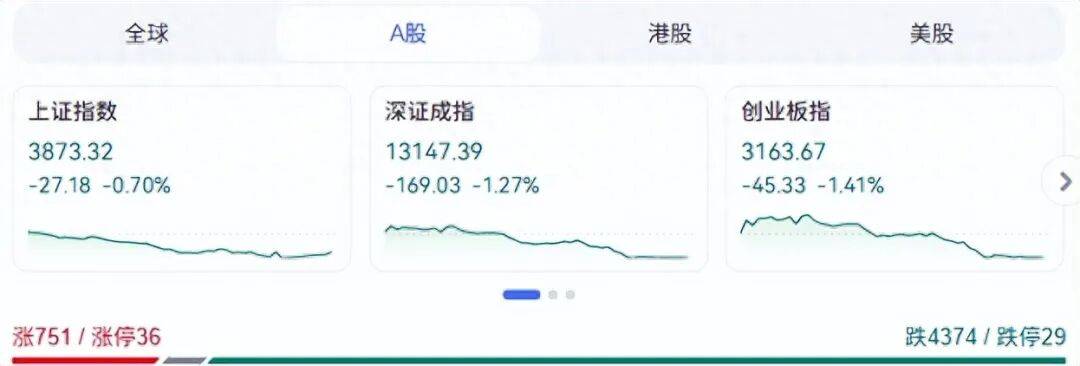
Group 1 - The A-share market experienced a collective decline on Thursday, with the Shanghai Composite Index falling by 0.70% to close at 3873.32 points, the Shenzhen Component down by 1.27% to 13147.39 points, and the ChiNext Index decreasing by 1.41% to 3163.67 points [1] - The trading volume in the Shanghai and Shenzhen markets reached 185.71 billion yuan, an increase of 78.6 billion yuan compared to the previous trading day, indicating heightened market activity [1] - Despite initial positive reactions to the Federal Reserve's interest rate cut of 25 basis points and the initiation of quantitative easing, the market faced a sharp downturn in the afternoon, leading to a broad-based decline in stocks [1][2] Group 2 - The market's internal structure revealed a "buy the rumor, sell the news" phenomenon, with significant gains in growth sectors like the ChiNext Index, suggesting that optimistic expectations for the Fed's policy shift had already been priced in [2] - The external market environment provided additional tightening signals, with Oracle's stock plummeting over 11% post-earnings, raising concerns about potential valuation bubbles in the AI sector, which negatively impacted related stocks in the A-share market [2] - Technically, the market showed a volume decline, with all three major indices breaking below the 5-day moving average, indicating a potential shift back to a consolidation phase unless a strong recovery occurs [3]
黄金时间·每日论金:虽然多头略占优,但金价暂仍以震荡行情对待
Sou Hu Cai Jing· 2025-12-11 08:51
Group 1 - The core viewpoint of the articles indicates that the international gold price is experiencing high-level fluctuations influenced by the Federal Reserve's interest rate decision, which has led to a third consecutive rate cut of 25 basis points, bringing the benchmark rate to a range of 3.50%-3.75% [1] - The Federal Reserve's decision to cut rates is expected to lower the opportunity cost of holding gold, which is generally favorable for gold prices, despite the market having anticipated this cut [1] - The Fed's dot plot suggests a more gradual approach to future rate cuts, with only one additional cut expected in 2026, which introduces uncertainty into the future of U.S. interest rate policy [1] Group 2 - Technically, gold prices rebounded after testing the 21-day moving average, indicating that the market remains bullish, although there are signs of potential overbought conditions [2] - Resistance levels for gold prices are noted at $4254 per ounce, with further resistance at $4310 per ounce if the former is breached; support levels are identified at $4153 per ounce and $4107 per ounce [2] - The collaboration between Xinhua Finance and China Gold News has resulted in a specialized column focusing on the gold and jewelry market, providing comprehensive coverage of industry policies, investment information, and risk analysis [2]
金银走势分化!黄金沉默白银“火箭式”上涨
Jin Tou Wang· 2025-12-10 09:52
Group 1 - The core viewpoint of the articles highlights the divergence in the performance of gold and silver ahead of the Federal Reserve's interest rate decision, with gold remaining stable while silver continues its historic upward trend, reaching a peak of $61.60 per ounce [1] - The primary driver for silver's price increase is the reduced opportunity cost of holding non-yielding assets due to lower interest rate expectations, coupled with tight supply conditions supporting its price [1] - Silver is experiencing dual support from both investment and industrial demand, while gold appears more cautious as it awaits the outcome of the interest rate decision [1] Group 2 - Investors are advised to be cautious of a potential "buy the rumor, sell the news" scenario following the interest rate decision, particularly regarding silver's possible technical correction after significant price increases [2] - UBS analysts note that the surge in silver prices above $60 per ounce has attracted more short-term speculators and trend followers, reflecting the tight physical supply in the silver market [2] - Silver prices have surged 113% this year, driven mainly by increased industrial demand, declining inventories, and its designation as a critical mineral by the U.S. [2] Group 3 - The upcoming Federal Reserve meeting is characterized by high uncertainty due to the absence of key economic data caused by a government shutdown and notable internal disagreements within the decision-making body [3] - While the market anticipates a nearly certain interest rate cut, there is a possibility that Fed Chair Powell may adopt a "hawkish cut" strategy, signaling a more cautious future policy outlook even while implementing a rate reduction [3]
江问樵:12.10黄金箱体正当!静待利率决议
Sou Hu Cai Jing· 2025-12-10 04:51
Group 1 - The article discusses the volatile trading pattern of gold, highlighting a rebound after a dip to the 4170 area, indicating a mixed market sentiment [1] - The focus is on the upcoming Federal Reserve interest rate decision, with market expectations for a rate cut increasing, but gold prices are expected to remain volatile until the announcement [1] - Technically, gold has stabilized above the key psychological level of 4200 USD, with short-term bullish momentum maintained, while resistance is noted between 4220 and 4245 USD, and support has shifted to around 4190 USD [1] Group 2 - Trading strategies are suggested, including shorting gold near the 4220-4225 area with a stop loss of 10 points and a target of 4205-4195, while also recommending buying on dips around 4185-4190 with similar stop loss and a target of 4210-4220 [3] - The analysis emphasizes the importance of monitoring market reactions to the interest rate decision, advising caution in position sizes before the announcement [1][3]