
产品迭代升级

Search documents
华伍股份(300095) - 300095华伍股份投资者关系管理信息20260310
2026-03-10 09:02
Group 1: Company Overview - Jiangxi Huawu Brake Co., Ltd. specializes in the R&D, manufacturing, and sales of industrial brakes and control systems, with over 30 years of history in the industry [2][3] - The company focuses on expanding its product applications in various fields, including port machinery, wind power generation, and water conservancy projects [2][3] - A strategic shift towards prioritizing core business development has been implemented, emphasizing internal resource allocation to the industrial brake sector [2][3] Group 2: Market Developments - The company has made significant progress in the port crane machinery sector, maintaining stable revenue growth and strong gross margins due to high customer retention [3][4] - The global trend towards smart and digital port operations is being actively pursued, with new product iterations and the development of a cloud platform for real-time monitoring [3][4] Group 3: Product Innovations - The wet multi-disc brake for mining trucks is identified as a core growth area, with significant market potential due to the shift towards larger tonnage and stricter safety regulations [3][4] - The penetration rate of wet brakes remains low, indicating substantial future growth opportunities [3][4] Group 4: Competitive Advantages - The company holds a dominant position in the domestic market for mining truck brakes, with superior technology, production capacity, and brand reputation [3][4] - Recent achievements include entering the supply chain of leading domestic mining truck manufacturers and securing initial bulk orders [4] Group 5: Future Prospects - The company is initiating a project to produce 10,000 sets of mining truck brakes annually to meet increasing market demand [4] - The aftermarket for mining truck brake components is expected to grow rapidly as older trucks enter the replacement cycle [4] Group 6: Other Business Areas - The company is expanding its brake solutions for various mining equipment, including hoists and conveyors, to capture additional market share [4] - In the oil equipment sector, the company is focusing on meeting stringent safety and reliability standards, with ongoing certification processes for market entry [4][5] Group 7: Wind Power Brake Business - The wind power brake segment is recovering from previous price wars, with improved gross margins and strong partnerships with domestic manufacturers [5][6] - The aftermarket for wind power brakes is anticipated to be a significant growth area due to increasing maintenance and replacement needs [6]

菜百股份20260203
2026-02-04 02:27
Summary of the Conference Call on Cai Bai Co., Ltd. Company Overview - Cai Bai Co., Ltd. is a long-established gold and jewelry brand in the North China region, particularly in Beijing, with origins dating back to 1956 when it was established as a department store in Xuanwu District, Beijing. The company transitioned to a dedicated gold and jewelry retail chain in 2010, operating under a fully direct sales model. As of June 2025, it has 103 stores in Beijing, with the flagship store covering 8,800 square meters, which is owned by the company [1][2]. Financial Performance - Revenue growth from 2018 to 2024 shows an increase from 8.6 billion to 20.2 billion, with a compound annual growth rate (CAGR) of approximately 15%. For the first three quarters of 2025, revenue reached 20.5 billion, reflecting a year-on-year growth of 33% [2]. - The net profit attributable to shareholders from 2018 to 2024 has a CAGR of 12%. The forecast for 2025 indicates a net profit between 1.06 billion and 1.23 billion, representing a year-on-year growth of 47% to 71%, marking a historical high [2]. - The company's return on equity (ROE) has been robust, exceeding 14% from 2018 to 2024, with peaks of 20% and 19% in 2023 and 2024, respectively [2]. Dividend Policy - The dividend payout ratio has consistently been above 76% from 2021 to 2024, with a cumulative dividend of 1.74 billion during this period [3]. Business Segmentation - The company's revenue is primarily derived from three categories: gold jewelry, gold bars, and ornaments. In 2024, gold jewelry accounted for 27% of revenue but contributed 56% to gross profit, while gold bars represented 64% of revenue but only 20% of gross profit [3]. Gross Margin Analysis - The gross margin for gold jewelry fluctuates between 14% and 19%, while for gold bars, it ranges from 2% to 5% [4]. - The sales volume of gold bars has shown a compound growth of 14% from 2018 to 2024, while the revenue growth for gold jewelry has been 6%, indicating a decline in volume but an increase in overall revenue due to rising gold prices [4]. Market Position and Competitive Advantage - Cai Bai Co., Ltd. is a member of the Shanghai Gold Exchange and sources raw materials from it or through bank leasing. The company does not own manufacturing facilities, relying on outsourced production [5]. - The company has a stable offline expansion strategy, adding approximately 10 stores annually, while online sales have been growing at a faster rate, with a compound growth of 64% from 2021 to 2024 [7]. Governance and Shareholder Structure - The company is controlled by the Xicheng District State-owned Assets Supervision and Administration Commission, holding 25% of shares. Other significant shareholders include Mingpai, Hengan Tianrun, and Yunnan Development, holding 16%, 13%, and 9% respectively [8]. Management Stability - The core management team has been stable, with many executives having been with the company since the early 2000s [9]. Growth Drivers 1. **Investment Gold Bars**: Recent tax policy changes favoring retail sales over wholesale are expected to enhance the company's market share in investment gold bars, which are primarily sold directly to consumers [10][11]. 2. **Competitive Pricing**: The company's pricing strategy for gold jewelry is lower than competitors, enhancing its market position. For instance, the company's gold price was 1,432 yuan per gram compared to 1,498 yuan for competitors like Chow Tai Fook [12]. 3. **Product Innovation**: The company has been actively innovating its product offerings, including collaborations with cultural institutions and the introduction of new product lines [14]. Regional Market Dynamics - The jewelry retail market in Beijing is experiencing significant growth, with a year-on-year increase of 40% in 2025, compared to a national average of 13%. Cai Bai's revenue is heavily concentrated in Beijing, with 68 out of 100 stores located there, contributing to 90% of total revenue [15][16]. Future Projections - Revenue projections for 2025 to 2027 are 31.7 billion, 43.5 billion, and 52.4 billion respectively, with year-on-year growth rates of 57%, 37%, and 20%. The net profit forecast for 2026 is 1.42 billion, increasing to 1.58 billion in 2027 [17]. Investment Rating - The company has been given a "Buy" rating based on its strong financial performance and growth prospects [17].

丰元股份(002805.SZ):预计2025年净亏损4亿元-4.6亿元
Ge Long Hui A P P· 2026-01-30 11:48
Core Viewpoint - The company, Fengyuan Co., Ltd. (002805.SZ), expects a net profit attributable to shareholders of between -460 million and -400 million yuan for 2025, compared to -362.23 million yuan in the same period last year, indicating continued losses despite improvements in operational resilience [1] Financial Performance - The company reported a significant increase in the production and sales scale of lithium battery cathode materials compared to the same period last year, although it still incurred losses due to multiple factors [1] - The expected net profit excluding non-recurring gains and losses is projected to be between -440 million and -380 million yuan [1] Operational Challenges - Key challenges leading to losses include increased R&D expenses due to product iteration and upgrades, insufficient overall equipment utilization rates caused by long new product validation cycles, and new production lines still ramping up [1] - Additional impacts on net profit stem from asset and credit impairment issues [1] Strategic Initiatives - In response to operational pressures, the company has implemented a series of optimization measures, including expanding a diversified customer base, deepening cooperation with core customers, promoting product differentiation, and continuously working on cost reduction and efficiency improvement [1] - In the fourth quarter, the company saw a significant increase in the capacity utilization rate of lithium battery cathode materials, with key indicators such as main business revenue and gross margin showing positive trends, leading to a notable reduction in losses [1]

中科飞测:2025年全年预计净利润4800万元—7200万元
2 1 Shi Ji Jing Ji Bao Dao· 2026-01-30 09:17
Core Viewpoint - The company, Zhongke Feice, is expected to achieve a turnaround in profitability for the year 2025, with a projected net profit attributable to shareholders ranging from 48 million to 72 million yuan, despite a forecasted net loss when excluding non-recurring items [1] Group 1: Financial Performance - The projected net profit for 2025 represents a significant improvement compared to the previous year, indicating a successful turnaround from losses [1] - The expected net profit excluding non-recurring items is forecasted to be between -145 million and -100 million yuan, highlighting ongoing challenges in certain areas [1] Group 2: Revenue Growth - The company anticipates sustained rapid growth in operating revenue for 2025, driven by breakthroughs in core technologies and ongoing industrialization efforts [1] - Enhanced competitive advantages in core technology, customer resources, and product coverage are expected to contribute to increased order volume and revenue [1] Group 3: Cost Management and Profitability - The company is expected to benefit from economies of scale, which will help improve profitability despite a steady increase in R&D investment [1] - The proportion of R&D expenses relative to operating revenue is projected to decrease year-on-year, contributing to improved profit margins [1]

中路股份:预计2025年全年净亏损3661.14万元—7322.28万元
2 1 Shi Ji Jing Ji Bao Dao· 2026-01-27 12:09
Core Viewpoint - The company anticipates a significant net loss for the year 2025, with projected losses ranging from 73.22 million to 36.61 million yuan, primarily due to increased marketing expenses and reduced gross margins in traditional business segments [1] Financial Performance - The expected net profit attributable to shareholders for 2025 is projected to be between -73.22 million and -36.61 million yuan [1] - The expected net profit after deducting non-recurring gains and losses is projected to be between -71.80 million and -35.90 million yuan [1] Business Strategy and Developments - The company is focusing on product iteration and upgrading while accelerating its global expansion [1] - The brand "FOREVERBLU" has attracted external investment with a valuation of 120 million yuan, and its production base in Yancheng, Jiangsu has been completed and put into operation [1] - The company has completed an equity investment in the bicycle brand FactorBikesPtyLtd and established its distribution channels in mainland China [1] - A new carbon fiber frame production line project has been initiated to optimize supply chain efficiency and costs [1] Cost and Investment Implications - The investments in equity, distribution channels, and production are expected to exert short-term pressure on profits due to increased expenses related to intermediary services, personnel, marketing, and facility construction [1] - The expansion of production capacity and increase in personnel are contributing to higher current expenditure, but these investments are aimed at establishing long-term cost advantages and supply chain control [1]

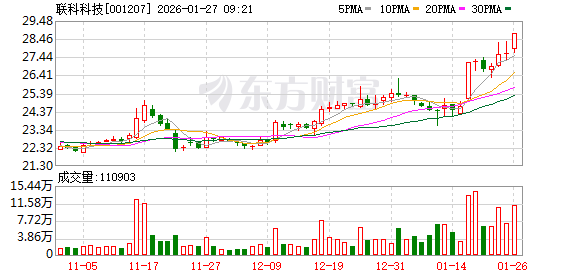
联科科技:子公司拟5.1亿元投建高纯净固体硅酸钠原料改扩建项目
Zhong Guo Zheng Quan Bao· 2026-01-27 01:24
Core Viewpoint - The company announced an investment project to expand its production capacity of high-purity solid sodium silicate, with a total investment of 510 million yuan and an expected construction period of 72 months [2] Group 1: Project Details - The project will be located within the existing factory area in Linqu County, Shandong Province, covering a total construction area of 25,000 square meters [2] - The main facilities to be constructed include sodium silicate production workshops, rice husk ash resource utilization workshops, finished product warehouses, and raw material warehouses [2] - Upon completion, the project is expected to achieve an annual production capacity of 450,000 tons of high-purity solid sodium silicate [2] Group 2: Strategic Importance - Sodium silicate is a key raw material for the company's production of silicon dioxide products, and its demand and purity are critical for enhancing product quality [2] - The project aims to meet the increasing demand for key raw materials, improve cost efficiency, and enhance product stability to better satisfy customer needs, ultimately boosting profitability [2] - The company emphasizes a "differentiation" strategy, focusing on new product development and upgrading existing products [2] Group 3: Financial Performance - For the first three quarters of 2025, the company reported total operating revenue of 1.788 billion yuan, an increase of 8.66% year-on-year [2] - The net profit attributable to the parent company was 230 million yuan, reflecting a year-on-year growth of 15.26% [2]

德福科技2025年预盈9700万-1.25亿元,同比扭亏为盈
Ju Chao Zi Xun· 2026-01-21 14:56
Core Viewpoint - Defu Technology forecasts a net profit attributable to shareholders of 97 million to 125 million yuan for 2025, marking a significant turnaround from a loss of 245.11 million yuan in the previous year, representing a year-on-year growth of 139.57% to 151% [2] Financial Performance - The expected net profit after deducting non-recurring gains and losses is projected to be between 70 million and 93 million yuan, a substantial increase from the previous year's loss of 236.76 million yuan, reflecting a year-on-year growth of 129.57% to 139.28% [2] Reasons for Performance Change - The company attributes the performance improvement to three main factors: - A significant recovery in downstream market demand, leading to a notable increase in the shipment volume of main products due to customer and technical accumulation [2] - Continuous product iteration and upgrades, with an increased proportion of high-value-added products such as lithium battery copper foil and electronic circuit copper foil, optimizing product structure and enhancing overall profitability through higher average processing fees [2] - A substantial increase in capacity utilization as production and sales scale expand, positively impacting cost reduction through economies of scale [2]
仕佳光子:稳步推进产品迭代升级与全球市场拓展
Zheng Quan Ri Bao· 2026-01-14 11:43
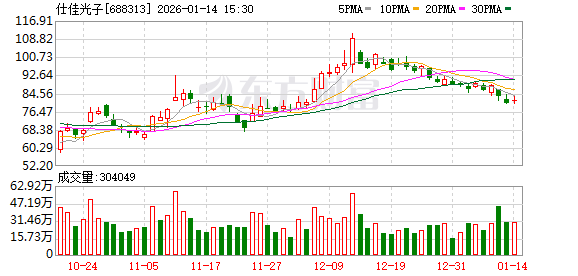
Core Viewpoint - The company has achieved a global market presence for its optical chips and related products, gaining recognition from clients in regions including Europe, America, and Southeast Asia due to its stable performance and technological advantages [2] Group 1: Company Performance - The company has established competitiveness in multiple niche markets within the optical communication sector, leveraging its mature technology accumulation and large-scale manufacturing capabilities [2] - The company plans to continuously align with industry trends and customer demands, steadily advancing product iteration and global market expansion [2]

宇通客车:通过持续的产品迭代升级等举措确保公司整体业务稳健发展
Zheng Quan Ri Bao Wang· 2026-01-12 13:10
Core Viewpoint - Yutong Bus (600066) is actively responding to changes in demand across different market segments through continuous product iteration, service model innovation, and proactive exploration of market opportunities to ensure stable overall business development [1] Group 1 - The company is focusing on product iteration and upgrades to meet market demands [1] - Innovation in service models is a key strategy for the company [1] - The company is exploring market opportunities to maintain business stability [1]

科达制造:公司肯尼亚伊新亚陶瓷项目主要生产规格较大的中高端瓷砖
Zheng Quan Ri Bao Zhi Sheng· 2025-12-05 15:17
Core Viewpoint - The company is focusing on the production of large-sized mid-to-high-end ceramic tiles at its Kenya Yinxin Ya ceramic project, with a daily capacity of approximately 11,000 square meters [1] Group 1: Production Capacity and Product Development - The company's Kenya project primarily produces larger mid-to-high-end ceramic tiles, with a daily output capacity of around 11,000 square meters [1] - The company is continuously working on product iteration and upgrades for some of its ceramic projects, although the overall capacity for large-sized tiles remains relatively small [1] Group 2: Market Demand and Future Plans - As the local economy develops and the demand for tiles upgrades, the company plans to gradually advance the upgrade of high-end product lines based on market needs [1] - The anticipated upgrades in product lines are expected to positively impact the average price of the company's ceramic products [1]
