价格发现功能

Search documents
抢椅子戏法终结:美股三十四年“万有引力”失效后的结构性崩塌
和讯· 2026-03-23 08:47
Core Viewpoint - The article discusses the impending correction in the U.S. stock market, driven by structural weaknesses and the dominance of passive investment strategies, which have led to a loss of price discovery and increased vulnerability to market shocks [3][4]. Group 1: Market Structure and Valuation - The U.S. stock market has experienced a 34-year period of abnormal valuation, with the cyclically adjusted price-to-earnings ratio (CAPE) remaining at a high of 40, deviating significantly from historical norms [4]. - Traditional macroeconomic models, such as the Federal Reserve model, have failed to predict market valuation limits, as the market has expanded due to narratives surrounding technology giants and AI, rather than fundamental value [4]. Group 2: Passive Investment and Price Discovery - Passive investment now accounts for 60% of the total market, with automated systems like 401(k) plans contributing to a "blind buying" mechanism that undermines price discovery [5]. - The reliance on algorithm-driven trading has created a liquidity vacuum, where market corrections can escalate into severe crashes due to the absence of human buyers during panic selling [6]. Group 3: Future Market Dynamics - The demographic shift, particularly the aging of the baby boomer generation, is expected to lead to a historic change in market dynamics, with mandatory withdrawals from retirement accounts projected to exceed inflows by 2028 [7]. - This shift will transform passive investors from buyers to forced sellers, fundamentally altering the landscape of the U.S. stock market and raising concerns about the definition of a company's baseline value in future market turmoil [7].


Moneta Markets外汇:解析加密衍生品新局
Xin Lang Cai Jing· 2026-01-27 12:36
Core Insights - The cryptocurrency market is transitioning into a "volatility game," with the introduction of Bitcoin and Ethereum volatility prediction contracts by Polymarket, indicating a shift from simple price speculation to more complex trading strategies [1][2] - Investors are increasingly pricing in market uncertainty, as Bitcoin (BTC) hovers around $87,900 and Ethereum (ETH) maintains the $2,900 level, reflecting a growing demand for volatility-based trading [1][2] Market Dynamics - Current market data reveals a cautious assessment of future risks, with a 35% probability that Bitcoin's 30-day implied volatility (BVIV) could double from 40% to 80%, and a similar likelihood for Ethereum's volatility reaching 90% [3] - This data serves not only as a prediction but also as a hedge against potential macroeconomic shocks or regulatory changes, enhancing capital flow efficiency compared to traditional complex options strategies [3] Asset Correlation - The financial environment is exhibiting new characteristics, particularly since the popularization of spot ETFs, which has led to an increasing negative correlation between Bitcoin's volatility and its price [4] - This shift necessitates that traders move beyond a singular price-focused mindset and utilize volatility tools to balance risk exposure in their asset portfolios [4] - The proliferation of volatility contracts is expected to enhance the price discovery function of the cryptocurrency market, improving liquidity and transparency as more retail investors gain access to previously institutional-only tools [4]

上期所打出“组合拳” 金银品种风控紧急调整
经济观察报· 2026-01-23 11:19
Core Viewpoint - The Shanghai Futures Exchange (SHFE) has made significant adjustments to margin ratios and price limits for gold, silver, and other futures contracts in response to the extreme volatility in global commodity prices, particularly in early 2026 [2][3]. Group 1: Adjustments and Rationale - On January 22, 2026, SHFE adjusted the margin ratios and price limits for various futures contracts, which was seen as a quick response to the action plan released by Shanghai to enhance the linkage between spot and futures markets for non-ferrous metals [2][5]. - The adjustments aim to increase market liquidity and improve price discovery efficiency while strengthening risk management measures [3][5]. - The volatility in commodity prices has intensified, particularly for precious metals and some non-ferrous metals, leading to increased risk management pressures for market participants, especially those in the physical industry [3][10]. Group 2: Specific Changes in Margin and Price Limits - For gold futures contracts nearing delivery, the price limit was expanded to 16%, with margin ratios raised to 17% for hedging and 18% for speculative trading [5]. - Silver futures saw even larger adjustments, with price limits increased to 17% and margin ratios set at 18% for hedging and 19% for speculation [5]. - Non-ferrous metals like copper and aluminum had their price limits unified at 8%, with margin ratios adjusted to 9% for hedging and 10% for speculation [6]. Group 3: Market Implications and Future Outlook - The adjustments are viewed as a necessary measure to prevent extreme market conditions and ensure liquidity, especially for entities holding significant positions [11][12]. - The changes reflect a more mature market, allowing for greater price fluctuations to better reflect supply and demand dynamics [6][12]. - Future risk management may involve more dynamic and differentiated approaches, potentially including complex margin models that consider volatility and correlation [14][17]. Group 4: Industry Response and Innovations - Companies are evolving their risk management strategies, seeking more sophisticated tools beyond traditional futures hedging, such as options and customized risk management solutions [16]. - The Shanghai Clearing House is expanding its services to enhance transparency and reduce counterparty credit risk in the over-the-counter market [16]. - There is a growing expectation for the development of supply chain financial products that leverage the authoritative pricing and standardized warehouse receipt systems of the Shanghai futures market [16].


【知识科普】股指期货是什么?大盘走势一致吗?
Sou Hu Cai Jing· 2025-12-05 00:46
Core Viewpoint - Stock index futures are standardized financial derivatives based on stock price indices, allowing for cash settlement on a specified future date, reflecting market expectations and trends [1][4]. Group 1: Characteristics of Stock Index Futures - Cross-period nature: Trading is based on future index expectations, directly impacting profits and losses [4]. - Leverage: Investors can control full asset value by paying a margin of only 10%-15%, amplifying both potential returns and risks. For instance, a margin of 12% allows an investor to control a contract worth approximately 900,000 yuan with about 108,000 yuan [4]. - Bidirectional trading: Allows for both long (betting on price increases) and short (hedging against price decreases) positions, overcoming the single-direction limitation of the stock market [5]. - T+0 trading: Enables multiple buy and sell transactions within the same day, enhancing capital efficiency [6]. - Expiration and settlement: Contracts have a defined expiration date, with cash settlement of price differences to avoid physical delivery [7]. Group 2: Relationship with Market Indices - Overall relationship: Stock index futures are strongly positively correlated with major indices like the Shanghai Composite Index and CSI 300, typically moving in tandem with market trends and investor expectations [8]. - Short-term discrepancies: Basis effects may cause futures prices to be either above (contango) or below (backwardation) the spot index, reflecting market expectations. For example, if an index is expected to rise, futures may trade at a premium [8]. - Market sentiment and capital flow: Investor sentiment, arbitrage activities, and capital movements can lead to short-term inconsistencies between futures and spot prices [8]. - Convergence on expiration: As the contract expiration date approaches, futures prices tend to converge with the spot index, reducing discrepancies [10]. Group 3: Functions and Strategies - Hedging and arbitrage: Institutions can hedge stock positions using stock index futures (e.g., shorting futures while holding stocks) or engage in arbitrage based on price differences between futures and spot markets [11]. - Price discovery function: The high liquidity of the futures market allows it to act as a "barometer" of market sentiment, potentially forecasting index movements [12].

以净资产为锚遏制个股爆炒空间
Guo Ji Jin Rong Bao· 2025-12-01 09:05
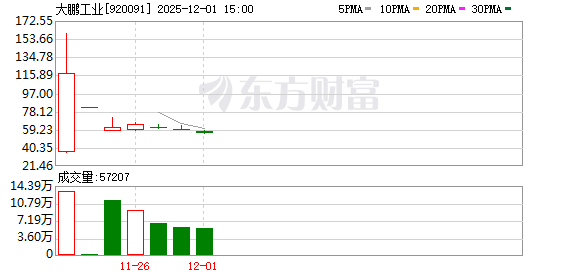
Core Viewpoint - The recent volatility of Dapeng Industrial's stock on the Beijing Stock Exchange highlights the need for regulatory reforms in the A-share market to prevent excessive speculation and ensure market stability [2][5]. Group 1: Stock Performance and Trading Rules - On its debut day (November 21), Dapeng Industrial experienced a turnover rate of 98.28% and surged by 1200%, reaching a peak of 159 yuan, before plummeting to 58.8 yuan by November 28 [2]. - The lack of price limits on certain stocks allows for extreme price fluctuations, with the potential for stocks to rise significantly within a single trading day due to high-frequency trading practices [2]. - Current trading rules permit temporary halts in trading only when prices rise by 30% or 60%, but there are no further restrictions beyond a 60% increase, allowing for unrestrained price surges [2]. Group 2: Proposed Regulatory Changes - To combat speculative trading, it is suggested to establish a price ceiling for stocks, limiting their price to no more than 10 times the latest audited net asset value, with a higher limit of 20 times for certain boards like the Sci-Tech Innovation Board [3][4]. - The proposal aims to ensure that stock prices are anchored to audited financial metrics, thereby reducing the potential for price manipulation and speculative bubbles [3][4]. - A transitional period is recommended for stocks currently exceeding these proposed limits, allowing for price adjustments while maintaining market stability [4]. Group 3: Market Implications - Implementing these regulations is expected to realign market valuation logic, ensuring that stock prices reflect the underlying business fundamentals rather than speculative trends [4][5]. - The proposed changes aim to redirect capital towards companies with solid performance, thereby enhancing the overall health of the capital market and supporting real economic growth [5]. - By establishing clear price limits, the market can discourage speculative behavior while promoting value investing, ultimately leading to a more rational investment environment [5].
金融监管总局、央行各自分工 联手重塑金融经纪监管
Sou Hu Cai Jing· 2025-11-19 09:16
Core Viewpoint - The introduction of new regulations for currency brokerage firms in China marks a significant shift in the oversight of the financial sector, aiming to enhance transparency and accountability in brokerage activities [3][4][17]. Regulatory Changes - The National Financial Supervision Administration revised the "Management Measures for Currency Brokerage Companies," effective from August 1, 2025, marking the first comprehensive overhaul in 20 years [3][11]. - The People's Bank of China issued the "Management Measures for Interbank Market Brokerage Business," effective January 1, 2026, which delineates the boundaries for brokerage activities in the interbank market [3][11]. Key Provisions of the Regulations - The new regulations clarify the permissible activities for brokerage firms, allowing them to provide brokerage services in various markets while prohibiting them from engaging in bond issuance activities [7][8]. - A set of strict rules, or "red lines," has been established, including prohibitions on holding positions, controlling trading accounts, and manipulating markets [8][20]. - All brokerage activities must be traceable, requiring real-time and accurate disclosure of quotes and transactions, with all communications stored securely for at least five years [8][9]. Institutional Requirements - The revised regulations define "currency brokerage companies" as licensed non-bank financial institutions with a minimum registered capital of 100 million yuan [13][14]. - The scope of services has been expanded to include gold and derivatives, allowing these companies to provide brokerage services for a wider range of financial instruments [14][15]. Market Impact - The first successful gold inquiry spot transaction under the new regulations was facilitated by Shanghai Guoli Currency Brokerage Co., indicating increased market activity and liquidity [18][19]. - The role of gold brokers is now defined as "transparent intermediaries," with strict rules against self-dealing and price manipulation [20]. Industry Dynamics - The regulatory changes are expected to shift the industry landscape from "gray intermediaries" to licensed brokers and in-house brokerage departments within large financial institutions [25]. - The business model is transitioning from profit through price differentials to value creation through transparency and data services [26][27]. Regulatory Focus - The emphasis of regulation has shifted from merely preventing incidents to ensuring accountability and traceability in brokerage activities [29].

金洲管道(002443) - 2025年9月2日投资者关系活动记录表
2025-09-03 11:10
Group 1: Company Strategy and Financial Health - The company has a solid financial health status, maintaining a good level of cash reserves, bank credit limits, and asset-liability ratios compared to the industry [2] - With 44 years of experience, the company has accumulated substantial customer resources, channel relationships, capital, cash reserves, and industry reputation, which are its foundational advantages [2] - As the welded steel pipe industry shifts from an incremental market to a stock market, competition intensifies, necessitating the company to cultivate a second main business to create a new growth curve [2][3] Group 2: Investment and Business Focus - The company will adopt a cautious approach towards large-scale expansion investments in the steel pipe industry, focusing instead on technology improvement investments [2][3] - Future operations will be driven by orders and market demand, emphasizing customized production based on customer contracts [3] - The company plans to prioritize technological upgrades to enhance technical capabilities and resource efficiency rather than pursuing large-scale expansion [3] Group 3: Industry Dynamics and Profitability - The profitability methods in the steel pipe industry have evolved due to market conditions, technological advancements, and competition, focusing on product structure optimization and high-end product ratios [4] - Companies are increasingly engaging in differentiated competition by customizing production to meet specific customer needs and establishing long-term strategic partnerships with suppliers to stabilize raw material supply and reduce costs [4] - The introduction of automated production lines and advanced manufacturing technologies has improved production efficiency and reduced unit product costs [4] Group 4: Cost Structure and Market Sensitivity - The main raw materials for steel pipe manufacturing include hot-rolled steel strips and zinc ingots, with raw material costs constituting a significant portion of sales prices [6] - The sensitivity of product prices to raw material costs is high, and the industry has a strong price discovery function, allowing for timely adjustments in product pricing based on raw material price changes [6] - The high transparency of raw material and finished product prices in the industry ensures that product price adjustments generally align with fluctuations in raw material costs, helping to maintain stable profit margins [6]

A50 实时股指期货:全球视野下的投资机遇
Sou Hu Cai Jing· 2025-07-29 15:46
Core Insights - A50 Real-time Index Futures serve as a vital bridge for global investors to access China's core assets and gain insights into the Chinese economy [1][4] - The underlying FTSE China A50 Index includes 50 leading A-share companies with significant market capitalization and liquidity, spanning key sectors such as finance, consumption, technology, and energy [1] - The trading hours of A50 Real-time Index Futures are a notable feature, allowing nearly seamless trading from Monday to Friday, which aligns closely with A-share trading hours and covers active periods in European and American markets [1] Trading Advantages - The price discovery function of A50 Real-time Index Futures is enhanced by its trading hours that span multiple global markets, allowing it to react promptly to international events and economic data [2] - A50 Real-time Index Futures act as a "barometer" for market expectations, providing valuable forward-looking signals to A-share investors and global market participants [2] Investment Opportunities - For global investors, A50 Real-time Index Futures offer an efficient tool to participate in China's economic growth, overcoming barriers that limit direct access to the A-share market [4] - The correlation between A50 Real-time Index Futures and the CSI 300 Index is as high as 0.8, indicating a strong relationship, while also often leading in response to market movements [4] - A50 Real-time Index Futures feature a more balanced industry distribution compared to the SSE 50 Index, showcasing greater resilience and vitality in emerging industries, thus providing diverse investment perspectives [4]

丙烯期货及期权今日在郑商所上市
Qi Huo Ri Bao Wang· 2025-07-21 16:18
Core Viewpoint - The listing of propylene futures and options on the Zhengzhou Commodity Exchange marks a significant development in China's futures market, enhancing the risk management framework for the olefin industry and providing diverse hedging tools for enterprises [1][2]. Industry Summary - The trading code for propylene futures is PL, with the initial contracts priced at 6350 yuan/ton, closely aligning with current spot prices in East China, reflecting market expectations for future prices [1]. - The rapid increase in domestic propylene production capacity, driven by large-scale refining and PDH projects, creates a strong demand for effective risk management tools, which propylene futures will provide [1][2]. - The propylene futures and options are expected to improve the chemical derivatives market ecosystem, offering more risk management tools for upstream and downstream enterprises [2]. - Propylene, being the largest olefin product in China, has a substantial trading scale and market demand, which supports the listing of futures and options contracts [2][3]. - The introduction of propylene futures will enhance pricing efficiency and market liquidity, providing a transparent pricing benchmark for enterprises to lock in profits [3][4]. - The design of the futures and options rules is tailored to industry needs, particularly in the delivery process, which will benefit a wide range of market participants [3]. - The futures market is anticipated to shift the pricing model from decentralized negotiations to a "futures price + basis" model, improving market transparency and trading efficiency [4].
三周年,相关指数基金稳步扩容
中国基金报· 2025-07-20 12:32
Core Viewpoint - The listing of the CSI 1000 index futures and options marks a significant milestone in the development of China's capital market, enhancing risk management tools and attracting more investments into small-cap stocks [3][4][10]. Group 1: Market Development - The CSI 1000 index futures and options have been instrumental in deepening capital market reforms, providing essential hedging tools for small-cap stocks and improving pricing efficiency [3][4]. - The introduction of these derivatives has led to a substantial increase in the scale and net inflow of related ETFs, with the South China CSI 1000 ETF's size doubling within a year of the futures listing, reaching a net inflow of 14.076 billion yuan [4]. - Daily trading volume of the South China CSI 1000 ETF surged by 597.5%, from 2.19 billion yuan to 15.28 billion yuan after the listing of the futures and options [4]. Group 2: Fund Expansion - Since the listing of the CSI 1000 index futures and options, there has been a steady expansion of related index funds, with 41 out of 59 funds established post-listing, including 34 enhanced index products [6][7]. - Over 80% of the 41 newly established CSI 1000 index funds have achieved positive returns, although there is significant size disparity among these funds, with 25 having assets below 200 million yuan [7]. - The CSI 1000 index funds are still in their early development stage, with limited recognition and small market capitalization of constituent stocks restricting fund sizes [7]. Group 3: Investment Outlook - The CSI 1000 index is viewed as a crucial tool for investors seeking opportunities in small-cap stocks, with a projected total ETF scale of 148.6 billion yuan by June 2025 [9]. - The index is expected to complement other major indices, providing a comprehensive coverage of A-share market styles and enhancing the investment ecosystem [9][10]. - The potential for the CSI 1000 index to become the "Chinese version" of the Russell 2000 index is supported by the anticipated continued release of profit elasticity in small-cap stocks amid economic recovery and industrial upgrades [10].