供应链扰动

Search documents
2026春油脂油料调研:宏观迷雾、供需博弈下的产业新常态
Ge Lin Qi Huo· 2026-03-31 07:21
Report Summary 1. Report Industry Investment Rating No information provided. 2. Core Viewpoints - The current core contradiction in the oil and feed industry lies in the tug - of - war between macro "uncertainty" and industrial "certainty", the race between short - term supply chain "disturbance" and long - term "looseness", and the interweaving of demand "total ceiling" and "structural change" [6]. - The key to winning in the complex game is to build three abilities: identifying the main contradiction in the macro fog, managing inventory and procurement rhythm in supply chain disturbances, and transforming uncertainty into a deterministic business strategy through financial tools and innovative service models in the stock market [6]. - The overall profit space of the industry is compressed, but it provides opportunities for enterprises with professional and refined operation capabilities to build moats and achieve leap - forward development [6]. 3. Summary According to the Directory 3.1 Macro Narrative Dominates Pricing, and the Industrial Analysis Framework Needs Reconstruction - Traditional supply - demand fundamental analysis is temporarily "ineffective", and geopolitical conflicts and crude oil prices have become the core factors leading to short - term price fluctuations of oils and fats, especially palm oil and soybean oil, resulting in a "war premium" in market prices that deviates from industrial inventory and consumption data [2]. - Market sentiment has become extremely cautious, with both buyers and sellers adopting a wait - and - see attitude, leading to a decline in trading activity and a "stability - seeking" mindset. The analysis framework of physical operators needs to be upgraded to a new model of "macro trend judgment first, industrial fundamentals verification later" [2]. 3.2 Supply: Intense Game between Long - term Loose Expectations and Short - term Structural Disturbances - Although there is a consensus on the long - term supply loosening pattern brought by the bumper harvest of South American soybeans, short - term, policy - related supply chain disturbances have become the key to affecting market rhythm and profits [2]. - The normalization of customs quarantine has extended the clearance and quarantine time of Brazilian soybeans from about one week to 20 - 25 days, causing a regional and phased supply shortage in mid - early April. The market generally expects a "tight - first, loose - later" situation, with the core game point being the duration of the "tight" period rather than the adequacy of the total supply [3]. - The overall increase in logistics costs, including international sea freight, domestic road freight, and container freight, will be a new cost pressure throughout the year and may affect the efficiency of cargo turnover [3]. 3.3 Demand: Structural Opportunities and Rigid Support under the Total Ceiling - The demand side has entered the stock era, with the end of the total growth story, but internal structural changes have created new balances and opportunities [3]. - For oil consumption, domestic demand is saturated, and external demand and substitution have become new highlights. Soybean oil is squeezing the market share of other oil types, and the core growth point in the future is exports. Biodiesel policies are a long - term factor affecting global oil demand [3][4]. - Despite the continuous losses in pig farming, high inventory and slaughter weight provide rigid support for feed demand. The decline in soybean meal demand will be a slow and gradual process, providing price elasticity space for upstream supply disturbances [4]. 3.4 Industrial Evolution: Risk Management Advancement and Deep Differentiation of Business Models - The high - volatility and low - growth environment are accelerating the differentiation and evolution of each link in the industrial chain. The basis trading has become the mainstream in spot transactions, and the financialization of the industry has deepened [4]. - In the upstream crushing and trading links, the core is refined position management and arbitrage trading. In the mid - stream feed enterprises, the core strategy is to ensure stable supply and cost control. The downstream breeding industry is in a "slow bottom - grinding" stage, with slow capacity reduction and mainly quarterly rebounds driven by the fat pig slaughter rhythm [5].
地缘冲突扰动供应链,内需与通胀走势分化:申万期货早间评论-20260312
申银万国期货研究· 2026-03-12 00:34
Core Viewpoint - Geopolitical tensions are disrupting global supply chains, with the Red Sea crisis affecting shipping operations and domestic demand for automobiles showing signs of pressure, indicating challenges for economic recovery [1] Group 1: Geopolitical and Economic Impact - The Red Sea crisis has led to over a hundred ships being blocked, significantly impacting global trade [1] - Recent attacks in the Strait of Hormuz highlight the escalating regional risks, despite signals of de-escalation from the U.S. [1] - Domestic automobile production and sales have declined year-on-year and month-on-month, reflecting ongoing pressures on internal demand [1] - The U.S. core CPI remains stable, providing room for potential adjustments in monetary policy [1] Group 2: Commodity and Market Analysis - Oil prices saw a 7% increase in the SC night market, influenced by the IEA's announcement to release 400 million barrels from strategic reserves [2][12] - The G7 energy ministers did not reach an agreement on releasing strategic oil reserves, opting for a situation assessment first [2] - U.S. crude oil inventories decreased by 1.7 million barrels as of the week ending March 6, 2026 [13] - The European shipping index (EC) rose by 7.15%, with Maersk maintaining pricing despite seasonal demand challenges [3] - The Dow Jones index experienced a pullback, with market dynamics shifting from "expectation-driven" to "profit-driven" as companies begin to disclose annual and quarterly reports [10] Group 3: Sector-Specific Insights - The automotive sector reported a significant drop in production and sales, with February figures showing a 31.7% and 23.1% decline month-on-month, respectively [7] - The domestic methanol production capacity is under pressure, with a decrease in operational load due to maintenance activities [14] - The rubber market is experiencing a rebound due to seasonal low production, with supply constraints expected to persist until May [15] - The aluminum market is facing supply risks due to ongoing geopolitical tensions, particularly affecting production in the Middle East [22] Group 4: Financial Market Trends - The financing balance in the stock market increased by 9.773 billion yuan, indicating a shift towards sectors with strong earnings potential [10] - The bond market saw a slight decline, with the 10-year treasury yield rising to 1.8175% amid heightened global risk aversion [11] - The overall market sentiment is expected to remain cautious, with a focus on domestic fundamentals and policy adjustments in response to geopolitical developments [10][11]


地缘冲突扰动,农产品波动较大
Zhong Xin Qi Huo· 2026-03-10 01:12
Report Industry Investment Rating The report does not provide an overall industry investment rating. Core Viewpoints - Geopolitical conflicts are causing significant fluctuations in the agricultural product market, with different products showing various trends and being affected by multiple factors such as geopolitical events, supply - demand fundamentals, and cost changes [1][5]. - The prices of most agricultural products are closely related to the development of the Middle - East situation, and the market is trading the "conflict premium" before the war shows a clear end signal [5]. Summary by Variety Oils and Fats - **Viewpoint**: Middle - East situation deteriorates, and vegetable oils hit the daily limit during trading. The price trend is highly correlated with the evolution of the Middle - East situation, and the core logic is that "the duration of the war determines the price level". - **Logic**: The war in the Middle - East leads to a sharp short - term increase in crude oil and its products. It affects oil prices through multiple paths. Before the war ends, the market will trade the "conflict premium", and the price center may rise. After the war, the prices will face downward pressure but may turn to a bullish shock pattern in the long - term due to low inventory and weather factors. - **Outlook**: Soybean oil, palm oil, and rapeseed oil are expected to be bullish with shocks. It is recommended to pay attention to the phased low - level buying strategy [5]. Protein Meal - **Viewpoint**: The volatility of double meals intensifies, and attention should be paid to the development of the Middle - East situation. - **Logic**: Internationally, the escalation of the US - Iran conflict and the spill - over effect of rising crude oil prices drive up the price of US soybeans. The expected implementation of the US biodiesel bill in March may boost the US soybean crushing volume. In South America, the soybean production in Brazil is expected to be lower than the February estimate. Domestically, the opening limit - up of soybean meal futures is affected by the US - Iran conflict, but the supply fundamentals are still loose. - **Outlook**: Soybean meal is expected to fluctuate. The increase in US soybean prices due to the US - Iran conflict raises the cost of domestic soybean meal, and the market is worried about the delay of Brazilian soybean arrivals [5]. Corn - **Viewpoint**: Emotional funds cause corn to rise first and then fall. - **Logic**: The rise in the futures price is mainly due to macro and fund rotation, trading the "war premium". In the short - term, there are no major negative factors in the domestic corn fundamentals. In the medium - term, the supply - demand is tight, and the fundamentals and emotions resonate to support the price increase. However, the increase is relatively rational compared to oils and fats. - **Outlook**: Bullish with shocks. In March, the increase in spot prices may narrow, and attention should be paid to the capital movement in the futures market. In the medium - term, corn is generally bullish [5][6]. Pigs - **Viewpoint**: The futures price is driven up by cost and sentiment, but the spot supply - demand is still loose. - **Logic**: In the short - term, the planned daily slaughter volume in March increases. In the medium - term, the supply pressure is large. In the long - term, the process of capacity reduction is not smooth. The demand is in the off - season after the festival, and the inventory and weight of pigs increase. - **Outlook**: Bearish with shocks. In the first half of the year, the industry is advised to pay attention to the hedging opportunity of short - selling at high prices. The pig cycle is expected to bottom out and pick up in the second half of the year [7]. Natural Rubber - **Viewpoint**: The fundamentals are insufficient to support the price, and the price follows with difficulty. - **Logic**: Although the price was driven up by the sharp rise of synthetic rubber, it quickly fell back, indicating that the fundamentals do not support the rise. The short - term trading logic is still related to the Middle - East geopolitics, and the downstream tire orders to the Middle - East are affected, which is negative for the price. - **Outlook**: The price will maintain a shock pattern due to limited fundamental variables [8][10]. Synthetic Rubber - **Viewpoint**: The strength continues, and the futures price hits the daily limit. - **Logic**: The Middle - East geopolitical event leads to a continuous rise in crude oil. Driven by the daily limit of multiple varieties in the sector, BR maintains its strength. The export of butadiene last week intensifies the bullish sentiment in the market. As long as crude oil remains strong, the futures price is likely to rise. - **Outlook**: The futures price mainly follows the sector sentiment. If crude oil continues to rise, the price will remain strong in the short - term, but attention should be paid to the rapid change of geopolitical sentiment [12]. Cotton - **Viewpoint**: The price rises during trading and then falls back, continuing the consolidation pattern. - **Logic**: There is no new driving force in the cotton market, and funds flow into hot varieties. The domestic cotton commercial inventory is in the de - stocking period, and the domestic supply - demand is expected to be in a tight balance. Overseas, the supply - demand situation is expected to improve in the next season. - **Outlook**: Bullish with shocks. It is recommended to buy on dips [13]. Sugar - **Viewpoint**: The sharp fluctuation of oil prices causes short - term shocks in sugar prices. - **Logic**: In the long - term, the internal and external sugar prices are expected to continue the weak shock at the bottom. In the short - term, affected by the rise and sharp fluctuation of oil prices, the futures price may have a shock rebound, but it is difficult to reverse the oversupply pattern. - **Outlook**: The price will fluctuate. Affected by the oil price fluctuation caused by the Middle - East conflict, the sugar price may have a shock rebound, and the internal price range can be moderately expanded to 5100 - 5500 yuan/ton [14]. Pulp - **Viewpoint**: The price rises first and then falls back, and is greatly affected by the market trading atmosphere. - **Logic**: The fluctuation of pulp futures is mainly affected by the transmission of crude oil fluctuations. The current fundamentals are weak, but the seasonal demand is expected to increase. The supply - demand situation is complex, with both positive and negative factors. - **Outlook**: Bullish with shocks. The expected improvement in demand forms a positive factor, and the pulp price will maintain a bullish shock pattern within the range [16]. Double - Glue Paper - **Viewpoint**: Paper mills announce price increases, and the futures price is bullish within the range. - **Logic**: The trading atmosphere in the double - glue paper market is average, and the price is stable. The supply pressure exists, and the downstream demand is weak. In March - April, the supply and demand are expected to increase, and the price is expected to rise. In May, the price may fall. - **Outlook**: Bullish with shocks. After the festival, the supply and demand are expected to increase, and the price is expected to be bullish within the range in the short - term [18]. Logs - **Viewpoint**: The cost increases, and the logs are bullish with shocks. - **Logic**: The geopolitical conflict increases the freight cost and the CFR quotation of the outer market. The domestic spot price follows the increase. In the short - term, the price is bullish with shocks. In the medium - term, the price may be under pressure after the arrival of a large number of logs. - **Outlook**: The price will maintain a shock pattern. The increase in the outer - market quotation drives up the domestic spot price, and the price will maintain a range - bound operation [19]. Commodity Index - **Comprehensive Index**: The comprehensive index, specialty index (including commodity 20 index and industrial products index), and sector index (agricultural product index) all show an upward trend on March 9, 2026. The agricultural product index has a daily increase of 2.48%, a 5 - day increase of 3.55%, a 1 - month increase of 3.93%, and a year - to - date increase of 5.17% [180][182].
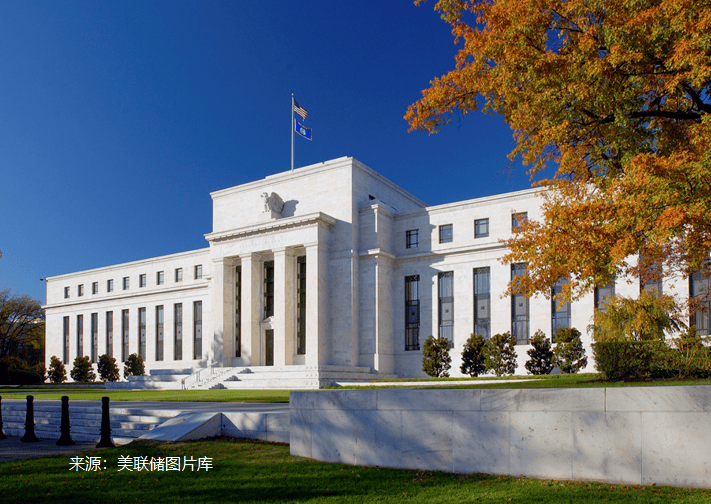
美联储发出警告,通胀魅影浮现!
Sou Hu Cai Jing· 2025-05-16 03:32
Group 1 - The Federal Reserve Chairman Jerome Powell indicated that inflation may become more volatile in the future, suggesting that the U.S. might be entering a period of more frequent and prolonged supply shocks [2] - The Federal Reserve is currently conducting its first monetary policy framework review since 2020, aiming to incorporate lessons from the inflation surge in 2021 and subsequent aggressive rate hikes [2] - Fed Governor Michael Barr warned that supply chain disruptions related to tariffs could lead to economic growth slowdown and rising inflation, particularly affecting small businesses that have limited access to credit [2][3] Group 2 - Barr highlighted the multiplier effect of supply chain disruptions, referencing the COVID-19 pandemic's impact on various industries and prolonged price volatility [3] - The uncertainty in current trade policies could potentially weaken economic growth momentum and increase inflationary pressures beyond expectations [3] - Despite recent trade agreements between the U.S., U.K., and China, global macroeconomic and trade uncertainties persist, with supply chain disruptions posing a risk of a domino effect on already fragile trade networks [3]