
全域零售

Search documents
2026年中国快消品线下渠道重构报告:从流量红利到场景深耕的业态进化
Qin Ce Xiao Fei Yan Jiu· 2026-03-18 02:25
Investment Rating - The report indicates a positive investment outlook for the fast-moving consumer goods (FMCG) sector, particularly in the context of offline channel restructuring and the rise of instant retail [1]. Core Insights - The restructuring of offline channels in the FMCG industry is driven by dual transformations in supply and demand, with a focus on efficiency and consumer experience [57]. - Instant retail is projected to grow significantly, with market size expected to reach 7,810 billion yuan in 2024 and exceed 20,000 billion yuan by 2030, reflecting a compound annual growth rate (CAGR) of 21% from 2019 to 2024 [4][6]. - The report highlights a shift in consumer behavior towards instant gratification, with a preference for 30-minute delivery becoming a standard expectation [7]. Summary by Sections Market Size and Growth - The instant retail market in China is expected to reach 7,810 billion yuan in 2024, growing at a rate of 20.2% year-on-year, and is projected to surpass 20,000 billion yuan by 2030 [4][6]. - From 2019 to 2024, the market is anticipated to expand by 2.6 times, with a CAGR of 21%, significantly outpacing overall online retail growth [6]. Channel Structure Changes - The FMCG channel structure is evolving, with traditional offline retail's share declining from 68% in 2019 to 58% in 2024, while instant retail's share is expected to double from 5% to 10% [12][9]. - Online retail is stabilizing at around 28% market share, indicating a peak in growth potential [12]. Competitive Landscape - Major players in the instant retail market, such as Hema and Xiaoxiang, are achieving significant growth, with Hema's GMV reaching 750 billion yuan and Xiaoxiang's GMV growing to 300 billion yuan, marking a 50% increase [15][36]. - The report notes that the profitability of leading players signifies a shift from a scale-driven to a profit-driven model in the instant retail sector [19]. Future Trends - The next five years will see instant retail transition from scale expansion to efficiency optimization, with expectations that it will account for 8-10% of total social consumer goods retail by 2030 [8]. - The report anticipates a "433" structure in FMCG retail by 2028, with offline experiential retail, traditional e-commerce, and instant retail each holding approximately 30% market share [14]. Consumer Behavior - Consumer preferences are shifting towards instant satisfaction and quality-price ratio, with a growing emphasis on shopping as a social and experiential activity [57]. - The demand for immediate delivery options is reshaping the retail landscape, with instant retail becoming a primary channel for daily purchases [7]. Technological Advancements - The report highlights the role of technology in enhancing operational efficiency, with AI-driven inventory management and smart replenishment systems expected to reduce operational costs significantly [28]. - The integration of online and offline channels is accelerating, with brands increasingly using instant retail for product launches and inventory clearance [7]. Regional Market Dynamics - The report identifies a tiered market structure, with first-tier cities reaching saturation, while second-tier and lower-tier cities present significant growth opportunities, particularly in instant retail [68]. - The penetration rate in first-tier cities is around 25-30%, while second-tier cities are experiencing growth rates of 25-30% [69][70]. Supply Chain and Distribution - The instant retail model is characterized by a robust delivery network of 800,000 riders, with average delivery times improving from 45 minutes in 2019 to 28 minutes in 2024 [7]. - The report emphasizes the importance of supply chain efficiency, with a focus on reducing delivery costs and enhancing customer experience through technology [44].

江南布衣2026财年中期业绩“飘红”:品牌生态韧性彰显 “百亿零售”目标不变
Zheng Quan Ri Bao Wang· 2026-03-03 08:59
Core Insights - Jiangnan Buyi reported a 7.0% year-on-year revenue growth to 3.376 billion yuan and an 11.9% increase in net profit to 676 million yuan for the first half of the 2026 fiscal year, with a gross margin of 66.5% [1] - The board proposed an interim dividend of 277 million HKD, equivalent to 0.52 HKD per share, marking a total dividend payout exceeding 5 billion HKD since its listing [1] - The company aims to maintain a dividend payout ratio of over 75% for the fiscal year 2026, reflecting its commitment to delivering long-term value to shareholders [1] Strategic Focus - Jiangnan Buyi's growth strategy emphasizes "user relationships" rather than solely relying on store openings and discounts, with its flagship brand JNBY serving as a cornerstone for brand trust and cash flow [2] - Online channel revenue grew by 25.1% year-on-year, becoming a key driver of overall revenue growth, supported by a comprehensive retail network and digital tools [2] - The company operates 2,163 independent retail stores globally, with a net increase of 46 stores, covering all provinces in mainland China and extending to nine other countries and regions [2] Membership and Customer Engagement - Membership contributed over 80% of retail revenue, with active members reaching 590,000, including 340,000 high-value members who spent over 5,000 yuan annually [3] - The introduction of the new store format "jnby+ Children's Imagination Collection Store" aims to enhance consumer relationships and create immersive experiences for families [3] - The company maintains its "100 billion retail" target while prioritizing quality and health of growth over mere numerical expansion [3] Sustainability Commitment - Jiangnan Buyi has set a "30-50 carbon neutrality goal," aiming for carbon neutrality in its operations by 2050, with interim targets to reduce emissions by 20% by 2030 and 40% by 2035 [4] - The company is innovating in sustainable materials, using protein-based synthetic fabrics that reduce greenhouse gas emissions by approximately 79% during production [5] - Collaborations with educational institutions aim to integrate sustainable practices into design education, fostering creativity and innovation among students [5] Cultural and Community Engagement - The "Fabric Utilization" project, now in its fourth year, focuses on preserving and revitalizing traditional fabric techniques, contributing to sustainable industry innovation [6] - The project has gained significant public attention, with activities reaching over 30 million views on social media, showcasing the intersection of traditional craftsmanship and contemporary design [6] - Jiangnan Buyi promotes a culture of sustainability within the organization, encouraging employee participation in sustainable practices and community engagement initiatives [5][6] Future Outlook - The company remains committed to its core values of original design, brand integrity, and user experience, aiming to build competitive barriers and ensure sustainable growth despite macroeconomic challenges [7] - Jiangnan Buyi's leadership expresses confidence in navigating market fluctuations and seizing opportunities for growth [7]
滔搏(06110.HK):短期审慎 长期乐观
Ge Long Hui· 2025-12-28 04:43
Core Viewpoint - The company reported a significant decline in retail and wholesale sales for FY26Q3, with total sales decreasing by a high single-digit percentage year-on-year, and a reduction in gross sales area of direct stores by 1.3% quarter-on-quarter and 13.4% year-on-year [1] Group 1: Retail Strategy - The company is advancing an integrated retail network centered around physical stores, adopting a "1 (offline stores) + N (corresponding online multi-scenario layout)" model for diversified operations [1] - The company is implementing a "one product, one strategy" approach for retail store structural adjustments, focusing on innovation in store scenarios and formats that combine functional services with social attributes [1] - The online ecosystem is expanding with over 800 accounts on Douyin and WeChat video accounts, more than 3,600 mini-program stores, and over 3,700 stores participating in instant retail [1] Group 2: Brand Partnerships - The company is deepening its brand layout in the running and outdoor segments, having established exclusive operational partnerships with brands such as norda, soar, Ciele, and Norr na in mainland China [1] - The company is engaging core users through social media matrices, large-scale events, and community activities, while also utilizing diverse formats like online flagship stores and offline pop-up shops [1] - The company opened its first running concept store, ektos, in Shanghai, focusing on the needs of runners and integrating into the community to enhance user engagement [1] Group 3: User Engagement - The company is building a diversified user value system centered on consumer needs, with a cumulative user base of 89 million, and is enhancing user profiles through multi-platform information integration [1] - The company upgraded its membership system, linking the original member IP "Tao Xiaoxia" with daily scenarios and introducing a cost-saving seasonal card for frequent consumers [1] - To resonate with younger consumers, the company is activating community connections through diverse IP co-branding marketing activities and offline community experience events [1] Group 4: Financial Forecast - The company maintains its profit forecast, expecting revenues of 26.5 billion RMB, 27.3 billion RMB, and 28.6 billion RMB for FY26-28, with net profits of 1.3 billion RMB, 1.5 billion RMB, and 1.7 billion RMB, and EPS of 0.21 RMB, 0.24 RMB, and 0.27 RMB respectively [2]

滔搏(06110.HK):三季度基本符合预期 经营指标健康 需求仍待回暖
Ge Long Hui· 2025-12-24 20:42
Group 1 - The core viewpoint of the articles indicates that the retail and wholesale sales of the company have experienced a high single-digit decline year-on-year, which is in line with expectations. Retail performance is better than wholesale, with online sales outperforming offline sales [1] - The company maintains a healthy inventory level, with total inventory continuing to decline and turnover efficiency being good. The company prioritizes maintaining a relatively healthy inventory as a key objective [1] - Nike is strengthening product innovation and retail capabilities while increasing efforts to recover inventory. The company is cautious about new product orders for 2026 to avoid channel inventory buildup and is focusing on recalling old inventory from distributors [2] Group 2 - Retail demand has weakened since the fourth quarter, posing challenges to achieving the annual guidance. The company is making efforts to optimize personnel and adjust stores to save costs in the second half of the year [3] - The company is focused on high-quality growth in the sports apparel retail business and is expanding its brand portfolio to create diverse growth curves. Profit forecasts for FY26-28 have been slightly lowered, with expected net profits of 1.25 billion, 1.39 billion, and 1.51 billion yuan respectively [3] - The company has a strong retail operation capability through deep cooperation with major brands like Nike and Adidas, and is optimistic about the mid-term recovery trend despite short-term retail fluctuations [3]
滔搏(06110):三季度基本符合预期,经营指标健康,需求仍待回暖
Shenwan Hongyuan Securities· 2025-12-23 10:11
Investment Rating - The report maintains a "Buy" rating for the company [2] Core Insights - The company reported third-quarter operational data for FY26, which was generally in line with expectations, with retail and wholesale sales experiencing a high single-digit decline year-on-year [7] - Retail performance outpaced wholesale, with online sales outperforming offline sales. The decline in retail was mitigated by a low base effect from the previous year, while online growth slowed due to a high base [7] - Inventory levels remain healthy, with a stable discount rate year-on-year. The total inventory decreased, and the company is focused on maintaining a healthy inventory turnover [7] - The core brand is enhancing product innovation and retail capabilities while increasing inventory recovery efforts. Collaborations with key retailers aim to optimize online market management and address pricing inconsistencies in the industry [7] - The company is expected to significantly reduce store closures compared to FY25, with a slight decrease in direct store sales area [7] - Retail demand has weakened since the fourth quarter, posing challenges to achieving annual guidance, although the company is still working towards this goal [7] - The company focuses on high-quality growth in sports apparel retail, with a slight downward adjustment in profit forecasts for FY26-28 [7] Financial Data and Earnings Forecast - Revenue projections for FY2024 to FY2028 are as follows: - FY2024: 28.93 billion RMB (7% growth) - FY2025: 27.01 billion RMB (7% decline) - FY2026E: 25.27 billion RMB (6% decline) - FY2027E: 26.62 billion RMB (5% growth) - FY2028E: 28.27 billion RMB (6% growth) [6] - Net profit forecasts for the same period are: - FY2024: 2.21 billion RMB (21% growth) - FY2025: 1.29 billion RMB (42% decline) - FY2026E: 1.25 billion RMB (3% decline) - FY2027E: 1.39 billion RMB (11% growth) - FY2028E: 1.51 billion RMB (9% growth) [6] - The company’s gross margin is projected to be around 41.8% in FY2024, declining to 38.4% in FY2025, and gradually improving to 40.0% by FY2028 [6]
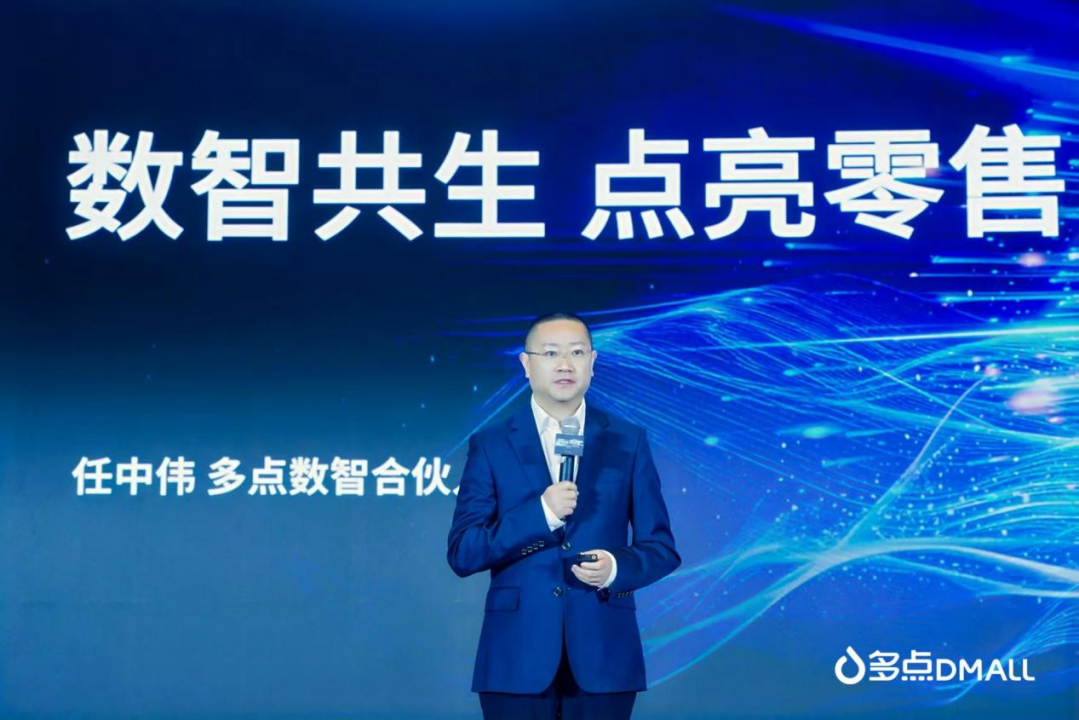
树立国际标杆客户,多点数智携中国零售数字化经验赋能海外增长
Jin Rong Jie· 2025-12-15 07:48
Core Insights - The increasing interest of Southeast Asian companies in China's AI applications and digital transformation experiences is evident, as demonstrated by a Singapore retail company's executive team visiting China to discuss retail digitalization solutions with Duodian Shuzhi [1][3] Group 1: International Expansion Strategy - Duodian Shuzhi, a leading provider of retail digitalization solutions in China, is focusing on international markets as a key strategic pivot, with overseas sales currently accounting for 8% and a target of over 30% in the next three years [3] - The company's international strategy is based on a deep understanding of overseas market demands and a precise match with its core capabilities, summarized in three dimensions: foundational services, AI capabilities, and ecosystem collaboration [4] Group 2: AI Capabilities and Market Demand - AI capabilities are becoming the core competitive advantage for Duodian Shuzhi in international markets, particularly in Southeast Asia, where there is a high recognition of China's advancements in AI applications [5] - The company is offering mature AI modules such as AI product selection, AI loss prevention, and AI pricing to address common industry challenges, with AI pricing improving decision-making efficiency by over 30% compared to traditional methods [5] Group 3: Local Adaptation and Trust Building - Duodian Shuzhi is building a competitive barrier in the overseas retail digitalization market through a combination of focus on the retail sector, benchmark experiences, and local adaptation [7] - The company emphasizes the importance of localizing its products to address market differences, particularly in payment methods, language support, and compliance with local regulations [8] - To overcome trust issues, Duodian Shuzhi employs a strategy of "on-site verification and local benchmarks," inviting overseas clients to visit successful domestic cases and establishing local success stories in Southeast Asia [9] Group 4: Future Outlook and Strategic Goals - The company aims to establish at least one benchmark client in each Southeast Asian country in the short term, with a long-term goal of promoting China's retail digitalization experience to more countries along the Belt and Road Initiative [9] - Duodian Shuzhi's "Retail Intelligent Body" strategy, which integrates cloud, SaaS, and AI solutions, is expected to address the pain points of overseas retail enterprises, enhancing decision-making efficiency and data utilization [9]

森马服饰(002563):Q3收入与利润皆增长,费用端控制仍有空间
BOHAI SECURITIES· 2025-11-03 11:15
Investment Rating - The investment rating for the company is "Accumulate" [6][10]. Core Views - The company reported a revenue of 9.844 billion yuan for Q3 2025, representing a year-on-year growth of 4.74%. However, the net profit attributable to the parent company was 537 million yuan, a decline of 28.90% year-on-year, with basic earnings per share at 0.20 yuan [3][6]. - The company has seen a slight decrease in inventory, and profit growth was achieved in Q3. The gross profit margin and net profit margin for the first three quarters were 45.12% and 5.38%, respectively, with year-on-year changes of +0.35 and -2.63 percentage points [6][3]. - The company is focusing on enhancing its online marketing and opening new offline stores, which has led to an increase in sales expense ratio, impacting net profit margins [6][3]. Financial Summary - For the first three quarters of 2025, the company had a total inventory of 4.142 billion yuan, a decrease of 0.64% year-on-year, with inventory turnover days increasing by 10.67 days to 190.50 days [6][3]. - In Q3 2025, the company achieved a revenue of 3.695 billion yuan, a year-on-year increase of 7.31%, and a net profit of 212 million yuan, up 4.55% year-on-year [6][3]. - The company plans to continue expanding its store count, with a total of 8,236 stores as of the first half of the year, an increase of 96 stores compared to the same period last year [6][8]. Earnings Forecast - The company has adjusted its EPS forecast for 2025 to 0.36 yuan, maintaining the EPS forecasts for 2026 and 2027 at 0.42 and 0.45 yuan, respectively. The corresponding PE valuation for 2025 is set at 15.00 times, which is below the average of comparable companies [10][6].

国信证券:维持滔搏(06110)“优于大市”评级 合理估值3.8-4港元
Zhi Tong Cai Jing· 2025-10-27 09:04
Core Viewpoint - The report from Guosen Securities expresses optimism about the operational resilience and long-term cash returns of Tabo (06110), highlighting a narrowing decline in retail sales and stable gross margins despite a challenging retail environment [1] Group 1: Financial Performance - In the first half of the 2026 fiscal year, Tabo's revenue decreased by 5.8% year-on-year to 12.3 billion, with retail channel revenue at 10.6 billion (down 3.0%) and wholesale channel revenue at 1.62 billion (down 20.3%) [1] - The main brands, Nike and Adidas, generated 10.81 billion in revenue, down 4.8%, while other brands saw a 12.2% decline to 1.41 billion [1] - Net profit attributable to shareholders fell by 9.8% to 790 million, with a slight decrease in gross margin to 41.0% and a net profit margin of 6.4% [1] Group 2: Cash Flow and Dividends - Operating cash flow decreased by 48.2% year-on-year to 1.35 billion, with a net cash ratio of 1.7 [1] - The interim dividend payout ratio was 102.2%, with a dividend of 0.13 per share [1] Group 3: Store and Membership Strategy - As of August 2025, the number of direct-operated stores decreased by 1,125 to 4,688 (down 19.4%), while total sales area declined by 14.1% [2] - The cumulative user base reached 89.1 million, with membership contributing 92.9% of sales, and high-value members accounting for nearly 35% of sales [2] Group 4: Market Position and Growth Strategy - The company is strategically enhancing its presence in the running and outdoor segments, partnering with high-end brands and opening specialized stores [2] - Online retail business experienced double-digit growth, with significant contributions from content e-commerce and private domain operations [2]

滔搏中期业绩透视:全域零售战略深化,高韧性发展应对市场新常态
Xin Lang Cai Jing· 2025-10-27 07:05
Core Insights - The Chinese sports footwear and apparel industry is undergoing a significant "value reconstruction," shifting consumer decision-making from "cost-performance" to "emotional value" [1] - Retailers are facing structural differentiation, requiring them to find ways to achieve quality growth amid uncertainty [1] Group 1: Company Performance - Tmall, the largest domestic sports retail operator, reported revenue of 12.3 billion yuan and a net profit of 790 million yuan for the period ending August 31, 2025 [1] - The company has over 20 cooperative brands and a user base exceeding 89 million, indicating a strong market presence [1] Group 2: Retail Strategy - The retail strategy has shifted from "scale expansion" to "value deepening," redefining the role of stores as "super interfaces" that drive omnichannel traffic [2] - Tmall employs a "preferred + optimized" strategy for store adjustments, aiming to enhance the multi-dimensional value of stores [2] Group 3: Digital and Omnichannel Integration - Tmall operates over 800 Douyin and WeChat video accounts, with more than 3,600 mini-program stores and over 3,700 instant retail stores, achieving double-digit growth in online sales [3] - The company has established a "1 (offline store) + N (online multi-scenario)" operational model to enhance online and offline channel synergy [2] Group 4: Brand Collaboration - Tmall is expanding its brand collaboration ecosystem by exclusively operating niche brands like norda™, soar, Ciele, and Norrøna, adapting to market segmentation and consumer upgrades [4][5] - The company aims to build long-term, trust-based strategic partnerships with core brand partners to respond to market changes effectively [4] Group 5: User Value and Membership - Approximately 92.9% of Tmall's sales come from members, with high-value members contributing 35% of membership sales despite being a small percentage of the total [7] - The company focuses on deepening user value through a refined operational system that includes demand matching, scenario penetration, and experience value [7] Group 6: Digital Empowerment - Tmall's digital transformation focuses on creating a "smart retail ecosystem" through enhanced inventory sharing, member value extraction, and optimized marketing strategies [8] - The company is investing in AI technology for supply chain efficiency, marketing conversion, and operational decision-making [8]
滔搏2025年上半财年营收123.0亿元,净利润7.9亿元
Cai Jing Wang· 2025-10-27 04:37
Core Insights - The company reported a revenue of 12.3 billion and a net profit of 790 million for the first half of the fiscal year, with cash and cash equivalents reaching 2.54 billion [1] Group 1: Business Model and Strategy - The company implements a "1+N" model in the omnichannel retail sector, centering around offline stores while integrating content e-commerce and private domain operations [1] - Online business achieved double-digit growth year-on-year, with over 800 Douyin and WeChat video accounts and more than 3,600 mini-program stores, accumulating over 89 million users [1] Group 2: Digital Transformation and Brand Expansion - The company is advancing its digital transformation, optimizing product management and circulation efficiency around integrated omnichannel strategies [1] - New brand partnerships include exclusive operations for Norwegian outdoor brand Norrøna and running brands soar and Ciele in China, alongside the introduction of the running multi-brand store brand ektos [1] Group 3: Customer Engagement and Sales Performance - Membership sales accounted for 92.9% of total retail sales from offline and mini-programs, with repeat members contributing 60% of membership consumption, highlighting high user stickiness [1] - The company plans to continue focusing on omnichannel retail, user operations, and business innovation while deepening digital empowerment [1]