全球流动性泛滥

Search documents
西部证券:A股估值扩张 有色金属行业领涨
Xin Lang Cai Jing· 2025-12-28 08:28
Group 1 - The overall valuation of A-shares has expanded this week, with the non-ferrous metal industry leading the gains due to global liquidity and tight supply, resulting in historical highs for gold, silver, copper, and platinum prices [1][7] - The current overall PB (LF) of the non-ferrous metal industry is at the historical 84.4 percentile, with industrial metals, precious metals, and minor metals at 89.1%, 77.1%, and 69.3% respectively, indicating that valuations are not at extreme levels [1][7] - The relative PE (TTM) for computing infrastructure, excluding operators and resource categories, increased from 4.28 times last week to 4.39 times this week, while the relative PB (LF) rose from 4.46 times to 4.58 times [1][7] Group 2 - From a static PE (TTM) perspective, major industries such as consumer discretionary, consumer staples, midstream manufacturing, cyclical, and midstream materials have absolute and relative valuations above the historical median, with consumer discretionary and midstream manufacturing exceeding the 90th percentile [2][8] - In terms of PB (LF), resource, TMT, cyclical, and midstream manufacturing industries have absolute and relative valuations above the historical median, while consumer discretionary, financial services, services, consumer staples, and consumer discretionary have absolute and relative valuations below the historical median, with consumer staples and consumer discretionary below the 10th percentile [2][8] - The current comparison of odds (PB historical percentile) and win rates (ROE historical percentile) indicates that industries such as agriculture, public utilities, and non-bank financials exhibit characteristics of low valuation and high profitability [2][8] Group 3 - The comparison of odds (full dynamic PE) and win rates (25-26 consensus expected net profit compound growth rate) shows that industries like building materials, electrical equipment, media, and defense have both low valuations and high performance growth [3][9] - The relative attractiveness of the stock market compared to the bond market has decreased this week, with the A-share non-financial ERP dropping from 0.89% to 0.81%, and the stock-bond yield difference declining from -0.05% to -0.14% [3][9] - The full dynamic ERP for key non-financial companies in A-shares decreased from 2.8% to 2.68% this week [3][9]

西部研究月度金股报告系列(2025年12月):冰火转换继续,12月如何布局?-20251130
Western Securities· 2025-11-30 09:22
Group 1 - The current A-share bull market is part of a six-year global liquidity expansion driven by post-2020 monetary easing, with systemic revaluation of key assets such as gold, US tech stocks, and European/Japanese manufacturing [1][11] - The return of cross-border capital to China is expected to systematically reassess the competitive advantages of Chinese manufacturing, particularly in sectors like new energy, chemicals, and medical devices [2][12] - The A-share market is likely to experience volatility in 2026, with either a stagnation of the bull market or a "Davis Double Play" in consumer sectors, as external exports may not drive profits due to high base effects [3][13] Group 2 - The industrialization maturity phase in China has led to a bull market for core assets, driven by improved domestic consumption and the ability of manufacturing to generate national wealth through exports [4][14] - The recommendation for industry allocation focuses on a combination of "existing," "new," and "high" sectors, emphasizing non-ferrous metals, new consumption trends, and high-end manufacturing [5][14] Group 3 - The investment logic for China Hongqiao includes short-term price increases in electrolytic aluminum and long-term growth driven by integrated operations and high dividends [17][19] - For Luoyang Molybdenum, the investment rationale is based on the rising copper cycle and diversified product offerings, with a focus on sustainable growth [20][22] - Huafeng Aluminum is positioned for growth through high-end aluminum processing and international expansion, capitalizing on trends in the automotive sector [25][28] Group 4 - Nanjing Steel's strategy involves creating a fully integrated supply chain and exploring new growth points to stabilize returns on equity [29][32] - Dongfang Tower's investment logic is driven by rising prices of potassium chloride and phosphate rock, with ongoing capacity expansion [33][36] - Luxshare Precision is transitioning to an AI hardware manufacturer, benefiting from increased demand for computing power and AI models [37][40] Group 5 - Great Wall Motors is focusing on high-end SUVs and global expansion, with new model launches expected to drive sales [41][44] - Leap Motor is leveraging competitive pricing and differentiation in the domestic and overseas markets, with new models and subsidies supporting growth [45][48] - Heng Rui Pharmaceutical is advancing its clinical pipeline with over 100 innovative products, aiming for significant growth through international collaborations and new product approvals [49][51] Group 6 - Yifeng Pharmacy is expected to improve its market share through enhanced operational efficiency and strategic store adjustments [54][59] - Dongfang Electric is positioned to benefit from rising global demand for gas turbines, driven by AI-related power needs [60][63]




金价狂飙后回调,是否“倒车接人”? 专家解读黄金投资策略 | 巴伦菁英月谈会
Sou Hu Cai Jing· 2025-10-27 05:38
Core Viewpoint - Recent fluctuations in gold prices, including a peak of $4,400 per ounce followed by a 6% decline, highlight the increasing volatility and interest in the gold market, alongside other precious metals like silver and platinum [1] Group 1: Long-term Logic - The long-term investment logic for gold is driven by geopolitical risks, central bank gold purchases, and global liquidity expansion, which are identified as the three core driving forces [1] Group 2: Medium-term Variables - Medium-term variables affecting gold prices include market sentiment and economic indicators that influence investor behavior and demand for gold [1] Group 3: Short-term Catalysts - Short-term catalysts for gold price movements are linked to immediate market reactions to geopolitical events and economic data releases, which can lead to rapid price changes [1] Group 4: Investment Strategies - Discussion on how to hold gold stocks and gold ETFs, emphasizing the importance of strategic investment in these assets to capitalize on market trends [1] Group 5: Price Correction Risks - Experts provide insights on assessing the risks associated with potential gold price corrections, focusing on market dynamics and investor sentiment [1]


价格涨到新高之后,这个资产越来越危险了!
大胡子说房· 2025-10-10 11:05
Core Viewpoint - The article highlights the recent surge in gold prices, which reached a historical high of $4059 per ounce, driven by factors such as the collapse of dollar credit and global liquidity excess. The article also warns of potential short-term corrections in gold prices despite a bullish long-term outlook [1][5][12]. Group 1: Gold Price Surge - Gold prices rose from approximately $3800 per ounce to a peak of $4059 per ounce, marking the first time it surpassed the $4000 threshold [1]. - The article predicted this surge as early as June, reiterating the expectation of a significant price increase in August [1][3]. - The driving forces behind this increase are identified as the collapse of dollar credit and excessive global liquidity, which gained market acceptance by July and August [5]. Group 2: Market Influences - Recent events, such as the U.S. government shutdown, have heightened market risk aversion, leading to increased demand for gold [5]. - The expectation of a Federal Reserve interest rate cut in October has further stimulated gold prices, with major investment firms like Goldman Sachs and JPMorgan Chase expressing optimism about future gold price trends [6]. Group 3: Short-term Correction Risks - The article outlines three main reasons for potential short-term corrections in gold prices: 1. The price increase to $4000 per ounce has exhausted short-term upward potential, leading to profit-taking by investors [8]. 2. The recent strengthening of the U.S. dollar, with the dollar index rising to 99.5, negatively impacts gold prices due to their inverse relationship [10]. 3. Increased selling pressure from futures and options contracts as the year-end approaches, which typically sees higher physical gold delivery volumes [11]. Group 4: Long-term Outlook - Despite anticipated short-term corrections, the long-term outlook for gold remains positive due to the persistent issues of dollar credit collapse and liquidity excess [12]. - The article emphasizes the importance of understanding market cycles and trends to maximize investment opportunities in strong assets like gold [12].

美股三大指数集体低开!现货黄金升破3390关口
2 1 Shi Ji Jing Ji Bao Dao· 2025-05-06 16:00
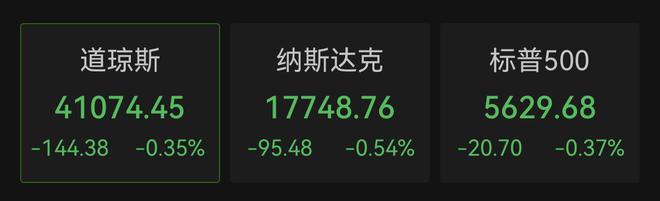
Market Overview - US stock market opened with declines, with Dow Jones down 0.75%, S&P 500 down 0.97%, and Nasdaq down 0.74% [1] - By 11:10 PM, Dow Jones narrowed its decline to 0.35%, S&P 500 down 0.37%, and Nasdaq down 0.54% [1] Technology Sector Performance - Among the seven major US tech companies, only Apple saw a slight increase of 0.08%, while others experienced declines [3] - Tesla and Nvidia both dropped over 2%, while Facebook and Google fell more than 1.5% [3] - Microsoft and Amazon decreased by 0.56% and 0.91% respectively [3] Chinese Stocks Performance - Nasdaq Golden Dragon China Index saw a slight increase of 0.22% [4] - ZTO Express rose over 2%, while Alibaba, Tencent Music, and Baidu Group all increased by over 1% [4][5] Gold Market Insights - Key factors supporting gold prices include ongoing geopolitical tensions, central banks increasing gold holdings, and excess global liquidity [7] - Technical analysis suggests a potential price rally if gold finds support at the 20-day moving average [7]