
全球金融秩序重构

Search documents
不管涨跌只管买,连续15个月增持黄金,中国央行到底想干什么?
Sou Hu Cai Jing· 2026-02-11 14:46
Core Viewpoint - The continuous purchase of gold by the People's Bank of China (PBOC) for 15 consecutive months signals a strategic move to diversify reserves and mitigate risks associated with dollar dominance and geopolitical tensions [1][3][9] Group 1: PBOC's Gold Purchasing Strategy - In January, the PBOC added approximately 40,000 ounces (about 1.134 tons) of gold, marking the 15th consecutive month of gold purchases [1] - The PBOC's strategy reflects a focus on long-term asset security rather than short-term price fluctuations, as gold serves as a hedge against the risks of dollar-denominated assets [3][6] - The PBOC's actions are part of a broader trend among global central banks, with a total net purchase of 863 tons of gold in 2025, indicating sustained interest in gold as a reserve asset [6][7] Group 2: Global Economic Context - The recent volatility in gold prices was influenced by the nomination of Kevin Warsh as the next Federal Reserve Chair, signaling a potential return to a strong dollar policy [4][6] - The shift towards gold by central banks, including China and Russia, represents a significant transition from debt-based assets to physical assets, indicating a long-term change in reserve asset preferences [7] - The PBOC's gold accumulation is seen as a response to increasing geopolitical risks and the weaponization of currencies, emphasizing the need for a diversified reserve strategy [3][9] Group 3: Implications for the Gold Market - The PBOC's consistent buying provides a stabilizing effect on international gold prices, acting as a strong buyer during market downturns [9] - The ongoing increase in gold reserves by central banks is contributing to a gradual "de-dollarization" process, reducing the dollar's influence in international payments and reserves [9] - The PBOC's strategy suggests that gold's role in the global financial system will continue to grow, potentially impacting market dynamics for years to come [7][9]

美国股汇债三杀,A股与国足双双走强
Sou Hu Cai Jing· 2026-01-21 12:59
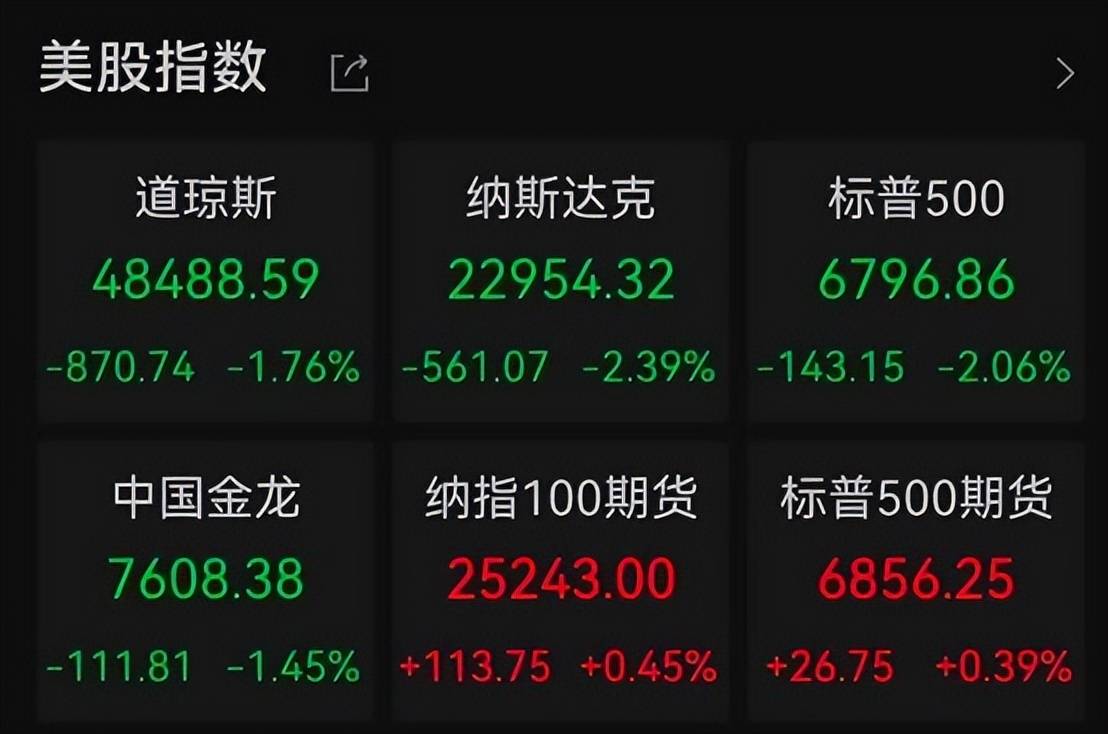
Group 1 - The core message of the news is that global capital is rapidly shifting, triggered by Denmark's pension fund announcing a gradual exit from U.S. Treasury bonds, leading to significant market turmoil [1][2] - U.S. stock markets experienced a sharp decline, with the Dow Jones falling by 1.76%, the Nasdaq dropping by 2.39%, and the S&P 500 decreasing by 2.06% [1] - Major U.S. tech stocks faced severe losses, with Nvidia and Tesla plummeting over 4%, and even Apple, known for its resilience, saw a rare drop of 3.46% [1] Group 2 - The U.S. dollar index fell to 98.55, reflecting a loss of market confidence and challenging the long-standing belief that U.S. Treasuries are the anchor for global asset pricing [2] - Gold and silver prices surged, indicating a shift in the global financial order rather than merely serving as safe-haven assets [2] - Chinese assets are also being reassessed, as evidenced by the resilience of A-shares in the face of the U.S. market's turmoil, with the Shanghai Composite Index closing at 4116.94, up by 0.08% [3][5] Group 3 - The A-share market showed a strong recovery, with major indices like the Shanghai Composite and Shenzhen Component closing in the green, and the Sci-Tech 50 Index soaring by 3.48% [3] - In the concept sectors, GPU stocks surged by 6.65%, alongside significant gains in gold, tungsten, and advanced packaging [5] - The simultaneous rise of A-shares and the Chinese U23 football team's success in reaching the finals of the Asian Cup suggests a potential shift in trends for both the financial and sports sectors [7][9]
日元引发全球金融核弹,美日利差惊天逆转,你的钱包正面临巨大风险
Sou Hu Cai Jing· 2026-01-12 16:53
Core Viewpoint - The recent upheaval in the global financial landscape is not a sudden event but the culmination of over two decades of structural changes, primarily triggered by Japan's shift away from its role as a low-cost financing source for global capital [1]. Group 1: Impact of Japan's Monetary Policy Shift - The Bank of Japan's gradual exit from negative interest rates, raising the policy rate from -0.1% to around 0.25%, marks the end of the "ultra-loose monetary policy era" [1]. - This shift has led to a significant contraction in the yen carry trade, which has supported a prolonged bull market in U.S. equities and inflated global risk asset prices [1]. - The immediate market reaction included forced liquidations by institutions reliant on yen financing, resulting in a sharp sell-off of liquid assets such as U.S. stocks and bonds [1]. Group 2: Global Market Repercussions - The Nikkei 225 index experienced a single-day drop of over 12%, while the S&P 500 fell nearly 5%, reflecting systemic capital reflow [1]. - The yen's transition from a financing currency to a safe-haven currency has led to a rapid appreciation against the dollar, impacting global capital allocation strategies [1]. - The rise in the yen has increased the cost of imports for Japan, while simultaneously causing a ripple effect on global commodity prices, leading to heightened volatility in assets priced in dollars [4]. Group 3: Effects on Emerging Markets and Global Supply Chains - A phase of foreign capital withdrawal from A-shares, Hong Kong stocks, and Southeast Asian markets has occurred, despite stable fundamentals [3]. - The rising yen has indirectly increased the prices of commodities like gold and oil, further straining global supply chains and increasing costs for consumers [4]. - The cost of studying abroad and cross-border consumption for Chinese citizens has significantly increased due to the yen's appreciation, affecting consumer behavior [4]. Group 4: Investment Strategies and Market Outlook - The current market environment necessitates a reevaluation of investment strategies, as the previous reliance on cheap yen financing is no longer viable [1][14]. - Holding cash and maintaining liquidity is emphasized as a survival strategy in the face of market volatility and potential asset price corrections [14]. - The transition away from a low-cost funding environment suggests that asset prices will need to adjust to a new normal, with a downward shift in equity valuations expected [14][15].

特朗普还没动身来中国,中方忽然亮出黄金储备,美元霸权眼看撑不住了
Sou Hu Cai Jing· 2025-12-09 23:53
Core Viewpoint - The continuous increase in China's gold reserves signals a strategic shift in its financial security approach, emphasizing a move away from reliance on the US dollar amidst growing global uncertainties [1][12][36]. Group 1: Gold Reserve Increase - China's gold reserves reached 74.12 million ounces, increasing by 30,000 ounces from the previous month, marking the thirteenth consecutive month of accumulation [1]. - This consistent increase is not merely a reaction to market conditions but reflects a long-term strategy to enhance financial sovereignty and security [8][18]. - The accumulation of gold is seen as a proactive measure to prepare for potential global financial disruptions, rather than a speculative investment [10][24]. Group 2: Shift from US Treasury Bonds - Concurrently, China is reducing its holdings of US Treasury bonds, which have been declining for several years, indicating a strategic asset reallocation [7][20]. - This gradual divestment from US debt is part of a broader strategy to mitigate risks associated with excessive reliance on US credit [7][17]. - The approach of maintaining some US Treasury holdings while increasing gold reserves reflects a balanced strategy to ensure liquidity while enhancing financial security [7][20]. Group 3: Implications for Financial Sovereignty - The increase in gold reserves enhances the credibility of the Chinese yuan in international markets, providing a tangible asset to support its currency [12][20]. - This strategy is not aimed at replacing the dollar but at reducing dependency on a single credit system, thereby expanding China's financial autonomy [8][36]. - The ongoing accumulation of gold is a clear statement of China's commitment to defining its own financial security framework, independent of external pressures [36][48]. Group 4: Global Context and Strategic Positioning - China's actions resonate with similar trends among other nations, particularly in the Global South, which are also increasing gold reserves to reduce exposure to US assets [15][18]. - The strategic positioning of gold as a non-sovereign asset underscores its role as a universal medium of value, especially in times of geopolitical tension [5][10]. - The consistent increase in gold reserves is a calculated move to prepare for potential future crises in the global financial system, reflecting a deep understanding of the evolving geopolitical landscape [23][50].
美国拒绝归还600吨黄金?我国只用了一招,俄罗斯:早就该这样!
Sou Hu Cai Jing· 2025-10-29 06:24
Group 1 - The core issue revolves around China's request for the return of 600 tons of gold stored in the U.S., which was denied, raising concerns about global financial trust and economic order [1] - The U.S. cited "technical complexities" as reasons for the refusal, impacting market confidence and undermining its status as a "neutral financial infrastructure" [1] - Previous similar refusals faced by Germany and Venezuela highlight the politicization of U.S. financial services [1] Group 2 - In response, China sold $57.3 billion in U.S. Treasury bonds in April 2025, reducing its holdings to the lowest level since 2011 at $759 billion, causing a spike in 10-year Treasury yields above 5% [3] - This action received support from countries like Russia and is viewed as a significant challenge to U.S. dollar hegemony [3] - The incident reveals cracks in international trust and accelerates the restructuring of the global financial order, with the dollar's share in foreign exchange reserves dropping to its lowest since 1999 at 58.2% [3] - The strategic value of gold as hard currency is further emphasized, with the competition for reserves reflecting a struggle for global economic dominance [3] - Countries are reassessing economic policies, with de-dollarization and multipolarity becoming central trends in the evolution of the international financial system, while China's strategic initiatives offer a more resilient development approach [3]
特朗普大败而归,美联储拉响警报,全球财富洗牌,人民币资产躺赢
Sou Hu Cai Jing· 2025-09-12 11:33
Group 1 - The article discusses the political and financial turmoil initiated by Trump's attempts to influence the Federal Reserve, which has led to a significant shift in the global financial landscape [1][3][5] - Trump's efforts to push for interest rate cuts to alleviate the federal debt burden and boost the stock market were met with judicial resistance, emphasizing the independence of the Federal Reserve [3][5][9] - The decline in the US dollar's credibility is highlighted, with the dollar index dropping 8% this year and a historic low in domestic investor allocation for US Treasury bonds [7][9] Group 2 - The article notes a shift in global central banks' trust in the US dollar, with a record increase in gold holdings and a reduction in US Treasury bond investments [9][11] - The stability of Chinese assets is emphasized, with the Chinese government bonds offering a stable yield compared to the volatility of US bonds, attracting global capital [11][13] - China's proactive measures in "de-dollarization," including currency swap agreements and increased use of the yuan in international trade, are discussed as part of a broader strategy to enhance the yuan's global standing [13][15] Group 3 - The article outlines the transition from a dollar-dominated financial order to a more multipolar system, driven by the US's fiscal challenges and geopolitical conflicts [15][17] - The redefinition of "safe assets" by hedge funds and sovereign wealth funds is noted, with the yuan emerging as a reliable alternative amidst increasing global uncertainty [17][19] - The ongoing financial restructuring is characterized as a reassessment of trust, safety, and institutional integrity in global capital markets, with the yuan potentially becoming a new anchor currency [19]
机构称港股将成为本土在岸资金+全球新秩序下的核心资本市场,重点关注科技板块
Mei Ri Jing Ji Xin Wen· 2025-06-13 01:52
Group 1 - The Hong Kong stock market opened lower on June 13, with the Hang Seng Tech Index down by 0.95%, and the Hang Seng Tech Index ETF (513180) also followed the decline with a slight premium [1] - Key stocks such as Xiaopeng Motors, BYD, NIO, Kingsoft, Tencent Music, BYD Electronics, and Li Auto experienced significant declines [1] - As of June 12, the latest valuation (PETTM) of the Hang Seng Tech Index ETF (513180) was only 20.27 times, placing it in the historical undervaluation range, below 90% of the time since its inception on July 27, 2020 [1] Group 2 - Shenyin Wanguo believes that Hong Kong will play a crucial role in the restructuring of the global financial order, becoming a core capital market under the new global order [1] - The firm anticipates that investment opportunities in Hong Kong stocks will continue to expand by the second half of 2025, focusing on broad growth sectors represented by internet technology and pharmaceuticals [1] - The new consumption sector still holds mid-term alpha advantages, although it faces short-term issues regarding cost-effectiveness [1] Group 3 - The Hong Kong Consumption ETF (513230) combines e-commerce and new consumption, covering relatively scarce new consumption sectors compared to A-shares [2] - The Hang Seng Tech Index ETF (513180) includes core AI assets and encompasses technology leaders that are relatively scarce in A-shares [2]