
公用事业

Search documents
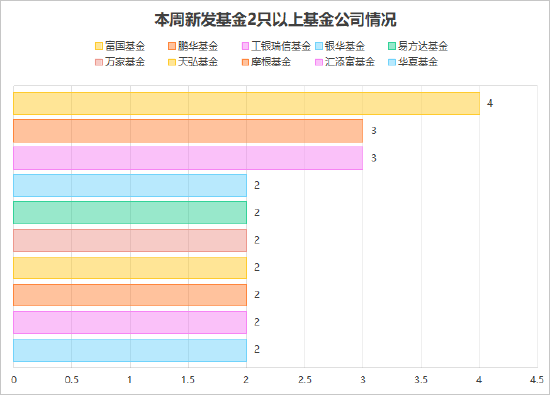
本周40只新基扫描:富国、鹏华、工银瑞信、华夏、易方达等26家公募PK 主题指数、FOF稳健、混合成长齐上阵
Xin Lang Cai Jing· 2026-01-19 08:17
Group 1 - The public fund market is experiencing a new round of product issuance starting from January 19, with 40 new funds launched for subscription, involving 26 fund management companies [1][14] - The distribution of new funds includes 15 stock funds, 12 FOF funds, 9 mixed funds, and 4 bond funds [1][14] Group 2 - Among the 15 stock funds, theme index funds are the main focus, covering sectors such as engineering machinery, non-ferrous metals, chip design, healthcare, photovoltaic, animal husbandry, and artificial intelligence [3][16] - New funds are closely aligned with current market hotspots and policy directions, particularly in technology innovation and high-end manufacturing, with specific funds targeting semiconductor and AI industries [3][16] - The new funds also focus on renewable energy, industrial metals, and resource sectors, reflecting ongoing investment in energy transition and infrastructure [3][16] Group 3 - The 12 FOF funds launched are characterized by a "stable" positioning and set minimum holding periods of 3 to 6 months, aiming to provide clear styles and strong operational discipline for medium to long-term investment [6][19] - The overall strategy for the new FOFs emphasizes "fixed income+" with a significant allocation to bond assets, typically between 70% to 85%, serving as a stability component for returns [7][20] - Many FOF products include gold as a standard asset, highlighting its role as an inflation hedge and risk management tool in the current macroeconomic environment [7][20] Group 4 - The 9 mixed funds exhibit diverse strategies, focusing on themes such as quantitative stock selection, healthcare innovation, and consumer sectors in Hong Kong, with most funds having equity allocations between 60% to 90% [10][12] - The majority of mixed funds incorporate Hong Kong stock indices in their performance benchmarks, indicating a focus on valuation recovery opportunities in the Hong Kong market [10][12] Group 5 - The 4 newly issued bond funds primarily adopt a "fixed income+" strategy, suitable for investors with moderate to low risk tolerance, with most having low subscription thresholds [12][13] - The bond funds are designed to provide a stable income while allowing for some equity exposure, with varying subscription periods to accommodate investor preferences [12][13]

中芯扩产+小米机器人量产!港股信息技术ETF(159131)上涨0.7%!机构:科技成长与高股...
Xin Lang Cai Jing· 2025-12-04 01:57
Core Viewpoint - The Hong Kong stock market, particularly the information technology sector, shows stable performance with a notable increase in certain stocks, while others experience declines. The overall profitability of the Hong Kong market remains strong, with low valuations despite recent gains, suggesting a favorable long-term investment outlook [1]. Group 1: Market Performance - The Hong Kong Information Technology ETF (159131) saw a mid-session increase of 0.7% [1]. - Strong performers included UBTECH, Q Technology, and InnoCare, with respective gains of 2.47%, 1.5%, and 1.43% [1]. - Weak performers included Fubon Group, China Software International, and Kingdee International, with declines of 0.87%, 0.78%, and 0.46% [1]. Group 2: Company Developments - SMIC announced the completion of equipment installation for its 12-inch wafer fab expansion project, expected to commence production in Q1 2026 [1]. - Xiaomi Group-W launched a new generation of bionic robots on November 30, featuring self-developed AI models and achieving commercial mass production [1]. Group 3: Investment Insights - Everbright Securities highlighted the strong profitability of the Hong Kong market, noting the relative scarcity of assets in internet, new consumption, and innovative pharmaceuticals [1]. - Despite several months of increases, valuations remain low, indicating high cost-effectiveness for long-term investments [1]. - The report suggests a focus on technology growth and high dividend "barbell" strategies, including sectors like self-controllable technology, chips, high-end manufacturing, telecommunications, and public utilities [1]. Group 4: Index Composition - The Hong Kong Information Technology ETF (159131) passively tracks the Hong Kong Stock Connect Information C (HKD) Index, with top ten weighted stocks including SMIC, Xiaomi Group-W, Lenovo Group, SenseTime-W, Hua Hong Semiconductor, Kingdee International, Sunny Optical Technology, UBTECH, Meitu, and BYD Electronics [1].



因势而动,精耕个券 - 2026年转债策略展望
2025-12-01 16:03
Summary of the Conference Call on Convertible Bond Strategy for 2026 Industry Overview - The conference call focuses on the convertible bond market in China, particularly the performance and outlook for 2026, influenced by macroeconomic factors and policy changes [1][3][8]. Key Points and Arguments Market Performance and Characteristics - The convertible bond market showed strong performance in 2025, with a cumulative increase of approximately 16.5% by the end of November [3]. - High-rated large-cap convertible bonds saw a rapid decline in scale due to tightened refinancing policies since 2024, particularly affecting bank convertible bonds [3][6]. - The rapid increase in ETF scale, reaching 620.682 billion, accounted for 12.5% of the convertible bond market, growing over 50% since the beginning of the year [1][5]. - The valuation of convertible bonds is increasingly aligned with the stock market, indicating a shift towards equity-like characteristics [1][3]. Future Supply and Demand Dynamics - Supply pressure in the convertible bond market is expected to persist into 2026, with a significant reduction in issuance anticipated due to strong redemption and delisting pressures [1][6][10]. - Despite the anticipated supply challenges, there is a strong willingness among major shareholders to issue new bonds due to lower financing costs [6][10]. - The demand for fixed-income products is expected to support valuations, preventing significant declines despite the shrinking supply [7][10]. Economic Outlook - The outlook for the A-share market in 2026 is optimistic, driven by expectations of economic recovery, structural adjustments, and policy reforms [8][9]. - Low-risk interest rates are likely to encourage a shift of savings and long-term capital into the equity market, enhancing the attractiveness of equity assets [9]. Investment Strategies for 2026 - Investment strategies should focus on two main opportunities: low-priced convertible bonds as a stabilizing asset and flexible equity-linked convertible bonds [11][14]. - Specific sectors to watch include technology growth (AI, humanoid robots), green energy (energy storage, hydrogen), and defensive positions in banking and public utilities [3][18]. - The strategy should involve active selection of bonds that are less likely to trigger strong redemption and those with a solid underlying stock logic [12][20]. Risks and Considerations - The potential for strong redemption events remains high, necessitating caution with high-priced and high-premium bonds that may trigger such actions [12][20]. - The shrinking scale of the convertible bond market may lead to capital inflows into the stock market, which could compress time value [2][10]. Conclusion - The convertible bond market in 2026 is expected to maintain high valuations supported by favorable policies and low-interest rates, despite challenges in supply and potential strong redemption pressures [10][14]. - A balanced approach with a focus on both defensive and flexible investment strategies will be crucial for navigating the market dynamics in the coming year [11][14].
股市三点钟丨沪指收涨0.52%,两市合计成交额2.18万亿元
Bei Jing Shang Bao· 2025-09-30 07:43
Core Viewpoint - The A-share market concluded September with a mixed performance, showing resilience despite fluctuations in various sectors [1] Market Performance - On September 30, the three major A-share indices opened higher and maintained a volatile trend throughout the day, with the Shanghai Composite Index rising by 0.52% to 3882.78 points and the Shenzhen Component Index increasing by 0.35% to 13526.51 points; the ChiNext Index closed flat at 3238.16 points [1] Sector Performance - The energy metal sector led the gains, while sectors such as storage chips and lithium mining also showed active trading; in contrast, sectors like wheel motors, public utilities, and banking experienced the largest declines [1] Individual Stock Performance - A total of 2657 stocks in the A-share market closed in the green, with 63 stocks hitting the daily limit up; conversely, 2578 stocks closed in the red, with 10 stocks hitting the daily limit down [1] Trading Volume - The trading volume for the Shanghai Stock Exchange reached 9732.75 billion yuan, while the Shenzhen Stock Exchange recorded a trading volume of 12081.41 billion yuan, resulting in a combined trading volume of 2.18 trillion yuan [1]
市场全天震荡拉升,三大指数均收涨
Dongguan Securities· 2025-09-22 23:31
Market Overview - The A-share market experienced a day of oscillation and ended with all three major indices rising, with the Shanghai Composite Index closing at 3828.58, up 0.22% [1] - The Shenzhen Component Index closed at 13157.97, up 0.67%, while the CSI 300 Index closed at 4522.61, up 0.46% [1] Sector Performance - The top-performing sectors included Electronics, which rose by 3.71%, and Computers, which increased by 1.70% [2] - The weakest sectors were Social Services, down 2.04%, and Beauty Care, down 1.36% [2] Market Trends - The market showed a strong performance in the consumer electronics sector, driven by positive news, while the robotics sector continued its strong trend [3] - The chip industry chain was notably active, and liquid-cooled server concept stocks saw fluctuations but ultimately rose [3] - The overall market saw approximately 2200 stocks rise, with over 70 stocks hitting the daily limit up [3] Economic Indicators - The September Loan Prime Rate (LPR) remained unchanged, with the 5-year LPR at 3.5% and the 1-year LPR at 3% [4] - The People's Bank of China provided insights into the financial industry's achievements during the 14th Five-Year Plan period, focusing on long-term perspectives without immediate policy adjustments [4] Market Liquidity and Outlook - The trading volume in the Shanghai and Shenzhen markets was 2.12 trillion, a decrease of 202.3 billion from the previous trading day [5] - Despite the lack of a significant rebound, the market did not show risk signals, indicating that liquidity remains relatively active [5] - The report suggests that the mid-term upward momentum of the market remains strong, supported by continuous catalysts in the technology sector [5] - The report recommends focusing on sectors such as TMT (Technology, Media, and Telecommunications), public utilities, and non-ferrous metals for investment opportunities [5]
交易型指数基金资金流向周报-20250922
Great Wall Securities· 2025-09-22 09:21
Group 1: Core Insights - The report analyzes the fund flow of exchange-traded index funds from September 15 to September 19, 2025, highlighting significant trends in various categories [1][2]. - The overall fund flow indicates a mixed performance across different index categories, with notable outflows in major indices like the Shanghai Composite and CSI 300 [6][7]. Group 2: Fund Flow by Category - The Shanghai 50 index had a fund size of 159.46 billion yuan, with a weekly decline of 1.71% and a net outflow of 5.98 billion yuan [6]. - The CSI 300 index, with a fund size of 983.45 billion yuan, experienced a slight decline of 0.39% and a significant net outflow of 33.92 billion yuan [6]. - The ChiNext index showed a positive trend with a weekly increase of 2.17% and a net inflow of 5.76 billion yuan, indicating investor interest in growth sectors [6]. - In the technology sector, the large technology category saw a fund size of 216.69 billion yuan, with a weekly increase of 2.20% and a substantial net inflow of 58.01 billion yuan [7]. - The large financial category faced a decline of 3.20% with a net inflow of 140.61 billion yuan, suggesting a shift in investor sentiment [7]. Group 3: Sector Performance - The healthcare sector had a fund size of 100.16 billion yuan, with a weekly decline of 2.11% and a modest net inflow of 5.94 billion yuan, reflecting cautious investor behavior [7]. - The manufacturing sector reported a fund size of 72.82 billion yuan, with a weekly increase of 2.19% and a net inflow of 64.79 billion yuan, indicating resilience in this area [7]. - The consumer sector showed a slight decline of 0.24% with a net inflow of 32.55 billion yuan, suggesting mixed investor confidence [7]. Group 4: International Indices - The Nasdaq 100 index had a fund size of 78.42 billion yuan, with a weekly increase of 1.84% and a net outflow of 0.67 billion yuan, indicating fluctuating investor interest [11]. - The S&P 500 index reported a fund size of 20.84 billion yuan, with a slight increase of 0.50% and a net inflow of 0.77 billion yuan, reflecting stable performance [11]. - The Hang Seng index had a fund size of 19.17 billion yuan, with a weekly increase of 0.40% and a net outflow of 3.72 billion yuan, suggesting challenges in the Hong Kong market [11].
交易型指数基金资金流向周报-20250917
Great Wall Securities· 2025-09-17 03:40
1. Report Information - Report Title: Weekly Report on Capital Flows of Exchange-Traded Index Funds - Data Date: September 8 - 12, 2025 - Research Institution: Great Wall Securities Industrial Finance Research Institute - Analyst: Jin Ling - Report Date: September 17, 2025 [1] 2. Core View - The report presents the capital flow, fund scale, and weekly price change data of various exchange-traded index funds from September 8 - 12, 2025, covering comprehensive, industry theme, style strategy, enterprise nature, regional, QDII, bond, commodity, and index-enhanced funds. 3. Summary by Category Comprehensive Index Funds - **Fund Performance**: The Shanghai Composite 50 had a fund scale of 15.9456 billion yuan, a weekly increase of 0.99%, and a net weekly capital outflow of 394 million yuan; the CSI 300 had a scale of 98.3449 billion yuan, a rise of 1.51%, and an outflow of 4.095 billion yuan; the CSI 500 had a scale of 14.012 billion yuan, a 3.41% increase, and an inflow of 1.174 billion yuan [6]. Industry Theme Index Funds - **Sector Performance**: The large technology sector had a fund scale of 21.6688 billion yuan, a 5.13% increase, and an outflow of 6.616 billion yuan; the large finance sector had a scale of 12.8483 billion yuan, a 0.92% rise, and an inflow of 11.468 billion yuan; the large health sector had a scale of 10.0161 billion yuan, a 0.50% decline, and an inflow of 6.432 billion yuan [7]. Style Strategy Index Funds - **Style Performance**: The dividend style had a fund scale of 5.9877 billion yuan, a 1.01% increase, and an inflow of 633 million yuan; the growth style had a scale of 730.6 million yuan, a 3.02% increase, and an outflow of 252 million yuan; the value style had a scale of 330.8 million yuan, a 1.11% increase, and an outflow of 102 million yuan [9]. QDII Index Funds - **Overseas Market Performance**: The Nasdaq 100 had a fund scale of 7.8421 billion yuan, a 0.73% increase, and an outflow of 197 million yuan; the S&P 500 had a scale of 2.0837 billion yuan, a 0.69% increase, and an outflow of 38 million yuan; the German DAX had a scale of 975 million yuan, a 0.43% decline, and an inflow of 101 million yuan [11]. Bond Index Funds - **Bond Type Performance**: The 30-year bond had a fund scale of 896.9 million yuan, a 1.18% decline, and an inflow of 149 million yuan; the 10-year bond had a scale of 409 million yuan, a 0.20% decline, and no net inflow; the 5 - 10-year bond had a scale of 3.8952 billion yuan, a 0.26% decline, and an outflow of 302 million yuan [12]. Commodity Index Funds - **Commodity Performance**: Gold had a fund scale of 7.0887 billion yuan, a 2.33% increase, and an inflow of 2.095 billion yuan; soybean meal had a scale of 419.3 million yuan, a 0.75% increase, and an inflow of 12 million yuan; non-ferrous metals had a scale of 74.5 million yuan, a 1.40% increase, and an inflow of 7.7 million yuan [12]. Index-Enhanced Funds - **Index Enhancement Performance**: The Shanghai Composite 50 index-enhanced fund had a scale of 76 million yuan, a 0.99% increase, and no net inflow; the CSI 300 had a scale of 320.9 million yuan, a 1.30% increase, and an outflow of 108 million yuan; the CSI 500 had a scale of 197.8 million yuan, a 2.72% increase, and an inflow of 21.6 million yuan [12].
大众公用:归母净利润同增172.62%,释放“现金牛+科技成长性”双重价值
Ge Long Hui· 2025-09-12 03:22
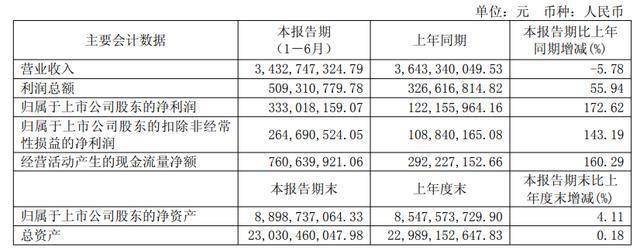
Core Viewpoint - In the complex economic environment of the first half of 2025, the company reported impressive financial results, showcasing strong profitability and cash flow growth, which reflects its dual investment logic of being a "utility cash cow + venture capital growth option" [1][6]. Group 1: Financial Performance - The company achieved a net profit attributable to shareholders of 333 million yuan, a year-on-year increase of 172.62% [1]. - The net profit excluding non-recurring gains and losses was 265 million yuan, up 143.19% year-on-year [1]. - The net cash flow from operating activities reached 761 million yuan, a significant increase of 160.29% year-on-year [1]. Group 2: Utility Business Attributes - The utility business has a "bond-like" defensive attribute, which is the foundation of its performance growth, supported by regional monopolies and rigid demand characteristics [1]. - The gas business covers seven administrative regions in Shanghai and provides exclusive services in Nantong, creating a significant supply barrier [1]. - The wastewater treatment business operates nine plants in Shanghai and Jiangsu, with a total treatment capacity of 46,500 tons per day, and the Dazhong Jiading plant meets the highest A+ level standards in Shanghai [2]. Group 3: Policy and Market Dynamics - Policy incentives are catalyzing continuous profit improvement, with 65% of cities adjusting gas prices, leading to a price increase of 0.21 yuan per cubic meter [3]. - Water price reforms are also underway, with cities like Guangzhou ending a 13-year price freeze, enhancing the sustainability of profits [3]. - The optimization of pipeline costs is beneficial, as new guidelines reduce procurement costs for gas companies, indirectly improving profit margins [3]. Group 4: Dividend and Investment Strategy - The company has distributed a total cash dividend of 210 million yuan over the past three years, representing 94.07% of average net profit, which is significantly higher than industry standards [4]. - The venture capital business injects strong growth momentum, with the company indirectly sharing in the profits of Shenzhen Innovation Investment Group, which reported a net profit of 1.047 billion yuan in the first half of the year [4][5]. - The management of venture capital assets is synergistic with the utility business, creating a closed-loop model that balances risk and return effectively [5]. Group 5: Future Outlook - The mid-term performance is seen as a starting point, with expectations for continued value release from the dual characteristics of being a "cash cow + growth stock" as policies are fully implemented [6]. - The company is positioned as a core asset that combines dividend safety with technological growth potential, appealing to investors seeking stable yet flexible investment opportunities [6].

大众公用上半年净利增173%,董事长杨国平年近七旬、三年来薪酬翻倍
Sou Hu Cai Jing· 2025-09-10 10:41
Core Insights - The company reported a decline in revenue but a significant increase in net profit for the first half of 2025, indicating improved profitability despite lower sales [1][2] Financial Performance - Revenue for the first half of 2025 was CNY 3.43 billion, a decrease of 5.78% compared to the same period last year [1] - Total profit reached CNY 509.31 million, reflecting a year-on-year increase of 55.94% [1] - Net profit attributable to shareholders was CNY 333.02 million, up 172.62% year-on-year [1] - The net profit excluding non-recurring gains and losses was CNY 264.69 million, an increase of 143.19% compared to the previous year [1] - Basic earnings per share stood at CNY 0.11 [1] Profitability Metrics - Gross margin for the first half of 2025 was 19.21%, an increase of 2.49 percentage points year-on-year [2] - Net profit margin improved to 12.42%, up 6.15 percentage points from the previous year [2] Expense Management - Total operating expenses for the first half were CNY 393 million, a reduction of CNY 27.46 million compared to the same period last year [2] - The expense ratio was 11.44%, a slight decrease of 0.09 percentage points year-on-year [2] - Sales expenses increased by 7.06%, while management expenses decreased by 14.31% [2] Shareholder Equity - As of the end of the reporting period, net assets attributable to shareholders were CNY 8.90 billion, a 4.11% increase from the end of the previous year [1] - Total assets amounted to CNY 23.03 billion, reflecting a marginal increase of 0.18% [1]
交易型指数基金资金流向周报-20250828
Great Wall Securities· 2025-08-28 03:37
Report Information - Report Title: Weekly Report on Capital Flows of Exchange-Traded Index Funds [1] - Data Date: August 18 - 22, 2025 [1] - Analyst: Jin Ling [1] - Report Date: August 28, 2025 [1] Core Findings Domestic Passive Equity Funds - Different index funds showed varying performance in terms of fund size, weekly returns, and net weekly capital inflows. For example, the Shanghai - Shenzhen 300 index fund had a size of 983.449 billion yuan, a weekly return of 4.27%, and a net weekly capital outflow of 34.74 billion yuan; while the ChiNext Index fund had a size of 126.448 billion yuan, a weekly return of 5.81%, and a net weekly capital inflow of 22.61 billion yuan [4]. Overseas Index Funds - International index funds also had diverse performance. The Nasdaq 100 index fund had a size of 78.421 billion yuan, a weekly return of -3.08%, and a net weekly capital inflow of 7.78 billion yuan; the S&P 500 index fund had a size of 20.837 billion yuan, a weekly return of -1.63%, and a net weekly capital outflow of 1.44 billion yuan [5]. Bond Funds - Bond funds had different performance based on factors such as maturity and credit rating. The 30 - year bond fund had a size of 8.969 billion yuan, a weekly return of -1.25%, and a net weekly capital inflow of 59.60 billion yuan; the short - term financing bond fund had a size of 29.341 billion yuan, a weekly return of 0.01%, and a net weekly capital outflow of 28.50 billion yuan [6]. Commodity Funds - Commodity funds, including gold, soybean meal, and others, also had distinct performance. The gold fund had a size of 70.887 billion yuan, a weekly return of -0.29%, and a net weekly capital outflow of 0.94 billion yuan; the energy and chemical fund had a size of 2.93 billion yuan, a weekly return of 0.76%, and a net weekly capital inflow of 0.88 billion yuan [6]. Index - Enhanced Funds - Index - enhanced funds based on different indices had different performance. The CSI 500 index - enhanced fund had a size of 1.978 billion yuan, a weekly return of 3.76%, and a net weekly capital inflow of 0.12 billion yuan; the ChiNext Index - enhanced fund had a size of 0.469 billion yuan, a weekly return of 5.46%, and a net weekly capital outflow of 0.04 billion yuan [6].