利益博弈

Search documents
一句欧洲之子,换来满场掌声!欧洲又一次端上美国的餐桌
Sou Hu Cai Jing· 2026-02-16 09:34
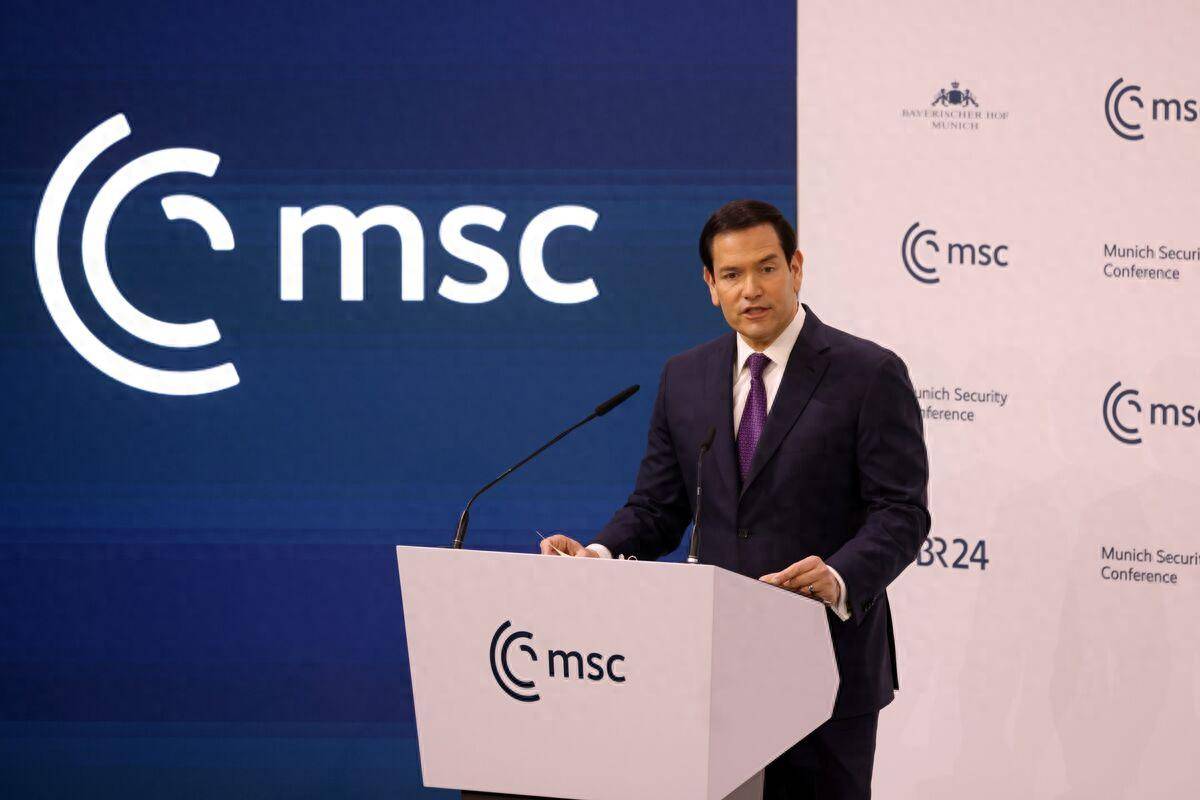
三、欧洲的困境,不在美国,而在自己 欧盟委员会主席冯德莱恩在会后表示感到安心,并称鲁比奥是可靠的朋友。作为欧盟的代表,这种公开表态反映了 欧洲高层仍然希望维持现有的战略框架。然而,问题是,这个框架是否真正符合欧洲的利益?安全依赖意味着战略主动权受限,经济依赖意味着谈判空间狭 小,政治依赖则让话语权处于被动地位。尽管欧洲内部关于战略自主的讨论已经展开,但落实起来并非易事。成员国的利益分散,政策协调复杂,而对美关 系又时刻牵动着内部平衡。中国外长王毅在同一场会议中提到,欧洲不应仅仅是菜单上的对象,而应坐在餐桌旁参与决策。这句话直指问题的核心:如果欧 洲无法在重大安全议题中拥有独立的立场,那么所有的安慰不过是情感上的价值。美国对欧洲的态度,从来都不是单向的。它既需要欧洲作为盟友,也视欧 洲为竞争者。无论是在贸易、科技、能源还是军工领域,双方的利益博弈从未停止。鲁比奥的温和语气无法改变这种结构性矛盾。欧洲真正的问题,恰恰在 于心理上的落差。它既希望美国承担安全责任,又希望保持战略自主;既不想被忽视,又不愿承受全部成本;既害怕被抛弃,又惧怕真正的独立。这种内心 的矛盾,使得欧洲在面对美国时往往处于被动局面。万斯式的直言 ...

马杜罗留下的160吨黄金,成了反抗特朗普最大的底气
Sou Hu Cai Jing· 2026-01-07 04:46
Core Viewpoint - The gold reserves left by Maduro, totaling 160 tons, have become a crucial bargaining chip for Venezuela's interim president Rodriguez in negotiations with Trump, proving to be more reliable than oil [1][3]. Group 1: Economic Context - Venezuela's sovereign gold reserves amount to 161 tons, approximately 5.18 million troy ounces, valued at over $22 billion based on current market prices [3]. - The gold reserves position Venezuela as the country with the largest gold reserves in Latin America, serving as a significant economic legacy from Maduro's government [3][5]. Group 2: Political Dynamics - Rodriguez's government is strategically negotiating with the U.S., seeking to secure more favorable terms rather than outright submission to U.S. demands [1][5]. - The government believes it can withstand U.S. military threats and oil sanctions without immediate collapse, leveraging its gold reserves as a key asset in negotiations [3][5]. Group 3: Strategic Importance of Gold - Unlike oil, gold does not require extraction or depend on international transport and settlement systems, allowing Rodriguez's government to bypass U.S. financial blockades [7]. - The gold reserves are essential for maintaining loyalty among military and bureaucratic elites, ensuring social order and stability within Venezuela [7][8]. Group 4: Negotiation Signals - Rodriguez's proposed cooperation agenda signals to Trump that while the government is open to discussions about oil, it insists on including local elites in any agreements [8]. - The potential for conflict arises if the U.S. attempts to seize control without accommodating local interests, as this could lead to significant instability within Venezuela [8].

立陶宛被欧美彻底抛弃,中国锁死经济命脉,91%出口归零大快人心
Sou Hu Cai Jing· 2025-12-14 12:16
Core Viewpoint - The European Union (EU) has quietly terminated its investigation into China's economic coercion against Lithuania, marking the end of a four-year diplomatic conflict without any significant statements or plans for the future [1][3]. Group 1: EU's Decision-Making Process - The EU's decision to end the investigation reflects a calculated retreat, as the official statement indicated insufficient evidence to continue the inquiry while avoiding mention of Lithuania [3]. - Prior to the termination, the EU had already paused trade aid discussions with Lithuania, signaling a shift in priorities towards addressing US-EU tariff disputes [3][5]. - The EU's choice to abandon support for Lithuania is driven by a clear assessment of its economic interests, prioritizing its significant trade relationship with China, which exceeds 800 billion euros annually [5][10]. Group 2: Internal and External Pressures - The decision to terminate the investigation was influenced by external pressures, particularly from the US, which threatened to impose tariffs on EU automobiles, targeting major German manufacturers [7]. - Internally, the EU is divided in its stance towards China, with Lithuania's vocal support only attracting minimal backing from Latvia and Estonia, while major economies like Germany and France prioritize their substantial trade with China [9][12]. - The automotive sector is crucial for the EU, contributing 3.2% to the region's GDP, and any tariffs could severely impact European manufacturing, leading to a reluctance to support Lithuania against China [10][12]. Group 3: Lithuania's Economic Struggles - Lithuania's proactive stance in 2021, allowing Taiwan to open a representative office, led to significant economic repercussions, including a drastic reduction in exports to China, which fell from 230 million euros to 21 million euros, a decline of 91.4% [20][22]. - The closure of trade channels with China resulted in severe consequences for Lithuania's key industries, such as lasers, wood, and dairy, with profits plummeting by 60% in some sectors [22][24]. - Despite Lithuania's appeals for EU support, the assistance remained superficial, and by 2024, Lithuania's fiscal deficit exceeded the EU's warning threshold, indicating a dire economic situation [24][26]. Group 4: Broader Implications - The ongoing trade dynamics illustrate the consequences of political provocations against China, with the EU's retreat highlighting the prioritization of core economic interests over political alliances [26][30]. - The situation serves as a reminder that any challenge to the One China principle will incur costs, and the future of EU-China relations hinges on mutual respect for core interests to avoid similar conflicts [30].
俄罗斯突施弹性关税,中俄贸易额为何连续两季下跌?
Sou Hu Cai Jing· 2025-07-08 09:45
Group 1 - The core issue is the decline in China-Russia trade, with a 6.6% year-on-year decrease in early 2025, particularly in the automotive and energy sectors [1] - Russia has implemented a flexible export tax policy linked to the ruble, raising the export tax on fertilizers to 10%, which has not been communicated to China, indicating a shift in their trade relationship [3] - In Q1 2025, China imported 24.31 million tons of crude oil from Russia, a 14.7% year-on-year decrease, reflecting a change in strategic attitudes rather than just procurement issues [3] Group 2 - The automotive sector is facing challenges as Russia has closed its market to Chinese electric vehicles, forcing Chinese companies to pivot to Central Asian markets like Uzbekistan and Kazakhstan [5] - In April 2025, China imported 8.07 million tons of crude oil from Russia, accounting for 16.8% of total imports that month, a 12.9% year-on-year decrease, driven by both energy efficiency initiatives and Russia's export policy changes [5] - China is no longer offering concessions on coal imports from Russia, as domestic coal production is significant, and lowering tariffs could harm local coal companies [5] Group 3 - Despite visible cooperation in agriculture and technology, trade dynamics are shifting, with a 6.8% decline in China-Russia trade in Q1 2025, indicating a potential reduction in Russia's reliance on the Chinese market [7] - The changing trade relationship is characterized as a negotiation for rebalancing interests, with China needing to stabilize domestic demand and export routes while Russia aims to control inflation and stabilize the ruble through export policies [9] - The current state of affairs suggests a need for a long-term negotiation-based partnership between China and Russia, moving beyond previous informal agreements [9]