国有三资改革

Search documents
中信建投:国有三资改革重构资产价值 关注四大投资机会
智通财经网· 2026-02-23 01:09
Core Viewpoint - The state-owned three assets reform focuses on the systematic revitalization and management of state-owned resources, assets, and funds based on the principles of "assetization, securitization, and leveraging" [1][2] Summary by Relevant Sections Reform Framework - The reform combines central top-level design with local differentiated practices, emphasizing the methodology of "confirmation of rights - confirmation of value - classified revitalization" [2] - Market-based tools such as REITs and mergers and acquisitions are utilized to activate existing value, supporting macro goals of stable growth and risk prevention [2] Local Practices - Different regions exhibit distinct practices: - Hubei integrates reform into a large fiscal system, focusing on comprehensive revitalization to service debt and increase fiscal revenue - Anhui emphasizes "large assets" with unified ledgers to enhance asset allocation efficiency - Hunan focuses on the assetization of natural resources and ecological rights through franchising - Guangdong drives reform through data assetization and state-owned enterprise restructuring - Zhejiang promotes large-scale issuance of REITs to establish standardized asset exit and reinvestment cycles [2][3] Economic and Debt Impact - The reform serves as a crucial support for local debt, enhancing cash flow for debt repayment and optimizing financing structures - It shifts fiscal reliance from land to asset-driven models, directing revitalized funds towards innovation and new productive forces, thus improving fiscal sustainability - The reform intensifies regional credit differentiation, with resource endowment, policy execution, and marketization level becoming key anchors for local debt qualification reassessment [3] Investment Opportunities - Four key investment opportunities arise from the reform: 1. State-owned enterprise mergers and acquisitions, focusing on regional resource integration in public utilities and transportation 2. Valuation reshaping from quality asset injections into listed companies, particularly in energy, electricity, and cultural tourism sectors 3. Revaluation of data elements and scarce minerals 4. Asset securitization products in consumer infrastructure and affordable rental housing, benefiting from the value release brought by deepening reforms [3]

银行国资轮番下场卖房,业内呼吁“规范行为”避免冲击市场心理
Di Yi Cai Jing· 2025-11-25 09:45
Core Viewpoint - The emergence of banks and state-owned enterprises in the second-hand housing market is a response to the ongoing adjustment in the real estate sector, with an increase in asset disposals, although the overall impact on the market remains limited [1][8]. Group 1: Bank Involvement - Major banks are increasingly listing properties for sale on online platforms, including residential and commercial properties, with significant discounts compared to market prices [2][4]. - The properties being sold by banks primarily come from developer collateral and business loans, with a notable increase in distressed assets due to market downturns [3][4]. - The "bank direct supply" model allows banks to sell properties without relying on lengthy judicial processes, making the transaction more efficient and less risky compared to traditional auction methods [4][9]. Group 2: State-Owned Enterprises - Local state-owned platforms are also actively selling properties, including affordable housing and market-priced homes, to avoid asset idleness and improve financial strength [6][7]. - The sale of these properties is part of a broader strategy to enhance the efficiency of state assets and respond to changing population demands in various regions [7][10]. - The trend of state-owned enterprises selling properties is seen as a regular operational strategy, with the aim of maximizing asset utilization [6][7]. Group 3: Market Impact - While the actual impact of these asset sales on the second-hand housing market is considered small, the psychological effect on market expectations could be significant, potentially leading to increased price pressure [8][9]. - Experts suggest that the influx of properties from banks and state-owned enterprises could exacerbate negative market sentiment and prolong transaction cycles in the real estate market [10]. - There is a call for regulatory measures to manage the sale of these assets to prevent disorderly price declines and ensure a more stable market environment [10].
银行国资轮番下场卖房,业内呼吁”规范行为”避免冲击市场心理
Di Yi Cai Jing· 2025-11-25 09:43
Core Viewpoint - The emergence of institutional property sales, while not large in scale, is expected to impact market expectations negatively, particularly during a critical period for the real estate sector's recovery [1][7]. Group 1: Institutional Sales - Various banks and local state-owned enterprises are increasingly listing properties for sale on platforms like Alibaba and JD, covering residential, commercial, and office spaces [2][5]. - The properties being sold often come with significant discounts compared to market prices, attracting attention from potential buyers [2][4]. - The trend of banks directly selling properties, termed "bank direct supply," has become more common as banks seek to manage their non-performing assets more effectively [3][4]. Group 2: Sources of Properties - The properties listed by banks primarily originate from developers' collateral and loans that have defaulted, leading to an increase in the number of properties held by banks [3][6]. - The process of selling these properties has evolved, with banks now using online platforms to expedite sales after traditional auction methods have failed [3][4]. Group 3: Market Impact - While the actual impact on the second-hand housing market may be limited, the psychological effect of increased institutional sales could exacerbate negative market sentiment [7][8]. - The influx of properties from banks and state-owned enterprises could lead to downward pressure on prices in certain areas if the supply continues to grow [8][9]. - Experts suggest that to mitigate potential market pressures, it is essential to manage the sale of these assets carefully and consider mechanisms like asset storage and REITs to stabilize the market [9].
重组获批 新筑股份剑指千亿级清洁能源赛道
Zheng Quan Ri Bao· 2025-11-24 11:40
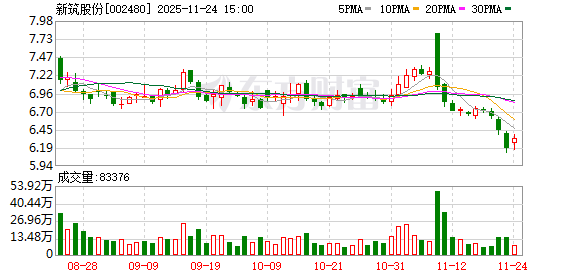
Core Viewpoint - Chengdu Xinzhu Road & Bridge Machinery Co., Ltd. has received preliminary approval from the Sichuan Provincial State-owned Assets Supervision and Administration Commission for a major asset restructuring plan, indicating a strategic shift towards optimizing assets and focusing on core businesses, particularly in the clean energy sector [2][3]. Group 1: Asset Restructuring - The restructuring plan involves divesting non-core rail transit assets and acquiring a 60% stake in Sichuan Shudao Clean Energy Group, which will become a subsidiary of Xinzhu [3]. - The restructuring aims to enhance the company's focus on clean energy generation and integrate transportation and energy services, creating a comprehensive energy service enterprise [3][4]. Group 2: Policy and Market Context - The Sichuan government's approval reflects a broader initiative to reform state-owned assets management, promoting the optimization of state-owned enterprises and their transition towards strategic emerging industries [2][4]. - The clean energy sector is experiencing significant growth, with China's clean energy investment projected to reach $625 billion in 2024, representing one-third of global investment [4].


地方国资扎堆出售房产
第一财经· 2025-11-13 11:17
Core Viewpoint - Local state-owned assets are publicly auctioning off real estate to alleviate financial pressure and improve asset efficiency in response to changing housing demand and declining market prices [5][6][7]. Group 1: Auction Details - Sichuan Gongxin Auction Co. is conducting an online auction for 144 housing units in Xichang, with starting prices ranging from 3,017 yuan to 5,799 yuan per square meter [2][5]. - The auction includes three main asset packages: 35 units from Lizhou Middle School, 69 units from Yuanjiashan, and 40 units from Xicheng Dongcheng, with varying sizes and average starting prices [2][5]. Group 2: Reasons for Auction - The auction of state-owned properties is driven by slow distribution of affordable housing, leading to capital being tied up in these assets [5][6]. - There is a mismatch between current housing supply and demand, as the target demographic for these properties may no longer qualify or have lower acceptance levels [5][6]. - The ongoing decline in the value of existing housing stock necessitates timely sales to prevent further depreciation [5][6]. Group 3: Broader Context - The trend of state-owned asset sales is not isolated, with multiple regions, including Fuzhou and Beijing, also engaging in similar auctions to enhance local government financial strength [6][7]. - The marketization of affordable housing is seen as a way to improve asset efficiency and align with current population movements and housing needs [7].

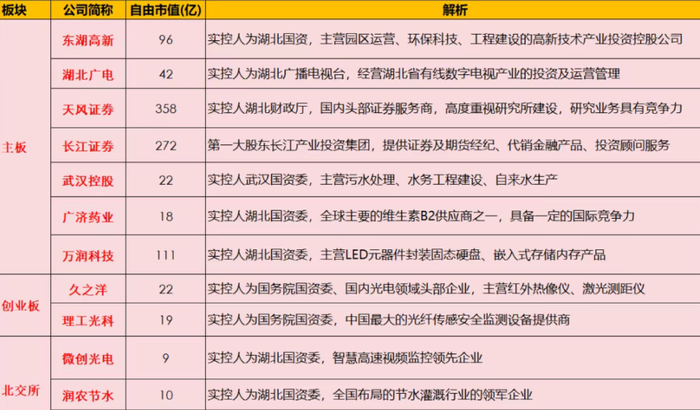
湖北盘活“三资”改革引燃股市 国资证券化有望重塑地方国企价值
Xin Jing Bao· 2025-10-25 02:42
Core Viewpoint - Hubei Province's proposed principles for state-owned "three assets" reform reflect the urgent need for local governments to activate existing resources, enhance efficiency, and expand effective investment in the new era, while also emphasizing the importance of risk prevention [1][2]. Summary by Sections Principles of Reform - The three principles proposed are: assetization of all state-owned resources, securitization of all state-owned assets, and leveraging of all state-owned funds [1][3]. - The emphasis on "appropriate leverage" and "controllable risk" is crucial, with a call for a strict monitoring system for state-owned enterprise debt ratios [2]. National Context - The reform of state-owned "three assets" is part of a broader national initiative, initiated by the State Council in 2022, aimed at revitalizing existing assets and expanding effective investment [3][7]. - Policies from the National Development and Reform Commission and the Ministry of Finance have provided a framework for these reforms, integrating them into the top-level design of economic strategy [3]. Local Implementation - Hubei's reform practices are seen as a potential precursor to nationwide reforms, with a clear operational framework established for the management of state-owned assets [5][6]. - The focus is on transforming dormant assets into productive resources, utilizing various methods to activate underperforming assets [5]. Market Reactions - The A-share market has shown strong performance in Hubei state-owned asset concept stocks, indicating investor interest in the signals of state-owned enterprise reform [1][7]. - Experts predict that the actions to revitalize local state-owned assets will accelerate, potentially leading to a revaluation of A-share values [7]. Future Directions - Local state-owned enterprises are encouraged to accelerate reforms and transition away from reliance on land finance, while also exploring the value of data resources [8]. - The integration of multi-level capital markets is recommended to enhance asset securitization and increase direct financing proportions [8].
套现37亿元,CPO龙头公告!黄金,跌破4200美元大关
2 1 Shi Ji Jing Ji Bao Dao· 2025-10-21 14:51
Group 1: State-Owned Asset Management Reform in Hubei - Hubei proposed three principles for the management reform of state-owned "three assets": assetization of all state resources, securitization of all state assets, and leveraging of all state funds [1] - Wuhan Public Transport Group issued the first carbon-neutral asset-backed notes in Central China, with a total of 601 million yuan [1] - Hubei is promoting credit loan reforms, aiming to leverage 10 billion yuan in risk compensation funds to unlock over 100 billion yuan in credit loans [1] Group 2: Market Performance and Influencing Factors - The Shanghai Composite Index rebounded over 1% to reclaim the 3900-point mark, with over 4600 stocks rising in the market [4] - The Federal Reserve is expected to cut interest rates, with a 99.4% probability of a 25 basis point cut in October and a 98.6% probability of a cumulative 50 basis point cut by December [5] - Positive external news, including a significant drop in gold prices and strong performances from major companies like Apple and Ningde Times, contributed to the market's rebound [5][4] Group 3: New Yi Sheng's Share Transfer - New Yi Sheng announced that its controlling shareholder transferred 11.43 million shares at a price of 328 yuan per share, totaling 3.749 billion yuan [6] - The share transfer by the actual controller may not directly pressure the secondary market but could affect market sentiment [7] Group 4: CPO Sector Performance - The CPO sector saw significant gains, with New Yi Sheng and Zhongji Xuchuang's stock prices nearing historical highs [8] - The demand for 1.6T optical modules is increasing, with overseas clients raising their procurement plans from 1 million to 2 million units due to accelerated deployment of AI training and inference networks [8] Group 5: Market Sentiment and Future Outlook - Despite the market's recovery, some investors remain anxious as many themes have not returned, leading to higher costs for some [10] - The upcoming third-quarter reports are expected to reveal performance exceeding market expectations, which may lead to premium valuations for certain stocks [10]