
国有资产证券化

Search documents
电投产融554亿重组完成交割聚焦主业 电投集团注入千亿资产 搭建专业核电平台
Chang Jiang Shang Bao· 2026-01-12 00:21
Core Viewpoint - The asset restructuring of Electric Power Investment Co., Ltd. (000958.SZ) has been completed, transforming it into the nuclear power operation asset integration platform of the State Power Investment Group, enhancing the efficiency of nuclear power asset operations and supporting green development initiatives [1][5]. Group 1: Restructuring Details - The restructuring involved the exchange of financial business for a 100% stake in Guodian Nuclear Power Co., Ltd., with the transaction values being CNY 151.08 billion for the assets being divested and CNY 553.94 billion for the assets being acquired [1][3]. - The difference of CNY 402.85 billion will be settled through the issuance of new shares at a price of CNY 3.36 per share [3]. - The restructuring process began in October 2024, with approvals from the Shenzhen Stock Exchange and the China Securities Regulatory Commission obtained by December 2025 [2]. Group 2: Shareholding Changes - Following the restructuring, the State Nuclear Power will hold 43.62% of Electric Power Investment Co., Ltd., making it the controlling shareholder, while the State Power Investment Group's stake will be diluted to 15.42% [4]. - China Life Insurance has become the second-largest shareholder with a 25.4% stake [4]. Group 3: Financial Impact - The restructuring is expected to significantly boost Electric Power Investment Co., Ltd.'s revenue and net profit, with projected increases of 111.63% and 382.22%, respectively, based on mid-2025 financial data [1][6]. - The total assets of the company are anticipated to reach CNY 1,316.57 billion, reflecting a growth of 166.17% [6]. - The asset-liability ratio is projected to rise from 39.47% to 60.6% post-restructuring [6]. Group 4: Future Commitments - The State Nuclear Power has committed to achieving a net profit of no less than CNY 33.75 billion, CNY 30 billion, and CNY 35.87 billion for the years 2025, 2026, and 2027, respectively, totaling at least CNY 99.62 billion over three years [7]. - The company aims to enhance its overall competitiveness and profitability through resource and business integration following the acquisition [7].

电投产融554亿重组完成交割聚焦主业 电投集团注入千亿资产搭建专业核电平台
Chang Jiang Shang Bao· 2026-01-11 23:31
Core Viewpoint - The asset restructuring of Electric Power Investment Co., Ltd. (000958.SZ) has been completed, transforming it into the nuclear power operation asset integration platform of the State Power Investment Group, enhancing the efficiency of nuclear power asset operations and supporting green development [1][4]. Group 1: Restructuring Details - The restructuring involved the exchange of financial assets for a 100% stake in Guodian Nuclear Power Co., Ltd., with the transaction values being CNY 151.08 billion for the assets disposed and CNY 553.94 billion for the assets acquired, resulting in a difference of CNY 402.85 billion to be purchased through share issuance [1][3]. - The share issuance price was set at CNY 3.36 per share, with a total of 119.9 billion new shares to be issued, which will be listed on January 13, 2026 [3][4]. - After the restructuring, the controlling shareholder will change from the State Power Investment Group to Guodian Nuclear Power, while the latter will hold 43.62% of the shares, and China Life will become the second-largest shareholder with a 25.4% stake [4][6]. Group 2: Financial Impact - The restructuring is expected to significantly enhance Electric Power Investment's financial metrics, with projected increases of 111.63% in operating revenue and 382.22% in net profit attributable to shareholders based on the first half of 2025 data [1][7]. - The total assets of the company are projected to reach CNY 1,316.57 billion, reflecting a growth of 166.17% compared to pre-restructuring levels [7][8]. - The asset-liability ratio is anticipated to rise from 39.47% to 60.6% post-restructuring, indicating a higher leverage position [7]. Group 3: Future Commitments and Operations - Guodian Nuclear Power has committed to achieving net profit targets of no less than CNY 33.75 billion, CNY 30 billion, and CNY 35.87 billion for the years 2025, 2026, and 2027 respectively, totaling at least CNY 99.62 billion over three years [8]. - The company aims to fully develop the nuclear power operation asset integration platform, ensuring the sustainability and stability of its business segments while enhancing overall competitiveness and profitability [8].
A股最大收购案!中国神华为何豪掷1336亿买了这些资产?
Xin Lang Cai Jing· 2025-12-21 03:31
Core Viewpoint - China Shenhua (601088.SH) announced a significant acquisition plan to purchase assets worth 1,335.98 billion yuan from its controlling shareholder, China Energy Group, marking the largest acquisition in the A-share market to date [1]. Group 1: Acquisition Details - The acquisition involves 12 target companies across coal, coal power, coal chemical, shipping, and port sectors, with a payment structure of 30% in shares and 70% in cash [1]. - The assessed value of the target assets is 1,436.75 billion yuan, with a premium rate of 59.52% [3]. - The total assets of the acquired entities are projected to be 2,334.23 billion yuan, with a revenue of 1,139.74 billion yuan and a net profit of 94.28 billion yuan for the previous year [3]. Group 2: Financial Metrics - The acquisition's price-to-earnings (PE) ratio based on 2024's net profit is 14.2 times, comparable to China Shenhua's current PE of 15.49 times [4]. - Post-acquisition, China Shenhua's coal reserves will increase to 6.849 billion tons, a growth rate of 64.72%, while its recoverable coal reserves will rise to 3.45 billion tons, a 97.71% increase [5]. - The company's coal production capacity will reach 512 million tons, reflecting a 56.57% growth [5]. Group 3: Strategic Context - The acquisition aligns with China Energy Group's commitment to resolving industry competition issues, as outlined in previous agreements since 2005 [4]. - Following the restructuring of China Energy Group in 2017, the integration of assets into China Shenhua is expected to be completed by August 27, 2028 [4]. - The transaction is part of a broader trend of accelerating state asset securitization and is supported by recent regulatory encouragement for mergers and acquisitions in the capital market [11]. Group 4: Market Position and Performance - China Shenhua's total assets will reach 8,965.87 billion yuan post-transaction, with total liabilities increasing to 3,904.90 billion yuan, resulting in a debt-to-asset ratio rise from 25.11% to 43.55% [10]. - The company has faced declining revenues over the past four reporting periods, with a 16.57% year-on-year decrease in revenue for the first three quarters of 2025 [12]. - As of December 20, China Shenhua's stock price was 40.59 yuan, with a market capitalization of 8,064.63 billion yuan [12].


年内第六次出手!湖北国资再现“扫货”A股公司 交易对价超24亿元 专家称引入产业是主因之一
Mei Ri Jing Ji Xin Wen· 2025-12-09 13:36
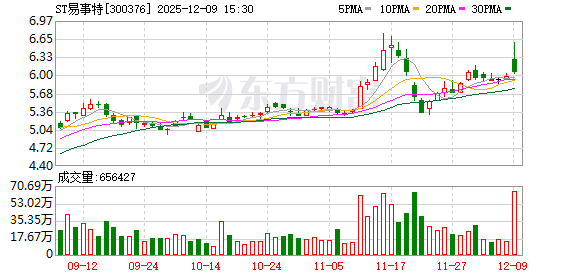
Core Viewpoint - ST Yishite (SZ300376) announced a share transfer where Guangdong Hengrui and Oriental Group will sell 17.93% and 0.72% of their shares to Hubei Jingjiang Industrial Investment Group, making Jingjiang the controlling shareholder of ST Yishite, reflecting a trend of local state-owned enterprises acquiring listed companies in the A-share market [2][6][7]. Group 1: Share Transfer Details - The share transfer agreement was signed on December 8, with Jingjiang acquiring approximately 4.34 billion shares, representing 18.66% of the total share capital of ST Yishite [3][6]. - The transfer price is set at 5.61 yuan per share, which is a discount of approximately 6.19% compared to the closing price of 5.98 yuan on the same day [6]. Group 2: Background of the Acquisition - This transaction marks the sixth control acquisition of a listed company by Hubei state-owned assets in 2023, indicating a broader strategy of local state-owned enterprises to consolidate control over listed companies [2][7]. - Hubei state-owned enterprises have been actively acquiring multiple A-share listed companies, including notable cases like Guanfu Shares and Chaozhuo Hangke [7][8]. Group 3: Strategic Implications - The acquisition aims to introduce industry and promote the securitization of state-owned assets, which are key motivations for local state-owned enterprises pursuing listed companies [2][9]. - The focus on asset securitization has been emphasized in recent government meetings, highlighting its importance for improving asset structure and operational efficiency [10]. Group 4: Challenges Ahead - The successful integration and development of the acquired companies pose significant challenges, as evidenced by the mixed performance of previously acquired companies by Hubei state-owned enterprises [11][13]. - Analysts have noted that while acquisitions are a step forward, ensuring the sustained growth and profitability of the acquired entities remains a critical test for local state-owned enterprises [11][13].

产投债:地方政府破解产业基金缺钱困局的“破局之道”
Sou Hu Cai Jing· 2025-11-26 05:56
Core Viewpoint - The issuance of industrial investment bonds (产投债) is emerging as an innovative financing solution for local governments to overcome funding bottlenecks in the process of upgrading local industries and cultivating new productive forces [1] Group 1: Industrial Investment Bonds as a Financing Tool - Industrial investment bonds are specialized bonds issued by local governments or urban investment platforms to support industrial development, providing long-term, low-cost funding for industrial funds and major projects [1] - These bonds emphasize "industry orientation," directing funds towards areas such as technological innovation, green economy, and strategic emerging industries, aligning with local government goals for industrial ecosystem cultivation and economic transformation [1] Group 2: Six Core Advantages of Industrial Investment Bonds - **Flexible Scale**: The issuance scale ranges from 500 million to 1 billion yuan, with a total scale controlled at 30%-40% of local fixed asset scale, meeting the needs for large fundraising while avoiding excessive debt risk [2] - **Elastic Term**: The bonds feature a "3+2+2" flexible term structure, with a maximum duration of 7 years, alleviating short-term repayment pressure and aligning with the long investment return cycle [3] - **Low Cost**: The interest rate ranges from 2.5% to 3.5%, with a comprehensive fee not exceeding 5%, significantly lower than non-standard channels like trusts and financing leases, saving local governments millions to tens of millions in financing costs annually [4] - **Pure Credit Financing**: These bonds are backed by local government or urban investment credit without requiring fixed asset collateral, suitable for light asset and high-growth industries [5] - **Wide Usage**: Funds can be used for establishing industrial funds, investing in strategic projects, and supplementing corporate capital, covering the entire chain from R&D to industrialization [6] - **Flexible Repayment**: Policies allow for the issuance of new bonds to repay old ones before maturity, mitigating liquidity risks and enabling a virtuous cycle of financing, investment, and returns [7] Group 3: Future of Industrial Investment Bonds - Industrial investment bonds serve not only as a financing tool but also as a catalyst for the "capitalization transformation" of local economies, enabling local governments to achieve three breakthroughs: transforming resources into capital, converting short-term debt into long-term investments, and aligning with national policy directions [8] - Regions like Jiangsu, Zhejiang, and Guangdong have successfully incubated multiple hundred-billion yuan industrial funds through industrial investment bonds, attracting over 100 billion yuan in social capital across sectors like new energy, biomedicine, and intelligent manufacturing [9] Conclusion - For local governments, the challenge of funding industrial funds is not insurmountable; the key lies in selecting the right tools and effectively utilizing policies. Industrial investment bonds provide a tailored financing solution with advantages of low cost, long duration, high flexibility, and wide applicability, enabling local governments to connect capital with industrial and innovation chains, thereby seizing opportunities for high-quality development [10]
张乐飞:地方城投国有资产证券化“债券融资”六大优势剖析
Sou Hu Cai Jing· 2025-11-12 06:11
Core Viewpoint - The model of "bond financing" through state-owned asset securitization plays a crucial role in supporting local investment companies, providing significant advantages for their development. Group 1: Reasonable and Flexible Quota Range - The financing quota for local investment companies is set between 500 million to 1 billion, with a total scale controlled at 30% to 40% of fixed assets, ensuring that funding needs are met without excessive financing risks [2]. Group 2: Flexible Term Structure - The financing model features a flexible term design of 3 + 2 + 2 years, with a maximum duration of 7 years, allowing for annual interest payments and principal repayment at maturity, which aligns with the cash flow of various infrastructure projects [3]. Group 3: Significant Cost Advantages - Interest rates are set between 2.5% to 3.5%, with a comprehensive rate not exceeding 5%, providing a clear cost advantage over other financing methods, thereby reducing financial expenses and enhancing project profitability [4]. Group 4: Pure Credit Loans and Non-standard Asset Securitization - The model allows for pure credit loans without the need for fixed asset collateral, facilitating easier financing for local investment companies, and enables the securitization of non-standard assets, improving liquidity and value [5]. Group 5: Wide Range of Fund Uses - Funds can be used broadly as long as they align with national strategic directions, allowing local investment companies to flexibly allocate resources for both traditional infrastructure and emerging industries [6]. Group 6: Flexible Maturity Repayment Mechanism - The bond maturity can be extended, and policies allow for the issuance of new bonds to repay old ones before maturity, providing local investment companies with greater financial maneuverability and reducing liquidity risks [7].
淮河能源116.9亿关联重组过会 国资持股将超80%提升控制力
Chang Jiang Shang Bao· 2025-11-06 23:52
Core Viewpoint - Huaihe Energy's significant asset restructuring, involving the acquisition of 89.3% of Huaihe Energy Power Group, has been approved, which is expected to enhance its operational scale and profitability while reducing competition with its parent company [2][4][10]. Group 1: Restructuring Details - The restructuring plan involves a total transaction value of 11.694 billion yuan, with cash payment of 1.754 billion yuan and share issuance valued at 9.94 billion yuan [4][5]. - After the transaction, Huaihe Energy's total assets are projected to increase from 23.514 billion yuan to 47.724 billion yuan, representing a growth of 102.96% [3][9]. - The acquisition will allow Huaihe Energy to consolidate its fire power generation business, thereby improving asset quality and reducing competition with its parent company [5][10]. Group 2: Financial Projections - Post-restructuring, Huaihe Energy's operating revenue is expected to rise by 19.4% to 8.591 billion yuan, while net profit attributable to shareholders is projected to increase by 75.06% to 4.66 billion yuan [3][9]. - The financial performance of Huaihe Energy Power Group shows revenues of 10 billion yuan in 2023 and a net profit of 1.108 billion yuan, indicating strong operational capabilities [8][10]. Group 3: Shareholding Structure - Following the restructuring, Huainan Mining's shareholding in Huaihe Energy will increase to 80.08%, reinforcing its control over the company [5][10]. - The share issuance will result in Huaihe Energy having a total of 7.167 billion shares, with Huainan Mining holding 5.74 billion shares post-transaction [5][10]. Group 4: Market Position and Strategy - The restructuring is a strategic move to address the issue of same-line competition, as both Huaihe Energy and Huaihe Energy Power Group operate in the thermal power sector [5][10]. - The integration of Huaihe Energy Power Group's assets is expected to create synergies and enhance Huaihe Energy's market position in the thermal power industry [10].

湖北恩施:将国有存量土地纳入“一张图”管理
Zhong Guo Zi Ran Zi Yuan Bao· 2025-10-28 04:37
Core Viewpoint - The document outlines a plan by the Enshi Tujia and Miao Autonomous Prefecture in Hubei Province to revitalize state-owned land and mineral resources, aiming for asset management reform through the goals of asset capitalization, securitization, and leveraging state funds [1] Group 1: Objectives and Strategies - The plan emphasizes the need to clarify the status of state-owned enterprises' land and mineral resources, focusing on understanding the baseline, clarifying property rights, and realizing value [1] - Specific measures include conducting natural resource surveys and confirming land rights for state-owned enterprises, establishing a management ledger for land assets, and integrating these into a dynamic management system [1] Group 2: Implementation Measures - The plan encourages the acceleration of the disposal of existing construction land and supports the securitization of land assets, enhancing liquidity and value realization [1] - It promotes the construction of multi-layer industrial buildings that can accommodate various production services, with a requirement that industrial space must constitute at least 50% of the total area [1] - The plan allows for the increase of floor area ratio for legally obtained industrial land without additional land price charges, provided the land use remains unchanged and is aimed at expanding production capacity [1]
建筑装饰行业周报:国有“三资”管理深化,建筑国企有哪些投资机会?-20251026
GOLDEN SUN SECURITIES· 2025-10-26 08:06
Investment Rating - The report maintains a "Buy" rating for several companies in the construction and decoration industry, including local state-owned enterprises such as Sichuan Road and Bridge, Tunnel Co., Anhui Construction, and Zhejiang Communications [4][22]. Core Insights - The report highlights the acceleration of state-owned asset management reforms across various provinces, aiming to enhance the efficiency of state-owned assets through measures like mergers, restructuring, and securitization [1][12]. - It emphasizes the importance of state-owned listed companies in preserving and increasing the value of state assets, which is crucial for supplementing local fiscal and social security funds [3][17]. - The report suggests that the focus on asset securitization will likely increase, with local governments and state-owned enterprises actively pushing for the listing of unlisted assets [2][17]. Summary by Sections State-Owned Asset Management - Multiple provinces are implementing reforms to optimize state-owned assets, with principles focusing on asset utilization, securitization, and leveraging funds [1][12]. - The scope of asset revitalization is expected to expand, targeting various types of state-owned resources and assets [2][12]. Financial Implications - The report indicates that local governments are facing funding constraints due to declining land transfer revenues and slow tax growth, which necessitates the revitalization of state-owned assets to supplement fiscal resources [2][19]. - State-owned listed companies are anticipated to prioritize valuation enhancement through operational improvements, increased dividends, mergers, and asset injections [3][17]. Investment Recommendations - Key investment opportunities include local state-owned enterprises with low price-to-earnings ratios, such as Sichuan Road and Bridge (25PE 9.6X), Tunnel Co. (25PE 7.4X), and Anhui Construction (25PE 6.0X) [4][22]. - The report also highlights the potential for asset injection and integration in leading international engineering firms like North International and China National Materials [4][22]. Valuation Insights - The report provides a detailed valuation table for key companies, indicating low price-to-book ratios for several central state-owned enterprises, suggesting potential undervaluation [20][24].


湖北之后,安徽省推进国有“三资”改革方案
Hua Er Jie Jian Wen· 2025-10-24 05:58
Core Viewpoint - The Anhui Province has officially issued a comprehensive work plan for the coordinated management of "large assets," emphasizing the establishment of a reform policy system and the efficient management of state-owned assets [1] Group 1: Policy and Reform Initiatives - The plan aims to create a systematic and efficient policy support and institutional guarantee system by collaborating with relevant provincial departments to implement specific reform tasks in the management of state-owned "three assets" [1] - The principles highlighted include maximizing the assetization of all state-owned resources, the securitization of all state-owned assets, and leveraging all state-owned funds [1] Group 2: Implementation and Management Strategies - The meeting led by Hubei's provincial governor emphasized the need for a deeper understanding of the reform principles and the scientific application of four management strategies: use if possible, sell if not used, rent if not sold, and leverage if possible [1] - The focus is on achieving greater effectiveness in the management reform of state-owned "three assets" across the province [1]