
多元资产投资

Search documents
资产配置新工具,ETF解锁新玩法!
Sou Hu Cai Jing· 2026-02-05 09:47
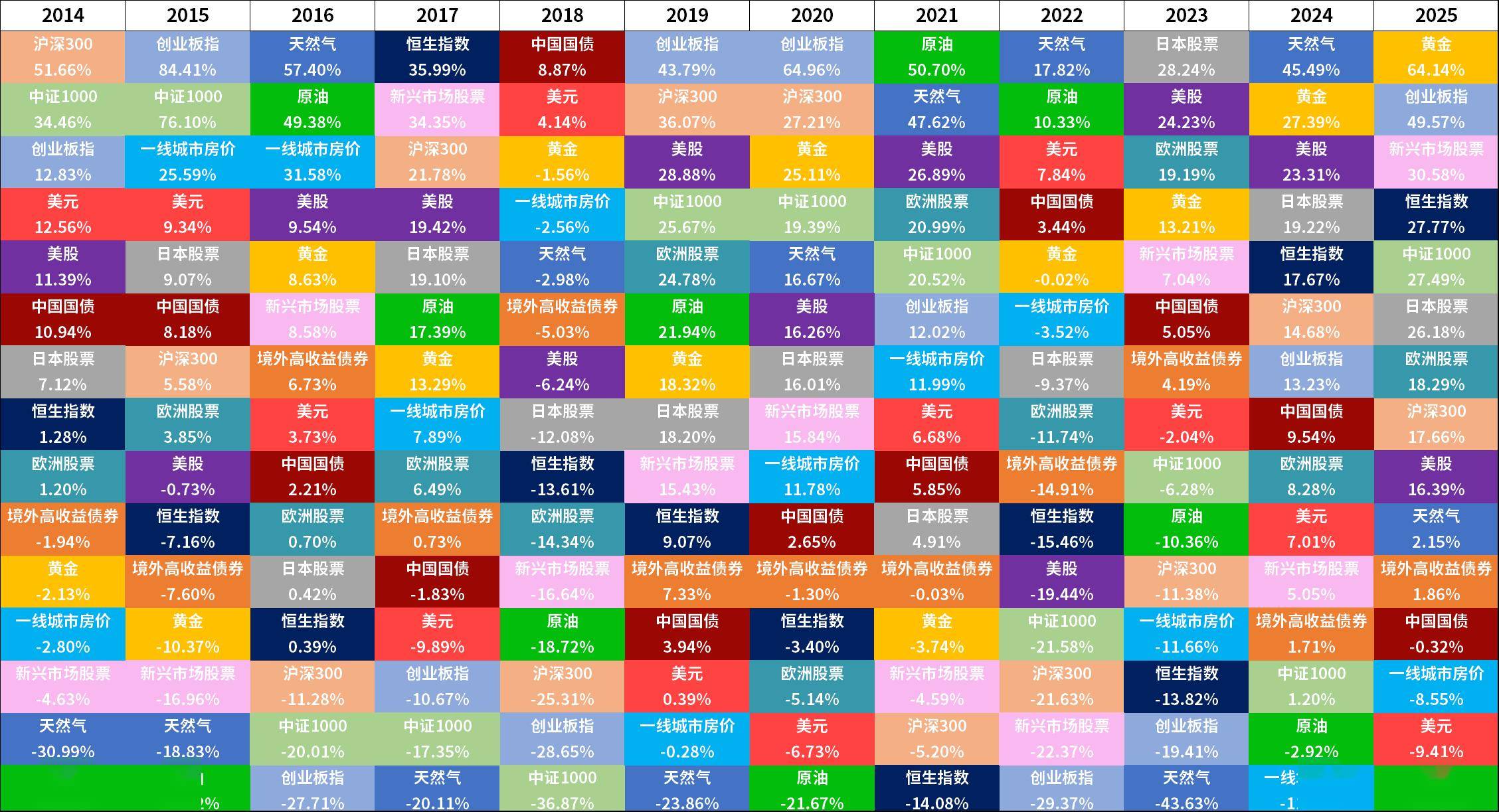
Group 1 - The core idea of the article is the emergence of ETF-FOF as a new investment tool that combines the advantages of ETFs and FOFs, providing a more convenient investment strategy for investors [1] - The number of ETFs in the market has exceeded 1,000, creating challenges for ordinary investors in selection, timing, and portfolio configuration [1] - ETF-FOF focuses on constructing investment portfolios using passive index funds, offering a solution to the practical difficulties of selecting and allocating funds [1] Group 2 - The past year has been significant for metal commodities, with gold, silver, and copper experiencing substantial gains, while black commodities like crude oil and coking coal have shown weak performance [2] - Historical data indicates that no single asset can continuously rise, emphasizing the importance of diversifying investments across different asset types to achieve stable growth [2][3] Group 3 - The newly launched HuaFu Chunxin Stable 3-Month Holding Mixed ETF-FOF aims to provide a quantitative strategy-based investment product that focuses on multi-asset investment [5] - The product employs an enhanced all-weather strategy based on Bridgewater's model, covering various macro scenarios and asset types, including equities, bonds, and gold [6] - The fund emphasizes diversification by incorporating assets with low correlation to domestic markets, such as gold and QDII, to reduce drawdown risks in extreme situations [8] Group 4 - HuaFu FOF team specializes in global asset research, utilizing ETFs and funds to help investors mitigate market volatility and achieve long-term stable returns [9] - The team employs quantitative financial models to construct diversified asset portfolios, focusing on optimizing asset allocation to adapt to different market cycles [11] - The fund manager, Yan Lv, has extensive experience in macro asset allocation and quantitative investment, prioritizing investor experience and confidence [12]

中金2026年展望 | “固收+”基金:多资产大时代的增长法则
中金点睛· 2026-01-07 23:43
Core Viewpoint - The "Fixed Income +" fund is expected to continue its growth trajectory into 2026, driven by various factors including the migration of resident wealth seeking stable returns, institutional demand for enhanced yields, and the market consensus on cross-asset diversification [2][25][28]. Group 1: Growth Drivers for "Fixed Income +" Funds - The long-term low interest rate environment is driving residents to seek stable and moderately higher returns, making "Fixed Income +" funds an attractive option for wealth migration [25][28]. - Institutional investors are facing rigid liability cost pressures, leading them to increase their risk exposure and volatility tolerance to achieve better returns, thus favoring "Fixed Income +" funds as a new allocation channel [25][28]. - The performance of "Fixed Income +" funds has already gained market recognition, with significant returns reported in 2025, making them appealing to both retail and institutional investors [25][26][28]. Group 2: Performance and Strategy Insights - In 2025, "Fixed Income +" funds saw a notable increase in market attention, with strategies dynamically evolving alongside market trends, such as a focus on convertible bonds and equity markets [4][8][18]. - The "Fixed Income + Technology" and "Fixed Income + Growth" strategies outperformed others, with median returns of 11.71% and 8.85% respectively, indicating strong market interest in these areas [16][18]. - The growth of "Fixed Income +" funds is significantly influenced by long-term performance metrics, with a strong correlation between past performance and fund size growth [34][36]. Group 3: Competitive Landscape and Fund Management - The competitive landscape for "Fixed Income +" funds has shifted, with some institutions achieving rapid growth in management scale through differentiated strategies and strong performance in equity opportunities [18][19]. - Institutions that successfully attract incremental funds often leverage unique product offerings and strong stock-picking capabilities, particularly in high-volatility sectors like technology and growth [45][41]. - The market is expected to see a bifurcation in "Fixed Income +" fund strategies, with "extreme style" funds attracting more capital, while funds focusing on stable returns and cost-effectiveness also hold significant potential for growth [46][47].

跨越低利率周期,坚定为民理财初心
Xin Lang Cai Jing· 2025-12-30 19:09
Core Insights - The banking wealth management market is experiencing a stark contrast between "record high scale" and "pressured returns," with the industry scale expected to reach 34 trillion yuan by the end of 2025, while the average annualized return on products has dropped to 2.12% in the first half of the year [1][2][3] Group 1: Market Trends - The development environment for banking wealth management is undergoing profound changes, with a policy focus on maintaining low social financing costs leading to a subtle shift in market dynamics [2] - The risk appetite of wealth management clients is generally converging, with conservative and stable clients now accounting for a combined 50% of the market, while the proportion of aggressive clients has slightly increased [2] - As of June 2025, the combined scale of conservative and stable wealth management products has risen to 96%, with stable products now making up 70% of the total [2] Group 2: Asset Allocation - Fixed income products dominate the wealth management market, accounting for 97% of the total, but there is a trend towards more diversified and balanced offerings [3] - The average annualized return on wealth management products in the first half of 2025 was 2.12%, a decrease of 53 basis points compared to 2024 [3] Group 3: Growth Opportunities - The construction of a financial powerhouse presents new opportunities for wealth management growth, with the banking sector expected to play a crucial role in enhancing residents' property income [4] - By 2030, the scale of the three-pillar pension system in China is projected to reach 30 to 40 trillion yuan, which will become a significant source of incremental funds for banking wealth management [4] Group 4: Investment Strategies - The banking wealth management sector must enhance its multi-asset investment capabilities and innovate product offerings to achieve high-quality growth [4][5] - The shift towards a more diversified investment strategy is essential, as traditional fixed income investments alone will not suffice in the current low-interest-rate environment [5] Group 5: Client Engagement - Wealth management clients continue to prioritize stable returns, with a strong demand for low-risk, acceptable yields [6] - The industry faces challenges in balancing returns and volatility in multi-asset investments, as historical reliance on fixed income limits the ability to diversify effectively [6] Group 6: Strategic Initiatives - The banking wealth management sector should integrate asset allocation optimization with broader strategic initiatives, focusing on technology finance, pension finance, inclusive finance, and digital finance [7][8] - Enhancing investment strategies and product offerings through collaboration within banking groups and innovation in response to market dynamics is critical for maintaining competitiveness [8][9]

农银理财董事长马曙光:跨越低利率周期,坚定为民理财初心
券商中国· 2025-12-30 06:57
Core Viewpoint - The banking wealth management market is experiencing a stark contrast between "record high scale" and "pressured returns," with the industry scale expected to reach 34 trillion yuan by the end of 2025, while the average annualized return on products has dropped to 2.12% in the first half of the year, challenging the traditional fixed-income investment model [1][2]. Group 1: Industry Development Trends - The development environment for banking wealth management is undergoing profound changes, with a policy focus on maintaining low comprehensive financing costs leading to difficulties in significantly increasing bond yields [3]. - Customer risk preferences are converging, with conservative (level one) and stable (level two) clients now accounting for nearly 50% of the total, while the proportion of aggressive (level five) clients has slightly increased [3]. - As of June 2025, the combined scale of level one and level two wealth management products has risen to 96%, with level two products now making up 70% of the total, indicating a shift towards lower-risk investments [3]. Group 2: Product Structure Changes - The asset allocation structure is adjusting, with bonds and non-standard investments dropping below 50% of total investments, while deposits, public funds, QDII, and financial derivatives are on the rise [4]. - The average annualized return on wealth management products in the first half of 2025 is 2.12%, a decrease of 53 basis points from 2024 [4]. Group 3: High-Quality Growth Strategies - The construction of a financial powerhouse presents new opportunities for wealth management growth, with the potential for significant development still to be tapped [5]. - The aging population is expected to drive the scale of the pension system to reach 30 trillion to 40 trillion yuan by 2030, becoming a crucial source of incremental funds for banking wealth management [6]. - The banking wealth management sector must enhance its multi-asset investment capabilities and innovate product offerings to adapt to the low-interest-rate environment [6]. Group 4: Integration with National Strategies - The banking wealth management sector should align its asset allocation optimization with national strategies, focusing on technology finance, pension finance, inclusive and green finance, and digital finance [9]. - Emphasis on technology-driven investment strategies, such as participating in sci-tech bonds and public REITs, is essential for enhancing returns [9]. - The sector must also develop a diversified investment strategy and improve product labeling to strengthen its core competitiveness [10]. Group 5: Client Engagement and AI Integration - Continuous client engagement is necessary in the low-interest-rate era, with a focus on managing expectations and providing tailored services [12]. - The integration of AI in client services is seen as a priority, aiming to create a comprehensive AI-driven wealth management platform that offers market insights and investment strategies [13].

惠理基金:A股及港股短期缺乏催化剂 但外资对投资中国兴趣回升
Sou Hu Cai Jing· 2025-12-16 04:01
Group 1 - The core viewpoint is that the U.S. government shutdown has delayed economic data releases, complicating market assessments of the Federal Reserve's interest rate cut path, which is a major factor for market volatility in November [1] - The basic scenario from 惠理基金 suggests a slowdown in the U.S. economy but a significant chance to avoid recession next year, with potential fiscal policies from the Trump administration to support the economy ahead of the 2026 midterm elections [1] - The Chinese mainland and Hong Kong stock markets are expected to lack new catalysts in the short term, leading to a range-bound market; third-quarter corporate earnings have generally fallen short of market expectations [1] Group 2 - A recovery in A-shares is anticipated to be more differentiated, with capital concentrated in sectors like AI and technology, while interest in consumer sectors remains weak [2] - Retail investors have recently withdrawn funds from savings accounts to invest, but market momentum has weakened, suggesting a continuation of consolidation and range-bound trading until new catalysts emerge [2] - North Asian stock market earnings forecasts have improved, but valuations are considered high; Southeast Asian markets remain undervalued due to political and growth concerns [3] Group 3 - Japanese stocks may benefit from a weaker yen in the short term, but valuations are approaching historical highs, influenced by geopolitical tensions affecting tourism and net exports [4] - The U.S. Treasury yield curve is expected to remain steep, making investment strategies based on duration management more challenging due to the widening fiscal deficit [5] - Asian high-yield bond prices experienced slight adjustments, but credit spreads remain well below historical averages, indicating a need for more rigorous bond selection [6] Group 4 - Gold prices are expected to rise following silver prices, supported by central bank purchases and a weak dollar, while the correlation among risk assets has increased, making stable income sources crucial for investment returns [7]
新交所:7月各项业务呈现强劲增长势头 大宗商品总交易量同比上升76%
Qi Huo Ri Bao Wang· 2025-08-11 18:09
Core Insights - SGX Group reported strong growth across its business segments in July, reflecting investor confidence in diverse asset classes [1][2][3] Securities Market Performance - In July, the total trading volume in the securities market increased by 27% year-on-year, reaching SGD 33.8 billion, marking a three-month high [1] - The average daily trading volume rose by 27% year-on-year to SGD 1.47 billion [1] - The Straits Times Index (STI) rose by 5.3% month-on-month, closing at 4,173.77 points, outperforming other major ASEAN markets [1] - Daily average trading value in Singapore stocks increased by 19% month-on-month, with improved liquidity across all sectors [1] Small and Mid-Cap Stocks - Small and mid-cap stocks saw a significant liquidity increase of 94% month-on-month, reaching SGD 261 million, contributing majorly to the trading volume growth [2] - The FTSE ST Small Cap Index and FTSE ST Mid Cap Index rose by 9.9% and 6.7% respectively [2] - Retail investors have become the fastest-growing segment, while institutional investors have net bought SGD 62 million in small and mid-cap stocks over the past six months [2] ETF Market Expansion - The launch of the 10th cross-border ETF under the Shenzhen Stock Exchange-SGX ETF mutual recognition mechanism contributed to market growth [2] - Total assets under management for ETFs increased by 36% year-on-year, reaching SGD 14.9 billion, with two ETFs tracking the STI surpassing SGD 3 billion in total size for the first time [2] Derivatives Market Performance - The total trading volume in the derivatives market increased by 25% year-on-year, reaching 29.3 million contracts [1] - Commodity trading volume surged by 76% year-on-year, hitting a historical high of 9 million contracts [3] - Iron ore average daily trading volume reached a record high of 362,755 contracts, with open interest nearing 3.5 million contracts [3] Forex Futures Demand - Forex futures trading saw increased demand due to uncertainties in US-India trade negotiations, with Indian Rupee/USD futures trading volume rising by 41% year-on-year to 2.2 million contracts [3] - The trading volume for USD/offshore RMB futures increased by 7% year-on-year to 3.1 million contracts amid heightened RMB exchange rate volatility [3]
DWS:上调金价预测明年6月目标每盎司3750美元 美联储最快秋季才减息
Zhi Tong Cai Jing· 2025-06-18 12:01
Group 1: Market Outlook - DWS forecasts that gold will continue to rise, with a target price of $3,750 per ounce by June 2025, driven by geopolitical risks, declining confidence in the dollar, increased global liquidity, and ongoing central bank purchases [1] - The S&P 500 index is expected to reach 6,100 points by June 2025, supported by the AI boom and overall digital technology growth [2] - European stock markets have outperformed U.S. markets this year, with the Stoxx 600 index projected to reach 570 points by June 2025, contingent on when corporate earnings adjustments conclude [2] Group 2: Economic Growth Projections - DWS predicts U.S. economic growth will slow to 1.2% in 2025, down from 2.8% in 2024, due to declining corporate investment amid trade disputes and weak consumer sentiment [2] - European economic growth is forecasted at 1.1% for 2025, showing improvement compared to 0.8% in 2024 [2] Group 3: Emerging Markets and Currency Trends - DWS finds Chinese stocks more attractive than Indian stocks, noting improvements in sentiment and performance in the Chinese market, particularly in consumer and technology sectors [3] - The euro is expected to strengthen against the dollar, with a forecast of 1.18 by June 2025, as the dollar weakens due to de-globalization trends and reduced investor confidence [3]