安全优先

Search documents
2026年,汽车“反人类”设计会消失吗?
Jing Ji Guan Cha Wang· 2026-02-24 02:16
Group 1 - The core viewpoint of the news is the introduction of a new mandatory national standard for automotive door handles, which aims to enhance safety and eliminate the use of hidden door handles in vehicles by 2027 [2][4]. - The new standard requires mechanical release functions for both interior and exterior door handles, ensuring they can be manually operated in extreme situations such as power failure [2][4]. - The standard mandates specific dimensions for hand operation space and mechanical strength requirements, such as exterior handles needing to withstand a force of at least 500 Newtons [2][4]. Group 2 - The hidden door handle design, popularized by Tesla's Model S in 2012, is set to become obsolete due to safety concerns, as it has been found to provide minimal aerodynamic benefits while posing risks in emergency situations [3][4]. - The transition period for compliance with the new standard allows for gradual implementation, with new models needing to meet most requirements by January 1, 2027, and all requirements by January 1, 2028 [4][5]. - Several automotive companies are already adapting their designs to comply with the new regulations, with examples including AITO's M8 and M7 models featuring semi-hidden handles and multiple unlocking mechanisms [5]. Group 3 - The new standard is seen as a return to the "safety first" principle in automotive design, pushing manufacturers to prioritize safety over aesthetic innovations [2][4]. - The emergence of the new standard has sparked discussions about other "anti-human" designs in the automotive industry, such as the elimination of physical buttons and the adoption of half steering wheels, which may also require regulation [6][7]. - The automotive industry is expected to face challenges in redesigning vehicles to meet new safety standards, but the trend towards eliminating unreasonable designs is anticipated to continue [8].


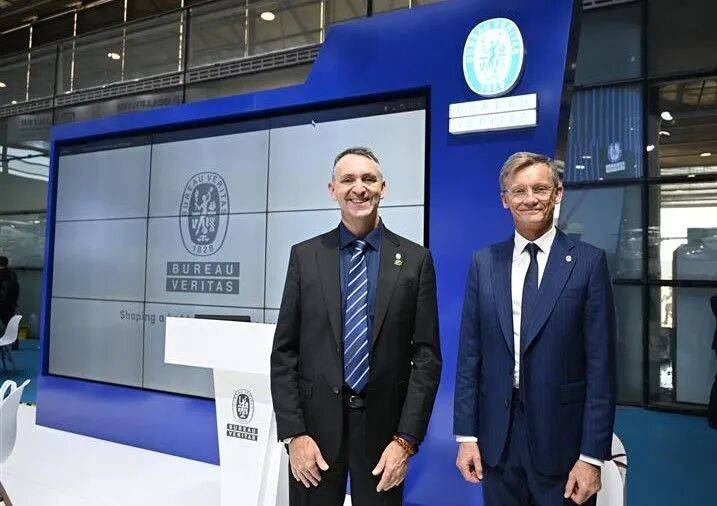
重磅任命落地:Alex Gregg-Smith 正式出任必维船级社(BV)全球总裁
Sou Hu Cai Jing· 2026-01-25 01:49
Core Viewpoint - Alex Gregg-Smith has officially taken over as President of Bureau Veritas Marine & Offshore, emphasizing that "safety is the foundation of industry transformation" [1][3][4] Group 1: Appointment and Organizational Changes - The appointment of Alex Gregg-Smith as President is part of Bureau Veritas' ongoing efforts to optimize its organizational structure and operational model to better support the group's strategic vision [3] - This change aims to enhance global competitiveness in the maritime and offshore sectors amid industry transformations, regulatory upgrades, digital acceleration, and supply chain restructuring [3][6] - Alex Gregg-Smith's dual nationality and extensive experience within Bureau Veritas, particularly in the Asia-Pacific region, are seen as key assets for the role [3][5] Group 2: Focus on Safety and Industry Transformation - In his recent statements, Alex Gregg-Smith highlighted that the shipping industry is undergoing an unprecedented transformation, driven by decarbonization, new fuels, digitalization, regulatory evolution, and global supply chain changes [4][6] - He stressed that the role of classification societies has expanded beyond compliance verification to include a broader responsibility of "promoting progress" and ensuring the safe deployment of emerging technologies [4][6] - Safety is positioned as the top priority, with a clear logic that without safety, performance cannot be maximized, extending the definition of safety to various operational aspects [4][5] Group 3: Evolution of Classification Society Roles - Bureau Veritas is redefining the role of classification societies along three main lines: moving from compliance verification to being technology partners, integrating cross-industry capabilities, and re-establishing safety as a foundational logic [6][8] - The focus will be on deeper involvement in the commercialization of new fuels and technologies, emphasizing cross-domain insights and collaboration [6] - The organization aims to bind safety directly to operational performance to address new risks associated with emerging technologies [6][8]
平安资源精选混合基金经理陈默:关注工业金属、新能源金属、小金属等资源品细分机会
Quan Jing Wang· 2026-01-15 06:10
Core Viewpoint - The report indicates a significant structural market trend for resource products in 2025, with precious metals and industrial metals like copper leading the charge, driven by heightened global uncertainty and various risk factors [1]. Group 1: Market Dynamics - The global supply chain is shifting from "efficiency first" to "security first" due to intensified great power competition, making key resources like metals and energy strategic assets for countries [1]. - Geographical restructuring of industrial division is driven by escalating trade frictions, leading to new manufacturing and service clusters in emerging markets, which will increase demand for infrastructure and physical assets [1]. - The U.S. faces rising debt pressure, questioning the stability of its monetary credit system, while "de-dollarization" is becoming a long-term global trend, prompting investors to diversify their asset portfolios [2]. Group 2: Resource Nationalism and Investment Opportunities - Resource nationalism is on the rise as countries seek to protect their interests through regulatory measures, increasing uncertainty in global resource supply [2]. - China's mining industry is positioned to benefit from global uncertainties, showcasing resilience and innovation in resource exploration and utilization [2][3]. - Chinese mining enterprises are deepening their overseas presence, demonstrating strong decision-making and operational management capabilities in complex environments [3]. Group 3: Investment Focus Areas - Industrial metals, particularly copper, are expected to benefit from an expanding global supply-demand gap, with a focus on leading companies with quality copper resources [4]. - The lithium battery sector is anticipated to rebound post-2025, while rare earths will benefit from high demand in the electric vehicle and wind power industries [4]. - Precious metals like gold and silver are highlighted for their long-term value, with gold serving as a core asset for risk diversification and silver having both financial and industrial attributes [5]. - Attention is drawn to strategic minor metals such as tungsten and tantalum, which may benefit from national policies aimed at resource development [5]. Group 4: Broader Resource Sector Tracking - The company will continue to monitor sectors like oil, gas, coal, agriculture, and chemicals for potential value re-evaluation opportunities [5]. - There is an emphasis on identifying "hidden champions" in mining services, machinery, environmental protection, and logistics markets to leverage investment advantages [5].
摩通私银:预计美国今年国防预算将突破1万亿美元,国防板块具备长期投资吸引力
Ge Long Hui A P P· 2026-01-06 08:38
Core Viewpoint - The actions of the United States towards Venezuela highlight the necessity of increasing defense spending and enhancing resilience amid escalating global divisions [1] Group 1: Defense Spending - The U.S. defense budget is projected to exceed $1 trillion by the fiscal year 2026 [1] - Europe is responding by raising core defense spending to 3.5% of GDP based on new NATO guidelines, with an additional investment of 1.5% for infrastructure [1] - This marks a significant shift from the post-Cold War "peace dividend" to a focus on security [1] Group 2: Investment Opportunities - Recent geopolitical shocks have accelerated capital inflows into defense, technology, and infrastructure sectors, driving innovation and industry profit growth [1] - The defense sector is viewed as having long-term investment appeal, providing resilience, diversification, and growth potential for investment portfolios in the context of rising geopolitical risks and global fragmentation [1]
读懂“十五五”:国盛证券首席经济学家熊园带你解码宏观政策的底层逻辑,从政策语义逻辑前瞻趋势拐点
Hua Er Jie Jian Wen· 2026-01-05 09:41
Core Viewpoint - The year 2026 marks a significant turning point in China's economic history, transitioning from "scale dividends" to a focus on "system security and quality efficiency revolution" as the old trade and growth logic fails [1][2]. Group 1: Economic Transition - The "Fifteen Five" plan signifies a shift in China's economic strategy, with a complex non-linear system emerging that renders traditional GDP growth and monetary policy approaches ineffective [2][3]. - Historical patterns show that every five-year plan corresponds with a restructuring of wealth logic, indicating the importance of understanding policy language to navigate economic changes [1][11]. Group 2: Policy Interpretation - The upcoming "Fifteen Five" plan presents unprecedented complexities in macroeconomic policy, making it challenging to translate administrative language into actionable asset allocation strategies [3][12]. - The course led by Dr. Xiong Yuan aims to decode the "Fifteen Five" plan's core keywords, distinguishing between soft guidance and hard constraints, which is crucial for investors [14][15]. Group 3: Investment Strategy - Investors must prepare for the new economic environment by understanding the implications of central government leverage and the boundaries of fiscal policy post-2026 [12][15]. - The course will cover how to utilize forward-looking indicators like PMI and PPI to anticipate policy shifts and manage the time lag between policy announcements and market reactions [12][15].


速度之快、伤亡之惨重,香港火灾之痛是“老龄住宅”更新之鉴
Mei Ri Jing Ji Xin Wen· 2025-11-27 12:19
Core Viewpoint - The recent fire at Hong Kong's Mong Fuk Court, the largest in 17 years, highlights significant safety concerns in urban renewal projects, particularly in aging residential areas [1]. Group 1: Incident Overview - The fire escalated to a level five alarm within four hours, resulting in severe casualties and raising concerns about urban safety during renewal processes [1]. - Mong Fuk Court, a public housing estate over 42 years old, is undergoing major renovations, reflecting the challenges of maintaining safety in high-density living environments [1]. Group 2: Urban Renewal and Safety - Urban renewal aims to enhance livability and safety through maintenance, reconstruction, and improved public facilities, with safety being a fundamental priority [2]. - The aging of residential buildings, coupled with an increasing elderly population, poses significant challenges for cities, necessitating a focus on safety in urban renewal efforts [1][2]. Group 3: Safety Aspects - **Material Safety**: Building materials must meet fire-resistant and environmental standards to prevent fire risks. The use of bamboo scaffolding, while cost-effective, contributed to the rapid spread of the fire due to its flammability [4]. - **Process Safety**: A strict construction oversight and risk warning mechanism is essential during long renovation periods. The ongoing renovations at Mong Fuk Court, which are set to continue until mid-2026, present inherent safety risks [5]. - **Result Safety**: Long-term safety resilience must be established to address existing hazards and respond to emergencies. The tragic fire underscores the need for a safety-first approach in urban renewal, prompting potential policy changes in construction practices [5].

芯片换稀土,是交易还是僵局?
伍治坚证据主义· 2025-10-22 08:06
Core Viewpoint - The current global economic situation resembles a tense cold war rather than a globalization feast, with the U.S. and China engaging in a fragile balance of interdependence, particularly in the trade of chips and rare earths [2][3]. Group 1: U.S.-China Trade Relations - The U.S. plans to impose 100% tariffs on all Chinese exports by October 2025, while China tightens controls on rare earth exports, indicating a complex trade relationship [2]. - Both countries are engaged in a "chip for rare earth" dynamic, reflecting a mutual dependency that neither side is willing to fully escape [2][3]. Group 2: Global Supply Chain Dynamics - The trend of "de-risking" rather than complete decoupling has become the new normal, with China controlling approximately 70% of global rare earth resources and the U.S. dominating high-end chip design [3]. - The market currently reflects a belief that the U.S. and China will return to a stable state after short-term tensions, as both sides are reluctant to see supply chains collapse [3]. Group 3: Investment Implications - Investors must adapt to increased market volatility, as evidenced by stock price fluctuations despite strong earnings reports from major banks [4]. - The traditional investment logic of "buying the dip" is challenged by new variables such as policy risk, supply chain risk, and trust risk, which now influence valuations [4]. Group 4: Shift in Investment Focus - The focus has shifted from "efficiency first" to "safety first," with the U.S. and Europe implementing protective measures in various sectors [5]. - China's export structure is evolving, with a growing share of rare earths, solar energy, and electric vehicles directed towards non-U.S. markets, indicating a strategic pivot in supply chains [5]. Group 5: Strategic Resource Investment - Strategic resources like gold, rare earths, lithium, and chip equipment are becoming focal points for investment, as they are viewed as geopolitical currencies in a divided world [5]. - There is an increasing valuation mismatch between U.S. banks and large tech stocks, with financial sector profits soaring but stock prices stagnating, while tech stocks remain in demand despite policy pressures [5]. Group 6: Future Market Landscape - The future may see the U.S. continuing to subsidize chips while China exports rare earths, with Japan, South Korea, and ASEAN countries emerging as new supply chain bridges [6]. - Investors are advised to adopt a diversified and patient approach in a policy-driven market, emphasizing the importance of staying engaged in the market despite volatility [6].