家文化

Search documents
直击西贝闭店最后一夜,“我们也不知道会被安排去哪儿”
凤凰网财经· 2026-03-10 13:53
Core Viewpoint - The article discusses the struggles faced by the restaurant chain Xibei, highlighting its decision to close 102 stores, which accounts for 30% of its total locations, affecting over 4,000 employees. The narrative captures the emotional and operational challenges during the final days of the restaurant's operation, reflecting on the broader implications for the industry and the company's future [4][5][41]. Group 1: Company Challenges - Xibei is experiencing significant operational difficulties, including delayed salary payments and a 30% pay cut for management, leading to a change in leadership with founder Jia Guolong stepping back and Dong Junyi taking over as CEO [4][5]. - The decision to close stores was announced two months prior, with 102 locations set to shut down, impacting a large workforce and signaling a critical moment for the company [5][41]. - The restaurant's revenue has drastically declined, with daily earnings dropping from 1.1 million to only 400,000, indicating severe financial distress [37][41]. Group 2: Employee Perspectives - Employees express a sense of loyalty to Xibei, citing good working conditions and benefits, despite the recent turmoil. Many employees feel a strong attachment to the company, emphasizing its positive aspects [20][21]. - The article features personal stories from employees who have built their careers at Xibei, highlighting their experiences and the emotional impact of the impending closures [25][28]. - There is a noticeable shift in employee morale and job security, with some employees contemplating leaving due to limited opportunities and the company's uncertain future [31][32]. Group 3: Industry Context - The broader restaurant industry is facing challenges, with Xibei's struggles reflecting a trend of declining revenues and increased competition. The article notes that many restaurants are struggling to maintain profitability amid changing consumer behaviors [51][52]. - Xibei's management has resorted to price cuts and promotions to attract customers, which contradicts previous strategies that emphasized maintaining quality over low prices [40][41]. - The narrative suggests that the company's previous commitment to a "family culture" is being tested as financial pressures mount, leading to a potential shift in its operational philosophy [37][40].


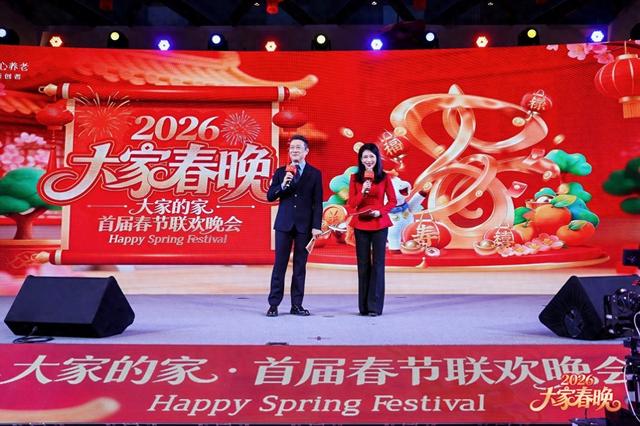
“大家春晚”举办,系养老行业首台10城12个社区联动并全程直播的云春晚
Bei Jing Shang Bao· 2026-02-11 09:27
Core Viewpoint - The "Dajia Spring Festival Gala" series of events, organized by Dajia Insurance Group's elderly care brand "Dajia's Home," aims to create a significant cultural event for the elderly, emphasizing community engagement and the concept of "home" in urban centers [1] Group 1: Event Overview - The event kicked off on February 7, covering 10 cities and 12 urban community centers across the country [1] - It features a combination of "cloud live streaming + offline performances + real-time interaction," making it the first cloud gala of its kind in the elderly care industry [1] - The main venue is located at Dajia's Home in Beijing, with 11 sub-venues in cities like Shanghai, Hangzhou, and Wuhan, creating a unified atmosphere of reunion [1] Group 2: Participation and Engagement - Nearly 100 original performances were selected, with 28 programs showcased nationwide [1] - The average age of participating elderly performers is close to 80 years, with the oldest performer being 93 years old [1] - The initiative is designed to foster a genuine sense of community and interaction between urban centers and the elderly residents, reinforcing the message that "urban community—my new living stage" is more than just a slogan [1]
“大家春晚”温情启幕,点亮万家团圆时刻
Xin Lang Cai Jing· 2026-02-09 08:57
Core Viewpoint - The "Dajia Spring Festival Gala" series of events, organized by Dajia Insurance Group's elderly care brand "Dajia's Home," aims to enhance brand recognition and influence in the elderly care industry through a nationwide celebration involving 10 cities and 12 community centers, combining online and offline interactions for a festive atmosphere [1][3][7]. Group 1 - The "Dajia Spring Festival Gala" officially launched on February 7, 2026, featuring a cloud gala that connects various communities across the country, providing a sense of ceremony, participation, and happiness for nearly 10,000 elderly participants [1][3]. - The event includes various themed activities such as "Homecoming Feast" and "New Year Family Celebration," promoting a festive atmosphere and enhancing the brand's recognition among the elderly and their families [3][5]. - The gala showcased nearly 100 original performances, with 28 selected for the main event, featuring participants with an average age of nearly 80, including the oldest performer at 93 years old [5][7]. Group 2 - The offline participation reached nearly 10,000 people, while online viewership exceeded 13 million on platforms like Douyin, receiving widespread acclaim from the elderly, their families, and the broader community [7]. - The event is not merely a celebration but aims to foster a "home" culture, allowing the elderly to experience a genuine connection with their community, reinforcing the idea that the community is their new living space [7]. - Dajia's Home plans to continue focusing on the needs of the elderly, creating more warm and quality community cultural activities to ensure a dignified and fulfilling late life for every elderly individual [7].
32岁程序员猝死后,“所有的荣誉都变成了垃圾”
凤凰网财经· 2026-01-23 11:52
Core Viewpoint - The article highlights the tragic story of Gao Guanghui, a programmer who died suddenly due to overwork, raising critical discussions about workplace culture, employee well-being, and the impact of excessive work hours on health [2][5][19]. Group 1: Gao Guanghui's Last Hours - On November 29, 2025, Gao Guanghui experienced severe discomfort, which ultimately led to his collapse and subsequent death within hours, despite being a dedicated employee [6][12]. - His last moments were marked by a lack of awareness about the severity of his condition, as he had been under significant stress and fatigue for an extended period [9][10]. - The day of his death, he was still engaged in work-related communications, illustrating the blurred lines between personal life and work responsibilities [12][18]. Group 2: Workplace Culture and Employee Pressure - Gao Guanghui worked at CVTE, a company that promotes a "family culture" and encourages long hours, which contributed to his overwhelming workload and stress [16][19]. - The company’s culture normalized excessive overtime, leading employees to feel obligated to sacrifice personal health for work commitments [19][23]. - Gao's experience reflects a broader issue within the tech industry, where high expectations and pressure can lead to severe health consequences for employees [19][30]. Group 3: Aftermath and Company Response - Following Gao's death, his wife, Liu Yue, faced difficulties with the company regarding the handling of his belongings and the recognition of his work-related death [3][4][28]. - The company’s response included attempts to manage the narrative around Gao's death, including restricting discussions and handling of his work-related documents [29][30]. - Liu Yue expressed her frustration with the company's actions, feeling that they were erasing her husband's contributions and legacy [30][31].


永远的铁道兵不朽的创业魂——追记全国劳动模范、全国模范退役军人,香驰控股有限公司原党委书记、董事长刘连民
Xin Lang Cai Jing· 2026-01-08 16:57
Core Viewpoint - Liu Lianmin, the founder and chairman of Xiangchi Holdings, passed away at the age of 69, leaving behind a legacy of dedication to the food processing industry and a strong sense of community responsibility [1][12]. Group 1: Early Life and Military Service - Liu Lianmin was born in 1957 in a farming family in Boxin County and became a soldier at the age of 19, serving as a railway soldier on the Qinghai-Tibet Plateau, where he demonstrated exceptional work ethic by exceeding daily tasks [2][3]. - His military service instilled in him a strong sense of resilience and dedication, earning him multiple awards and recognition for his contributions [3]. Group 2: Career Development - After retiring from the military, Liu was appointed as the manager of a local grain depot, where he quickly rose through the ranks due to his hard work and innovative approach [3][4]. - In 1989, he took on the role of factory director at the Boxin County Plant Oil Factory, facing significant challenges but successfully implementing strategies to improve management and production [4][5]. Group 3: Business Growth and Achievements - Under Liu's leadership, the plant transformed into a leading enterprise in deep processing of soybeans and corn, achieving significant production milestones and financial success, including a sales revenue of 732.3 million yuan in 1994 [5][10]. - The company expanded its product offerings and market reach, establishing long-term partnerships and achieving a production capacity of 300,000 tons of soybeans and 60,000 tons of corn annually [10][9]. Group 4: Corporate Culture and Social Responsibility - Liu fostered a corporate culture centered on family values, emphasizing employee welfare and community engagement, which contributed to a strong sense of loyalty among staff [11][12]. - He was actively involved in social initiatives, donating over 20 million yuan to various charitable causes and supporting educational projects in underprivileged areas [13]. Group 5: Legacy and Impact - Liu's commitment to quality and innovation positioned Xiangchi as a benchmark in the industry, with its products holding significant market shares both domestically and internationally [10][9]. - His leadership style and dedication to social responsibility have left a lasting impact on the company and the community, inspiring future generations of entrepreneurs [13].

从铁水到光焰:一位企业家与他的时代担当 对话宜光集团领航人 王克艮
Sou Hu Cai Jing· 2026-01-07 05:47
Core Perspective - The essence of the company's journey over the past four decades is encapsulated in the concept of "responsibility," which reflects a commitment to employees, the enterprise, and the community [2][4]. Group 1: Crisis Management - During the 2008 global financial crisis, the company faced severe challenges, including a sudden loss of orders and a near collapse of the funding chain, leading to a commitment of "not abandoning or giving up" on employees [4]. - The company chose to prioritize employee welfare over financial gains, even at the cost of significant profits, demonstrating a strong commitment to its workforce [4]. - The crisis ultimately reinforced the belief that the true strength of a company lies in the unity and loyalty of its people, rather than just financial metrics [4]. Group 2: Strategic Transformation - The company has successfully transitioned from traditional printing and casting to a diversified portfolio that includes construction and modern services, driven by strategic thinking and adaptation [10]. - Two significant moments of learning and awakening shaped the company's strategic direction: the adoption of digital printing technology in 1993 and a shift in mindset towards social responsibility after attending executive education programs [11]. - The company aims to serve as a "supplementary role" to government functions, exemplified by the development of a landmark building that integrates high-end dining, modern offices, and vibrant commercial spaces [11]. Group 3: Corporate Culture - The company fosters a unique and profound "family culture," which is built on shared experiences and traditions, creating a strong sense of community among employees [15]. - Cultural practices include celebrating significant milestones together, providing support for employees' families, and maintaining a caring environment for all, including stray animals [15]. - This culture has resulted in a loyal workforce, with many employees having long tenures, and a strong commitment to the company's mission and values [15]. Group 4: Social Responsibility - The company integrates social responsibility into its core operations, believing that a business's value is reflected in its contributions to society [20]. - Initiatives include using environmentally friendly materials, establishing a solar power station, and supporting local communities through donations and educational sponsorships [20]. - The company views itself as a public entity that must give back to society, emphasizing sustainable and respectful growth [20]. Group 5: Future Aspirations - The company aims to be recognized not just as a physical landmark but as a symbol of integrity, innovation, and responsibility in the business community [23]. - Future plans include exploring better solutions in areas such as elder care, community services, and green industries, reinforcing its role as a "supplementary" entity [23]. - The vision is to create a company that is not the largest or the most profitable, but the most respected and warm-hearted, contributing positively to the community [23].
李军:唯有沉下去办实事,才能不负人民信任|代表委员风采
Xin Lang Cai Jing· 2025-12-28 23:34
Group 1 - The core viewpoint emphasizes the importance of practical actions to address community needs and improve the business environment, as demonstrated by the initiatives led by the company [3][4] - The company has established long-term education funds in multiple schools in Changsha, aiming to provide stable support for educational development and address practical issues in talent cultivation [4] - The company has actively engaged in public welfare activities, including donations to support rural revitalization and community assistance, with cumulative contributions amounting to several million yuan [4][5] Group 2 - The company has a high employee retention rate, with over 80% of employees being long-term staff, which is attributed to the "family culture" that enhances employee belonging and cohesion [5] - The company plans to focus on urban infrastructure updates, public safety, and balanced education in 2026, aiming to deepen research and provide precise recommendations for community concerns [5] - The company intends to strengthen the sustainability of its public welfare initiatives and optimize the management of education funds to enhance its contributions to society [5]

一根吸管年销2.4亿!从小货郎到企业大拿,他撬动了全球市场
Sou Hu Cai Jing· 2025-11-01 18:09
Core Viewpoint - The article highlights the journey of Lou Zhongping, known as the "Straw King," who transformed a small straw business into a leading global player by focusing on quality, standards, and innovative management practices, demonstrating that even low-margin industries can thrive with the right approach [1][15]. Group 1: Business Development - In 1994, Lou Zhongping invested all his savings of 50,000 yuan to purchase a second-hand straw production line, despite skepticism from relatives about the low-profit margins [3]. - By 1997, during the financial crisis, Lou maintained high-quality standards and registered the "Shuangtong" trademark, allowing the company to dominate the straw market in Yiwu and Zhejiang [3][5]. - By 2025, the company achieved sales of 240 million yuan, showcasing significant growth from its humble beginnings [1][15]. Group 2: Quality and Standards - Lou identified a critical gap in the straw industry regarding the lack of unified production standards, leading him to create the first corporate standard for polypropylene drinking straws in 1998 [5][9]. - The company implemented strict quality control measures, including sampling and testing, which allowed it to penetrate international markets like the U.S. and Japan [5][9]. Group 3: Lessons Learned - A significant setback occurred in 2003 when a Japanese client rejected a shipment due to cleanliness issues, prompting Lou to emphasize quality and cleanliness in production [7][9]. - Lou's decisive action to destroy a batch of defective straws reinforced a culture of quality within the company, leading to improved hygiene standards in the factory [8][9]. Group 4: Customer Strategy - Lou made a strategic decision to prioritize small clients over large orders, limiting any single customer's order to 3% of total production, which helped the company remain resilient during economic downturns [11]. - This diversification strategy allowed the company to grow during the 2008 financial crisis, while competitors reliant on large clients faced significant challenges [11]. Group 5: Human Resource Management - The company promotes a humanized management approach, including creating a pleasant work environment with amenities like an ecological garden and encouraging family involvement in the workplace [13]. - Lou's personal experiences with loss and health challenges led him to adopt a "family culture" within the company, ensuring employees' well-being and job satisfaction [13]. Group 6: Innovation and Future Outlook - Lou has become a rule-maker in the global straw industry, holding two-thirds of the industry's patents and contributing to the ISO international standard for drinking straws [15]. - The company continues to innovate with over 1,000 unique straw products, integrating elements of fashion, art, and environmental sustainability [17].

曝娃哈哈销量已受影响!
Zhong Guo Jing Ying Bao· 2025-07-18 03:44
Core Viewpoint - The family dispute within Wahaha has significantly impacted product sales and market confidence, leading to a decline in e-commerce sales and a potential long-term threat to the brand's reputation and future growth [1][2]. Sales Performance - Following the family dispute, Wahaha's e-commerce sales dropped from a daily range of 10,000-12,000 units to 5,000-7,500 units between July 14 and 15, with live streaming sessions decreasing from 317 to 91 and the number of influencers involved dropping from over 200 to 75 [1]. - Despite the decline in e-commerce sales, Wahaha's products still ranked among the top four in sales on platforms like Tmall Supermarket, Hema Fresh, and Meituan Xiaoxiang Supermarket, with Wahaha drinking water leading the sales chart in the latter [1]. Brand Image and Market Impact - The ongoing family dispute has tarnished Wahaha's "family culture" image, which has been a cornerstone of its brand identity, leading to a significant reduction in emotional brand value [2]. - The public's fascination with the "wealthy family dispute" narrative diverts attention from the products themselves, damaging brand reputation and consumer trust [2]. - The management's focus on resolving family disputes may hinder Wahaha's ability to innovate products, reform channels, and pursue digital transformation, potentially leading to a competitive disadvantage [2]. Legal Issues - Recent reports indicate that Wahaha's chairman, Zong Fuli, is facing a lawsuit from half-siblings claiming equal inheritance rights and trust benefits, which has intensified public scrutiny and speculation about the family's internal dynamics [3].
海底捞你学不会,胖东来你学不了
创业邦· 2025-05-12 03:13
Core Viewpoint - The article emphasizes the exceptional business model of Pang Donglai, highlighting its focus on trust, product quality, and customer service, which have led to its remarkable success in the retail sector, particularly in the supermarket industry [3][4]. Product - Pang Donglai sells "trust" rather than just products, focusing on genuine and safe goods, which has become its primary selling point [5][6]. - The slogan "Use genuine products to exchange for sincerity" has been pivotal in establishing consumer trust, especially in a market plagued by counterfeit goods [8]. - Pang Donglai has implemented stringent food safety standards, exceeding both national and European benchmarks, which has further solidified its reputation for quality [9][12]. Service - The service model at Pang Donglai is structured into three parts: pre-sale, sale, and post-sale, with a focus on transparency and customer empowerment [15][18]. - The "Pang-style service" emphasizes minimal interference with customers, allowing them to shop freely while ensuring assistance is readily available when needed [18][22]. - The post-sale policy of "satisfaction guaranteed or your money back" has built immense customer loyalty, even leading to customers choosing to spend compensation money back at the store [22][25]. Culture - Pang Donglai fosters a family-like culture among employees, emphasizing respect and support rather than a traditional hierarchical structure [27][29]. - The company offers competitive salaries, with an average wage of 9,000 yuan, significantly higher than the local average, which enhances employee motivation and retention [30][32]. - Employee welfare programs, such as generous vacation policies and a focus on work-life balance, contribute to a positive workplace environment [35][36]. Supply Chain - Pang Donglai has adopted a "big single product + self-operated" strategy to enhance its supply chain, focusing on quality over quantity [37][38]. - The company has reduced its SKU count to streamline operations and improve product selection, aligning with consumer demand for high-quality goods [38][41]. - The establishment of a central kitchen and partnerships with top-tier suppliers has allowed Pang Donglai to maintain high standards in product quality and safety [44][45]. Conclusion - Pang Donglai's approach to business emphasizes long-term sustainability over rapid expansion, focusing on building trust with customers and employees alike [49][53]. - The company's success serves as a case study for the importance of prioritizing quality, service, and ethical practices in the retail industry [57].